
Cala Granadella is beautiful but small, and summer reality is queuing, full parking and pebbles underfoot — not the empty sandy postcard many imagine. Read this before you go so you’re not surprised by access limits, scarce parking and strong local currents on certain winds.
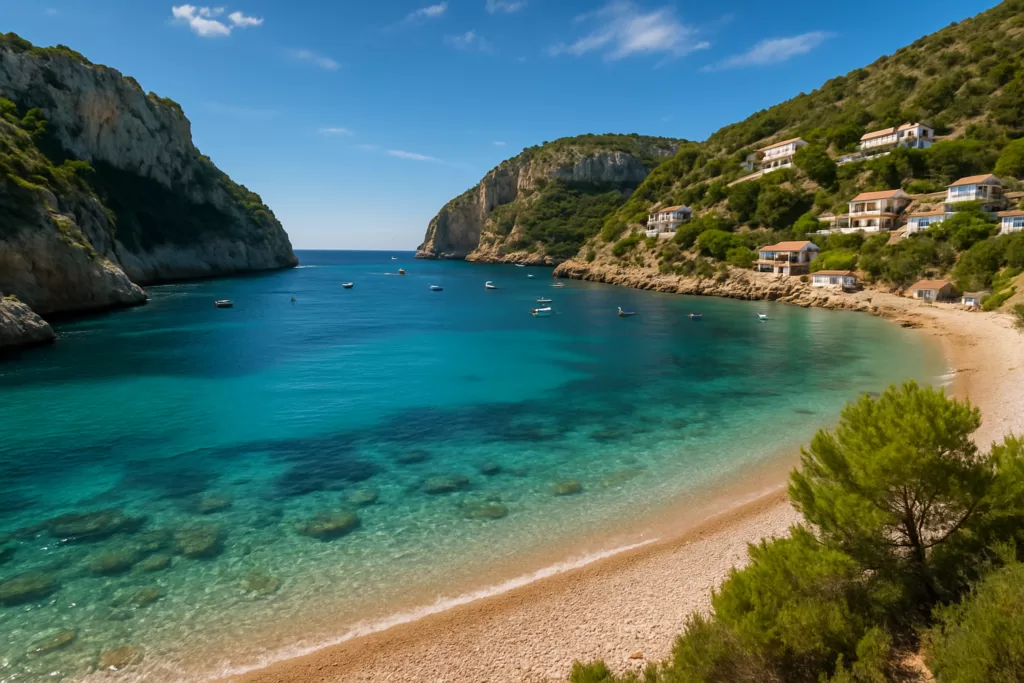
Quick facts — at a glance
- Small pebble cove at the southern tip of Jávea (Xàbia), set between high cliffs with clear turquoise water.
- Parking is very limited: around 200 car spaces split across small areas near the ravine, restaurants and Carrer del Pic Tort.
- In July–August vehicle access is restricted to roughly 200 cars; once capacity is reached the cove is closed until someone leaves.
- Best times to arrive to secure parking or avoid queues: before 10:00 (ideally 08:00–09:00) or after 18:00; weekdays and off-season are much quieter.
- Pebble beach — water shoes recommended; excellent for snorkelling and kayaking; arriving by sea (for example on a kayak) has no access restrictions.
What first-timers don’t expect
- Access-control: in the high season authorities limit vehicle access to about 200 cars and will close the cove when full — so driving there midday in July–August can end with you redirected away.
- Pebbles not sand: the cove is a stone beach; expect uneven footing and bring water shoes for comfort and safety while entering the water.
- Arriving by sea avoids the car limits: kayak or boat visitors don’t face the same vehicle-capacity restriction, making sea arrival a reliable alternative.
Getting there and parking realities
Parking is the limiting factor at Cala Granadella. There are only around 200 spaces divided between small lots by the ravine, near the restaurants and along Carrer del Pic Tort. In July and August the access-control point enforces the 200-car limit and will close the cove when those spaces are full. To have a realistic chance of finding a space, aim to arrive before 10:00 — better still between 08:00 and 09:00 — or come after 18:00. Weekdays and the off-season are much less crowded.
What to expect on the beach and in the water
The cove is a pebble beach framed by high cliffs with clear water, which is why it’s popular for snorkelling and kayaking. Because it’s a stone shore, water shoes are strongly recommended. Kayak tours and private boats can land without being affected by the vehicle-access cap, so if parking or queues are a concern, arriving by sea is a practical option.
Weather, currents and crowd patterns
Wind direction affects conditions: some nearby narrow coves develop strong currents under certain winds. Jellyfish (maneter) are more common in August after persistent easterly winds. In summer a tourist train or shuttle runs from the La Guàrdia urbanisation to the cove, and taxis also serve the route; these can be useful alternatives to driving when parking is tight.
🧭 Local tip
If you must drive in high season, plan for an early departure from your base so you arrive before the access-control point fills; cars parked badly on the roadside risk being towed.
Visitor reality check
- Do not expect a large sandy beach — it’s a small stone cove, crowded in peak season.
- Access may be physically restricted by authorities once the about-200-car limit is reached.
- Kayaks and boats bypass vehicle limits, so sea arrival is often the most reliable way to visit during busy months.
- Arriving very early or late is the practical strategy to avoid long waits or being turned away.
Worth it… — if you accept the trade-offs. Cala Granadella’s clear water and cliff setting make it one of the most photogenic coves on the coast, and it’s excellent for snorkelling and kayaking. But its small size, pebble shore and strict summer vehicle limit mean it’s not the relaxed, empty beach some expect. Go early/late, by sea, or outside high season to get the best experience.
Cala Granadella vs. nearby coves
| Cove | Beach type | Parking | Best for |
|---|---|---|---|
| Cala Granadella | Pebble, dramatic cliffs | ~200 spaces, capped in summer | Snorkelling, the classic postcard view |
| Cala Sardinera | Small pebble cove | Very limited, mostly walk-in | A quieter alternative nearby |
| Platja de la Granadella car park overflow | N/A | Roadside, easily fined or towed | Avoid — not a real solution |
| Ambolo & Portitxol (further south) | Pebble, wilder, longer walk in | Small, unmarked | Escaping the Granadella crowds entirely |
What’s nearby if the cove is full
If you arrive after the vehicle cap has been reached, you are not stuck for options. The wider Cap de la Nau headland has several other coves within a short drive, each with its own character and generally lighter crowds than Granadella’s single famous cove. Cala Sardinera, reached down a separate access road, offers a similarly clear-water pebble cove with far less foot traffic. Further along the coast towards Moraira, Ambolo and Portitxol require more of a walk in but reward the effort with genuine quiet even in August. Treating Granadella as one stop on a headland with several coves, rather than the only destination, is the most realistic way to plan a summer visit.
The best way to see the cove without a car
Given how tight parking gets, the sea approach is worth taking seriously rather than treating as a last resort. Kayak rental operators in Jávea and Moraira run guided and self-guided trips along this stretch of coastline, typically launching from a nearby beach with easier access and paddling in to Granadella, Sardinera and the wider Cap de la Nau headland in a single outing. It sidesteps the vehicle cap entirely, gives you a view of the cliffs from the water that most land-based visitors never see, and turns what could be a frustrating morning of circling for parking into the actual highlight of the day. Snorkelling gear is worth bringing regardless of how you arrive — the clear water and rocky edges support a reasonable variety of Mediterranean fish close to shore, particularly around the cove’s flanks away from the busiest central strip of pebble.
Photographing the cove
Cala Granadella’s reputation as one of the Costa Blanca’s most photographed coves comes from a specific viewpoint: the walking trail that climbs the southern headland above the beach, reached via a signed path near the car park, gives the classic postcard shot of turquoise water framed by pine-covered cliffs. Morning light before the crowds arrive, or late afternoon as the sun angles lower, both work better than the flat glare of midday. The trail continues further along the coast toward neighbouring coves for anyone who wants a longer walk, and it is genuinely free of the parking and access restrictions that govern the beach itself, making it a reliable option even on the busiest August days when the cove below has already reached capacity and the access-control point has turned drivers away for the morning.
Arrive early, arrive by sea, or come outside the summer peak — any one of the three makes a genuine difference here.
How we assess this guide
We compiled this guide from cross-checked local-access and visitor information: parking counts and the summer vehicle-restriction policy, shuttle availability, shoreline type and recreational uses. We leave out details we cannot verify locally and avoid first-hand claims.
Whichever way you approach it, this is a cove worth the effort — few beaches on this stretch of coast combine dramatic cliffs, genuinely clear water and a workable Plan B for busy days quite as well.
FAQ
Is parking guaranteed if I drive there?
No. Parking is very limited (about 200 spaces) and in July–August authorities restrict vehicle access to roughly 200 cars; once full the cove is closed until someone leaves.
Can I arrive by kayak or boat?
Yes. Arriving by sea (for example on a kayak) does not face the vehicle-access restriction and is a common way to avoid parking limits.
Is the beach sandy?
No. Cala Granadella is a pebble (stone) beach. Water shoes are strongly recommended for comfort and safety.
When is the best time to visit to avoid crowds?
Aim to arrive before 10:00 (ideally 08:00–09:00) or after 18:00; weekdays and the off-season are far quieter. June and September offer nearly the same warm water as July and August, with noticeably shorter queues at the access point. In July–August the parking can fill before 10:00.
Nearby on the northern Costa Blanca
Read next
This place sits on the Costa Blanca. Read the full Costa Blanca guide → or open the interactive map to see everything we have mapped nearby.
How this page is maintained. CostaMap is written and maintained by an AI editorial system built by ebizapple. Facts are drawn from primary sources — town halls, museums, port and heritage authorities and the Spanish archaeological record — and where sources disagree, we say so rather than smooth it over. Photographs marked as ours are taken on location. This page was last reviewed on 14 August 2026. Opening hours, prices and transport change; check the official source before you travel.