
The Costa del Sol earns its name: over 300 days of sun a year, a string of resort towns and white villages, and a big airport at Málaga that puts the whole region within an easy drive. But “Sun Coast” covers a lot of ground — from built-up central resorts to the gorge-top drama of Ronda inland. This is an honest, grounded guide to where to go and what tends to be overrated.
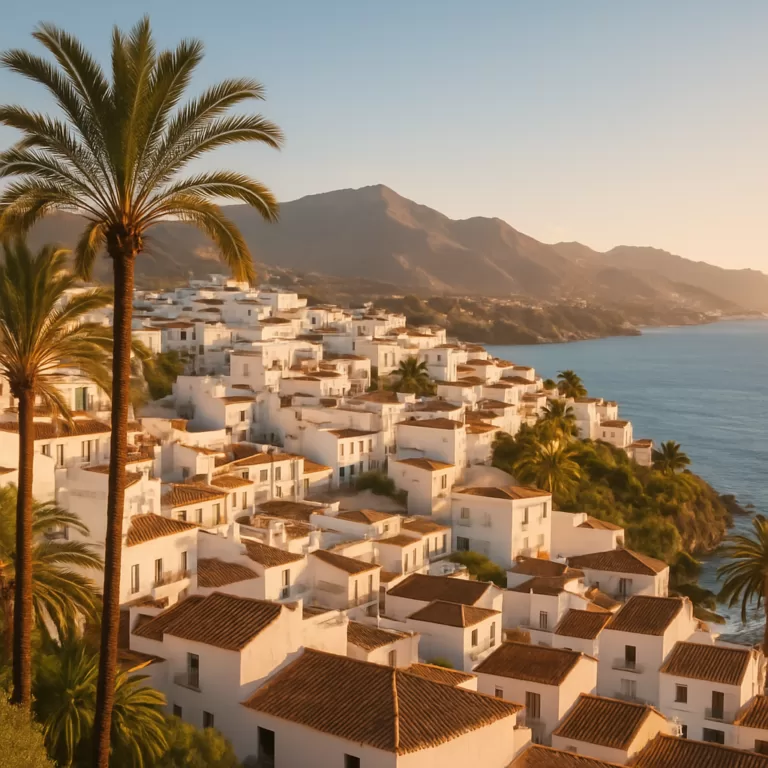
At a glance
- Where: Málaga province, Andalusia, southern Spain.
- Gateway: Málaga–Costa del Sol Airport (AGP), one of Spain’s busiest.
- Best for: winter sun, beach resorts, golf, white villages and day trips to Granada, Córdoba and Gibraltar.
- Headline stops: Málaga, Marbella, Nerja, Ronda, Mijas Pueblo, Frigiliana, Estepona, Fuengirola.
- Getting around: the Cercanías C-1 train runs Málaga–Fuengirola every 20 minutes or so, via the airport; for Marbella, Ronda and the villages you want a car.
Explore the Costa del Sol on the map
Every town in this guide is a marker you can open for its own card. Tap a place type — beach, town, viewpoint and more — to filter what you see.
Three things that surprise first-time visitors
- Málaga is the highlight, not just the airport. The city has a Moorish Alcazaba, a Roman theatre, the Picasso Museum (he was born here) and a good food scene — give it a couple of days.
- The best scenery is inland. Ronda’s gorge, Frigiliana’s lanes and Mijas Pueblo’s viewpoints are what most people remember, and they’re a short drive up from the coast.
- The central strip is built-up. Torremolinos, Benalmádena and Fuengirola are lively and family-friendly, but for quiet coves head east to Nerja.
West: Marbella, Estepona and the resort coast
West of Málaga is the glamorous end. Marbella — about 45 minutes down the coast — pairs a luxury reputation and the yacht-filled marina at Puerto Banús with a genuinely pretty whitewashed old town. Further west, Estepona is quieter, with a flower-filled old quarter and a trail of street-art murals. Fuengirola and the central resorts offer long sandy beaches, wide promenades and the Sohail castle — easy bases on the coastal train.
East: Nerja and the Axarquía
East of Málaga the coast is lower-key and steeper. Nerja is the anchor: its clifftop Balcón de Europa looks over small coves, and the nearby Nerja Caves are a major draw. Up the hill, Frigiliana is repeatedly voted one of Spain’s prettiest villages — white houses, cobbled lanes and Moorish heritage. Choose this side for the Costa del Sol with fewer high-rises.
Inland: Ronda, Mijas and mountain drama
Ronda sits astride the El Tajo gorge, split in two and joined by the 18th-century Puente Nuevo bridge, with one of Spain’s oldest bullrings. It’s about 90 minutes from Málaga by car, and the prettiest approach — the A-397 up from Marbella — climbs through the Sierra de las Nieves national park. Closer to the coast, Mijas Pueblo is the classic white hill village — narrow streets, craft shops and sweeping sea views. Even one inland day changes how the region feels.
Which part of the Costa del Sol is for you?
| Area | Character | Best for | From Málaga (AGP) |
|---|---|---|---|
| Málaga city | Moorish Alcazaba, Roman theatre, Picasso’s birthplace | City culture, food, a real Andalusian city | At the airport |
| Marbella & Puerto Banús | Glamorous marina, whitewashed old town | Upscale dining, yachts, a smart night out | ~45 min |
| Estepona | Quieter old quarter, street-art murals | A calmer base on the west coast | ~55–60 min |
| Torremolinos, Benalmádena & Fuengirola | Long sandy beaches, built-up resort strip | Families, easy train access | 15–30 min |
| Nerja | Quieter coves east of the centre | Escaping the central-strip crowds | ~50 min |
| Ronda | Dramatic gorge-top old town, inland | A single unforgettable day trip | ~1.5 hrs |
When to go
Over 300 sunshine days a year is the coast’s real headline, and it is what makes this one of the few Spanish costas that genuinely works as a winter-sun destination — daytime temperatures rarely struggle in December and January, when much of northern Europe wants exactly that. July and August bring the heat and the crowds to the central resort strip; spring and autumn give milder days with the beaches, Ronda and the white villages all far less busy. If winter sun is the whole point of your trip, this is one of the few costas built for it.
A simple 3–4 day plan
- Day 1 — Málaga. The Alcazaba, the Roman theatre, the Picasso Museum and the old town. Stay the night in the city.
- Day 2 — your stretch of coast. Pick one base: Marbella or Estepona in the west, Nerja in the east. Beach, promenade and an evening in the old town.
- Day 3 — go up. Ronda’s gorge (about 1.5 hours by car), or from the east, Frigiliana and the Nerja Caves.
- Day 4 (optional) — a big day trip. Granada for the Alhambra, Córdoba for the Mezquita, or Gibraltar.
Local tip
Base yourself once and day-trip. Málaga or Nerja work in the east; Marbella or Estepona in the west. Granada (the Alhambra), Córdoba (the Mezquita) and Gibraltar are all full-day excursions from the coast.
Reality check
In July and August the coast is busy and hot — beaches, parking and sights fill up. Spring and autumn give the same sun with smaller crowds, and winters stay mild, which is why so many come in the cooler months. If you want a secret, undeveloped coastline, this isn’t it; if you want reliable sun, easy logistics and variety within a short drive, it’s hard to beat.
Verdict
Treat the Costa del Sol as a base, not a single place. Combine Málaga, a coastal town to suit your style and at least one white village or Ronda, and you get the best of it: sun and sea plus the Andalusian character the resort strip alone can hide.
How we assess
This guide is compiled and cross-checked from established, verifiable information about each town — geography, headline sights, transport and how places connect. Travel times and the Cercanías C-1 line are cross-checked against current sources. We don’t invent first-hand fieldwork; where something is a matter of taste or changes seasonally, we say so plainly. Place names use correct Spanish spelling and accents.
Getting around once you’re here
Málaga–Costa del Sol Airport sits right on the coast, which makes this one of the easier Spanish costas to arrive into without a rental car. The Cercanías C-1 train runs from the airport through Málaga city and on to Torremolinos, Benalmádena and Fuengirola roughly every 20 minutes, covering the busiest central stretch cheaply and without traffic. Once you want Marbella, Estepona, Ronda or any of the white villages, though, that train line stops helping — those all sit off the rail corridor, and buses between them run far less often than the coastal train. A short-stay trip based around Málaga and the central resorts works fine without a car; anything that mixes in the west coast or the inland villages is a genuinely different, car-shaped trip.
Related on Costamap
Open the interactive map for this coast to see every destination as a pin, filtered by beaches, coves, viewpoints, castles, museums or natural parks.
Every town guide on the Costa del Sol
21 towns on this coast have their own guide on CostaMap. They are listed alphabetically, with what each one is actually for.
- Alhaurin de la Torre — a Costa del Sol town below the Sierra de Mijas in the fertile
- Alhaurín el Grande — a whitewashed Costa del Sol town in the Guadalhorce valley, with Moorish streets
- Antequera — an inland Málaga town with the UNESCO Antequera Dolmens
- Benalmádena — beaches, Puerto Marina, the Calamorro cable car and family attractions, with honest
- Casares — the white hilltop village behind Estepona: castle viewpoints, griffon vultures, Blas Infante’s birthplace
- Coín — a green Guadalhorce-valley town of citrus groves
- Cártama — a hilltop Roman-Moorish castle, the fertile Guadalhorce valley and quick access to Málaga
- Estepona — the flower-filled old town, murals
- Frigiliana — a whitewashed pueblo blanco above Nerja, Moorish lanes
- Fuengirola — Fuengirola on the Costa del Sol is a family-friendly beach base
- Manilva — a western Costa del Sol town with the Puerto de la Duquesa marina
- Marbella — Marbella on the Costa del Sol pairs a pretty old town with glossy
- Mijas — the whitewashed pueblo above the coast, Mijas Costa beaches, donkey controversy
- Málaga — the Alcazaba and Gibralfaro, Picasso’s birthplace
- Nerja — eastern Costa del Sol favourite: the Nerja Caves, Balcón de Europa, Burriana beach
- Rincón de la Victoria — Málaga’s local beach town: Cueva del Tesoro sea cave, seafront promenade
- Ronda — the Puente Nuevo over the El Tajo gorge
- Torremolinos — Torremolinos on the Costa del Sol is the original package-holiday resort
- Torrox — white village and beach town claiming Europe’s best climate: pueblo vs costa
- Vélez-Málaga — historic Axarquía capital behind Torre del Mar: Moorish fortress, old town churches, markets
- Álora — a white town in Málaga’s Guadalhorce valley
See the full Costa del Sol region guide for the interactive map of every beach, town and historic site along this coast.
Frequently asked questions
When is the best time to visit the Costa del Sol?
Spring (April–June) and autumn (September–October) bring warm, sunny weather with fewer crowds than the July–August peak. Winters are mild.
How do I get from Málaga Airport?
The Cercanías C-1 train runs from the airport’s own station to Málaga city centre in about 12 minutes, and the other way to Torremolinos, Benalmádena and Fuengirola. Trains run roughly every 20 minutes, so it is often quicker and cheaper than a taxi.
Do I need a car?
The Cercanías C-1 train covers the central coast from Málaga to Fuengirola, but a car helps a lot for Marbella (about 45 minutes from Málaga), Ronda (about 1.5 hours) and the white villages, which the train does not reach.
How many days do you need?
Three to four days suits a first visit: a day for Málaga itself, a day or two for a coastal base that fits your style, and a day for Ronda or Nerja. Add more if you want day trips to Granada or Córdoba.
East or west?
The west (Marbella, Estepona) is more polished; the east (Nerja, the Axarquía) is quieter and lower-rise. Many visitors enjoy a bit of both.
Is the Costa del Sol worth visiting in winter?
Yes. Winters are mild and sunny, which is why the Costa del Sol is one of Europe’s most popular winter-sun destinations. Some beach clubs wind down, but the cities, white villages and major sights stay open year-round.
Plan your trip
Use the map above to open each town, or see the full Costamap map of every Spanish costa. Continuing along the coast? Read our guides to the neighbouring Costa Tropical to the east and the Costa de la Luz to the west.
Every place we have mapped on the Costa del Sol
52 towns, beaches, coves and landmarks, kept up to date automatically.
- Alcazaba of Málaga
- Bajondillo Cave
- Balcón de Europa
- Basílica de Vega del Mar
- Benalmádena Stupa
- Bioparc Fuengirola
- Calaburras Lighthouse
- Carmen Thyssen Museum
- Casares
- Castillo de Colomares
- Caves of Nerja
- Estepona
- Frigiliana
- Fuengirola
- Gibralfaro
- Málaga
- Málaga Cathedral
- Marbella
- Marbella Lighthouse
- Mijas Pueblo
- Montes de Málaga Natural Park
- Museo de Málaga
- Museo Picasso Málaga
- Museum Jorge Rando
- Nerja
- Puerto Banús
- Ronda
- Sierra Blanca
- Sierras of Tejeda, Almijara and Alhama Natural Park
- Sohail Castle
- Torre de Maro
- Alhaurin de la Torre: Costa del Sol Guide
- Alhaurín el Grande: hvit landsby i Costa del Sols innland
- Álora: Guadalhorce Valley White Town near El Chorro
- Antequera: UNESCO Dolmens and El Torcal
- Benalmádena: Beaches, Cable Car & Marina
- Cártama: Castle and the Guadalhorce Valley
- Casares: White Hilltop Village of Costa del Sol
- Coín: Guadalhorce Valley Gardens and Springs
- Estepona: Garden of the Costa del Sol
- Frigiliana
- Fuengirola: Beaches, Castle & Family Base
- Málaga
- Manilva: Duquesa Marina and Roman Baths
- Marbella: Old Town, Golden Mile & Beaches
- Mijas: White Village, Beaches & What's Worth It
- Nerja: Caves, Balcón de Europa & Beaches, Costa del Sol
- Rincón de la Victoria: Málaga's Local Beach Town
- Ronda
- Torremolinos: Beaches, La Carihuela and the Costa del Sol's Original Resort
- Torrox: Best Climate in Europe, Costa del Sol
- Vélez-Málaga: Capital of the Axarquía Near Costa del Sol
How this page is maintained. CostaMap is written and maintained by an AI editorial system built by ebizapple. Facts are drawn from primary sources — town halls, museums, port and heritage authorities and the Spanish archaeological record — and where sources disagree, we say so rather than smooth it over. Photographs marked as ours are taken on location. This page was last reviewed on 11 August 2026. Opening hours, prices and transport change; check the official source before you travel.