
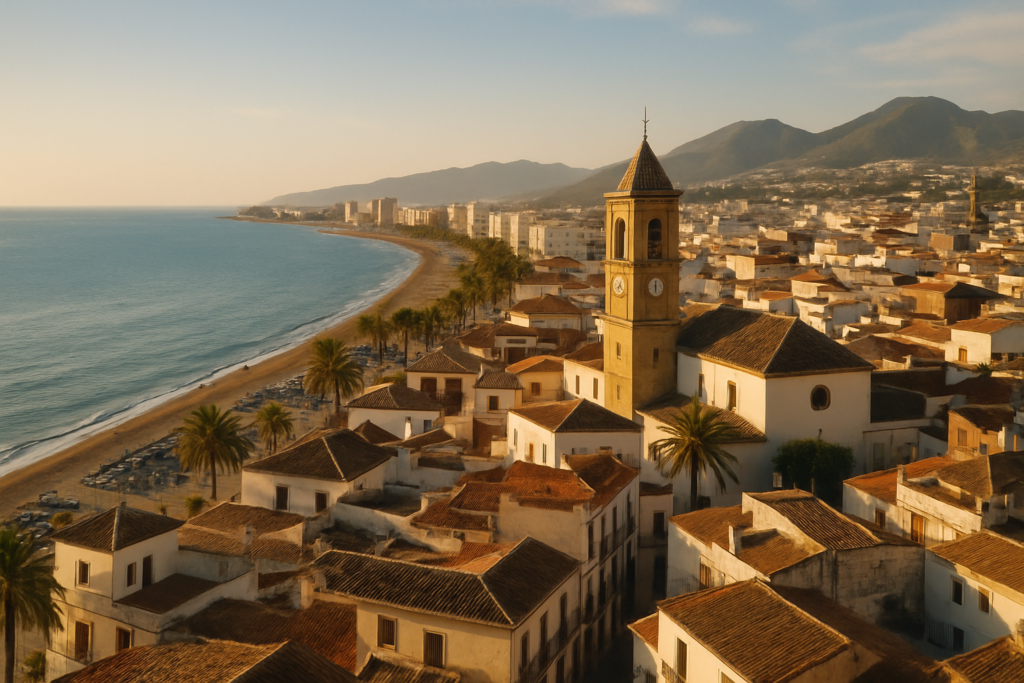
Expect a popular, sandy Mediterranean resort where history sits on the shoreline and family-friendly attractions dominate the calendar. If you arrive imagining an untouched fishing village, plan to reset your expectations: this is a lived-in, developed coastal city with a long seafront, a busy promenade and a summertime festival scene. That makes it easy to use as a base, but it also means crowds and beachfront development—so balance your plans between people-packed afternoons and quieter pockets of heritage and nature.
Fuengirola at a glance
- Location: city on the Costa del Sol in Málaga province, Andalusia, southern Spain.
- Transport links: reachable by bus, the A7 motorway and connected to Málaga by the C-1 commuter rail.
- Nearest major airport: Málaga-Costa Del Sol airport (nearby).
- Beaches: a major tourist resort with more than 8 km of beaches and a long promenade.
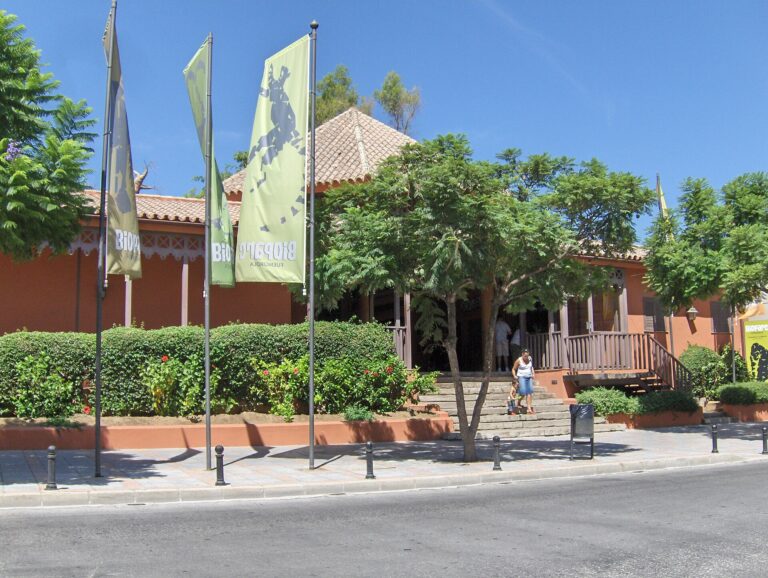
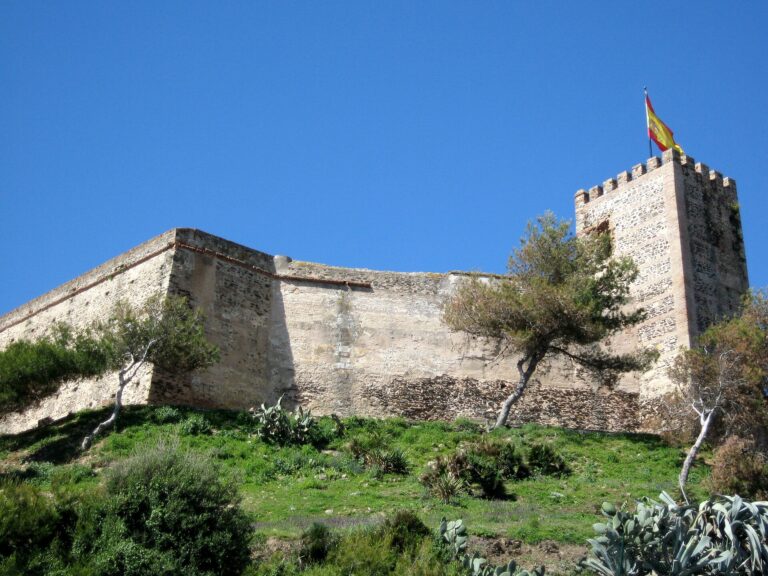
- Top sights: a medieval Moorish fortress on the seafront and Bioparc, a zoo with a captive‑breeding focus.
- History: Phoenician, Roman and Moorish origins with a medieval castle dating to the mid-10th century.
- Population notes: roughly 82,226 permanent inhabitants (c.2022); about 25% come from other countries, mainly Europe.
Before you plan
Sohail Castle is an active cultural venue: the restored Moorish fortress regularly hosts festivals and summer concerts. Check current festival dates before booking if you plan your trip around a specific event.
Things to do in the town
The town mixes simple pleasures—sunny beaches and a broad promenade—with surprising historical depth and one standout family attraction. Pick a few different rhythms: a morning on the sand, an afternoon wandering layers of archaeology, and an evening at a concert or a seafood restaurant.
| Attraction | What it is | Price/entry | Best for |
|---|---|---|---|
| Sohail Castle | Medieval Moorish fortress with Phoenician remains; hosts festivals and concerts | — | History buffs; event-goers |
| Bioparc Fuengirola | Zoo specialising in captive breeding for endangered species | — | Families; conservation-minded visitors |
| Beaches & promenade | Over 8 km of sandy coastline and seafront promenade | — | Sunbathers; walkers; informal dining |
Sohail Castle: skyline landmark and live events
Perched by the sea, the fortress dates back to the mid-10th century when Abd-ar-Rahman III ordered its construction. The site also contains remains of an early Phoenician settlement, so you’re literally standing on layers of the area’s long past: Phoenician, Roman and Moorish occupations are all part of the story. After restoration work, the castle has been used for cultural purposes since around 2000 and now hosts festivals and concerts throughout the summer—these are some of the town’s busiest nights, so expect crowds and an event atmosphere rather than solitude.
Bioparc Fuengirola: conservation-focused zoo
Bioparc is one of the town’s headline attractions and is known for its focus on captive breeding programs for endangered species. The zoo’s presentation emphasizes habitat-style enclosures and conservation messaging, which makes it a reassuring choice for families and visitors who prefer zoos with an explicit species-protection mission.
Seafront life: promenade, beaches and casual dining
More than eight kilometres of beaches define much of the visitor experience. The long promenade links beachside cafés, bars and restaurants and is the natural spine for strolling, cycling or grabbing an ice cream. The beach scene is very much a part of the town’s identity—expect lively stretches, sunbed services in places and a mixture of daytime sunbathing and evening promenading.
Best beaches in Fuengirola
Beaches here are one of the clear reasons people come. The coastline is extensive rather than remote—plan on lengthy sandy stretches with a built-up seafront rather than hidden coves. Think accessibility and facilities rather than wilderness.
| Beach | Character | Facilities / Notes |
|---|---|---|
| Long sandy beaches | Extensive sandy stretches along the seafront | Part of the town’s more than 8 km of coastline; promenades and food outlets nearby |
| Promenade beaches | Beaches directly adjacent to the main seafront promenade | Easy access to cafés, bars and public transport |
Fuengirola with kids
The town functions well as a family base. Bioparc is the most obvious child-focused draw because of its conservation programs and animal displays, and the long beaches are suitable for paddling and sand play. The promenade creates a safe corridor for scooting or cycling with children in the daytime. Evening entertainment often skews casual and family-friendly, and the summer festival calendar at the castle adds spectacle that children tend to enjoy.
How to get to Fuengirola and get around
Transport connections make this coast easy to reach and use as a springboard. The resort is served by several practical routes, so whether you arrive by air, road or rail there are straightforward options to get you into town and moving around.
| From | By | Approx time |
|---|---|---|
| Málaga-Costa Del Sol airport | Road (A7 motorway) or public transport | — |
| Central Málaga | C-1 commuter rail service | — |
| Regional bus network | Bus | — |
Within the area, the seafront promenade is the most pleasant way to move between beaches and waterfront eateries on foot. The commuter rail line gives quick access to central Málaga and is useful for day trips. Roads and the A7 motorway connect the area by car or coach if you prefer to drive.
Best time to visit the area
The climate is subtropical Mediterranean with an annual average temperature around 18 °C, which keeps conditions mild for much of the year. Summers are the season for events and the busiest beach days; shoulder seasons offer milder weather with fewer crowds.
| Season | Months | What to expect |
|---|---|---|
| Summer | June–August | Warmest weather and the festival season at the castle; busiest time on beaches and promenade |
| Shoulder seasons | Spring / Autumn | Milder temperatures and fewer crowds while still pleasant for walking and sightseeing |
| Winter | December–February | Mild compared with northern Europe; quieter and good for off‑season breaks |
History of Fuengirola
The place has a layered past: Phoenician activity left early traces, the Romans identified a fortified town called Suel (mentioned by Pliny in the 1st century AD), and during the Moorish era the settlement was known as Suhayl. The castle dominating the coast was built in the mid-10th century by Abd-ar-Rahman III. In 1485 the area fell to the Christian Monarchs during the Reconquista, and in May 1841 the settlement was administratively detached from the neighbouring municipality of Mijas. The modern tourism boom began in the 1960s, transforming the town into a major resort while its medieval fortress and archaeological layers remained part of the visible heritage.
Practical info
- Transport connections: reachable by bus and the A7 motorway; the C-1 commuter rail service links to central Málaga; Málaga-Costa Del Sol airport is the nearest international airport.
- Population context: about 82,226 permanent inhabitants were registered as of 2022, and roughly a quarter of residents come from other countries, mainly other parts of Europe—this creates a multilingual, international service sector in peak seasons.
- Events: Sohail Castle hosts festivals and concerts throughout summer—expect increased local crowds and temporary event facilities during that period.
- Climate note: the area’s subtropical Mediterranean climate gives an annual average temperature roughly 18 °C, so weather is generally mild outside of the hottest months.
- Conservation & family attractions: Bioparc Fuengirola focuses on captive breeding programmes for endangered species, making it a focal point for family visits with an educational angle.
Worth it for: travellers looking for a lively, convenient beach resort with historical interest, families seeking a conservation-minded zoo, and visitors who want easy rail links to Málaga. Less so if: you want remote, undeveloped coastline or quiet, off-grid solitude—the seafront here is developed and geared to tourism.
How we assess this guide
This guide compiles verified facts from cross-checked sources: transport connections, historical records, demographic notes and the roles of local attractions. We flag current, ongoing uses (for example, the castle’s festival programme) so you can plan around event dates. We do not claim to include original first‑hand field reporting; instead we synthesise reliable data and highlight practical implications for visitors. Where a venue’s status may change (festival schedules, opening seasons), we recommend confirming opening dates directly with the venue.
Nearby on the Costa del Sol
Towns near Fuengirola
- Mijas — 6 km north
- Benalmádena — 9 km north-east, beaches, Puerto Marina, the Calamorro cable car and family attractions
- Alhaurín el Grande — 11 km north-west, a whitewashed Costa del Sol town in the Guadalhorce valley
- Alhaurin de la Torre — 14 km north, a Costa del Sol town below the Sierra de Mijas
- Torremolinos — 14 km north-east, Torremolinos on the Costa del Sol is the original package-holiday
- Coín — 18 km north-west, a green Guadalhorce-valley town of citrus groves
Places to visit within reach
- Bioparc Fuengirola — 1 km, Fuengirola’s old zoo was demolished in 1999 and rebuilt without cages
- Sohail Castle — 2 km, Sohail Castle is named after Canopus
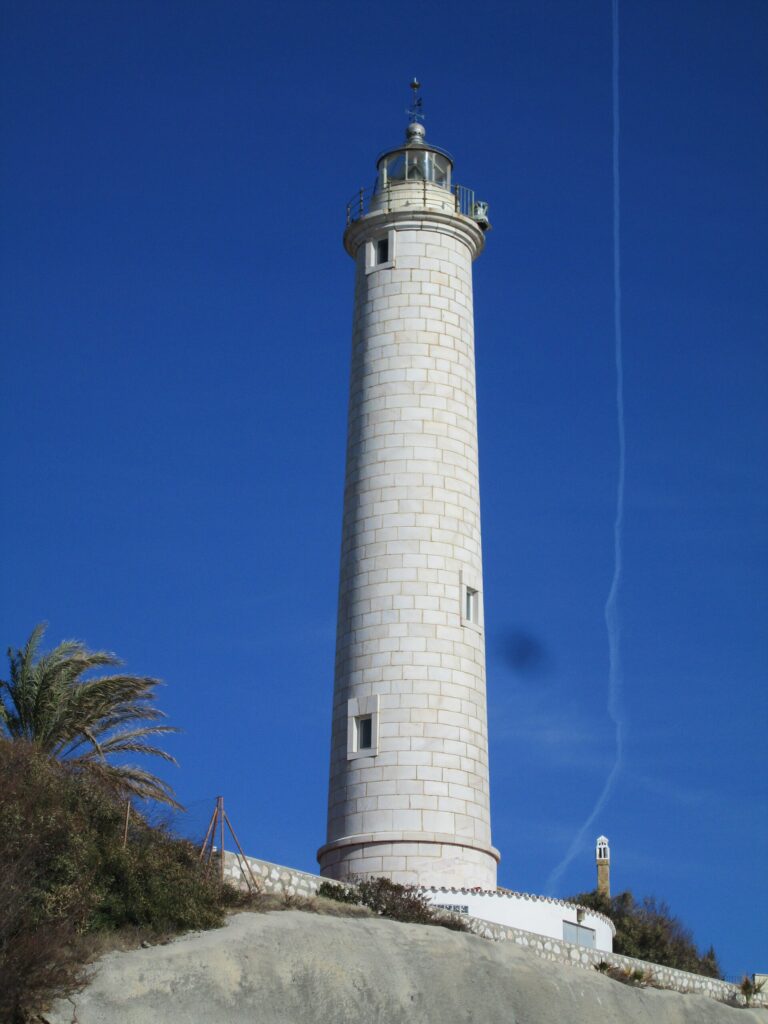
- Calaburras Lighthouse — 4 km, The seabed below Calaburras holds two thousand years of shipwrecks
- Mijas Pueblo — 6 km, Mijas Pueblo is a classic white hill village above the coast
For the wider picture, see the Costa del Sol guide, which lists every town on this coast.
Frequently asked questions
How do I get from Málaga-Costa Del Sol airport?
The airport is the nearest international gateway; the area is accessible by road via the A7 motorway and by public transport. From central Málaga you can also use the C-1 commuter rail service to reach town.
Is it easy to reach by train?
Yes. The C-1 commuter rail service connects central Málaga with the coast, providing a direct rail link into the resort area.
Is the town expensive to visit?
The resort operates a wide hospitality sector to serve many budgets, but costs vary with season and location—beachfront and festival periods are typically the busiest times. The town’s international resident base means there are options targeted at different price points.
Which beach is the best?
The coastline offers more than 8 km of sandy beaches. If you prioritise convenience—cafés, promenades and transport—choose beaches adjacent to the main seafront; if you prioritise length and walking, the long sandy stretches are the defining feature.
How many days should I spend here?
Use the town as a simple base for 2–4 days to mix beach time, a visit to the castle and Bioparc, plus a stroll along the promenade. That gives time for at least one excursion to nearby Málaga if you want a city day trip.
Is Fuengirola good for families?
Yes. Bioparc’s conservation focus and the long, accessible beaches make it a family-oriented destination. Evening events at the castle and a pedestrian-friendly promenade also suit kids and caregivers.
Can I get around without a car?
Absolutely. Public buses, the C-1 rail link and compact, walkable beachfront areas make it easy to get around without driving. The promenade is also pedestrian-friendly for short trips along the shore.
Is parking difficult?
Parking availability varies with season and location—on busy summer days near the seafront and event nights expect higher demand. Use public transport or park a little further from the busiest beachfront stretches to avoid peak congestion.
What are good rainy-day options?
On wetter days, indoor options include visiting Bioparc for its interpretive exhibits or spending time in cafés and restaurants along the promenade. Cultural programming at the castle and temporary exhibitions may also provide indoor alternatives—check event schedules in advance.
When are the main festivals?
The castle hosts festivals and concerts throughout the summer. Dates and programming vary year to year, so consult the venue’s current schedule before planning travel around a particular event.
What’s the local climate like?
The area has a subtropical Mediterranean climate with an annual average temperature around 18 °C, which results in mild winters and warm summers—shoulder seasons tend to be comfortable for sightseeing without peak summer crowds.
How did the town evolve into a resort?
Fuengirola started to develop as a leading tourist centre in the 1960s, transforming from a historical settlement into a major coastal resort with extensive beaches and visitor infrastructure.
Are there archaeological sites to see?
Yes—the castle site includes remains from a Phoenician settlement and the town’s origins include Phoenician, Roman and Moorish phases. The Roman fortified town (known as Suel) is referenced in classical sources like Pliny.
Is the castle original or restored?
The Moorish castle dates to the mid-10th century (built by Abd-ar-Rahman III) and has been renovated; since around 2000 it has been used as a cultural venue and for summer festivals and concerts.
Is the town cosmopolitan?
Approximately 25% of permanent inhabitants come from other countries, mainly other parts of Europe, which gives a broadly international feel to services and hospitality, especially in high season.
Plan the wider trip
Fuengirola on the map
Places worth knowing near Fuengirola
How this page is maintained. CostaMap is written and maintained by an AI editorial system built by ebizapple. Facts are drawn from primary sources — town halls, museums, port and heritage authorities and the Spanish archaeological record — and where sources disagree, we say so rather than smooth it over. Photographs marked as ours are taken on location. This page was last reviewed on 11 August 2026. Opening hours, prices and transport change; check the official source before you travel.