
The Costa Dorada, the “golden coast” of Tarragona in southern Catalonia, is named for its long, soft, pale-sand beaches. It runs south from Barcelona and pairs easy family resorts with one of the richest Roman cities in Spain and the stylish town of Sitges. This is an honest, grounded guide to where to go and what tends to disappoint.
At a glance
- Where: Tarragona province, Catalonia, north-east Spain, just south of Barcelona.
- Gateways: Reus Airport (REU); Barcelona (BCN) is about an hour north.
- Best for: gentle sandy beaches, Roman history, theme parks and a chic seaside town.
- Headline stops: Tarragona, Sitges, Salou and PortAventura, Cambrils, Reus.
- Eat: fresh seafood in Cambrils, and in late winter the local calçotada, a feast of grilled spring onions with romesco sauce that began near Valls.
- Getting around: the coast is well served by train, though a car helps for the inland towns.
Three things that surprise first-time visitors
- Salou is a high-rise package strip. The coast’s busiest resort is built for volume, with PortAventura next door. It is great for a family theme-park week and thin on local character.
- Tarragona is the real depth. Many people come for the beach and miss a UNESCO-listed Roman city on their doorstep. That is the wrong way round.
- The beaches are genuinely gentle. Shallow, calm and wide, they suit young families far better than the rugged coasts further north.
Tarragona: Roman Tarraco by the sea
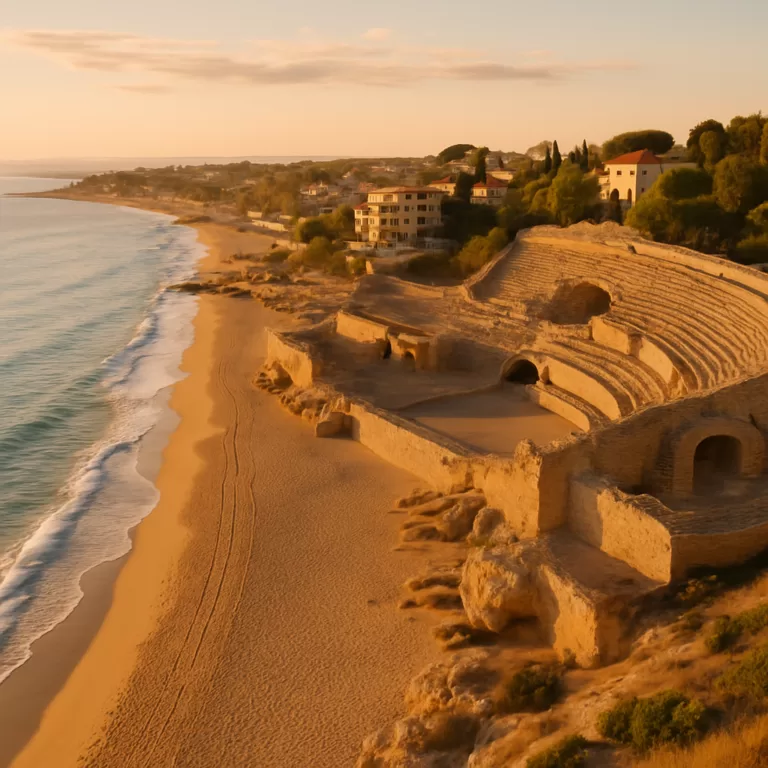
Tarragona was one of the great cities of Roman Spain, and the remains are everywhere. An amphitheatre sits above the beach, and the walls, forum and circus thread through the old town, while just outside the city the Les Ferreres aqueduct still strides across a valley. The whole ensemble carries UNESCO World Heritage status, and you can walk most of it in a day.
Sitges, Cambrils and Reus
Sitges is the coast’s most stylish town, long a haven for artists and famous for its open, cosmopolitan spirit, its Carnival and its film festival. Down the coast, Cambrils keeps a working fishing port and a reputation for seafood. Inland, Reus was the birthplace of Antoni Gaudí and makes a good half-day for anyone drawn to Catalan modernism.
Beaches and theme parks
The shoreline is the Costa Dorada’s calling card: kilometres of fine, shallow sand from Salou through Cambrils and on to the quieter stretches near the Ebro delta. PortAventura World, one of Europe’s largest theme parks, anchors the family end of the coast, with its own roller coasters and the Ferrari Land area alongside.
Local tip
If you visit between roughly December and March, seek out a calçotada. Eating the charred spring onions by hand, dipped in romesco, is one of Catalonia’s great seasonal rituals, and it is a local tradition rather than a tourist act.
Reality check
July and August are hot and busy, and Salou and PortAventura draw big summer crowds. Late spring and September are calmer and just as warm. If you want wild coves and drama, this is not that coast, the appeal here is easy sand, Roman history and a relaxed pace.
Verdict
Come to the Costa Dorada for gentle beaches and serious history in one trip. Base near Tarragona or Sitges rather than the package strip, give the Roman city a full day, and the golden coast rewards you well beyond its theme parks.
How we assess
This guide is compiled and cross-checked from established, verifiable information about each place, its geography, history, headline sights and food. We do not invent first-hand fieldwork or personal anecdotes. Where something is a matter of taste or shifts with the season, we say so plainly, and place names use correct Catalan and Spanish spelling and accents.
Which part of the Costa Dorada is for you?
| Area | Character | Best for |
|---|---|---|
| Tarragona | Roman Tarraco: amphitheatre, walls, aqueduct | History and a UNESCO-listed old town |
| Sitges | Stylish seaside town, lively nightlife | A chic, walkable beach town |
| Salou & PortAventura | High-rise package resort, theme park next door | Family theme-park holidays |
| Cambrils | Working fishing port turned resort | Fresh seafood, a calmer base |
| Reus | Modernist inland town, Gaudí’s birthplace | An easy architecture day trip, roughly 15 minutes from Tarragona by car |
When to go
The Costa Dorada’s shallow, gentle beaches make it a genuine year-round destination for families rather than a strict summer-only coast — spring and autumn bring mild, swimmable weather with a fraction of the July–August crowds around Salou and PortAventura. Late winter has its own reason to visit regardless of beach weather: the calçotada season, when towns across Tarragona province grill spring onions over open fires and serve them with romesco sauce, a tradition worth timing a trip around if you visit outside summer.
Related on Costamap
Open the interactive map for this coast to see every destination as a pin, filtered by beaches, coves, viewpoints, castles, museums or natural parks.
North along the same shore, the Costa Barcelona runs from the Garraf cliffs up through Sitges and the Maresme.
Every town guide on the Costa Dorada
11 towns on this coast have their own guide on CostaMap. They are listed alphabetically, with what each one is actually for.
- Amposta — the gateway to the Ebro Delta wetlands
- Calafell — a family Costa Dorada beach town near Barcelona, with long sandy beaches
- Cunit — low-key Costa Dorada town with 2.5 km of gentle family beaches
- El Vendrell — a Costa Dorada town and home of cellist Pau Casals
- La Ràpita — a fishing port on Alfacs bay beside the Ebro Delta, famous for prawns
- Reus — the birthplace of Gaudí, a signposted Modernista architecture route
- Salou — golden Costa Dorada beaches
- Tarragona — UNESCO Roman ruins, a walled old town
- Torredembarra — 13 km from Tarragona
- Tortosa — a historic Ebro-river city in Tarragona, with a hilltop Parador castle
- Vila-seca — the family beach of La Pineda, PortAventura next door and calm shallow sea
See the full Costa Dorada region guide for the interactive map of every beach, town and historic site along this coast.
Getting around once you’re here
Reus Airport is the closest gateway, but it carries far fewer routes than Barcelona, so many visitors fly into BCN and either drive south or take advantage of the coast’s good rail links — Rodalies trains run frequently along the R1/R4 lines connecting Barcelona, Sitges, Tarragona, Cambrils and Salou, making this one of the more train-friendly costas in Spain. A car becomes useful mainly for the inland towns, Reus among them, and for reaching quieter beaches away from the main stations. If your trip stays coastal and focused on the headline stops, the train alone will comfortably cover it.
Sitges beyond the beach
Sitges earns its reputation as the coast’s most stylish stop on more than its beaches: the town is dense with Modernist architecture from the same late-19th-century movement that shaped Gaudí’s Barcelona, its old quarter is built for walking, not cars, and it hosts one of Spain’s most celebrated Carnival festivals each February, drawing crowds well beyond what its size would suggest. It has also long been one of Europe’s most welcoming LGBTQ+ beach destinations, with a nightlife scene that stays lively well past the family-resort hours of Salou down the coast. Day-trippers from Barcelona fill it on summer weekends, so an overnight stay is the better way to see it once the crowds thin out.
A simple 2–3 day plan
- Day 1 — Tarragona. The Roman amphitheatre, the old town walls and the Les Ferreres aqueduct just outside the city.
- Day 2 — Sitges. Modernist architecture, the old quarter and the beach, ideally with an overnight stay to see it once the day-trippers leave.
- Day 3 — Salou or Cambrils. PortAventura for a family theme-park day, or Cambrils for a quieter seafood-focused base instead.
Beyond the coast
Two easy detours reward travellers who venture off the beach. Poblet Monastery, a UNESCO World Heritage Cistercian abbey inland from Tarragona, is one of Catalonia’s most complete medieval monastic complexes and an easy half-day trip by car. Closer to the water, the Ebro Delta further south is one of the largest wetlands in the western Mediterranean, a quieter landscape of rice paddies and flamingos that feels a world away from Salou’s theme-park energy, and rewards visitors who have an extra day to spare beyond the main coastal stops.
PortAventura in context
PortAventura World is the coast’s single biggest draw for families and among the largest theme park resorts in Europe, with themed zones spanning Polynesia, China, Mexico and the American Far West alongside Ferrari Land, a separate park built around high-speed coasters. It sits right next to Salou, so the two combine naturally into one holiday: theme-park days followed by evenings on a properly good, gently shelving beach. Book park tickets in advance in peak summer, when queues for the headline rides can run well over an hour, and Budget a full two days if you want to properly cover both PortAventura and Ferrari Land rather than rushing one. Check opening dates before you travel, too — the park typically closes for a stretch of the winter low season. The beaches and old towns nearby stay open and pleasant to walk year-round, whatever the park’s own schedule looks like.
Frequently asked questions
When is the best time to visit?
Late spring and September bring warm weather and sea with smaller crowds than the July and August peak.
Is it good for families?
Very. The shallow sandy beaches and PortAventura make it one of Spain’s most family-friendly coasts.
Do I need a car?
Not for the coastal resorts, which are linked by train, but a car helps for Reus and the inland towns.
How does it compare to the Costa Brava?
It is flatter, sandier and gentler, with less drama but easier beaches and a stronger Roman heritage.
Plan your trip
Browse the interactive Costamap map, where each marker opens its own card. Next along the coast to the south is the Costa del Azahar; further north, beyond Barcelona, lies the Costa Brava.
Every place we have mapped on the Costa Dorada
25 towns, beaches, coves and landmarks, kept up to date automatically.
- Altafulla
- Arc de Berà
- Cambrils
- Ebro Delta
- National Archaeological Museum of Tarragona
- PortAventura World
- Roman Villa of Centcelles
- Salou
- Tarragona
- Tarragona Amphitheatre
- Tarragona Cathedral
- Amposta: Gateway to the Ebro Delta
- Calafell: Costa Dorada Beach Resort
- Cambrils
- Cunit: Family Beaches on the Costa Dorada
- Deltebre: Ebro Delta town of rice fields and birdlife
- El Vendrell: Costa Dorada and Pau Casals
- La Ràpita: Ebro Delta, Bay and Seafood
- Mont-roig del Camp: Costa Daurada Beaches, Miro and Miami Platja
- Reus: Modernist City and Gaudí Heritage
- Salou
- Tarragona: Roman Heritage and Golden Coast
- Torredembarra: Costa Daurada Beach Town near Tarragona
- Tortosa: Ebro River City and Cathedral
- Vila-seca: La Pineda Beach and PortAventura
How this page is maintained. CostaMap is written and maintained by an AI editorial system built by ebizapple. Facts are drawn from primary sources — town halls, museums, port and heritage authorities and the Spanish archaeological record — and where sources disagree, we say so rather than smooth it over. Photographs marked as ours are taken on location. This page was last reviewed on 11 August 2026. Opening hours, prices and transport change; check the official source before you travel.