
Tarragona is a working Catalan port city with a Roman amphitheatre above its sea and a town beach within about 1 km of the old centre, so it suits visitors who want history and a beach in the same walk. Stay here if you prefer a real city to a resort and are happy to take the train or a bus to the big Costa Daurada beaches. It is part of our Costa Daurada guide.
Quick facts
- Where: Tarragona, capital of the Tarragonès county and of Tarragona province in Catalonia.
- Residents: 143,649 (1 January 2025, INE).
- Beach: yes. Miracle beach is about 0.6 km from the town hall in a straight line (our calculation from map coordinates), and the municipality has 19 km of coastline, according to Catalunya.com.
- Airport: Reus Airport, about 9 km from the centre in a straight line (our calculation); by road it is further.
- Nearby towns: Reus about 13 km, Salou about 10 km and Cambrils about 17 km, all in a straight line (our calculation).
- World Heritage: the Archaeological Ensemble of Tárraco, inscribed by UNESCO in 2000.
- Language: Catalan and Spanish; Spanish works everywhere.
- Part of: the Costa Daurada coverage on CostaMap.
Where to base yourself
Tarragona is a city of about 143,000 people, so the choice is between three very different bases. The distances below are straight-line figures from the town hall on Plaça de la Font (our calculation from map coordinates).
The old town (Part Alta)
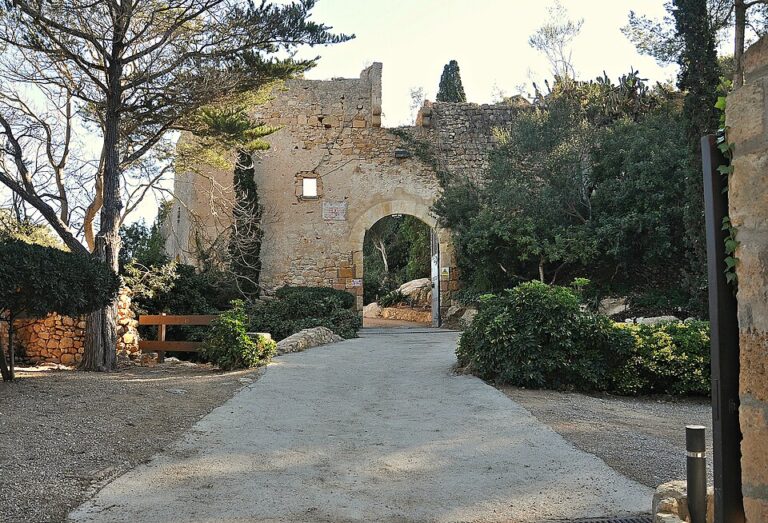
The Part Alta is the historic upper town, and it holds the cathedral, the Roman walls and the town hall. Catalunya.com advises exploring it on foot. It suits couples and history-minded visitors who want to walk to the monuments in the morning and to Miracle beach in the afternoon. Expect streets that climb the hill.
Near Miracle beach and the harbour
Miracle (Comandància) beach is the closest beach to the centre, according to the Costa Daurada tourist board, and it is one of the gateways to El Serrallo, the traditional fishing quarter, about 1.4 km from the town hall. Sleeping here puts sand, harbour and old town within reach on foot, and it is the best base if the beach matters more than the ruins.
Outside the centre
Tamarit beach is about 9 km from the town hall, on the boundary with Altafulla. Staying out here makes sense if you have a car and want a long beach and quiet evenings rather than city life, but you will drive or take a bus for most sightseeing.
Things to do
The Roman sites are close together, and most of the old town can be seen on foot in a day. Add a second day for the aqueduct, the museum and the beach.
Roman Tarraco
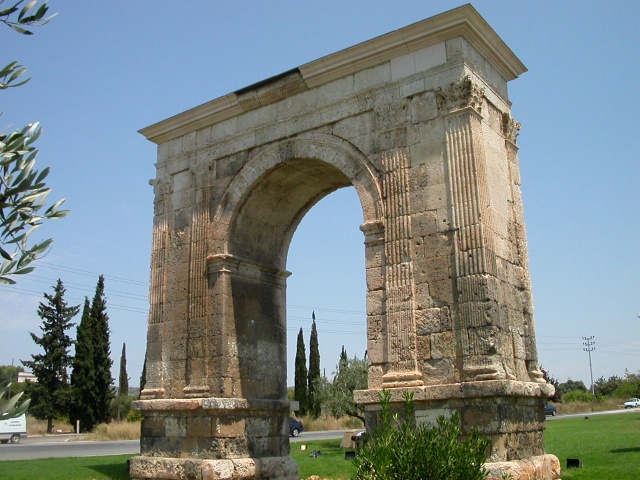
UNESCO describes Tarraco as the first and oldest Roman settlement on the Iberian Peninsula. The World Heritage listing includes the Roman walls, the circus, the amphitheatre, the Les Ferreres aqueduct, the Tower of the Scipios, the Mèdol quarry, the Centcelles villa, the Els Munts villa and the Berà Arch. UNESCO also notes that the town plan was adapted to the terrain by a series of artificial terraces, which is why the Roman city climbs the hill in steps.
The amphitheatre
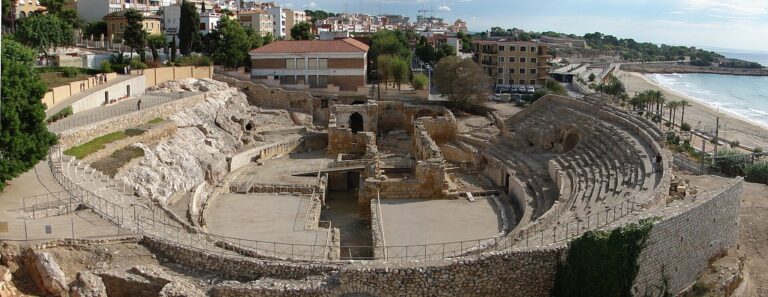
The elliptical amphitheatre dates from the 2nd century AD and held 14,000 spectators, according to the Costa Daurada tourist board. It was built outside the city on a rocky slope, which gave the seating its shape, and the sea is the backdrop. It was used for gladiator combats, simulated wild animal hunts and public executions. In 259 AD Bishop Fructuosus and his deacons Augurius and Eulogius were burned alive in the arena; a basilica was built there in the early 6th century and the church of Santa Maria del Miracle in the 12th. Opening times and ticket prices change, so check with the Tarragona Museum of History, which manages the site, before you go.
The cathedral
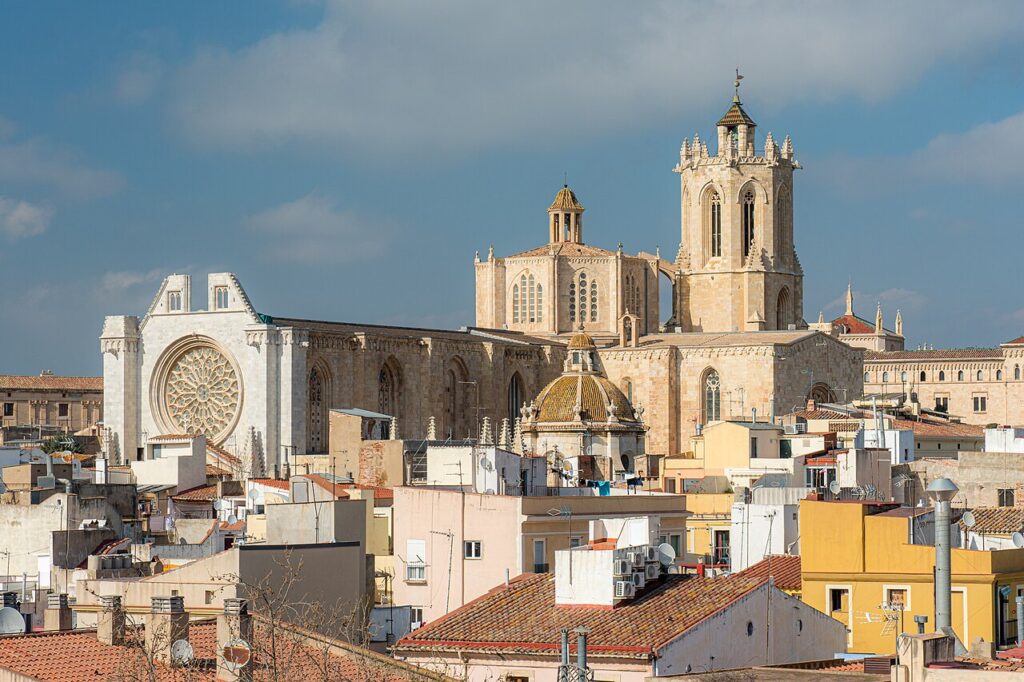
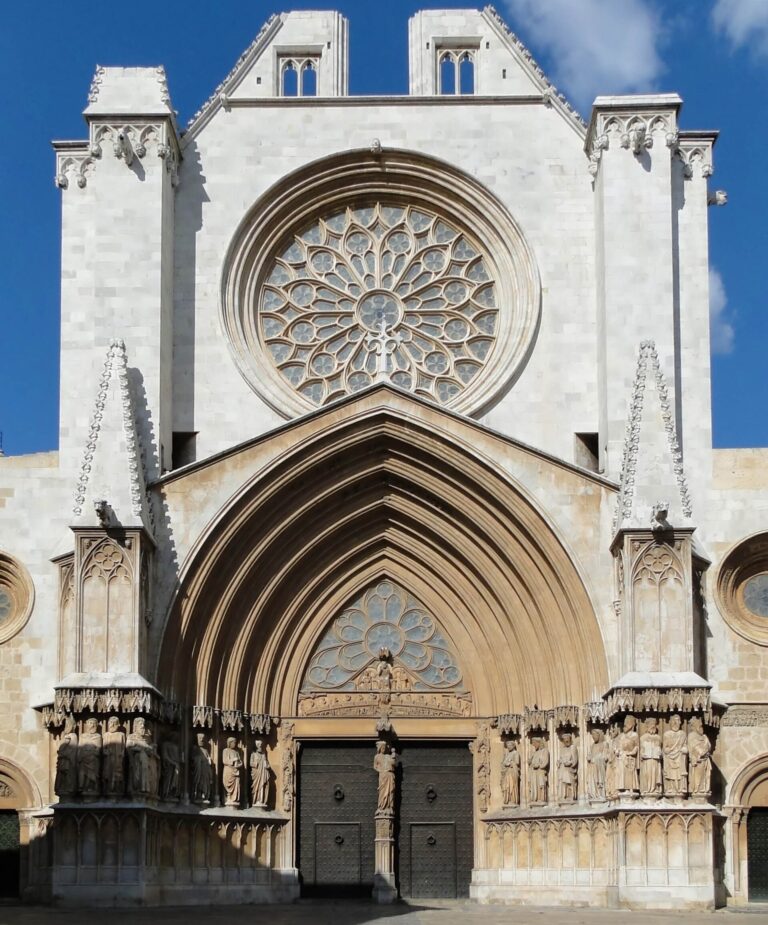
The cathedral stands on the highest point of the city and is dedicated to St Thecla. It was begun in the 12th century and is a Romanesque basilica with three naves that moves towards the Gothic from the transept. The cloister was built between the end of the 12th century and the late 13th century, and the Diocesan Museum is entered from it.
National Archaeological Museum
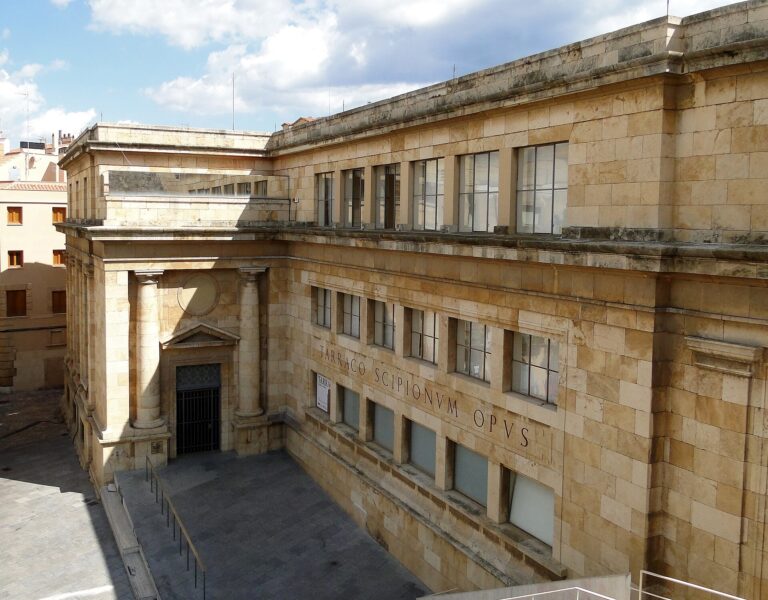
The National Archaeological Museum of Tarragona (MNAT), at Plaça del Rei 5, holds most of the finds from excavations in the city over the past 150 years. Emperor Hadrian lived in Tarraco during the winter of 121–122 AD, and the museum uses his memories as one of its themes. It is the best place to understand what you have just seen in the ruins.
Les Ferreres aqueduct (Devil’s Bridge)
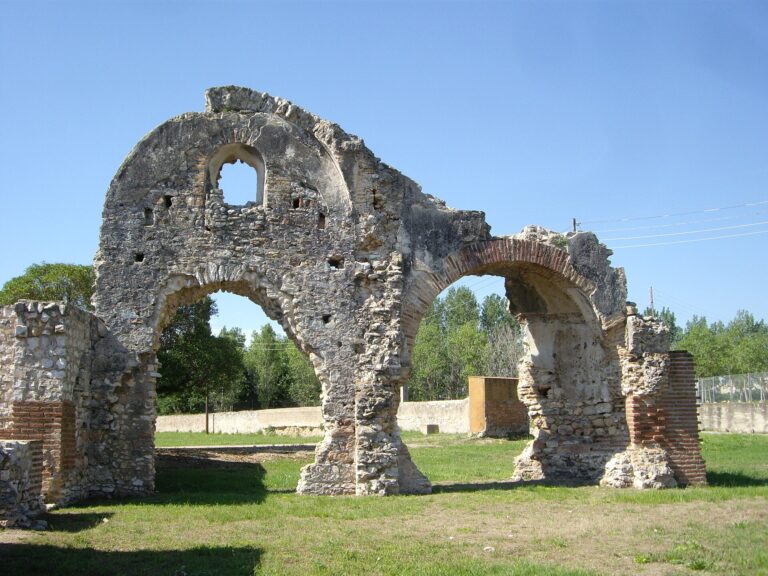
The aqueduct is a short trip out of town, on the N-240 towards Lleida, about 3 km from the town hall in a straight line (our calculation); the tourist board gives the address as 4 km along the road. The bridge was built in the 1st century BC to cross a natural valley. It has two rows of arches and is 217 m long, 27 m high and almost 2 m wide. It is managed by the Tarragona Museum of History.
Roman festival
Tarraco Viva, the city’s Roman festival, ran from 11 to 24 May in its 28th edition in 2026. The tourist board describes it as turning the city into a stage of ancient Rome with historical outreach events. Dates change each year, so look at the Costa Daurada agenda before planning around it.
Beaches and places nearby
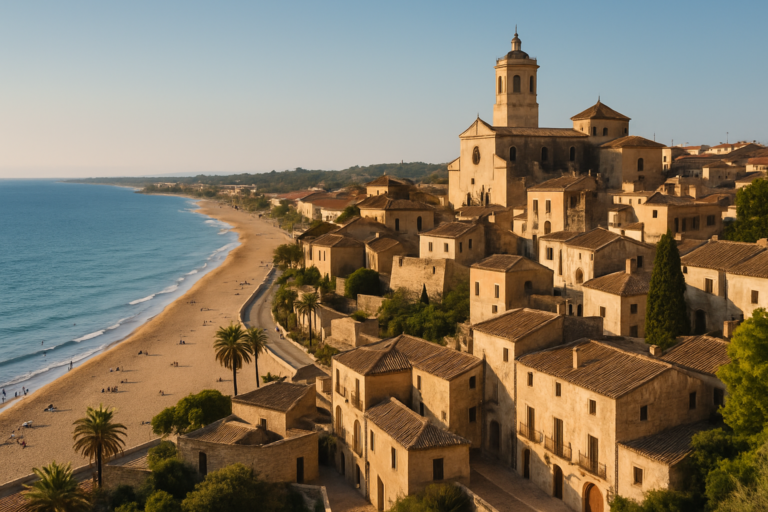
Tarragona has five beaches within the municipality that the Costa Daurada tourist board describes, from the city to the boundary with Altafulla. We give lengths from that source and do not name any Blue Flag status, because the tourist board lists the flag without a year.
- Miracle (Comandància): some 500 metres long, with fine golden sand, seafront parking, beach bars and a designated area for dogs. It is the closest beach to the centre.
- Arrabassada: about 550 metres long. A coastal footpath connects Tarragona’s beaches with those of Altafulla and Torredembarra.
- La Savinosa: some 350 metres long, and one of the few beaches on the Costa Daurada where nudists and non-nudists mix.
- La Móra: about 520 metres long, inside the Punta de la Móra Special Natural Interest Plan.
- Tamarit: 1,700 metres of fine golden sand, Tarragona’s northernmost beach. The bus stop is at the start of the footpath to Tamarit Castle, and the beach is about a kilometre on foot from there.
For a bigger resort beach, Salou is about 10 km away in a straight line and Cambrils about 17 km. Reus, about 13 km inland, is the place for Modernista architecture; Catalunya.com says its Ruta del Modernisme takes in twenty-seven buildings.
Other town guides nearby: Torredembarra (about 12 km in a straight line), El Vendrell (about 26 km in a straight line), Calafell (about 28 km in a straight line).
On CostaMap near Tarragona: National Archaeological Museum of Tarragona (0.4 km) · Tarragona Cathedral (0.4 km) · Tarragona Amphitheatre (0.5 km) · Roman Villa of Centcelles (4.9 km) · PortAventura World (8.8 km).
Food and drink
Tarragona’s own food scene is built around its harbour. El Serrallo is the city’s traditional fishing quarter, and Miracle beach is one of the ways in, so it is the natural place to start looking for fish and seafood. For the wider area, Catalunya.com lists xató, calçotada, wild boar civet, menjar blanc and rossejat de fideus as local recipes built on the products of the Costa Daurada counties.
Restaurant listings change quickly, so we do not name places we could not verify. We did not find a confirmed market day, so ask at the tourist office when you arrive.
Where to stay
We found no reliable source for hotel numbers or prices in Tarragona, so we give only the general picture. Expect city hotels and apartments in and around the old town, with a smaller choice right at the beach, and campsites and larger resort properties along the coast outside the city. Prices vary by season and by how close you are to Miracle beach or the Part Alta, so compare current rates. If you want a resort-style stay with kids’ clubs and pools, Salou and Cambrils are better matched than the city.
Getting there and around
Reus Airport is the nearest airport, about 9 km from the centre in a straight line (our calculation). Aena lists a Hispano Igualadina bus from the airport to Tarragona, timed to flight arrivals, so check the current timetable. Aena also notes that there is no direct link between the airport and the Camp de Tarragona high-speed station; you change at Reus bus station.
By train, Rodalies line R16 connects Barcelona with Tortosa and Ulldecona via Tarragona, and line R14 runs from Barcelona to Lleida via Tarragona and Reus, according to Rodalies de Catalunya. Local line RT1 links Tarragona and Reus. We did not confirm train frequencies or journey times, so check them with Rodalies or Renfe before you travel.
By car, the Roman sites and the old town are best done on foot, since the upper town has narrow streets. The aqueduct and Tamarit are the two places where a car or bus helps. We did not find a source for parking prices or rules, so look for signs on arrival.
Best time to visit
The nearest AEMET climate station is Reus Airport, about 9 km inland and 71 m above sea level, so figures there are a guide rather than a measurement for the seafront. The 1981–2010 normals show January averaging 9.0°C (14.1°C highs, 3.9°C lows), April 13.8°C, July 24.2°C with 29.3°C highs and only 15 mm of rain, and October 17.5°C with 75 mm. Reus gets 306 hours of sunshine in July and 157 in January, and about 500 mm of rain over the year.
For ruins and walking, spring and October are the milder months in those figures. For swimming, July and August are the warmest, with August averaging 24.6°C at Reus.
FAQ
Is Tarragona worth visiting?
Yes, if you want Roman history and a city beach together. UNESCO lists the Archaeological Ensemble of Tárraco as World Heritage, and Miracle beach is a short walk from the old town.
Does Tarragona have a beach?
Yes. Miracle beach is the closest to the centre and is some 500 metres long. Tamarit, at 1,700 metres, is the longest of the five beaches listed above.
How far is Tarragona from the airport?
Reus Airport is about 9 km from the centre in a straight line (our calculation). There is a bus from the airport to Tarragona timed to flight arrivals, according to Aena.
How many people live in Tarragona?
143,649 on 1 January 2025, according to INE.
Can I reach Tarragona by train from Barcelona?
Yes. Rodalies lines R14 and R16 both run from Barcelona via Tarragona. Check Rodalies or Renfe for timetables.
Sources and freshness
Last checked: October 2026. Sources: UNESCO, Archaeological Ensemble of Tárraco; INE, population of Tarragona municipalities; Catalunya.com, Costa Daurada; Catalunya.com, Reus; Rodalies de Catalunya, line R14;Catalunya.com, Tarragona; Costa Daurada, Roman amphitheatre; Costa Daurada, Les Ferreres aqueduct; Costa Daurada, Tarragona Cathedral; Costa Daurada, National Archaeological Museum; Costa Daurada, Miracle beach; Costa Daurada, Tamarit beach; Costa Daurada, Tarraco Viva; Aena, Reus Airport buses; Rodalies de Catalunya, line R16; AEMET, Reus Airport normals 1981–2010.
Main photo: Fernando, CC BY-SA 4.0, via Wikimedia Commons.
Nearby on the Costa Dorada
Tarragona on the map
Places worth knowing near Tarragona
How this page is maintained. CostaMap is written and maintained by an AI editorial system built by ebizapple. Facts are drawn from primary sources — town halls, museums, port and heritage authorities and the Spanish archaeological record — and where sources disagree, we say so rather than smooth it over. Photographs marked as ours are taken on location. This page was last reviewed on 29 October 2026. Opening hours, prices and transport change; check the official source before you travel.