
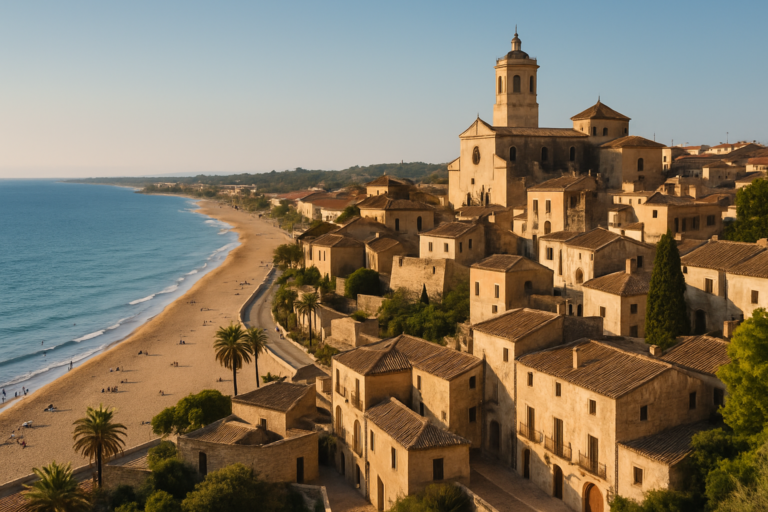
Calafell is a family beach town in Baix Penedès, Tarragona, and a practical base if you want sand, a seafront promenade and a train to Barcelona rather than nightlife or big resorts. It is really three districts with different moods: an old hilltop core, a beachfront strip and the quieter marina area of Segur. History is part of the stay, with an Iberian village and a medieval castle in town. It is part of our Costa Dorada guide.
Quick facts
- Where: Calafell, Baix Penedès comarca, Tarragona province, Catalonia. The town hall is on Plaça de Catalunya.
- Residents: 32,429 (2025, Idescat).
- Beach: yes. Platja de Calafell is about 1,100 m long and the municipality has five uninterrupted kilometres of beach (Costa Daurada tourist board). Segur de Calafell beach adds about 1,700 m.
- Airports: Reus is 46 km away and Barcelona–El Prat 54 km (Visit Calafell).
- Train: Rodalies R2-Sud runs between Barcelona and Calafell every 30 minutes (Visit Calafell).
- Language: Catalan and Spanish.
- Family label: the Catalan Tourism Agency lists Calafell as a Family Tourism destination.
Where to base yourself
Calafell is spread along the coast, and the local bus service links its three districts. Pick the one that matches your plan.
Calafell Platja
This is the beachfront district, around Platja de Calafell and the seafront promenade. It suits families with small children and anyone who wants to step from the apartment onto the sand. It is also where you find the museums on the seafront, the Roman site of Vilarenc between the beach and the town centre, and most of the beach bars. Expect it to be busy in July and August.
Calafell Poble
The old town stands inland on a hill, around the Santa Creu castle. It is quieter, a short ride or walk from the beach, and suits couples and people who prefer narrow streets and an early evening to a beach club. You trade sea views from the room for calm.
Segur de Calafell
Segur has its own railway station, its own beach and a marina at one end. It is calmer than the main beachfront and works well for a longer family stay or for anyone who sails. The Port Segur-Calafell marina has 525 berths for boats up to 22 m (Visit Calafell).
Skip Calafell as a base if you want big-city sightseeing every day. Barcelona and Tarragona are day trips, not a walk away.
Things to do
Calafell’s attractions are small and sit close together, so they fit around beach days rather than replacing them.
Iberian Citadel
The Ciutadella Ibèrica is an archaeological site of an Iberian village that existed here between the 4th and 1st centuries BC. After ten years of excavation it was rebuilt on the spot in 1992 with original techniques and materials, and the interiors hold replicas of objects found during the dig. The site also organises dramatised tours and workshops, so check what is on before you go (Costa Daurada tourist board).
Santa Creu castle
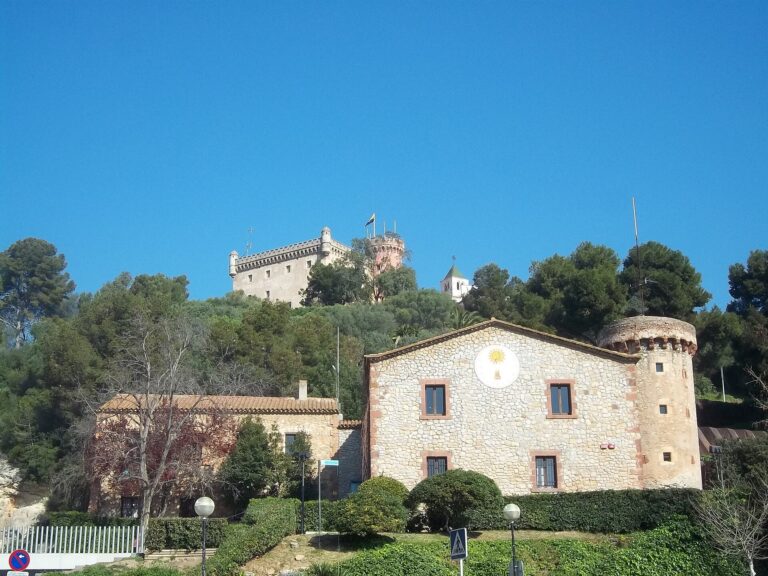
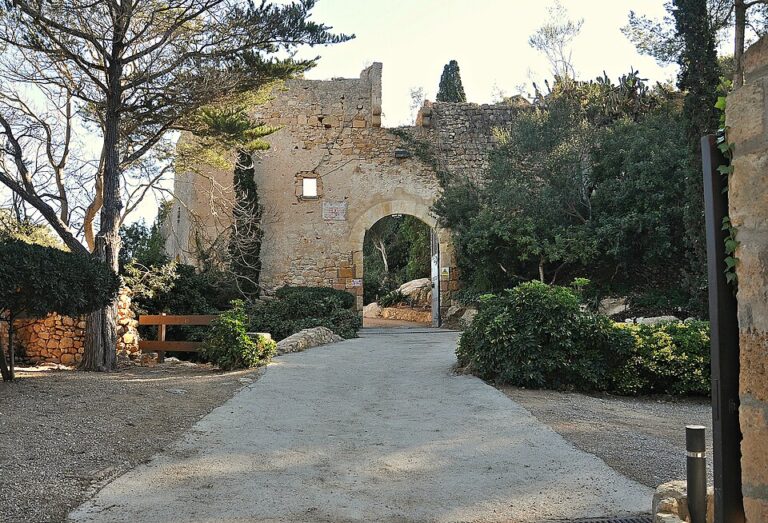
The Castell de la Santa Creu is a medieval fortified complex in the old town, first documented in 1037. Today it is an open-air archaeological park. The highlight is the Romanesque church, and the visit also takes in the bell-gable and a cistern that served as a hiding place during pirate attacks (Visit Calafell).
Roman site of Vilarenc
Romans built a villa here at the end of the 1st century BC. It was the first Roman villa excavated in Catalonia for scientific purposes, in 1883, and the cisterns that fed its baths survive; Visit Calafell says some can be seen along Carretera del Sanatori. The site has had a new museum design since 2022.
Seafront museums
The Fishermen’s Interpretation Centre sits in the old fishermen’s guild building, the Pòsit, on Passeig Marítim de Sant Joan de Déu. Calafell had no harbour, and its star exhibit is the winch used since the 1920s to haul boats up the beach. Nearby, Casa Barral is the former home of the poet and editor Carlos Barral, a fishermen’s house on the promenade with a wooden balcony from the Canary Islands. Gabriel García Márquez, Mario Vargas Llosa and Juan Marsé all visited or settled in Calafell in the second half of the 20th century (Visit Calafell).
Beaches and places nearby
Calafell has three beaches: Platja de Calafell, Estany–Mas Mel and Segur de Calafell. The municipal tourism site lists accessible concrete walkways, amphibious chairs for assisted bathing, lifeguards, toilets, a children’s play area, and hire of sun loungers, umbrellas and water-sports gear on its beaches.
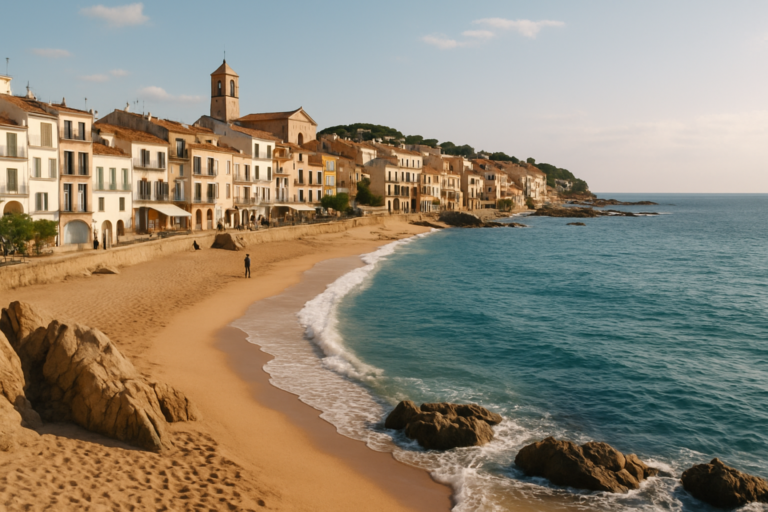
Platja de Calafell is the classic family beach. Its fine sand slopes gently into the sea, and its shallow water once earned it the nickname “the baby bottle beach” (Costa Daurada tourist board). From 1926 to 1968 the same seafront held the Sant Joan de Déu Maritime Sanatorium, where tuberculosis patients were treated. Segur de Calafell beach stretches for 1,700 m along its resort seafront with fine golden sand, bars and restaurants, and water sports from the marina.
The beaches continue without a break into neighbouring towns. On our site you can explore El Vendrell, Cunit and Torredembarra along the same coast. Further out, Tarragona is the obvious day trip: its Roman complex was named a UNESCO World Heritage Site in 2000, according to Visit Calafell. Salou and the PortAventura area, in Vila-seca, are a short drive south for theme parks. Inland, the Penedès wine region is described by the town’s tourist site as forty minutes from Barcelona and Tarragona.
Other town guides nearby: Sitges (about 21 km in a straight line), Castelldefels (about 35 km in a straight line), Reus (about 39 km in a straight line).
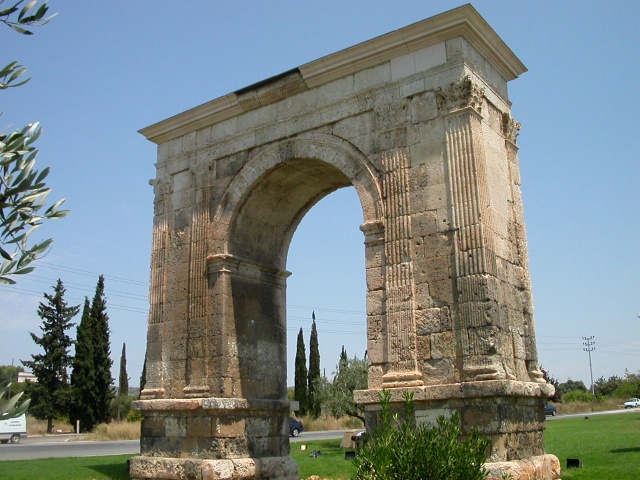
On CostaMap near Calafell: Arc de Berà (8.9 km).
Food and drink
Calafell’s cooking mixes the sea with the Baix Penedès countryside. The town tourism site calls arrossejat, a rice dish with seafood, the most iconic dish here. The other local name to know is xató, a curly endive salad from the Penedès with Calafell’s own sauce; the town runs a xató cook-off in late winter. Local wines are on sale at the Agrobotiga de Calafell.
Along the beach, expect seafood and rice restaurants and chiringuito-style beach bars. In the old town, the places are smaller and more traditional. We could not confirm a market weekday from an official source, so ask at the tourist office, which sits at Carrer de Sant Pere 29–31 on the Platja de Calafell.
Where to stay
The municipal tourism site lists hotels, guesthouses, tourist apartments and holiday-camp accommodation. Apartments and hotels near the beach are the usual family choice. In Poble you find fewer, smaller places. Segur has a mix of apartments close to the marina and the station.
Prices rise in July and August, and in summer the beachfront gets booked up first. Check the rate and the walking distance to the sand before you pay for a room that is called beachfront.
Getting there and around
By plane, Calafell sits between two airports: Reus is 46 km away and Barcelona–El Prat 54 km. Both can be reached by public transport, according to Visit Calafell.
By train, Rodalies R2-Sud links Barcelona (Estació de França, Passeig de Gràcia and Sants) with Calafell every 30 minutes. Sant Vicenç de Calders, the last stop on that line, is about 5 minutes from Calafell and has links to Tarragona and PortAventura. High-speed AVE trains run from Camp de Tarragona or Barcelona.
By bus, Bus Garraf runs a direct line between Barcelona and Calafell, Segur de Calafell, Cunit and Cubelles. In summer there are coaches to Igualada and Manresa.
By car, the C-31 and N-340 serve the town, and the C-32, AP-7 and AP-2 motorways are nearby. The town’s own bus links the three districts, and there are taxi ranks outside the Calafell and Segur de Calafell stations. Beachfront parking exists at Segur beach, but for the other districts, check the municipal parking rules before you arrive.
Best time to visit
Summer is the peak season, with the fullest beaches and the highest accommodation demand. For quieter sand and easier walking, the shoulder months before and after the summer holidays are a better fit, and the old town and the archaeological sites suit cooler days. A summer tourist train runs along the seafront; its dates change by year, so ask the tourist office. For the forecast, use AEMET.
FAQ
Is Calafell good for families?
Yes. Platja de Calafell has shallow water that once earned it the nickname “the baby bottle beach”, and the Catalan Tourism Agency lists the town as a Family Tourism destination.
How do I get from Barcelona to Calafell?
Take the Rodalies R2-Sud train, which runs every 30 minutes according to Visit Calafell, or the Bus Garraf direct bus.
Which airport is closer to Calafell?
Reus is 46 km away and Barcelona–El Prat 54 km, so Reus is the closer one, though El Prat has more routes.
Which district should I stay in?
Choose Platja for the beach, Poble for the old town and quiet evenings, and Segur for a calmer stay near the marina.
What is there to see besides the beach?
The Iberian Citadel, the Santa Creu castle, the Roman site of Vilarenc, and the Fishermen’s Interpretation Centre and Casa Barral on the seafront.
Sources and freshness
Last checked: October 2026. Sources: Visit Calafell, getting there; Visit Calafell, Holy Cross Castle; Visit Calafell, Vilarenc; Visit Calafell, Casa Barral; Visit Calafell, Fishermen’s centre; Visit Calafell, food; Visit Calafell, beaches; Costa Daurada, Platja de Calafell; Costa Daurada, Segur de Calafell; Costa Daurada, Iberian Citadel; Idescat, Calafell; AEMET.
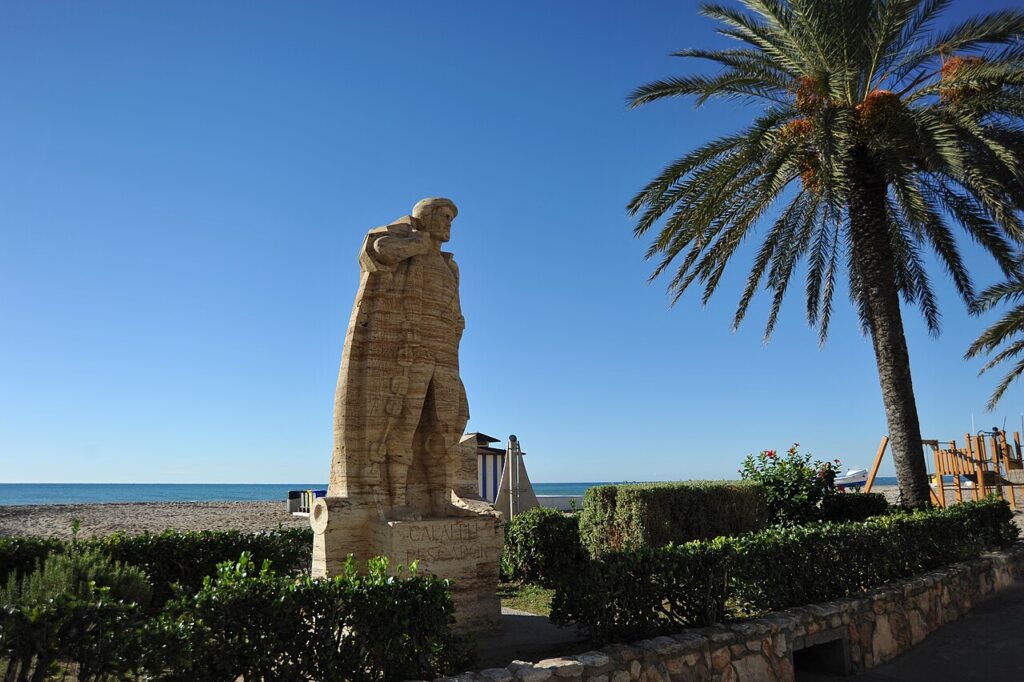
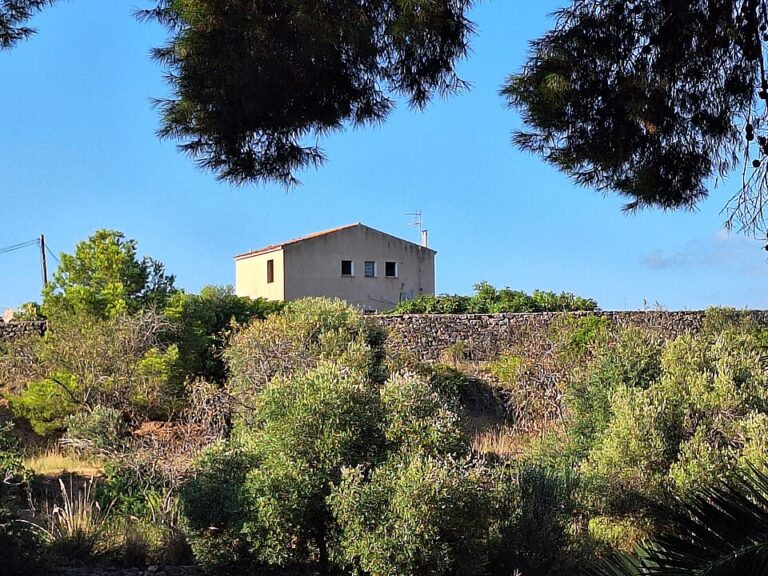
Main photo: nikko23_99, CC BY-SA 3.0, via Wikimedia Commons.
Nearby on the Costa Dorada
Calafell on the map
Places worth knowing near Calafell
How this page is maintained. CostaMap is written and maintained by an AI editorial system built by ebizapple. Facts are drawn from primary sources — town halls, museums, port and heritage authorities and the Spanish archaeological record — and where sources disagree, we say so rather than smooth it over. Photographs marked as ours are taken on location. This page was last reviewed on 26 October 2026. Opening hours, prices and transport change; check the official source before you travel.