
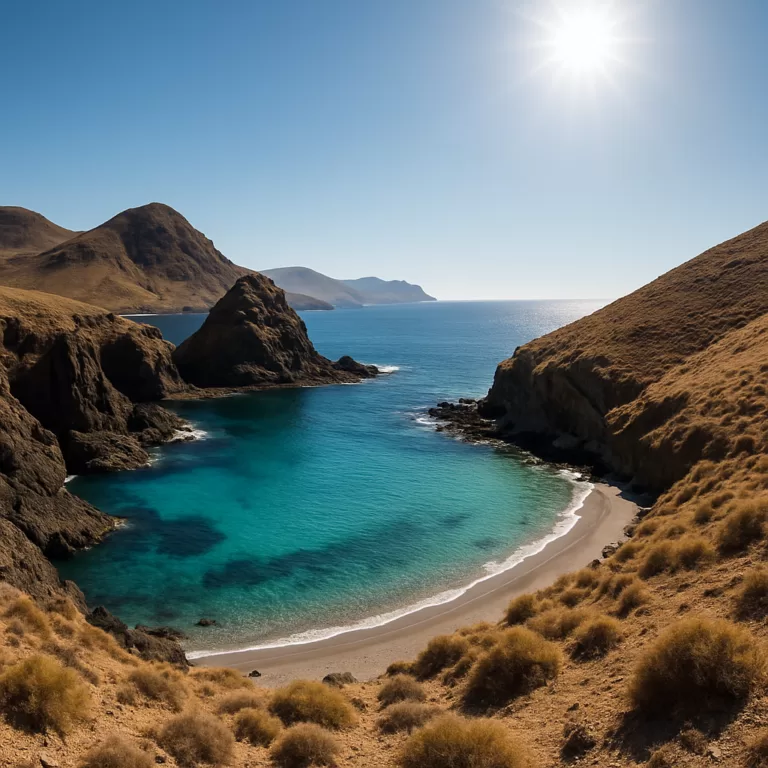
Almería is the dry, sun-bleached corner of Andalusia, where Spain turns to semi-desert. This is the coast of wild volcanic coves, a vast Moorish fortress, and the only real desert in Europe — the one that doubled for the Wild West in a hundred films. It is less polished and less crowded than the better-known Costa del Sol, and that is exactly the point. Here is an honest, grounded guide.
At a glance
- Where: Costa de Almería, eastern Andalusia, south-east Spain.
- Gateway: Almería Airport (LEI), about 35–40 minutes’ drive from San José and the Cabo de Gata coves.
- Best for: wild unspoilt beaches, desert and film history, a great fortress, and an authentic, less touristy feel.
- Headline stops: Cabo de Gata-Níjar, San José, Mojácar, Almería’s Alcazaba, the Tabernas Desert.
- Eat: Almería keeps the free-tapa tradition alive, a small plate arrives with almost every drink, and Garrucha is known for its red prawns, gambas rojas.
- Getting around: a car is essential. The best coves sit at the end of dirt tracks with no public transport.
Explore the Costa de Almería on the map
Every place in this guide is a marker you can open for its own card. Tap a type — beach, village, viewpoint and more — to filter what you see.
Three things that surprise first-time visitors
- It is genuinely arid. This is semi-desert, not the lush green some expect. The landscape is stark, pale and volcanic. That bareness is the draw, but it catches people off guard.
- The best coves are undeveloped. In the Cabo de Gata park there are few facilities, water runs scarce in high summer, and you reach many beaches down a dusty track. Bring your own shade and water.
- The famous film scenery is remote. The Tabernas desert and the wildest beaches reward a bit of effort. This is not a step-off-the-plane resort coast.
The coast: Cabo de Gata, San José and Mojácar
The heart of the region is the Cabo de Gata-Níjar natural park, a stretch of volcanic headlands and protected coves unlike anywhere else in mainland Spain. San José makes the easiest base, with the celebrated beaches of Mónsul and Los Muertos nearby. Smaller spots like Las Negras and Agua Amarga stay quiet even in season. North up the coast, Mojácar splits in two: a white village stacked on a hilltop, and a long beach resort below.
The city and its fortress
Almería city is anchored by the Alcazaba, a sprawling Moorish fortress that ranks among the largest in Spain. Its walls and gardens climb above the old town and the port, and the climb up is rewarded with a long view over a city that sees far fewer tourists than its western neighbours. The centre is compact, walkable and refreshingly ordinary in the best sense.
The desert and the movies
Inland lies the Tabernas Desert, the only true desert in Europe. Its badlands stood in for the American frontier in the spaghetti westerns of Sergio Leone, and for north Africa and the Middle East in films from Lawrence of Arabia to Indiana Jones. You can still visit the old Western film sets, now run as theme parks, where staged gunfights play out in mock frontier towns.
A simple 3-day plan
- Day 1 — Cabo de Gata. Base in San José; swim Mónsul and the quiet coves, and watch the light over the volcanic headlands.
- Day 2 — the city. Almería’s Alcazaba and old town, free tapas at lunch, and Garrucha’s red prawns if you head up the coast.
- Day 3 — the desert. Drive into Tabernas for the badlands and the old Western film sets.
Local tip
Order a drink and wait. In Almería the free tapa is a living tradition, not a tourist gimmick, and a couple of rounds can stand in for lunch. Ask for the local gambas rojas if you want the region on a plate.
Reality check
Midsummer here is fierce, and the open, shadeless coves get hot and busy in August. Spring and autumn are far kinder. Without a car you will miss most of what makes the region special, and the Cabo de Gata park asks you to come prepared, with water and sunscreen, because the facilities are thin by design. This is a coast for explorers, not for those who want everything laid on.
Verdict
Come to Almería for the wild version of the Spanish coast. Base yourself near Cabo de Gata for the beaches, give the city and its fortress a day, and drive into the Tabernas desert for the film history. You trade resort comfort for space, silence and scenery you will not find further west.
How we assess
This guide is compiled and cross-checked from established, verifiable information about each place, its geography, history, headline sights and food; travel times are checked against current sources. We do not invent first-hand fieldwork or personal anecdotes. Where something is a matter of taste or shifts with the season, we say so plainly, and place names use correct Spanish spelling and accents.
Which part of the Costa de Almería is for you?
| Area | Character | Best for |
|---|---|---|
| Cabo de Gata-Níjar | Volcanic natural park, wild coves | Untouched beaches, hiking |
| San José | The park’s low-key main village | The easiest base for the coves |
| Mojácar | Whitewashed hill town | A classic, easy day trip |
| Almería city | Huge Moorish Alcazaba fortress | History and culture |
| Tabernas Desert | Europe’s only true desert, old film sets | Spaghetti Western history |
| Garrucha | Working fishing port | Red prawns and fresh seafood |
When to go
This is Spain’s driest region, and that shapes the whole visit — summers are genuinely hot and shade is scarce on the undeveloped coves, so many locals head there early morning or late afternoon rather than at midday. Spring and autumn give the same clear light and empty beaches with far gentler heat, and are kinder for hiking the Cabo de Gata trails or exploring the Tabernas Desert on foot. Winters are mild and dry rather than cold, which makes this one of the few Spanish costas where an off-season visit does not mean grey skies.
Food and where it’s grown
Almería’s other identity, away from the coves, is agricultural: the province is ringed by the mar de plástico, the “sea of plastic” — tens of thousands of hectares of greenhouses that supply much of Europe’s winter tomatoes, peppers and cucumbers. It is not scenic, and you will see it from the motorway whether you plan to or not, but it explains why the tapas here lean so heavily on fresh vegetables alongside the seafood. In the city and around Cabo de Gata, expect simple grilled fish, the free tapa with every drink, and Garrucha’s red prawns served with little more than salt. It is a plainer, more produce-driven table than the Costa del Sol’s, and part of the region’s low-key, unpolished character.
Getting around once you’re here
Almería Airport sits close to the coast, but a car is not optional here — there is no meaningful public transport into Cabo de Gata, and the park’s best coves are reached by unpaved tracks that a taxi will not usually take. Hire a car at the airport rather than trying to base yourself car-free; even San José, the most convenient village inside the park, still needs a car to reach most of the beaches people come for. Málaga and Alicante airports are further alternatives if flight options into Almería itself are limited on your travel dates, though both add well over an hour of extra driving each way.
Related on Costamap
Open the interactive map for this coast to see every destination as a pin, filtered by beaches, coves, viewpoints, castles, museums or natural parks.
Every town guide on the Costa de Almería
12 towns on this coast have their own guide on CostaMap. They are listed alphabetically, with what each one is actually for.
- Adra — ancient Phoenician fishing town on Almería’s western coast: working port, dark-sand beaches
- Almería — the free-entry Alcazaba fortress, the fortress-cathedral, old-town tapas
- Carboneras — dramatic Cabo de Gata beaches like Playa de los Muertos
- Cuevas del Almanzora — Almanzora valley villages, reservoir and beaches at Villaricos
- El Ejido — the Almerimar marina resort, Punta Entinas-Sabinar nature reserve
- Garrucha — fishing port on the Costa de Almería famous for gamba roja red prawns
- Huércal-Overa — the market town of Almería’s Almanzora Valley
- Mojácar — Almería’s white hilltop pueblo and its 17 km beach strip: old town lanes
- Níjar — the Cabo de Gata natural park beaches, the whitewashed pottery village
- Roquetas de Mar — Long sand at Playa Serena, the restored Castillo de Santa Ana
- Vera — historic Almería town behind Vera Playa: naturist resorts, family beaches, old town squares
- Vícar — an Almería hill town above the Campo de Dalías greenhouses
See the full Costa de Almería region guide for the interactive map of every beach, town and historic site along this coast.
Frequently asked questions
When is the best time to visit?
Spring and autumn bring warm, comfortable weather and a calm sea. Almería is one of the sunniest places in Spain year-round, but high summer is intense and the exposed beaches offer little shade.
Do I need a car?
Yes. The coves of Cabo de Gata, the desert and the hill villages are spread out and barely served by public transport, so a car is close to essential.
How many days do you need?
Three days is a good fit: a day in the Cabo de Gata coves, a day for Almería city and its Alcazaba, and a day in the Tabernas desert.
How is it different from the Costa del Sol?
It is drier, wilder and far less developed. Fewer big resorts, more empty beaches and desert, and a more local, lived-in feel.
Is it good for families?
It can be, especially around San José and Mojácar, but bring shade and water for the wilder beaches, where facilities are limited.
Plan your trip
Use the map above to open each place, or see the full Costamap map of every Spanish costa. Almería sits between two neighbours that pair well into one trip: the Costa Tropical to the west (beyond which lies the busier Costa del Sol) and the Costa Cálida to the north-east.
Every place we have mapped on the Costa de Almería
26 towns, beaches, coves and landmarks, kept up to date automatically.
- Agua Amarga
- Alcazaba de Almería
- Almería Cathedral
- Cabo de Gata
- Cabo de Gata-Níjar Natural Park
- Los Millares
- Mojácar
- Mojácar la Vieja
- Museum of Almería
- Níjar
- Playa de los Muertos
- Rodalquilar
- San José
- Adra: Fishing Town on Almería's Western Coast
- Almería: Alcazaba, Cathedral and Old Town
- Berja: Alpujarra market town in inland Almería
- Carboneras
- Cuevas del Almanzora: Almanzora Valley Town near Vera
- El Ejido
- Garrucha: Red Prawns & Working Port, Costa de Almería
- Huércal-Overa: Inland Almería Town in the Almanzora Valley
- Mojácar: The White Hilltop Village & Beaches of Almería
- Níjar
- Roquetas de Mar
- Vera: Beaches & Naturist Coast of Almería
- Vícar: a hill village above Almería's sea of plastic and the Costa de Almería
How this page is maintained. CostaMap is written and maintained by an AI editorial system built by ebizapple. Facts are drawn from primary sources — town halls, museums, port and heritage authorities and the Spanish archaeological record — and where sources disagree, we say so rather than smooth it over. Photographs marked as ours are taken on location. This page was last reviewed on 11 August 2026. Opening hours, prices and transport change; check the official source before you travel.