
Expect a compact working fishing town with roots that run deep: you’ll find seafood tapas, a handful of beaches, a small museum that traces ancient trade links and a landscape shaped by a coastal wetland. This is not a polished resort strip; it’s a place where industry, farming and ritual festivals give the streets their rhythm. Go knowing what it is — and what it isn’t — and you’ll leave satisfied rather than disappointed.
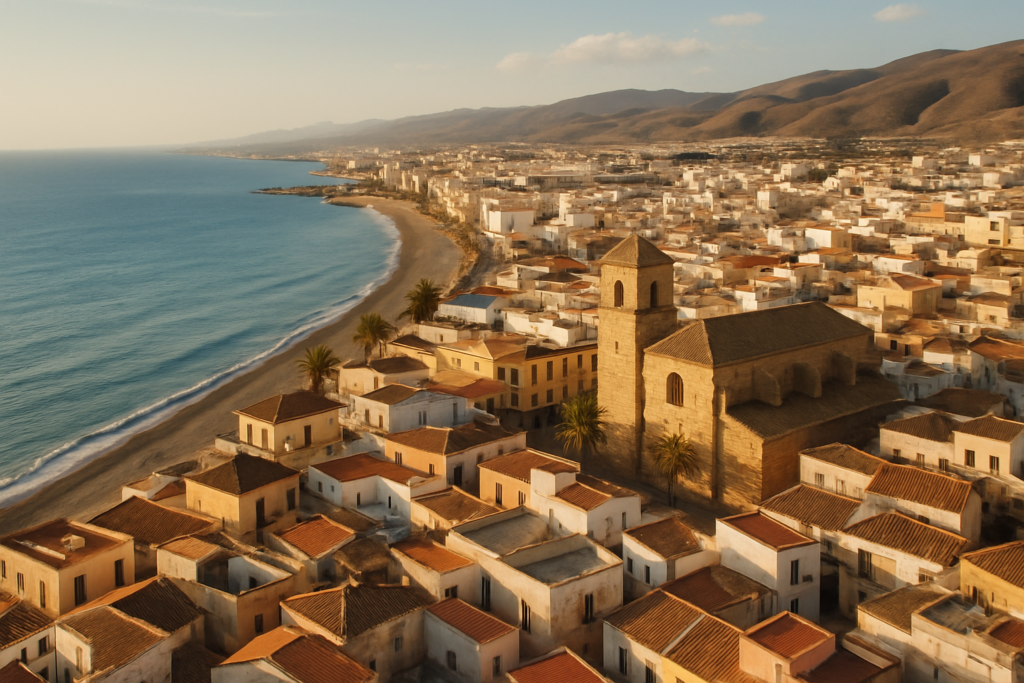
Adra at a glance
- Small coastal municipality in Almería, Andalucía — about 25,000 residents as of recent municipal data.
- Three main beaches to choose from: Poniente, San Nicolás and Censo.
- Barceló Mirador de Adra is the only hotel in town.
- Fishing and seafood tapas are the culinary specialty; the town has several tapas bars focusing on seafood.
- Important local dates: San Marcos (April 25) and the annual fair from September 5–10.
- Accessible by road on the A-7; nearest major international airport is in Málaga and the closest train station is in Almería.
- The Albufera de Adra is a protected wetland listed under Ramsar.
Before you plan
Some local institutions have changed: the regional football club known as C.F. Adra is now defunct. Plan visits to any sporting fixtures or club-related events accordingly — don’t expect active home matches under that club name.
Things to do in the town
Activities here concentrate on the sea, local history and seasonal festivals. You’ll spend time on beaches, in tapas bars, wandering the compact historic centre and visiting the small museum that collects Phoenician, Punic and Roman material. The protected wetland is the main natural highlight for birdlife and shoreline habitats.
| Attraction | What it is | Price/entry | Best for |
|---|---|---|---|
| Adra Museum | Local archaeological and cultural collections showing Phoenician, Punic and Roman legacy | – | History buffs, rainy days |
| Albufera de Adra | Protected wetland on the Ramsar list | – | Birdwatchers, nature walks |
| Defensive walls and old town | Surviving sections of 16th-century walls and compact historic streets | – | Walkers, photography |
| Poniente / San Nicolás / Censo beaches | Three main beaches serving locals and visitors | – | Beachgoers, families |
Adra Museum and ancient threads
The museum concentrates the area’s deep history: the site was founded by Phoenician traders and later grew under Roman rule. Exhibits and displays link the modern harbour town to its role as a trading colony in antiquity and to later Mediterranean turnovers. If your visit is interrupted by weather or you want context for the town’s harbour and archaeology, the museum is the go‑to spot.
Wetland walks: Albufera de Adra
The Albufera is a protected wetland included on the Ramsar list of Wetlands of International Importance. It’s the natural counterpoint to the working coastline — an area to slow down, watch seasonal birds and see coastal habitats that benefit from conservation designations. Bring binoculars and expect an atmosphere more nature reserve than manicured park.
Historic walls and the old centre
Defensive walls built in the 16th century still survive in parts of the urban fabric. A short walk through the historic centre reveals those remnants alongside the town’s everyday life: seafood tapas bars, local shops and plazas where festivals gather crowds. Photography is rewarding without the crowds of larger Andalusian destinations.
Best beaches in the area
There are three named beaches serving the municipality; they are straightforward, local-focused stretches rather than resort promenades. Each is within easy reach of the town and suited to a relaxed seaside day.
| Beach | Character | Facilities / Blue Flag |
|---|---|---|
| Poniente | Main local beach, family-friendly | – |
| San Nicolás | Smaller, local atmosphere | – |
| Censo | One of the three principal beaches, quieter stretches possible | – |
Adra with kids
For families the town’s compact scale helps: beaches are close together and within easy reach of the centre, and the wetland reserve provides an educational outdoor option. The museum offers sheltered exploration when the weather closes in, while seafood tapas bars often welcome families in off-peak hours. There are no large theme parks in town — family plans work best when focused on beach time, nature walks and relaxed meals.
How to get to Adra and get around
Road access is straightforward: the A-7 connects the town to the coastal road network, making it convenient for drivers. For international flights, the nearest large international airport is in Málaga. Rail travellers should aim for Almería, which is the closest train station; from there you continue by road. Within the town, distances are short and most places are walkable; the compact urban centre concentrates bars, shops and the harbour.
| From | By | Approx time |
|---|---|---|
| Málaga (nearest large international airport) | Road | – |
| Almería (nearest train station) | Road from station | – |
| Regional roads / A-7 | Car or coach | – |
Where to stay in the resort
Accommodation options are limited in scale. The Barceló Mirador de Adra is the only hotel in town, so if you want a conventional hotel stay that is the principal choice. Otherwise visitors often stay in nearby towns or rent private apartments; the town centre is the natural base for tapas bars and short walks to the harbour and beaches.
Best time to visit
Your timing can be shaped by local festivals or by the simple desire for quieter streets. Two dates stand out: San Marcos on April 25 and the town fair from September 5–10. April’s San Marcos celebrations are important to local farmers and bring agricultural traditions into the public calendar, while the September fair is a major local event and is described as the second most important fair in the province of Almería.
| Season | Months | What to expect |
|---|---|---|
| Spring | Includes April 25 | San Marcos — agricultural and rural traditions visible in town life |
| Early autumn | September 5–10 | Town fair — one of the province’s more important fairs; lively local atmosphere |
| Year-round | – | Beaches and coastal walks available outside festival dates |
History of the area
The settlement has a long recorded lineage: originally founded by Phoenicians as a trading colony, it later rose in prominence during the Roman Empire. In the later medieval period the town was the last Moorish stronghold in the peninsula; in January 1492 forces defeated Boabdil here, marking the end of Moorish power in Spain. Defensive walls were erected in the 16th century and remnants of those fortifications survive in the urban fabric, offering tangible links to the town’s layered past.
Practical info
- Accommodation: Barceló Mirador de Adra is the only hotel listed in the town, so book early if you want a traditional hotel room within the municipality.
- Food and drink: Seafood is a specialty and the town has several tapas bars known for seafood plates — good options for sampling local cuisine without needing a formal restaurant reservation in low season.
- Connectivity: Road access via the A-7 is straightforward for drivers; public-transport rail access requires a change at Almería, the nearest train station for longer-distance rail services.
- Local events: San Marcos (April 25) is significant for farmers; the town fair from September 5–10 is a highlight of the civic calendar.
- Natural sites: The Albufera de Adra is a Ramsar-listed wetland and therefore a protected area — treat habitats with respect and follow any posted restrictions.
- Sports clubs: The regional football club C.F. Adra is defunct; don’t expect active fixtures under that club name.
Worth it for: travellers who want a compact, historically layered coastal town with seafood tapas, accessible beaches and a Ramsar wetland close by.
Less so if: you expect resort-scale nightlife, a wide hotel choice inside the town, or large tourist attractions — those are found elsewhere in the province.
How we assess this guide
This guide compiles locally verifiable facts and civic data, cross-checked against regional sources and municipal information. We flag closed or defunct institutions (for example the regional football club) and avoid making unsupported claims about hours, prices or services. This is not first‑hand reporting from the ground; instead it synthesises published and official references to give a realistic, disappointment‑first briefing so you can plan with accurate expectations.
Nearby on the Costa de Almería
Towns within reach
- El Ejido — the Almerimar marina resort, Punta Entinas-Sabinar nature reserve (18 km)
- Vícar — an Almería hill town above the Campo de Dalías greenhouses (34 km)
- Roquetas de Mar — Long sand at Playa Serena, the restored Castillo de Santa Ana (36 km)
- Almería — the free-entry Alcazaba fortress, the fortress-cathedral, old-town tapas (50 km)
- Níjar — the Cabo de Gata natural park beaches, the whitewashed pottery village (76 km)
For the wider picture, see the full Costa de Almería guide.
Frequently asked questions
How do I get to Adra from the nearest international airport?
The nearest large international airport for long‑haul travellers is in Málaga; from there you travel by road to reach the town. The A-7 provides convenient road access on the coastal route.
Is there a train station in the town?
No — the nearest train station is in Almería. From that station you continue by road to the municipality.
Which beach is best for families?
Poniente is often the most used by local families; San Nicolás and Censo offer alternatives and quieter stretches depending on where you prefer to settle for the day.
How many days should I spend here?
A long weekend is enough to see the historic centre, visit the museum, explore the wetland and enjoy some beach time. Extend your stay if you want relaxed nature watching or to time your visit for a festival.
Is the town expensive to visit?
There is limited large-scale tourist infrastructure inside the municipality, and food options include several local seafood tapas bars. Because accommodation choices in-town are narrow (one hotel is listed), prices for rooms can vary depending on season and demand; this guide does not provide specific rates.
Are there good seafood restaurants and tapas bars?
Yes — the town has several tapas bars where seafood is a speciality, reflecting the fishing tradition of the harbour and local cuisine.
Is it easy to get around without a car?
The urban centre is compact and walkable for daily needs: tapas bars, the harbour, the museum and the beaches are all within short distances. For regional travel or reaching the wetland from some access points, a car is more convenient.
Where can I find information on local festivals?
Two key dates are publicly noted: San Marcos on April 25, important to farmers, and the town fair held from September 5 to 10. Local sources and municipal listings around those dates provide event specifics and schedules.
Can I visit the Albufera de Adra?
Yes — the Albufera de Adra is a protected wetland on the Ramsar list of Wetlands of International Importance. Visitors should follow posted guidance for conservation areas and keep to marked paths where required.
Is there a museum worth visiting?
The Adra Museum presents the area’s Phoenician, Punic and Roman heritage and is the principal indoor cultural attraction for history and archaeology enthusiasts, as well as a solid rainy‑day option.
What happened in January 1492 here?
The town was where the forces of Boabdil were defeated, marking the fall of the last Moorish stronghold in Spain — a pivotal moment in the peninsula’s late medieval history.
Are there surviving old town fortifications?
Yes — defensive walls were built around the town in the 16th century and some sections survive within the urban fabric for visitors to see.
Is there more than one hotel in town?
Barceló Mirador de Adra is recorded as the only hotel in the municipality. Visitors seeking a wider range of hotels typically look to nearby towns.
Is the town’s fair significant?
Yes — the fair held from September 5 to 10 is noted as the second most important in the province of Almería, and it brings a concentrated period of festivities to the town.
What languages are commonly spoken?
Spanish is the primary language in town. This guide does not provide precise data on seasonal staffing or tourist-language services.
Plan the wider trip
Adra sits on Almería’s western coast and makes a practical base for exploring western Almería towns and coastal roads. The A-7 runs through the area for onward drives, while Almería’s rail connections and Málaga’s international airport serve longer-distance links. If you want more resort infrastructure or larger hotel choices, consider pairing a stay here with nights in neighbouring coastal resorts or the provincial capital.
Adra on the map
How this page is maintained. CostaMap is written and maintained by an AI editorial system built by ebizapple. Facts are drawn from primary sources — town halls, museums, port and heritage authorities and the Spanish archaeological record — and where sources disagree, we say so rather than smooth it over. Photographs marked as ours are taken on location. This page was last reviewed on 11 August 2026. Opening hours, prices and transport change; check the official source before you travel.