
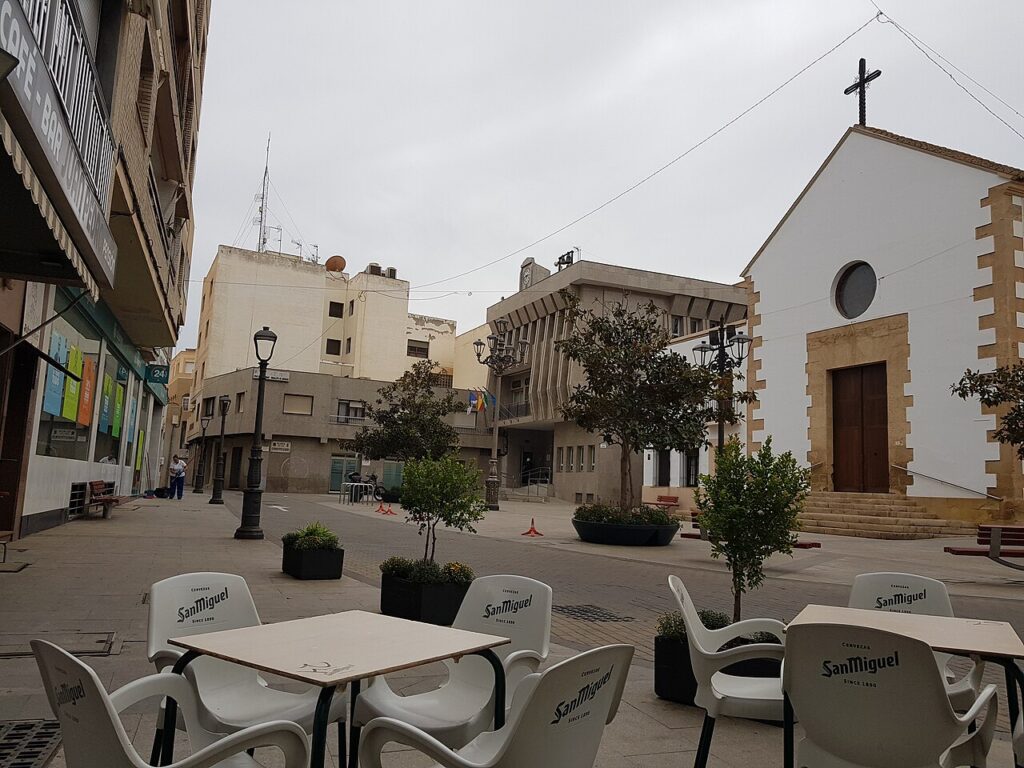
Roquetas de Mar is a large beach municipality of about 111,000 people on the western side of Almería province, and it suits families and anyone who wants long, easy beaches with a nature reserve and a free castle close by. It is not a whitewashed-village or old-town destination: it is a modern resort town built around the sea, with greenhouse farmland behind it. Base yourself here for a beach week; use Almería city for cliffs, cathedral and nightlife. It is part of our Costa de Almería guide.
Quick facts
- Where: Roquetas de Mar, Almería province, Andalusia. The town hall is on Plaza de la Constitución.
- Residents: 111,240 (1 January 2025, INE).
- Size: 59.65 km², the second-largest municipality in the province, according to the Roquetas de Mar tourism board.
- Beaches: more than 16 km of coast. The town hall counts 13 km of urban and semi-urban beach and 3 km inside the Punta Entinas-Sabinar natural area.
- Distance: 25 km from Almería, about 30 minutes by car or bus, says the tourism board.
- Airport: Almería Airport (LEI), about 25–30 minutes by car.
- Train: none in town; the nearest station is Almería.
- Language: Spanish.
Where to base yourself
The municipality is spread along the coast, and the area you choose matters more than the town name. The town council’s gastronomy listings split the restaurants into areas, and the three biggest are the ones that work as bases: Roquetas de Mar itself (76 listings), Aguadulce (67) and La Urbanización (59).
Roquetas town and the castle
The old centre holds the town hall, the Castillo de Santa Ana, the lighthouse next to it and the fishing harbour. It suits you if you want to walk to a harbour-side lunch, a museum and a beach without a car.
La Urbanización and Playa Serena
This is the resort strip of apartments, promenade and long beaches, and Playa Serena also has an 18-hole golf course. Choose it for a classic family beach holiday, with the sand a short walk from the door.
Aguadulce
Aguadulce, to the east, has its own marina, a seafront promenade and the 1,900 m beach of the same name. It suits visitors who want a marina and a beach in one place and a shorter drive to Almería. In 1964 Aguadulce was declared a Centre of National Tourist Interest, which the town history page treats as the start of tourism here.
Things to do
Castillo de Santa Ana
The castle is the town’s emblem. According to the Roquetas de Mar route site, it was built in the early 16th century as a defensive fortress to protect the coast from Barbary pirates and the salt trade, and the town grew around it. It was declared a Bien de Interés Cultural in 1985, the council began rebuilding it in 1997 and it opened as an art and ethnographic museum in May 2003. Entry is free and guided visits are offered. Inside are donated works by artists such as Carmen Pinteño and Ouka Leele, and a set of 82 Goya etchings, the Desastres de la Guerra.
Torre de Cerrillos
A 14th-century Nasrid tower stands near the Cerrillos salt pans, and in the 16th century Felipe II had the present signal tower built on top of it. It was declared a Bien de Interés Cultural on 22 June 1993, access is free, and it marks the boundary with El Ejido. It is a small structure that the same source says holds two people, so treat it as a short stop on a coastal walk, not a visit.
Punta Entinas-Sabinar
The natural area west of town covers 1,960 hectares of Paraje Natural plus 785 hectares of nature reserves, according to the town hall. It has four habitats: sandy beaches, dunes held by scrub, an endorheic zone and the salt pans (the Salinas de Cerrillos and the Salinas Viejas). Flamingos are present, and waders such as dunlin, curlew and avocet use it on migration. Climate figures on the same page give an average annual temperature above 18 °C and 200 to 250 mm of rain, so shade is scarce: bring water and a hat.
History in one paragraph
The town history page says the area had Neolithic, Almerian and Argaric settlements and was visited by Phoenicians, Greeks and Romans, but permanent settlement is documented only from the 18th century; before that, “Las Roquetas” belonged to Enix. The parish church dates from 1757. In the 20th century the salt pans and then intensive agriculture arrived, and Roquetas was the first municipality with a greenhouse. Colonists came in the middle of the century under the Instituto Nacional de Colonización. That is why the town feels new.
Beaches and places nearby
The tourism board lists ten beaches. Aguadulce, Romanilla, La Bajadilla, the Urbanización beach and Playa Serena are the extensive urban ones; the board’s own beach index describes them as fine sand, although its page for Aguadulce gives coarse beige sand, so expect some variation. Los Bajos, La Ventilla and Cerrillos are the more natural stretches.
- Aguadulce: 1,900 m long. The tourism board lists toilets, showers with footbaths, sunshade and lounger rental, beach bars, an adapted bathing area for people with reduced mobility and accessible parking.
- Playa Serena and La Urbanización: the long promenade beaches, best for families who want facilities behind the sand.
- Playa de Cerrillos: inside the natural area. The town hall says it has the densest Posidonia seagrass meadow on the municipal coast, and that at least 9 km of seabed between roughly 1 and 30 m depth is suitable for diving.
For a day out, El Ejido is the next town west along the same flat, greenhouse-covered coast and Almería is the city to the east.
Food and drink
The food is seafood first. The tourism board names arroz con marisco, fideos, and migas roqueteras as signature dishes, with salmonete (red mullet), sargo (sea bream) and gallo pedro (John Dory) served alongside local vegetables. The town’s fish auction, the lonja, is known for swordfish, called Espada de Roquetas. Its tourism pages list 232 places to eat and drink, of which 30 are chiringuitos (beach bars), 26 have sea views and 52 are tagged as local cooking. The board also says Roquetas de Mar was named Ciudad Gastronómica for 2025.
The lowland around the town is a major fruit and vegetable growing area, which the board calls the Huerta de Europa, so salads and grilled vegetables are rarely an afterthought. We could not confirm a weekly market day from official pages, so ask at a tourist office on arrival.
Where to stay
The municipality reports more than 2,000 hotel and restaurant establishments. In practice you choose between beach hotels and apartments in La Urbanización and Playa Serena, marina-side apartments in Aguadulce, and smaller options near the old centre. Prices are not published on the official pages we read, so check current rates for your own dates.
Getting there and around
There is no train. The tourism board says the nearest station is in Almería, and the town is reached by road: take the A-7, leave at exit 6, and follow the A-1051 into town, a drive of about 30 minutes from Almería, 25 km away.
- By air: Almería Airport (LEI) is about 25–30 minutes away by car, according to the tourism board. Aena says it is 9 km east of Almería and 500 m from the coast, and that city bus line 30 links it to the centre in about 35 minutes. That bus does not go to Roquetas, so you change in Almería or take a taxi or hire car.
- By bus: The tourism board says several operators run buses to town, directly or with a change, from Madrid, Granada or Málaga, and that the trip from Almería takes about 30 minutes by bus. Timetables are on the Almería metropolitan transport consortium site.
- Taxi: the tourism board gives Taxiponiente on +34 950 334 000.
- By car: useful for Punta Entinas-Sabinar and for moving between Aguadulce, the old centre and La Urbanización, which are several kilometres apart.
Best time to visit
The tourism board says summer, June to August, often passes 30 °C, winter temperatures can fall to 8 °C, and spring and autumn sit between 15 °C and 22 °C. That makes May, June and September the comfortable beach months for people who do not want the hottest weeks, and the natural area is pleasanter outside midsummer. The town’s two main fiestas, Santa Ana and the Virgen del Carmen, are described by the tourism board as being of National Tourist Interest of Andalusia; check the tourism agenda for the dates in the year you travel. The summer programme of guided and theatrical visits is announced on the same site each year.
FAQ
Is Roquetas de Mar a good place for a family beach holiday?
Yes. It has more than 16 km of coast, five extensive urban beaches with promenades, and facilities such as accessible bathing areas at Aguadulce. It is a modern resort rather than a historic town.
How far is Roquetas de Mar from Almería airport?
The tourism board gives about 25–30 minutes by car. The airport bus goes only to Almería centre, so you need a car, taxi or a bus change.
Is the Castillo de Santa Ana free?
Yes. The town’s route site says entry is free and guided visits are offered. It does not publish opening hours, so check locally before going.
Does Roquetas de Mar have a train station?
No. The nearest station is in Almería, 25 km away.
Can I see flamingos near Roquetas?
The town hall says flamingos occur in Punta Entinas-Sabinar and that the Cerrillos and Viejas salt pans lie inside it. It gives no count, so sightings are not guaranteed.
Sources and freshness
Last checked: October 2026. Sources: INE, population of Almería municipalities; Roquetas de Mar tourism board (area, 16 km of beaches, gastronomy, golf); tourism board, how to get there and climate; tourism board, beaches; tourism board, Aguadulce beach; tourism board, gastronomy; Roquetas de Mar coastal fortresses route (Castillo de Santa Ana, Torre de Cerrillos); Roquetas de Mar town hall, nature; Roquetas de Mar town hall, history; Aena, Almería Airport bus.
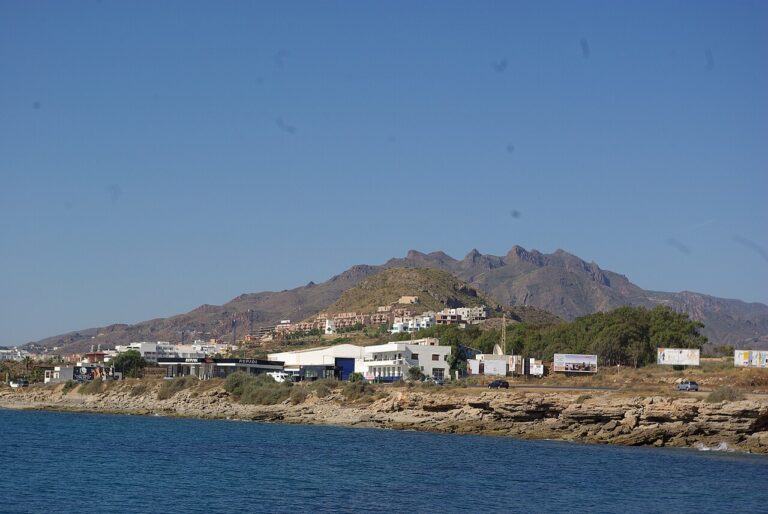
Main photo: Tyk, CC BY-SA 4.0, via Wikimedia Commons.
Nearby on the Costa de Almería

Roquetas De Mar on the map
How this page is maintained. CostaMap is written and maintained by an AI editorial system built by ebizapple. Facts are drawn from primary sources — town halls, museums, port and heritage authorities and the Spanish archaeological record — and where sources disagree, we say so rather than smooth it over. Photographs marked as ours are taken on location. This page was last reviewed on 27 October 2026. Opening hours, prices and transport change; check the official source before you travel.