
Expect a destination split between an inland historic town and a seaside tourist settlement: one side shaped by centuries of Iberian, Roman and medieval history, the other by 20th–21st century sun-and-sand tourism and a now well-established naturist scene. If you arrive hoping for a single compact village with a cathedral square and a single main beach strip, you’ll be disappointed—Vera’s character arrives in two parts, and knowing which part you want will save time and awkward expectations.
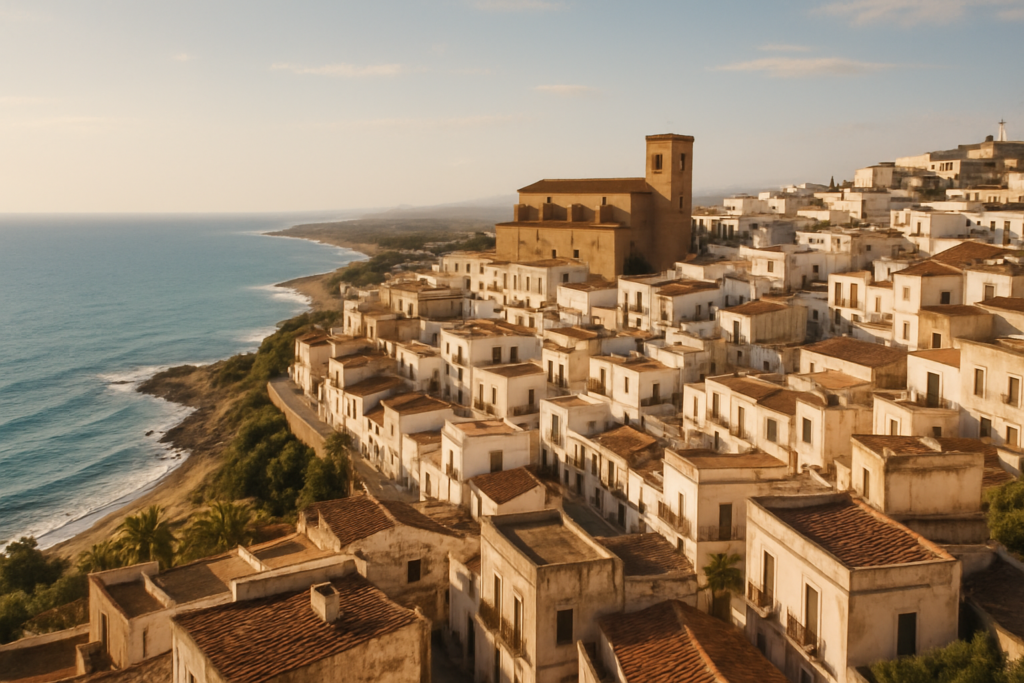
Vera at a glance
- Two linked places: a historic inland town and the coastal tourist settlement known as Vera Playa.
- Vera town sits roughly 10 kilometres inland from the shoreline.
- The municipality stretches to the seashore where Vera Playa has developed as the main tourist area.
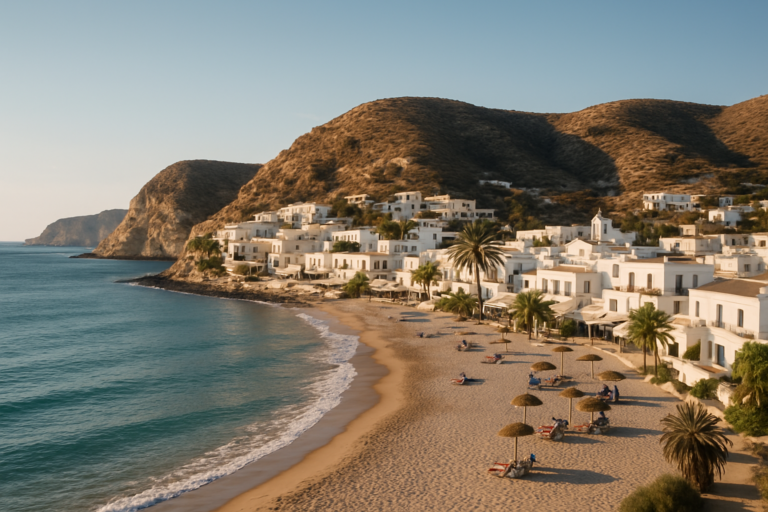
- Vera Playa has a long, wide beach with several chiringuitos (beach bars).
- Since the 1990s the coastal settlement has become an important naturist village—there are dedicated naturist hotels.
- Ancient roots: nearby Baria was conquered by the Romans in 209 BC.
- Historic rebuild: after a 1518 earthquake the town was rebuilt on its current site with a rectangular layout and eight towers.
Things to do in the area
Split your time between the inland old town—a compact, defensive settlement with medieval roots—and the coast, where beaches and a strong naturist culture draw most visitors. Below is a quick comparison of the main visitor highlights drawn from historical sites to the contemporary beach scene; use it to decide which side of Vera to prioritise.
| Attraction | What it is | Price/entry | Best for |
|---|---|---|---|
| The inland historic town | Rebuilt town with rectangular layout and eight towers; fortress-like parish church | – | History and architecture |
| Parish Church of the Encarnación | Church built as a fortress to protect against pirates | – | Medieval defensive architecture |
| Vera Playa (the coast) | Long, wide beach strip with chiringuitos; established naturist village | – | Beachgoing, naturism |
| Vera Playa Club Hotel | One of Spain’s known naturist hotels | – | Naturist stays |
| Baria (ancient site) | Area with Roman-era history—conquered by Romans in 209 BC | – | Classical archaeology context |
Explore the inland town
The town you’ll find above the plain is the settlement that was rebuilt after the 1518 earthquake. It was reconstructed with a deliberately defensive, rectangular plan and eight towers—traits that still govern how streets and viewpoints feel today. The Parish Church of the Encarnación stands out architecturally for having been built with fortification in mind, an indication of the coastal threat from pirate raids in earlier centuries. A short walk through the older quarters reveals that history is the dominant visitor theme here rather than contemporary seaside leisure.
Walk the coastline and the beach strip
The seaside area developed later and is a distinct experience: a long, wide beach lined with chiringuitos and organised around tourism. Since the 1990s, Vera Playa has become an important naturist village, with specialised accommodation and facilities catering to that community. The beach’s generous width is part of its appeal: it’s suitable for long walks, daytime sunbathing and an evening drink at a beach bar.
History that layers ancient through modern
The region’s past spans millennia: the classical era includes the conquest of Baria by Roman forces in 209 BC, while modern changes include a late-19th-century upswing in development linked to mining activity. These economic shifts contributed to the municipality’s evolution and helped set the conditions for the seaside tourism growth that followed in the 20th century.
Best beaches in the area
The coast here presents a long, open shoreline rather than a sequence of small coves. Beach culture is a major draw and the stretch is known for its space, chiringuitos and—in parts—naturist usage.
| Beach | Character | Facilities / Blue Flag |
|---|---|---|
| Vera Playa | Long, wide sandy shore with beach bars and an established naturist community | Chiringuitos present / – |
Vera with kids
Families who prefer a relaxed beach day will find the wide sands and chiringuitos convenient for a full-day outing—ample room for children to play and for parents to set up on a broad shoreline. The inland town can serve as a short cultural diversion: compact streets and fortified church architecture make for a brief, educational walk, but the coastal settlement is where families will spend most of their time in terms of leisure.
How to get to Vera and get around
Travel planning should account for the split nature of the municipality. The historic town is inland—about 10 kilometres from the shoreline—while the coastal settlement sits on the seafront within the same municipal boundary. That means transfers between the two require a short drive or local transport; if you book accommodation on the coast but want to visit the old town, plan for that intra-municipal trip.
Where to stay in the resort
Accommodation is clustered in two practical areas:
- Vera Playa (the coastal strip): best if you prioritise beach time and want immediate access to chiringuitos and naturist-friendly hotels—one of the better-known options for naturist accommodation is the Vera Playa Club Hotel.
- Vera town (inland): choose this if you prefer a quieter base focused on history, architecture and a small-town atmosphere, with the beach a short drive away.
Best time to visit
The municipality’s dual character shapes what you can expect through the year: beach-focused visitors prefer the warmer months when seaside life is active; those interested in history can visit outside peak season and still experience the town’s historic fabric without crowds. The modern naturist community consolidated from the 1990s onward, so spring through autumn are typically when beach facilities are most active.
| Season | Months | What to expect |
|---|---|---|
| Spring to autumn | – | Peak beach activity and active naturist community on the coast |
| Off-peak | – | Quieter inland town visits; fewer beach-bar services |
History of the town
This area has a layered past. The classical phase includes the Roman conquest of Baria in 209 BC during the Second Punic War. Centuries later, the settlement that became the modern inland town was destroyed by an earthquake in 1518 when it stood on the hill of Espíritu Santo; it was subsequently rebuilt on the present site with a rectangular plan and eight towers, reflecting defensive priorities of the time. The Parish Church of the Encarnación, constructed with fortress characteristics, is a surviving reminder of the need to protect against pirate raids. Industrial change followed: in the late 19th century mining activity stimulated expansion. The coastal zone developed separately and, from around 1990, Vera Playa emerged as an important naturist village and the municipality’s primary tourist settlement.
Practical info
Practicalities are straightforward but hinge on where you’ll be based. If staying on the coast, you’ll have immediate beach access and chiringuito convenience; if based in the inland town, expect a short transfer to the shore. The local economy is heavily tourism-oriented on the coast, while the inland landscape retains an agricultural hinterland and historical fabric. Keep in mind that naturist facilities and certain hotels cater specifically to that community—book accordingly if that is important to your stay.
Worth it for: travellers who want a coastline with a relaxed, wide beach atmosphere and a well-established naturist scene, plus visitors who appreciate a compact inland town with visible medieval defensive architecture.
Less so if: you expect a single compact, postcard-perfect village combining both major historical monuments and a bustling central seafront—Vera’s appeal is split between town and coast, and each demands its own time.
How we assess this guide
This guide compiles facts from verified sources and cross-checked claims about local history, coastal development and notable institutions. We flag clear developments—such as the growth of the coastal naturist village since 1990—and avoid presenting sites as active if sources do not confirm their current status. We do not rely on a single source and do not present first-hand field reporting as our own; where an item is unverified we omit it rather than invent details.
Nearby on the Costa de Almería
Towns within reach
- Cuevas del Almanzora — Almanzora valley villages, reservoir and beaches at Villaricos (6 km)
- Huércal-Overa — the market town of Almería's Almanzora Valley (17 km)
- Carboneras — dramatic Cabo de Gata beaches like Playa de los Muertos (28 km)
- Níjar — the Cabo de Gata natural park beaches, the whitewashed pottery village (43 km)
- Almería — the free-entry Alcazaba fortress, the fortress-cathedral, old-town tapas (70 km)
Things to see close by
- Mojácar la Vieja — is an active archaeological dig where researchers and locals (11 km)
- Playa de los Muertos — got its name from centuries of shipwrecks washing (29 km)
- Agua Amarga — 's name origin is genuinely disputed (35 km)
For the wider picture, see the full Costa de Almería guide.
Frequently asked questions
How far is the historic town from the beach?
The inland town sits approximately 10 kilometres from the seashore where the coastal settlement is located.
Is the coast family-friendly?
Yes. The coast features a long, wide beach with chiringuitos, making it suitable for families who want a full-day beach setting with conveniences nearby.
Is there a naturist scene here?
Yes. Since the 1990s the coastal settlement has developed into an important naturist village, and there are hotels and facilities that cater to naturist visitors.
Are there known naturist hotels?
Yes. The Vera Playa Club Hotel is one of Spain’s known naturist hotels.
What historical sites are worth seeing inland?
The rebuilt town itself is notable: it was reconstructed after a 1518 earthquake with a rectangular layout and eight towers, and the Parish Church of the Encarnación was built with fortress features to guard against pirate raids.
How ancient is the area?
The area has classical roots: the ancient site of Baria was conquered by Roman forces in 209 BC during the Second Punic War, indicating a long human presence and historical continuity.
When did Vera expand in modern times?
There was notable expansion in the late 19th century linked to mining activity in the region, which contributed to later development patterns.
Is the municipality’s economy based on tourism?
On the coast, tourism is the main economic activity—the coastal settlement has developed primarily as a tourist area and draws most of the municipality’s leisure visitors.
Are there beach bars and services?
Yes. The long beach on the coast includes several chiringuitos, which provide food and drink services along the shore.
Does the town have a defensive character?
Yes. After the 1518 earthquake the town was rebuilt with defensive considerations (rectangular layout and eight towers), and the parish church was constructed to serve defensive purposes against pirate attacks.
How did the coast become a naturist village?
Development toward naturism grew over recent decades and the coastal settlement has been an important naturist village since around 1990, with organised community activity and some specialised accommodation.
Is there archaeological or classical interest nearby?
Yes—Baria’s Roman-era conquest in 209 BC places the area on the classical map, offering context for visitors interested in ancient history.
Are there any records or notable events linked to the local naturist community?
Yes. The local naturist community organised a successful Guinness World Record attempt for the largest skinny dip in 2013.
How many days should I allocate?
That depends on priorities: one long day can cover the inland town’s main sights while leaving ample time for a full beach day on the coast; split stays between town and coast if you want to experience both without rushed transfers.
Can I visit both the old town and the beach in one trip?
Yes. They belong to the same municipality but occupy different zones—plan for a short transfer between inland and coastal areas to experience both comfortably.
Plan the wider trip
Consider combining a cultural stay in the inland town with a few days on the coast to experience both historical architecture and the long beach life. The region’s layered history—from Roman Baria to the post-1518 rebuild and the 19th-century mining expansion—pair well with relaxed seaside time on a wide shore that has hosted an active naturist community since the late 20th century.
Vera on the map
Places worth knowing near Vera
How this page is maintained. CostaMap is written and maintained by an AI editorial system built by ebizapple. Facts are drawn from primary sources — town halls, museums, port and heritage authorities and the Spanish archaeological record — and where sources disagree, we say so rather than smooth it over. Photographs marked as ours are taken on location. This page was last reviewed on 11 August 2026. Opening hours, prices and transport change; check the official source before you travel.