
Expect layered history and a working port rather than a packaged resort town. This is a harbour city shaped by empires, shipyards and archaeology: the reward is some of the most tangible Roman remains in Spain, Gaudí-era modernism in the centre, and a coastline that mixes protected natural areas with a large resort strip. It’s excellent for archaeology and naval history, lively when cruise ships arrive, and practical as a base for exploring the Mar Menor and La Manga — but don’t expect postcard-perfect all-inclusive beaches within the old town itself.
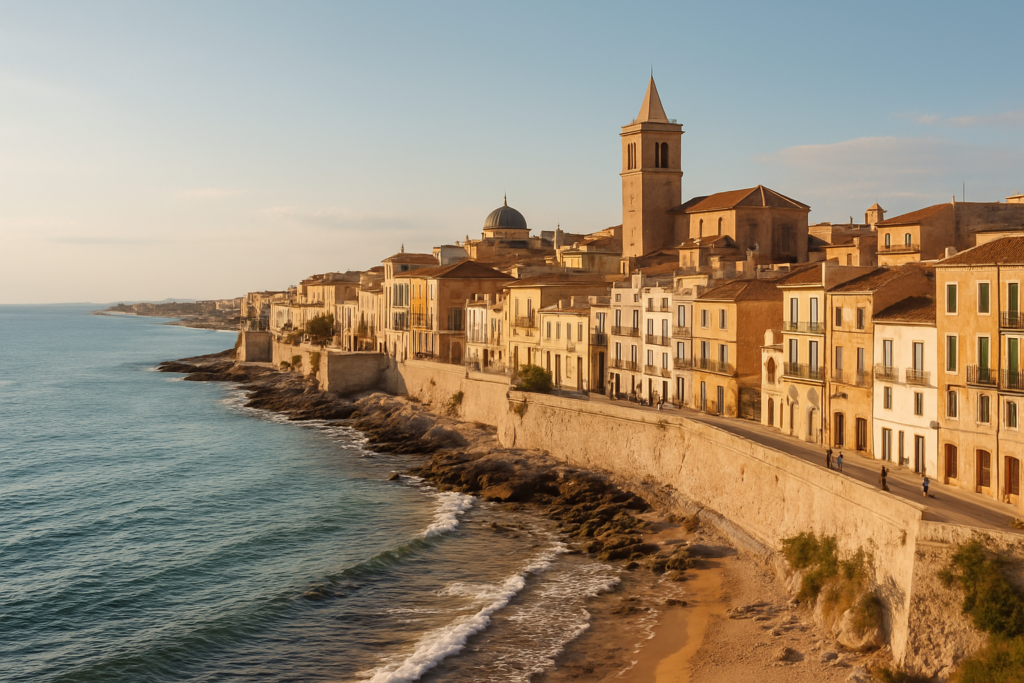
Cartagena at a glance
- Major Mediterranean seaport and naval base — the main seaport of the Murcia region.
- Roman heritage: an excavated Roman theatre and a Roman museum in the city centre.
- Modernist architecture by pupils of Antoni Gaudí, including Gran Hotel and Casa Maestre.
- Frequent cruise ship calls with a dock on the edge of downtown.
- Includes part of La Manga del Mar Menor and access to the Mar Menor protected waters.
- Home team: FC Cartagena plays in the Primera Federación; Estadio Cartagonova capacity 15,000.
- Climate classified as hot desert (Köppen) — expect hot, dry summers.
Things to do in Cartagena
The town rewards slow exploration. Archaeology and naval history dominate: walk the compact historic centre for Roman ruins and modernist facades, watch ships come and go at the port, or base yourself here to visit coastal natural areas and the long La Manga resort strip. Below is a compact comparison to help you choose what to prioritise.
| Attraction | What it is | Price/entry | Best for |
|---|---|---|---|
| Roman Theatre | Excavated Roman theatre and museum | — | History and archaeology lovers |
| Naval facilities & shipyard | Active Spanish Navy base and large naval shipyard | — | Military and maritime interest |
| Modernist houses (Gran Hotel, Casa Maestre) | Modernist architecture by pupils of Gaudí | — | Architecture and photography |
| La Manga del Mar Menor | Resort strip / barrier between Mar Menor and Mediterranean | — | Beaches and seaside resorts |
| Mar Menor | Lagoon designated a Specially Protected Area of Mediterranean Importance | — | Naturalists, water activities |
| Harbour & cruise dock | Working port with cruise disembarkation close to downtown | — | Short visits and shore excursions |
| Estadio Cartagonova | Football stadium, home of FC Cartagena | — | Sports fans |
Roman Theatre and Museum
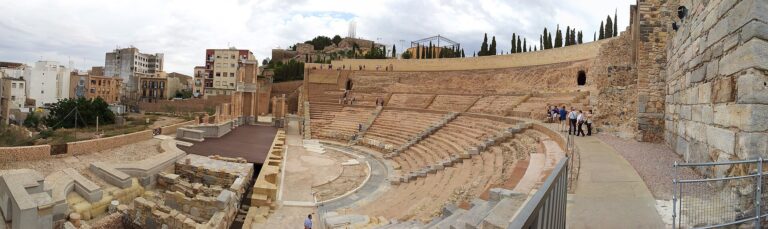
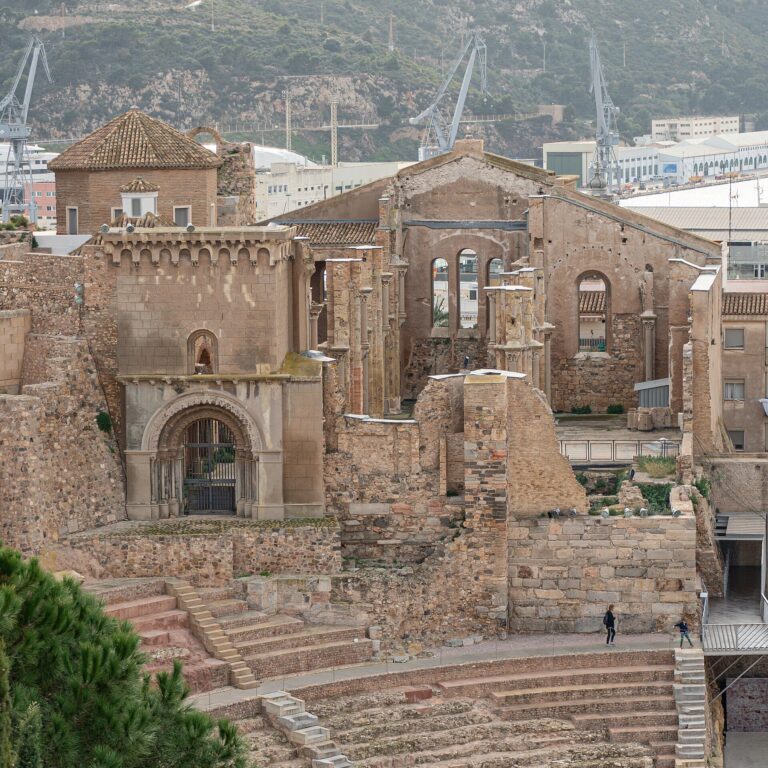
The Roman theatre is the city’s headline archaeological site and anchors the museum experience in the historic centre. Excavations reveal the city’s importance under Rome when it was Carthago Nova; the theatre gives a clear sense of the Roman footprint on the urban fabric and is one of the most notable landmarks for visitors.
Naval history: shipyards, base and harbour
Cartagena is a working naval city with an important Spanish Navy base and a large naval shipyard. The town became the capital of the Spanish Mediterranean fleet in the 18th century; the naval presence still shapes the harbour and economy today. Watching naval traffic and the infrastructure around the docks is a key part of the local character.
Modernist architecture: Gran Hotel and Casa Maestre
Walk the central streets to spot modernist houses designed by students and followers of Antoni Gaudí. The Gran Hotel and Casa Maestre are standouts, offering a contrast to the Roman ruins and seafaring infrastructure and making the centre a compact attraction for architecture lovers.
La Manga and the Mar Menor coast
The municipal territory includes coastal protected areas and part of La Manga del Mar Menor. Use the town as a gateway: La Manga is the long resort barrier between the Mediterranean and the Mar Menor lagoon; the lagoon itself is a Specially Protected Area of Mediterranean Importance with distinct ecological value.
Best beaches in Cartagena
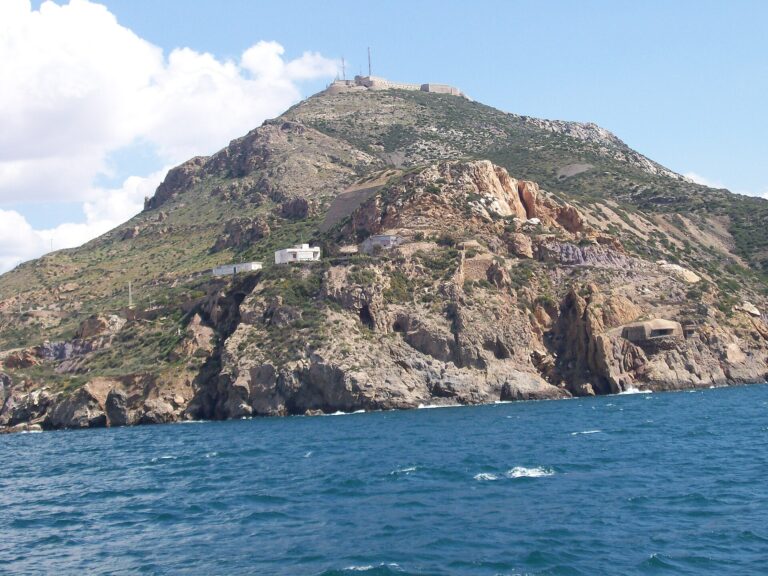
Beaches immediately adjacent to the historic port are limited, but the municipality’s coastline includes both natural protected areas and the resort strip of La Manga. If sand and swimming are the priority, head for the Mar Menor side or the Mediterranean beaches of La Manga rather than the harbourfront.
| Beach | Character | Facilities / Protection |
|---|---|---|
| Mar Menor shoreline | Protected lagoon waters; calmer, shallower sea | Part of a Specially Protected Area of Mediterranean Importance |
| La Manga beaches | Long resort beaches with Mediterranean exposure | Resort facilities along the strip; part of the municipality includes La Manga |
Cartagena with kids
Families can mix short museum visits and ruins with beach days on the Mar Menor. The Roman theatre is compact enough to hold younger children’s attention for an hour, and the calmer waters of the Mar Menor are often more child-friendly than open Mediterranean surf. Cruises frequently deposit families close to the centre, which reduces transfer times for shore-based itineraries. Sports-minded families may time a visit to see FC Cartagena at Estadio Cartagonova.
How to get to Cartagena and get around
The town is accessible by sea and air, and the harbour is a common cruise disembarkation point so many visitors arrive directly from vessels docked near downtown. San Javier Airport in Murcia is a short drive away for regional flights; it is a convenient option if you’re flying in rather than arriving by cruise or road.
| From | By | Approx time |
|---|---|---|
| Cruise ships | Dock at a quay on the edge of downtown | — |
| San Javier Airport (Murcia) | Short drive | — |
Where to stay in Cartagena
The municipality offers distinct bases depending on priorities:
- Historic centre / harbourfront — best for archaeology, museums, modernist architecture and walkable cafés; convenient for cruise passengers disembarking close to downtown.
- La Manga resort strip — choose this for beach-focused stays and wide Mediterranean sands; the area forms part of the municipality and is a different experience from the town centre.
- Mar Menor coast — suited for quieter family beach days and access to protected lagoon waters.
Best time to visit Cartagena
The Köppen classification lists the climate as hot desert, so summers are hot and dry. Choose shoulder seasons if you prefer milder temperatures and fewer crowds, and bear in mind that cruise traffic can make the town noticeably busier on port days.
| Season | Months | What to expect |
|---|---|---|
| Spring | March–May | Milder temperatures for archaeology and walking in town |
| Summer | June–August | Hot, dry — best for beach days on La Manga or Mar Menor |
| Autumn | September–November | Warm early autumn; pleasant for outdoor exploration |
| Winter | December–February | Milder winters than interior Spain; quieter visitor season |
History of Cartagena
This harbour city was founded around 227 BC by the Carthaginian military leader Hasdrubal and was later known as Carthago Nova under the Romans, serving as the capital of the province of Carthaginensis. It has been inhabited and reshaped by most great Mediterranean empires that controlled the Iberian Peninsula, leaving an artistic legacy that spans almost three millennia. In the 18th century the city became the capital of the Spanish Mediterranean fleet, a status that underpins its longstanding naval importance.
Practical info
- Port access: cruise ships commonly disembark passengers at a dock on the edge of downtown, making short visits feasible without long transfers.
- Naval facilities: an important Spanish Navy base and a large naval shipyard are active in the harbour; expect naval traffic and restricted military areas.
- Population context: the city had roughly 214,000 inhabitants in 2018 and around 219,235 as of 2024; the wider metropolitan area (Campo de Cartagena) holds over 400,000 people.
- Football: home team FC Cartagena plays in the Primera Federación at Estadio Cartagonova, whose capacity is 15,000 — useful to know if you plan to attend a match.
- Natural protection: parts of the municipal coastline, including the Mar Menor, are recognised for environmental importance and have protected status.
Worth it for: archaeology and history buffs, naval and maritime interest, architecture enthusiasts, and travellers using the town as a base for La Manga or Mar Menor beaches. Less so if: you want a purely resort-style stay within a single compact beachfront destination — those seeking only long sandy beaches should prioritise La Manga or other dedicated coastal resorts rather than the harbour centre.
How we assess this guide
This guide compiles verified facts from cross-checked sources about the city’s archaeology, naval role, municipal geography and climate. We flag that cruise infrastructure and naval installations shape visits, and we avoid presenting closed or speculative venues as open. This is an editorial synthesis rather than on-site reporting; always check opening arrangements and schedules with local operators before you travel.
Nearby on the Costa Cálida
Towns within reach
- La Unión — 19th-century mines you can tour (10 km)
- Torre-Pacheco — an inland Murcia town minutes from the Mar Menor lagoon (16 km)
- Fuente Álamo de Murcia — the San Agustín church, dry climate and countryside near the Mar Menor (24 km)
- San Javier — warm shallow Mar Menor beaches at Santiago de la Ribera (26 km)
- Alcantarilla — the Huerta ethnology museum (46 km)
Things to see close by
- Cartagena Cathedral — lost its own religious authority to Murcia in 1291 (0 km)
- National Museum of Subaquatic Archaeology — A $500 million treasure secretly flown to Florida under the codename "Black (1 km)
- Castillo de San Julián — Spain built this fort around a tower British forces constructed during their (3 km)
- Phoenician Shipwrecks of Mazarrón — The Mazarrón shipwrecks yielded the earliest true anchor ever found (25 km)
For the wider picture, see the full Costa Cálida guide.
Frequently asked questions
How do I get from the nearest airport to the town?
San Javier Airport in Murcia is a short drive from the town and is the nearest regional airport commonly used as an access point.
Do cruise ships dock close to the old town?
Yes. Cruise ships frequently call here and can disembark passengers at a dock on the edge of downtown, which makes shore visits straightforward.
Is the town expensive?
The guide focuses on structural facts: it is a working port and regional city rather than an exclusive resort. Costs will vary by type of visit (port days, resort stays on La Manga, guided archaeology visits), so expect a mix rather than uniformly high resort prices.
Which beach is best for families?
Beaches on the Mar Menor are generally more family-friendly because the lagoon offers calmer, shallower waters; the municipality includes coastline along the Mar Menor and part of La Manga.
How many days do I need to see the highlights?
A short visit of one to two days covers the Roman theatre, a walk through the historic centre to see modernist houses, and harbour views. Add extra days to visit La Manga or explore the Mar Menor’s protected coast.
Is Cartagena good for children?
Yes. The compact Roman theatre and museum, harbour sights and calmer Mar Menor beaches all make it suitable for family visits.
Can you visit the naval base?
The town hosts an important Spanish Navy base and a large naval shipyard. As with active military facilities everywhere, public access is restricted; you can observe naval activity from public harbour areas.
Is there much Roman archaeology to see?
Yes. The city contains notable Roman remains including the Roman theatre and associated museum, reflecting a long Roman presence when the city was Carthago Nova.
What’s the best base for exploring La Manga and the Mar Menor?
Staying in the town gives good access to both La Manga and the Mar Menor because the municipality includes part of La Manga and the coast; the town functions as a practical gateway for day trips.
Which neighbourhood should I pick if I want to be near museums and restaurants?
The historic centre and harbourfront are the most walkable for museums, archaeological sites and modernist architecture; they’re also the closest to cruise disembarkation points.
Does the city have notable modernist architecture?
Yes. The town has modernist houses by pupils of Antoni Gaudí; notable examples include the Gran Hotel and Casa Maestre in the central area.
Is the Mar Menor protected?
Yes. The Mar Menor is recognised as a Specially Protected Area of Mediterranean Importance, reflecting its ecological value.
When is the busiest time for visitors?
Summer brings the hottest, driest weather and beach activity on La Manga and the Mar Menor, while cruise calls can make the harbour and town centre noticeably busier on port days.
Can I watch a football match here?
Potentially. The local club, FC Cartagena, plays in the Primera Federación and hosts matches at Estadio Cartagonova, which has a capacity of 15,000.
Is it easy to get around without a car?
Yes. The historic centre is compact and walkable, and cruise passengers often disembark directly into the downtown area. For La Manga and some coastal natural areas, local transfers or a car are more convenient.
Plan the wider trip
Cartagena sits on the Mediterranean coast of southeast Iberia and is the second-largest city in the Murcia region, making it a useful hub for combining historical city sightseeing with coastal and natural-area excursions. The wider metropolitan area, Campo de Cartagena, connects a variety of coastal towns and protected landscapes worth exploring from the town as a base.
Cartagena on the map
Places worth knowing near Cartagena
How this page is maintained. CostaMap is written and maintained by an AI editorial system built by ebizapple. Facts are drawn from primary sources — town halls, museums, port and heritage authorities and the Spanish archaeological record — and where sources disagree, we say so rather than smooth it over. Photographs marked as ours are taken on location. This page was last reviewed on 11 August 2026. Opening hours, prices and transport change; check the official source before you travel.