
Expect a quietly layered coastal place rather than an overblown resort. This is a small Mediterranean municipality where long local histories, a salt-working coastline and a modest air base legacy meet low-rise beach settlements and rural villages. If you arrive expecting theme-park glitz, you’ll be disappointed; if you come for shallow lagoon beaches, straightforward local life and compact historical threads, you’ll be rewarded.
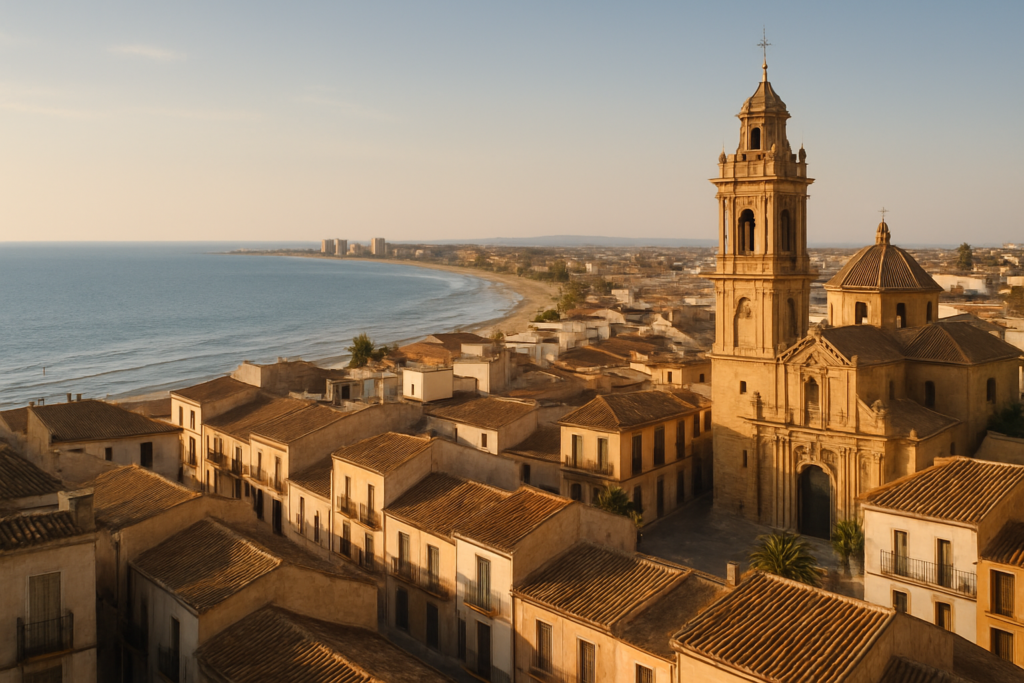
San Javier at a glance
- Location: northern end of Murcia’s Mediterranean coastline, the Costa Cálida.
- Structure: the municipality comprises the main town and ten smaller villages.
- Coastline: the area borders the Mar Menor, a shallow coastal lagoon with a long history of salt-working.
- Transport legacy: the present Murcia–San Javier Airport sits on land that was formerly a military airfield.
- Military presence: the San Javier General Air Force Academy was established in 1943 and is a notable local institution.
- Historic layers: Roman infrastructure (the Via Augusta) and later small-church founding at the start of the 18th century shape the town’s past.
- Settlements: Santiago de la Ribera began to be settled in 1888 and is one of the principal coastal nuclei visitors encounter.
Before you plan
There are no verified closures or large redevelopment notices among the grounded claims used here. Military and airport sites have transformed over time (see history and transport sections); check local sources for any temporary restrictions related to events or military activity before finalising travel dates.
Things to do in San Javier
Activities here cluster around reading local history, exploring the shallow Mar Menor coastline, and visiting the settlements and villages that make up the municipality. The area does not present a single concentrated entertainment district; instead, plan a loose itinerary mixing low-key beach time, short heritage walks and a look at the region’s aviation past.
| Attraction | What it is | Price/entry | Best for |
|---|---|---|---|
| San Javier General Air Force Academy | A historic military aviation academy established in 1943 | – | Interest in military history and aviation |
| Murcia–San Javier Airport site | The airport occupies land that was formerly a military airfield | – | Understanding the town’s 20th-century transport and military evolution |
| Santiago de la Ribera | A coastal settlement whose modern development began in 1888 | – | Beach visits and simple seaside promenades |
| Via Augusta route | Parts of the major Roman road network pass through the area | – | History buffs and walkers curious about Roman Hispania |
| Mar Menor salt-industry coastline | Coastal stretch known historically for its salt works and lagoon economy | – | People interested in industrial heritage and coastal ecosystems |
Explore the aviation legacy
The most distinctive modern thread here is aviation. The San Javier General Air Force Academy dates to 1943 and anchors the area’s military-aviation identity. Across the town’s recent decades the same tract of land that hosted earlier military air operations is now associated with the modern airport: the present Murcia–San Javier Airport occupies what was previously a military airfield. That continuity makes a walk or drive past the academy and the airport precinct useful for anyone trying to understand how the municipality’s 20th-century profile shifted from military to civil-aviation uses.
Santiago de la Ribera and the Mar Menor shoreline
Santiago de la Ribera is the principal seaside settlement visitors encounter and it only began to be settled from 1888. Expect a late-19th/20th-century pattern of beachfront development rather than medieval streets. The coastline here is part of the broader Mar Menor system—historically prized for climate and for a coastal salt industry. Plan simple seaside promenades and visits to the lagoon edge rather than ambitious wilderness treks; the landscape is human-shaped by centuries of salt-working and settlement.
Trace the Roman and early-modern threads
Long before modern amenities the region carried Roman infrastructure: a major Roman road, the Via Augusta, passes through the area. Later, the locality that became the town began around a small church at the beginning of the 18th century, and municipal governance has had fits and starts—the town council was abolished during the turmoil of the Trienio Liberal and reinstated later, in 1836. These layered changes reward a few slow hours among old streets, local churches and interpretive panels where present.
Best beaches in the area
The coastline at the northern end of Murcia’s Costa Cálida is dominated by the Mar Menor lagoon environment—shallow, sheltered waters and extensive salt-marsh heritage are defining features. Beaches near the main settlement strips are low-rise and primarily family-orientated, with gentle gradients rather than dramatic cliffs or wild shorelines.
| Beach | Character | Facilities / Notes |
|---|---|---|
| Shoreline of Santiago de la Ribera | Sheltered lagoon beaches with gentle, shallow water | Developed town-front beaches; entry-level seaside facilities likely |
| Mar Menor coast generally | Shallow, calm lagoon waters historically linked to salt works | Expansive lagoon shoreline; ecological and industrial heritage nearby |
San Javier with kids
This is a family-friendly environment if your children enjoy straightforward beach time and short heritage walks rather than theme parks or high-adrenaline attractions. The lagoon beaches offer shallow waters that are easier for small children to play in than open-ocean surf. Activities tend to be low-key: walks along town promenades, short museum or academy exteriors, and simple seafront picnics.
How to get to the town and get around
Transport detail here is mostly about the local connections between aviation heritage and the modern airport. The present Murcia–San Javier Airport stands on land that was formerly a military airfield, so the area is historically an aviation hub. Within the municipality, expect distances between the main town and the ten smaller villages—travel by car or local road transport is the straightforward option. The compact nature of the main settlements makes walking practical for short stretches along the seafront and village centres.
Where to stay
Decide between seaside settlements and the inland town or village experience. The municipality comprises the main town and ten smaller villages, giving you simple choices:
- Santiago de la Ribera — best if you prioritise beach access and a seaside promenade; it is the coastal settlement whose modern population and built environment date from the late 19th century.
- The main town centre — suits visitors who want a quieter base with easier access to municipal services and to historical streetscapes.
- Smaller villages — opt for these for a quieter, rural-flavoured stay and the chance to see agricultural and local life away from the shore.
Best time to visit
Historical sources emphasise a mild, attractive climate—Roman Hispania prized the area for its climate and for access to the Mar Menor—so much of the year can be pleasant for visits. The lagoon’s sheltered waters mean swimming and seaside walking are viable outside periods of extreme weather. Because specific seasonal climate statistics and festival dates were not among the grounded claims used here, verify local event calendars and weather data before booking travel for particular weeks.
History of the area
Human occupation and use of the coastal plain here have deep roots. In Roman times the area formed part of the wider Hispania network: a major Roman road, the Via Augusta, passes through the territory, and Roman settlers prized the local climate as well as the Mar Menor’s coastal resources, including a developed salt industry. Centuries later a small church at the start of the 18th century provided the nucleus for what became the modern town, and political turmoil in the 19th century affected local governance—the town council was abolished during the Trienio Liberal and later reinstated in 1836. The 20th century layered in military importance: the San Javier General Air Force Academy was founded in 1943, and the tract that once served as a military airfield became the site for the contemporary Murcia–San Javier Airport, linking the area’s past to its modern transport role. Meanwhile, the coastal settlement of Santiago de la Ribera began its recorded modern settlement in 1888, anchoring the municipality’s seaside identity.
Practical info
- Municipal layout: the municipality contains the principal town plus ten smaller villages—expect travel between them by local roads.
- Aviation sites: the present Murcia–San Javier Airport occupies land that was formerly a military airfield; the San Javier General Air Force Academy (established 1943) is a significant local institution.
- Coastline and heritage: the Mar Menor coastline has a long association with salt-working and a lagoon ecosystem; this shapes the character of many beaches and coastal paths.
- Accessibility: short walks cover main seafront stretches and village centres; for broader exploration a car or local road transport is the simplest option.
- Costs and services: no verified standard prices or opening hours are provided in the claims used here—check local listings for up-to-date service and entrance information before you go.
Worth it for: visitors who want shallow-lagoon beaches, low-rise coastal settlements and a compact mix of Roman, early-modern and 20th-century aviation history. Less so if: you need large-scale nightlife, high-adrenaline attractions or guaranteed high-service luxury beach clubs—those are not the defining features here.
How we assess this guide
This guide compiles verifiable facts from historical and institutional records: Roman infrastructure (Via Augusta), municipal governance milestones (Trienio Liberal and 1836 reinstatement), settlement dates (Santiago de la Ribera, 1888), military and aviation developments (San Javier General Air Force Academy, 1943; airport on former military airfield), and the municipality’s composition (town plus ten villages). We do not invent opening times, prices or current operational details; readers should check local authorities and venue websites for the latest practical information. Where closures or significant changes are known we flag them; where we lack grounded detail we avoid presenting specifics.
Nearby on the Costa Cálida
Towns near San Javier
- San Pedro del Pinatar — 5 km north-east
- Los Alcázares — 7 km south
- Pilar de la Horadada — 8 km north-east, the southernmost Costa Blanca town
- Torre-Pacheco — 12 km south-west, an inland Murcia town minutes from the Mar Menor lagoon
- La Unión — 21 km south, 19th-century mines you can tour
- Torrevieja — 23 km north-east, the pink salt lake, sandy beaches, the marina and promenade
Places to visit within reach
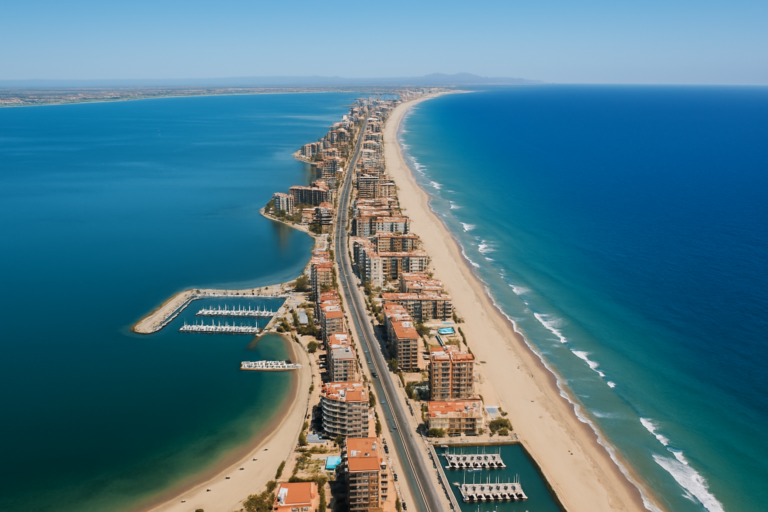
- La Manga del Mar Menor — 20 km, La Manga del Mar Menor is a narrow strip of sand
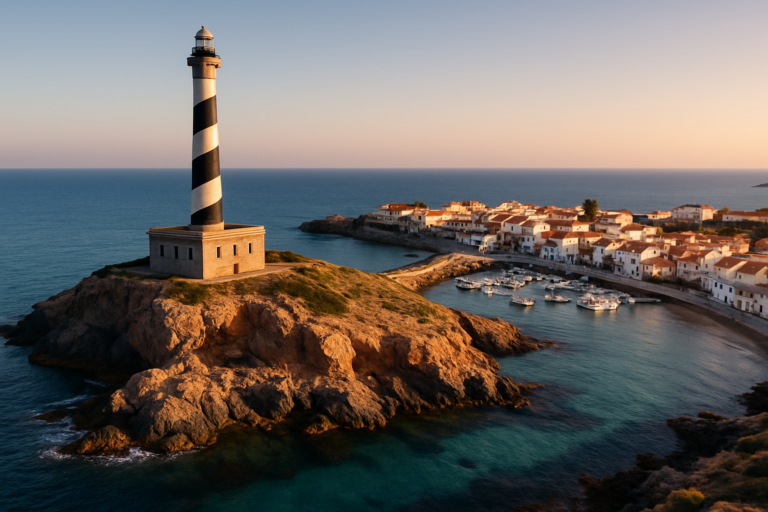
- Cabo de Palos — 22 km, Cabo de Palos is a fishing village marked by a striking
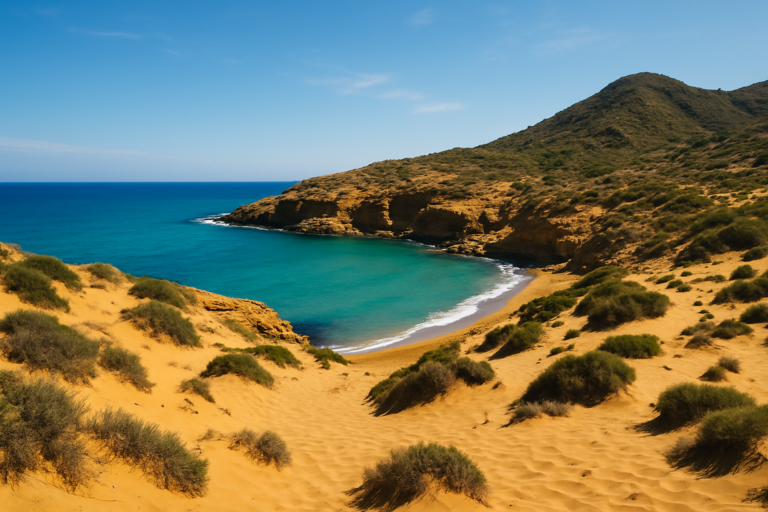
- Calblanque — 25 km, Calblanque is a protected regional park of golden dunes
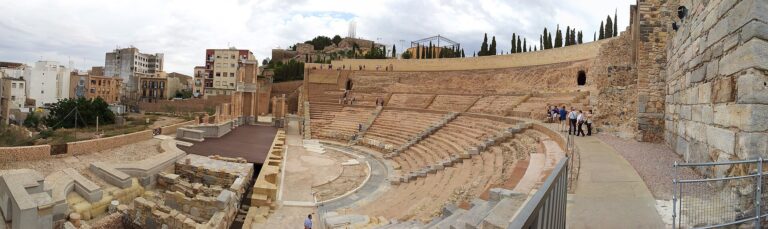
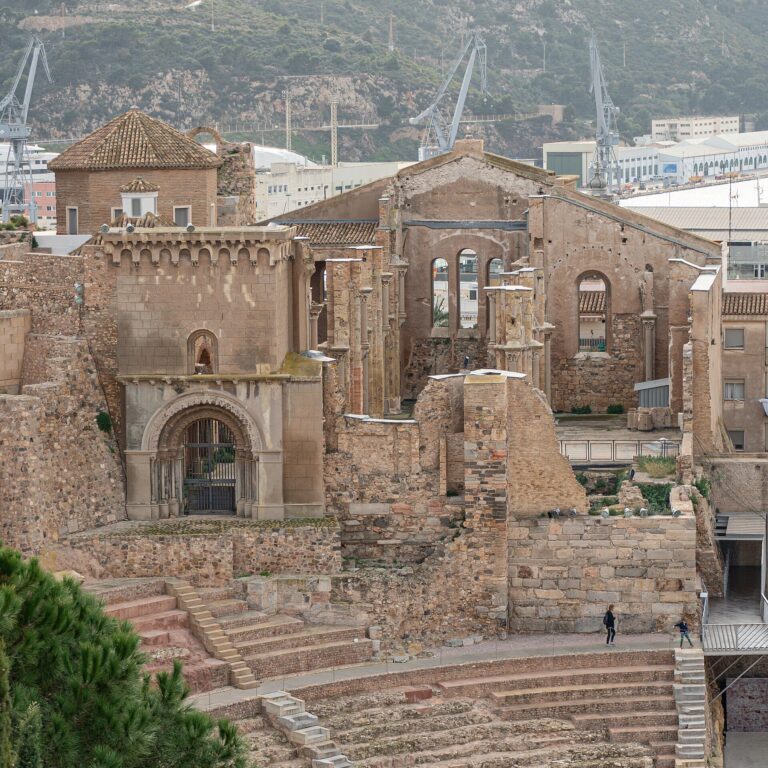
- Roman Theatre of Cartagena — 26 km
For the wider picture, see the Costa Cálida guide, which lists every town on this coast.
Frequently asked questions
How do I get to the nearest airport?
The present Murcia–San Javier Airport occupies land that was formerly a military airfield. That historical continuity makes it the nearest aviation facility tied to the municipality. For up-to-date flight schedules, services and transport connections consult current airport information before planning.
Is the area expensive to visit?
No verified, current price or cost-of-travel figures were included among the grounded claims used in this guide, so we do not present an average cost. General expectations should follow typical small-town coastal patterns: moderate, locally run hospitality options alongside standard seaside amenities. Check local listings for specifics on accommodation and dining prices.
Which beach is best for families?
Beaches along the Mar Menor shoreline and the seafront of Santiago de la Ribera are characterised by shallow, sheltered waters suitable for children. The lagoon environment tends to provide gentler conditions than open-ocean beaches, making them a practical family choice.
How many days do I need to see the town and the coast?
Because the municipality comprises a main town and ten smaller villages, plus the coastal settlements, plan for at least one full day to orient yourself (seafront and a village or two) and two to three days to explore the aviation sites, the Mar Menor shoreline and a sample of local villages at a relaxed pace.
Is this a good destination for children?
Yes—if your idea of a family holiday is straightforward beach time, easy promenades and short educational outings. The lagoon’s calm waters are an asset for younger children. If you need theme-park attractions or large-scale children’s entertainment, those are not emphasised in the grounded information used here.
Can I get around without a car?
Walking covers seafront stretches and village centres within the main settlements. For travel between the town and the ten smaller villages, public or private road transport is the practical option; verify local bus schedules or arrange car hire if you need flexible access to dispersed sites.
Is parking available?
Specific parking locations and rules were not part of the grounded claims. The municipality contains a range of settlement types—seafront areas and village centres—so expect typical local parking arrangements; check current local guidance for exact spots and any paid zones.
What can I do on a rainy day?
The grounded facts emphasise historical and institutional sites: the town’s origins around an 18th-century church, the Via Augusta Roman route, and the San Javier General Air Force Academy (established 1943). On quieter or wet days, pursue heritage walks in the town centre and villages, and visit any local museums or interpretation centres—confirm opening times locally.
When is the best time to visit the coastline?
Historical and geographic sources note that the area was prized for its climate in Roman Hispania, suggesting generally mild, attractive conditions for visits. For specific seasonality, contemporary weather data and local event calendars should be checked to match your travel priorities.
Are there archaeological remains to see?
Yes: a major Roman road, the Via Augusta, passes through the territory. Visitors interested in Roman Hispania will find the Roman infrastructural footprint an important part of the area’s deep history; local signage or interpretation may point to specific stretches and finds.
What is special about the Mar Menor here?
The Mar Menor is a shallow coastal lagoon historically prized for its climate and for a salt industry that developed along its shores. That combination of lagoon ecology and industrial heritage gives the coastline a distinctive character compared with open-Mediterranean beaches.
Are there notable people from the town?
Yes. Among notable locals are Borja Gómez, a motorcycle racer, and Antonio Cañadas, a footballer; both are linked to the municipality.
Is there much nightlife?
The grounded claims do not highlight nightlife as a defining feature. The municipality and its coastal settlements are better known for beaches, local history and aviation heritage than for bustling nightlife districts.
How did local governance change over time?
Political history includes the abolition of the town council during the Trienio Liberal and its subsequent reinstatement in 1836—an example of how 19th-century political upheaval affected municipal structures here.
How has aviation shaped the area?
Aviation is central to the town’s 20th-century identity: the San Javier General Air Force Academy dates from 1943 and the modern airport occupies the site of a former military airfield. This legacy is visible in the built environment and transport history.
Plan the wider trip
San Javier on the map
Places worth knowing near San Javier
How this page is maintained. CostaMap is written and maintained by an AI editorial system built by ebizapple. Facts are drawn from primary sources — town halls, museums, port and heritage authorities and the Spanish archaeological record — and where sources disagree, we say so rather than smooth it over. Photographs marked as ours are taken on location. This page was last reviewed on 11 August 2026. Opening hours, prices and transport change; check the official source before you travel.