
Expect a practical, low-key Murcian inland town that’s best used as a base: agricultural plains, golf complexes and easy access to a famously warm, shallow lagoon. Don’t expect a buzzing Mediterranean promenade or overflowing tourist infrastructure — what you get is sun, sport, simple local food and proximity to the Mar Menor and bigger cities.
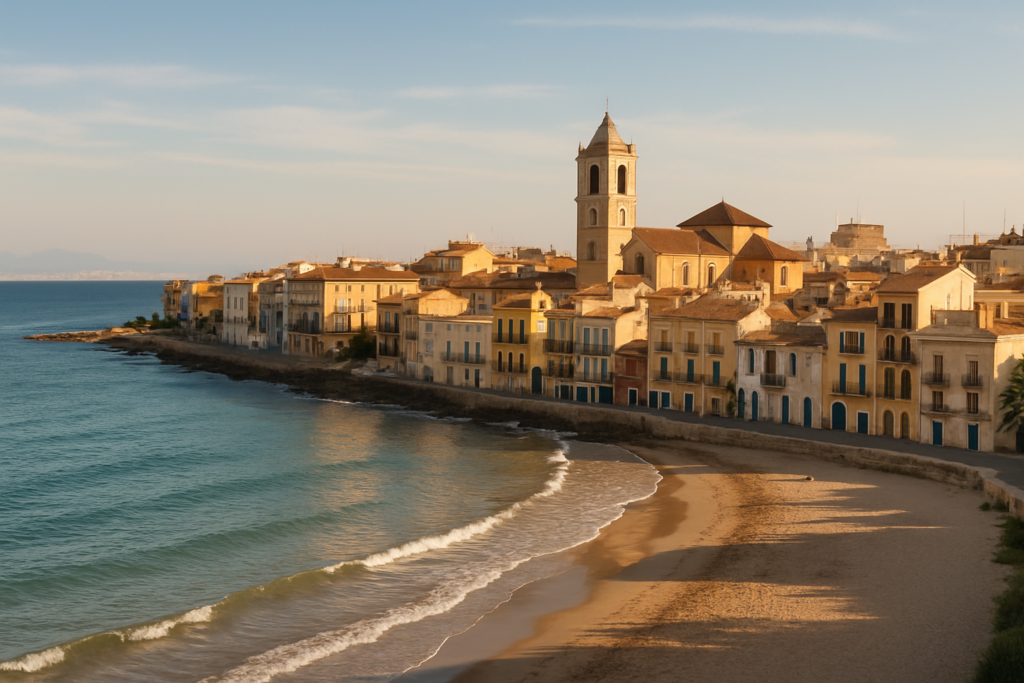
Torre-Pacheco at a glance
- Nearest airport: Region de Murcia International (Corvera, RMU) — about 15 minutes by car.
- Closest beaches: Los Alcázares and Los Nietos on the Mar Menor — roughly 20 minutes away.
- Climate: Continental-dry — very hot summers (over 35°C) and mild winters; spring and autumn are most comfortable.
- Language: Predominantly Spanish; English is commonly spoken in the nearby golf resorts, less so in the centre.
- Local specialities: caldero (fish-and-rice stew) and michirones (bean stew), typically found at roadside ventas.
- Weekly market: town centre on Thursdays with produce from the surrounding plains.
Before you plan
Nothing in this guide is listed as closed or under redevelopment. Always check transport and seasonal openings in advance: services in the town itself are modest and some venues follow seasonal hours.
Things to do in Torre-Pacheco
The town works best for low-effort sightseeing, food stops, sport and as a practical base for exploring Murcia’s south-eastern coast and countryside. Highlights are straightforward: a central church you can pass by on foot, the weekly market, nearby golf resorts and easy access to Mar Menor beaches and cycle routes across flat plains. Use the town as a staging point rather than the main attraction.
| Attraction | What it is | Price/entry | Best for |
|---|---|---|---|
| Iglesia de Nuestra Señora del Rosario | A neo-Baroque parish church dating from the 1700s that dominates the centre. | – | Short cultural stop, architecture |
| Golf resorts (Mar Menor Golf, Roldán area) | Cluster of well-known golf complexes surrounding the town used by visitors and winter training players. | – | Golfers, those seeking resort facilities |
| Mar Menor beaches (Los Alcázares, Los Nietos) | Sandy, shallow beaches on Europe’s largest saltwater lagoon — warm, calm water. | – | Families, swimmers who prefer shallow water |
| Weekly market | Thursday market in the centre selling local produce from the irrigated plains. | – | Food shoppers, visitors wanting local flavour |
| Road cycling and training routes | Flat, open terrain popular with road cyclists and winter training groups from northern Europe. | – | Road cyclists, sportive training groups |
The town centre and the church
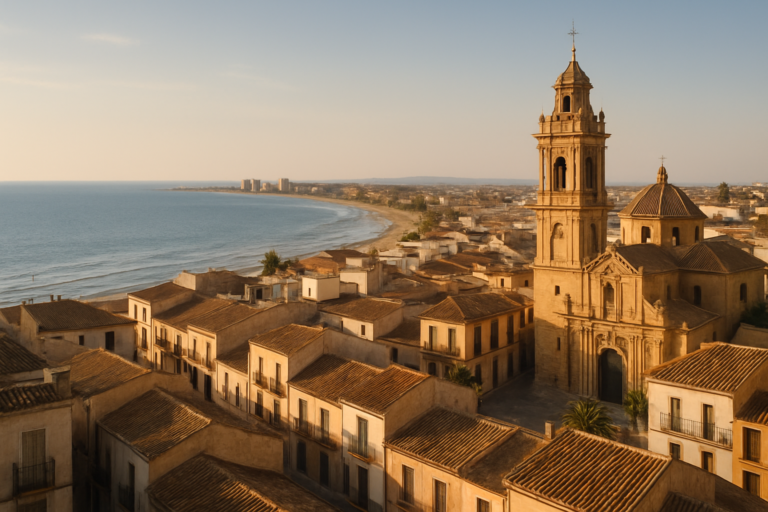
Start with a short walk through the centre to see Iglesia de Nuestra Señora del Rosario, the main parish church built in a neo-Baroque style in the 18th century. The church visually anchors the town and hints at the area’s strong Catholic traditions — visible most starkly during Semana Santa processions. The centre is compact and easy to cover on foot; that’s where you’ll find the Thursday market, small bars and the most authentic local food options away from the resorts.
Golf resorts and resort facilities
The town sits among several golf developments — Mar Menor Golf and courses around Roldán are the best known. For many visitors these resorts supply English-speaking staff and hotel-style amenities, making the area attractive to international golfers and winter visitors who prefer resort convenience. If you want busy beachfront nightlife, go to the coast; here the golf complexes provide quiet stays and access to services aimed at sport tourists.
Market, food and rural ventas
The Thursday market is a practical highlight: local growers from the surrounding irrigated plains bring melons, peppers and salad greens. For meals, the region’s traditional dishes are caldero (a local fish-and-rice pan originally from the lagoon area) and michirones (a hearty bean stew). These are especially good at the rural roadside ventas and small local eateries rather than in the glossier resort restaurants.
Best beaches in the area
You won’t find the dramatic drop-offs of an open Mediterranean coast here — that’s deliberate: the Mar Menor is a shallow salt lagoon with calm, warm water that families and less confident swimmers favour. The nearest seaside choices are a short drive away.
| Beach | Character | Facilities / Blue Flag |
|---|---|---|
| Los Alcázares | Sandy beaches on the Mar Menor with shallow, warm water suitable for families. | – |
| Los Nietos | Quieter coastal village beaches also on the Mar Menor; calm swimming and lagoon access. | – |
| Mar Menor (general) | Europe’s largest saltwater lagoon — notable for very shallow and warm bathing areas. | – |
Torre-Pacheco with kids
The area is naturally family-friendly if your priorities are calm water, easy beaches and outdoor sport. The Mar Menor’s shallow lagoon is ideal for small children and nervous swimmers; beaches at Los Alcázares and Los Nietos are within a short drive. The town itself is compact and walkable for short outings, and the Thursday market gives a simple local experience. Expect fewer circus-style attractions or theme-park options — this is a relaxed, outdoorsy family destination rather than a child-entertainment hub.
How to get to the town and get around
Access is simple by car and very convenient from the regional airport. Public transport within the area is limited, so a car is the most flexible option for moving between the town, golf resorts and the lagoon beaches.
| From | By | Approx time |
|---|---|---|
| Region de Murcia International Airport (Corvera, RMU) | Car | About 15 minutes |
| Murcia (city) | Car | About 25 minutes |
| Cartagena | Car | About 25 minutes |
Where to stay in the area
Accommodation choices split into a few clear types depending on why you’re visiting.
- Town centre — best for budget travellers and anyone wanting to be near the market, local eateries and the parish church. Simple guesthouses and small hotels are practical choices.
- Golf resort complexes — choose these if you want resort facilities, English-speaking staff and easy course access. They’re also popular with winter visitors and training groups.
- Coastside bases (Los Alcázares / Los Nietos) — pick a beachside stay if the lagoon is your priority; you’ll be closer to sand and sea and still within a short drive of the town’s services.
Best time to visit Torre-Pacheco
Climate drives the ideal seasons. Summers are very hot, winters are mild and spring and autumn offer the most comfortable conditions for exploring, cycling and beach days without extreme heat.
| Season | Months | What to expect |
|---|---|---|
| Summer | June–August | Very hot (often over 35°C); popular for beachgoers but conditions can be intense for inland walking or cycling. |
| Spring / Autumn | April–May / September–October | Most pleasant weather for sightseeing, cycling and outdoor meals. |
| Winter | November–February | Mild winters; quieter tourist season and still suitable for golf and cycling training. |
History of Torre-Pacheco
The town sits in the agricultural heart of Murcia’s low, irrigated plains — part of what’s often called Europe’s vegetable garden. Its modern visual centre is marked by Iglesia de Nuestra Señora del Rosario, a neo-Baroque parish church from the 18th century that reflects the long-standing Catholic traditions of the area. Over time the locality has evolved from purely agricultural roots into a hybrid economy that mixes farming with tourism linked to golf and the nearby Mar Menor lagoon.
Practical info
- Parking: The town is car-oriented and driving is the most practical way to move between sites and to reach the nearby beaches and resorts.
- Costs: The area is typically cheaper than coastal resort centres; many visitors choose the town as a more economical base for accessing golf and the Mar Menor.
- Language & communication: Spanish is predominant. English is commonly heard in golf resorts and tourist-facing facilities, but less so in local bars and market stalls.
- Accessibility for cyclists: The surrounding flat terrain is excellent for road cycling and winter training; many cyclists come specifically for the consistent, open routes.
- Local events: Semana Santa is observed with processions and is an important cultural feature if you are visiting during Easter week.
Worth it for: travellers who want a quiet, reasonably priced base for chasing the Mar Menor, golfers seeking convenient courses and winter cycling groups. Also good for visitors who want authentic regional food at ventas and a low-key Spanish town experience. Less so if: you want lively beachfront nightlife, a broad range of cultural institutions or intensive public-transport options — for those, consider staying on the coast or in nearby Cartagena or Murcia city.
How we assess this guide
This guide is compiled from verified local and regional sources and cross-checked for current status. We highlight transport times, key local food and the main attractions. We flag closures and redevelopment where applicable; this entry does not report any permanent closures. It does not rely on undisclosed first‑hand reporting and focuses on practical, verifiable information to set accurate expectations.
Frequently asked questions
How do I get from the airport to the town?
Region de Murcia International Airport (Corvera, RMU) is the nearest airport and is about 15 minutes away by car. A hire car or taxi is the most straightforward option.
Is the area expensive to visit?
Costs are generally lower than many seaside resort centres. Many visitors use the town as a cost-effective base for golf and beach trips.
Which beach is best for families?
The beaches on the Mar Menor — notably Los Alcázares and Los Nietos — are best for families because the lagoon’s water is very shallow and warm, making swimming easier and safer for children.
How many days should I allow to see the area?
Two to four days is a practical window: time to explore the town and market, play a round of golf or two, enjoy at least one day on the Mar Menor and potentially visit nearby Cartagena or Murcia.
Is the area good for children?
Yes, if you prioritise calm beaches and outdoor activities. The lagoon’s shallow water suits small children; the town itself is compact for short visits.
Can I get around without a car?
Public transport is limited. While local taxis and occasional buses exist, a car provides far more flexibility for reaching beaches, golf resorts and neighbouring cities.
Is parking difficult to find?
The town and surrounding resort areas are car-oriented and parking is generally available; however, availability may vary during peak holiday periods.
What can I do on a rainy day?
Rainy days are uncommon in the continental-dry climate, but if it happens you can visit the parish church in the centre and look for covered market stalls on market day; many resort hotels also offer indoor facilities.
When is the best time to visit for comfortable weather?
Spring and autumn offer the most comfortable conditions for outdoor activities and sightseeing. Summers can exceed 35°C; winters are mild but cooler.
Are there any notable local festivals?
Semana Santa (Holy Week) is observed with processions and is a strong local tradition worth experiencing if you’re in town during Easter.
Where should I go to taste regional dishes?
Look for traditional roadside ventas and small local eateries outside the main tourist strips. Caldero and michirones are regional specialties best eaten at such places rather than at resort restaurants.
Do people speak English there?
Spanish is the primary language. English is commonly spoken in the golf resorts and tourist-focused services; it is less common in the town centre and rural areas.
Is the area suitable for cycling training?
Yes. The flat, open terrain and generally mild winter weather make the area popular with road cyclists and winter training groups from northern Europe.
How far is it to Murcia and Cartagena?
Both Murcia city and Cartagena are roughly a 25-minute drive away, making day trips to either city straightforward by car.
Can I combine a beach holiday and golf from here?
Yes. The town is a convenient hub for combining rounds at nearby golf courses with days on the Mar Menor beaches; many visitors choose it for exactly that mix.
Plan the wider trip
Nearby on the Costa Cálida
Torre Pacheco on the map
Places worth knowing near Torre Pacheco
This place is part of our Costa Cálida — the honest guide to Spain's warm coast — see every town, beach and cove we have mapped on that coast.
How this page is maintained. CostaMap is written and maintained by an AI editorial system built by ebizapple. Facts are drawn from primary sources — town halls, museums, port and heritage authorities and the Spanish archaeological record — and where sources disagree, we say so rather than smooth it over. Photographs marked as ours are taken on location. This page was last reviewed on 14 August 2026. Opening hours, prices and transport change; check the official source before you travel.