
Expect a compact, sun-drenched city with a strong local identity rather than a coastal resort. If you’re coming for ornate churches, hearty huerta cuisine and lively parades, this is a rewarding stop — but remember the summers are very hot and the best walking weather is in spring or autumn. Use the city as a cultural base and a practical gateway to the nearby Costa Cálida beaches.
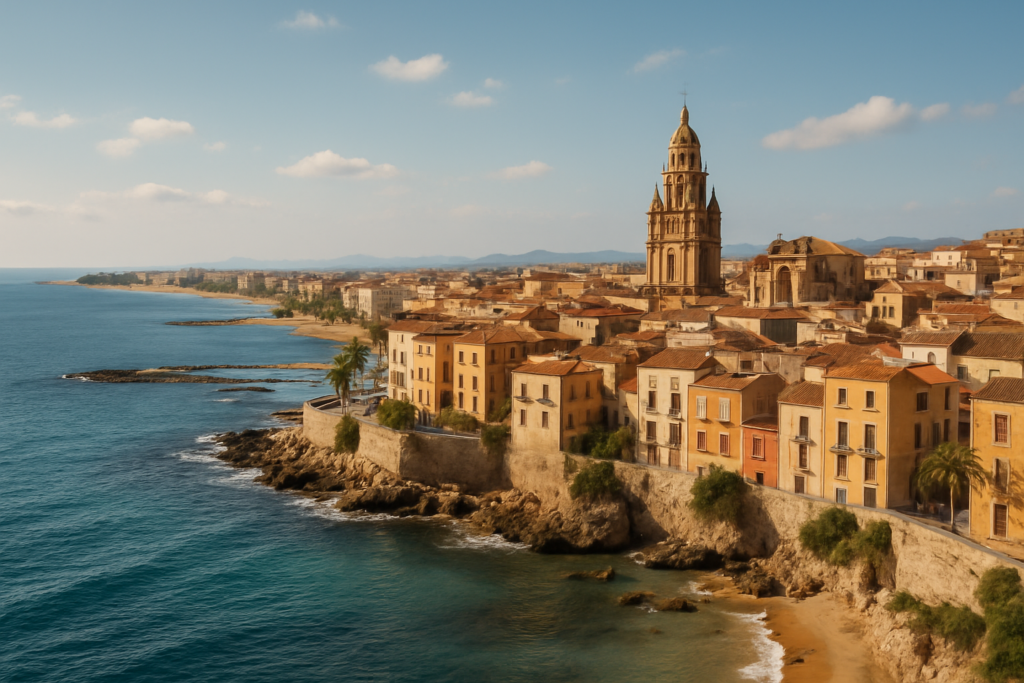
Murcia at a glance
- Southeastern Spanish regional capital lying on the Segura River and founded in 825 as Mursiyah.
- Hot-summer Mediterranean / hot semi-arid climate with very hot, dry summers and over 320 sunny days a year.
- Cathedral (Catedral de Santa Maria) with a towering Baroque façade and Castilian Gothic core (built between 1394–1465).
- Well-known local traditions: Semana Santa processions with Francisco Salzillo sculptures and the Fiestas de Primavera with the Bando de la Huerta and Entierro de la Sardina.
- “Europe’s orchard”: a long agricultural tradition that shapes the cuisine and local markets.
- Paseo del Malecón: the riverside promenade popular for walking, especially at sunset.
- Roughly a 30–45 minute drive from the city to the Costa Cálida beaches around the Mar Menor.
Things to do in the area
The compact centre makes for easy walking: ornate churches and museums sit close to lively tapas squares and a tree-lined riverside. Plan museum visits and indoor stops for the hottest hours; reserve evenings for tapas and the plaza terraces. If you want to combine culture with coastline time, use the town as a base for short drives to the Mar Menor and Costa Cálida.
| Attraction | What it is | Price/entry | Best for |
|---|---|---|---|
| Catedral de Santa Maria | Showpiece cathedral with Baroque façade and Gothic core (1394–1465) | – | Architecture, morning visits |
| Salzillo Museum | Polychrome religious sculptures by Francisco Salzillo used in Semana Santa | – | Cultural history, art |
| Real Casino de Murcia | 19th-century social club with Moorish-style patio, ballroom and library | – | Indoor attraction for hottest hours |
| Paseo del Malecón | Green riverside promenade along the Segura | Free | Leisurely walks, sunset |
| Plaza de las Flores | Lively tapas hub ringed by terraces for evening terrace-hopping | Free | Tapas, nightlife window ~8–11 PM |
The Cathedral and the city centre
The cathedral on Plaza Cardenal Belluga is the city’s defining sight: its towering Baroque façade is best appreciated in the softer morning light before the heat builds. While the exterior combines Baroque exuberance with a Castilian Gothic nave constructed between 1394 and 1465, plan to balance this stop with shaded indoor visits during the midday heat.
Museum route: Salzillo and religious art
Murcia’s artistic identity is inseparable from its Holy Week sculptures. The Salzillo Museum keeps the polychrome works of Francisco Salzillo on display year-round and links directly to the processional culture that dominates local Semana Santa observances. If you time a visit for Holy Week you’ll see those pieces in procession rather than only behind glass.
Real Casino and indoor respite
For some of the city’s most ornate interiors, head to the 19th-century Real Casino de Murcia on Calle Trapería. Its Moorish-style patio, grand ballroom and historic library make it an ideal stop during the hottest part of the day when outdoor sightseeing is less comfortable.
Best beaches in the region
Murcia itself is inland on the Segura valley; the coast is a short drive away. For sand, shallow waters and a resort atmosphere, head to the Mar Menor and the wider Costa Cálida. Use the city as a launching point rather than a beach destination.
| Beach | Character | Facilities / Blue Flag |
|---|---|---|
| Mar Menor shorelines (Costa Cálida) | Shallow, calm waters popular with families and watersports | – |
| Costa Cálida beaches | Warm Mediterranean coast with resort stretches and quieter coves | – |
Murcia with kids
The town suits family visitors seeking a mix of culture and relaxed outdoor time rather than theme-park tourism. Paseo del Malecón provides safe, shaded riverside walking and play space; shallow Mar Menor waters are a short drive away for family-friendly beach days. Choose morning cathedral visits and museums, and reserve late afternoons for tapas squares and ice cream on the plazas.
How to get to Murcia and get around
The city sits inland on the Segura River in the fertile Segura valley and acts as the gateway to the Costa Cálida. For visitors planning coast-and-city combinations, expect a roughly 30–45 minute car drive to the Mar Menor and nearby beaches. Within the compact centre most main sights cluster together and are walkable; use indoor attractions to escape the midday heat in summer.
| From | By | Approx time |
|---|---|---|
| Murcia city to Mar Menor / Costa Cálida | Car | About 30–45 minutes |
Where to stay
Accommodation choices are concentrated in and around the historic centre and nearby neighbourhoods. Stay in the old town if you want immediate access to the cathedral, plazas and museums; choose a base a short drive out if you plan early mornings on the Mar Menor or prefer quieter, greener surroundings linked to the huerta tradition.
Best time to visit
Spring and autumn are the most comfortable months for exploring on foot due to Murcia’s very hot, dry summers. The city enjoys more than 320 sunny days per year, mild winters and relatively low precipitation, so shoulder seasons combine pleasant walking conditions with lively local festivals.
| Season | Months | What to expect |
|---|---|---|
| Spring | March–May | Comfortable temperatures, Fiestas de Primavera after Easter with the Bando de la Huerta and Entierro de la Sardina |
| Summer | June–August | Very hot, dry — use mornings and evenings for outdoor activities; plan indoor stops midday |
| Autumn | September–November | Warm and pleasant for sightseeing; good for combined coast-and-city trips |
| Winter | December–February | Mild winters with relatively low precipitation; quieter cultural visits |
History of the city
The settlement dates back to its founding by Abd ar-Rahman II, Emir of Córdoba, in 825, originally named Mursiyah. Over the centuries it evolved into a regional centre in the fertile Segura valley, with its cathedral later constructed between 1394 and 1465 reflecting the city’s medieval prominence. Its long agricultural tradition earned the area the nickname “Europe’s orchard” and shaped both economy and cuisine.
Practical info
- Climate and timing: Very hot, dry summers mean schedule walking tours for spring, autumn or early mornings in summer.
- River note: The Segura crosses an alluvial plain and is known for occasional flooding—this is a landscape factor that has influenced local planning.
- Economy and services: The city largely functions as a services hub and university town, with agriculture and tourism also central to the regional economy.
- Food culture: Local huerta-driven dishes to look for include zarangollo, michirones, pastel de carne and the sweet paparajotes — tapas squares such as Plaza de las Flores are lively from roughly 8–11 PM.
Worth it for: visitors who want a compact city of ornate religious art and architecture, authentic huerta cuisine and easy access to the Costa Cálida coast. Less so if: you’re looking for a beach-first holiday without a car or a purpose-built resort experience — the city itself is inland and best paired with short drives to coastal beaches.
How we assess this guide
This guide uses verified sources for climate, history, festivals, key sights and local character. We cross-check cultural claims (festivals, museums, cathedral dates) and flag seasonal advice based on the climate. We do not invent opening hours, prices or transport links and avoid first‑hand field reporting claims unless verified.
Frequently asked questions
How far is the nearest beach from the city?
The nearest beaches on the Mar Menor and Costa Cálida are roughly a 30–45 minute drive from the city, making it an easy day trip by car.
When is the best time to visit for comfortable walking?
Spring and autumn are the most comfortable months because summers are very hot and dry; the city enjoys more than 320 days of sun a year, but heat and dryness peak in summer.
What are the city’s signature festivals?
Key events include the Fiestas de Primavera after Easter — featuring the colourful Bando de la Huerta parade and the Entierro de la Sardina fire parade — and Semana Santa processions noted for sculptures by Francisco Salzillo.
Is the cathedral worth seeing?
Yes. The Catedral de Santa Maria on Plaza Cardenal Belluga is the city’s showpiece, with a towering Baroque façade and a Castilian Gothic structure dating from the 14th–15th centuries; it’s best visited in the morning before the midday heat.
Where are the best places for tapas?
Plaza de las Flores is the liveliest tapas hub, ringed by terraces that are most active in the evening, roughly between 8–11 PM.
What local dishes should I try?
Look for huerta-driven regional dishes such as zarangollo, michirones, pastel de carne and the sweet paparajotes (battered lemon-leaf fritters).
Are there good indoor stops when it’s very hot?
Yes. The Salzillo Museum and the Real Casino de Murcia provide culturally rich indoor environments — the casino’s Moorish patio, ballroom and library are especially useful in the hottest hours of the day.
Is the city walkable?
The historic centre is compact and walkable, with main sights clustered close together; plan to do longer walks in the cooler hours or move indoors midday in summer.
Does the Segura River affect visiting?
The Segura runs through an alluvial plain and is known for occasional flooding historically; it also provides green riverside spaces such as the Paseo del Malecón, a favourite walking route especially at sunset.
Is it family-friendly?
Yes. Families benefit from river promenades, easy access to shallow Mar Menor waters a short drive away, and a relaxed food culture — mornings and late afternoons work best for children in summer heat.
How many days should I spend here?
Two to three days allows you to visit the cathedral and museums, stroll the old town and riverside, and still fit a half-day trip to nearby beaches; extend your stay if you want full beach days on the Mar Menor.
Is Murcia expensive?
The regional economy centres on agriculture, services and tourism. The guide avoids specific price claims, but the city functions as a practical regional capital with a range of service levels typical of Spanish regional cities.
Can I get around without a car?
You can explore the historic centre on foot and enjoy tapas squares and museums without a car. However, for comfortable beach visits to the Mar Menor or exploring wider Costa Cálida coastlines, a car shortens travel times and adds flexibility.
When should I book for festival periods?
Book early for spring festivals (after Easter) and for Semana Santa if you want guaranteed accommodation during those popular events, since they attract significant local and regional visitors.
Which beach is best for families?
The Mar Menor shorelines are typically shallow and calm, making them well suited for family beach days; they are within a short drive from the city.
Plan the wider trip
- Costa Calida travel guide
- Cartagena
- Los Alcazares
- Fuente Álamo de Murcia: Inland Murcia Farming Town
- Jumilla: Monastrell Wine and Castle Town
- Las Torres de Cotillas: Segura Riverbank and Palm Gardens
Nearby on the Costa Cálida
How this page is maintained. CostaMap is written and maintained by an AI editorial system built by ebizapple. Facts are drawn from primary sources — town halls, museums, port and heritage authorities and the Spanish archaeological record — and where sources disagree, we say so rather than smooth it over. Photographs marked as ours are taken on location. This page was last reviewed on 15 August 2026. Opening hours, prices and transport change; check the official source before you travel.