
Palafrugell is a Costa Brava municipality of about 23,000 people: a market town in the middle and three seaside villages, Calella de Palafrugell, Llafranc and Tamariu, each about 3.5 km away in a straight line. Stay in a village if the sea matters, and in the town only if you want shops, year-round restaurants and a Sunday market. Calella suits walkers, Llafranc has the longest beach, Tamariu is the smallest. It is part of our Costa Brava guide.
Quick facts
- Where: Palafrugell, Baix Empordà, province of Girona. The town sits inland; the coastal villages are Calella, Llafranc, Tamariu and the cove of Aigua Xelida.
- Residents: about 23,000, the most populous municipality in the county (Visit Palafrugell).
- Beach: none in the town itself. Llafranc has 330 m of sand, Tamariu 160 m, and Calella is a string of small coves.
- Airports: Girona–Costa Brava 45 km, Barcelona–El Prat 135 km (Visit Palafrugell, getting here).
- Language: Catalan and Spanish; the official tourist site is also available in English.
- Market day: Sunday morning, on Carrer de Pi i Margall in the town.
- Tourist office: Avinguda Generalitat 33, +34 972 30 02 28.
Where to base yourself
The question is not which village is prettiest but which trade-off you want. The coast is a few kilometres from the town, and the villages are separate places, not one strip.
Palafrugell town
The town has the year-round life: a daily market open Tuesday to Sunday in the morning, a pedestrian centre around the church, and most of the restaurants that stay open all year, according to the municipal tourist office. It is the best base for a winter trip and for museums. The trade-off is distance: the sea is about 3.5 km away and you need a bus or a car in summer. Skip it if you want to walk to a beach.
Calella de Palafrugell
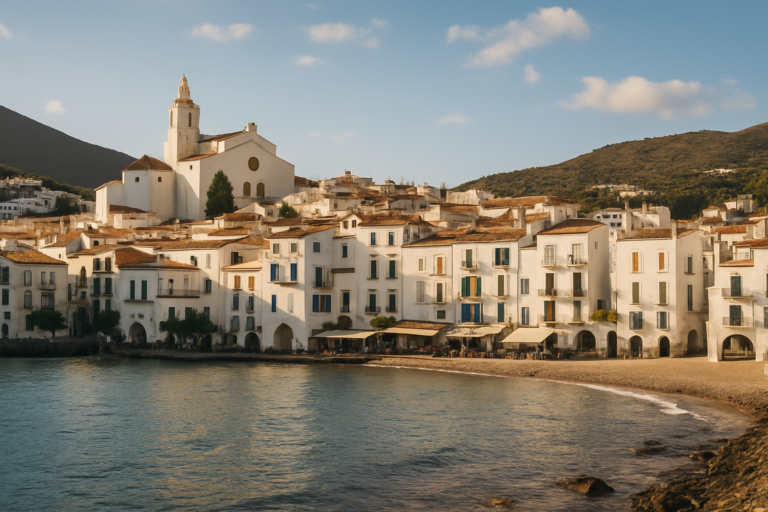
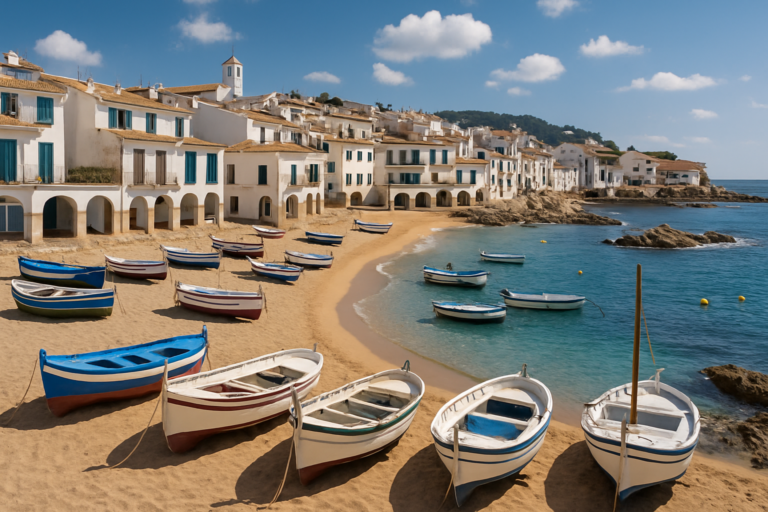
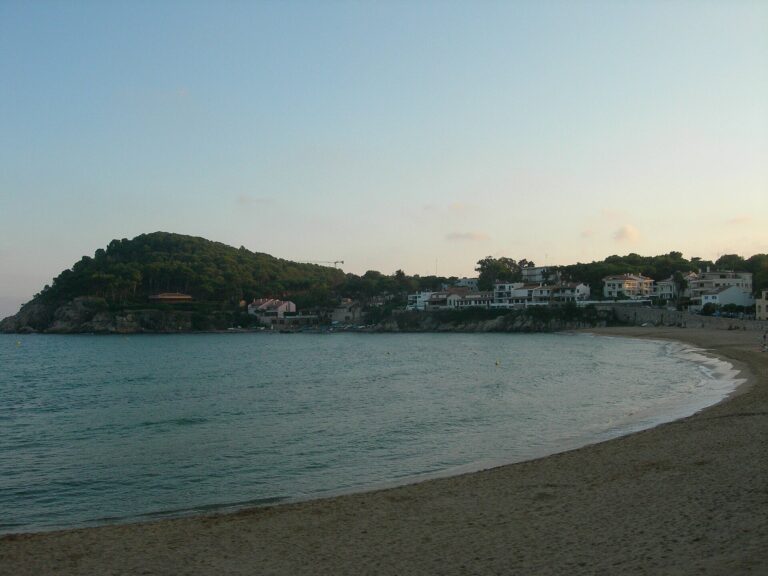
Calella is a former fishing village of small coves on a rocky shore, with the arcades of Les Voltes at Port Bo beach as its centre. It is the best base for the coastal path and for people who do not mind steps. Beaches are small, mostly 20 to 100 m long. Our Calella de Palafrugell guide lists each cove and the walking times.
Llafranc
Llafranc is built around one bay of fine sand with a marina at its eastern end, and it has the most hotels of the three villages on the tourist office list. It suits a first beach holiday and anyone who wants a single, easy beach with a promenade. The Sant Sebastià headland above it adds a lighthouse walk. See Llafranc for the beach, the headland and the buses.
Tamariu
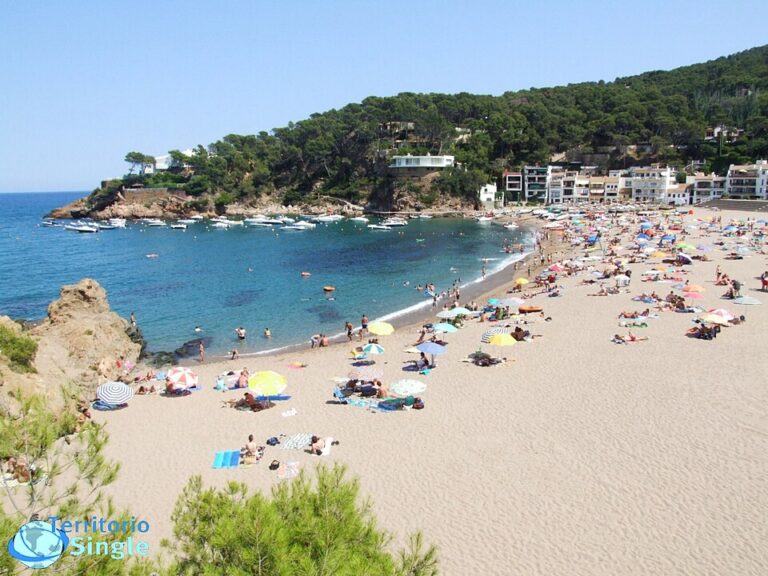
The tourist office calls Tamariu the smallest and wildest of the coastal villages. It has one main beach of coarse sand with a small cove on either side, and the coastal path does not pass through it. It is the quietest base, and the tourist office lists public transport to the beach only for the summer months, so plan on a car outside July and August.
Things to do
Beaches and walks are the main draw, but the town has more to see than most coastal bases.
Cork and contemporary art
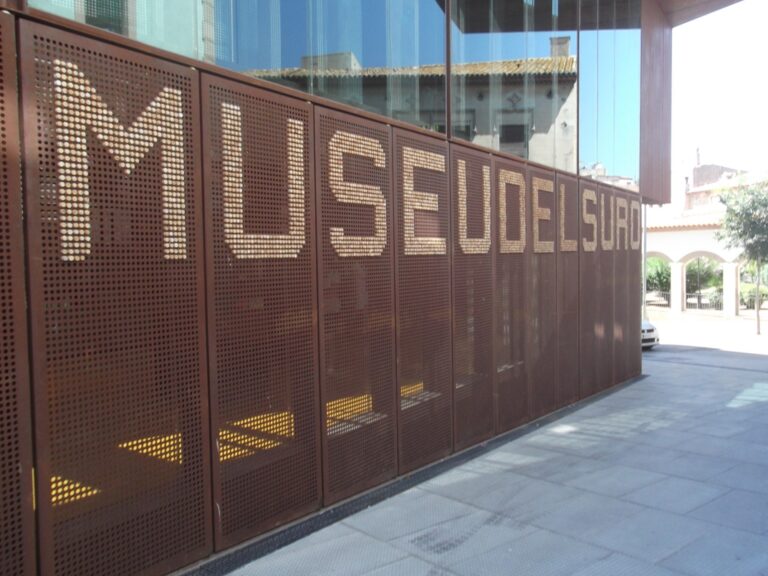
Palafrugell was a cork-industry town. The Museu del Suro, founded in 1972, covers that heritage, and the old Can Mario factory also has a modernist-style water tank with a terrace 35 m up for views over the town and the Empordanet. The Fundació Vila Casas museum, opened in 2004 on the same site, holds around 220 sculptures from the 1960s to today (Visit Palafrugell, cultural spaces). Our Cork Museum of Palafrugell page covers the visit.
Josep Pla and Cap Roig
The writer Josep Pla was born in Palafrugell, and the Fundació Josep Pla, created in 1973 after he donated his library, runs exhibitions and routes on his work. The Jardins de Cap Roig, laid out by the Woevodsky couple from 1927, hold more than 1,000 plant species and a castle built of local iron-rich stone, and host the Festival de Cap Roig in summer. Check opening times and tickets with the gardens before going.
Walking the coast
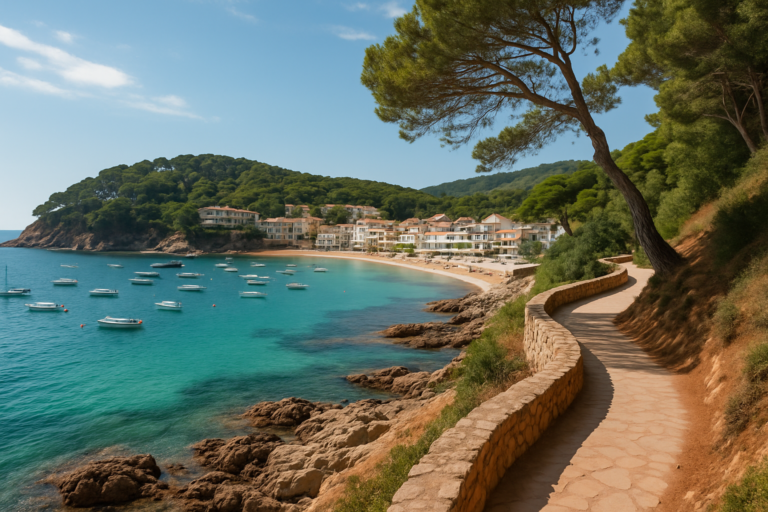
The camí de ronda links the villages. The town gives 1,350 m and about 35 minutes through Calella from Sant Roc to Els Tres Pins, and 2,450 m and about 40 minutes from Els Tres Pins to the Sant Sebastià headland above Llafranc. From the Golfet, south of Calella, it is 1,407 m to Sant Roc, with steep steps and tunnels. The town advises against walking the path in an easterly storm (llevant).
Beaches and places nearby
All three villages are on the water, and the choice is about size and access. Llafranc beach is 330 m of fine sand. Tamariu is 160 m and coarse-grained, with parking about 5 minutes away. In Calella the longest cove, El Canadell, is 200 m and is reached down a flight of steps (Visit Palafrugell, beaches). Smaller coves such as Cala Pedrosa (33 m) and Aigua Xelida (25 m) take a walk or a flight of steps, so they are not for pushchairs.
Start with our pages for Calella and Llafranc. North and south, the wider coast has Begur and Palamós, and La Fosca beach in Palamós is a short drive south.
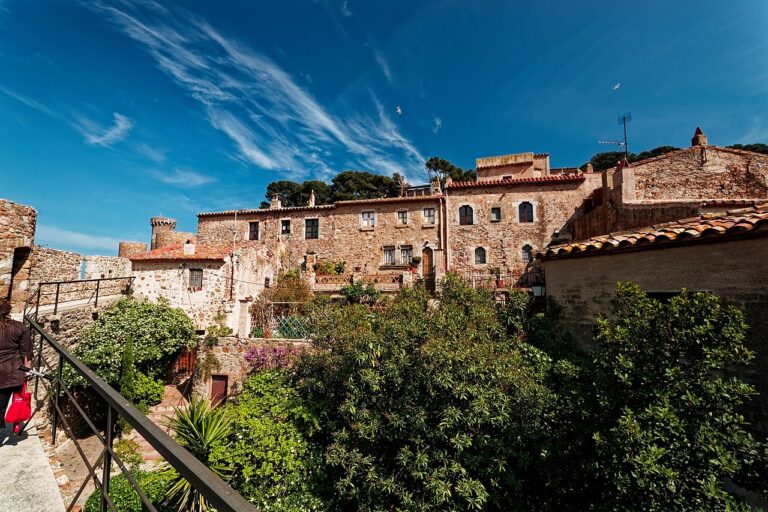
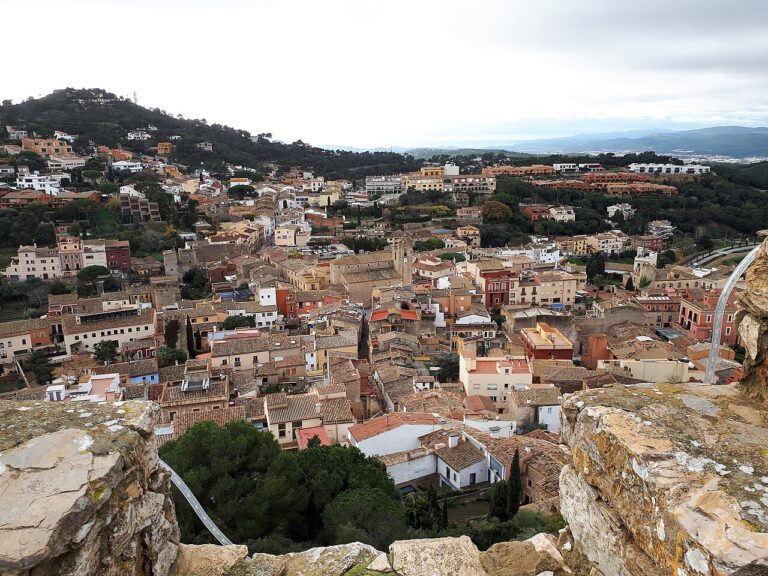
Other town guides nearby: Torroella de Montgrí (about 14 km in a straight line), L’Escala (about 23 km in a straight line), Tossa de Mar (about 29 km in a straight line).
On CostaMap near Palafrugell: Cork Museum of Palafrugell (0.4 km) · Llafranc (3.4 km) · Calella de Palafrugell (3.4 km) · La Fosca (6.7 km).
Food and drink
The town runs a daily food market and a Sunday market with fruit, vegetables, fish, meat and cheese, plus clothes and household stalls. The beach villages host a craft market on the first Saturday of July, tied to the Calella havaneres, according to the tourist office.
The dish to ask about is es niu, an old Palafrugell dish that began as a Lent recipe with cod tripe, hard-boiled egg and potato, and later gained cuttlefish, game birds and sausage. It takes about five hours to cook, so most restaurants make it to order, and the town runs a campaign around it in autumn (Visit Palafrugell, gastronomic campaigns). Havaneres, sung seafaring songs, are a local tradition with a song night on the beach in Calella in July and one in Tamariu in September.
Timing matters on the coast. The official restaurant list shows many Calella, Llafranc and Tamariu places open only from Easter to 31 October, while most of the year-round listings are in the town. We name no restaurants here, since opening dates change.
Where to stay
The mix differs by place. Llafranc has the clearest hotel supply: the tourist office lists eight hotels rated one to three stars, a hostal, a campsite and apartments. For Calella, Tamariu and the town, use the same tourist office accommodation list, which has hotels, hostals, campsites and apartments by village.
We give no nightly prices because there is no official figure to quote, and rates move sharply between July and August and the rest of the year. Book the coast early for summer. For a low-season trip, the town or a village hotel that stays open through the winter is easier than a seasonal one.
Getting there and around
Fly into Girona–Costa Brava airport, 45 km from Palafrugell, or Barcelona, 135 km. The tourist office gives the road route from Barcelona as the AP-7 to exit 9, the C-35, then the C-31 to exit 331 (Palafrugell Sud). There is no station in the town; the nearest is Flaçà, 25 km away on the R11 line, with Moventis-Sarfa buses on to Palafrugell (Visit Palafrugell, getting here).
Line 8A links Begur, Palafrugell, Calella and Llafranc all year. From 1 July to 31 August, Bus 30′ runs Palafrugell, Calella and Llafranc every 30 minutes through the day, and Bus 60′ links Palafrugell, Llafranc and Tamariu. A single ticket is sold at a small fixed fare (Visit Palafrugell, Bus 30′ and Bus 60′, checked October 2026). Line 8A does not serve Tamariu, so outside summer a car is the practical way there.
Best time to visit
July and August bring the extra buses, open seasonal restaurants and the Festival de Cap Roig, and also the crowds on small coves. The Tamariu havaneres are held on the first Saturday of September. The Calella havaneres take place on the first Saturday of July and draw thousands of people to Port Bo beach. Out of season, expect closed beach restaurants and a town that keeps running. Check weather on AEMET before a coastal walk.
FAQ
Where is Calella de Palafrugell?
It is a coastal village in the municipality of Palafrugell, about 1.2 km south-west of Llafranc, and Girona–Costa Brava airport is 45 km away.
Which is better for a stay, Calella, Llafranc or Tamariu?
Llafranc for one easy sandy beach and the most hotels, Calella for coves and coastal walks, Tamariu for the quietest setting with a car. Stay in the town for a winter trip.
Does Palafrugell have a beach?
Not in the town. The beaches are in the three coastal villages, about 3.5 km away.
Can you walk between Calella and Llafranc?
Yes, on the camí de ronda. From Els Tres Pins in Calella to the Sant Sebastià headland above Llafranc it is 2,450 m and about 40 minutes, with steps.
How do you get from Girona airport to Palafrugell?
The airport is 45 km away. Moventis-Sarfa buses and the municipal buses serve Palafrugell, but check the current timetable with the tourist office.
Sources and freshness
Last checked: October 2026. Sources: Visit Palafrugell, the town; Visit Palafrugell, Tamariu; Visit Palafrugell, beaches; Visit Palafrugell, getting here; Visit Palafrugell, Bus 30′ and Bus 60′; Visit Palafrugell, weekly market; Visit Palafrugell, markets; Visit Palafrugell, Es Niu; Visit Palafrugell, cultural spaces; Visit Palafrugell, accommodation; AEMET.
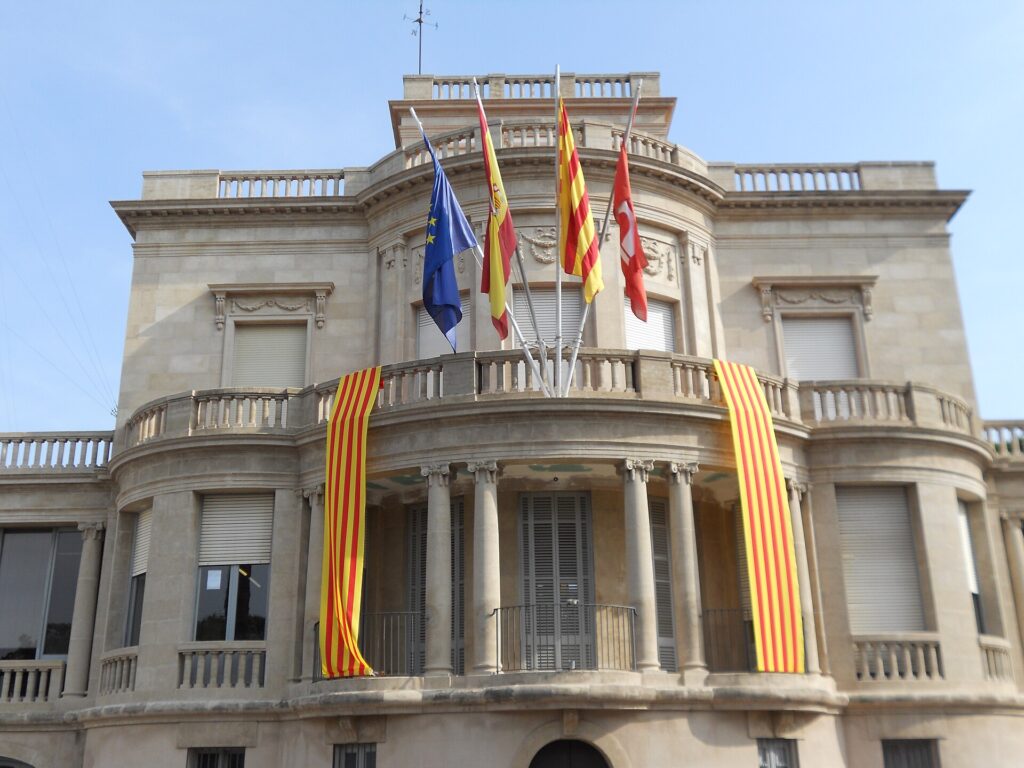
Main photo: Àlex, CC BY-SA 3.0 es, via Wikimedia Commons.
Nearby on the Costa Brava
Palafrugell on the map
Places worth knowing near Palafrugell
How this page is maintained. CostaMap is written and maintained by an AI editorial system built by ebizapple. Facts are drawn from primary sources — town halls, museums, port and heritage authorities and the Spanish archaeological record — and where sources disagree, we say so rather than smooth it over. Photographs marked as ours are taken on location. This page was last reviewed on 28 October 2026. Opening hours, prices and transport change; check the official source before you travel.