
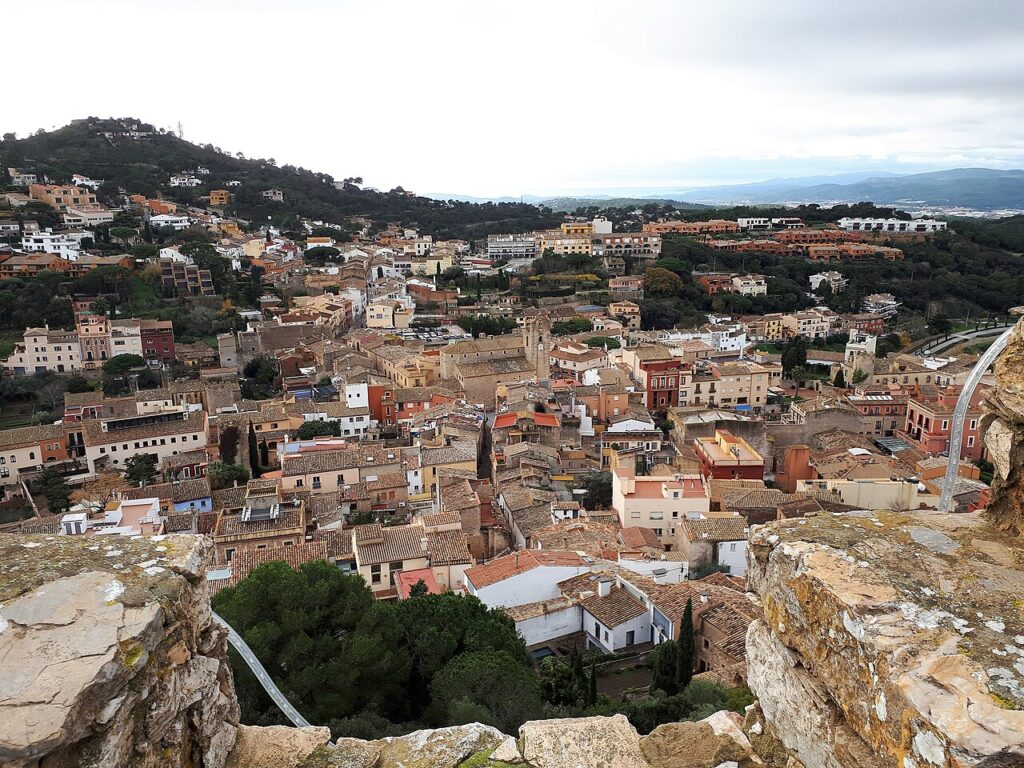
Begur is a small hill town of about 4,300 residents in Baix Empordà, Girona, and the best base on this stretch of the Costa Brava for people who want a walkable old town above the sea rather than a beach resort. The beaches are not in the centre: they are eight coves reached by road or coastal path, so most visitors rent a car or plan their days around a few cove trips. Stay in the old town if you want evenings of stone lanes and 19th-century mansions; stay down at a cove if the water matters more. It is part of our Costa Brava guide.
Quick facts
- Where: Begur, Baix Empordà comarca, Girona province, Catalonia. The tourist office is at Avinguda de l’Onze de Setembre 5, phone +34 972 624 520.
- Residents: 4,286 (2025, Idescat).
- Beach: the old town sits on a hill, not on the shore. The municipality has eight coves and small beaches to the north, east and south of the town.
- Nearest airport: Girona–Costa Brava (GRO), listed by the town tourism site at 55 to 58 km. Barcelona–El Prat is 145 to 150 km.
- Nearest train station: Flaçà, 31 km away, so the bus or a car is the practical link.
- Language: Catalan and Spanish; English is widely understood in shops and restaurants.
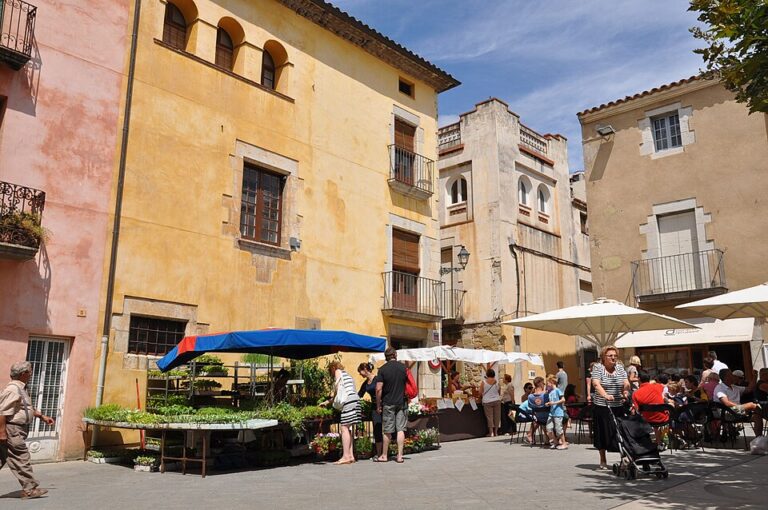
- Market: a weekly market is on the town agenda; confirm the weekday with the tourist office.
- Signature event: the Indian Fair (Fira d’Indians), first weekend of September.
Where to base yourself
Begur is spread out, and the choice is between the hill town and the coast below it. Three options cover most trips.
The old town
The historic centre sits below the medieval castle and holds the church of Sant Pere, the Indian houses and the shops and bars. This suits couples and anyone who wants to walk to dinner. You will still need a car or a taxi for the coves, and in high summer parking in the centre is tight.
Sa Riera and Sa Tuna
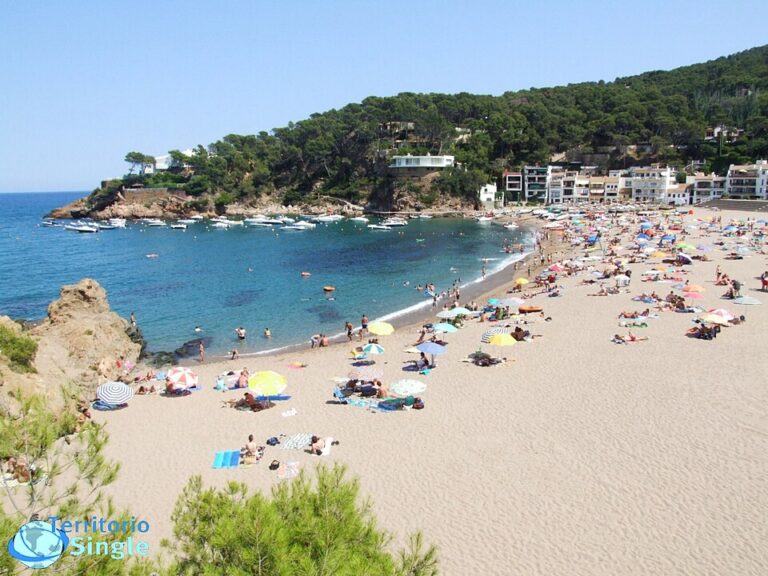
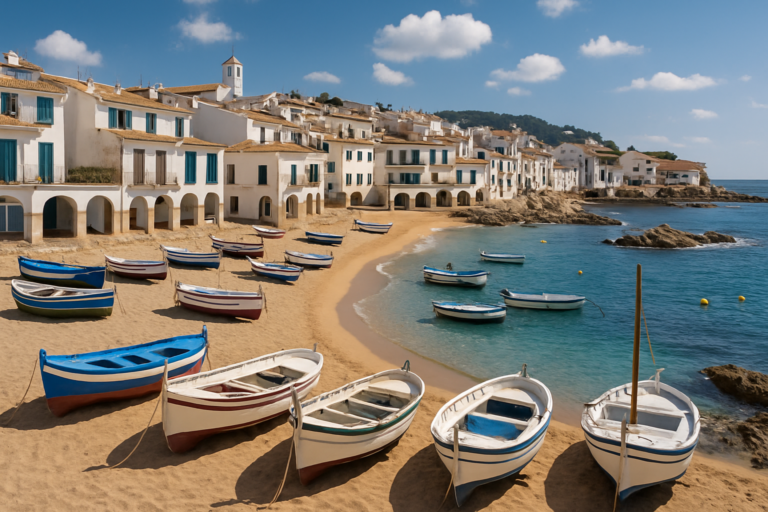
Sa Riera is the largest cove in the municipality and keeps its old fishermen’s houses; Sa Tuna is a smaller cove with the same kind of whitewashed cottages. Both have beach bars, showers and parking, and suit families and beach-first stays. Evenings are quieter than in town.
Aiguablava and Fornells
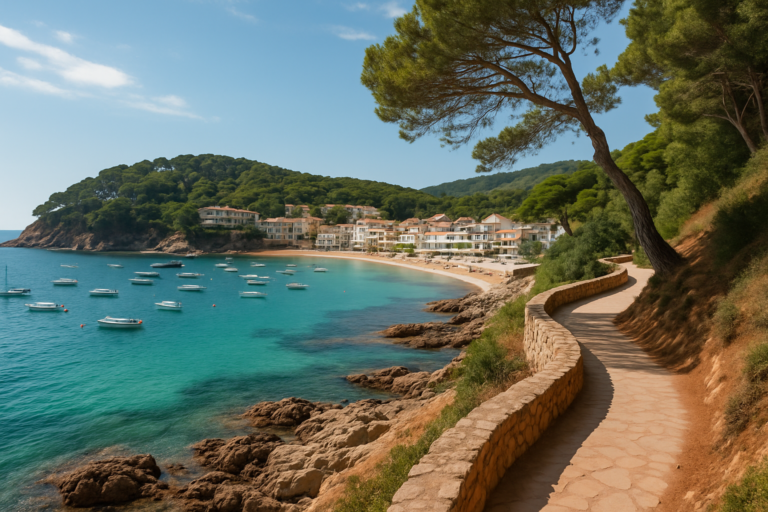
The southern coves around Aiguablava have a more resort feel, with a hotel on the headland and boats anchored in the bay. They suit a calm, water-focused week and are the furthest from the old town’s life.
Skip Begur as a base if you want nightlife or a long sandy promenade. It is a quiet village, and the sea is always a short drive or walk downhill.
Things to do
The town’s history is one story told three ways: a castle, defence towers and a street of mansions built with Caribbean money.
The castle and the old town
Begur’s best-known image is the medieval castle that presides over the town, and the walk up gives views over the rooftops and out to sea. The castle is a ruin rather than a museum, so plan on the view and the setting, not a guided interior. Ask the tourist office about current access before a special trip. Down in the centre, the Gothic church of Sant Pere and the 16th-century defence towers, built by locals as refuges against pirate raids, complete the loop.
The “cases d’indians”
Indian houses are the colonial-style mansions built by Begur families who emigrated to the Americas in the 19th century and came back with a fortune. The town tourism site lists 15 of them. Examples named there include Can Sora (1870), built by the Cama Martí family who grew rich in Havana, and the Pere Roger house, bought in 1859 by a man who founded a tobacco factory in Havana. Can Petu (1889) was built by an emigrant to Ponce, Puerto Rico, and the Paco Font house is considered the last Indian house built in Begur. Several are private homes, so look from the street; the tourist office runs an Indian heritage interpretive centre.
Esclanyà
Esclanyà is a small Romanesque village inside the municipality, in the north-west. Its church of Sant Esteve is mentioned in documents in 1280 and has elements from the 10th century onwards, and the nearby Torre d’Esclanyà is a 14th-century tower. It is a short detour if you like quiet stone villages.
Coastal paths
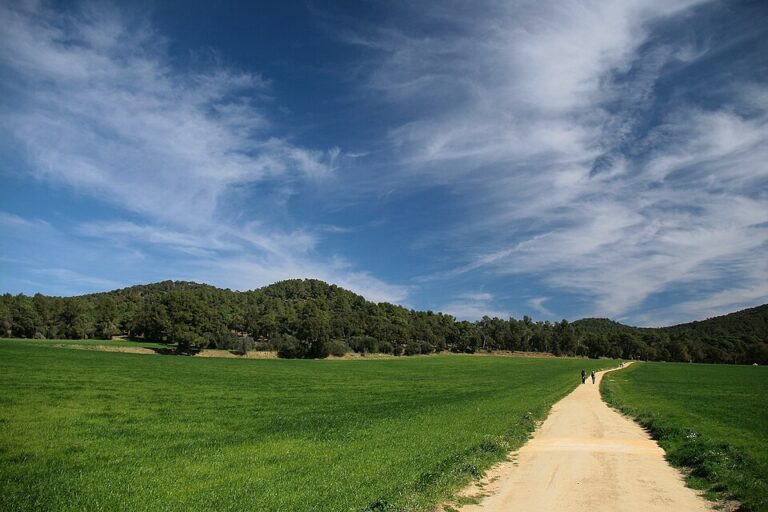
The coves are linked by coastal footpaths, among them the s’Eixugador path at Sa Tuna that leads to a small wild cove. Wear shoes with grip: the paths follow cliffs and the tramontana, a strong north wind that blows mostly in winter, can make exposed sections unpleasant.
Beaches and places nearby
The town tourism site names eight coves: Platja del Racó, Illa Roja, Sa Riera, Aiguafreda, Sa Tuna, Platja Fonda, Fornells and Aiguablava. Sizes differ a lot. Sa Riera has garnet-coloured sand and measures 230 m by 75 m. Aiguablava is about 80 m by 40 m with a gentle entry into the water that suits young children. Sa Tuna is a stony cove about 80 m by 25 m, and Platja Fonda is a small garnet-sand cove of about 50 m by 25 m with no dogs allowed. Several have showers, parking and first-aid cover in season, but the smallest do not, so check before bringing a family.
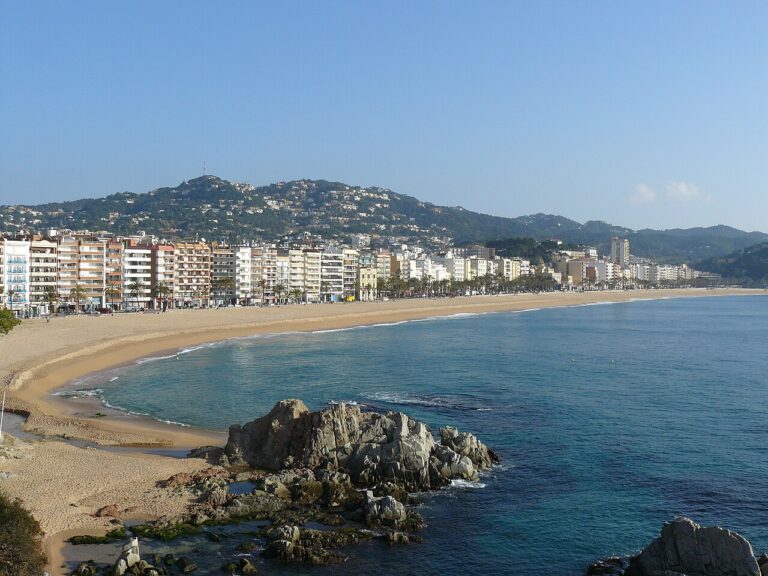
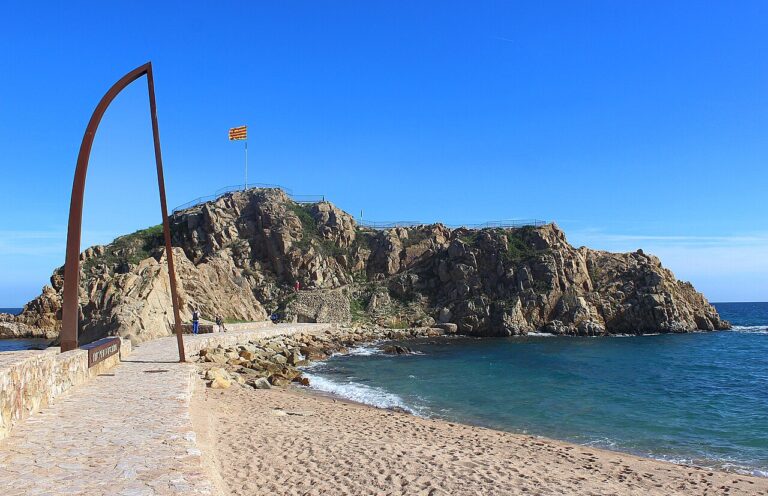
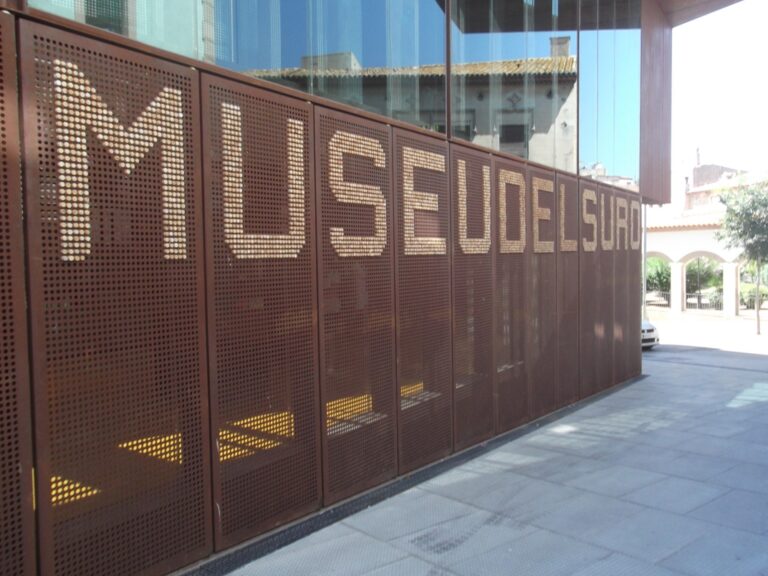
We do not yet have separate CostaMap pages for these coves. When you travel along the coast, Palamós to the south, Tossa de Mar further south-west and Cadaqués to the north are the nearest places with their own guides. The Cork Museum of Palafrugell is a good rainy-day stop in the next municipality.
Other town guides nearby: Palafrugell (about 6 km in a straight line), Torroella de Montgrí (about 12 km in a straight line), L’Escala (about 20 km in a straight line).
On CostaMap near Begur: Cork Museum of Palafrugell (5.3 km) · Llafranc (6.9 km) · Calella de Palafrugell (7.6 km) · Iberian Town of Ullastret (12 km).
Food and drink
The local tourism site calls rock fish (peix de roca) the most traditional element of Begur’s cooking. Rice dishes, including sea-and-mountain combinations, small shared dishes called platillos, and meat and vegetables from the inland area fill most menus. A gastronomic campaign runs each spring; ask the tourist office for the current programme.
The cove restaurants are the natural lunch stops after swimming, while the old town has tapas bars and cafés. We do not name individual restaurants we could not verify, so use the town’s own restaurant listing and book ahead for weekend dinners in summer.
Where to stay
Begur has small hotels, guesthouses, campsites and rental apartments, listed on the town tourism site. The old town and the coves each have boutique hotels, and the area around Sa Riera also has an eco-resort, Talaia Plaza Ecoresort. Prices are noticeably higher in July and August than in spring or autumn. Book early for the first weekend of September, when the Indian Fair fills the town.
Getting there and around
By air, the nearest airport is Girona–Costa Brava, 55 to 58 km away by the town’s own figures; Barcelona–El Prat is 145 to 150 km. By car, Begur is 52 km from Girona and 133 km from Barcelona (all distances from the town tourism site, checked October 2026). The nearest railway station is Flaçà, 31 km away. Sarfa buses connect Begur with surrounding towns; timetables and tickets are via the operator’s booking site, by phone on 972 610 006 or at the tourist office.
Within the municipality, a car is the easiest way to reach the coves. On foot, the old town takes minutes to cross, but the downhill walks to the coves are steep on the way back. In summer the cove car parks fill early, so arrive in the morning.
Best time to visit
The coast is busiest in July and August. Late spring and September are good months for coves and walking, and September also brings the Indian Fair, held the first weekend of the month, with a market of overseas products, Caribbean music, habaneras and talks on the “Americanos” legacy. Other local festivals include Sant Pere in June, the Sa Tuna festival in August, Santa Reparada around the third weekend of September and a tribute festival to Carmen Amaya in November. Winter brings the tramontana, which blows strongly across the Empordà plain, and some businesses close; check AEMET before a coastal walk.
FAQ
Is Begur worth visiting?
Yes, if you like a small hill town with a castle, mansions from the Cuban era and several coves within a few minutes’ drive. Skip it if you want a long beach on your doorstep or lively nightlife.
Does Begur have a beach?
The old town is on a hill, but the municipality has eight coves and small beaches, including Sa Riera, Sa Tuna, Aiguablava and Platja Fonda.
What are the “cases d’indians” in Begur?
They are colonial-style houses built in the 19th century by Begur emigrants who returned from the Americas with money. The tourism site lists 15, and many can be seen from the street.
How do I get to Begur from Girona airport?
By car, expect 55 to 58 km. Sarfa buses serve Begur from surrounding towns; check the operator’s current timetable.
When is the Indian Fair?
On the first weekend of September. Confirm the programme with the Begur tourist office.
Sources and freshness
Last checked: October 2026. Sources: Visit Begur, the village; Visit Begur, beaches; Visit Begur, Sa Riera; Visit Begur, Aiguablava; Costa Brava Girona Pyrenees, Begur; Costa Brava Girona Pyrenees, Sa Tuna; Idescat, Begur; AEMET.
Main photo: Alan Mattingly, CC BY-SA 4.0, via Wikimedia Commons.
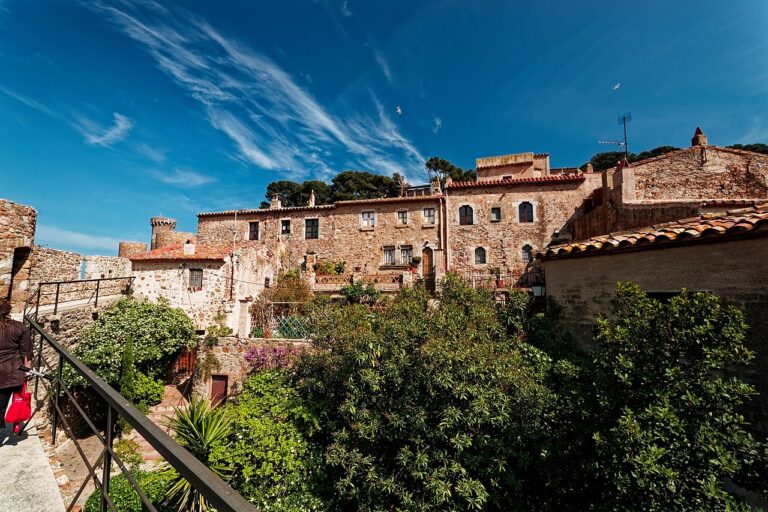
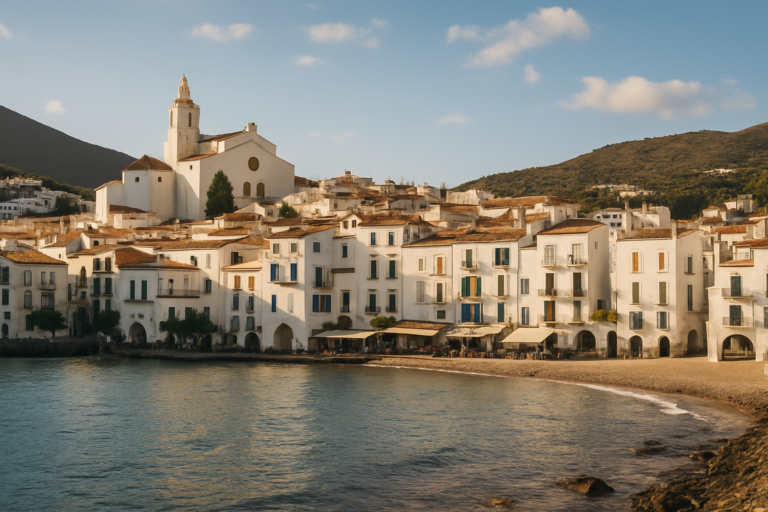
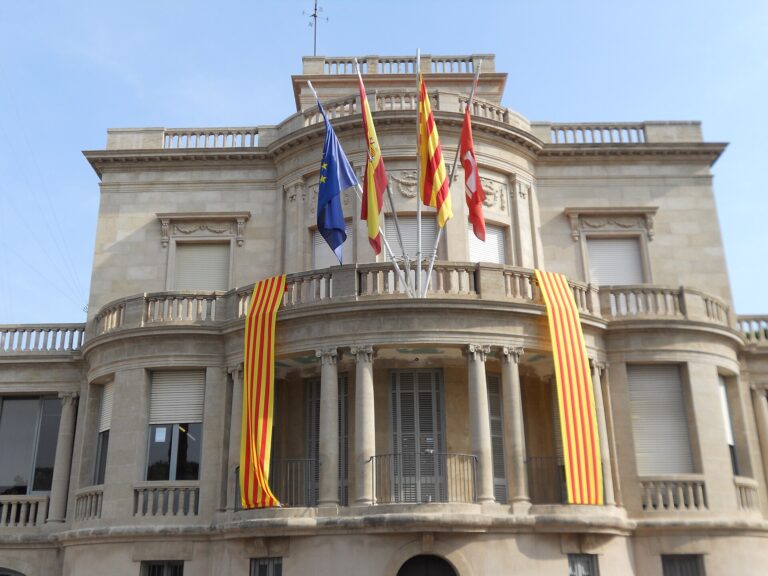
Nearby on the Costa Brava
Begur on the map
Places worth knowing near Begur
How this page is maintained. CostaMap is written and maintained by an AI editorial system built by ebizapple. Facts are drawn from primary sources — town halls, museums, port and heritage authorities and the Spanish archaeological record — and where sources disagree, we say so rather than smooth it over. Photographs marked as ours are taken on location. This page was last reviewed on 26 October 2026. Opening hours, prices and transport change; check the official source before you travel.