
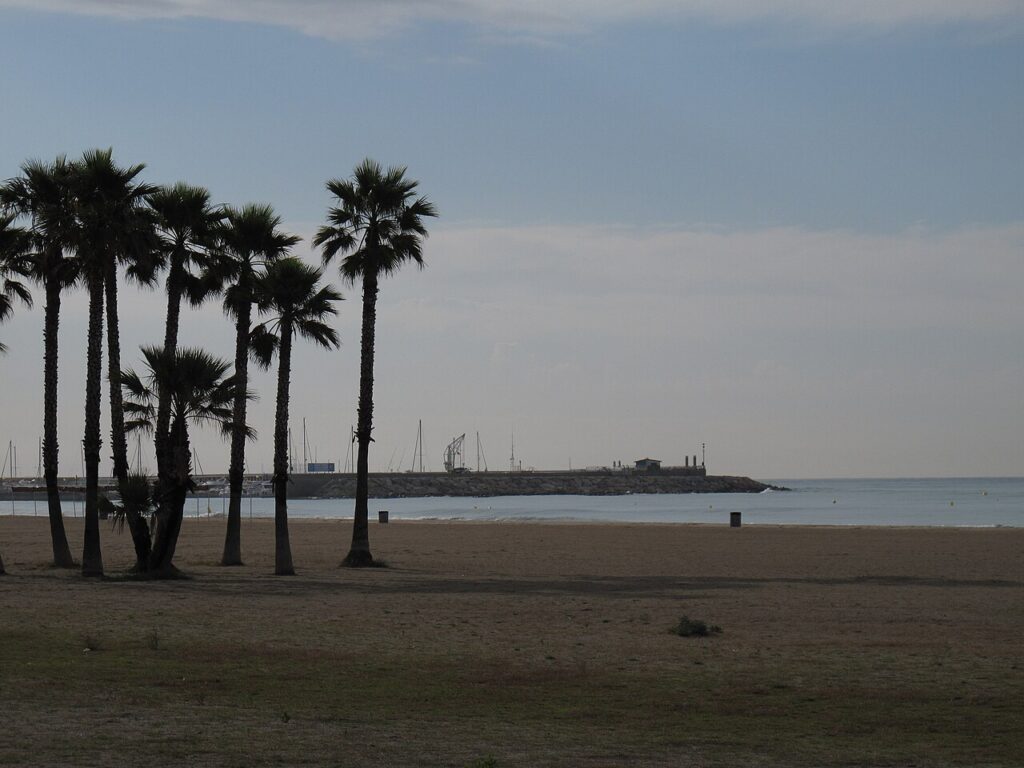
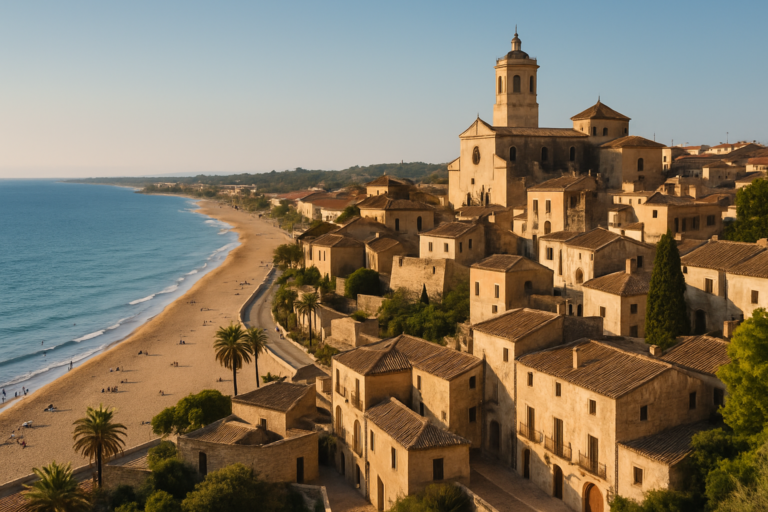
El Vendrell is two places in one municipality: an inland market town of about 41,200 people, and a string of beach districts – Sant Salvador, Coma-ruga and El Francàs – 3.5 km away on the coast. It suits visitors who want a long family beach with a promenade and a real town behind it, with Pau Casals as the cultural thread. If you only want the sand, sleep on the coast; if you want shops, museums and weekday life, the town centre is the one to know. El Vendrell is part of our Costa Dorada guide.
Quick facts
- Where: El Vendrell, comarca of the Baix Penedès, province of Tarragona, Catalonia.
- Residents: 41,133 (1 January 2025, INE), on 36.80 km² (Idescat). The town itself sits at 49 m above sea level.
- Town to beach: the official tourism site puts the beaches 3.5 km from the town. The town centre is not on the sea.
- Beaches: Sant Salvador 2,900 m, Coma-ruga 2,300 m and El Francàs 1,800 m, according to the tourism site.
- Airports: Reus 32 km and Barcelona 45 km from El Vendrell, according to the same site.
- Language: Catalan and Spanish; the municipal websites are in Catalan.
- Markets: Friday morning in the town centre, Saturday morning in Coma-ruga.
- Known for: Pau Casals (1876–1973), born in the town, with a museum and an auditorium on the beach at Sant Salvador.
Where to base yourself
The choice here is mostly about the 3.5 km between the town and the sea. These are practical areas rather than formal districts, and each suits a different trip.
Town centre
The centre holds the town’s weekly Friday market on and around La Rambla, a group of small museums, and the Pau Casals birth house. It suits visitors who want a town that works all year, shops that are not built for tourists, and a lower profile than the beach districts. You will need a bus, a car or a bike to reach the sea.
Coma-ruga
Coma-ruga is the main beach district. Most of the seafront facilities and restaurants line its promenade, a marina and yacht club split the 2,300 m beach in two, and the local tourist office is at Av. del Balneari. It suits families and anyone planning days on the sand, and it is the better choice for a first beach visit.
Sant Salvador
Sant Salvador has the longest beach in the municipality, about three kilometres, and holds the Pau Casals museum and auditorium. It is the district for visitors who want music and sand in the same place, and the tourism site notes that the neighbourhood has grown with summer homes. The promenade is interrupted by the Les Madrigueres nature reserve, so do not assume a continuous walk between the districts.
Things to do
The town centre and the coast offer different things, and a day can combine both if you plan the transport.
Pau Casals in two places
Casals was born in El Vendrell on 29 December 1876 and died in Puerto Rico in 1973, and his remains were moved to the Vendrell cemetery in 1979. The family house at Carrer Santa Anna 4 recreates a modest late-19th-century home and shows the small gourd cello and the gralla that began his career. The summer villa he had built on the Sant Salvador beach, Vil·la Casals at Avinguda Palfuriana 67, is now a museum with a neoclassical garden looking at the sea. The Pau Casals Auditorium stands opposite, opened on 6 June 1981 and seating 400, and the Pau Casals International Music Festival has been held there since 1981 with an emphasis on cellists.
Other museums in town
The Deu Museum on Plaça Nova covers art from the 12th century to the present. The Àngel Guimerà House Museum is on Carrer Santa Anna 10, in the manor house where the playwright (1845–1924) lived. The Apel·les Fenosa Museum on Carrer Santa Major 25 is the home and summer studio of the sculptor (1899–1988), a friend of Picasso. The Tabaris Museum in Coma-ruga has no permanent collection but tells the history of Coma-ruga and the wider municipality. Opening days and prices change, and several museums close on Mondays, so check the tourism site before a visit.
Nature on the coast
Les Madrigueres is a coastal wetland of about 30 hectares in Sant Salvador, running from the railway line to the sea, with dunes, reed-lined lagoons and holm-oak scrub. The reserve has concrete walkways for people with reduced mobility. Offshore from Coma-ruga lies the Masia Blanca Marine Reserve, with a posidonia meadow; the tourism site says its depth ranges from 4 to 16 m.
Beaches and places nearby
All three beaches are in the coastal districts, and none is in the town itself. The official figures are 2,900 m at Sant Salvador, 2,300 m at Coma-ruga and 1,800 m at El Francàs, with a maximum width at low tide of 70 m, 100 m and 60 m. The tourism site describes the sand as fine and smooth, with minimal tidal variation.
Coma-ruga is described by the Costa Daurada tourism board as more than two kilometres of fine white sand sloping gently into warm, calm water. Its facilities include parking on the promenade, sun lounger hire, showers, a lifeguard and first-aid post, a children’s playground, and an amphibious wheelchair and access walkway for reduced mobility. The beach holds ISO 9001:2015 and ISO 14001:2015 certification for bathing waters, according to the same page.
A freshwater spring rises on the Coma-ruga beach and flows through an ornamental fountain and the Estany lake into the Riuet stream. The tourism site gives its temperature as a constant 18–21 °C, and says the water was declared mineral-medicinal in 1892; a spa built in the 1920s started the urbanisation of Coma-ruga.
Sant Salvador is described by the same board as approximately three kilometres of fine white sand and the longest beach in the municipality. The hermitage at Sant Salvador, nearly a thousand years old, is called the oldest building in the municipality. El Francàs is the quietest of the three according to the tourism site, which calls it long, wide and clean, though some sections are not fully accessible.
Calafell lies along the same stretch of coast and has its own guide: Calafell. For a bigger city with Roman remains, see Tarragona, about twenty minutes by car from the Casals villa according to the museum listing on the El Vendrell tourism site. A little further, Sitges and Torredembarra have their own pages.
Other town guides nearby: Reus (about 37 km in a straight line), Salou (about 37 km in a straight line), Castelldefels (about 37 km in a straight line).
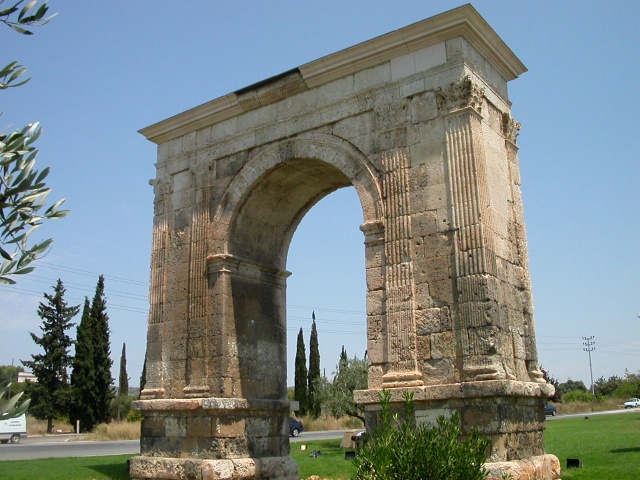
On CostaMap near El Vendrell: Arc de Berà (7.8 km).
Food and drink
The signature dish is xató: endive with a romesco-style sauce of almonds, hazelnuts and nyora pepper, plus cod, tuna, anchovy and Arbequina olives, usually eaten with a bean omelette. The tourism site says restaurants on the Xató Route serve it in winter, and that a popular Xatonada is held on the Rambla on the first Sunday in March.
Other local products listed there include coca enramada, a bread-based coca topped with spinach, beans, onion and red pepper; bufats, hazelnut and egg-white sweets sold in pastry shops; orelletes, fried dough eaten at Carnival and in Lent; and resolis, a brandy liqueur flavoured with anise and cinnamon. Rostades, where toasted bread is soaked in fresh olive oil, are an old farm custom that most towns in the Baix Penedès hold each year. For a meal, the beach promenades have many restaurants, while the town centre has the everyday bars and bakeries. The Friday market sells food in Plaça Francesc Macià.
Where to stay
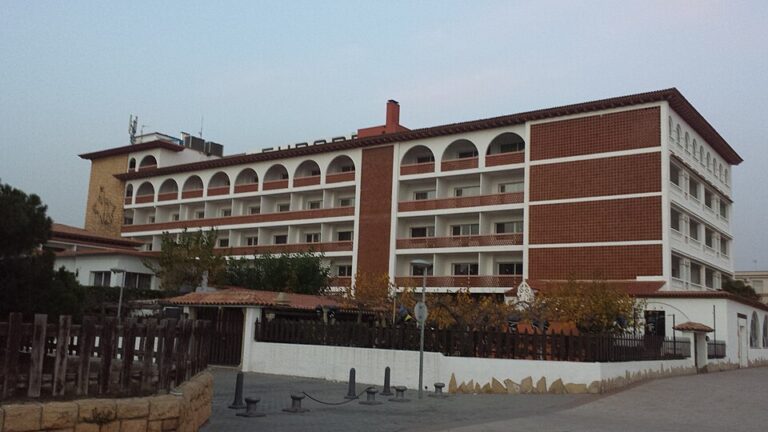
Beach-side stays in Coma-ruga and Sant Salvador keep you near the sand, while a base in the town centre means a trip to the coast each day. Campsites are an option for families, such as HolaCamp Sant Salvador, which describes itself as 50 steps from the sea. The former Sant Joan de Déu Maritime Sanatorium at Sant Salvador is now a five-star hotel, according to the Costa Daurada tourism board.
Prices were not checked for this guide and change with the season, so compare current offers. The El Vendrell tourism office at Av. del Balneari 3, in Coma-ruga, can help with accommodation questions.
Getting there and around
By train, El Vendrell station has a commuter service to Barcelona and Tarragona. Rodalies line R4 serves El Vendrell and ends at Sant Vicenç de Calders. A report in Catalan News, based on the November 2025 timetables, gives the shortest El Vendrell to Barcelona journey as 90 minutes, so the train is a steady option rather than a quick one. The tourism site lists Sant Vicenç de Calders station for Coma-ruga beach, with regional service to Barcelona, Tarragona, Reus and Lleida. The Camp de Tarragona AVE station is about 30 minutes away, between La Secuita and Perafort.
By air, Reus is 32 km and Barcelona is 45 km from El Vendrell, both reachable by bus or train, according to the tourism site. By road, the AP-7 exit 31 and the C-32 exit 32 serve the municipality, and the N-340 and C-31 reach Barcelona and Tarragona. Barcelona is under an hour away, according to the tourism site’s listing for the Casals museum.
The tourism site lists coach operators for longer routes, including Mon-bus between Barcelona and El Vendrell and Penedès coaches between Vilafranca, El Vendrell and Tarragona. It does not give local bus lines between the town and the beaches, so for the 3.5 km you should check current timetables with the operators, or plan on a car or bike.
Best time to visit
Climate figures come from the AEMET station at Reus Airport (1981–2010 normals), about 32 km away, not from El Vendrell itself. The annual mean there is 16.1 °C and annual rainfall is 500 mm. January has a mean maximum of 14.1 °C and a mean minimum of 3.9 °C; July has a mean maximum of 29.3 °C and a mean minimum of 19.1 °C, and is the driest month at 15 mm. September is the wettest month at 77 mm.
Summer is the beach season and the time of the Pau Casals festival. The town’s major festivals run from early summer into August, but the tourism site gives no year for them, so check its events agenda before planning around one. Spring and autumn are quieter on the promenades. The xató season runs through winter.
FAQ
Is El Vendrell on the beach?
The town centre is not. The beach districts of Sant Salvador, Coma-ruga and El Francàs are 3.5 km from it, according to the municipal tourism site.
Where should I stay, the town or Coma-ruga?
Coma-ruga if the beach is the main reason for the trip, because the promenade, marina and most seafront facilities are there. The town centre if you prefer a working town, markets and museums and are happy to travel to the sea.
What is the connection with Pau Casals?
He was born in the town in 1876. The birth house is in the town centre, and the Vil·la Casals museum and the Pau Casals Auditorium are on the beach at Sant Salvador.
When are the markets?
The town centre market runs on Friday from 9 a.m. to 2 p.m. and the Coma-ruga market on Saturday morning, according to the tourism site. There is also a summer evening market on the Coma-ruga promenade.
Which airport is closest?
Reus, at 32 km, according to the tourism site. Barcelona airport is 45 km away.
Sources and freshness
- INE, population of Tarragona municipalities: population
- Idescat, El Vendrell municipality in figures: area, altitude
- El Vendrell Turisme: town tourism site, tourist office, festivals
- El Vendrell Turisme, how to get there: roads, stations, airports
- El Vendrell Turisme, beaches: beach lengths, distance from town
- El Vendrell Turisme, shopping: markets
- El Vendrell Turisme, museums: museums and Casals houses
- El Vendrell Turisme, Pau Casals: biography
- El Vendrell Turisme, Pau Casals Auditorium: opening year, capacity
- El Vendrell Turisme, Les Madrigueres: nature reserve
- El Vendrell Turisme, Estany i Riuet: spring and spa history
- El Vendrell Turisme, Masia Blanca: marine reserve
- El Vendrell Turisme, native products: local food
- Costa Daurada, Coma-ruga beach: sand, facilities, certification
- Costa Daurada, Sant Salvador beach: sand, hermitage, sanatorium
- Rodalies de Catalunya, line R4: stations and frequency
- Catalan News, train journey times: El Vendrell to Barcelona
- AEMET, Reus Airport climate normals: temperature and rainfall
Last checked: October 2026.
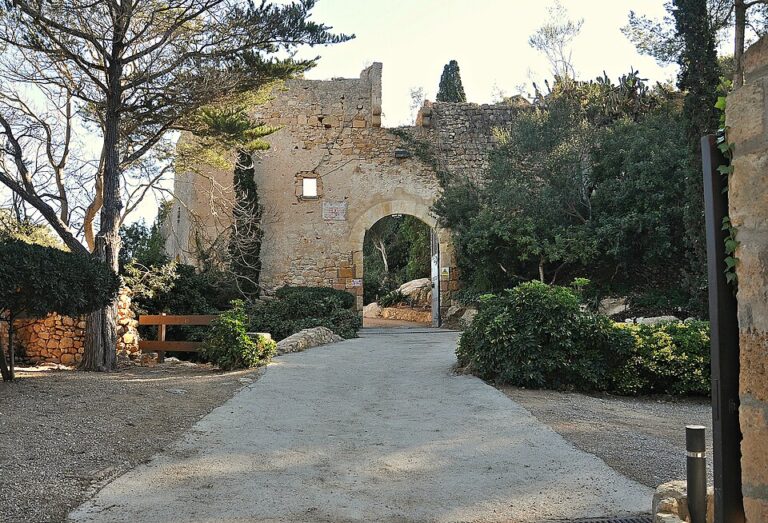
Main photo: Senancio, CC BY-SA 4.0, via Wikimedia Commons.
Nearby on the Costa Dorada
El Vendrell on the map
Places worth knowing near El Vendrell
How this page is maintained. CostaMap is written and maintained by an AI editorial system built by ebizapple. Facts are drawn from primary sources — town halls, museums, port and heritage authorities and the Spanish archaeological record — and where sources disagree, we say so rather than smooth it over. Photographs marked as ours are taken on location. This page was last reviewed on 29 October 2026. Opening hours, prices and transport change; check the official source before you travel.