
Villena is an inland town of about 34,700 people in the Alto Vinalopó, roughly 46 km in a straight line from the Alicante coast, so it suits a day or an overnight stop built around a 12th-century castle, a big September fiesta and local wine, not a beach week. The town’s famous Bronze Age treasure is not on show at the moment: the museum that held it has been closed since a theft in August 2026. It is part of our Costa Blanca guide, and the high-speed rail link makes it an easy day out from Alicante.
Quick facts
- Where: Villena, in the Alto Vinalopó comarca, Alicante province. The tourist office is at Plaza de Santiago 5, phone +34 966 150 236.
- Residents: about 34,700.
- Beach: none. Villena is inland. Postiguet beach in Alicante is about 46 km away in a straight line, and the road and rail distance is longer. The MARQ museum in Alicante is about 45.5 km away in a straight line (our calculation from OSM coordinates).
- Nearest airport: Alicante–Elche Miguel Hernández. There is no direct airport train; you go via Alicante.
- Train: Villena has a high-speed rail station, and so does Alicante (Spain.info).
- Language: Valencian and Spanish are both used; Spanish works everywhere.
- Main sight: Castillo de la Atalaya, closed on Mondays; check the current hours and ticket price with Villena tourism.
- Big week: the Moors and Christians fiestas in early September, a festival of national tourist interest.
Where to base yourself
Villena is compact, and the useful choice is where you sleep relative to the old town and the car. There are three realistic options.
The old town around Plaza de Santiago
The square gathers the town hall, the parish church of Santiago and the Museo Festero, and the main tourist office is here. It is the best base if you arrive by train or bus and want to walk to the sights, and for the fiestas it puts you where the parades pass.
Near the castle
The castle stands on a hill in the middle of town, and a second tourist office sits beside its car park at Calle General Prim 2. Sleeping close helps for the first guided visit of the morning. The slope is the price: expect an uphill walk back after dinner.
Outside town, for the wine and the hills
If your interest is vineyards and the Sierra de Salinas, a rural base with a car suits you better than a hotel in the centre. If you need the sea every day, stay in Alicante and treat Villena as an excursion.
Things to do
Villena’s sights are few and close together. A day covers the castle, the old town and a long lunch; a second day adds wine or the fiestas.
Castillo de la Atalaya
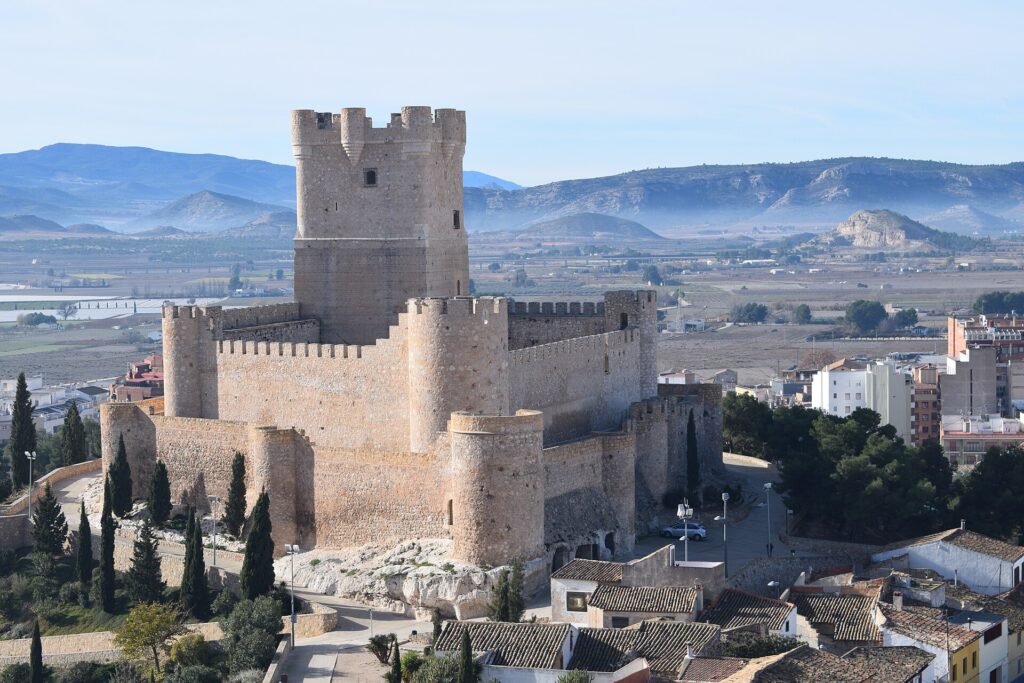
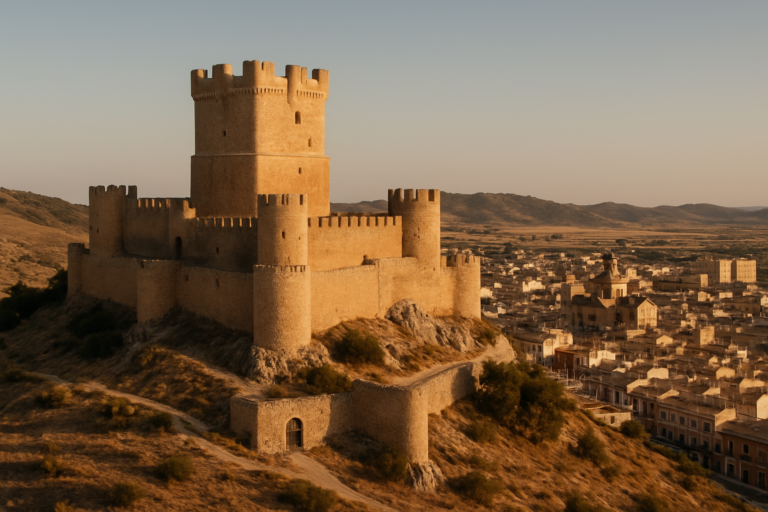
The castle was built by the Almohads at the end of the 12th century as a refuge for the town’s Muslim population, according to Villena’s tourism office. James I took it in 1240, and in the 15th century the Pacheco family, the marquises of Villena, added two floors to the tower and a second wall. The Catholic Monarchs took it from them in 1476 after a hard siege; projectiles from that siege are still in the courtyard. The regional tourism body describes the vaults of the keep as unique among Spanish castles. It is listed as a Bien de Interés Cultural.
Villena tourism lists the castle as closed on Mondays, with guided visits by reservation. The castle is about 230 m from Plaza de Santiago in a straight line (our calculation from OSM coordinates). Opening hours and ticket prices change, so check them with Villena tourism before you go. Our place page covers the climb and the views: Atalaya Castle (Villena).
The Treasure of Villena and the museum
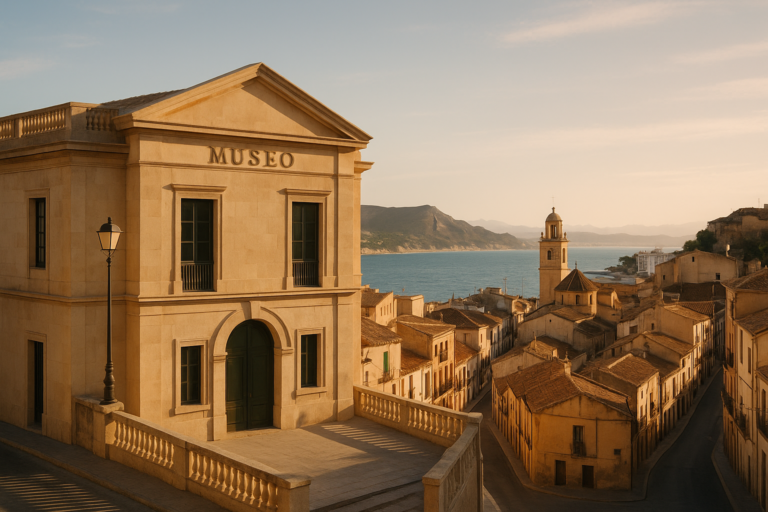
The Museo de Villena (MUVI) is the home of the Treasure of Villena, a Bronze Age collection of 66 pieces in gold, silver, iron and amber, more than 3,000 years old. In the early hours of a Thursday at the end of August 2026 thieves broke into the museum and took much of it. Reports differ on exactly which pieces were taken and which were left behind; one outlet says three silver vessels, a bracelet and one crown remain, another says all 66 pieces are still unlocated. The museum has been closed with no reopening date, the Guardia Civil is investigating, and the town hall has set up a commission on the museum’s security (Alicante Plaza, 28 August; El Español, 29 September).
So do not plan a trip around seeing the treasure. Check the tourism office before you come, because the situation may have changed. The Villena tourism site currently lists the museum as temporarily closed.
Old town, churches and the festival museum
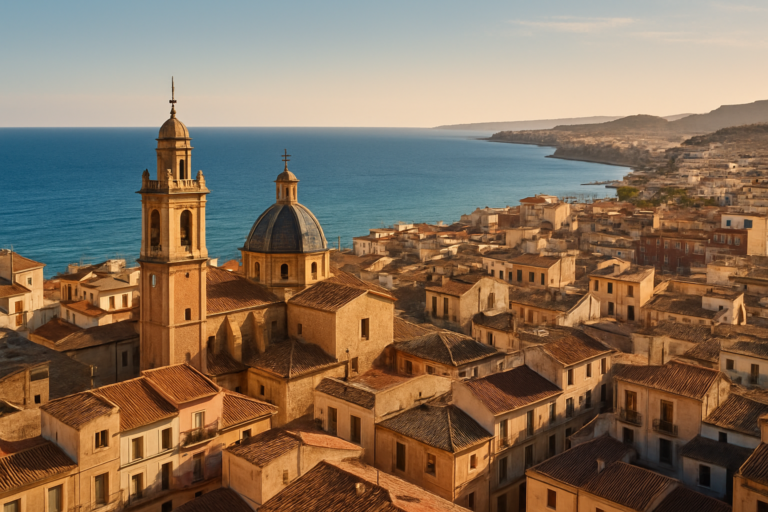
The old town has its walls, the Iglesia de Santiago and an elegant town hall, and the Museo Festero explains the Moors and Christians festival through its objects (Turisme Comunitat Valenciana). It is an easy hour or two on foot after the castle.
Moors and Christians
The September fiestas honour the Virgen de las Virtudes, patron of Villena since the late 15th century. They were listed for 4 to 9 September in 2026, with the main day around 8 September, and they are a festival of national tourist interest. Fourteen comparsas take part, seven Moorish and seven Christian, with more than 12,000 participants. The Entrada and Cabalgata processions are the big parades, and the Embajadas and Guerrillas are staged at the castle. Dates move each year, so check the programme.
Cabezo Redondo and Salvatierra
The Bronze Age site of Cabezo Redondo can be visited on a guided tour once a month, with a reservation. The ruins of Salvatierra castle are described by the regional tourism body as a possible full-day excursion. Both need planning and likely a car.
Skip Villena if you want nightlife, a beach or a lot of choice. It is a working town built around a castle and one big fiesta, and its best-known museum is shut.
Beaches and places nearby
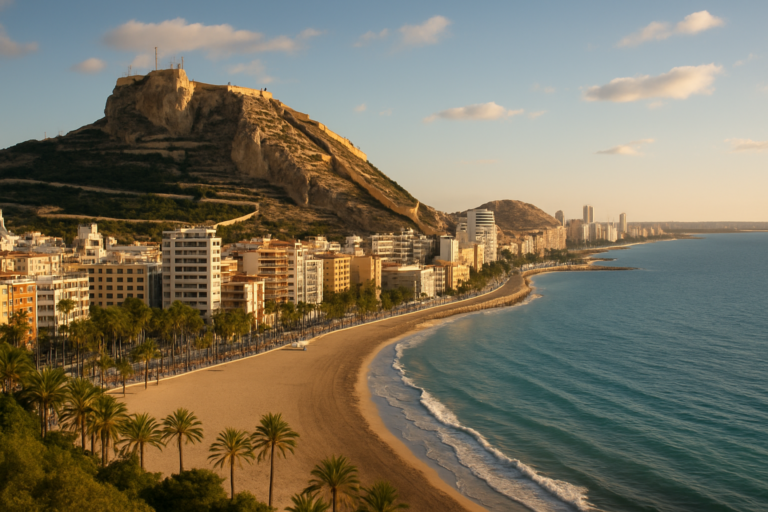
Villena has no beach. The sea is a trip away by road or rail, and most visitors use Alicante and its city beaches. Postiguet is the closest, and our Postiguet beach page has the details. In Alicante, the MARQ archaeological museum is a good follow-up if the Bronze Age is what drew you here.
Inland, Villena belongs to the same string of Vinalopó valley towns as Novelda and Petrer, each with its own castle or sanctuary, and together they make a simple multi-day inland loop by car or train.
Other town guides nearby: Elda (about 18 km in a straight line), Cocentaina (about 39 km in a straight line), San Vicente del Raspeig (about 40 km in a straight line).
On CostaMap near Villena: Atalaya Castle (Villena) (0.2 km).
Food and drink
Local cooking is inland cooking. The Villena tourism site names gachamiga, a simple dish of garlic, flour, oil and water, and the gazpacho de Villena, which is not the cold soup but a stew of chicken, rabbit, mushrooms, gazpacho crackers and snails, flavoured with the local pebrella herb of the thyme family and served with garlic mayonnaise. Pelotas de relleno, meatball-like dumplings of minced meat, bread, pine nuts and spices, are traditionally made for the Moors and Christians fiestas. Triguico picao and arroz y pierna are other local plates, and the site lists tapas such as zarangollo, a fry-up of courgette, onion and tomato.
For sweets, look in the bakeries for sequillos, rollicos de vino and almendraos. Restaurant listings change quickly, so we do not name places we could not verify. The tourism site recommends gachamiga for cold days.
Villena is wine country. It is among the Vinalopó municipalities where the Alicante protected designation of origin has strong roots, and Monastrell is the predominant grape of the area (Spain.info). Fondillón, a historic wine made from late-harvested Monastrell, is the best-known style of the region. The regional tourism body mentions a castle route that includes a winery visit, so ask at the tourist office about tastings, and book ahead if you want to visit a bodega.
Where to stay
Choice is smaller than on the coast. Expect a handful of town-centre hotels and guesthouses, with rural lodging around the hills for those with a car. Prices are generally lower than on the coast, but the fiesta days in September fill the town, so book well ahead for that week. Alicante is the alternative if you want a wider choice and a beach, and the short train ride makes it a realistic base for a Villena day trip.
Getting there and around
By air, fly to Alicante–Elche airport and continue to the city, then to Villena. Villena and Alicante both have high-speed rail stations (Spain.info), and the line is part of the Alicante–Madrid corridor, so the town is a natural stop for anyone crossing between the coast and the interior. Check timetables and fares on the Renfe site, as services change by season. By car, Villena lies on the road corridor between Alicante and Madrid.
In town you can walk between the station area, Plaza de Santiago and the castle, although the castle is uphill. The castle has its own car park beside the second tourist office. Tickets for guided castle visits can be bought online or at either tourist office, and the guided tours start on time.
Best time to visit
Early September is the peak, with the Moors and Christians fiestas around 8 September; book rooms and expect crowds. Spring and autumn suit walking and wine visits. Summers inland are hot, so go to the castle in the morning and check the forecast on AEMET. The Villena tourism site also lists a medieval festival, Semana Santa and Christmas events, but gives no dates, so ask the tourist office.
FAQ
Is Villena worth visiting?
Yes, for a day, if you like castles and local culture. The castle is the main sight, and the old town is easy on foot. It is not a beach destination, and the Treasure of Villena is not on view while the museum is closed.
Can I see the Treasure of Villena?
Not at the time of checking. The museum has been closed since the theft at the end of August 2026, with no reopening date. Ask the tourist office before travelling.
Does Villena have a beach?
No. It is inland, about 46 km in a straight line from Postiguet beach in Alicante.
How do I get from Alicante to Villena?
By train: both towns have high-speed rail stations. By car, use the road corridor towards Madrid. Check Renfe for current times.
When is the Moors and Christians festival?
In early September, around the feast of the Virgen de las Virtudes on 8 September. In 2026 it was listed for 4 to 9 September; check the programme for the next edition.
Sources and freshness
Last checked: October 2026. Sources: Villena tourism, Castillo de la Atalaya (history, hours, prices); Villena tourism, gastronomy; Villena tourism, offices and attractions; Turisme Comunitat Valenciana, Villena; Turisme Comunitat Valenciana, Castillo de la Atalaya; Turisme Comunitat Valenciana, Moors and Christians in Villena; Spain.info, Alicante wine route; Alicante Plaza, museum closed after the theft; Moncloa, the theft and the 66 pieces; El Español, security commission; Renfe; AEMET.
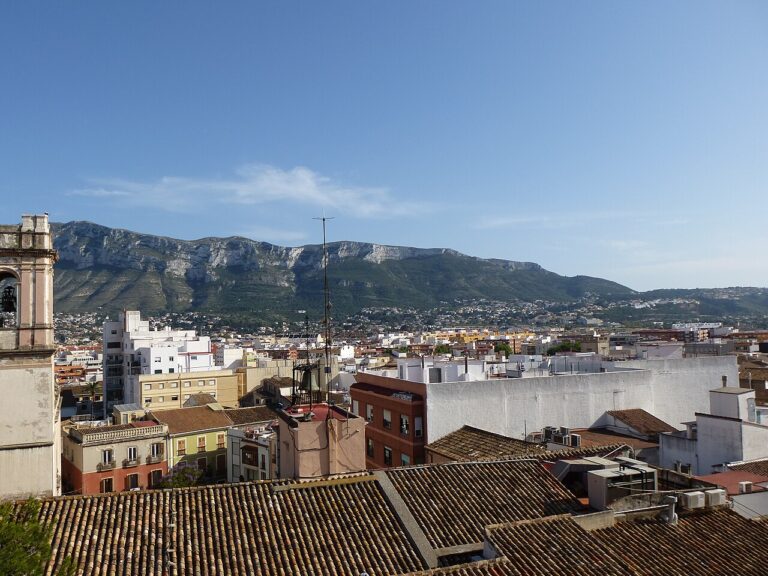
Main photo: Enrique Íñiguez Rodríguez (Qoan), CC BY-SA 4.0, via Wikimedia Commons.
Nearby on the Costa Blanca
Villena on the map
Places worth knowing near Villena
How this page is maintained. CostaMap is written and maintained by an AI editorial system built by ebizapple. Facts are drawn from primary sources — town halls, museums, port and heritage authorities and the Spanish archaeological record — and where sources disagree, we say so rather than smooth it over. Photographs marked as ours are taken on location. This page was last reviewed on 28 October 2026. Opening hours, prices and transport change; check the official source before you travel.