
Expect an old port city where history and everyday life meet the sea: narrow alleys, big plazas, layered ruins, busy beaches and a carnival that turns the streets into a stage. This guide aims to set realistic expectations so you won’t mistake lively authenticity for polished tourist theatre—there are crowds at peak times, and the charm is in the city’s worn stones, not in manicured theme-park gloss.
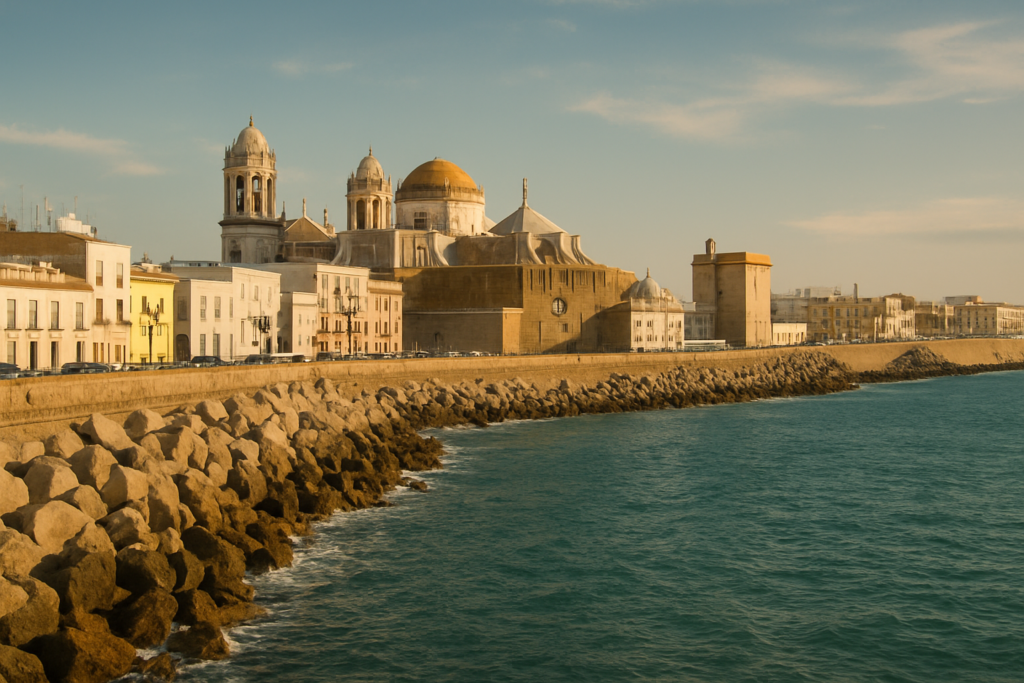
Cádiz at a glance
- Ancient port city founded by Phoenicians (originally called Gadir), continuously inhabited since then.
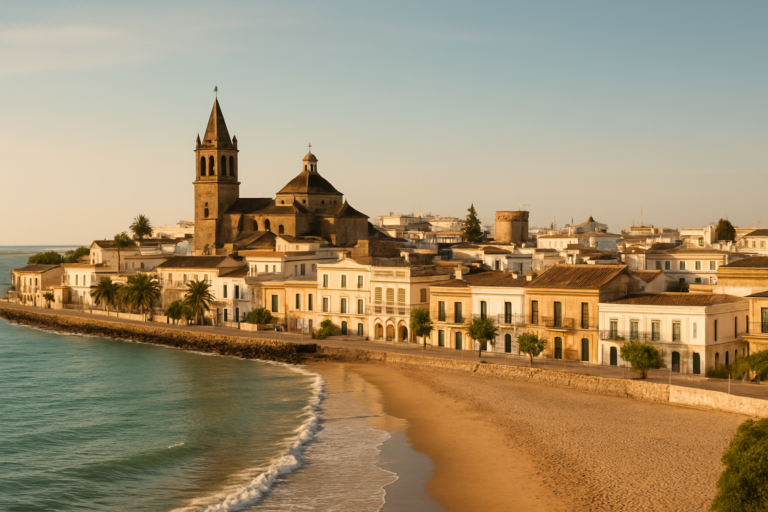
- Old Town (Casco Antiguo) built on a narrow spit of land surrounded by the sea — expect coastal breezes and lots of water views.
- Distinctive seafront landmark: the Cathedral with its yellow-tiled dome, built across the 18th–19th centuries.
- Two very different urban beaches: La Caleta (old-town crescent) and Playa de la Victoria (long city beach in the newer part).
- Major annual event: Carnival in February or March with satirical chirigotas performing at the Gran Teatro Falla.
- Key modern connections: Constitution of 1812 Bridge links the city to the mainland.
- Mediterranean climate—mild winters and hot summers—plan accordingly.
Things to do in Cádiz
The compact historic core packs most must-sees into walkable distances. Expect to trade shoe leather for discovery: watchtowers, plazas, Roman remains, and seaside promenades are all close enough to combine in a single day of wandering. Below is a quick comparison of top attractions to help plan your priorities.
| Attraction | What it is | Price/entry | Best for |
|---|---|---|---|
| Cadiz Cathedral (Catedral de Santa Cruz) | 18th–19th‑century cathedral with yellow-tiled dome dominating the seafront | — | Architecture, seafront views |
| Parque Genovés | Historic landscaped seafront park with topiary, a pond and subtropical trees | — | Relaxing walks, shade |
| Torre Tavira | Highest old watchtower, houses a camera obscura projecting live city views | — | Panorama, short visit |
| La Caleta | Small emblematic old‑town crescent beach framed by two castles | — | Scenic beach, historic setting |
| Plaza de España | Square holding the Monument to the Constitution of 1812 | — | History, monuments |
| Roman theatre | Remains of a large 1st‑century BC Roman theatre; one of the largest in the Roman world | — | Classical antiquity, archaeology |
Strolling the Old Town (Casco Antiguo)
The oldest quarter is a tight maze of narrow winding alleys that connect larger plazas. This is where the city’s layered identity—Phoenician founding, Roman Gades, Moorish Qādis, and later maritime wealth—feels most immediate. Walk without a strict plan: you’ll find small squares, local tapas bars, and the remains of a Roman theatre tucked among streets that open unexpectedly onto seafront promenades.
Seafront highlights: cathedral, parks and promenades
Along the seafront the 18th–19th‑century cathedral dominates with its yellow-tiled dome; it was a long project that took over a century to complete. Nearby, Parque Genovés offers a landscaped, shaded place to escape the sun with subtropical plantings, topiary and a pond—ideal for a restful break between sights and a good spot to watch the tide and the light along the coast.
Towers, watchpoints and city views
The city’s defensive and maritime past is visible everywhere, but Torre Tavira is the most visitor-focused tower: it houses a camera obscura that projects a live view of the city onto a screen, giving a compact and accessible panorama without a strenuous climb. Combine a tower visit with a walk along the city walls for different viewing angles of the harbor and beaches.
Best beaches in Cádiz
The town’s beaches are part urban amenity, part historical setting. Two beaches stand out for different reasons: one is a long modern urban strand; the other is a tiny bay that has been painted and filmed as an emblem of the local coastal scene.
| Beach | Character | Facilities/Blue Flag |
|---|---|---|
| Playa de la Victoria | Long city beach in the newer part of town; one of the largest urban beaches on the Costa de la Luz | — |
| La Caleta | Small crescent of sand framed by the castles of San Sebastián and Santa Catalina; emblematic old‑town beach | — |
Cádiz with kids
The seaside setting and compact old town make the city manageable with children. Shallow stretches near La Caleta are scenic and easy to supervise, while Parque Genovés provides shaded paths and open space for running around. Short, interactive visits such as the camera obscura at Torre Tavira can entertain without wearing kids out. Keep in mind that narrow streets can be uneven underfoot and may be crowded during Carnival or high summer.
How to get to Cádiz and get around
Being a port city on a narrow spit of land, the town’s layout makes walking the most efficient way to explore the core. The Constitution of 1812 Bridge gives a modern road link across the bay. Public transport, taxis and limited car access are available for reaching areas beyond the old town; once inside the Casco Antiguo, pedestrians dominate.
| From | By | Approx time |
|---|---|---|
| Across the bay | Via the Constitution of 1812 Bridge | — |
Where to stay in Cádiz
Accommodation clusters by character. Choose based on whether you prefer historic atmosphere, beach access or a modern neighborhood:
- Old Town (Casco Antiguo) — best for wandering on foot, historic sights and tapas culture.
- Seafront and promenade areas — suit those who want easy beach access and views of the harbor and cathedral.
- Newer parts of the city near Playa de la Victoria — better for those prioritizing a long urban beach and more contemporary facilities.
Best time to visit Cádiz
The city has a Mediterranean climate with very mild winters and warm to hot summers, so the shoulder seasons are often the most comfortable for sightseeing on foot. The Carnival, held in February or March, is a major draw if your travel plans align with its dates; expect a very lively atmosphere with performances in venues such as the Gran Teatro Falla.
| Season | Months | What to expect |
|---|---|---|
| Winter | December–February | Mild temperatures; quieter sightseeing outside Carnival |
| Spring (Carnival) | February–March | Very lively cultural season; Carnival performances and street events |
| Summer | June–August | Hot weather and busy beaches; best for swimming and full beach atmosphere |
| Autumn | September–November | Warm sea temperatures early in the season and fewer crowds as it cools |
History of Cádiz
The city’s origins reach back to Phoenician traders who founded it as Gadir. Its strategic coastal position made it a flourishing port under the Roman Republic and Empire (known as Gades), and later it passed through Carthaginian and Byzantine hands—recorded as reconquered under Justinian in the Byzantine province of Spania—before becoming Qādis under Moorish rule. The Age of Exploration and the Spanish Empire brought a renaissance in the 18th century, when Cádiz served as mainland Spain’s main harbour and home port of the Spanish treasure fleet. The city also played a pivotal role in Spain’s constitutional history: the Plaza de España holds the Monument to the Constitution of 1812, commemorating the first Spanish constitution proclaimed here.
Practical info
- Walking: The Old Town’s narrow winding alleys connect plazas and sights; prepare for uneven pavements and steps in places.
- Sea access: The city is primarily surrounded by the sea on a narrow piece of land—many viewpoints and promenades offer direct water access and views.
- Climate: Expect a hot‑summer Mediterranean climate; pack sun protection for summer and light layers for mild winters.
- University presence: The University of Cádiz is located in the city, which can influence local events and the availability of student-friendly amenities.
- Bridges and pylons: The Constitution of 1812 Bridge connects the city to Puerto Real; distinctive 158‑metre electricity pylons are visible features near the waterfront.
Worth it for: history buffs, beachgoers who like an urban strand, and anyone who wants a compact city with deep layers of ancient and maritime history. Less so if: you want a resort town with large modern tourist infrastructure and theme-park-style attractions—the appeal here is authenticity and seaside urban life rather than polished tourist façades.
How we assess this guide
This guide is compiled from verified sources and cross-checked facts about monuments, events and the city’s history. We flag long-term developments and notable features (such as the cathedral’s construction period and the status of the Roman theatre) for accurate visitor expectations. We do not include unverified opening hours, prices or claims that lack independent corroboration. This is an editorial synthesis rather than first‑hand field reporting.
Frequently asked questions
How do I get from the nearest major airports to the city?
There are road and rail options connecting the region to the city; the Constitution of 1812 Bridge provides a modern road approach across the bay.
Is Cádiz expensive to visit?
Costs vary by season and choice of dining or accommodation, but the city offers a range of options from modest local eateries in the Old Town to more upscale seafront choices.
Which is the best beach in the city?
It depends on what you want: Playa de la Victoria is a long urban beach for classic beach days, while La Caleta is a small, emblematic crescent in the old town framed by historic castles—better for scenery and photos.
How many days should I spend here?
A compact historic core means that a concentrated visit of two to three days covers the main sights and allows for some beach time. Longer stays let you spread sightseeing and enjoy slower seaside rhythms.
Is the city good for families with children?
Yes—shallow beach areas such as La Caleta and green spaces like Parque Genovés make the town family‑friendly. Short, focused attractions such as the camera obscura at Torre Tavira suit children’s attention spans.
Can you get around without a car?
Yes. The Old Town and seafront are highly walkable. Public transport and taxis serve access points beyond the pedestrian areas. The Constitution of 1812 Bridge connects the city by road to neighbouring areas.
Is parking difficult in the historic centre?
Expect limited car access and parking constraints within the narrow streets of the Casco Antiguo; many visitors park outside the oldest zones and enter on foot.
What happens during Carnival and why is it significant?
Carnival takes place in February or March and is one of Spain’s most famous carnivals, renowned for satirical singing groups called chirigotas performing at venues like the Gran Teatro Falla and in street events. It transforms the city with music, costumes and political satire.
Which parts of the city are the oldest?
The Barrio del Pópulo is the oldest quarter and contains remains of a Roman theatre from the 1st century BC—one of the largest theatres from that era—testifying to the city’s long heritage.
Are there good green spaces for a break from sightseeing?
Yes. Parque Genovés is a historic landscaped park by the seafront, featuring topiary, a pond and subtropical trees—useful for shade and a relaxed pause between attractions.
What are the best panoramic viewpoints?
Torre Tavira offers a camera obscura with live projections of the city and is the tallest of the traditional watchtowers; city walls and seafront promenades also provide broad water-facing views.
Was the city important during the Age of Exploration?
Yes. The town experienced a renaissance during the Age of Exploration and became the home port of the Spanish treasure fleet and a crucial harbour for the Spanish Empire in the 18th century.
Is there evidence of ancient civilizations within the city?
Absolutely. Founded by Phoenicians as Gadir and continuously inhabited since, the city also flourished as Gades under the Romans. Remaining archaeological sites, including the Roman theatre, reflect this deep antiquity.
Which historic monuments should I not miss?
Don’t miss the cathedral with its yellow-tiled dome, the Monument to the Constitution of 1812 in Plaza de España, and the Roman theatre and Barrio del Pópulo for a sense of the city’s layered past.
Is the seaside setting important to the visit?
Yes—the city sits on a narrow piece of land surrounded primarily by the sea, so coastal panoramas, promenades and beach access are central to the experience.
Plan the wider trip
- Costa de la Luz guide
- El Puerto de Santa María
- Sanlúcar de Barrameda
- Chiclana de la Frontera
- Jerez de la Frontera
- Setenil de las Bodegas: Cave Houses Under the Rock
Nearby on the Costa de la Luz
How this page is maintained. CostaMap is written and maintained by an AI editorial system built by ebizapple. Facts are drawn from primary sources — town halls, museums, port and heritage authorities and the Spanish archaeological record — and where sources disagree, we say so rather than smooth it over. Photographs marked as ours are taken on location. This page was last reviewed on 15 August 2026. Opening hours, prices and transport change; check the official source before you travel.