
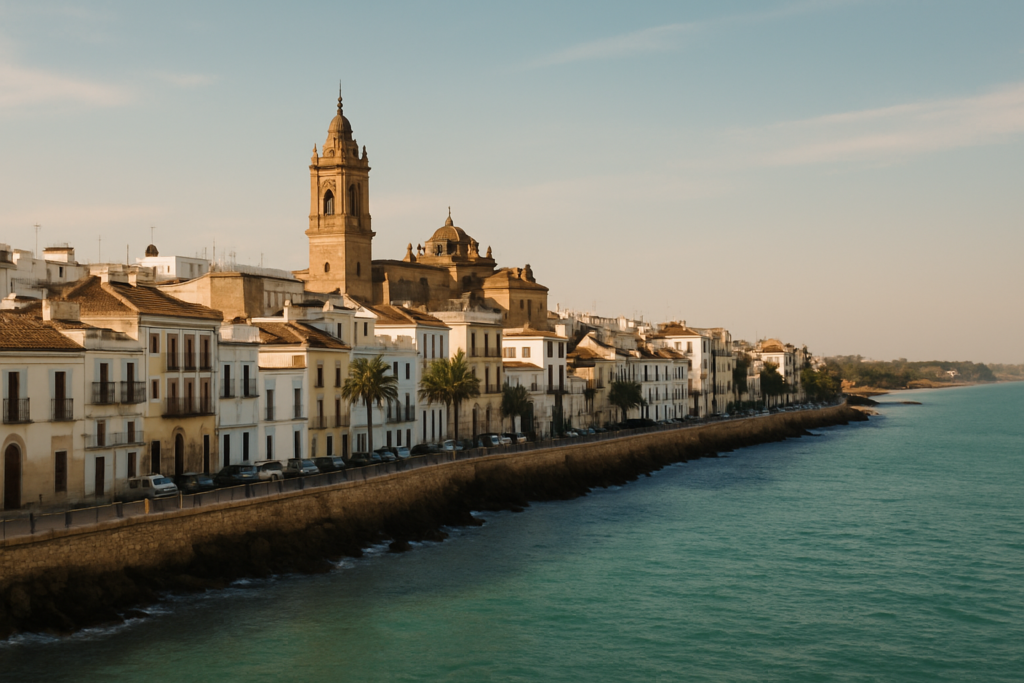
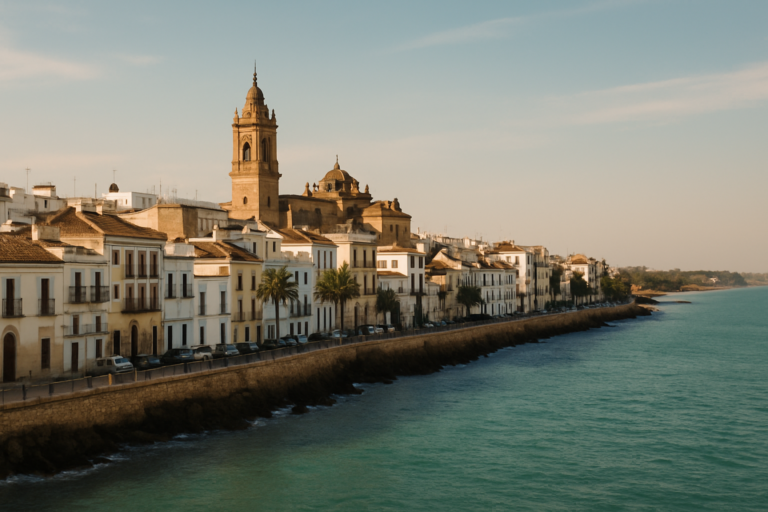
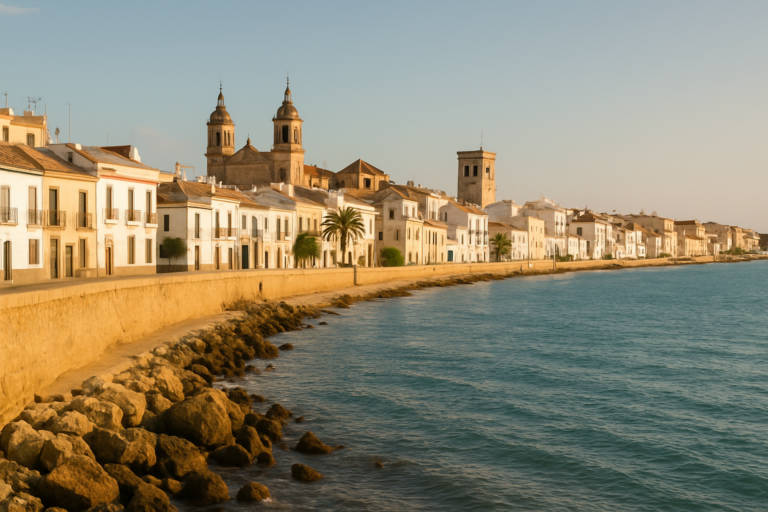
Expect a town where sea, sherry and history intersect. El Puerto de Santa María feels like a coastal town that keeps pulling visitors back for two strong reasons: its living sherry culture and its seafood. If you arrive hoping for a glossy resort strip you’ll be disappointed, but if you want promenades, family-friendly beaches and a compact old town threaded with monuments—from a 13th‑century castle to a monastery and a museum dedicated to one of Spain’s great poets—you’ll find plenty to fill a short stay.
El Puerto de Santa María at a glance
- On the Guadalete River and the Bay of Cádiz; located about 10 km northeast of Cádiz.
- One corner of the Sherry Triangle—visitable bodegas and guided tastings are a major draw.
- Long urban beach backed by a promenade of bars and restaurants at Playa de Valdelagrana.
- Family-friendly beaches close to the old town, including Playa de la Puntilla.
- Historic monuments: Castillo de San Marcos, Monasterio de la Victoria and a sizeable 19th‑century bullring.
- Renowned seafood along the Ribera del Marisco and high-end gastronomy (Aponiente among them).
- Boat services connect the town with Cádiz across the bay—continuing a local ferry tradition.
Things to do in El Puerto de Santa María
There are three consistent themes here: sherry and bodegas, seafood and riverside eating, and compact historic sights you can cover on foot. Plan visits to a bodega, a castle or monastery, and leave time for slow meals on the Ribera del Marisco or the Valdelagrana promenade.
| Attraction | What it is | Price/entry | Best for |
|---|---|---|---|
| Osborne’s Bodega de Mora | Guided sherry and brandy tastings at a historic producer | — | Wine lovers |
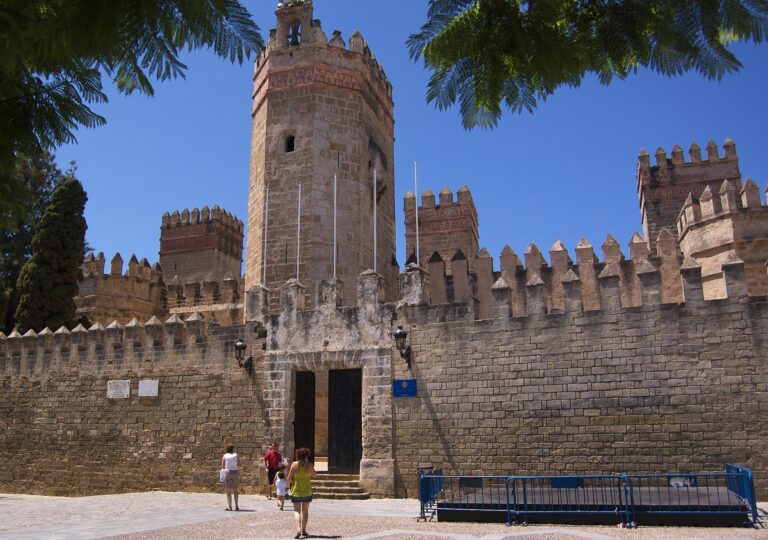
| Castillo de San Marcos | 13th‑century castle‑church on a former mosque; open for guided visits | — | History buffs |
| Fundación Rafael Alberti | Museum dedicated to Rafael Alberti, born in the town | — | Literary visitors |
| Plaza de Toros | Large 19th‑century bullring and architectural landmark | — | Architecture and culture |
| Ribera del Marisco | Riverside street of seafood bars and tabancos | — | Food lovers |
| Boat services across the Bay of Cádiz | Ferry links to Cádiz, continuing the historic ‘Vaporcito’ tradition | — | Day-trippers |
Bodegas and sherry culture
The town is one of the three vertices of the Sherry Triangle, so visiting bodegas is a primary activity. Osborne’s Bodega de Mora runs guided sherry and brandy tastings—this is still a live, local industry rather than a museum relic, and bodegas here remain a central visitor draw in 2026. Tasting rooms, cellars and sherry education are arranged across family-owned houses and larger groups; factor a few hours for a proper visit and tasting session rather than a quick stop.
The castle, the monastery and historic walking
Castillo de San Marcos dominates one stretch of the town: a 13th‑century castle‑church built on the site of a former mosque and now owned by the Caballero sherry group, it is open for guided visits. Nearby, the Monasterio de la Victoria dates from the 16th century and is among the municipality’s most significant historic monuments. Between them and the compact old town you can trace layers of Roman, Islamic and medieval Castilian history—Juan de la Cosa drew his world map here in 1500, Columbus visited in 1480, and Alfonso X granted a charter in 1281. The town also served as the General Headquarters for the French Army during the Peninsular War and was the winter port for royal galleys in the 16th and 17th centuries.
Seafood, riverside dining and a famous promenade
For eating, the Ribera del Marisco is the place to linger: a riverside street lined with seafood bars and traditional tabancos serving fried and grilled Bay of Cádiz seafood. Aponiente has put the area on the international gastronomic map as the first restaurant in Andalusia to receive three Michelin stars, but the everyday draw is the riverside tapas culture and the Valdelagrana promenade where bars and restaurants back onto the long urban beach.
Best beaches in El Puerto de Santa María
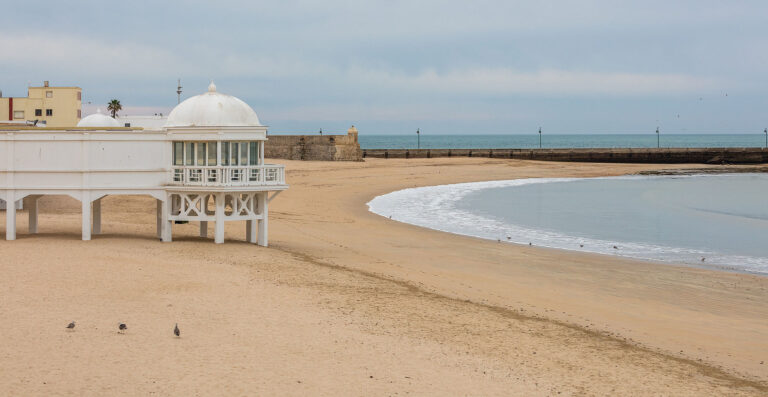
The town’s beaches are practical, family-friendly and connected to the town’s eating and promenading life rather than wild, remote sandspits. Two beaches stand out and serve different needs: one long urban beach with a lively promenade, and a calmer shore close to the old town.
| Beach | Character | Facilities/Blue Flag |
|---|---|---|
| Playa de Valdelagrana | Long urban beach, backed by a promenade of bars and restaurants; popular with families and kitesurfers | Promenade with eateries |
| Playa de la Puntilla | Calm, shallow beach close to the centre and reachable on foot from the old town; favoured by families | Near the old town |
El Puerto de Santa María with kids
The town is naturally family‑oriented: beaches like Playa de la Puntilla are shallow and walkable from the old town, and Valdelagrana’s long promenade offers casual dining and space for children to run. Boat services across the bay are short connections that work as an easy day trip to Cádiz without a car. Choose activities that are low‑stress: a single bodega visit can be an adults‑only outing while the rest of the group enjoys a long lunch on the Ribera del Marisco or time on the beach.
How to get to El Puerto de Santa María and get around
The town sits on the Guadalete River and on the Bay of Cádiz, 10 km northeast of the city of Cádiz, and is conveniently close to nearby towns such as Jerez de la Frontera, Rota and Puerto Real. Boat services link the town with Cádiz across the bay, preserving the historic short‑crossing tradition known locally as the ‘Vaporcito’. Once here, the main sights, beaches and riverside dining are compact enough to explore on foot; local buses and short boat links provide connections if you need them.
Where to stay in town
Accommodation choices cluster around three practical areas: the old town for historic atmosphere and walking access to monuments; the Ribera del Marisco for easy access to restaurants and riverside life; and the Valdelagrana beach strip for families who prioritise sand and a promenade. Pick the area that matches your priorities—history and walkability, dining, or beach time.
Best time to visit
Tourism is the municipality’s most important economic activity, so the town is busiest when seasonal visitors head to the coast. If you prefer a quieter visit, avoid the busiest summer weeks; if your priority is lively promenades and beach time, the warmer season brings the atmosphere that many visitors seek. Cultural sites, bodegas and the riverside are visitable year‑round.
| Season | Months | What to expect |
|---|---|---|
| High season | — | Promenades and beaches busiest; full restaurant scene and active tourism |
| Shoulder/low season | — | Quieter streets and easier access to bodegas and monuments |
History of the town
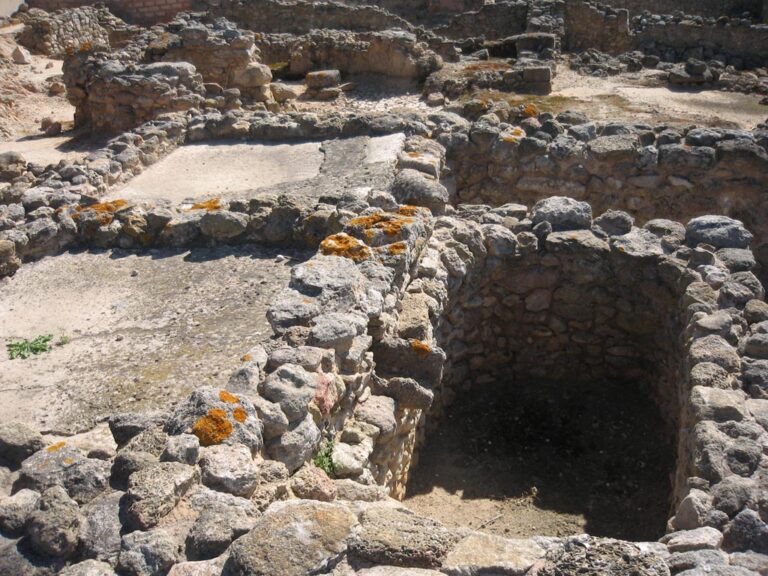
The town’s history is layered and maritime. It likely served as a Roman shipping point referred to as Portus Gaditanus, then became the Islamic settlement known as al‑Qanatir between the 10th and 12th centuries. After becoming part of Castile around 1255–1257 and receiving a formal charter from Alfonso X in 1281, it flourished as a strategic port. The town was the winter port for royal galleys in the 16th and 17th centuries and hosted notable figures: Christopher Columbus visited in 1480 and Juan de la Cosa drew his world map here in 1500. In the 19th century the Plaza de Toros was inaugurated (1880) and, during the Peninsular War, the town served as General Headquarters for the French Army. These events have left a dense architectural and cultural imprint that remains easy to read on a walking route through the old town.
Practical info
– Boat services: Regular boat connections cross the Bay of Cádiz and serve as a practical and scenic link to the city of Cádiz, upholding the local ferry tradition.
– Bodegas and guided visits: Several bodegas welcome visitors for tastings; Osborne’s Bodega de Mora explicitly offers guided sherry and brandy tastings.
– Beaches and promenades: The town’s beaches are directly connected to dining and promenade life rather than isolated resort infrastructure; Valdelagrana in particular is backed by a long strip of bars and restaurants.
– Protected areas: Parts of the municipality are inside the Bahía de Cádiz Natural Park, so some nearby landscapes are protected and worth seeking out for birdlife and coastal scenery.
Worth it for: sherry lovers, seafood and riverside dining, short beach stays with family‑friendly sand, and compact historical walking routes. Less so if: you need a polished resort experience with large hotel complexes and theme-park attractions—this is a working coastal town where food, wine and history take centre stage.
How we assess this guide
We assembled this guide from verified local and regional sources and cross-checked historical and practical claims. We flag current operational facts such as which bodegas offer guided tastings and which transport links operate; we do not invent prices, hours or other specifics. This is not based on an in-person overnight stay by our editors but on up-to-date verification of the town’s attractions, transport links and historic record.
Frequently asked questions
How do I get from Cádiz to El Puerto de Santa María?
Boat services operate across the Bay of Cádiz and connect the two towns; road links also connect them, and the town lies about 10 km northeast of Cádiz.
Is El Puerto de Santa María expensive?
Costs vary by choice of restaurants and activities. The town supports a mix of everyday seafood bars along the Ribera del Marisco and higher‑end gastronomy (including Aponiente), so your spend depends on whether you seek casual tapas or Michelin‑level dining.
Which beach is best for families?
Playa de la Puntilla is a calm, shallow beach close to the centre and favoured by families; Playa de Valdelagrana is a long urban beach with a promenade and family amenities.
How many days should I spend here?
One to three days covers the main draws: a bodega visit and tasting, a historic walk (castle and monastery), and time for riverside meals and beach time. Extend if you plan to make multiple bodega visits or eat at high‑end restaurants.
Is El Puerto de Santa María good for families with children?
Yes. The shallow beaches and walkable old town make it suitable for families; boat links to Cádiz provide easy day trips that work well with children.
Can I get around without a car?
Yes. The main sights, beaches and riverside dining are compact and walkable, and boat services provide additional short links across the bay.
Is there parking near the old town and beaches?
Parking exists in town areas and near the beaches, but availability varies with season and events; expect busier conditions during peak tourism times.
What can I do on a rainy day?
Visit a bodega for a guided tasting, explore indoor cultural sites such as the Fundación Rafael Alberti, or linger over seafood in sheltered riverside bars and tabancos.
When is the best time to visit for beach weather?
The town’s beaches attract the most visitors during the busier seasons; if beach time is your priority, plan for the warmer, busier months when the promenade is lively.
Are there guided sherry tastings here?
Yes. Osborne’s Bodega de Mora offers guided sherry and brandy tastings, and bodegas across the town host visits and tastings as part of the Sherry Triangle tradition.
Which street has the best seafood?
Ribera del Marisco is the riverside street known for seafood bars and tabancos serving fried and grilled Bay of Cádiz seafood.
Was Christopher Columbus associated with the town?
Yes. Christopher Columbus visited the town in 1480, and the town’s maritime history includes figures such as Juan de la Cosa, who drew his world map there in 1500.
Is the town part of any natural park?
Yes—parts of the municipality belong to the Bahía de Cádiz Natural Park, offering protected coastal landscapes and birdwatching opportunities.
Is there a notable bullring to visit?
Yes. The Plaza de Toros, inaugurated in 1880, is one of Spain’s larger bullrings and a notable piece of local architecture.
Plan the wider trip
- Chiclana de la Frontera
- Sanlúcar de Barrameda
- Jerez de la Frontera
- Costa de la Luz Guide
- Almonte: Doñana, El Rocío and Matalascañas
- Arcos de la Frontera: Clifftop White Town
Nearby on the Costa de la Luz
El Puerto De Santa Maria on the map
Places worth knowing near El Puerto De Santa Maria
How this page is maintained. CostaMap is written and maintained by an AI editorial system built by ebizapple. Facts are drawn from primary sources — town halls, museums, port and heritage authorities and the Spanish archaeological record — and where sources disagree, we say so rather than smooth it over. Photographs marked as ours are taken on location. This page was last reviewed on 15 August 2026. Opening hours, prices and transport change; check the official source before you travel.