
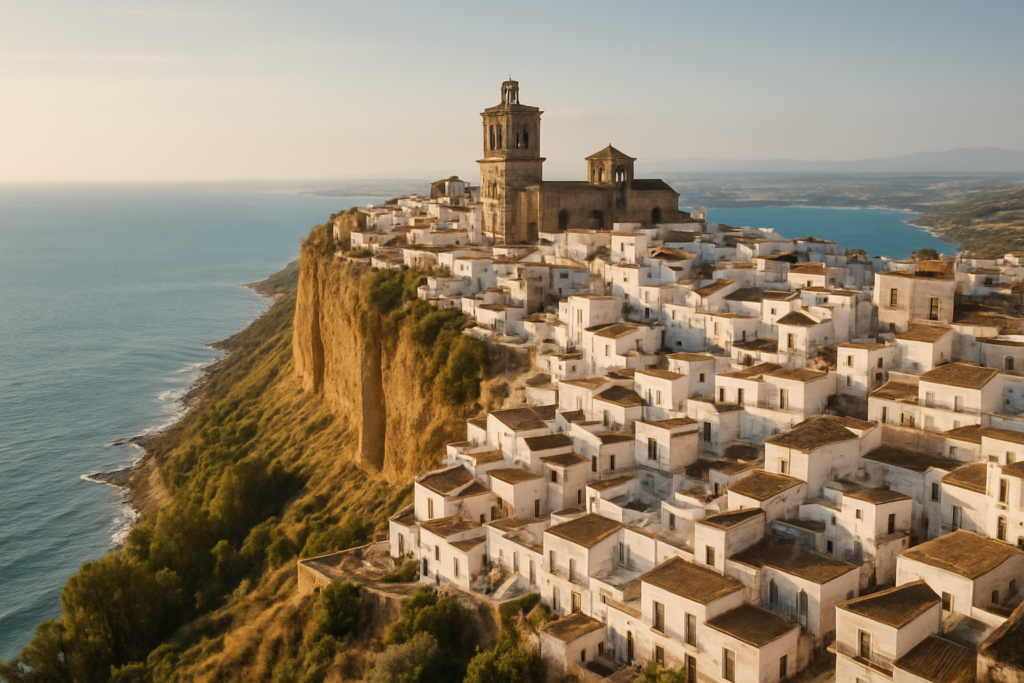
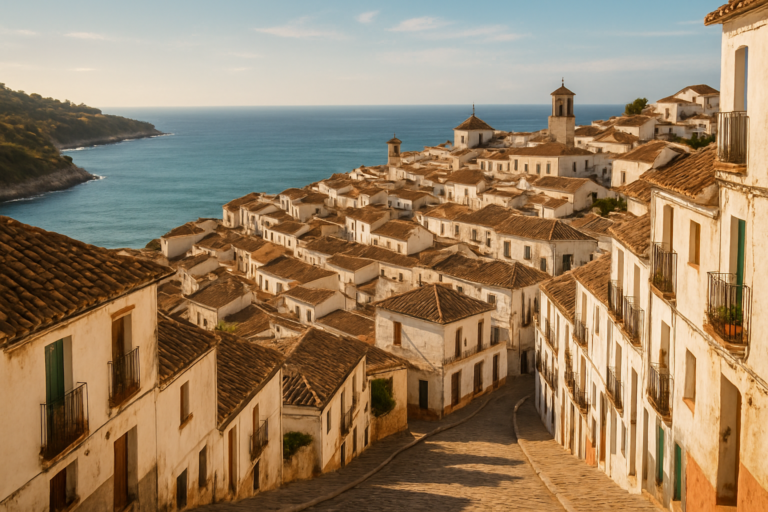
Expect a hilltop town whose main pleasures are atmosphere and views rather than theme-park attractions. Perched on a sandstone ridge, the old quarter rewards slow wandering: steep, narrow, whitewashed streets, dramatic cliff-edge vistas and a handful of impressive churches and plazas. If you come expecting wide promenades, sandy beaches or a bustling nightlife hub you’ll leave disappointed; if you come to soak in Andalusian history, architecture and valley panoramas, you’ll not be surprised.
Arcos de la Frontera at a glance
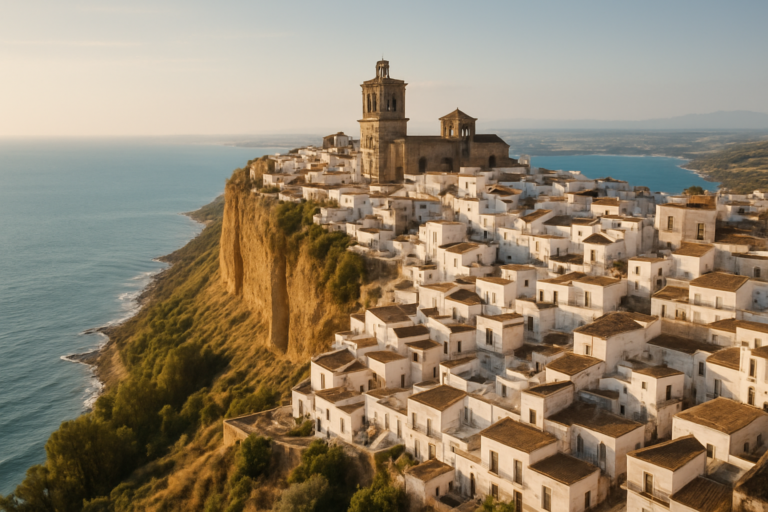
- Hilltop “pueblo blanco” set on a sandstone ridge above a bend in the Guadalete river.
- Main square: Plaza del Cabildo with a cliff-edge balcony and broad views over the Guadalete valley.
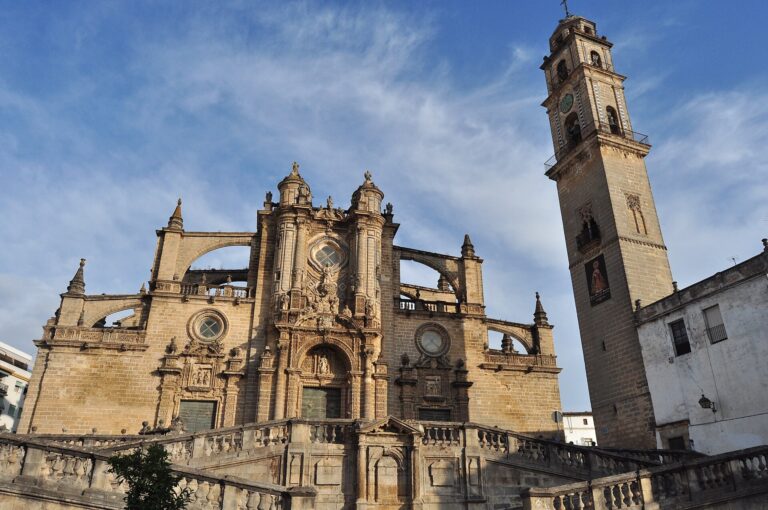
- Two major churches dominate the skyline: the Basílica Menor de Santa María de la Asunción and the Iglesia de San Pedro.
- Within easy inland day-trip distance from Jerez de la Frontera (about 30 km) and Cádiz (about 65 km).
- The historic centre is protected as a Conjunto Histórico-Artístico—expect preserved medieval street patterns.
- Below the town a dam forms the Embalse de Arcos, used for watersports and with walking paths.
- The Parador occupies a historic cliff-edge building on the Plaza del Cabildo with valley views.
Before you plan
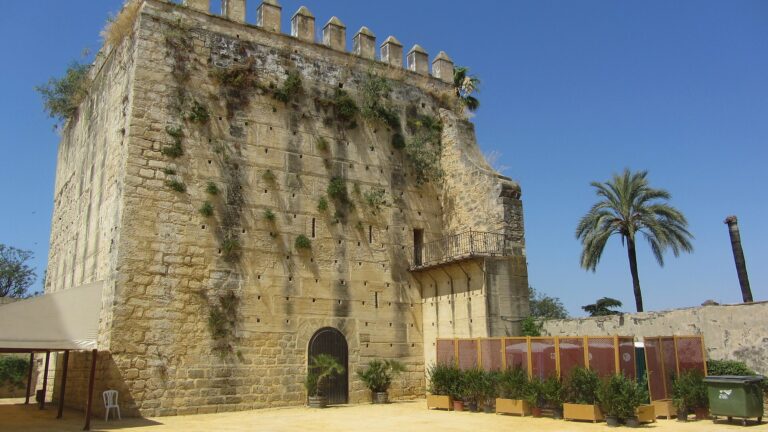
The Castillo de los Duques, an important landmark on the Plaza del Cabildo, is privately owned and generally closed to the public. Do not plan visits inside the castle; you can still view and photograph its exterior from the square and enjoy the mirador’s panorama.
Things to do in Arcos de la Frontera
The main draw here is architectural atmosphere and the sequence of viewpoints, churches and plazas that make up the historic centre. Walk, pause at viewing terraces and let the streets reveal courtyards, baroque portals and vistas of the Guadalete valley. Expect compact, walkable streets—there are few formal “attractions” in the theme-park sense but many memorable sights close together.
| Attraction | What it is | Price/entry | Best for |
|---|---|---|---|
| Plaza del Cabildo | Main square on the cliff edge with a mirador facing the valley | – | Views, photos, orientation |
| Basílica Menor de Santa María de la Asunción | Gothic-Renaissance church begun in the 15th century | – | Architecture, religious art |
| Iglesia de San Pedro | Large church on the highest point of the ridge | – | Panoramas, architecture |
| Castillo de los Duques (exterior) | Moorish-origin castle rebuilt in the 15th century; privately owned | – | History, exterior photography |
| Embalse de Arcos | Reservoir below the town used for watersports and lined with walking paths | – | Active families, walkers, watersports enthusiasts |
Plaza del Cabildo and cliff-edge promenades
The main square is borrowed straight from an artist’s idea of Andalusia: a plaza bordered by historic buildings, a mirador balcony and sweeping views across the Guadalete valley. Use it as your base for orientation—many of the town’s best streets and churches radiate from or funnel down to this space. The plaza’s balcony is the logical place for sunset or an early-morning panorama of mist and orchards below.
The two great churches
Two heavyweight churches dominate the skyline and internal experience. The Basílica Menor de Santa María de la Asunción began in the 15th century and blends Gothic and Renaissance elements; it faces the Plaza del Cabildo and forms a dramatic juxtaposition with the square. Higher on the ridge stands the Iglesia de San Pedro, which rivals Santa María in scale and crowns the town—climb toward it for some of the best close-in panoramas and to feel the spatial sequence from lower plaza to ridge-top church.
Castle exteriors and medieval legacy
The Castillo de los Duques is a reminder of layered history: Moorish foundations, substantial rebuilding in the 15th century and later additions. It sits on the same square as the basilica but is privately owned and generally closed to visitors—your experience will be of reading the exterior and imagining the medieval defences rather than touring interior rooms. The town’s layout and many historic buildings are products of this layered past, including the period when the place was an independent Muslim taifa before its 13th‑century capture.
Embalse de Arcos — watersports and walking
Contrast the cliff-top white village with the calm water below. The Guadalete has been dammed to create a reservoir that locals and visitors use for watersports; walking paths line parts of its shore. This makes the area useful for an active half-day away from the steep streets—bring walking shoes and expect a different, more open landscape than the compact old town.
Best beaches in the area
There are no major coastal beaches in the town itself; Arcos sits inland on a ridge. If you need a beach day, the town’s location makes it an easy base for day trips to the Costa de la Luz, including the beaches around Cádiz and the coastline nearer to Jerez. Use the Parador or local tourist offices to plan a combined inland-and-coast itinerary.
Arcos de la Frontera with kids
Families who enjoy short walks, viewpoints and history can do well here; the town’s compact layout means you won’t need to hop between distant attractions. The reservoir below offers watersports and walking paths that children often enjoy. Narrow streets and steep drops: keep a close eye on young children near cliff-edge viewpoints like the Plaza del Cabildo and expect limited child-specific attractions inside the old quarter.
How to get to Arcos de la Frontera and get around
Access is straightforward by road; the town lies inland and is typically reached by car or regional bus connections. Once inside the historic core, the steep, narrow streets make walking the only realistic way to explore—the Conjunto Histórico-Artístico protection means traffic is restricted in many parts.
| From | By | Approx time |
|---|---|---|
| Jerez de la Frontera | Road (car or bus) | About 30 km |
| Cádiz | Road (car or bus) | Roughly 65 km |
Where to stay in Arcos
Accommodation clusters around a few clear zones; choose according to your priorities—views, proximity to historic sights, or quieter neighbourhoods below the ridge.
- Plaza del Cabildo and immediate old town — best for first-time visitors who want to be steps from the main mirador, the basilica and the Parador.
- Higher ridge around Iglesia de San Pedro — suits those who prefer ridge-top quiet and easy access to panoramic walks.
- Below the old town near the Embalse de Arcos — better for visitors who want an active, outdoorsy base and easier vehicle access.
Best time to visit Arcos de la Frontera
The town is visitable year-round, but timing affects the experience: Holy Week brings intense, atmospheric processions through the narrow lanes, while summer hosts a running of the bulls. If you prefer quieter exploration of streets and viewpoints pick shoulder seasons when heat is milder and crowds smaller.
| Season | Months | What to expect |
|---|---|---|
| Spring | March–May | Milder weather, good for walking; Holy Week falls in spring and includes dramatic narrow-street processions. |
| Summer | June–August | Hotter temperatures and a summer running of the bulls; evenings are lively but day heat can make walking demanding. |
| Autumn/Winter | September–February | Quieter town atmosphere and cooler conditions—suitable for low-key sightseeing and reservoir walks. |
History of the town
The settlement’s history is layered: originally an independent Muslim taifa kingdom, it was taken from the Moors by King Alfonso X of Castile in 1264. Moorish foundations are still evident in the town plan and in surviving fortification lines; the Castillo de los Duques, though substantially rebuilt in the 15th century, preserves that continuity. The churches and many civic buildings that dominate the skyline are products of post-Reconquista rebuilding and embellishment, giving the old quarter its present Gothic-Renaissance and baroque character.
Practical info
The historic centre is protected as a Conjunto Histórico-Artístico, so expect preservation rules that affect renovations, signage and street-level changes. The town’s topography—steep, narrow streets—means accessibility is uneven; visitors with mobility impairments should plan routes carefully and may find some areas difficult without assistance. The Parador on the Plaza del Cabildo occupies a historic building and offers the rare convenience of cliff-edge lodging inside the heart of the old town. For active visitors, the reservoir below the town is an obvious practical resource for watersports and longer walks away from the uphill streets.
Worth it for: walkers and photographers who want classic Andalusian white‑town atmosphere, dramatic valley views and substantial churches. Less so if: you crave long sandy beaches, a late-night party scene or an attractions-heavy itinerary—those needs are better met on the nearby coast.
How we assess this guide
This guide compiles historical and practical claims cross-checked against verified sources. We flag closures and restricted-access sites such as privately owned castles when known; we do not invent prices, opening hours or web addresses. Information here is synthesis rather than first‑hand reporting—use local tourist offices for the latest on events, access and seasonal changes.
Nearby on the Costa de la Luz
Towns near Arcos de la Frontera
- Jerez de la Frontera — 28 km west
- Ubrique — 33 km east, the leather-making pueblo blanco of the Sierra de Cádiz between
- El Puerto de Santa María — 42 km south-west, What El Puerto de Santa María is really like
- Puerto Real — 42 km south-west, a royal-founded town on the Bay of Cádiz
- Chiclana de la Frontera — 48 km south-west, What Chiclana de la Frontera is really like
- Sanlúcar de Barrameda — 49 km west, What Sanlúcar de Barrameda is really like
For the wider picture, see the Costa de la Luz guide, which lists every town on this coast.
Frequently asked questions
How do I get to Arcos de la Frontera from Jerez de la Frontera?
By road. The town lies about 30 km east of Jerez, so travel is typically by car or regional bus services connecting inland towns.
Is Arcos expensive to visit?
Expect typical Andalusian small‑town prices rather than high tourist premiums. The town’s main costs arise from accommodation choices—staying on the Plaza del Cabildo or in the Parador will be pricier than lodgings further down the ridge.
Which viewpoint or plaza is best for photos?
The Plaza del Cabildo’s cliff-edge mirador gives the most immediate sweeping panoramas over the Guadalete valley and is the most photographed spot for sunsets and valley views.
How many days should I spend here?
A day trip suffices to see the main sights and soak in the atmosphere. An overnight stay lets you experience quieter early-morning and evening light, and gives time for a reservoir walk or watersports below the town.
Is Arcos good for families with children?
Yes, for families who enjoy walking, viewpoints and gentle outdoor activities. The reservoir below provides watersports and walking paths that are appealing to children. Keep a close watch near cliff-edge viewpoints and on steep streets.
Can I get around without a car?
Within the historic core you will walk. Regional buses and occasional taxis serve the town, but having a car makes it easier to reach the reservoir and to plan combined inland-and-coast days; check local bus timetables for connections to Jerez and Cádiz.
Is there parking available?
There are vehicle access limitations in the Conjunto Histórico-Artístico; parking tends to be outside the narrowest streets. Plan to park in accessible zones and walk into the steep central zones.
What are good rainy-day options?
Explore the substantial interior spaces of the basilica and the Iglesia de San Pedro, visit covered cafes and focus on museum or gallery offerings if available. The compact scale means you can shift to indoor visits without long transfers.
When is Holy Week and what is it like here?
Holy Week (Semana Santa) occurs in spring and brings intense religious processions that thread the town’s tight lanes—watching these is atmospheric but expect crowds and processions squeezing through narrow streets.
Is there a running of the bulls here?
The town stages a summer running of the bulls. If you plan to be in town for this, check local schedules and safety notices—these events are traditional but come with inherent risks and crowding.
Can I visit the castle?
The Castillo de los Duques is privately owned and generally closed to the public. You can view and photograph its exterior from the Plaza del Cabildo but do not expect interior access.
Where can I find local food and specialties?
The area follows inland Cádiz cuisine: hearty dishes such as berza stew, sopa de tomate and game, commonly paired with sherry from nearby Jerez. Seek small local restaurants in the old town for traditional plates rather than international menus.
Is the historic centre protected?
Yes—the steep, narrow, whitewashed streets of the old town are designated a Conjunto Histórico-Artístico, which influences conservation and development within the centre.
Are there watersports here?
Yes—the Embalse de Arcos reservoir formed by damming the Guadalete is used for watersports and has walking paths along parts of its shoreline.
How far is the nearest coastline?
The town sits roughly 65 km inland from the city of Cádiz and is therefore a reasonable base for combined inland-and-coastal trips to the Costa de la Luz.
Plan the wider trip
- Costa de la Luz guide
- Jerez de la Frontera
- Cádiz
- Barbate: Tuna, Cliffs and Atlantic Beaches
- Bollullos Par del Condado: Wine Capital of the Condado de Huelva
- Chipiona: Lighthouse, Beaches and Moscatel Wine
Arcos De La Frontera on the map
Places worth knowing near Arcos De La Frontera
How this page is maintained. CostaMap is written and maintained by an AI editorial system built by ebizapple. Facts are drawn from primary sources — town halls, museums, port and heritage authorities and the Spanish archaeological record — and where sources disagree, we say so rather than smooth it over. Photographs marked as ours are taken on location. This page was last reviewed on 15 August 2026. Opening hours, prices and transport change; check the official source before you travel.