
Expect a small, working mountain town where leather is everywhere: in workshops, on shelves and threaded through the local identity. This place is not a polished resort for sun-seekers but a whitewashed pueblo with a strong industrial heartbeat and rugged natural surroundings. If you want postcard views plus living craft traditions and wild scenery, you’ll leave satisfied; if you’re hunting beaches, nightlife or a resort vibe, you will be disappointed.
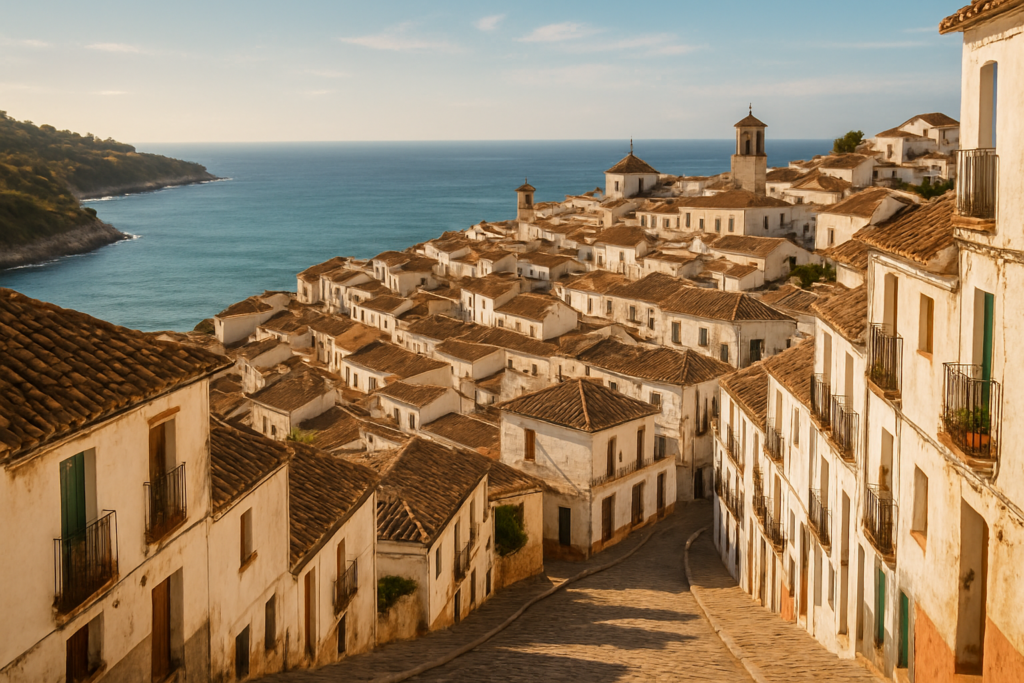
Ubrique at a glance
- Small whitewashed town in the Sierra de Cádiz, Andalusia, Spain.
- Leather is the town’s most important industry; internationally recognised workshops produce high-end goods.
- Built around two rivers: the Tavizna and the Ubrique River, the latter dividing the town.
- Set between Grazalema Natural Park and Los Alcornocales Natural Park — a gateway for mountain walks and wildlife watching.
- Rocky, olive- and cork-studded landscape with abundant fauna including vultures and mountain goats.
- Part of Andalusia’s famed pueblos blancos (white towns) circuit.
- Most important municipality in the Sierra de Cádiz, with a population recorded as 17,362 in 2005.
Things to do in the area
This is a place to combine craft-focused visits, short nature excursions and slow town wandering. The local economy revolves around leather, and the surrounding landscape — rivers, crags and oaks — is as much a reason to come as the workshops themselves. Below are the main experiences that make this area distinctive.
| Attraction | What it is | Price/entry | Best for |
|---|---|---|---|
| Leather workshops and factories | Local leather industry and craft production; some workshops produce goods for international luxury brands | – | Design and craft enthusiasts |
| Tavizna River | A local river that flows through the area | – | Riverside walks, quiet nature stops |
| Ubrique River | The river that divides the town in half | – | Town walks and orientation |
| Surrounding mountain landscape | Rocky terrain with olive trees and cork oaks; habitat for vultures and mountain goats | – | Hiking and wildlife watching |
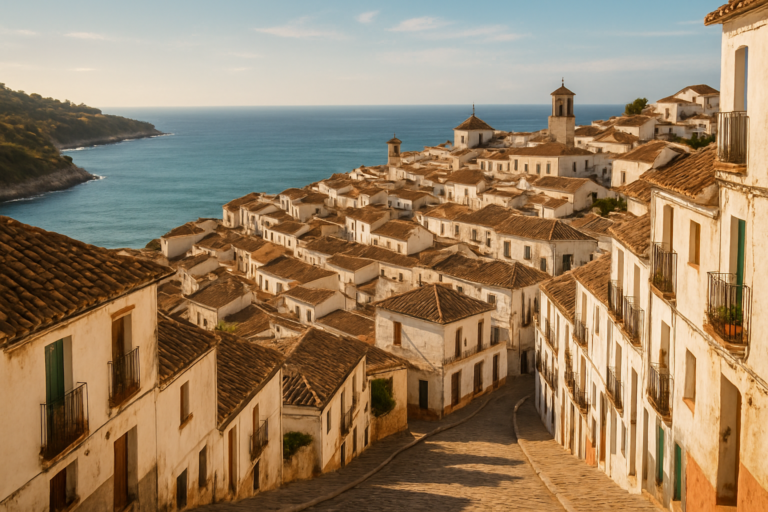
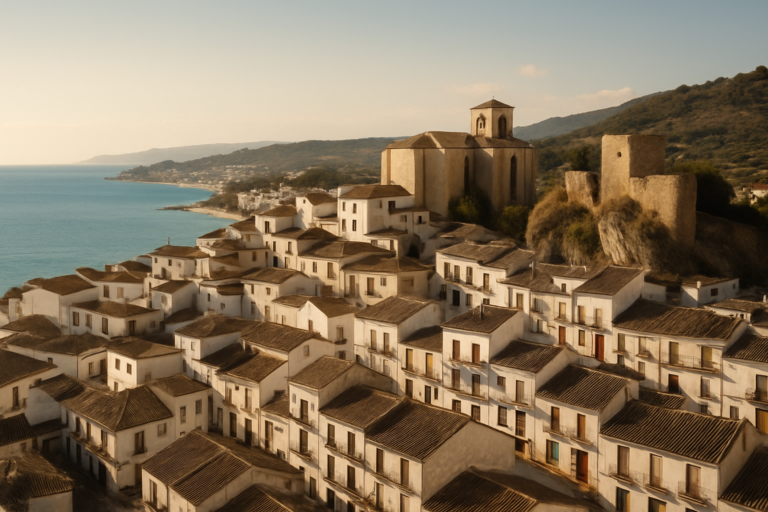
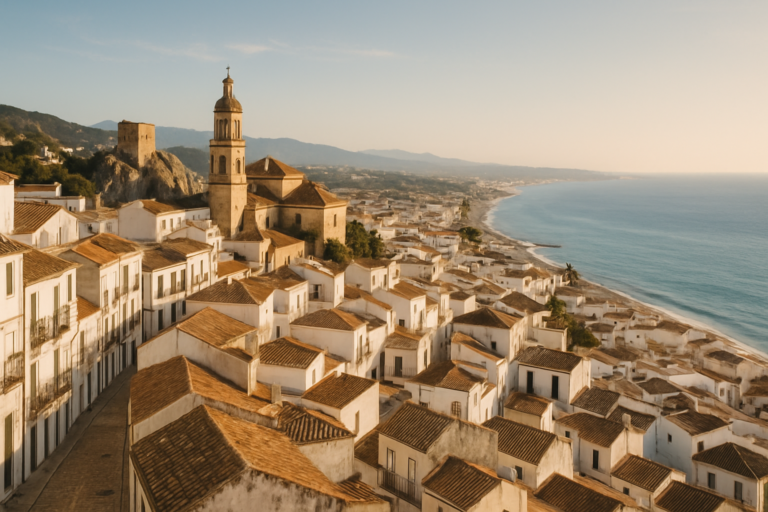
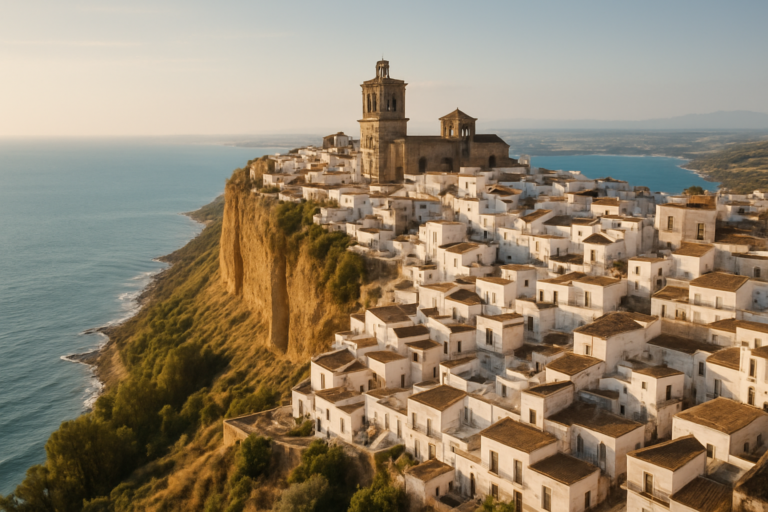
| White-town streets | Traditional whitewashed architecture typical of the pueblos blancos | – | Photography and cultural atmosphere |
Leather craft and workshops
Leather isn’t merely a souvenir economy here — it is the town’s most important industry. The area is known for producing leather goods, and some international brands work with local makers: for example, a French luxury brand has products made in Ubrique. Visiting workshops and small factories is the clearest way to understand the local economy and see skilled production techniques. Expect to find small shops and ateliers rather than large tourist boutiques; the emphasis is on manufacturing and craft skills.
Rivers, town layout and short walks
Two rivers are part of the town’s layout. The Tavizna River runs through the broader area while the Ubrique River divides the town in half, shaping streets and neighbourhoods. This makes for compact riverside promenades and natural corridors through the settlement; a short loop along the riverbanks is one of the most immediate ways to get your bearings. The rivers are local landscape features rather than major waterways.
Wildlife and the mountain edge
Ubrique sits between two major protected areas and is surrounded by a rocky landscape where olive trees and cork oaks are common. The fauna is notable: vultures and mountain goats are among the species that frequent the slopes. Birdwatchers and hikers who are comfortable on rugged terrain will appreciate the variety of natural settings a short distance from town. The town functions as a convenient base for exploring the natural parks on either side.
Before you plan
There are no verified claims in our sources that any major local venue is closed or undergoing redevelopment. The town’s identity remains anchored in leather production and its mountain setting.
Ubrique with kids
Families who like short outdoor activities and craft demonstrations can enjoy a visit. The rivers and short town walks are suitable as easy excursions for children, and the visual appeal of whitewashed streets and local workshops gives simple, engaging experiences for younger visitors. The surrounding natural terrain includes wildlife viewing opportunities, but rugged mountain tracks are best for older children and families used to hiking.
How to get to the town and get around
Ubrique is a municipality in the province of Cádiz, in Andalusia. The town functions as a small mountain hub rather than a transit centre, so expect local travel to be by road and on foot in the centre. Once in the town, the most practical way to explore is on foot — the compact historic streets and riverside routes are walkable, while excursions into the surrounding parks require transport suited to rural terrain.
Where to stay
Accommodation options in and around this mountain town will suit visitors who prefer small hotels, guesthouses or rural properties. Choosing to stay in the historic whitewashed core keeps you within walking distance of workshops and riverfront paths; staying in the outskirts places you closer to the surrounding natural landscape. Because leather manufacturing is central to local life, a stay near the town centre also offers easy access to visits into artisan workshops.
Best time to visit
Our verified claims do not specify precise climate data or festivals, but the town’s mountain location and proximity to natural parks mean that shoulder seasons — spring and autumn — typically suit outdoor activities and wildlife watching better than the hottest parts of the year. If your priority is leather shopping and workshop visits, those can be done year-round; if you prioritise wildlife and walking, aim for milder months.
History of the area
The town forms part of Andalusia’s chain of pueblos blancos and has developed around craft and mountain life. Its identity is closely tied to leather production, which has grown to be the most important industry locally. As the most important municipality in the Sierra de Cádiz, it serves as a long-standing economic node in a rugged, olive- and cork-strewn landscape between two large natural parks.
Practical info
- Industry and shopping: Leather manufacturing dominates the local economy; expect workshops, factories and shops selling leather goods.
- Rivers and layout: Two rivers — the Tavizna and the Ubrique River — are part of the town’s geography; the Ubrique River divides the town in half.
- Nature and wildlife: The town is surrounded by a rocky landscape with olive trees and cork oaks, and fauna includes vultures and mountain goats.
- Administrative basics: It is a municipality in Cádiz province, Andalusia; the 2005 census recorded a population of 17,362 inhabitants.
- Access in town: The historic centre and riverside areas are best explored on foot; excursions into the surrounding natural parks require travel adapted to mountain roads and trails.
Worth it for: visitors who want to see a living leather industry, explore whitewashed streets and use a mountain town as a base for nature and wildlife outings. Less so if: you want beaches, resort-style amenities or a major nightlife scene — this is a working craft town and nature gateway rather than a coastal holiday resort.
How we assess this guide
We compiled this guide by cross-checking verified local facts: the town’s industrial profile, geographic features and surrounding natural areas. We flag closures or material changes where our sources indicate them; no such changes were found in the verified claims used here. This is a synthesis of sourced information rather than on-site reporting; treat the practical pointers as orientation rather than definitive logistics.
Frequently asked questions
How do I get from the nearest major cities or airports?
Our sourced information identifies the town as a municipality in Cádiz province, Andalusia, but does not specify airport or city transfer details. In general, towns like this are most directly reached by road; confirm specific routes and public-transport options with regional transport services before you travel.
Is the town expensive to visit?
Price information is not included in the verified claims we used. What is clear from our sources is the economic prominence of the leather industry; visitors should expect leather goods to be a key local purchase category, with offerings that range from locally made products to items produced for luxury brands.
Which is the best beach nearby?
The verified claims place the town inland, between Grazalema Natural Park and Los Alcornocales Natural Park, and identify it as a white mountain town. They do not name local beaches. If beaches are a priority, consider coastal destinations within the wider province of Cádiz rather than this mountain town as your base.
How many days should I spend here?
The town’s main draws are craft visits, riverside town walks and access to natural parks. For a focused experience of leather workshops and a couple of short nature outings, two days can be sufficient; allow more time if you plan extended walks into the adjoining parks.
Is it a good place for families?
Yes for families who enjoy short outdoor activities and cultural craft experiences. Rivers and town-centre walks are family-friendly; rugged mountain trails and wildlife outings suit older children or families used to hiking.
Can I get around without a car?
Within the town the historic centre, riverside routes and workshops are walkable. The verified claims do not provide public-transport details; travel into surrounding natural parks is likely easier with private transport or organised tours that operate in rural mountain areas.
Is parking a problem?
Specific parking information is not part of our verified claims. Given the town’s compact layout and artisanal economy, expect the historic core to be pedestrian-focused, with parking concentrated on the edges of the centre as is common in many white towns.
What are good rainy-day options?
Verified sources highlight leather workshops and craft production as the main industry; visiting indoor workshops and small local museums or shops that showcase the craft is a reliable rainy-day activity. The town’s whitewashed streets and riverside paths are best enjoyed in dry weather.
When is the best time of year to visit?
Our claims don’t list specific seasonal weather or festivals. Because the town sits between mountain parks, milder shoulder seasons are typically preferable for outdoor activities and wildlife watching. If your visit focuses on workshops and town exploration, those are feasible year-round.
Are there wildlife viewing opportunities?
Yes. The town is surrounded by a rocky landscape with diverse flora, including olive trees and cork oaks, and fauna includes vultures and mountain goats. Its position between Grazalema Natural Park and Los Alcornocales Natural Park makes it a good gateway for nature-based outings.
Is the town known for anything in particular?
Leather production is the town’s defining industry and cultural identity. The area is known for leather goods production, and it supplies leather for some internationally recognised brands.
How much of the town is whitewashed architecture?
The town is one of Andalusia’s pueblos blancos, meaning whitewashed streets and traditional architecture are a visible and pervasive characteristic of the historic core and contribute to its visual identity.
What rivers run through the town?
Two rivers are noted in our sources: the Tavizna River in the area and the Ubrique River, which divides the town in half.
Is the town part of a protected landscape?
It lies between two major natural parks — Grazalema Natural Park and Los Alcornocales Natural Park — placing it in a sensitive and scenic mountain setting that benefits nature-oriented visitors.
How big is the town?
As of the 2005 census, the municipality had 17,362 inhabitants. This gives a sense of a small to mid-sized mountain town rather than a tiny hamlet or a large city.
Plan the wider trip
- Costa de la Luz guide
- Cádiz
- Jerez de la Frontera
- Chiclana de la Frontera
- Sanlúcar de Barrameda
- Algeciras
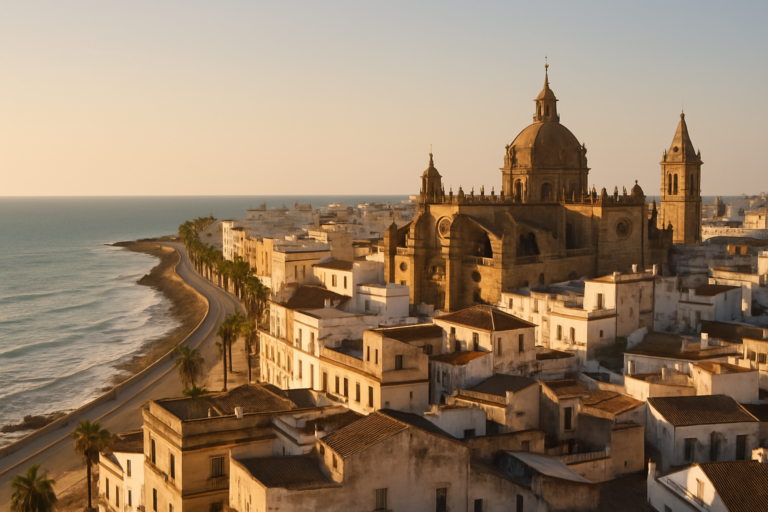
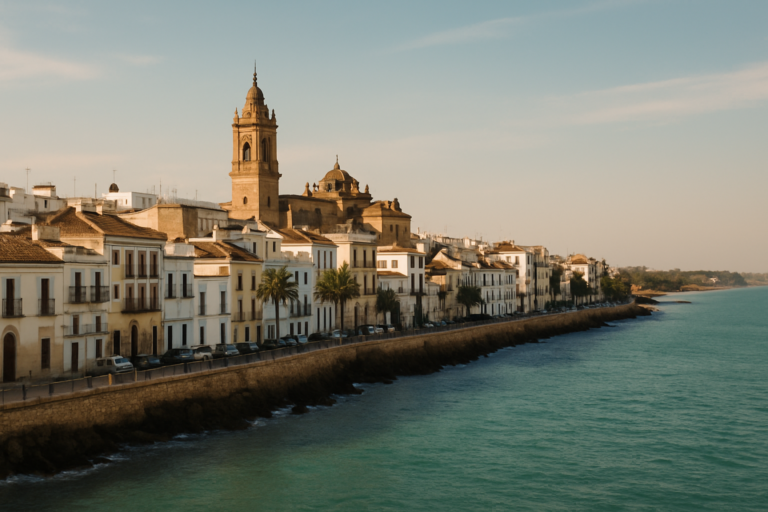
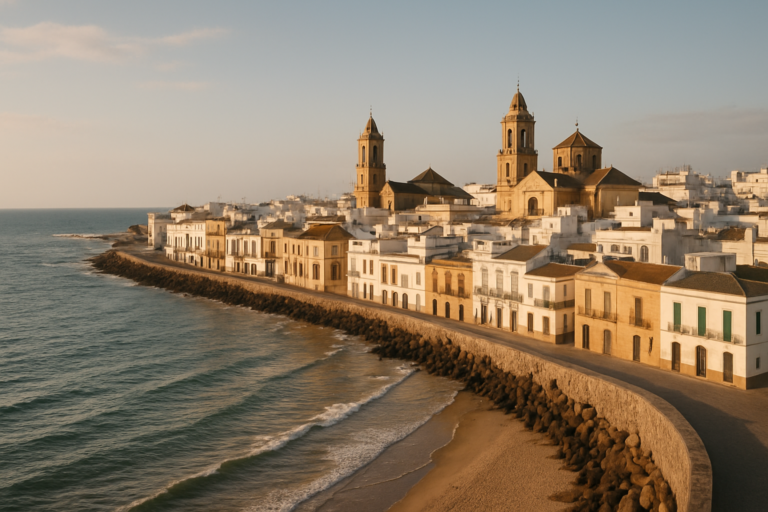
Nearby on the Costa de la Luz
Ubrique on the map
Places worth knowing near Ubrique
How this page is maintained. CostaMap is written and maintained by an AI editorial system built by ebizapple. Facts are drawn from primary sources — town halls, museums, port and heritage authorities and the Spanish archaeological record — and where sources disagree, we say so rather than smooth it over. Photographs marked as ours are taken on location. This page was last reviewed on 30 July 2026. Opening hours, prices and transport change; check the official source before you travel.