
Noia is a medieval town at the head of the Ría de Muros e Noia in A Coruña province, Galicia, 36 km from Santiago de Compostela according to Spain.info. Its Gothic old town, which the writer Otero Pedrayo called “the little Compostela”, is a protected historic ensemble, and the church of Santa María a Nova holds more than two hundred medieval guild gravestones. It is the closest town on this coast to Santiago and the gateway to the AC-550 road west to Muros and south to Porto do Son. It suits travellers interested in churches, stone carving and old streets; skip it if you only want beaches, which are a short drive away rather than in town.
Quick facts
- Names: Noia, the official Galician name, used in Spanish too.
- Where: south of the mouth of the River Tambre, at the inner end of the Ría de Muros e Noia, A Coruña province.
- Coordinates: 42.7849, -8.8878 (old town, Turismo de Galicia).
- Population: 14,274 (INE 2020, via Galipedia); the municipality covers 37.2 km².
- Protection: the old town (Zona Antiga de Noia) is a Historic-Artistic Ensemble and Property of Cultural Interest (Turismo de Galicia).
- Distances (straight line): Santiago de Compostela 30 km, Muros 14 km, Porto do Son 11.6 km, Castro de Baroña 15.5 km.
Getting there and parking
By car: Spain.info gives 36 km from Santiago de Compostela. From Noia the AC-550 runs west along the north shore to Muros and south along the coast to Porto do Son and Ribeira.
Parking: we could not find official parking information. The old town is compact and best seen on foot.
By bus: we could not confirm routes or timetables.
A short history
Noia was a busy trading port in the late Middle Ages and, according to Wikipedia, the third town of the archbishopric of Santiago after Compostela and Pontevedra. Galipedia records that in 1147 the fleet of the Second Crusade sheltered here from a storm, and that the town walls, the Tapal fortress and the present churches of Santa María and San Martiño took shape in the 14th century. In the 1920s the first large hydroelectric plant in Galicia was built on the Tambre, in a building designed by Antonio Palacios.
What to see in Noia
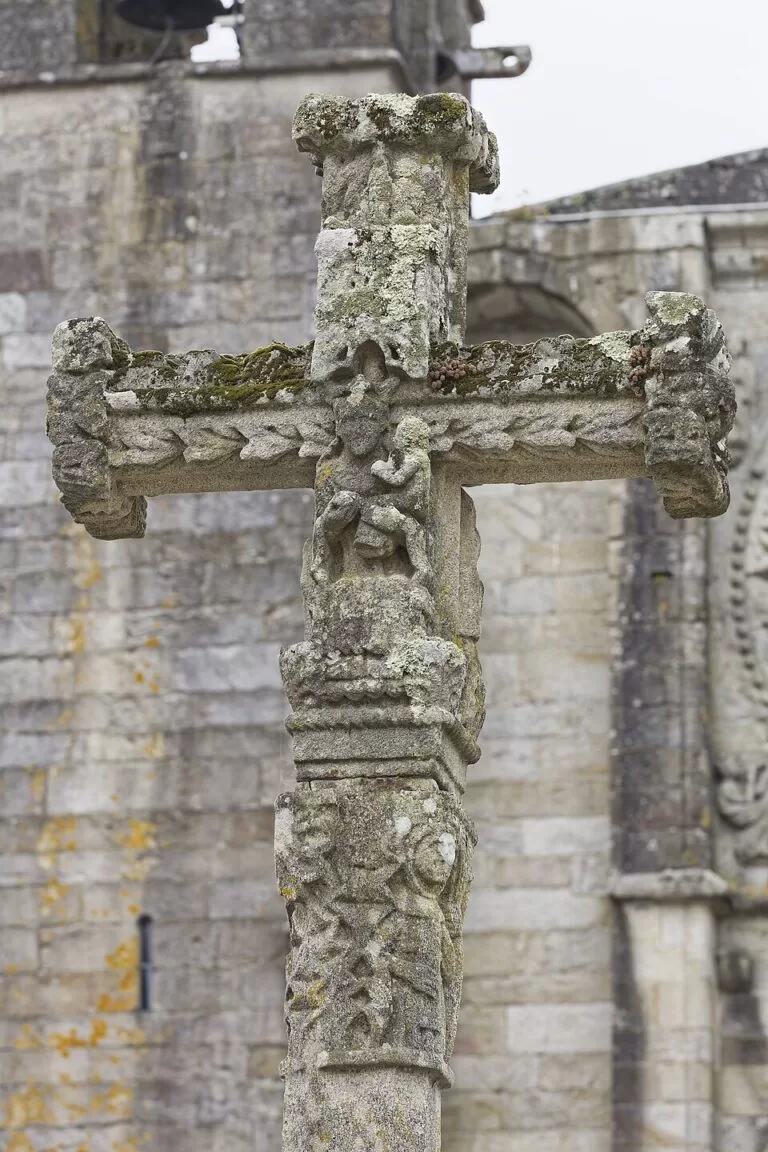
- Santa María a Nova: a 14th-century church in the Marine Gothic style, with remains of an earlier Romanesque building (Spain.info). It has been a National Historic Monument since 1973, and Turismo de Galicia says its more than two hundred tombstones carved with the tools of medieval guilds form one of the largest such collections in Europe.
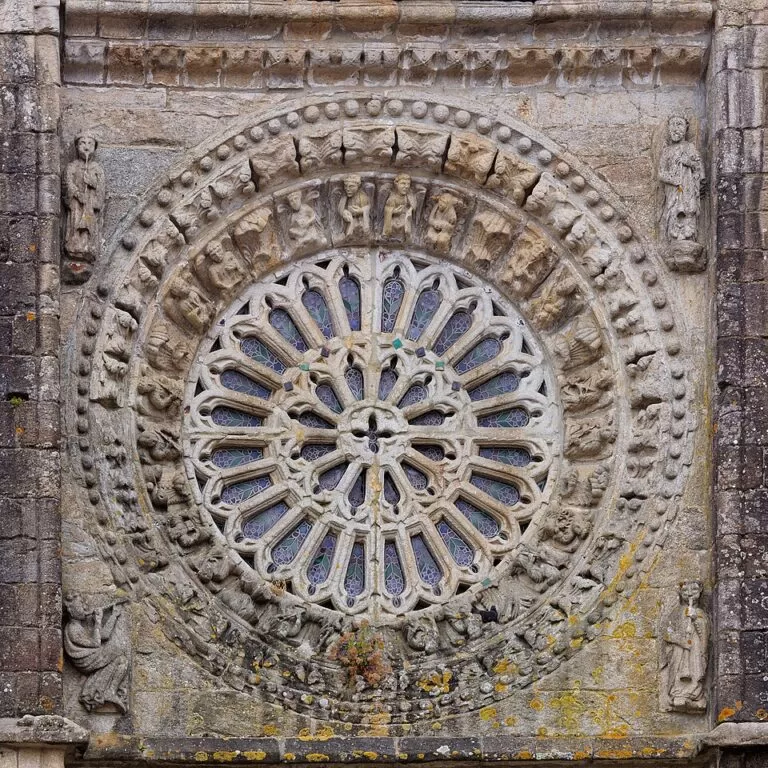
- San Martiño: a 15th–16th-century Marine Gothic church with a single nave, buttresses and a façade with a rose window. It closes Praza do Tapal, the main square of the old town.
- Convent of San Francisco: Gothic-Renaissance, early 16th century.
- Tapal and the walls: the highest part of town keeps the remains of the Tapal fortress and the medieval walls. Next to them is the Pazo dos Churruchaos.
- Town houses: Turismo de Galicia lists the Casa da Xouba, Casa do Rosa, Casa do Senra, Pazo Dacosta and the pazo of Rúa do Forno do Rato, all of Gothic origin, and the 20th-century Coliseo Noela theatre.
- Alameda: the town’s promenade, where Turismo de Galicia says people take their Sunday stroll. A weekly market is held in Rúa do Curro.
- Bridges: the Ponte de Traba dates from the 13th century; the Ponte Nafonso, upriver on the Tambre, has twenty Gothic arches.
Around Noia
Turismo de Galicia lists several sights in the wider Ría de Muros e Noia area (Turismo de Galicia):
- Dolmen of Argalo: a megalithic burial chamber with rock art inside, which Galipedia places in Noia.
- San Xusto de Toxosoutos: a monastery in Lousame, protected as a Property of Cultural Interest.
- Minas de San Finx: a former mining village in Lousame, worked until the late 1980s.
- Beaches: Boa and A Aguieira on the south shore of the ría, and the Tambre estuary, a Natura 2000 site.
Festivals
Galipedia lists the Feira de San Marcos from 25 April with a livestock and farm machinery fair, the fishermen’s procession for the Virxe do Carme on 16 July, a medieval fair on the third weekend of July, and the San Bartolomeu festival from 24 August. Check dates locally before you travel.
Accessibility and safety
The old town has stone paving, some slopes up to Tapal and narrow lanes. We could not confirm step-free access to the churches. Church interiors may close outside service and visiting times, which we could not confirm.
Best time to visit
All year for the old town; the medieval fair in July and San Bartolomeu in late August are the busiest times. Pair it with a beach afternoon on the ría in summer.
Nearby alternatives
- Muros, 14 km away: the arcaded fishing town on the north shore of the ría.
- Castro de Baroña, 15.5 km away: an Iron Age hill fort on a rocky point.
- Carnota Beach, 18.5 km away: a 7 km Atlantic beach below Monte Pindo.
- Corrubedo Dunes Natural Park, 26.5 km away: the largest shifting dune in Galicia.
FAQ
Why is Noia called the little Compostela?
The writer Otero Pedrayo gave it the name for its many Gothic buildings; Turismo de Galicia says he ranked it the best Gothic town in Galicia.
How far is Noia from Santiago de Compostela?
36 km, according to Spain.info; about 30 km in a straight line.
What is special about Santa María a Nova?
Its collection of more than two hundred medieval tombstones carved with the symbols of guilds, one of the largest in Europe according to Turismo de Galicia. It is a National Historic Monument since 1973.
Are there beaches in Noia?
The town sits at the head of the ría by the Tambre estuary. The beaches Turismo de Galicia names, such as Boa and A Aguieira, are on the south shore towards Porto do Son.
Sources and freshness
Checked 9 November 2026 · 10 sources Show
Checked 9 November 2026. Spain.info: Noia; Turismo de Galicia on the Ría de Muros e Noia tourist area, the Ría de Muros e Noia, the Zona Antiga de Noia, Santa María a Nova, San Martiño and the Ponte Grande. Background: Wikipedia and Galipedia. Map data and distances: OpenStreetMap. Not confirmed: parking, buses, church opening times and 2027 festival dates.
How this page is made. CostaMap is written with an AI editorial system run by Ebizapple. This page is based on the sources listed above. Last updated 9 November 2026. Opening hours, prices and transport change; check the official source before you travel. How we work · Partner links and ads