
Guardamar del Segura rarely delivers the glossy, postcard-perfect resort sheen travellers sometimes expect on the Costa Blanca. It’s quieter and more low-key than neighbours, with broad, natural-feeling beaches backed by a large dune-and-pine zone and a handful of archaeological surprises — but don’t expect polished promenades or busy nightlife. Come for space, dunes and history, not for resort theatrics.
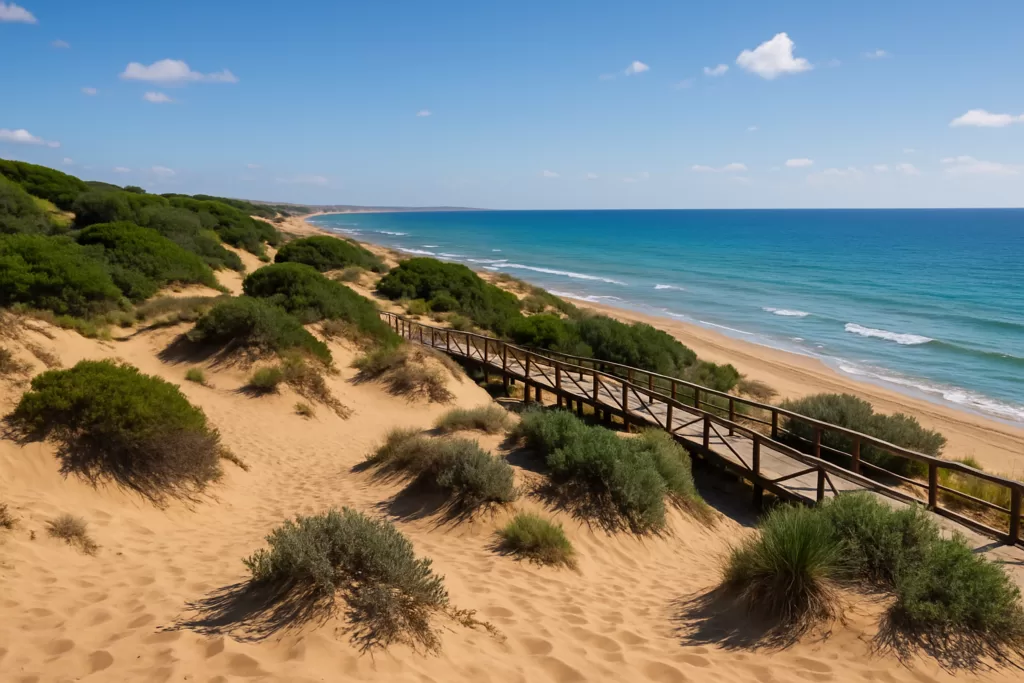
Guardamar at a glance
- Low-key coastal town with quieter beaches like Moncayo set among dunes.
- About 11 km of continuous golden sandy beaches, roughly 50–100 m wide.
- Large protected dune-and-pine forest (La Pinada) of roughly 800 hectares.
- Dunes and pine forest are a reforestation result after advancing dunes threatened the town.
- Two major archaeological sites hidden in the dunes: La Fonteta and the Caliphal Rábita.
What first-timers don’t expect
- The pines and dunes are not purely natural: a late‑19th/early‑20th-century reforestation planted around 600,000 trees over decades to stabilise moving dunes.
- There are serious archaeological sites in the sand — including a Phoenician port city (La Fonteta) and an almost intact 10th‑century Islamic monastery (the Caliphal Rábita) with prayer cells.
- The Segura River meets the sea here beside a small red lighthouse, where fresh water mixes with salt and you can see the Santa Pola sierra from the mouth.
Beaches and the dune forest
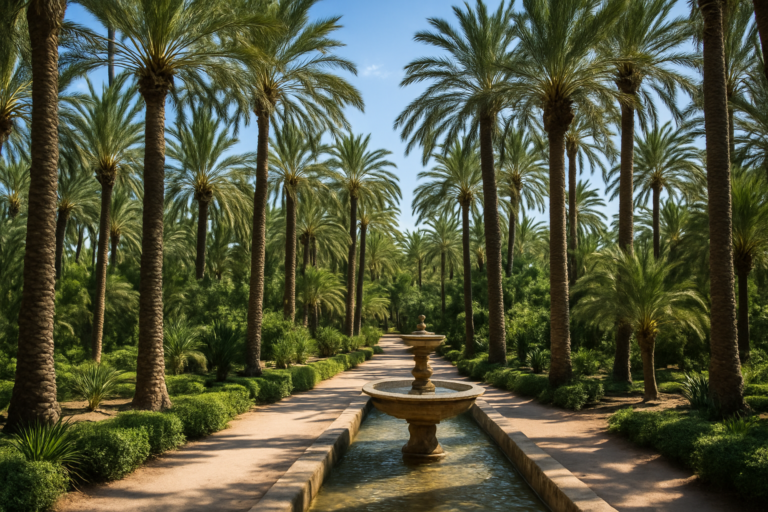
Guardamar’s beaches add up to about 11 km of continuous golden sand. They’re among the widest on the Costa Blanca, typically around 50–100 metres across, so even in high season there’s usually room to spread out. Behind the sand runs La Pinada, an 800‑hectare protected area of dunes and pine woodland designated a Site of Community Importance — its scale and open feel are the town’s defining landscape element.
Why the trees are here — and the Tree Festival
The shady pine belt doesn’t reflect an ancient landscape but a deliberate project begun when dunes were advancing quickly — 2 to 8 metres per year — and threatened to bury the settlement. Around 600,000 trees were planted over about four decades to stabilise the sand. That civic effort is still celebrated: the town’s Tree Festival (Fiesta del Árbol) has run every 31 January since 1904, with schoolchildren planting trees as part of the tradition.
History under the sand
Hidden among the dunes are two substantial archaeological sites. La Fonteta is a Phoenician port-city complex, and the Caliphal Rábita is an almost fully preserved 10th‑century Islamic monastery featuring 23 prayer cells. These finds make Guardamar unusually rich in buried history for a small coastal town.
🧭 Local tip
Walk the pine belt just behind the main beaches to appreciate how the forest frames the shore — and to find quieter access points to sand like Moncayo rather than the busiest beach stretches.
Visitor reality check
- Not a polished, high-energy resort: Guardamar keeps a relaxed, low-key atmosphere compared with nearby holiday towns.
- Beaches are wide and spacious, but facilities and promenade polish aren’t the town’s focus.
- The dunes and pine forest are protected and extensive; expect natural settings rather than manicured parkland.
Worth it… if you want broad, quiet beaches backed by a large dune-and-pine landscape and don’t expect slick resort façades. The archaeological sites and the river mouth add unexpected historical and landscape interest.
How we assess this guide
This guide is cross-checked against multiple sources on Guardamar’s landscape, history and events. We include only facts that are verifiable and omit claims we cannot confirm. We do not base statements on first‑hand CostaMap field observation.
Guardamar del Segura beach guide
| Feature | Detail |
|---|---|
| Total beach length | ~11 km of continuous sand |
| Beach width | 50–100 m, among the widest on the Costa Blanca |
| Dune forest (La Pinada) | ~800 hectares, roughly 600,000 trees planted |
| Archaeological sites | La Fonteta (Phoenician port), Caliphal Rábita (10th-century monastery) |
| River mouth | The Segura meets the sea beside a small red lighthouse |
Getting around Guardamar del Segura
The town itself is compact and walkable, with the beaches, dune forest and river mouth all reachable on foot or by a short bike ride from the centre — a bike path runs along much of the coastline, making this one of the easier Costa Blanca towns to explore without a car once you have arrived. A car remains useful for reaching the wider region, since Guardamar sits between Torrevieja and Santa Pola on the southern stretch of coast, but within the town itself, the flat terrain and marked paths through La Pinada mean most visitors get around comfortably without one.
The archaeological sites, explained
What makes Guardamar genuinely unusual among Costa Blanca beach towns is what lies buried in its dunes. La Fonteta was a fortified Phoenician trading port dating back to around the 8th century BC, one of the earliest and best-preserved examples of Phoenician settlement on the Iberian peninsula, uncovered by archaeologists after centuries hidden beneath shifting sand. Nearby, the Caliphal Rábita is an almost completely intact 10th-century Islamic monastery, a rare survival that includes individual prayer cells used by its resident ascetics — sites like it are exceptionally scarce anywhere in the Islamic world, let alone preserved this well. Both sites sit within or beside the same dune forest that draws beachgoers, meaning a walk that starts as a simple stroll to the sand can just as easily become a genuine archaeological detour.
When to visit
Summer brings the warmest swimming and the fullest beaches, but Guardamar’s wide sand copes with crowds better than most Costa Blanca resorts — even in August, the sheer 11 kilometres of coastline means it rarely feels as packed as narrower beaches further north. Spring is when La Pinada’s pine forest is most pleasant to walk, with mild temperatures well suited to the archaeological sites and the dune trails alike, and it is also when the town’s Tree Festival, celebrating the reforestation that created the dune forest in the first place, typically takes place. Autumn offers a similar calm with fewer visitors than peak summer, while winter stays mild by northern European standards even if swimming is off the table.
The river mouth and its lighthouse
Where the Segura River meets the Mediterranean, a small red lighthouse marks the point where fresh water mixes with salt, and the contrast is visible in the water itself on calmer days. It is a quieter spot than the main beaches, popular with local fishermen and an easy stop on a longer coastal walk, with views back toward the Santa Pola mountains across the bay. The river mouth also marks a natural boundary in the dune system, and birdwatchers occasionally spot waders and gulls feeding in the shallows where the two waters meet.
Between the wide sand, the buried history and the pine forest that holds it all together, Guardamar del Segura rewards visitors who want more than a beach towel and a sunbed — come with a little curiosity and some comfortable walking shoes, and the dunes give back far more than most Costa Blanca resorts manage in a full week of sunbathing.
Compared with Torrevieja and Santa Pola either side of it, Guardamar keeps a distinctly local pace — fewer high-rise apartment blocks, more family-run businesses, and a beach culture that still feels shaped by the town’s own residents rather than package tourism. That quieter rhythm, paired with the sheer amount of history hiding in the sand, is exactly what sets it apart from its livelier neighbours.
FAQ
Are Guardamar’s beaches natural?
The sand and dunes are natural features, but the large pine forest behind them is the result of a reforestation project begun to stop advancing dunes; about 600,000 trees were planted over several decades.
How big are the beaches?
Altogether there are about 11 km of continuous golden sand along Guardamar’s coast, with beach widths typically around 50 to 100 metres.
What archaeological sites are there?
Two major sites are hidden in the dunes: La Fonteta, a Phoenician port-city complex, and the Caliphal Rábita, an almost fully preserved 10th‑century Islamic monastery with 23 prayer cells.
Is there anything special at the river mouth?
The Segura River reaches the sea beside a small red lighthouse; here fresh and salt water mix and the Santa Pola sierra is visible from the mouth.
Nearby on the southern Costa Blanca
Guardamar Dunes on the map
Places worth knowing near Guardamar Dunes
Read next
This place sits on the Costa Blanca. Read the full Costa Blanca guide → or open the interactive map to see everything we have mapped nearby.
How this page is maintained. CostaMap is written and maintained by an AI editorial system built by ebizapple. Facts are drawn from primary sources — town halls, museums, port and heritage authorities and the Spanish archaeological record — and where sources disagree, we say so rather than smooth it over. Photographs marked as ours are taken on location. This page was last reviewed on 9 September 2026. Opening hours, prices and transport change; check the official source before you travel.