
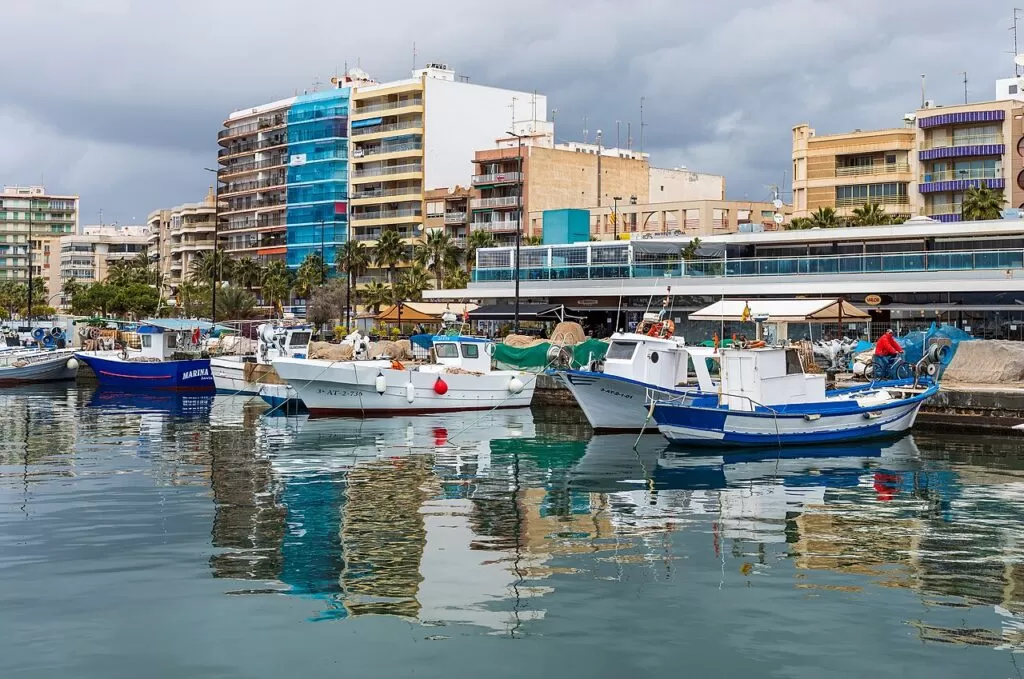
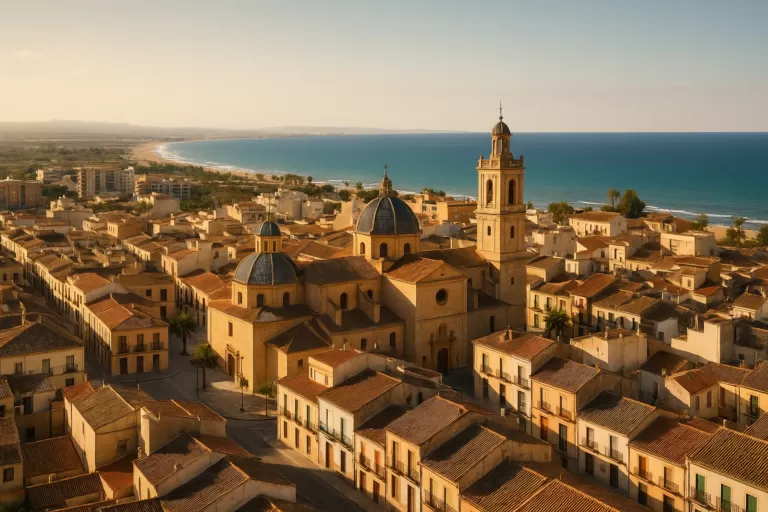
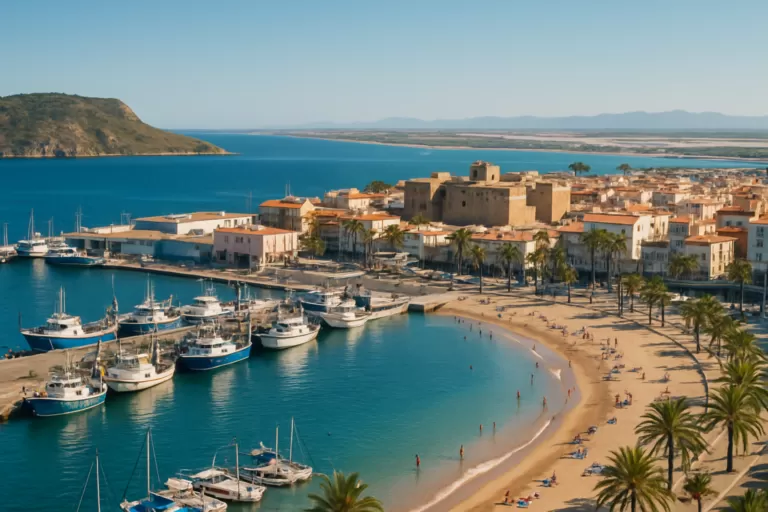
Santa Pola is a working fishing port and beach town of about 39,700 people on the southern Costa Blanca, and it suits visitors who want a long town beach, the Tabarca boats and a bird reserve within a short ride of Alicante airport. It is not a sightseeing city and has little nightlife, so stay here for sea, salt and rice dishes rather than a packed itinerary. It is part of our Costa Blanca guide.
Quick facts
- Where: Santa Pola, Alicante province, in the Baix Vinalopó comarca, on the coast south of Alicante and east of Elche.
- Residents: 39,709 (1 January 2025, INE); the number is higher in summer.
- Beach: yes, in the town. Gran Playa is about 1,425 m long and 55 m wide (Santa Pola tourist office).
- Nearest airport: Alicante–Elche Miguel Hernández, about 10 km in a straight line (our calculation from airport and town coordinates); the road distance is longer.
- Nearest big city: Alicante, about 18 km in a straight line (our calculation).
- Language: Valencian and Spanish; the tourist office publishes an English version of its site.
- Market: Mondays and Saturdays, mornings, Avenida de Albacete (mercadillos.org, verified July 2026).
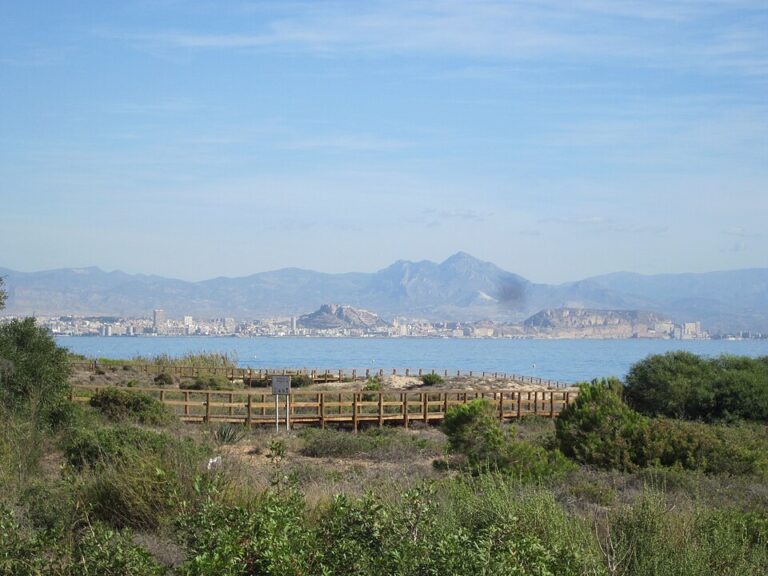
- Setting: the Salinas de Santa Pola natural park, 2,470 ha of salt pans and wetland, lies next to the town.
Where to base yourself
Santa Pola is small enough that the choice comes down to three bases. None of them is a quiet-cove base, so if coves are your priority, plan day trips to the cape described below.
Town centre and port
The old centre around the Castle-Fortress and the fishing port is the most practical base for a first visit. The castle, the museum and the harbour restaurants are on foot, and the Tabarca boats leave from the port, so you can reach the island without a car. Choose it if you want to walk to dinner and to the boat. Skip it if you want apartment-style space and a car park at the door.

Gran Playa seafront
Gran Playa is the town’s urban beach, with a promenade behind the sand, cafés and restaurants, and the full set of beach services listed below. It suits families and anyone who wants to walk from the room to the sea and back for lunch. It is also the busiest stretch in high summer.
Gran Alacant
Gran Alacant is a residential area in the municipality on the bus route between the town and the airport. It works for longer stays in an apartment or villa when you plan to rent a car, and for early flights. It is further from the old centre and the port, so you will depend on the bus or a car for evenings in the town.
Things to do
The town is compact, and most things worth seeing are about the sea, the salt and the coast defences.
Castle-Fortress and Museo del Mar
The Castle-Fortress was built in 1557 to defend the Valencian coast. The tourist office puts the cost at 23,000 ducats and says it was home to a garrison of 33 people, including families. It is a Site of Cultural Interest (BIC) and now holds the Maritime Museum and the Fishing Museum. The rooms cover fishing and shipbuilding, trade in the 19th century, mackerel fishing, a salted fish factory and a section on salt in daily life, plus Roman and Iberian finds from the area. The tourist office page gives no opening hours or prices, so confirm them on the spot or by phone before you plan around it.
Salinas de Santa Pola
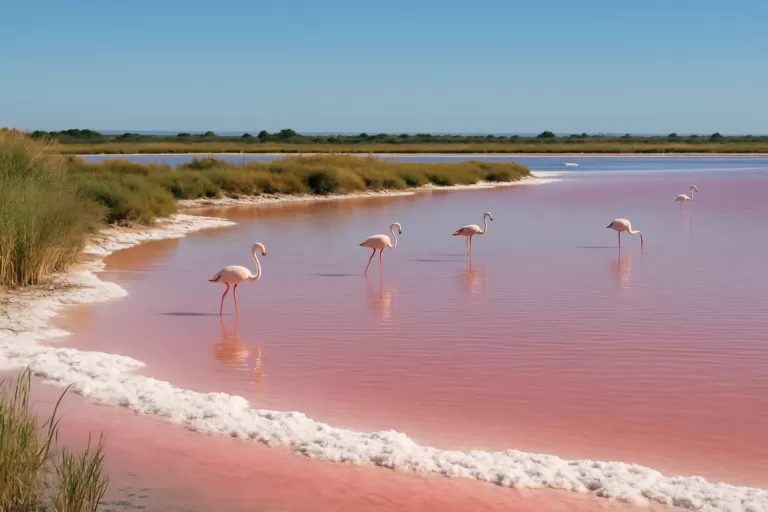
The natural park covers 2,470 ha, and the N-332 road crosses it from north to south, so wading birds in the salt pans are visible from the roadside (Generalitat Valenciana). The Generalitat’s park pages say that up to 8,000 flamingos can be seen. The salt pans and the El Hondo lagoons were added to the Ramsar list of wetlands on 28 July 1989. For access points and what to see, use our Salinas de Santa Pola page. The park’s visitor centre page gives no hours in the text we read, so check before you go.

Cabo de Santa Pola and the lighthouse
The cape is a fossil coral reef from the Messinian, and the cliffs of the Sierra de Santa Pola rise to 144 m (Santa Pola tourist office). The lighthouse stands at the eastern end of the cape. It was installed in 1858 on the site of a 16th-century watchtower called Atalayola, and its light is 152 m above sea level. It is about 4 km from the town centre in a straight line (our calculation from the tourist office coordinates). The tourist office does not say whether the lighthouse can be entered, so treat it as a viewpoint.

Tabarca
Tabarca is the island you see offshore, and the crossing from Santa Pola is the shortest. Ferry operators, prices and what to do on the island are in our Tabarca island guide, so we do not repeat them here.

Elche, inland
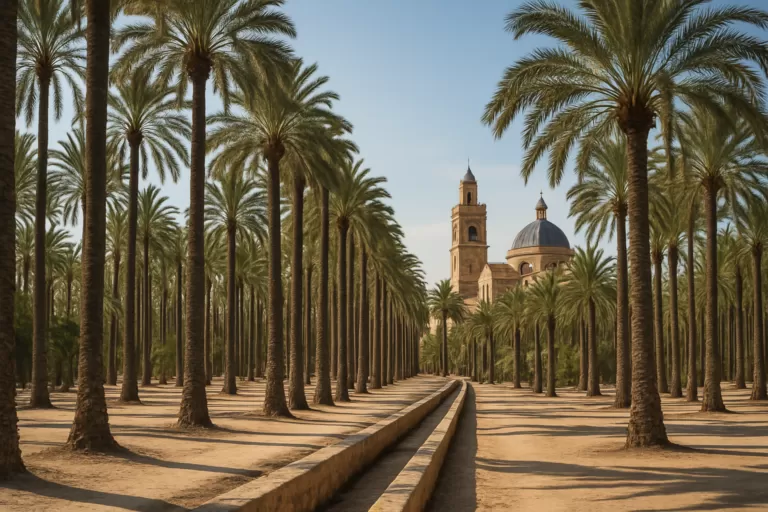
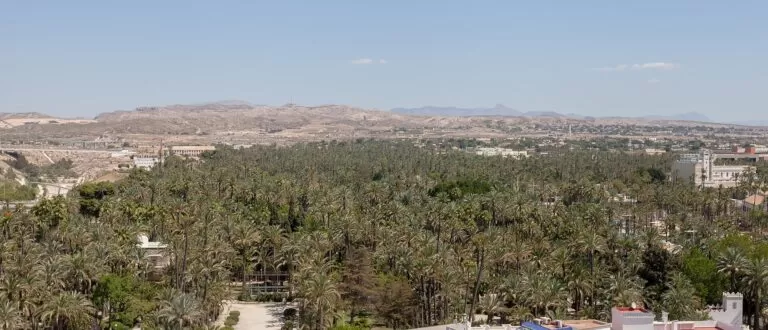
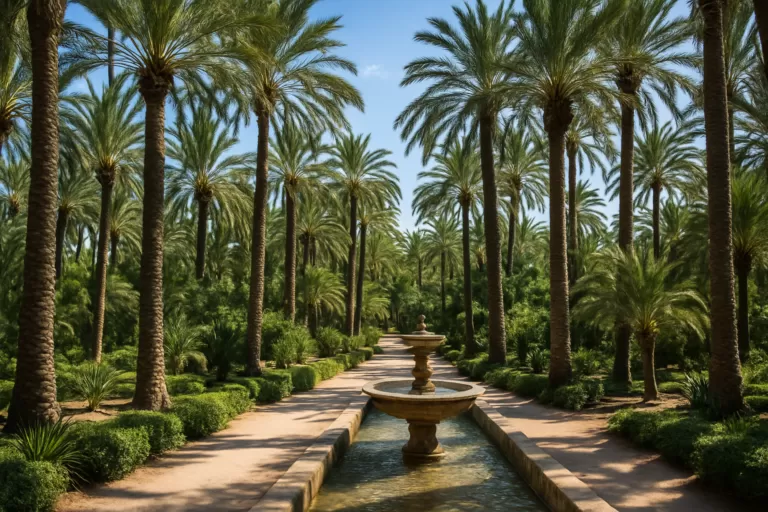
Elche is the obvious half-day trip inland. Its palm grove, the Palmeral of Elche, was inscribed as a UNESCO World Heritage Site in 2000 and covers 144 ha, and the Basilica of Santa María was built between 1672 and 1784. See also our Elche guide.
Beaches and places nearby
Gran Playa is the beach most people use. The tourist office lists lifeguard, rescue and first-aid service, a children’s play area, a public toilet, an area for people with reduced mobility, water-suitable chairs, a volleyball net and basketball hoops, and umbrella and sunbed hire. It names windsurfing, paddle surfing and kayaking among the activities. The same page labels it an accessible beach and says an accessible bathing service runs by reservation from June to the second week of September. It does not mention a Blue Flag or parking, so we make no claim about either.

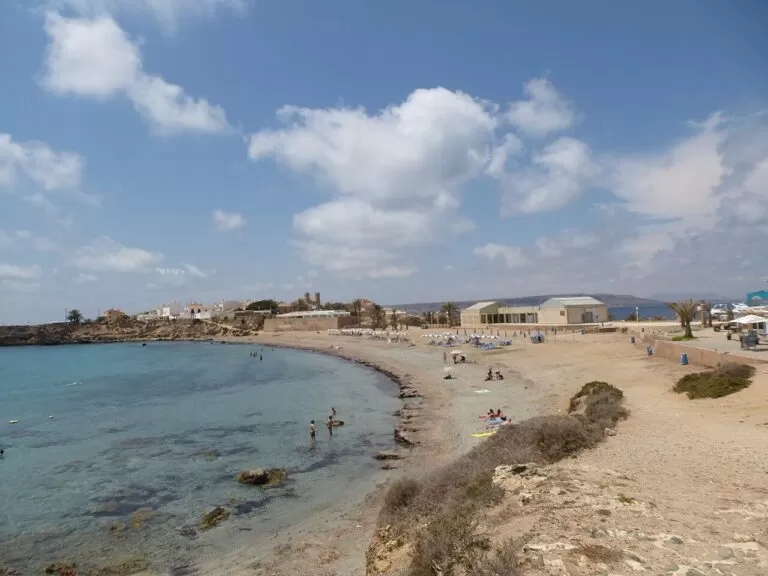
Beyond the town, the cape has smaller beaches and rocky coves. Caleta dels Gossets is a small dog-friendly beach of about 257 m, and the Calas del Cuartel are described by the tourist office as good for snorkelling. Our Caleta dels Gossets page covers access. We give no travel time to it, because we found no sourced one.
The nearest larger neighbours are Alicante to the north and Guardamar del Segura to the south, which is better for dunes and pine forest than for sights.
Other town guides nearby: San Vicente del Raspeig (about 23 km in a straight line), Crevillent (about 23 km in a straight line), Torrevieja (about 26 km in a straight line).
On CostaMap near Santa Pola: Caleta dels Gossets (Santa Pola) (5 km) · Salinas de Santa Pola (5.2 km).
Food and drink
The tourist office describes the local cooking as built on fish and seafood from the bay. Rice is the centre of it: arroz a banda, black rice, seafood paella and arròs i gatet. Two dishes to look for are grouper gazpacho and caldero, a fish stew with potatoes and allioli. The office also names sea bream, sea bass, shrimps, langoustines and red prawns among the local seafood.
The weekly market runs on Mondays and Saturdays in the morning on Avenida de Albacete, with 440 stalls in the mercadillos.org listing, verified in July 2026. It is a general street market rather than only a food market, so go for fruit and picnic supplies and not for a fixed idea of local produce. Restaurants cluster around the port and the seafront. We name no restaurants because we have no sourced recommendation.
Where to stay
The town offers hotels, apartments and holiday rentals, and the stays most suited to a car-based holiday are in Gran Alacant. We found no official accommodation price data for Santa Pola, so we give no price levels. Compare current prices for your dates, and book early for July and August and for the early September festival week.
Getting there and around
By air. Alicante–Elche airport is about 10 km away in a straight line. The direct Vectalia bus, line 8, stops at the airport terminal and takes about 40 minutes via El Altet, Arenales and Gran Alacant. It runs three times a day from Monday to Friday, once on Saturday and not on Sundays or public holidays. Timetables change in June, so check Vectalia before you fly. A taxi or hire car is the practical choice for late arrivals.
By train or tram. There is no tram or train into Santa Pola. The Alicante TRAM runs north, away from the town.
From Alicante. Santa Pola is about 18 km from the centre in a straight line, and a regular bus service also links the two towns. We have not read the current timetable, so use the Vectalia site.
By car. The N-332 passes through the salt pans park on the way to the town. We have no sourced information on parking rules or charges in the town, so check signs on arrival, especially near the port and in summer.
Around town. The old centre, the port and Gran Playa are close enough to walk. For Gran Alacant, the cape and the salt pans, a car or the local bus is easier.
Best time to visit
NASA POWER climate averages for the town give a mean air temperature of 11.6 °C in January, 15.9 °C in April, 25.8 °C in July, 26.3 °C in August and 20.5 °C in October. July is the driest month on that model at about 0.12 mm of rain a day, and November the wettest at about 1.5 mm a day. For beach time, June to September is the obvious window; for walking in the salt pans and day trips to Elche, spring and October are easier than August heat. Lifeguards on Tabarca work from 15 June to 15 September (see our Tabarca guide).
The patron festival honours the Virgen de Loreto together with Moors and Christians. It runs in late August and early September, and the main Moors and Christians parade goes from the Palmeral park to the port (Santa Pola tourist office). The programme can change, so look up the dates for the year you travel.
FAQ
Is Santa Pola a good base for Tabarca?
Yes, it has the shortest crossing to the island, and boats leave from the town port. Details are in our Tabarca guide.
How do I get from Alicante airport to Santa Pola?
Vectalia line 8 runs from the terminal in about 40 minutes, but only three times a day on weekdays, once on Saturday and not on Sundays. Otherwise take a taxi or hire a car.
Is there a train to Santa Pola?
No. There is no train or tram into the town; use the bus or a car.
When is the market in Santa Pola?
On Mondays and Saturdays in the morning on Avenida de Albacete, according to a listing verified in July 2026.
Can I see flamingos at Santa Pola?
Wading birds feed in the salt pans, and the park pages say that up to 8,000 flamingos can be seen. The N-332 crosses the park, so many are visible from the road.
Is Santa Pola good for nightlife?
Not particularly. We found no sourced nightlife listings for the town, and its draw is the beach, the port and the salt pans. For late nights, look at Alicante.
Sources and freshness
Checked October 2026 · 14 sources Show
Last checked: October 2026. Sources:
- INE, population of Alicante municipalities
- Santa Pola Tourist Info, Castle-Fortress
- Santa Pola Tourist Info, lighthouse
- Santa Pola Tourist Info, Gran Playa
- Santa Pola Tourist Info, Cabo de Santa Pola
- Santa Pola Tourist Info, where to eat
- Santa Pola Tourist Info, 2026 festivities
- Salines de Santa Pola natural park
- mercadillos.org, Santa Pola market
- reservasantapola.com, airport bus guide
- Vectalia, line 8
- NASA POWER
- UNESCO World Heritage Centre, Palmeral of Elche
- AEMET for forecasts
Main photo: Ximonic (Simo Räsänen), CC BY-SA 4.0, via Wikimedia Commons.
Nearby on the Costa Blanca
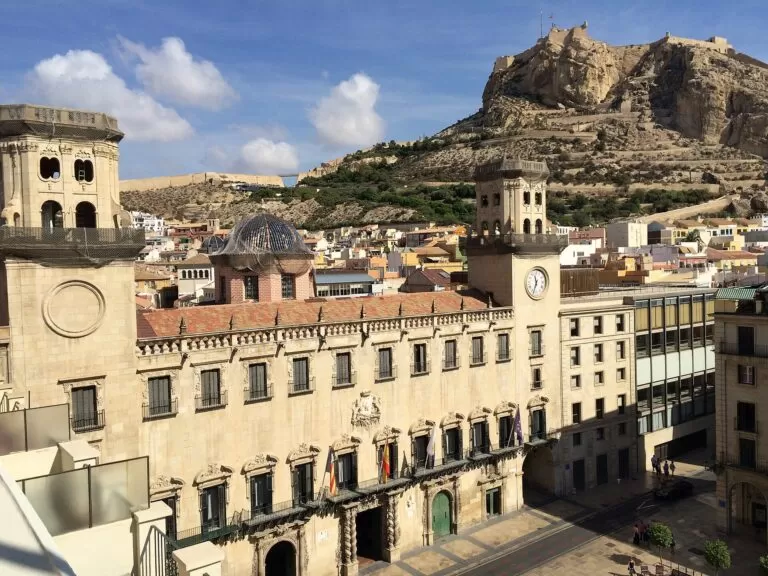
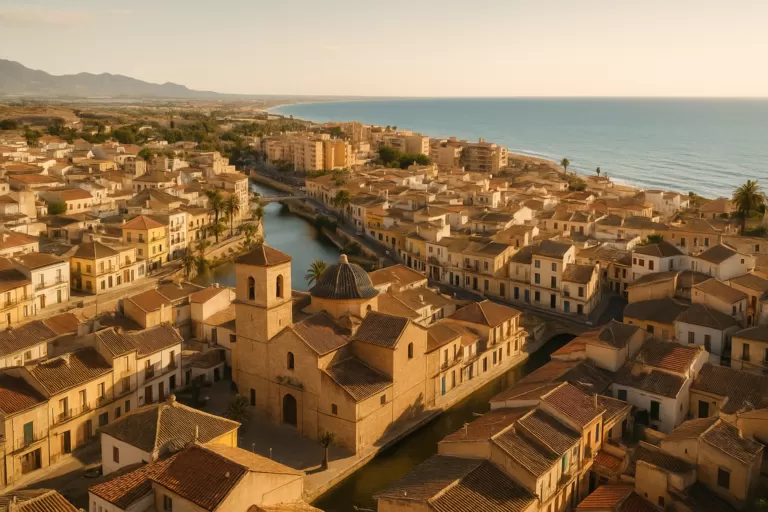
The nearest town guides on this coast, by straight-line distance from Santa Pola.
Santa Pola on the map
Places worth knowing near Santa Pola
How this page is made. CostaMap is written with an AI editorial system run by Ebizapple. This page is based on the sources listed above. Last updated 29 October 2026. Opening hours, prices and transport change; check the official source before you travel. How we work · Partner links and ads