
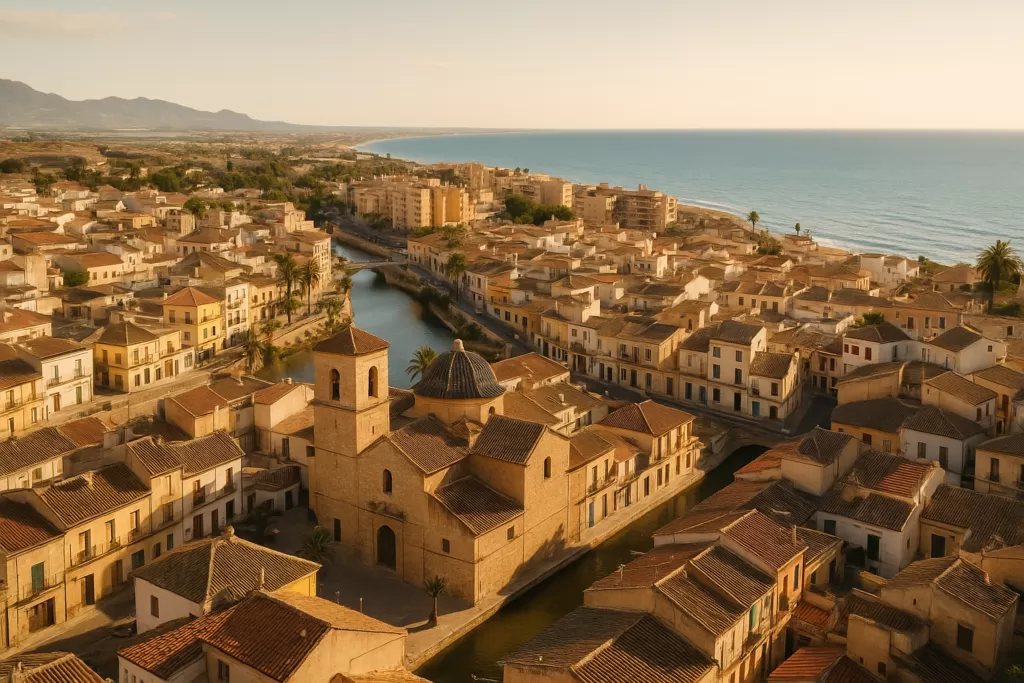
Rojales: Cave Houses, a Historic River Bridge and Weekly Market
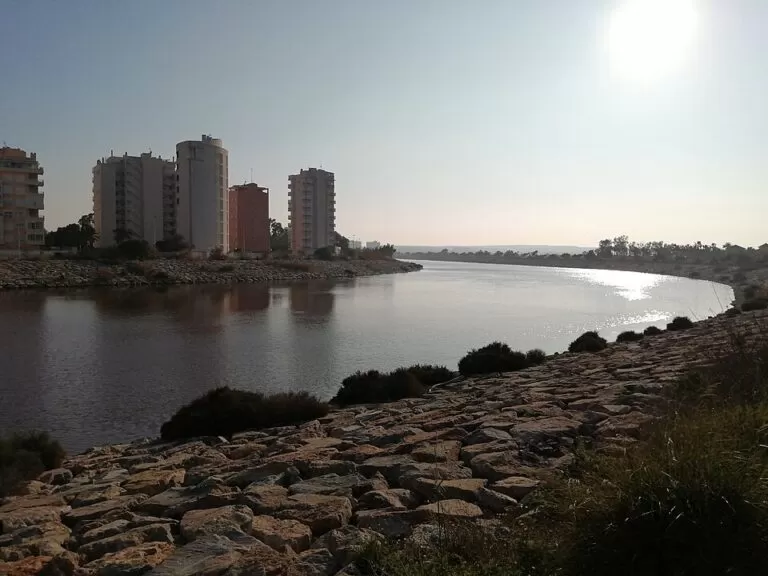
Rojales is a Vega Baja river town of 17,652 residents, a few kilometres inland from the Mediterranean, and it suits travellers who want a quiet, lived-in base with a short drive to the dunes at Guardamar. The old centre sits on the Segura, with a historic bridge, waterwheel and weir, and a hillside of whitewashed cave houses. There is no beach in town. Stay here for space, local life and good-value distances; skip it if you want a promenade, nightlife and the sea outside your door. It is part of our Costa Blanca guide.
Quick facts
- Where: Rojales, Alicante province, in the Vega Baja (Baix Segura) area on the Segura river. The tourist office is at Malecón de la Encantada 1.
- Residents: 17,652 (INE, 1 January 2025).
- Beach: none in the town. The regional tourism portal says only that the sea is a few kilometres away; the nearest long beaches are at Guardamar del Segura, which has 11 km of them.
- Nearest airport: Alicante–Elche. A regional bus network launched in early 2026 lists Rojales among the towns with an airport connection.
- Language: Spanish and Valencian are both official; Spanish works everywhere, and English is common in the residential areas.
- Market: Thursday, on Avenida Justo Quesada by the river (Mercadillos.org).
- Main sights: the Puente de Carlos III with its waterwheel and weir, and the Cuevas del Rodeo.
- Distances (straight line, from OpenStreetMap coordinates): about 6 km to Guardamar del Segura, 13 km to Torrevieja, 18 km to Orihuela and 35 km to Alicante.
- Nearby towns: Torrevieja, Orihuela and Almoradí are the usual neighbours for shopping, hospitals and day trips.
Rojales on the map
Beaches, sights and nearby towns with a CostaMap page. Click a pin to open it, or switch to places to stay.
Where to base yourself
Rojales is really two kinds of place in one municipality: a small river town with a historic core, and large residential areas built around golf and leisure facilities. Which one you pick shapes the whole trip.
The old town by the river
The centre around the Segura is the most characterful choice. The bridge, the waterwheel, the cave quarter and the Thursday market are all close together and easy to cover on foot, and you are among people who live here all year. It suits couples, walkers and anyone who wants a slower pace. The trade-off is that evening choices are limited, and without a car you depend on a small number of buses.
The residential areas and Ciudad Quesada
The regional tourism portal lists a water park and a golf course in the municipality, and the Ciudad Quesada area is where much of the holiday-home market sits. Visitors who rent a villa or apartment here usually want a pool, a supermarket within reach and a car for everything else. It suits families and golfers, but it feels like an estate rather than a Spanish town. If you want old-town atmosphere, plan to drive in.
Or stay on the coast and visit
If your priority is a beach day every day, base yourself in Guardamar del Segura or Torrevieja and treat Rojales as an outing. It works well as a half-day trip for the caves and the bridge.
Things to do
Rojales is a place for modest, specific sights rather than a long list of attractions. A half day covers the historic core; add a second for the caves and the museums if you like hearing how people lived and farmed here.
The bridge, waterwheel and weir
The regional tourism portal describes an urban hydraulic complex in the centre of town on the banks of the Segura. Its three parts were built at different times: the weir in the 17th century, the bridge in the 18th century and the waterwheel (noria) in the 19th. The bridge is known as the Puente de Carlos III and joins two parts of town that the river once divided; the portal notes the Segura often flooded dangerously. The weir sits downstream and regulated the river, channelling water towards the wheel. It is a short, free stop that explains why this town exists at all.
Cuevas del Rodeo
The Cuevas del Rodeo are rock-cut dwellings on the slope above town, dug between the 18th and 20th centuries, according to the regional tourism portal. Mining specialists were brought in to carve them. Many have been renovated, with lime-whitewashed outer walls and, usually, blue door and window frames. Today they hold craft workshops, exhibitions and a collection on how the caves were built and lived in. Check with the tourist office for current opening arrangements, because small cultural spaces here change their schedules.
Museums and the wider landscape
The same portal lists a Municipal Archaeological and Palaeontological Museum, with fossils of animals from the Miocene, and the Museo de la Huerta on the edge of town, which deals with the irrigated farmland of the Vega. It also mentions a restored windmill and the Aljibes de Gasparito, part of the rural landscape. These are worth a look if you want context for the flat, irrigated plain around you; they are not a reason to travel far on their own.
Festivals
The portal names the Fiesta de las Naciones, the Romería of San Isidro and the festivities of Nuestra Señora del Rosario, as well as a Holy Thursday staging of the trial and crucifixion of Jesus on the Calvary hill. I could not confirm dates for the first three from the sources I read, so ask the tourist office before you plan around them.
Beaches and places nearby
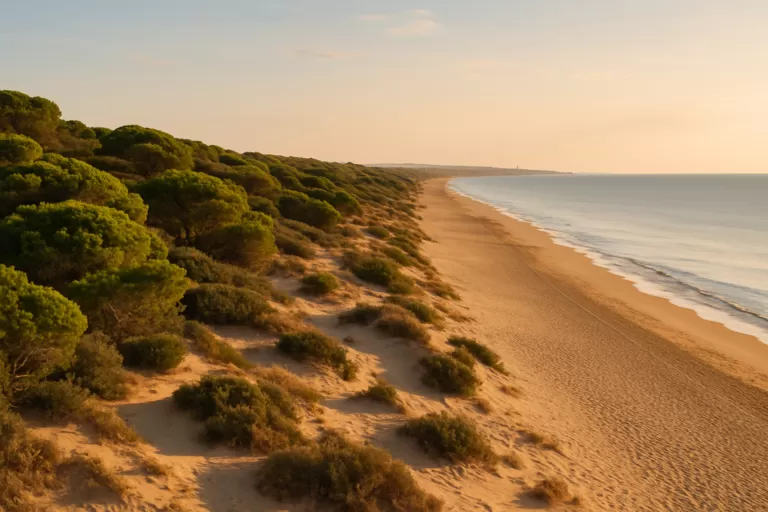
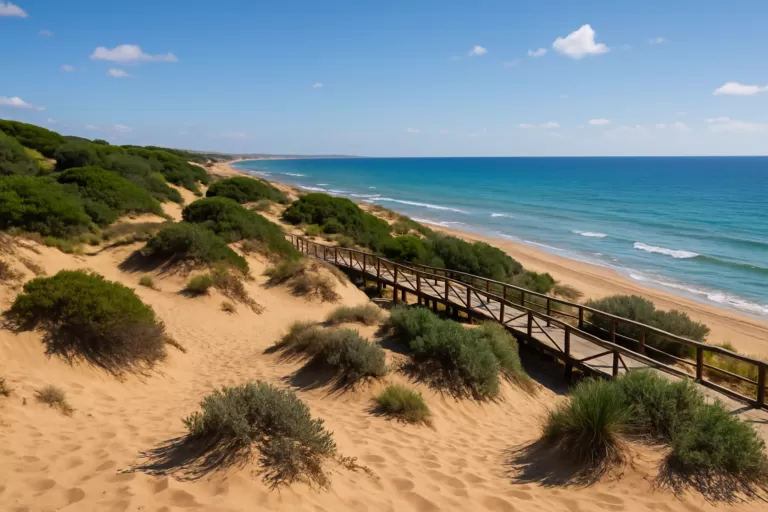
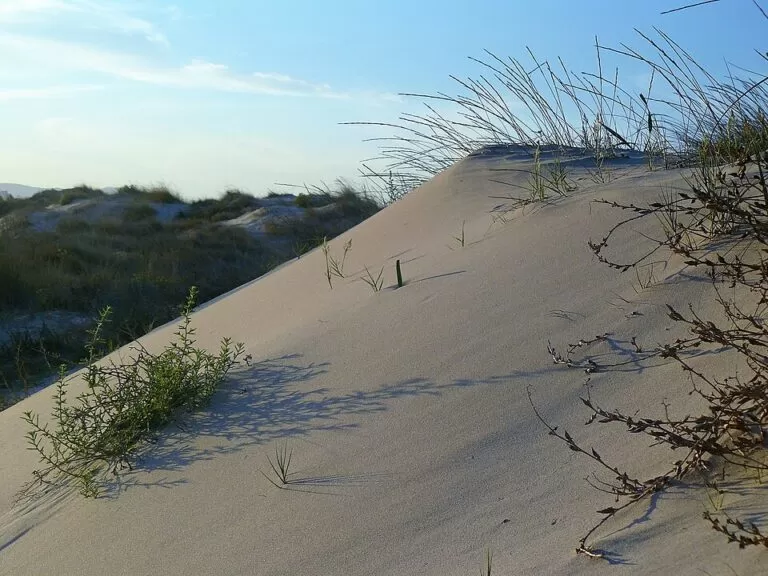
Rojales has no coastline of its own, and it is better to say so plainly than to pretend. The practical beach choice is Guardamar del Segura, where the regional portal counts 11 km of beaches and describes a pine forest of over 800 hectares and a large dune system. The Segura itself ends within the Guardamar municipality, so the river that shaped Rojales reaches the sea a short drive away.
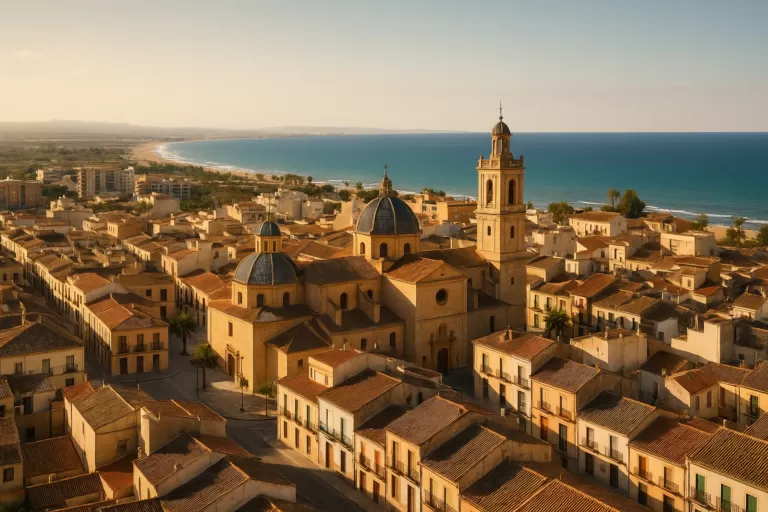
Beyond Guardamar, Torrevieja is the nearest large resort town, with services, shopping and more evening life than Rojales can offer. Orihuela adds a historic city centre, and Almoradí is a smaller agricultural town on the same bus network. For longer trips, Alicante and Santa Pola are both reachable by road. Bring a car if you want to move between these without planning around timetables.
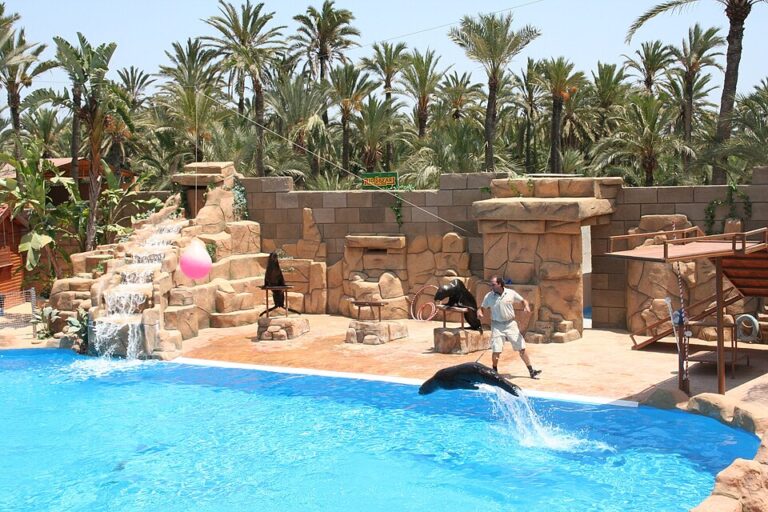
On CostaMap near Rojales: Aquopolis Torrevieja (11 km).
Food and drink
The regional portal lists rice dishes, stews with meatballs, and sweets such as almojábenas and toñas as the local food. That fits the Vega Baja: this is a farming plain, and the cooking leans on rice, vegetables and slow-cooked meat rather than seafood. Expect a menu of the day in local bars, and book ahead only for weekends and holidays.
The Thursday market on Avenida Justo Quesada, by the river, is the best single food stop. Mercadillos.org lists about 50 stalls selling fruit and vegetables, prepared food, clothes, spices, plants and household goods. Most stalls accept only cash, and it is busiest in mid-morning, so arrive early or park on streets away from the market and walk in.
Near the old centre you will find bars and small restaurants run for locals; the residential areas have a wider mix of international menus aimed at long-stay residents. Lunch is the main meal, and many kitchens close between lunch and dinner.
Where to stay
Accommodation here is mostly self-catering: apartments, townhouses and villas in the residential areas, rather than large beachfront hotels. Prices are generally lower than on the main resort strips, and the further you move from the sea, the better the value. Compare a few options in the old town and in the residential areas before you decide, and weigh the saving against the cost of a rental car.
Three things to check before booking. First, whether the property is within walking distance of a supermarket, because several areas are not. Second, whether you have the right to use the community pool and in which months it is open. Third, how far you actually are from the coast in minutes of driving rather than kilometres on a map. If you only want a beach holiday, a base in Guardamar will serve you better and Rojales becomes the day trip.
Getting there and around
Alicante–Elche is the nearest major airport. A bus network for the Vega Baja launched on 1 February and lists Rojales among the towns with an airport link. The same network has a Line 2 running Almoradí, Rojales and Alicante, with three trips each way from Monday to Saturday all year, according to El Periódic. That is useful for a day in Alicante, but it is not frequent enough to rely on without checking the timetable first.
The bus network does not serve Orihuela Costa, so do not assume every resort in the area is covered. Check the current route and times with the operator or the tourist office before you travel, because the lines were new when I read about them and may be adjusted.
Driving is the easiest way to see the area. Parking in the old centre can be tight on market mornings, so use the streets a little way from the river. Taxis fill gaps between the residential areas and the centre, but agree the fare before you start if there is no meter. Cycling is possible on the flat Vega, though summer heat limits the middle of the day.
Best time to visit
The area has long, hot summers and mild winters, and the sea stays warm well into autumn. For sightseeing on foot, spring and autumn are more comfortable than July and August, when the caves and the riverside are best visited early in the morning. Winter is quiet; some seasonal businesses in the residential areas slow down, though the town itself keeps its normal rhythm.
For events, Holy Week brings the Holy Thursday staging on the Calvary hill. The regional portal does not give dates for the other festivals, so confirm them with the tourist office. The weekly Thursday market runs all year and is a reliable way to see the town at its busiest.
FAQ
Does Rojales have a beach?
No. The town is inland, and the regional tourism portal describes the sea as only a few kilometres away. The nearest long beaches are at Guardamar del Segura, which has 11 km of them.
What is Rojales best known for?
For its Puente de Carlos III with the waterwheel and weir, and for the Cuevas del Rodeo, a hillside of rock-cut houses now used for workshops and exhibitions.
When is the market in Rojales?
On Thursday, on Avenida Justo Quesada by the river, according to Mercadillos.org. It is busiest in mid-morning and most stalls take cash only.
How many people live in Rojales?
INE records 17,652 residents at 1 January 2025. The figure covers the whole municipality, including the residential areas such as Ciudad Quesada.
Can I reach Rojales without a car?
Partly. A regional bus network launched in early 2026 links Rojales with Alicante, and with an airport connection listed. The service is limited, so check current timetables before relying on it.
Sources and freshness
9 sources Show
Last checked: November 2026. Sources: Turisme Comunitat Valenciana, Rojales; Turisme Comunitat Valenciana, Puente, Noria y Presa; Turisme Comunitat Valenciana, Cuevas del Rodeo; Turisme Comunitat Valenciana, Tourist Info Rojales; Turisme Comunitat Valenciana, Guardamar del Segura; INE, official population figures; El Periódic, new Vega Baja bus service; Mercadillos.org, Rojales market; OpenStreetMap, Rojales (coordinates for the straight-line distances).
Nearby on the Costa Blanca
The nearest town guides on this coast, by straight-line distance from Rojales.

Places worth knowing near Rojales
How this page is made. CostaMap is written with an AI editorial system run by Ebizapple. This page is based on the sources listed above. Last updated 17 November 2026. Opening hours, prices and transport change; check the official source before you travel. How we work · Partner links and ads