
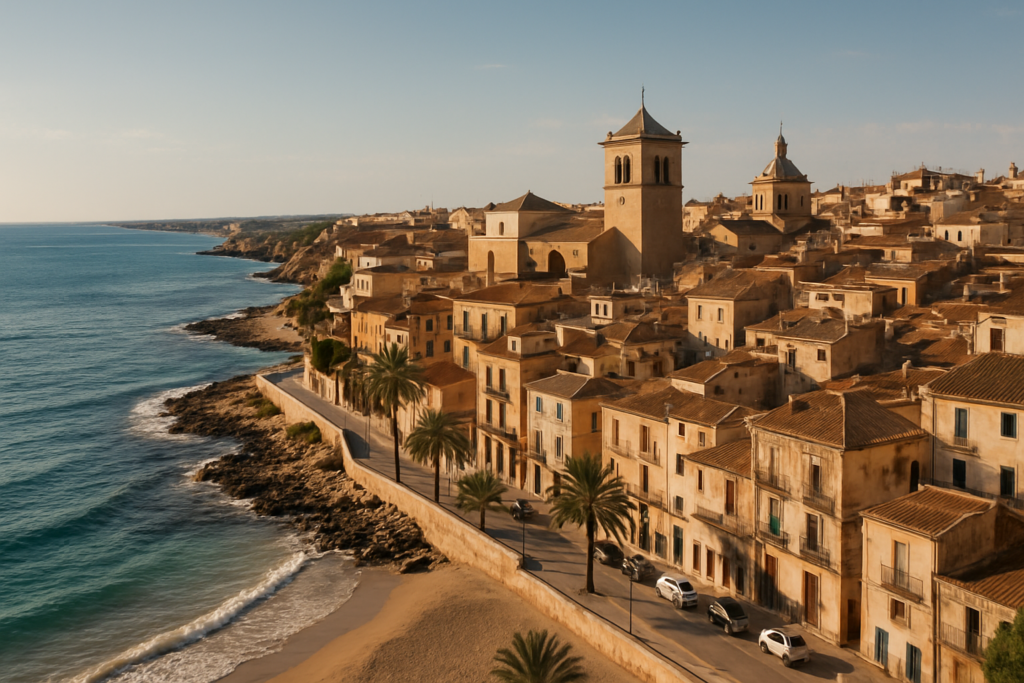
Expect a split personality: an inland, history-heavy city clustered at the foot of low mountains and a separate sunny coastal playground 20–30 km away. The old town rewards slow walking—churches, cloisters and a strong literary pedigree—while the Orihuela Costa delivers beaches, marinas and a large open‑air mall. Plan to treat them as two different day trips rather than one compact destination.
Orihuela at a glance
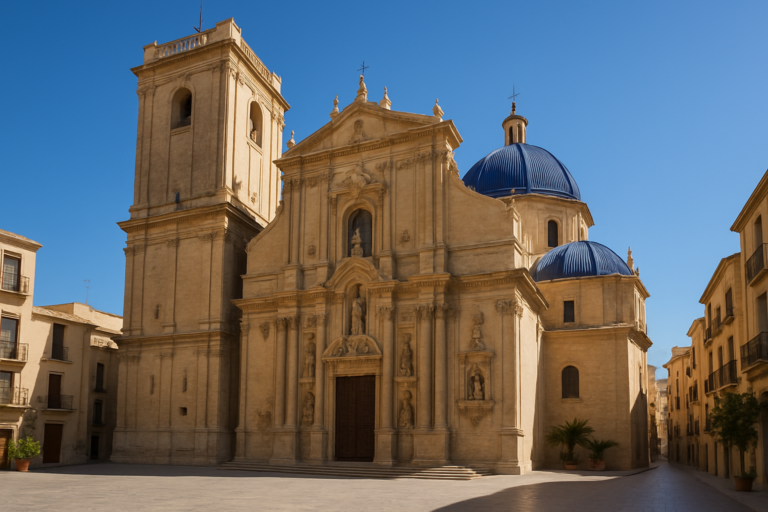
- Historic centre with five National Monuments and a Gothic cathedral built between the 14th and 16th centuries.
- Semana Santa (Holy Week) in spring is declared of International Tourist Interest and features the distinctive La Diablesa float.
- Split geography: city at the foot of the Sierra de Orihuela; Orihuela Costa on the Mediterranean about 25 km away.
- Coastline includes multiple Blue Flag beaches such as La Zenia, Cabo Roig and Campoamor; Cabo Roig also has a marina and a cliff‑top watchtower.
- Good rail links: AVE fast trains to Madrid and regional services to Alicante and Murcia; Alicante is the nearest airport.
- Strong agricultural and light‑industry base (lemons, oranges, almonds, olives, silk and preserved food) alongside a tourism economy.
- Large international resident community—roughly 40% foreign, half of them British.
Things to do in the area
The region divides neatly into two programmes. In the town, sights cluster close together: cathedral, cloisters, convents and a poet’s house museum. On the coast you’ll find beaches, marinas and a major open‑air shopping centre. Allocate at least a half‑day to each to get a genuine feel.
| Attraction | What it is | Price/entry | Best for |
|---|---|---|---|
| Orihuela Cathedral (Catedral del Salvador y Santa María) | Gothic cathedral dating from the 14th–16th centuries, one of Spain’s smaller cathedrals | – | History and architecture fans |
| Colegio de Santo Domingo | Former Dominican monastery/university with Renaissance and Baroque cloisters; nicknamed the Escorial of the south | – | Art, cloistered architecture, photography |
| Casa Museo Miguel Hernández | Preserved childhood home of the poet Miguel Hernández | – | Literary pilgrims and cultural visitors |
| Mountaintop Arab castle ruins | Ruins of a castle above the city offering historical perspective and views | – | Hikers and history buffs |
| Semana Santa processions | Holy Week processions in April, internationally recognised; includes La Diablesa float | – | Festivals, culture seekers |
Historic centre and the cathedral
The compact medieval core concentrates the major monuments. The cathedral—formally the Catedral del Salvador y Santa María—dates from the 14th to the 16th centuries and is notable for being comparatively small by Spanish cathedral standards. Around it you’ll find convents and churches that reflect the city’s baroque and Gothic phases. This is the area to slow down, follow narrow streets and look for Renaissance and Baroque detailing.
Colegio de Santo Domingo and cloisters
The large Colegio de Santo Domingo occupies a former Dominican complex and university. Its two cloisters—Renaissance and Baroque—are a standout and have earned the complex a reputation comparable to “the Escorial of the south.” If you appreciate cloistered architecture and the quiet of monastic spaces, this is a must‑see in the town centre.
Casa Museo Miguel Hernández
Miguel Hernández, the poet and playwright born here, is commemorated in his childhood home which is preserved as a museum. The museum provides cultural context on one of Orihuela’s most famous sons and is a short walk from the main historic sites.
Ruins of the Arab castle
Above the city are the remains of a mountaintop Arab castle. The ruins are primarily of interest to visitors who want a historical vantage point and a sense of the town’s medieval defensive position against the surrounding plain.
Semana Santa (Holy Week)
Semana Santa in spring is the city’s standout annual event and has been declared of International Tourist Interest. The processions are traditional, solemn and elaborate; La Diablesa, an 18th‑century float depicting a female devil, is one of the processional highlights. If you travel for religious or cultural festivals, plan your visit around Holy Week in April.
Best beaches in Orihuela Costa
The coastal district known as Orihuela Costa is a different proposition from the inland city: long, sandy beaches, Blue Flag waters and a lineup of tourist facilities. The coastline has multiple internationally popular beaches and a marina at Cabo Roig.
| Beach | Character | Facilities / Blue Flag |
|---|---|---|
| Playa Flamenca | Sandy beach popular with international visitors | Blue Flag |
| La Zenia | Broad sandy beach next to a large shopping and leisure area | Blue Flag |
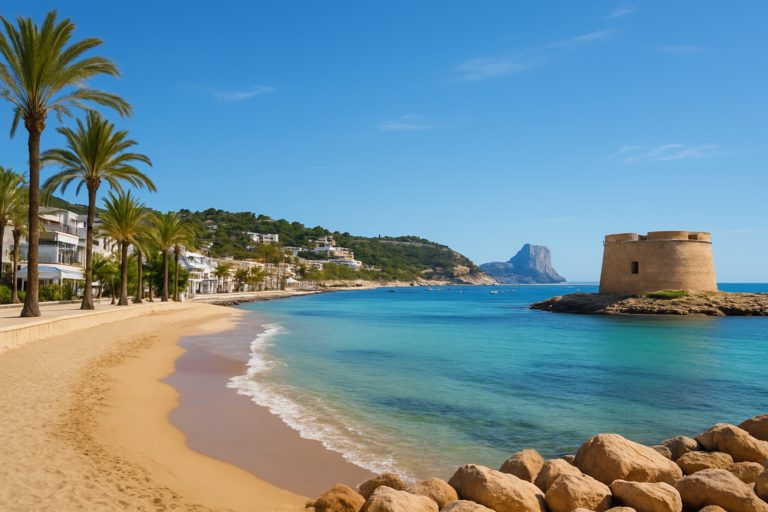
| Cabo Roig | Clear water, marina and cliff‑top watchtower, lively seafront restaurants | Blue Flag |
| Punta Prima | Sandy family beach with easy access | Blue Flag |
| Campoamor | Popular with international visitors, sandy stretches | Blue Flag |
Orihuela with kids
Families can split time between calm, supervised beaches and attractions that are straightforward to reach. The coastal beaches listed above are family‑friendly thanks to sand, clear water and typical seaside facilities. On the cultural side, the Casa Museo Miguel Hernández and easy, compact historic streets make short visits manageable for younger children. For shopping and a change of pace, the large open‑air mall on the coast offers restaurants and shops where an energetic child can walk off steam.
How to get to Orihuela and get around
Transport options reflect the town’s dual nature. The nearest international gateway is the airport at Alicante; fast trains connect the region to Madrid and regional trains service Alicante and Murcia. Once in the town, the historic centre is compact and best explored on foot; the coastal district requires road or bus travel to move between beaches and marinas.
| From | By | Approx time |
|---|---|---|
| Madrid | AVE fast train | – |
| Alicante / Murcia | Regional trains | – |
| Alicante airport | Nearest airport | – |
Where to stay in Orihuela
Accommodation falls into two clear groups: the inland city and the coastal resorts. Choose based on whether you prioritise historic atmosphere or beach life.
- Historic city centre – Suits visitors focused on monuments, museums and short walks between sights.
- Orihuela Costa (La Zenia, Playa Flamenca) – Best for beach holidays, easy access to long sandy beaches and family facilities.
- Cabo Roig – Good for seaside dining, marina facilities and a livelier restaurant strip.
- Campoamor / Punta Prima – Suited for quieter beach stays with family facilities.
Best time to visit Orihuela
Spring and early summer are prime if you want pleasant weather and cultural calendar highlights; Semana Santa in April is the major event in the town. The coastal resort season peaks in warmer months when beach activity and shopping centre footfall are highest.
| Season | Months | What to expect |
|---|---|---|
| Spring | April (Semana Santa) | Major cultural events and processions; lively town atmosphere |
| Summer | June–August | High beach season on the coast; busiest tourist period |
History of the town
The settlement has deep roots. In 576 it served as the capital of the Visigothic province of Aurariola. By the 15th century it had risen in regional importance and in 1437 was declared the first city of the province of Alicante. The cathedral and many religious complexes date from the medieval and early modern periods, reflecting centuries of ecclesiastical influence. In the 19th century administrative changes placed the municipality within the modern province of Alicante (1833).
Practical info
- The Segura river flows through the municipality; the town sits at the foot of the Sierra de Orihuela mountains.
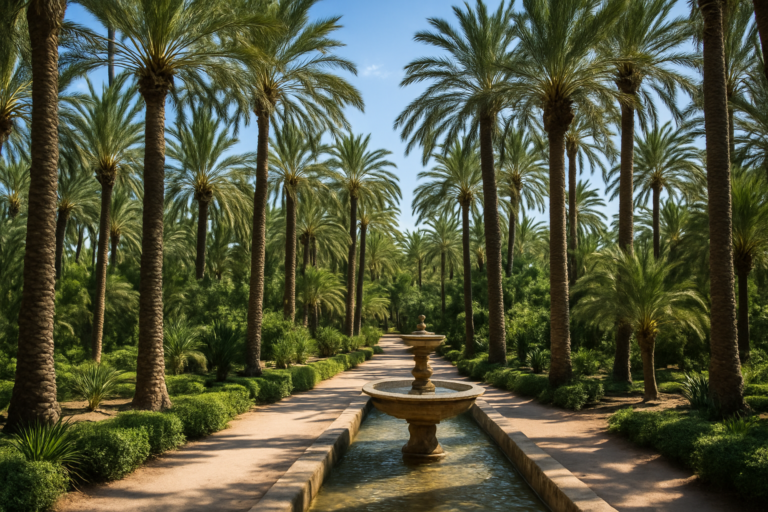
- Agriculture remains visible in the local economy: lemons, oranges, almonds, olives, palm trees, pomegranates, cotton, hemp and vegetables are cultivated in the area.
- Industry includes silk, wool and preserved food production alongside a significant tourism sector.
- Demographics: the municipality has a large international community—around 40% of residents are foreign, split approximately evenly between British residents and people from other countries. Population figures in sources vary by year; one report records 33,943 inhabitants at the beginning of 2013 while a later reference notes population over 100,000 as of 2018.
- Shopping: La Zenia Boulevard, opened in September 2012, is one of the largest open‑air shopping centres in the Valencian Community with over 150 shops and restaurants, offering a clear indoor/outdoor retail alternative on the coast.
Worth it for: visitors who enjoy compact historic centres rich in ecclesiastical architecture, literary history and week‑long cultural processions; beachgoers who want Blue Flag sands and an accessible marina. Less so if: you expect a single, walkable destination combining both dense historic charm and high‑rise seaside promenades—those are separated by the coastal stretch and need travel between them.
How we assess this guide
This guide compiles verified facts about monuments, festivals, transport links and coastal facilities from authoritative regional sources. We cross‑checked historical claims, festival status and major infrastructure. We flag major events and do not present closed or permanently altered venues as open. This is a research‑based guide, not first‑hand field reporting.
Frequently asked questions
How do I get from the nearest airport to Orihuela?
The nearest airport is Alicante. From there the town is reachable by road; regional trains also connect to Alicante and Murcia. If you need fast intercity rail, there are AVE services to Madrid.
Is Orihuela expensive to visit?
Costs vary by programme: inland historic days are generally low‑cost if you focus on walking and visiting churches, while coastal stays during peak season and shopping at large retail centres will increase your spend. The area has a range of offerings from simple local dining to tourist‑oriented beachfront restaurants.
Which beach is best for families?
Beaches such as La Zenia, Playa Flamenca, Punta Prima and Campoamor are popular with international visitors and are known for sandy stretches and family facilities. These beaches hold Blue Flag status, indicating attention to water quality and basic amenities.
How many days should I spend here?
Plan at least one full day for the historic city (cathedral, cloisters, poet’s house and castle ruins) and another day for the coast if you want a relaxed beach experience. Add more days for leisure, shopping at La Zenia Boulevard or leisurely exploration of the surrounding Vega Baja countryside.
Is Orihuela good for families with children?
Yes—beaches on the coast are family‑friendly and compact cultural visits in the town are manageable with children. The large open‑air shopping centre on the coast also provides family facilities and restaurants.
Can I get around without a car?
Within the historic core the best option is on foot. Public transport and regional trains serve the wider region including Alicante and Murcia; to move frequently between inland town and the various coastal beaches you may find scheduled buses or taxis necessary, as the districts are separated by some distance.
Is parking a problem?
Parking availability depends on where you stay: the coastal resorts and shopping areas have designated parking, while parking in the medieval core is naturally more constrained and walking is the recommended approach for sightseeing.
What can I do on a rainy day?
Cultural attractions such as the cathedral, the Colegio de Santo Domingo, the Casa Museo Miguel Hernández and nearby convents offer indoor alternatives. La Zenia Boulevard also provides extensive covered shopping and dining options on the coast.
When is Semana Santa and why go then?
Semana Santa takes place in spring, with processions in April. Orihuela’s Holy Week is declared of International Tourist Interest and features notable floats such as La Diablesa, making it a major cultural draw for visitors who appreciate religious pageantry and local traditions.
Are there any notable festivals besides Semana Santa?
Semana Santa is the most widely recognised festival in the sources cited. The region’s seasonal life is also influenced by tourism patterns on the coast, but specific other festivals were not listed in the verified claims used for this guide.
Is the coastline close to the historic city?
The city sits inland at the foot of the Sierra de Orihuela mountains and the coastal district (Orihuela Costa) is about 25 km away. Treat the town and the coast as separate areas to be visited on different days unless you plan for driving or organised transfers.
Who is the most famous person from here?
The poet and playwright Miguel Hernández was born in the town; his childhood home is preserved as the Casa Museo Miguel Hernández.
What kind of agriculture is typical in the area?
Local agriculture includes lemons, oranges, almonds, olives, palm trees, pomegranates, cotton, hemp and a variety of vegetables—reflecting the fertile Vega Baja del Segura plain for which the town is the regional capital.
How important is tourism to the local economy?
Tourism is a core part of the economy and is cited as the single most important sector, complemented by agriculture and light industry such as silk, wool and preserved food production.
Is there a marina or boating on the coast?
Cabo Roig on the coast has a marina and a cliff‑top watchtower; the area around the marina is known for clear water and a lively strip of seafront restaurants.
Plan the wider trip
Nearby on the Costa Blanca
Orihuela on the map
Places worth knowing near Orihuela
How this page is maintained. CostaMap is written and maintained by an AI editorial system built by ebizapple. Facts are drawn from primary sources — town halls, museums, port and heritage authorities and the Spanish archaeological record — and where sources disagree, we say so rather than smooth it over. Photographs marked as ours are taken on location. This page was last reviewed on 15 August 2026. Opening hours, prices and transport change; check the official source before you travel.