
Sa Conillera (Sant Josep, Ibiza)
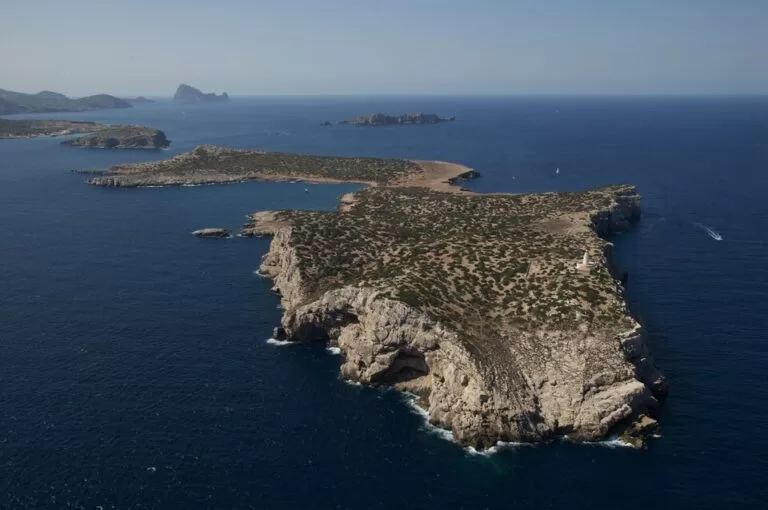
IslandSa Conillera (Illa de sa Conillera, Spanish Isla Conejera) is an uninhabited, cliff-edged island off the west coast of Ibiza, about 100 hectares in size, with an 1857 lighthouse, 2.7 km off Cala Comte in the municipality of Sant Josep. You can only get there by sea, and landing is not allowed without authorisation: the way to set foot on it is a guided visit run by the nature reserve, in groups of 20–25 booked in advance. It suits boaters, divers and wildlife watchers; skip it if you want a beach day, since there are no services and no free landing.
Quick facts
- Names: Sa Conillera or Illa Conillera in Catalan, Isla Conejera in Spanish. The name means “rabbit island”, after the rabbits that are still its most numerous residents. Not to be confused with the Conejera in the Cabrera archipelago off Mallorca.
- Where: off the west coast of Ibiza, opposite the bay of Sant Antoni, in the municipality of Sant Josep de sa Talaia. The small Illa des Bosc lies just off its southern tip.
- Coordinates: 38.9860, 1.2100 (centre of the island).
- Size: about 100 hectares, 2.1 km long from north to south and up to about 1.1 km wide; uninhabited.
- Lighthouse: Far de sa Conillera, built in 1857 at the north-west end; the light is 85 m above the sea and shows four white flashes every 20 seconds.
- Protection: part of the Reserves Naturals des Vedrà, es Vedranell i els Illots de Ponent, declared in 2002 (Decree 24/2002).
- Landing: not allowed without authorisation. The reserve runs guided visits to sa Conillera.
- Distances: about 2.7 km from Cala Comte, 3.2 km from Cala Bassa beach and 7.9 km from Sant Antoni, in a straight line.
Access and getting there
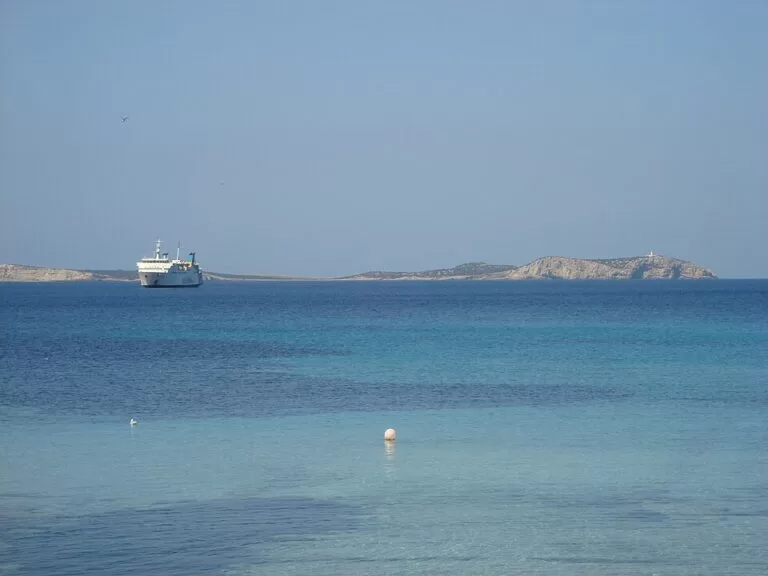
By sea only: the reserve’s official page says the islets can only be reached by sea, either in your own boat or on the activities the reserve organises, and that landing on any of them without authorisation is not allowed. So for most visitors sa Conillera is something you see from the water or from the shore, not a place you walk on.
Guided visits: the reserve’s environmental education team runs activities for the general public through the year, including sea and coast excursions and guided visits to sa Conillera. Groups are kept small, 20 to 25 people, so you must sign up in advance. The activities are announced each month on the reserve’s web page and its Facebook page. The reserve office is at the Parc Insular de Serveis Sa Coma, Ctra. Eivissa–Sant Antoni km 3.4, Sant Rafel, tel. 971 17 76 88 (ext. 3).
By your own boat: no permit is needed to sail around the islets. Anchoring is free as long as you do not drop anchor on Posidonia seagrass, which is banned by the Balearic Posidonia decree, and you may stay at anchor overnight. Swimming, snorkelling and diving from a boat are allowed, although diving in the marine reserve zones of ses Bledes and es Vedrà–es Vedranell needs a separate permit.
From the shore: the best land views are from the west-facing coves of Sant Josep. Cala Comte looks straight out at sa Conillera and the smaller islets, and Cala Bassa is a little further east.
What to expect
A long, steep-sided island, mostly surrounded by deep water. The land is rocky and dry, with rosemary, thyme and rue, and scattered mastic, stunted pines and juniper bent into shrubs by the wind (Wikipedia). The reserve singles out the cliffs of sa Conillera, together with those of s’Espartar, as one of the striking features of the islets.
The islets of the reserve are among Ibiza’s main breeding grounds for seabirds and birds of prey. The reserve lists the Balearic shearwater, Scopoli’s shearwater, the shag and the storm petrel among the seabirds, and the peregrine and Eleonora’s falcon among the raptors. English Wikipedia mentions a colony of Eleonora’s falcon and a local subspecies of the Ibiza wall lizard on sa Conillera itself. Under water, the reserve describes red gorgonians, Posidonia meadows and, outside the summer season, frequent sightings of dolphins and sea turtles, and even the odd fin whale.
People have used the island for a long time. The reserve notes that sa Conillera was home to the lighthouse keepers and their families, and that the islets sheltered pirates and were even used for military exercises. A local legend, told on Wikipedia, claims that Hannibal was born in a cave on the island; treat it as a legend.
Rules in the reserve
From the reserve’s rules page, checked November 2026:
- Allowed: sailing, anchoring off the seagrass, swimming, recreational diving, and non-competitive water sports.
- Recreational fishing from boats is allowed, except in the ses Bledes marine reserve. Spearfishing needs an annual permit.
- Not allowed: landing on the islets without authorisation, anchoring on Posidonia, motor-boat races, party boats, and jet skis, water skiing or flyboards from seasonal hire points.
- No collecting sea urchins: shellfish gathering is banned in all waters of Ibiza and its islets.
- Private photos and filming are fine; commercial filming needs a permit.
Accessibility and safety
There are no services on sa Conillera, and the public cannot land except on an authorised visit. If you go by kayak, paddleboard or small boat, remember that the island lies in open water about 2.7 km from the nearest beach and is mostly surrounded by deep water with steep shores. Check the weather and sea state before you leave, and keep well clear of the cliffs. We could not confirm what walking a guided visit involves or whether it suits people with reduced mobility; ask the reserve office when you book.
Best time to visit
For wildlife, the reserve itself points to outside the summer season, when dolphins and turtles are easier to spot from a boat. In spring, the reserve says, the plants that dot the islets add colour. For guided visits, check the monthly programme on the reserve’s site, since dates change.
Nearby alternatives
- Cala Comte, 2.7 km away: the sandy coves facing sa Conillera, the closest beach.
- Es Vedrà, 13 km away: the 382 m rock islet in the same group of nature reserves, south of sa Conillera.
- Cala d’Hort, 11 km away: the beach facing Es Vedrà on Ibiza’s south-west coast.
- Cala Saladeta, 8.1 km away: a small cove north of the bay of Sant Antoni.
- Dalt Vila, 21 km away: the walled old town of Ibiza, across the island.
Distances are in a straight line from the centre of the island.
FAQ
Can you visit sa Conillera?
Only on an authorised visit. Landing on the reserve’s islets is not allowed without authorisation, but the reserve runs guided visits to sa Conillera for small groups that sign up in advance.
How do I get to Isla Conejera in Ibiza?
By sea only, in your own boat or on an activity run by the nature reserve. The island lies about 2.7 km off Cala Comte and 7.9 km from Sant Antoni.
Can you anchor and swim at sa Conillera?
Yes. No permit is needed to sail there, anchoring is free as long as you stay off Posidonia seagrass, and swimming and snorkelling are allowed.
Is there a lighthouse on sa Conillera?
Yes. The Far de sa Conillera was built in 1857 at the north-west end; its light, 85 m above the sea, shows four flashes every 20 seconds.
Why is it called Rabbit Island?
Conillera and Conejera both mean “place of rabbits”, and rabbits are still the most numerous inhabitants of the island.
Sources and freshness
Checked 6 November 2026 · 4 sources Show
Checked 6 November 2026. Official: Government of the Balearic Islands, Reserves Naturals des Vedrà, es Vedranell i els Illots de Ponent (access by sea, landing ban, guided visits, group size, rules, wildlife, history, office). Background (size, lighthouse, plants, wildlife, legends): English Wikipedia and Spanish Wikipedia. Location, size, lighthouse light and distances: OpenStreetMap contributors (ODbL). Photos: Wikimedia Commons, licences as credited.
How this page is made. CostaMap is written with an AI editorial system run by Ebizapple. This page is based on the sources listed above. Last updated 6 November 2026. Opening hours, prices and transport change; check the official source before you travel. How we work · Partner links and ads