
Santander is the capital of Cantabria, a port city on the north side of the Bay of Santander with about 172,000 people, the Magdalena Palace on its peninsula and the El Sardinero beaches on the open sea. Its airport is 5 km from the centre, the railway and bus stations face each other in the middle of town, and ferries from Portsmouth and Plymouth dock a short walk from the Centro Botín arts centre. It suits city-break visitors, ferry arrivals and anyone who wants beaches, seafood and museums in one place; skip it if you are looking for a picturesque medieval old town.
Quick facts
- Names: Santander; nicknamed “the bride of the sea” (la novia del mar).
- Where: north coast of Spain, capital of Cantabria, on the Bay of Santander facing the Cantabrian Sea.
- Coordinates: 43.4602, -3.8043 (Centro Botín, on the city-centre waterfront).
- Population: about 172,000 (2017, Wikipedia).
- Getting there: Santander-Seve Ballesteros airport, 5 km away; railway and bus stations in the centre; ferry port in the centre with regular lines to Portsmouth and Plymouth.
- Key sights: Magdalena Palace, El Sardinero beaches, Centro Botín, the cathedral, the Cantabrian Maritime Museum, the Museum of Prehistory and Archaeology.
Access and parking
By air: Santander-Seve Ballesteros airport is 5 km from the city, about 15 minutes by car on the S-10. A bus runs to the city every 40 minutes between 07:00 and 23:00, and there are taxis (spain.info, checked November 2026).
By ferry: the port is central, so you can walk into town. It has two regular lines to the United Kingdom, Portsmouth and Plymouth. On OpenStreetMap the Estación Marítima is about 200 m from the Centro Botín.
By train and bus: the railway station, with connections to Madrid, Bilbao, Valladolid and other cities, faces the bus and coach station in the city centre, about 600 m from the waterfront.
By car: the A-67 links Santander with the A-1, and the A-8 runs along the north coast. Street parking in the centre is limited to two hours and paid, except on Saturday afternoons and Sundays; there are many commercial car parks.
Getting around: most sights are in the centre and easy on foot. The old town’s slopes have ramps, escalators and a cable car. City buses run from about 06:30 to 23:30, with three night lines; a rechargeable card is sold at kiosks and tobacconists. There is a tourist bus, the TUeBICI bike-share and boat trips round the bay.
What to expect
Santander was a port long before it was a resort, documented from the 11th century, and became a city in 1755. In 1941 a fire driven by a strong south wind burned for two days, destroyed most of the medieval centre and gutted the cathedral (Wikipedia). The centre was rebuilt in large blocks of flats, which is why it looks mostly mid-20th century rather than medieval.
The Magdalena peninsula: the Magdalena Palace, begun in 1908 on the top of the peninsula, was the summer residence of King Alfonso XIII and Queen Victoria Eugenia. It now hosts summer courses of the Menéndez Pelayo International University and conferences, and keeps furniture, photographs and paintings, including works by Sorolla, from its royal days. Guided tours are by appointment through the palace website. The peninsula also has gardens, an open-air marine park, the La Cerda lighthouse, the Royal Stables, the La Magdalena and Bikini beaches, and a tourist train known as El Magdaleno (spain.info, Magdalena Palace). The palace is about 3.2 km east of the Centro Botín.
The beaches: the city’s beaches include El Sardinero (first and second beaches), El Camello, Mataleñas, La Concha and Los Peligros. The Sardinero beaches are about 2.3 km from the centre in a straight line.
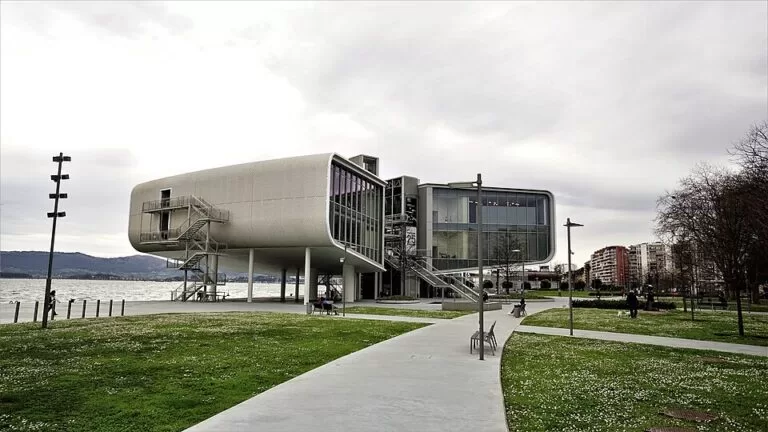
Centro Botín: opened in 2017 in the Pereda Gardens, Renzo Piano’s arts centre for contemporary art, music, film and theatre stands in two volumes on slender columns, partly over the sea. It has two galleries, a 300-seat auditorium and a roof terrace open to the public with a view over the bay (spain.info, Centro Botín).
Food: head for the fishing quarter (Barrio Pesquero), about 1.6 km west of the centre, for rabas (fried squid), maganos (squid with onions) and clams in marinara sauce.
Practical details
- Centro Botín: Muelle de Albareda s/n, Jardines de Pereda; phone +34 942 047 147; tickets on the centre’s own site.
- Magdalena Palace: Avenida de la Reina Victoria s/n; phone +34 942 203 084; visits booked on palaciomagdalena.com.
- Museums: the Cantabrian Maritime Museum and the Museum of Prehistory and Archaeology of Cantabria are both listed by spain.info.
- Taxis: white with a sky-blue horizontal stripe.
- Accessibility: spain.info lists Santander as an accessible destination.
We could not confirm current opening hours or prices for the palace, the Centro Botín or the museums from their own websites, which we could not reach; check before you go.
Accessibility and safety
The centre is hilly in places, but ramps, escalators and a cable car help on the old town’s slopes. The El Sardinero beaches face the open sea, so check the flags and swim where lifeguards are on duty in summer. The weather changes quickly on this coast: bring a rain layer whatever the season.
Best time to visit
Summer is the main beach season, when the Magdalena Palace hosts the university’s summer courses and the city is at its busiest. Spring and autumn suit city sightseeing and walks on the Magdalena peninsula, with fewer people. Santander has a mild climate with frequent rain and few heat waves, so plan indoor options such as the Centro Botín and the museums. Two nights is enough for the centre, the peninsula and El Sardinero.
Nearby alternatives
- Isla de Mouro, 4.2 km: the lighthouse islet at the mouth of the bay.
- Isla de Santa Marina, 6.2 km: the island off the beaches of Ribamontán al Mar, across the bay.
- Santillana del Mar, 25.5 km: the medieval village with its Romanesque collegiate church, near Altamira.
- Camping Santillana del Mar, 26 km: a campsite base for the western Cantabrian coast.
- Llanes Coastal Path, 77 km: the cliff-top walk on the Asturian coast.
Distances are in a straight line from the Centro Botín.
FAQ
How do I get from Santander airport to the city?
The airport is 5 km from the centre, about 15 minutes by car. A bus runs every 40 minutes between 07:00 and 23:00, and taxis wait outside.
Is there a ferry from the UK to Santander?
Yes. The port has two regular lines to the United Kingdom, from Portsmouth and Plymouth, and it is in the city centre, so foot passengers can walk into town.
Is there parking in Santander city centre?
Street parking in the centre is paid and limited to two hours, except on Saturday afternoons and Sundays. There are many commercial car parks.
Can you visit the Magdalena Palace?
Yes, on guided tours by appointment, booked through the palace website. The gardens and the rest of the peninsula are open for walks.
Why does Santander look so modern?
A fire in 1941 burned for two days and destroyed most of the medieval centre, which was then rebuilt in large blocks.
Sources and freshness
Checked 6 November 2026 · 5 sources Show
Checked 6 November 2026. Official: spain.info (Turespaña) on Santander (airport, train, bus, ferry, roads, parking, getting around, beaches, food), Magdalena Palace and Centro Botín. The Cantabria and Santander tourist sites could not be reached. Background: Wikipedia, Santander (history, 1941 fire, population, climate). Location, stations, ferry terminal and distances: OpenStreetMap.
How this page is made. CostaMap is written with an AI editorial system run by Ebizapple. This page is based on the sources listed above. Last updated 6 November 2026. Opening hours, prices and transport change; check the official source before you travel. How we work · Partner links and ads