
Basque Country · Northern Spain
Costa Vasca travel guide: the Basque coast
City beaches in San Sebastián, surf at Zarautz and Mundaka, flysch cliffs at Zumaia and fishing ports from Bermeo to Hondarribia.
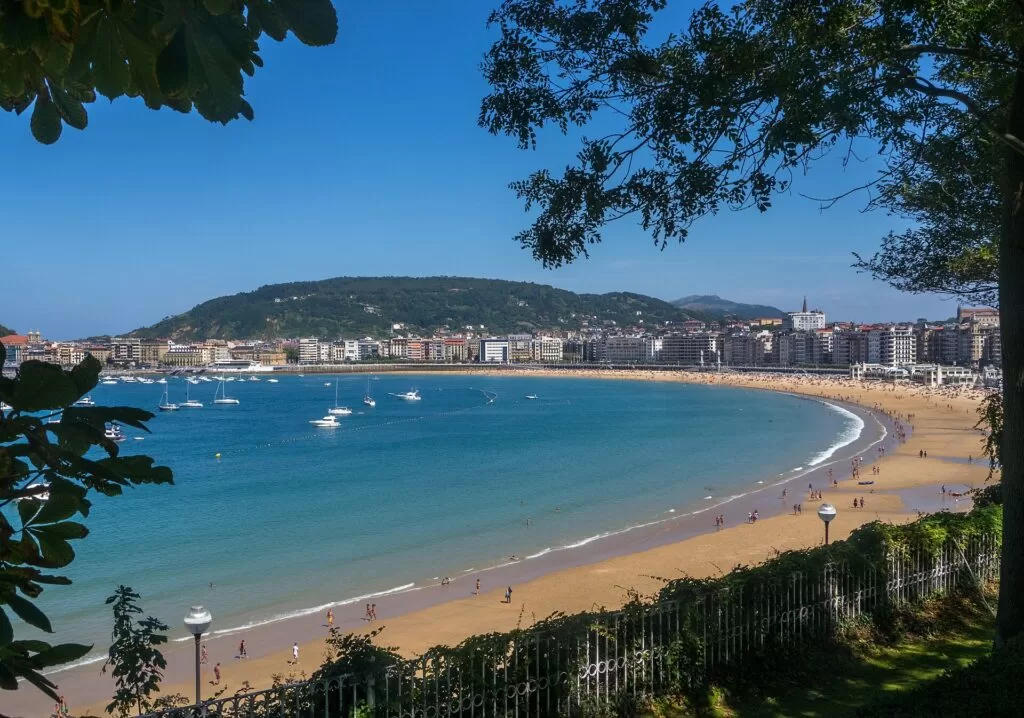
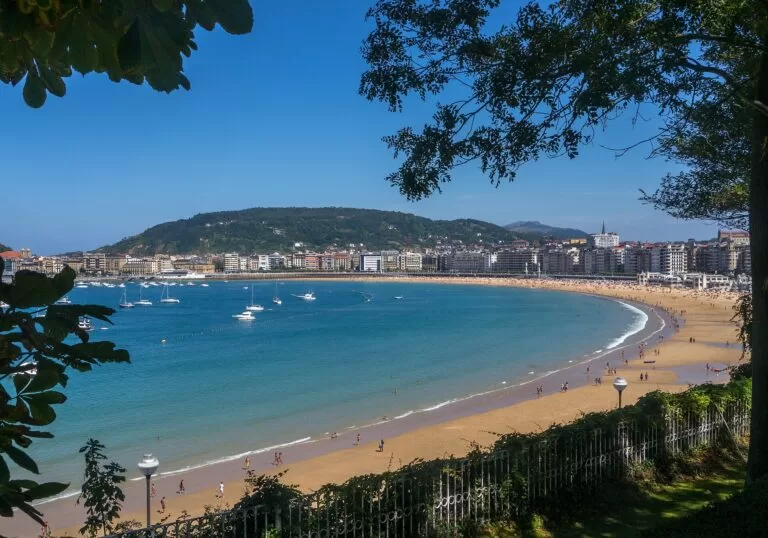
San Sebastián · Photo: Ermell, CC BY-SA 4.0
The Costa Vasca is the coast of the Basque Country in northern Spain, in the provinces of Bizkaia and Gipuzkoa. It runs from Muskiz in the valley of the Barbadún, in western Bizkaia (Basque tourism), to Hondarribia, which looks across Txingudi Bay to Hendaye in France (Basque tourism). In between are the Bizkaia Bridge, a UNESCO World Heritage Site (Basque tourism), the hermitage of San Juan de Gaztelugatxe, the Urdaibai Biosphere Reserve, the flysch cliffs of the Basque Coast Geopark, and San Sebastián’s La Concha. This guide covers the four stretches of coast, the beaches, the campsite, weather and routes.
At a glance
- Where the coast of the Basque Country in northern Spain, in Bizkaia and Gipuzkoa, from Muskiz in the west to Hondarribia on Txingudi Bay, opposite Hendaye.
- Geology the Basque Coast Geopark, a UNESCO Global Geopark since 2015, with the flysch cliffs of Mutriku, Deba and Zumaia.
- Fly to Bilbao Airport (BIO) in the west, or San Sebastián Airport (EAS) in Hondarribia in the east.
- On CostaMap One campsite on the coast.
- Climate an annual mean of 13.5 °C and 1,507 mm of rain at San Sebastián Igeldo (AEMET, 1981–2010).
- Food pintxos, grilled fish and txakoli, with two txakoli designations of origin, Getaria (1989) and Bizkaia (1994).
Map of the Costa Vasca
The map shows the places on this coast that have a CostaMap page, from San Sebastián and Zarautz to the Zumaia flysch, Bermeo and the campsite above San Sebastián. Tick a place type to filter it, and click a marker to see the place in the panel. The areas below follow the coast from west to east.
Place type
Area · next level
 Coast map
Costa Vasca
Click a marker to see the place here. Four areas from Getxo and Bermeo to Zumaia, Zarautz and San Sebastián, with Bilbao up the estuary.
Choose your areaChoose your area
We split the coast into four stretches, from Muskiz in the west to Hondarribia on the French border. Only places on the sea are in the lists; Bilbao, Gernika and the inland valleys follow under Things to do and in the itineraries.
West: Muskiz to Bakio
From the cliffs of Muskiz past the Bizkaia Bridge to the surf beaches of Sopela and Bakio, with the Bilbao metro running out to Sopela and Plentzia.
- Muskiz – the Itsaslur cliff promenade between Kobarón and Pobeña, and La Arena beach with three surf waves.
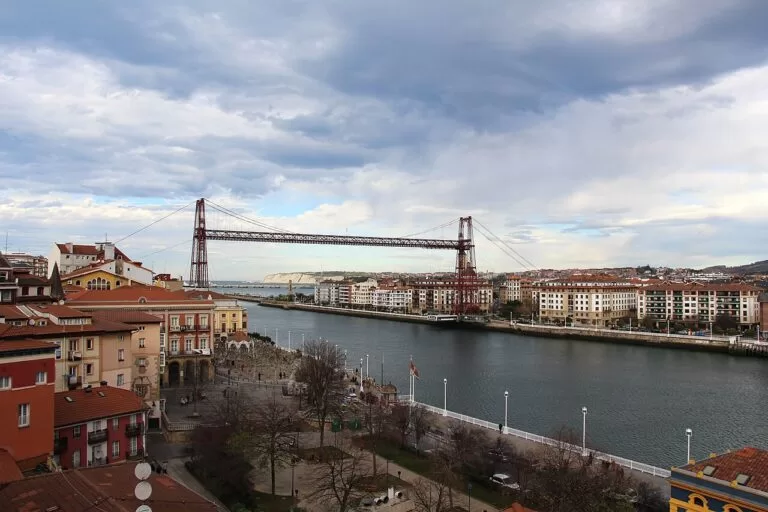
- Portugalete – the Bizkaia Bridge, opened in 1893 and a UNESCO World Heritage Site since 2006.
- Getxo – 10 km of cliffs and beaches facing the Bay of Abra, and the fishermen’s houses of the Old Port.
- Sopela – three beaches, among them Barinatxe, known as La Salvaje, with the La Triangular wave.
- Plentzia – founded in 1299, on a bay shared with Gorliz, with calm water for families.
- Bakio – an open surf beach, the Txakolingunea txakoli museum and Gaztelugatxe close by.
Urdaibai and Lea-Artibai: Bermeo to Ondarroa
The Urdaibai Biosphere Reserve around the Mundaka estuary, then a string of fishing ports and beaches east to Ondarroa.
- Bermeo – one of the main ports of Bizkaia, with the Fishermen’s Museum in the Ercilla Tower.
- Mundaka – inside the Urdaibai reserve and famous for its left wave.
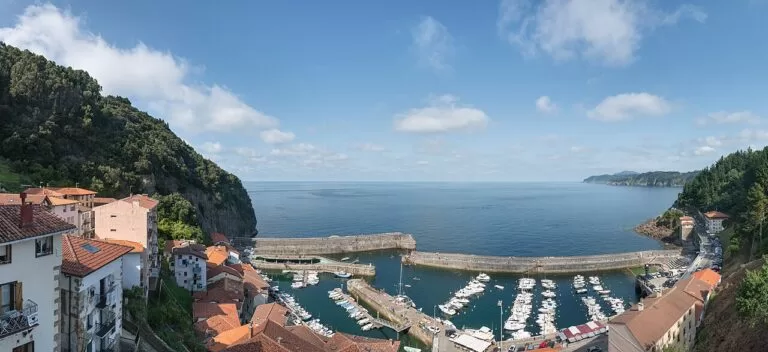
- Elantxobe – a village with piers built in 1783 to hold back the waves.
- Ea – three villages and two Romanesque-style bridges in the centre.
- Lekeitio – Isuntza and Karraspio beaches, and San Nicolás Island on foot at low tide.
- Ondarroa – a bridge by Santiago Calatrava and the Gothic church of Santa María from 1462.
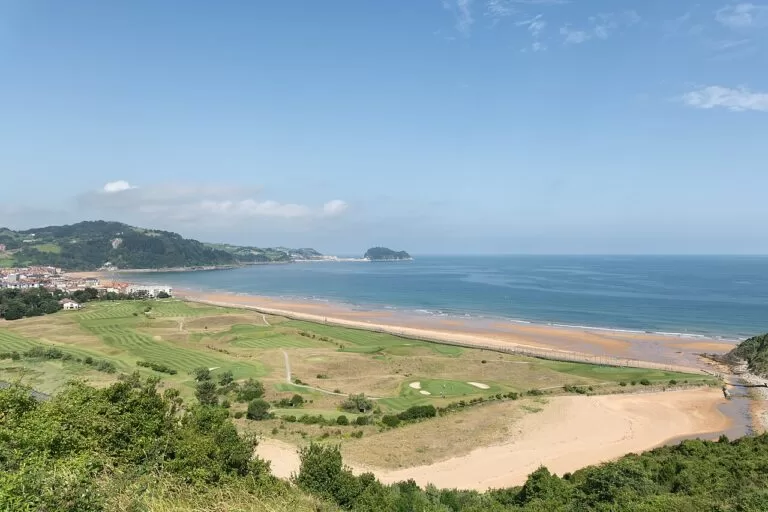
Gipuzkoa coast: Mutriku to Orio
The flysch cliffs of the Basque Coast Geopark, the harbour of Getaria and the long beach of Zarautz.
- Mutriku – one of the oldest ports in Gipuzkoa, with an old quarter declared historical heritage in 1995.
- Deba – the Ekain cave paintings and the Gothic church of Santa María.
- Zumaia – where the Urola meets the sea, with the flysch of Itzurun beach at low tide.
- Getaria – Elcano’s home and Balenciaga’s birthplace, with grilled fish and txakoli.
- Zarautz – the longest beach on the Basque coast, at 2,500 metres.
- Orio – on the Way of St James, with the beaches of Antilla and Oribarzar.
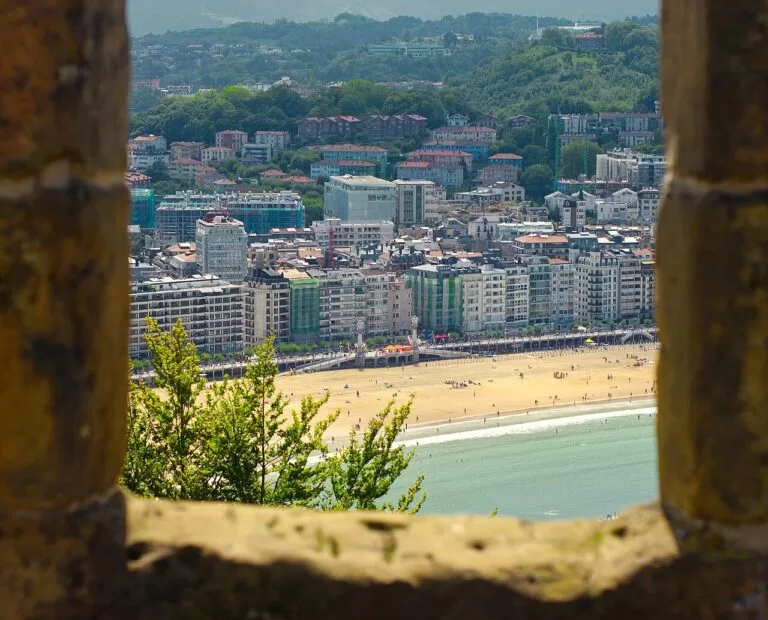
East: San Sebastián to Hondarribia
Three city beaches in San Sebastián, the natural harbour of Pasaia, and Hondarribia at the mouth of the Bidasoa.
- San Sebastián – La Concha, Ondarreta and Zurriola, joined by a 7-km promenade.
- Pasaia – four centres round Gipuzkoa’s main commercial port, and the Albaola Sea Factory.
- Hondarribia – the La Marina quarter at the foot of Jaizkibel, and the Alarde on 8 September.
Explore by interest
Pick a theme. Each tile opens the part of this guide that covers it.
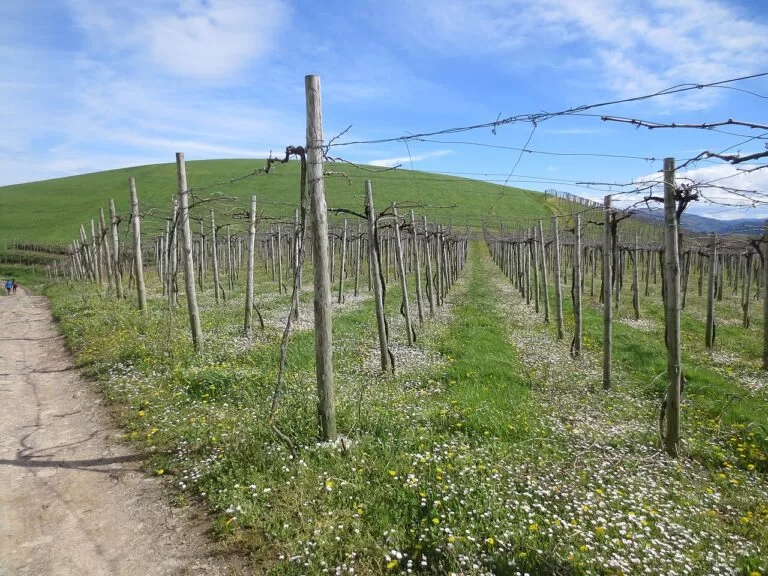
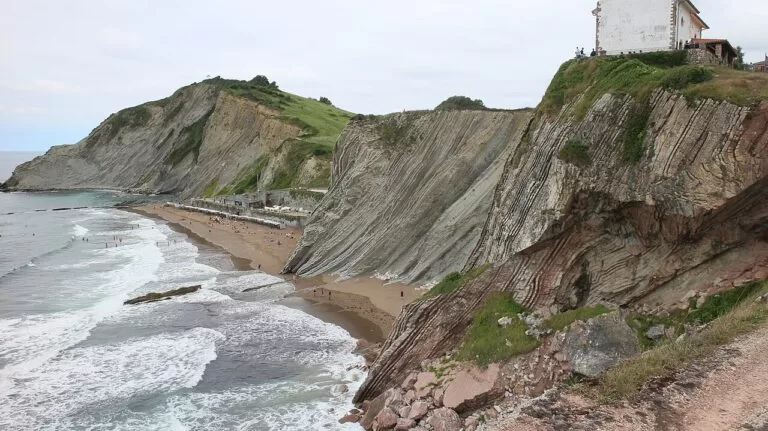
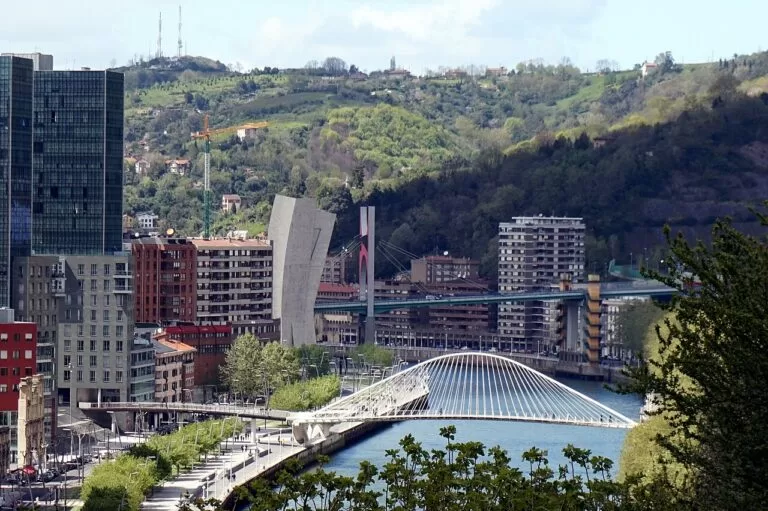
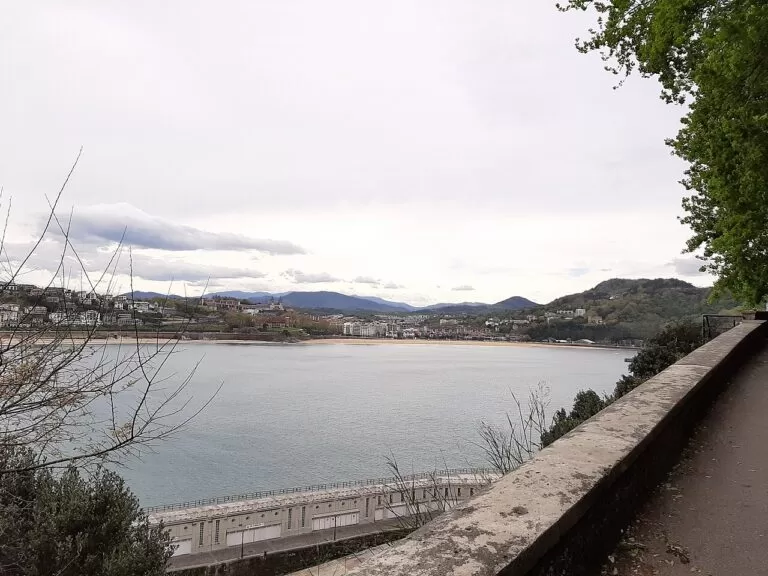
Best beaches and coves
The selection below is ours, from west to east. Lengths and descriptions are as given by the Basque Government’s tourism service and San Sebastián Turismo, checked in October 2026. Several of these beaches are known for surf and heavy swell, so check the flags and conditions before you swim.
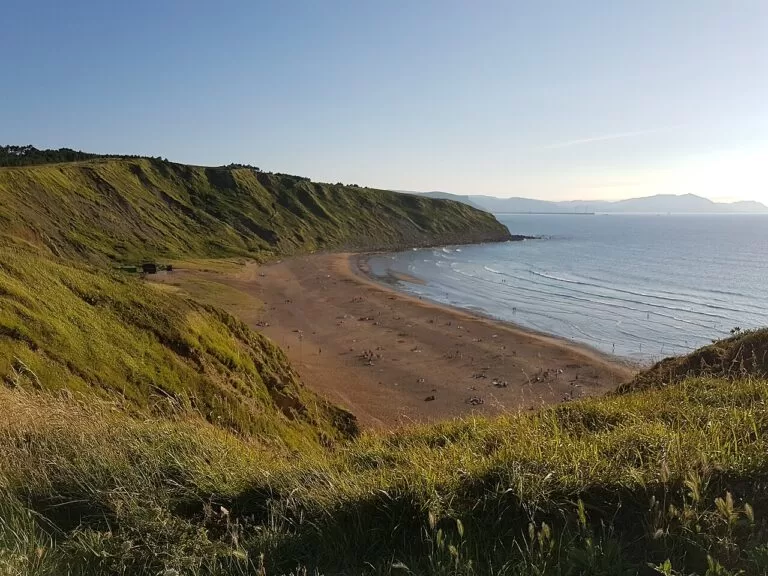
Barinatxe (La Salvaje)
Between Sopela and Getxo and also known as La Salvaje, the wild one; its best-known wave is La Triangular, over a rocky seafloor (Basque tourism).
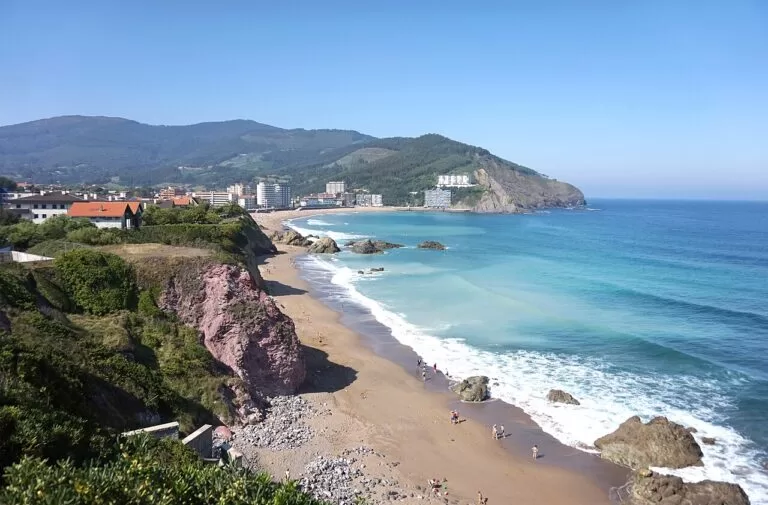
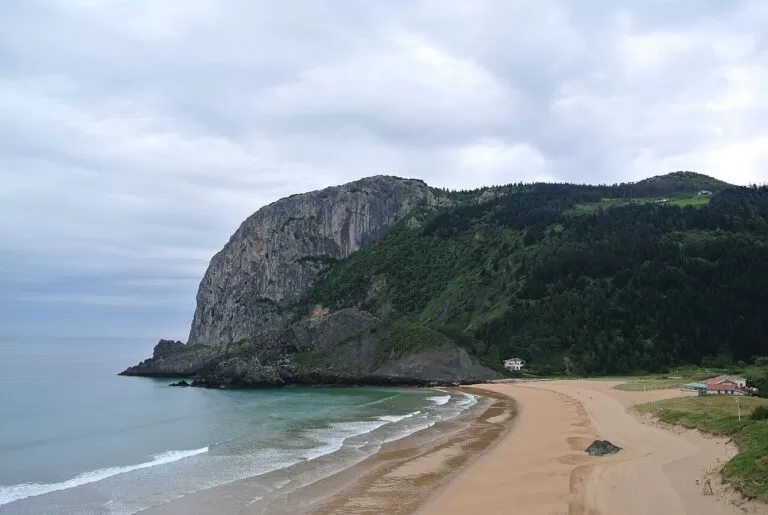
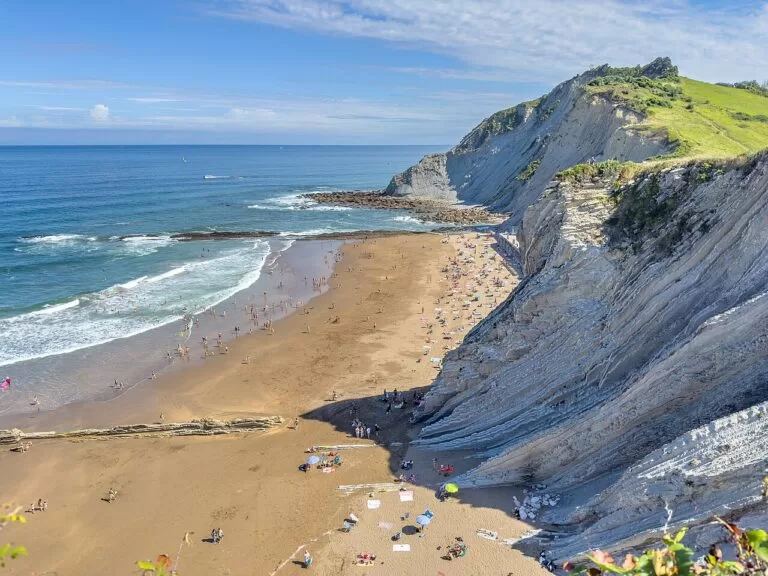
Itzurun
270 metres of golden sand with heavy swell, under cliffs and limestone walls up to 150 metres high (Basque tourism); the best-known part of the flysch outcrop is on this beach (UNESCO).
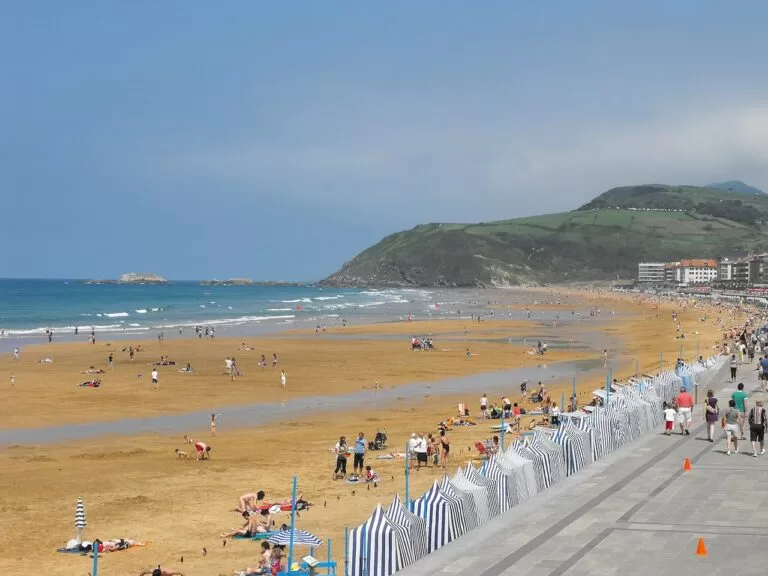
Zarautz
2,500 metres of sand (Basque tourism): the largest beach in Gipuzkoa and the longest on the Basque coast (Basque tourism).
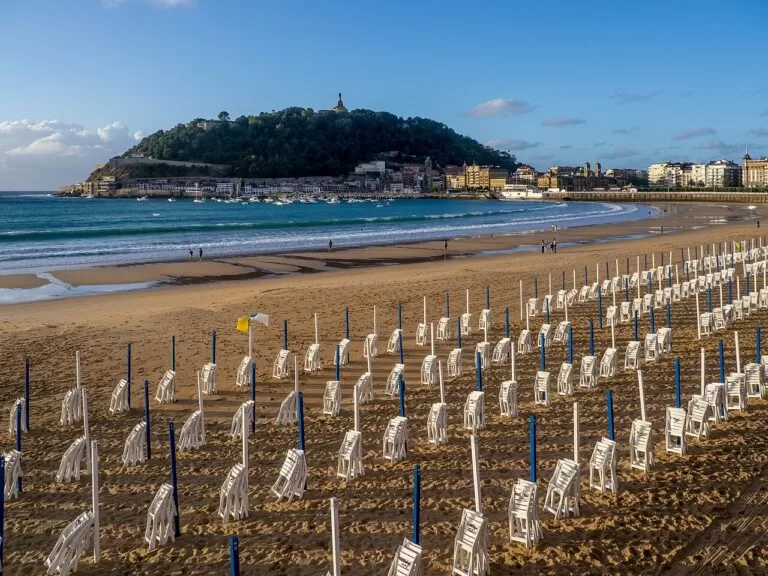
La Concha
1,350 metres of fine golden sand looking out on Santa Clara Island and the Urgull and Igeldo hills (Basque tourism). Queen Isabel II made it fashionable in 1845 (San Sebastián Turismo).
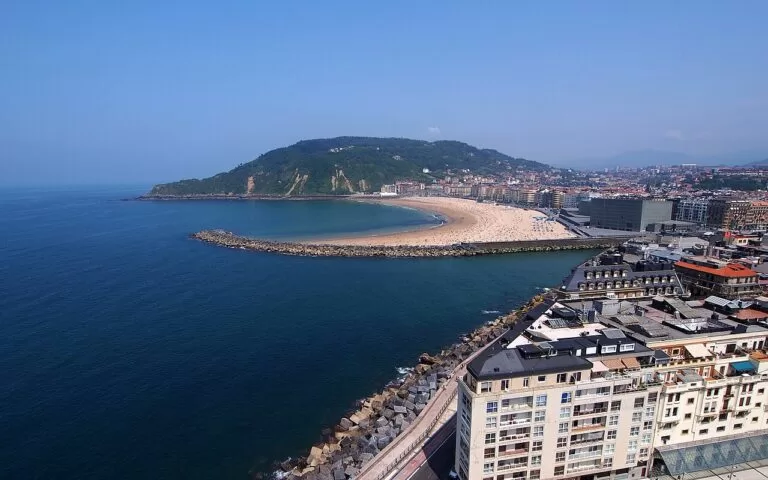
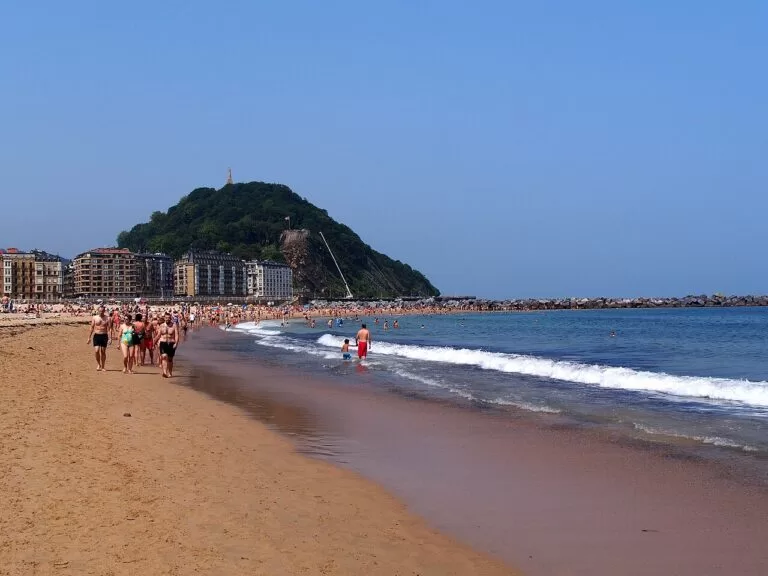
Zurriola
800 metres of sand (San Sebastián Turismo) beside the Kursaal, with the greatest surfing atmosphere in the city (Basque tourism).
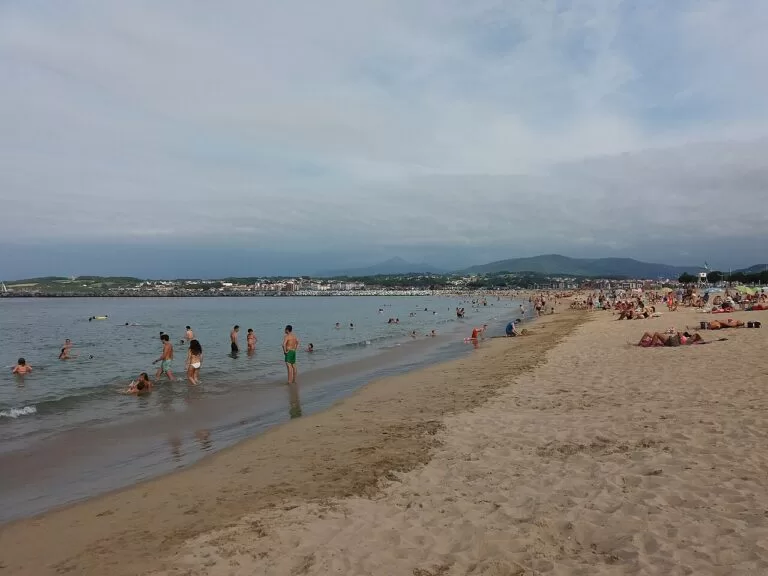
Hondarribia
700 metres of golden sand by the Bidasoa estuary, in Txingudi Bay (Basque tourism).
Also worth knowing: La Arena, between Muskiz and Zierbena, is 966 metres long with three main surf waves (Basque tourism). Plentzia beach has calm water, ideal for families with children (Basque tourism), and Laida, almost a kilometre of fine golden sand, is the longest beach in the Mundaka estuary, with shallow water (Basque tourism). In Lekeitio, Isuntza faces San Nicolás Island, which you can reach on foot along the breakwater at low tide (Basque tourism), and Karraspio across the river belongs to Mendexa (Basque tourism). In San Sebastián, Ondarreta is 600 metres long according to Basque tourism (Basque tourism) and over 500 metres according to San Sebastián Turismo (San Sebastián Turismo).
Where to stay by town
CostaMap has no town guides for the Basque coast yet, so these are the towns we would base a trip in, from east to west, with what each one is known for.
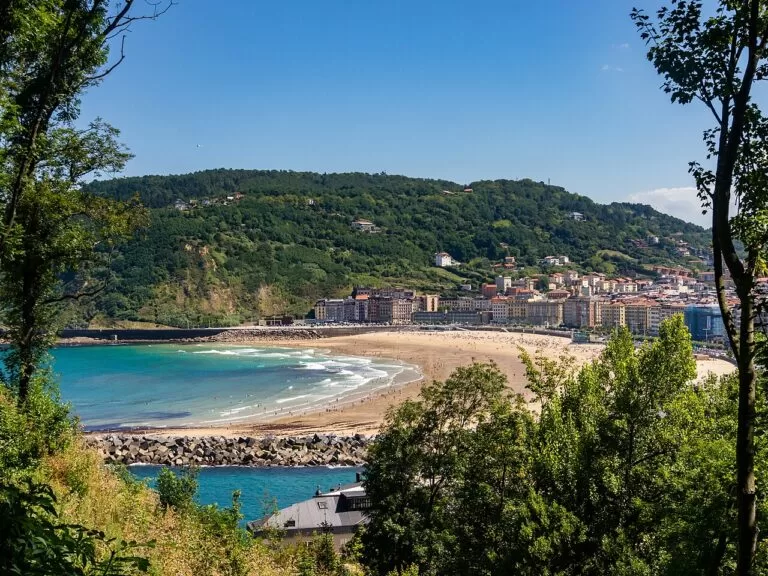
San Sebastián
Three city beaches joined by a 7-km promenade, Chillida’s Peine del Viento, and the oldest funicular in the Basque Country up Monte Igueldo.
City and beach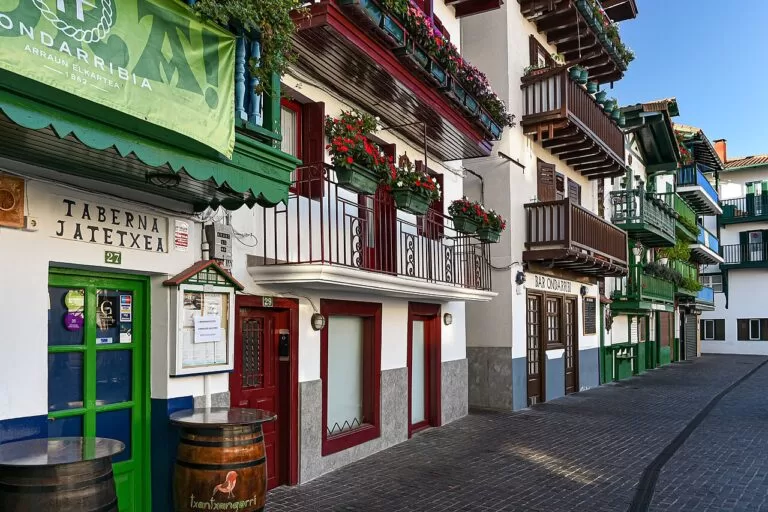
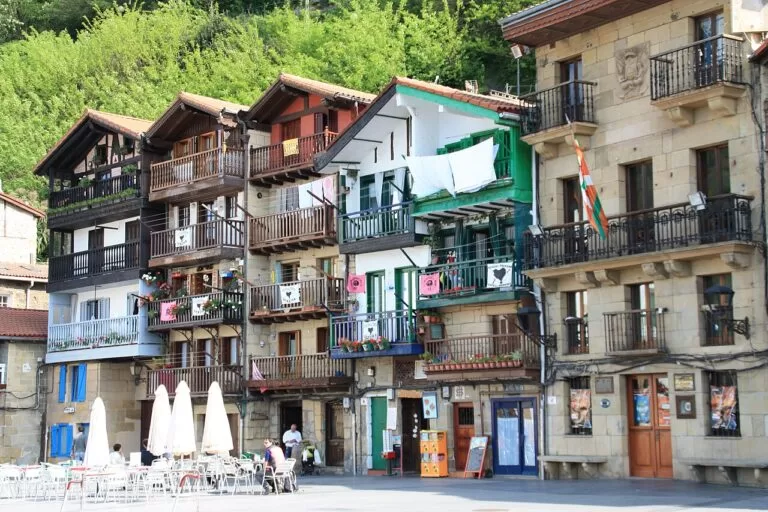
Hondarribia
The colourful fishermen’s houses and pintxos bars of La Marina, at the foot of Jaizkibel and across the bay from Hendaye.
Border town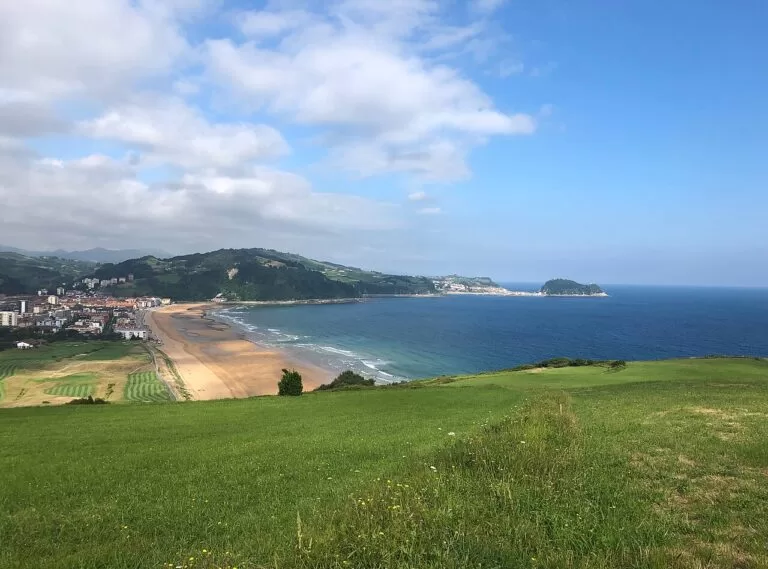
Zarautz
The longest beach on the Basque coast, a protected dune and a surf championship on the world circuit.
Surf and sand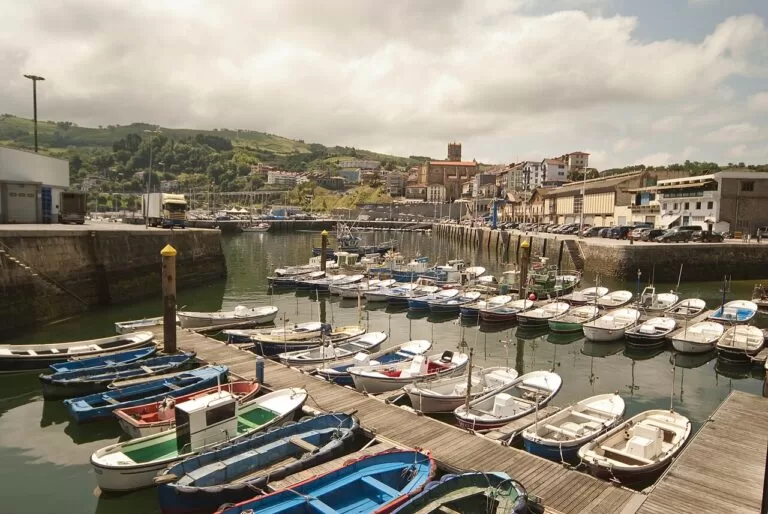
Getaria
Home of Elcano and birthplace of Balenciaga, under the headland called the Mouse, with grilled fish and txakoli.
Food and history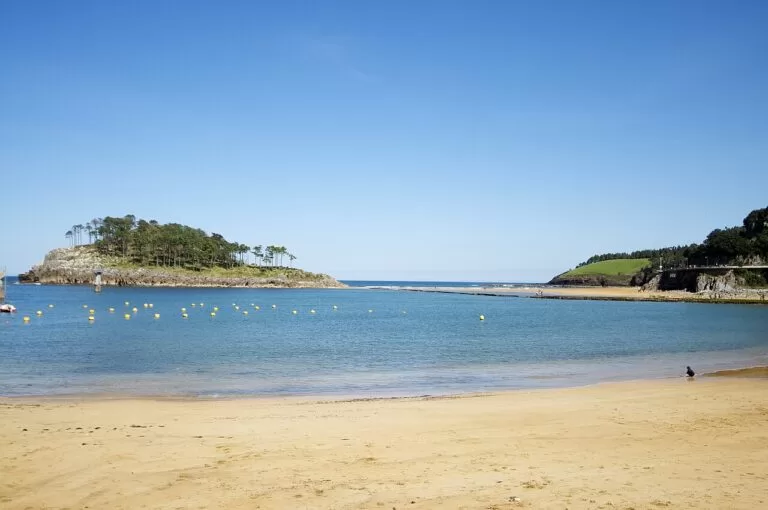
Lekeitio
Two beaches where the Lea meets the sea, San Nicolás Island on foot at low tide, and a gilded Gothic altarpiece.
Harbour and beaches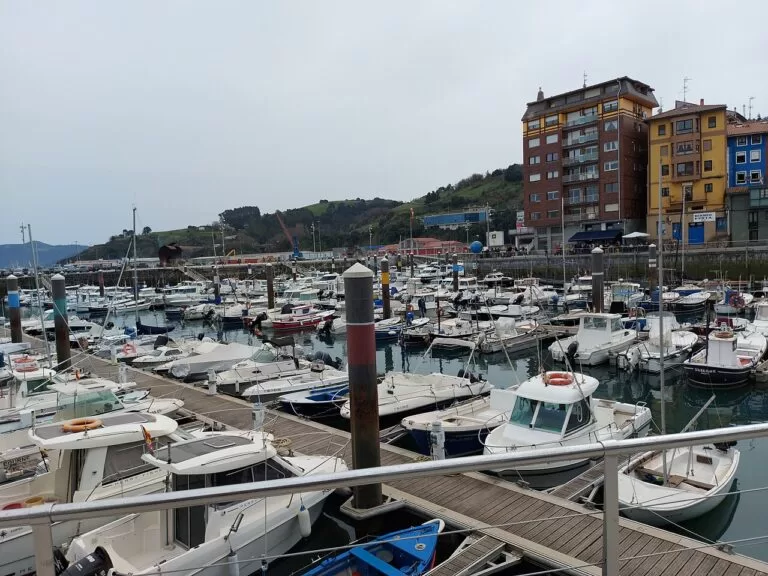
Bermeo
One of the main ports of Bizkaia, with a Fishermen’s Museum in the Ercilla Tower and Gaztelugatxe 8 km away.
Working portCampsites
One campsite on this coast has a CostaMap page. Wecamp San Sebastián is at Padre Orkolaga Ibilbidea 69, in Donostia (Wecamp). By its own account it is 5 km from Ondarreta beach and La Concha bay and 1 km beyond the Igueldo neighbourhood, and caravans and motorhomes should approach via Ondarreta beach to avoid narrow roads and sharp bends (Wecamp).
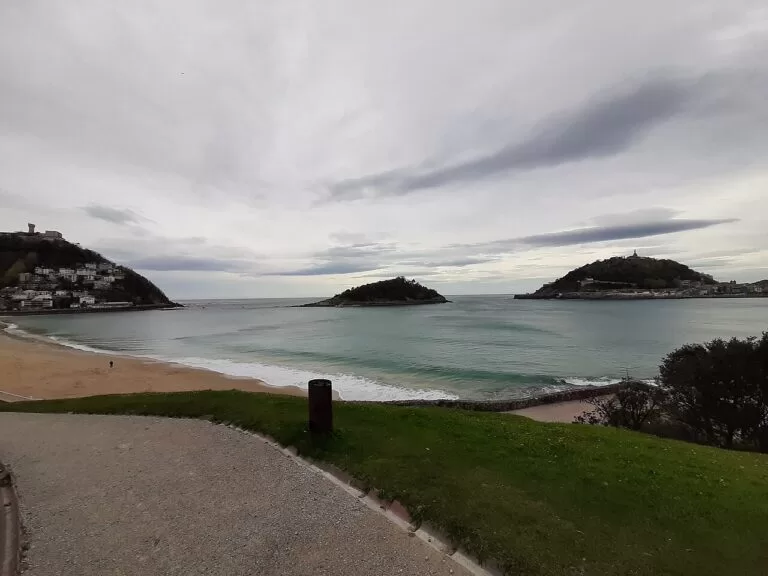
Wecamp San Sebastián
On Monte Igueldo, 1 km beyond the Igueldo neighbourhood and 5 km from Ondarreta beach and La Concha, by its own account.
See the campsite →Things to do
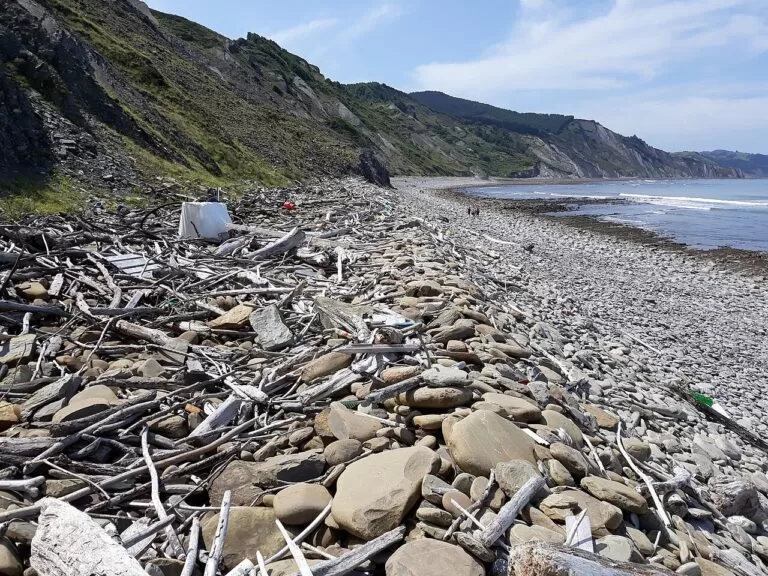
The flysch and the Basque Coast Geopark
The Basque Coast Geopark joined the European and Global Geoparks Network in 2010 and has been a UNESCO Global Geopark since 2015, with visitor offices in Mutriku, Deba and Zumaia (Basque Coast Geopark). More than 5,000 m of sediment and flysch were laid down here between about 110 and 50 million years ago, and one layer records the extinction of the dinosaurs about 65.5 million years ago; the Geopark has over 200 caves, and more than 40 hold archaeological remains, among them the cave paintings of Ekain, a UNESCO World Heritage Site (UNESCO). In Zumaia the flysch, sheets of sandstone and limestone shaped by the sea, shows at low tide (Basque tourism), and the cliffs of Mutriku, Deba and Zumaia can be visited on foot or by boat (Basque tourism).
For surfers, Mundaka is famous for its left wave (Basque tourism), Zarautz hosts an annual championship on the world surf circuit (Basque tourism), and the still bay of Gorliz suits canoeing, bodyboard and SUP (Basque tourism). In Getxo, the Punta Galea promenade lets you walk along the cliffs to Sopela (Basque tourism), and in Muskiz the Itsaslur promenade runs along the cliffs between Kobarón and Pobeña (Basque tourism).
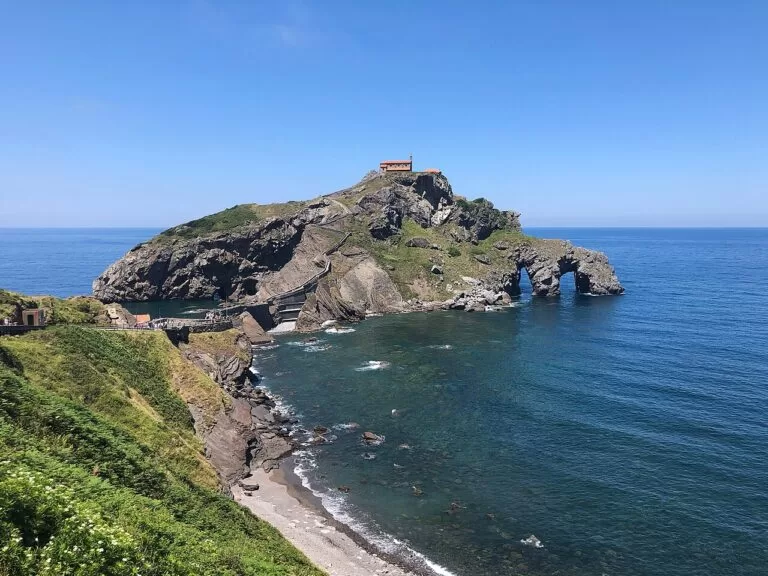
San Juan de Gaztelugatxe and Urdaibai
San Juan de Gaztelugatxe, between Bakio and Bermeo, is joined to the coast by a stone bridge and a 241-step staircase; the first hermitage is believed to date from the 9th century, the site is a protected biotope, and a free access ticket is required to visit (Basque tourism). Bizkaibus line A3527 from Bilbao’s Termibus to Bermeo stops there (Basque tourism).
UNESCO designated Urdaibai a Biosphere Reserve in 1984 and gives it 22,068 ha; in Basque the name means river of the boars (UNESCO). Its heart is the river Oka, which rises on Monte Oiz and meets the sea at Mundaka; ospreys, spoonbills and bitterns can be seen in the wetlands, and inland are the Santimamiñe caves with their paintings and the Forest of Oma (Basque tourism). Up the estuary, Gernika was founded in 1366; its Peace Museum remembers the bombing of 26 April 1937, and the Casa de Juntas keeps the tree that is the emblem of Basque freedoms (Basque tourism).
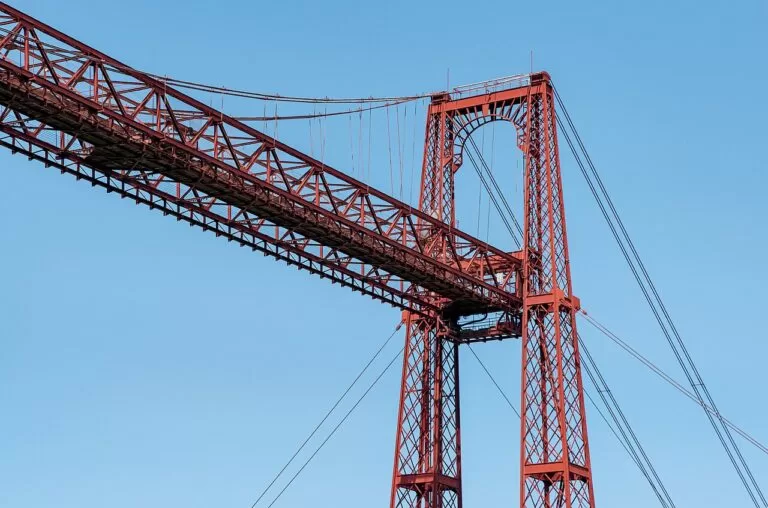
The Bizkaia Bridge and the fishing ports
The Bizkaia Bridge links Portugalete and Getxo, first opened on 28 July 1893 and was declared a UNESCO World Heritage Site in 2006 (Basque tourism). UNESCO calls it the first bridge in the world with a hanging transporter, a gondola suspended above passing ships; Alberto de Palacio designed it, its four steel towers are 51 metres high, and the 160-metre crossbeam hangs 45 metres above the sea at high tide (UNESCO). Across the river, Getxo’s Old Port keeps its narrow fishermen’s houses (Basque tourism).
Along the coast, Elantxobe’s piers were built in 1783 to hold back the waves (Basque tourism). In Lekeitio, the gilded Gothic altarpiece of Santa María is considered the third biggest in Spain, and in the Kaxarranka dance a dancer performs on a chest carried by eight fishermen (Basque tourism). Ondarroa has a bridge by Santiago Calatrava and a Gothic church from 1462 (Basque tourism), Mutriku’s port is one of the oldest in Gipuzkoa (Basque tourism), and in Pasaia the Albaola Sea Factory is building a replica of the 16th-century whaleship Nao San Juan (Basque tourism).
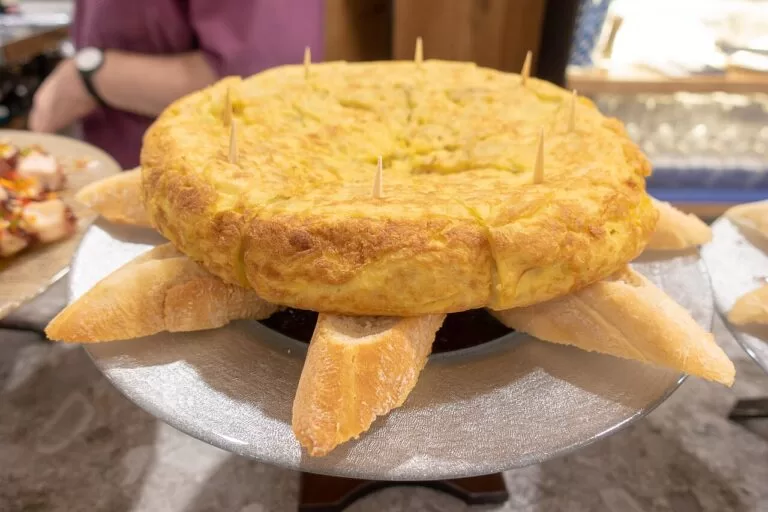
Pintxos, txakoli and cider houses
Txikiteo means going from bar to bar for small glasses of wine with pintxos (Basque tourism), and typical dishes include cod in pil-pil sauce, marmitako and squid in its ink (Basque tourism). Getaria’s speciality is grilled fish with the local txakoli (Basque tourism). Getariako Txakolina became a Designation of Origin in 1989 (Getariako Txakolina); it is made from the Hondarrabi grape and served at 6–10 °C, and 90% of its 446 hectares of vineyards are in coastal Gipuzkoa (Getariako Txakolina). Bizkaiko Txakolina followed in 1994 (Bizkaiko Txakolina), and Bakio, home of the Txakolingunea museum, launches the new vintage on 19 March (Basque tourism).
In the cider season, cider is caught straight from the barrel at the cry of Txotx!, and the traditional cider-house menu includes ribs, cod omelette and cheese (Basque tourism). Idiazabal cheese, a Designation of Origin since 1987, is made only from the unpasteurised milk of Latxa and Carranzana sheep and matured for at least two months (Idiazabal DO).
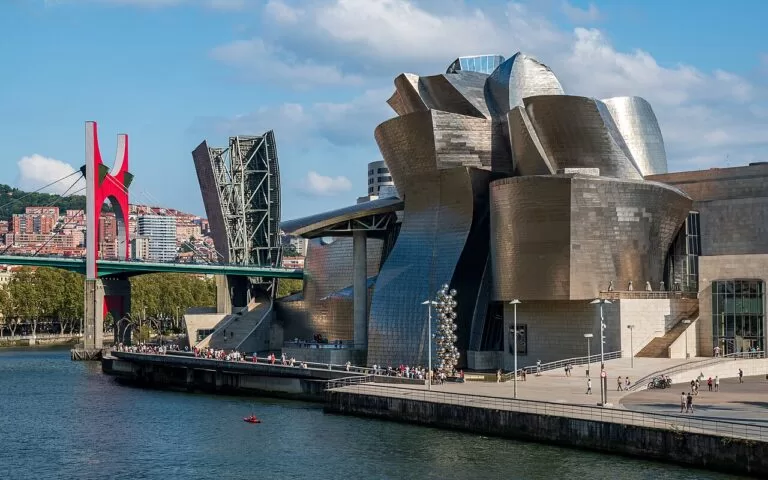
Bilbao and the Guggenheim
The Guggenheim Museum Bilbao, designed by Frank Gehry, has 24,000 m², of which 9,000 m² are exhibition space, and opens Tuesday to Sunday from 10 am to 7 pm (Guggenheim Bilbao). It was built between October 1993 and October 1997 on a former port wharf on a curve of the Nervión (Guggenheim Bilbao), and Richard Serra’s The Matter of Time, Jeff Koons’ Puppy and Louise Bourgeois’ Maman are on permanent display (Basque tourism). The Old Town, the Seven Streets, had to be restored after the floods of 1983 and holds Santiago Cathedral and the Plaza Nueva (Basque tourism). The metro, designed by Norman Foster, runs to the beaches of Sopela and Plentzia (Basque tourism). Inland, Vitoria-Gasteiz is the seat of the Basque Parliament, with a Green Ring of six large parks (Basque tourism).
When to go
Average temperature and the average daily high at San Sebastián Igeldo (AEMET station 1024E, at 250 m on the hill above the city), for 1981–2010 (AEMET).
Igeldo has an annual mean of 13.5 °C, 1,507 mm of rain, 1,816 hours of sunshine and 101.9 days of fog a year (AEMET). Lower down at Bilbao Airport (station 1082, 42 m, Loiu) it is warmer, with a July mean of 20.4 °C and highs of 25.4 °C, an annual mean of 14.7 °C, 1,134 mm of rain and 1,610 hours of sunshine; November is the wettest month there, with 147 mm (AEMET). In summer, a swimming deck with slides and diving boards is moored in La Concha bay (San Sebastián Turismo), and Hondarribia holds its Alarde parade on 8 September (Basque tourism).
Itineraries
Both plans can be done by public transport, with the metro, Euskotren and the regional buses, though a car makes the small ports between Bermeo and Mutriku easier.
Three days
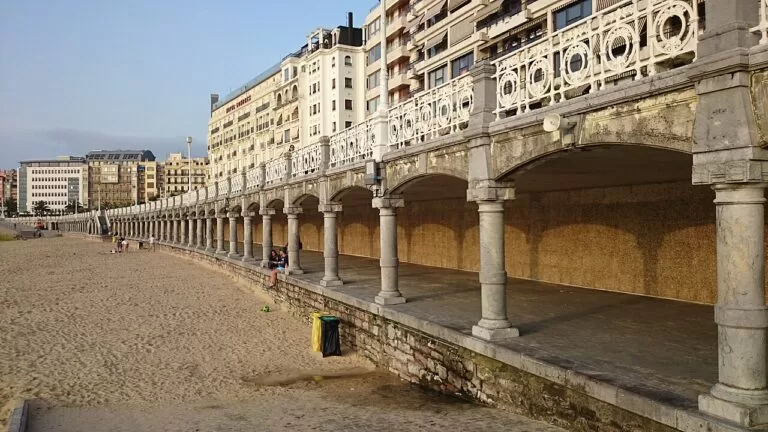
Day 1
San Sebastián
Start the morning on La Concha, 1,350 metres of fine golden sand facing Santa Clara Island, and follow the maritime promenade west to Ondarreta and Eduardo Chillida’s Peine del Viento; the promenade links Zurriola, La Concha and Ondarreta over 7 km. In the afternoon ride the Igeldo funicular, open since 1912 and the oldest in the Basque Country, to the vintage fairground on the summit. In the evening go from bar to bar for small glasses of wine with pintxos – txikiteo. La Concha has lifeguards from 10 am to 8 pm in summer.
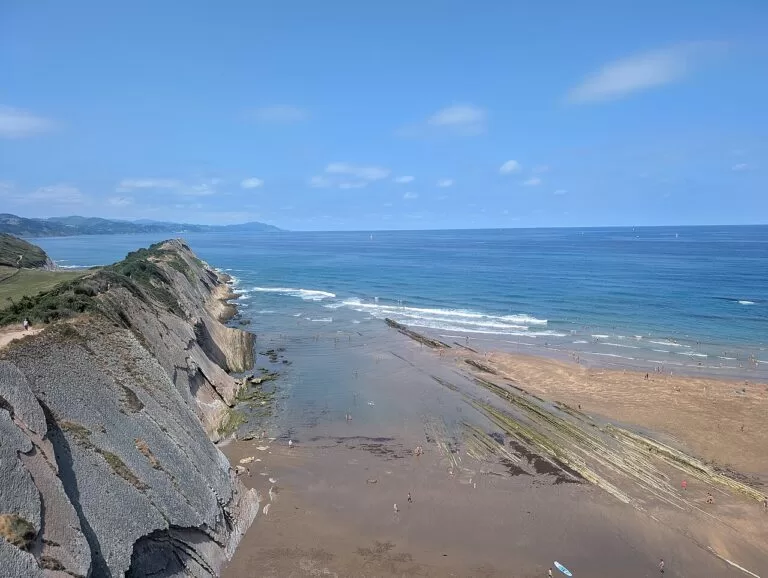
Day 2
Zumaia and the flysch
Begin at the Geopark visitor office in Zumaia; the Geopark has others in Deba and Mutriku. Time the morning for low tide, when the flysch – sheets of sandstone and limestone shaped by the sea – shows below Itzurun, a 270-metre beach under cliffs that reach 150 metres. One layer records the extinction of the dinosaurs about 65.5 million years ago. In the afternoon walk from Itzurun towards Deba, or see the flysch cliffs of Zumaia, Deba and Mutriku by boat. In the evening look into the 13th-century Gothic church of San Pedro in Zumaia.
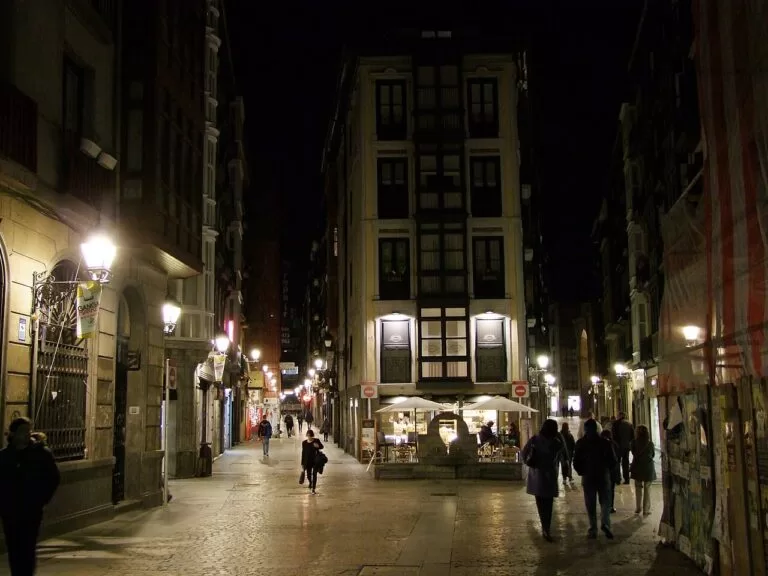
Day 3
Bilbao
Spend the morning at the Guggenheim, Frank Gehry’s museum on a former industrial wharf on the Nervión, with works such as Jeff Koons’ Puppy and Louise Bourgeois’ Maman on permanent display; its listed hours are Tuesday to Sunday, 10 am to 7 pm, and the tram stops nearby. In the afternoon walk the Seven Streets of the Old Town, with Santiago Cathedral and the Plaza Nueva. Then take the metro downriver to Portugalete for the Bizkaia Bridge, opened in 1893, whose gondola hangs above passing ships and connects Portugalete with Getxo.
Seven days
Days 1–3: as above.
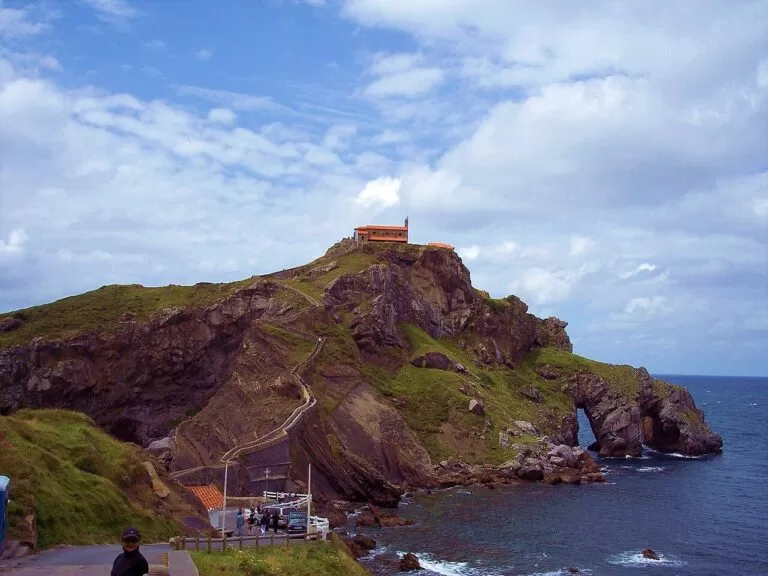
Day 4
Gaztelugatxe and Bermeo
Book the free access ticket before you go to San Juan de Gaztelugatxe, then cross the stone bridge and climb the 241 steps; the first hermitage here is believed to date from the 9th century. Bizkaibus line A3527 from Bilbao’s Termibus has a stop at the site, which lies 8 kilometres from the centre of Bermeo. In the afternoon visit Bermeo, one of the main ports in Bizkaia, and its Fishermen’s Museum in the Ercilla Tower. End the day in Mundaka, inside the Urdaibai Biosphere Reserve, where the left wave draws surfers every year.
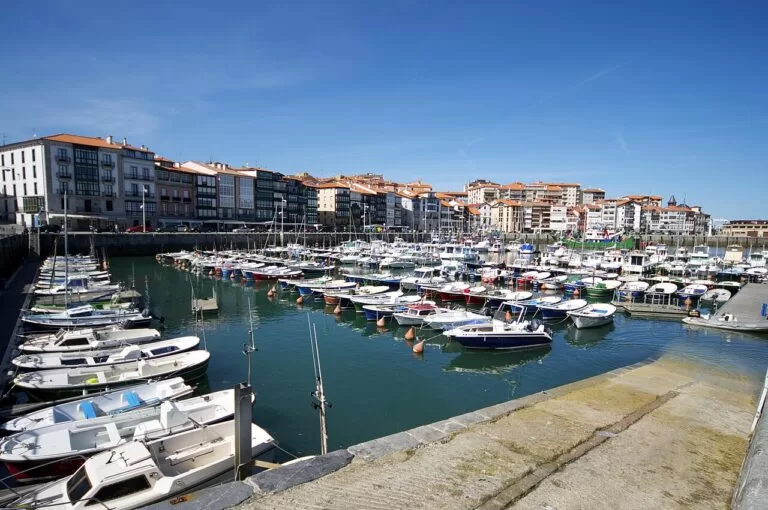
Day 5
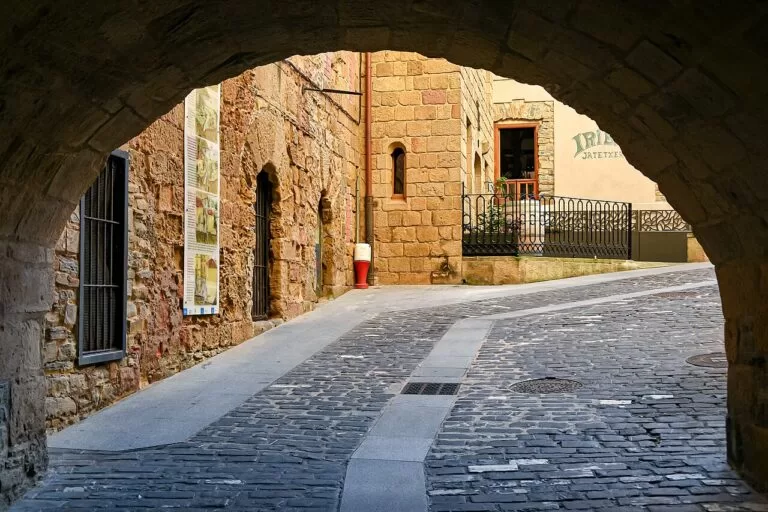
Urdaibai and Lekeitio
In the morning take Euskotren from Bilbao to Gernika – trains run every 30 minutes on workdays – for the Peace Museum, which remembers the bombing of 26 April 1937, and the Casa de Juntas with its tree, emblem of Basque freedoms. The Monday market is described as the most important weekly fair in Bizkaia. In the afternoon continue to Laga, 574 metres of golden sand next to Cape Ogoño, and Elantxobe, whose piers were built in 1783. In the evening reach Lekeitio, where San Nicolás Island can be reached on foot along the breakwater at low tide.
Day 6
Getaria and Zarautz
Getaria lies about 25 km from San Sebastián and can be reached on the Lurraldebus. Spend the morning at the Cristóbal Balenciaga Museum, which honours the designer born here in 1895, and look out for Mount San Antón, better known as the Mouse of Getaria. At lunch try the town’s speciality, grilled fish, with the local txakoli, made from the Hondarrabi Zuria grape and best served at 6–10 °C. In the afternoon move on to Zarautz, where the 2,500-metre beach is the longest on the Basque coast, and the dune by the Iñurritza estuary is a protected biotope.
Day 7
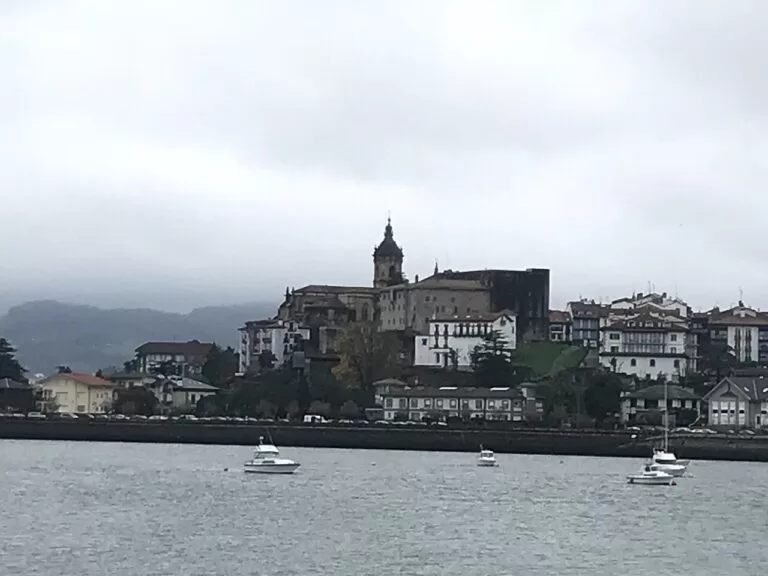
Pasaia and Hondarribia
Pasaia lies a few kilometres from San Sebastián. In the morning see the house in Pasai Donibane where Victor Hugo spent a few days, and Albaola, the Sea Factory of the Basques, where a replica of the 16th-century whaleship Nao San Juan is being built; a small motorboat crosses the bay to Pasai San Pedro. In the afternoon go on to Hondarribia, at the foot of Jaizkibel, for the colourful fishermen’s houses and pintxos bars of La Marina, then 700 metres of golden sand on Txingudi Bay, looking across to Hendaye. On 8 September the town holds the Alarde.
Getting there and around
By air
Bilbao Airport (BIO, ICAO LEBB) (OurAirports) has a 2,600-metre runway and a terminal opened in 2000 (Aena). San Sebastián Airport (EAS) is in Hondarribia (OurAirports), on the Bidasoa estuary (Aena), and Biarritz (BIQ) is across the border in France (OurAirports).
By bus
Bizkaibus A3247 links Bilbao’s Termibus with the airport every 15 minutes from 5:00 to 22:00, and Lurraldebus DO04 runs between Donostia/San Sebastián and Bilbao Airport via Zarautz, hourly from 05:00 to 21:00 in the timetable from 1 October 2026 (Aena). Lurraldebus also connects San Sebastián Airport with Hondarribia and Irun (Aena).
By metro and train
Metro Bilbao reaches Portugalete and the beaches of Sopela and Plentzia (Basque tourism), and Euskotren trains link Gernika with Bilbao every 30 minutes on workdays (Basque tourism).
Practical and safety
- Emergencies and lifeguards: we could not reach an official Basque page on emergency numbers, lifeguard seasons or beach flags in October 2026, so check the information at your beach or tourist office on arrival.
- On the beach: Itzurun has heavy swell (Basque tourism) and Bakio has surf practically all year (Basque tourism); for children, the tourist board points to the calm water at Plentzia (Basque tourism) and the shallows at Laida (Basque tourism).
- Tides: the flysch at Zumaia is best seen at low tide (Basque tourism), and the walk to San Nicolás Island in Lekeitio is only possible at low tide (Basque tourism). Check the tide table before you set out.
- Gaztelugatxe: a free access ticket is required to visit the hermitage (Basque tourism), so book before you travel.
- Language: place names are often signed in Basque first (Donostia for San Sebastián); the tourist board calls euskara Europe’s oldest language (Basque tourism).
FAQ
Where is the Costa Vasca?
In northern Spain: it is the coast of the Basque Country, in Bizkaia and Gipuzkoa, from Muskiz in the west to Hondarribia on Txingudi Bay, opposite Hendaye in France.
Which airport is closest?
Bilbao Airport (BIO) for the west and centre, with buses to Bilbao and to San Sebastián via Zarautz; San Sebastián Airport (EAS) in Hondarribia for the east.
Do I need a ticket for San Juan de Gaztelugatxe?
Yes. A free access ticket is required, and the hermitage is reached by a stone bridge and 241 steps.
What is the flysch at Zumaia?
Layers of sandstone and limestone laid down between about 110 and 50 million years ago, including a layer that records the end of the dinosaurs. It shows best at low tide on Itzurun beach.
Is the Costa Vasca good for a beach holiday?
It has fine city beaches such as La Concha and long surf beaches such as Zarautz, but it is a wet coast: Igeldo records 1,507 mm of rain a year and a July average of 18.9 °C.
Is there a campsite on the Costa Vasca?
Yes. Wecamp San Sebastián is on Monte Igueldo, 5 km from Ondarreta beach and La Concha by its own account.
Neighbouring costas
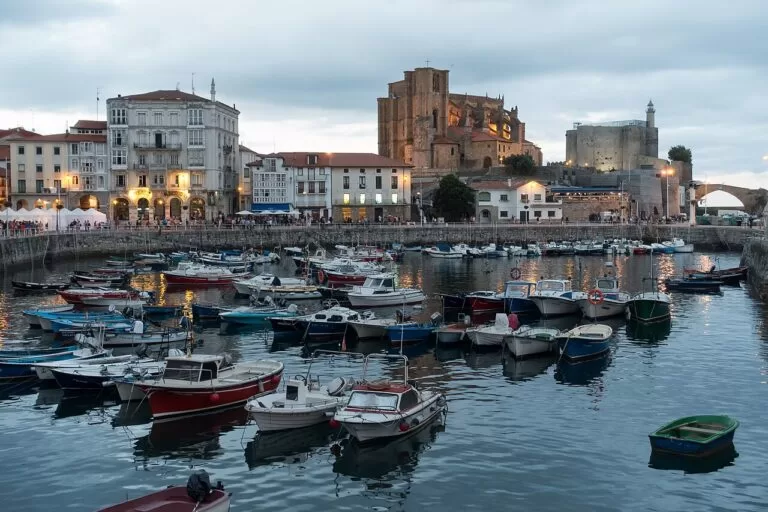
Costa de Cantabria
West of Muskiz: the coast of Cantabria, the next stretch of Spain’s green northern coast.
Costa de Cantabria guide →Sources and freshness
Checked 5 October 2026. Basque tourism (turismo.euskadi.eus) on the towns of Muskiz, Portugalete, Getxo, Sopela, Plentzia, Gorliz, Bakio, Bermeo, Mundaka, Elantxobe, Ea, Lekeitio, Ondarroa, Mutriku, Deba, Zumaia, Getaria, Zarautz, Orio, Pasaia and Hondarribia; on San Juan de Gaztelugatxe; and on the beaches of La Arena, Barinatxe, Plentzia, Bakio, Laida, Laga, Isuntza, Karraspio, Itzurun, Zarautz, La Concha, Ondarreta, Zurriola and Hondarribia. San Sebastián Turismo on La Concha, Ondarreta, Zurriola, Monte Igeldo and Monte Urgull. UNESCO on the Vizcaya Bridge, Urdaibai and the Basque Coast Geopark; the Geopark’s own site. Basque tourism (tourism.euskadi.eus) on Bilbao, the Seven Streets, the Guggenheim, Gernika, Urdaibai, the coastline, Vitoria-Gasteiz, Gaztelugatxe, cider houses, pintxos, typical dishes and the Basque language. Guggenheim Bilbao on the building, its construction and the museum. Food: Getariako Txakolina (designation), Bizkaiko Txakolina, Idiazabal DO. Transport: OurAirports on LEBB, LESO and LFBZ; Aena on the history of Bilbao and San Sebastián airports and their buses (Bilbao, San Sebastián). Campsite: Wecamp (San Sebastián, how to arrive). Climate: AEMET normals 1981–2010 for Bilbao Airport and San Sebastián Igeldo.
Photos from Wikimedia Commons, not altered except for cropping: San Sebastián by Ermell (CC BY-SA 4.0); Portugalete by Fred Romero from Paris, France (CC BY 2.0); Elantxobe by Giorgio Galeotti (CC BY-SA 4.0); Zarautz by Giorgio Galeotti (CC BY-SA 4.0); San Sebastián by Jchmrt (CC BY-SA 4.0); Zurriola, San Sebastián by rheins (CC BY 3.0); Pasai Donibane by Juan Lupión (CC BY 2.0); Gipuzkoa coast by Iñaki LL (CC BY-SA 4.0); Zumaia by Pomfuttge (CC BY-SA 4.0); Bilbao by Matt Kieffer from London, United Kingdom (CC BY-SA 2.0); San Sebastián by Sami Mlouhi (CC BY-SA 4.0); Barinatxe, Sopela by Xabier (CC BY-SA 4.0); Bakio by Tiia Monto (CC BY-SA 3.0); Laga, Ibarrangelu by Ben Bender (CC BY-SA 3.0); Itzurun, Zumaia by Kent Wang (CC BY-SA 4.0); Zarautz by diego_cue (CC BY-SA 3.0); La Concha, San Sebastián by Ermell (CC BY-SA 4.0); Zurriola, San Sebastián by rheins (CC BY 3.0); Hondarribia by Romainbehar (CC0); San Sebastián by Ermell (CC BY-SA 4.0); Hondarribia by Jorge Franganillo (CC BY 2.0); Zarautz by Einaz80 (CC BY-SA 4.0); Getaria by Marisol Murua (CC BY-SA 3.0); Lekeitio by Marisol Murua (CC BY-SA 3.0); Bermeo by Quahadi (CC BY-SA 4.0); Ondarreta, San Sebastián by Sami Mlouhi (CC BY-SA 4.0); Mutriku by Pacopac (CC BY-SA 4.0); San Juan de Gaztelugatxe by Einaz80 (CC BY-SA 4.0); Portugalete by José Ligero Loarte (CC BY-SA 4.0); San Sebastián by Kent Wang (CC BY-SA 2.0); Bilbao by José Ligero Loarte (CC BY-SA 4.0); San Sebastián by Smiley.toerist (CC BY-SA 4.0); Itzurun, Zumaia by Андрей Романенко (CC BY-SA 4.0); Bilbao by Andrzej Harassek (CC BY-SA 3.0); San Juan de Gaztelugatxe by dinamicline (CC BY-SA 3.0); Lekeitio by Marisol Murua (CC BY-SA 3.0); Getaria by Jorge Franganillo (CC BY 2.0); Hondarribia by Txo (CC BY-SA 4.0); Castro Urdiales by Edmundo Sáez (CC BY-SA 4.0).