
Denia Castle sits on a hill above the port and town, and it looks the part: a compact Moorish fortress turned municipal museum with useful panoramas. That said, if you arrive thinking of a sweeping, untouched medieval citadel or a long interpretive trail you may be disappointed — the site’s main draw is the view and the Archaeological Museum rather than an immersive castle experience. Expect a tidy, historically layered hilltop stop best paired with a harbour stroll or a seafood meal rather than a full-day attraction.
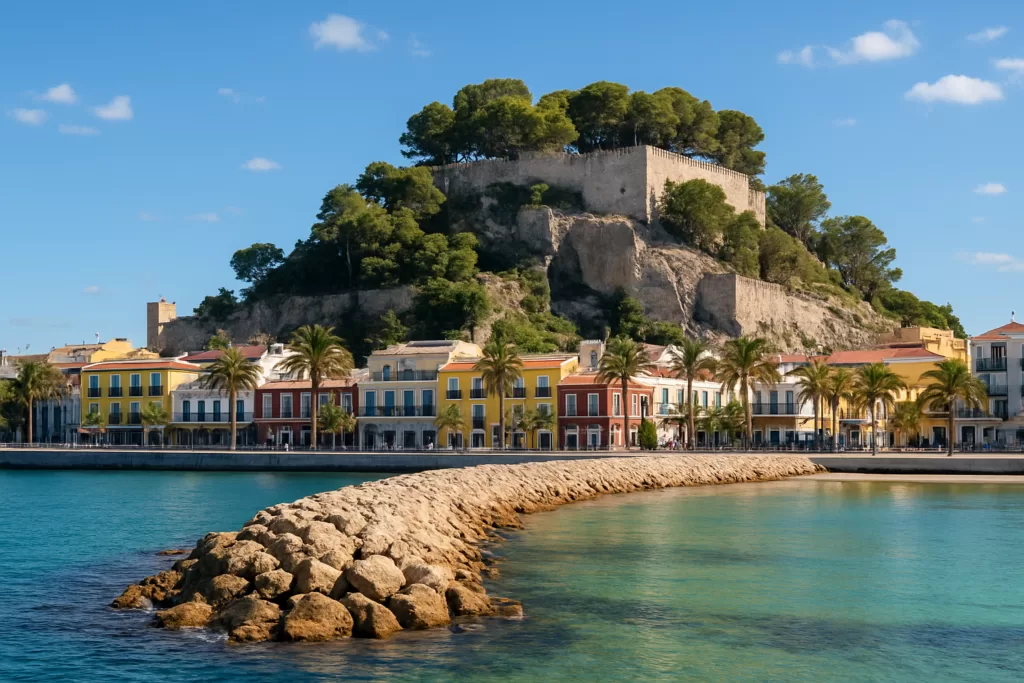
Denia Castle at a glance
- Location: hill in the heart of Denia overlooking the port and coast.
- Origins: fortress with Moorish origins from the 11th–12th centuries.
- On-site: houses the Denia Archaeological Museum covering Iberian, Roman, Muslim and Christian periods.
- Views: panoramas over town, marina and the coast; Montgó massif sits behind the town.
- Good as: a short historical stop combined with the harbour, fish market and nearby beaches.
What first-timers don’t expect
- The castle is compact and museum-centred, not a sprawling fortress: the main rewards are the exhibits and views, not long battlement walks.
- Denia’s maritime and gastronomic identity dominates the visit — the castle overlooks the active port where the town’s fishing tradition (including the famed red prawn) is evident.
- The castle sits within a busy town: a visit pairs naturally with the harbour, fish market and the nearby beaches rather than feeling remote.
How the castle fits into Denia
The castle crowns the town and functions as a compact historical anchor. Its Archaeological Museum traces local layers from Iberian and Roman settlements through the Muslim and Christian periods — a concise way to get historical context for Denia without lengthy regional travel. After a short tour you can drop down into the harbour area, where the working fishing port and lively Baix la Mar quarter are the living continuation of the town’s maritime story.
Pair it with harbour life and seafood
Denia’s identity is closely tied to its port. The town has a working fish market with an afternoon auction down by the docks where you can watch boats arrive and buy fresh fish. Dining clusters around Calle Loreto and Baix la Mar, and the town is famous as a UNESCO Creative City of Gastronomy — the local red prawn (gamba roja de Dénia) and rice dishes like arròs a banda are the signature plates to seek out after your castle visit.
Combine with coast and nature
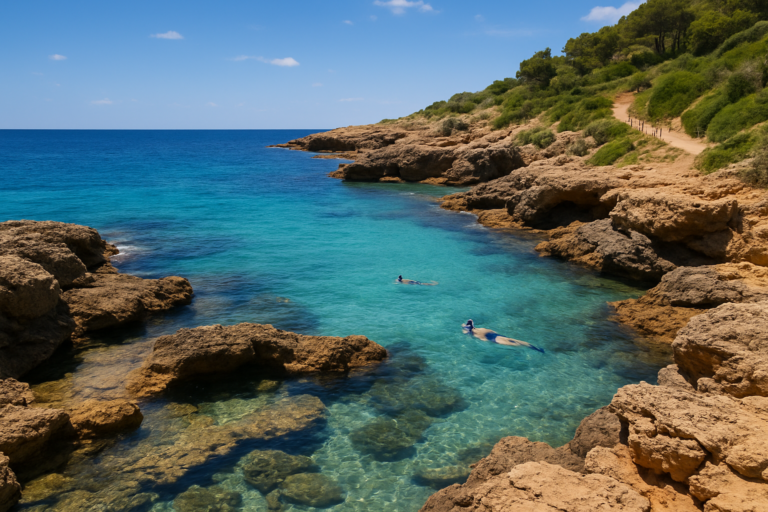
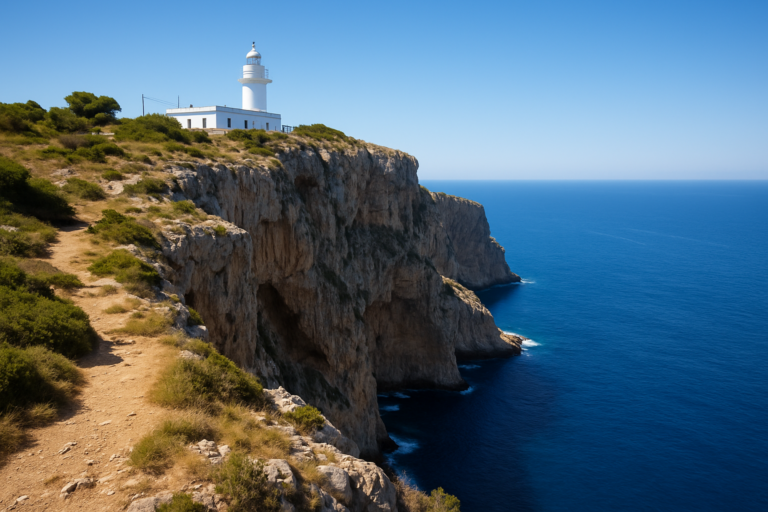
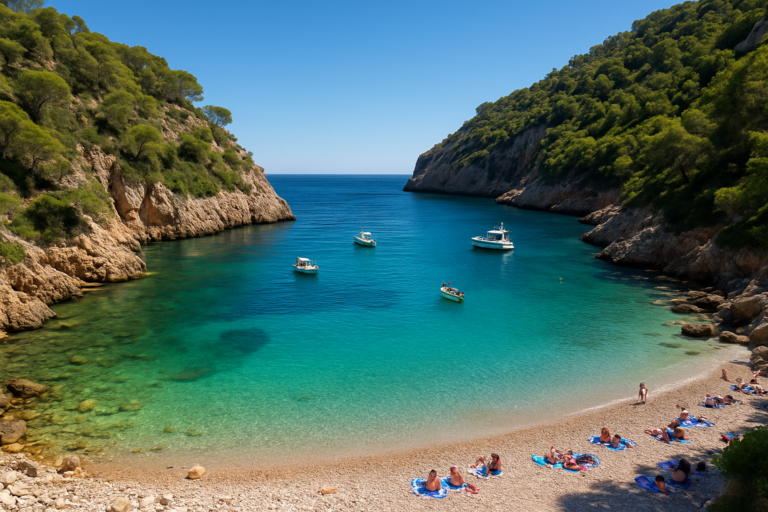
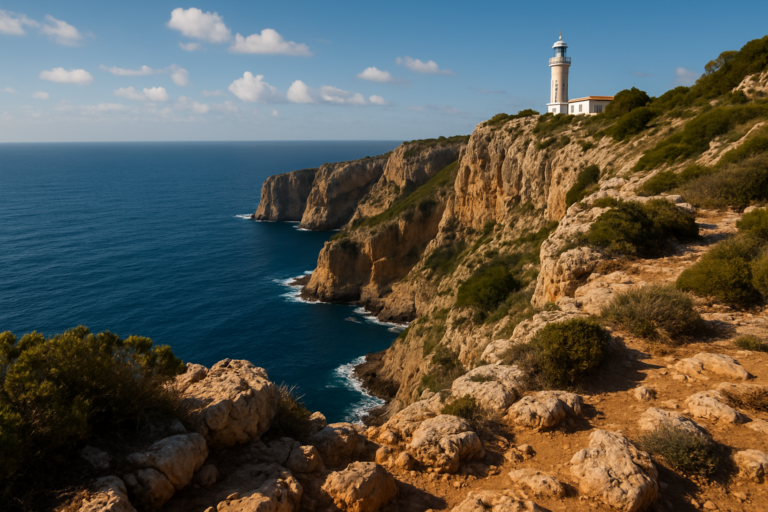
Use the castle as a midpoint between town and coast. Denia’s coast splits into Les Marines (long sandy beaches to the north) and Les Rotes (rocky coves to the south). Les Rotes includes a marine reserve protecting Posidonia seagrass meadows; scuba diving there requires permission. Behind the town rises the Montgó massif natural park, and from the Cabo de San Antonio lighthouse on the headland it’s possible to see Ibiza on a very clear day.
🧭 Local tip
Combine an early afternoon castle visit with a trip to the fish market’s afternoon auction down by the docks to see the day’s catch arrive and to choose a restaurant around Baix la Mar for fresh seafood.
Visitor reality check
- Don’t expect a large, immersive medieval complex — the site is compact and museum-focused.
- The castle visit pairs best with other local attractions (harbour, market, beaches) rather than standing alone as a long activity.
- If you plan snorkelling or diving in Les Rotes, remember parts are a marine reserve and require permission for scuba diving.
Worth it… for travellers who want a short historical stop with panoramic views and a neat way to connect to Denia’s maritime and gastronomic life. Skip it if you only have time for one outdoor highlight and prefer long coastal walks or full-day nature outings.
How we assess this guide
We cross-checked historical facts, the museum role, and local features such as the working fishing port, the UNESCO gastronomy designation and protected coastal areas against multiple reliable sources. We only include claims that are verifiable and leave out details we cannot confirm.
Denia Castle visitor information
| Feature | Detail |
|---|---|
| Origins | Moorish fortress, 11th–12th centuries |
| What’s inside | Denia Archaeological Museum — Iberian, Roman, Muslim and Christian periods |
| Views | Town, marina and coastline, with the Montgó massif behind |
| Typical visit length | 45–90 minutes |
| Best paired with | A harbour walk, the fish market or a seafood lunch |
The Montgó massif behind the castle
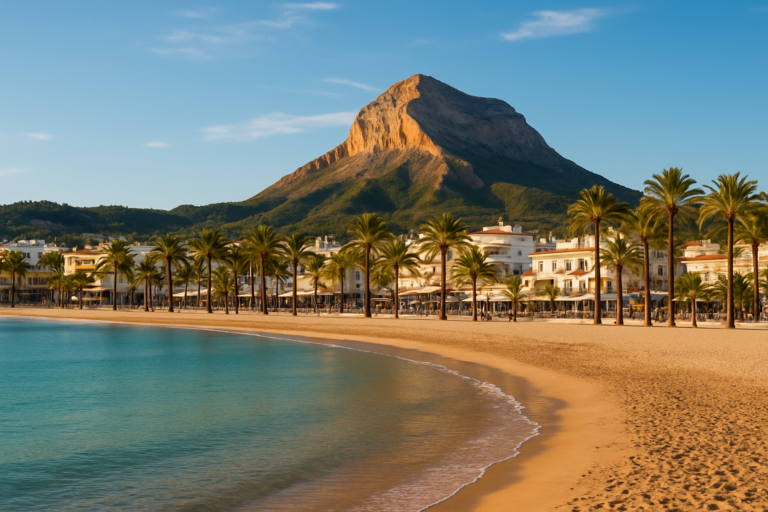
Looking inland from the castle walls, the view is dominated by the Montgó massif, a distinctive humped mountain that rises abruptly behind Dénia and forms the backdrop to nearly every view of the town from the sea. It is protected as a natural park, criss-crossed by hiking trails ranging from gentle lower routes to a properly demanding scramble to the 753-metre summit, and the contrast between the castle’s compact, historical scale and the mountain’s raw bulk behind it is part of what makes the hilltop view worth the climb even for visitors who only have time for a short stop.
Denia’s layered history, briefly
The castle’s Moorish fortress is only the most visible layer of a much longer story. Dénia was an Iberian settlement before the Romans arrived, then a Roman port town, before the Moors built the fortress that still crowns the hill today, and later Christian rulers who expanded and adapted it after the Reconquista. The Archaeological Museum inside the castle walls exists precisely to make sense of this stacked history, with exhibits moving through each period in turn — a useful stop for anyone who wants the story behind the view rather than just the view itself, and a natural complement to the town’s own more recent identity as one of the Costa Blanca’s principal fishing and ferry ports.
Getting there and when to visit
The castle sits directly above Dénia’s old town, a short, signposted walk uphill from the harbour and main streets — no car is needed if you are already staying in town, though the climb itself is enough to work up an appetite for the seafood lunch that follows naturally afterward. Morning visits avoid both the midday heat and the larger tour groups that tend to arrive later in the day, while a late-afternoon visit rewards you with softer light for photos over the marina and coastline. Confirm opening hours before you go, since they shift between summer and winter schedules, and the museum sections in particular can close earlier than the outdoor castle grounds.
The red prawn connection
Dénia’s gambas rojas, its red prawns, are considered among the best in Spain, and the town’s fishing fleet — visible from the castle walls below — is what keeps that reputation alive. The nightly fish auction at the port draws chefs and curious visitors alike, and the seafood restaurants clustered around the harbour serve the catch about as fresh as it comes anywhere on this coast. Pairing a castle visit with a walk down to the port and a plate of prawns afterward is less a suggestion than the natural shape of a Dénia day — history first, then the reason the town is actually famous — a plate of prawns with nothing more than a squeeze of lemon, eaten within sight of the water they came from.
None of this requires a full day — an hour at the castle, a walk down through the old town, and a seafood lunch by the harbour covers the essentials of what makes Dénia worth the stop, whether you have an afternoon to spare or are simply passing through on the way further up the coast.
FAQ
Can you visit Denia Castle’s interiors?
Yes. The castle houses the Denia Archaeological Museum, which presents the town’s archaeological record and local history.
Are there good views from the castle?
Yes. The castle sits on a hill and provides panoramas over the town, harbour and coast, with the Montgó massif rising behind Denia.
How should I combine a castle visit with other sights?
Pair the castle with a walk around the harbour and Baix la Mar, visit the afternoon fish auction at the docks, and plan a seafood meal to sample Denia’s red prawn and rice dishes.
Nearby on the northern Costa Blanca
All four of these northern towns sit within a comfortable half-day loop by car, making Dénia castle an easy first or last stop on a wider coastal trip.
Denia Castle on the map
Places worth knowing near Denia Castle
Read next
This place sits on the Costa Blanca. Read the full Costa Blanca guide → or open the interactive map to see everything we have mapped nearby.
How this page is maintained. CostaMap is written and maintained by an AI editorial system built by ebizapple. Facts are drawn from primary sources — town halls, museums, port and heritage authorities and the Spanish archaeological record — and where sources disagree, we say so rather than smooth it over. Photographs marked as ours are taken on location. This page was last reviewed on 14 August 2026. Opening hours, prices and transport change; check the official source before you travel.