
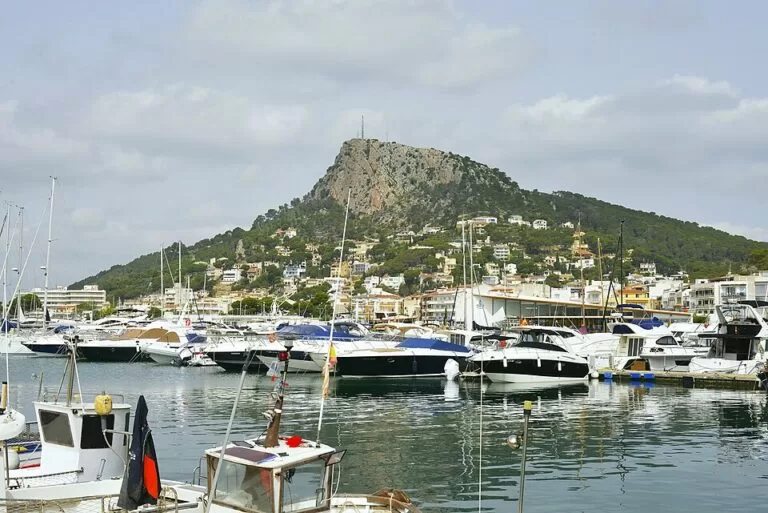
L’Estartit is the seaside village of Torroella de Montgrí on the Costa Brava, whose old town lies about 6 km inland, with a fishing and leisure harbour, a long sandy beach running south to the mouth of the Ter, and the Medes Islands about a kilometre offshore. People come for diving and snorkelling in the Medes marine reserve, boat trips over the reefs, the beach and walks into the Montgrí, Illes Medes and Baix Ter Natural Park. It suits families, divers and walkers; skip it if you want a small rocky cove or a quiet village in August.
Quick facts
- Names: L’Estartit (Catalan, used in English too); in Spanish also Estartit. The village belongs to the municipality of Torroella de Montgrí i l’Estartit, Baix Empordà (Girona).
- Where: on the coast at the south-east end of the Montgrí massif, between the Montgrí cliffs to the north and the Ter estuary to the south.
- Coordinates: 42.0549, 3.2014 (village centre).
- Offshore: the Medes Islands, seven islets about a kilometre from the coast; the land part is a full nature reserve and the sea around it a partial marine reserve.
- Beach: a long, narrow beach of fine sand between the port and the Ter, in three parts: Platja Gran in front of the village, Griells and La Pletera.
- Natural park office: Passeig del Port, Espigó de Llevant, 17258 L’Estartit, tel. 972 75 17 01 (park website).
- Festa Major: around 26 July, the feast of Santa Anna, the village’s patron saint.
Access and parking
By car: the tourist board’s route to Torroella de Montgrí is the AP-7 to exit 6, then the C-66 towards La Bisbal d’Empordà and, at La Pera, the GI-643 to Torroella (catalunya.com). From Torroella a local road runs about 6 km east to L’Estartit.
Parking: OpenStreetMap maps a paid car park with about 250 spaces at the harbour and a free car park of about 80 spaces just south of it, both a few minutes’ walk from the tourist office and the boat quays. Smaller free car parks are mapped at the west end of the village. We could not confirm tariffs or summer rules.
By bus and train: buses link Torroella regularly with L’Estartit, its beaches and port (catalunya.com). The natural park names Moventis-Sarfa and AMPSA-Gironabus as the companies serving its towns, with links to Figueres, Girona and Barcelona; the nearest railway stations are Girona, Flaçà and Figueres (park website). OpenStreetMap shows a bus stop on the seafront at Plaça del Doctor Fleming. Check timetables before you travel; we could not open them.
What to expect
L’Estartit grew late. The tourist board says the village was only founded in the 18th century, once piracy declined, and that fishermen settled here at the start of that century and pulled their boats up on the beach. Its port was important until the 20th century for shipping the area’s wheat, rice, wine and spirits (catalunya.com). Today it lives mainly from tourism, and in summer it is busy; the tourist office and the Estació Nàutica information point are on the seafront.
The old centre is small. On Carrer de Santa Anna, the Clock Tower was La Perola, where fishermen dyed their nets until 1890; a sundial was added in 1878. In the same street are two colonial-style “Indianos” houses, built in 1875 by the Marquès brothers after they made their fortune in America, and Casa Salietti, designed by the architect Rafael Masó in 1918 (catalunya.com). Spain’s tourist board also points to the fishing harbour and the Passeig del Molinet promenade (Spain.info).
The Medes Islands are the reason most visitors come. The archipelago is seven islets, with cliffs that drop to 50 m under water, coralline walls, tunnels and caves, and Posidonia meadows; groupers, eagle rays and barracudas are among the fish. The emerged islands are a full nature reserve that you may not land on without park permission; at sea, sailing, anchoring and diving are regulated and taking anything is banned (park guide). You see them by diving or snorkelling with a centre, or from a glass-bottom boat or a boat with submerged cabins from the harbour (catalunya.com). Our Illes Medes guide has the rules in detail.
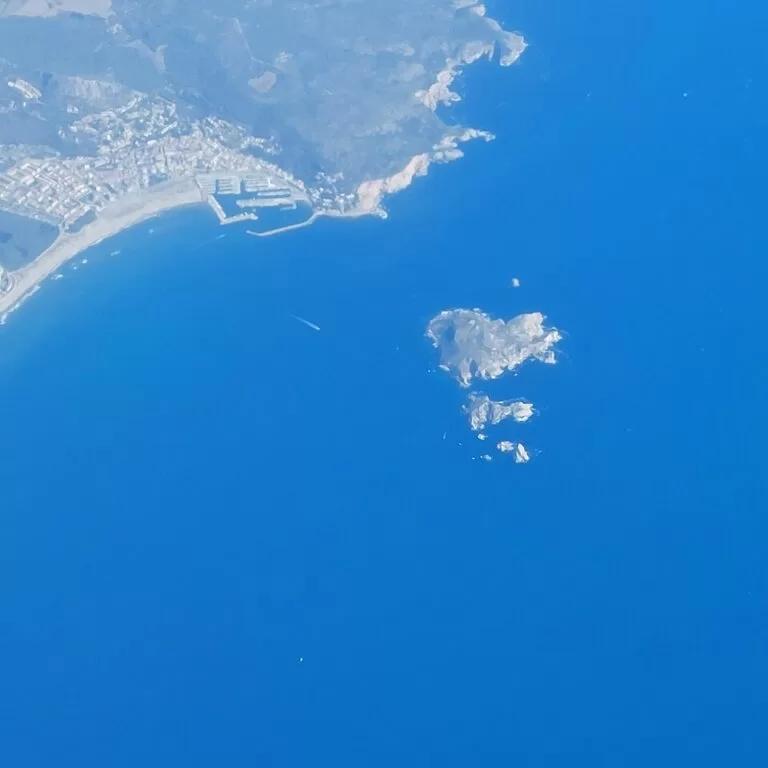
The beach is a long, narrow strip of fine sand between the port and the Ter estuary, a little over 3 km by the tourist board’s beach page. Platja Gran, in front of the village, is the widest and busiest and has all services; Griells and La Pletera to the south are quieter. The water is shallow, and the views take in the Montgrí castle inland and the Medes at sea (catalunya.com). The natural park counts an almost unbroken 6 km of natural beaches from L’Estartit to Pals, backed by dunes.
Walks: the Pletera trail starts at the tourist office and heads south along the promenade, past the Ter Vell lagoons and their bird hide and the restored salt marsh of La Pletera, to the Gola del Ter, the river mouth, returning along the beach (catalunya.com). North of the village the Montgrí meets the sea at Roca Maura and the Moratxa tower.
Practical details
- Water sports: sailing, kayaking, paddle surfing, windsurfing, boat hire and scuba diving are all offered in L’Estartit; the tourist board says most diving can be done all year (catalunya.com).
- Diving: only centres authorised by the park take divers and snorkellers into the Medes reserve; the park publishes the list.
- Free park activities: the natural park organises guided walks, bike and kayak trips and family workshops, many of them free.
- Toilets: OpenStreetMap shows free public toilets on the seafront, some marked wheelchair-accessible and open 24 hours.
Accessibility and safety
The seafront and Platja Gran are flat, and OpenStreetMap marks some public toilets as wheelchair-accessible; we could not confirm beach ramps or amphibious chairs, or wheelchair access on the boats. At sea, respect the reserve’s buoys and keep clear of diving flags. The tramuntana, the strong north wind of the Empordà, can make the sea rough and boat trips can be cancelled. On the Montgrí paths, carry water: the park says there are no fountains with guaranteed drinking water.
Best time to visit
For the beach and boat trips, June to September; July and August are the busiest months. Diving runs most of the year. Spring and autumn are better for walking the Montgrí and the Baix Ter, when it is cooler and quieter. Come around 26 July for the Festa Major of Santa Anna.
Nearby alternatives
- Illes Medes, 1.9 km away: the marine reserve itself, with diving and boat rules.
- Montgrí Castle, 5.8 km away: the unfinished 13th-century castle on the hill above Torroella, a 2-hour walk there and back.
- Cala Montgó, 6.4 km away: a sheltered sandy cove at the north end of the Montgrí coast.
- Pals old town, 10.4 km away: a walled hilltop village behind the beach of Pals.
- Empúries, 11.2 km away: the Greek and Roman ruins by the sea at L’Escala.
Distances are in a straight line from the centre of L’Estartit. The municipality is covered in our Torroella de Montgrí guide.
FAQ
How far are the Medes Islands from L’Estartit?
About a kilometre, or under a mile, off the coast. You see them from the beach, and boats leave from the harbour.
Can you visit the Medes Islands?
You cannot land on them without park authorisation, as the islands are a full nature reserve. You can dive or snorkel there with an authorised centre, or see the seabed from a glass-bottom boat or a boat with underwater cabins.
Is there parking in L’Estartit?
Yes. OpenStreetMap shows a paid car park of about 250 spaces at the harbour and a free one of about 80 spaces next to it, plus smaller free car parks on the west side of the village.
How do I get to L’Estartit without a car?
Take a train to Girona, Flaçà or Figueres and a bus on; buses also run regularly between Torroella de Montgrí and L’Estartit.
Is L’Estartit good for families?
Yes. The beach is long and shallow, and the municipality holds the Catalan Tourist Board’s Family Beach seal, with family activities in summer.
Sources and freshness
Checked 6 November 2026 · 3 sources Show
Checked 6 November 2026. Official:
- Catalan Tourist Board pages on Torroella de Montgrí, L’Estartit beach, the fishermen of the Illes Medes, a family trip, the Estació Nàutica and the Pletera trail
- Spain.info on L’Estartit
- the Montgrí, Illes Medes and Baix Ter Natural Park key data, how to get there and park guide. The local tourism website (visitestartit.com) could not be opened from our tools. Car parks, bus stop, toilets and distances: OpenStreetMap contributors (ODbL). Photos: Wikimedia Commons, licences as credited
This place is part of our Costa Brava travel guide: Cadaqués, the Palafrugell coves and Tossa de Mar — see every town, beach and cove we have mapped on that coast.
How this page is made. CostaMap is written with an AI editorial system run by Ebizapple. This page is based on the sources listed above. Last updated 6 November 2026. Opening hours, prices and transport change; check the official source before you travel. How we work · Partner links and ads