
Empúries
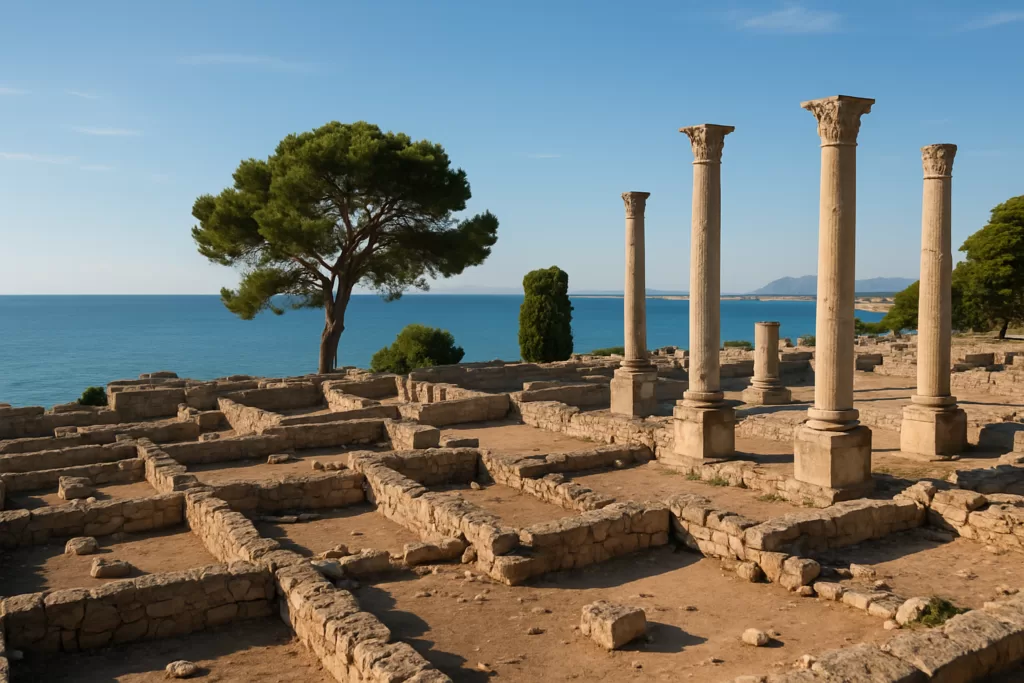
Historic siteEmpúries (Ampurias in Spanish) is the archaeological site at L’Escala where the Greek town of Empòrion, founded in the 6th century BC, and the Roman town of Emporiae lie side by side beside the sea. One ticket (€7, reduced €5, free under 16) covers both towns, the museum and an audio guide, and the municipal car park is next to the entrance. Skip the Roman town if you use a wheelchair: the museum says its route is not adapted.

Quick facts
- What it is: the only site in the Iberian Peninsula where a Greek colonial settlement and a Roman town survive together (Museu d’Arqueologia de Catalunya).
- Ticket: €7, reduced €5 for over-65s, free under 16; free on the first Sunday of the month except July to September.
- Hours: daily 10:00–20:00 from June to September, 10:00–18:00 in spring and autumn; closed on Mondays from 15 November to 15 February.
- Size: the Roman town covered 22.5 ha, and only about 25% of it has been excavated.
- Airport: Girona–Costa Brava, about 39 km away in a straight line.
Access and parking
By car: leave the AP-7 at exit 5 (Orriols), 20 km from L’Escala, and follow the GI-623. L’Escala’s tourist office gives 47.3 km (about 45 min) from Girona, 28.6 km (30 min) from Figueres and 144 km (1 h 30 min) from Barcelona (Visit L’Escala, getting here).
Parking: the municipal car park is beside the entrance; it does not take motorhomes in the low season. From July to September the museum ticket gives two hours’ discount there, and the rest of the year it is free. Coaches and drivers with reduced mobility park free in front of the reception centre, which also has 8 bicycle spaces (MAC-Empúries, plan your visit).
Without a car: SARFA buses on the Girona–L’Escala, Girona–L’Estartit and Barcelona–Costa Brava lines stop on Avinguda Francesc Macià. By train, take Rodalies from Barcelona to Girona or Figueres (RG1, R11) and change to the bus. On foot, the Passeig d’Empúries, a couple of kilometres long, links L’Escala with Sant Martí d’Empúries past the ruins and the Moll Grec (Visit L’Escala, Sant Martí).
What to expect
The site has three parts, and the museum’s own page explains each (MAC-Empúries, the site).
Sant Martí d’Empúries (the Palaiàpolis): the first Greek traders, from Phocaea, settled on the promontory of Sant Martí in the 6th century BC. It is the only part that has been lived in without a break to the present day. The village kept much of its medieval wall; its church was built in 1538 on a pre-Romanesque temple of 926, and Sant Martí was the seat of the county of Empúries until 1064.

The Greek town (Neàpolis): the main town of Empòrion lay south of the old port and grew to 4 ha. Systematic digging began here in 1908 and found the statue of Asclepius. The museum building stands in this part.

The port and the Moll Grec: the so-called Greek pier was built in the 2nd century BC and is in fact a long wall that protected the harbour from storms. Today it shelters the beach of the same name, where you can swim next to it (Visit L’Escala, beaches).
The Roman town: founded at the start of the 1st century BC on the hilltop, over an earlier military camp, with a grid of streets and a forum. It was abandoned at the end of the 3rd century AD.

Mosaics: the site keeps nearly 170 mosaic floors, and after conservation work they can all be visited again (MAC-Empúries).
Practical details
- Hours in detail: 16 February to 31 May and 1 October to 14 November, daily 10:00–18:00; 1 June to 30 September, daily 10:00–20:00; 15 November to 15 February, Tuesday to Sunday 10:00–17:00. Last entry 30 minutes before closing. Closed 25 and 26 December and 1 and 6 January; 24 and 31 December until 15:00 (checked Oct 2026).
- Tickets: online or at the desk; online tickets must still be validated at the reception centre. The audio guide is free in seven languages, English among them.
- Dogs: allowed on the site on a lead, but not in the museum or the exhibition rooms.
- Food: vending machines at the reception centre; the Bretta restaurant opens from 18 March to 1 November 2026.
- Tourist office: L’Escala’s main office on Plaça de les Escoles is open all year (Visit L’Escala, tourist office).
Accessibility and safety
The museum is reachable by wheelchair with a lift, and the route through the Greek town is partly adapted. The Roman town is reached by a separate route that is not adapted, with steps, steep ramps and uneven, stony paving in places. Drivers with reduced mobility can park in front of the reception centre, where there are accessible toilets; assistance dogs are welcome everywhere. Stay on the marked route and do not climb on the walls.
Best time to visit
From June to September the site stays open until 20:00, and in summer there are theatre-style and family visits in several languages (Visit L’Escala, MAC). Entry is free on the first Sunday of each month outside July, August and September, and on open days such as 23 April, 18 May and 11 September. In winter the site closes earlier, at 17:00, and on Mondays.
Nearby alternatives
- L’Escala travel guide: the town at the other end of the Passeig d’Empúries.
- Aiguamolls de l’Empordà Natural Park, about 10 km to the north.
- Iberian Town of Ullastret, about 15 km away: another site of the Museu d’Arqueologia de Catalunya.
- Ciutadella de Roses, about 15 km away, in Roses.
- For the whole coast, see our Costa Brava guide.
Distances are in a straight line from the museum.
FAQ
How much does it cost to visit Empúries?
€7, or €5 for over-65s, and free for under-16s. The ticket covers the Greek and Roman towns, the museum and the audio guide.
Can you get to Empúries by public transport?
Yes: SARFA buses run to L’Escala from Girona and Barcelona, and trains from Barcelona reach Girona and Figueres, where you change to the bus. From L’Escala you can walk along the Passeig d’Empúries.
Is Empúries wheelchair accessible?
Partly. The museum has a lift and the Greek town route is partly adapted, but the route to the Roman town is not.
Sources and freshness
Checked 3 October 2026. Official: Museu d’Arqueologia de Catalunya on tickets, hours, access and accessibility, the site’s history and the mosaics; Visit L’Escala (the town’s tourist office) on getting here, Sant Martí d’Empúries, the beaches, the MAC and the tourist office. Airport: OurAirports. Location and distances: OpenStreetMap contributors (ODbL). Photos: Wikimedia Commons, licences as credited.
Find Empúries on the map
On the map: MAC-Empúries museum · Greek and Roman ruins · Roman forum · Amphitheatre · Moll Grec · Church of Sant Martí d’Empúries · 42.13504, 3.11970. The pin is on the museum building in the Greek town. The Moll Grec is about 220 m north-east of it, the Roman forum about 350 m south-west, the amphitheatre about 580 m south, and the church of Sant Martí d’Empúries about 560 m north.
Nearby on CostaMap: Aiguamolls de l’Empordà Natural Park (9.5 km) · Iberian Town of Ullastret (15 km) · Ciutadella de Roses (15 km) · Salvador Dalí House Museum (22 km) · Cork Museum of Palafrugell (24 km).
Place type
Area · next level
 Costa Brava
Empúries
Greek Empòrion and Roman Emporiae side by side at L’Escala. €7 (free under 16) covers both towns, the museum and the audio guide; open daily 10:00–20:00 from June to September.
Nearby
Places worth knowing
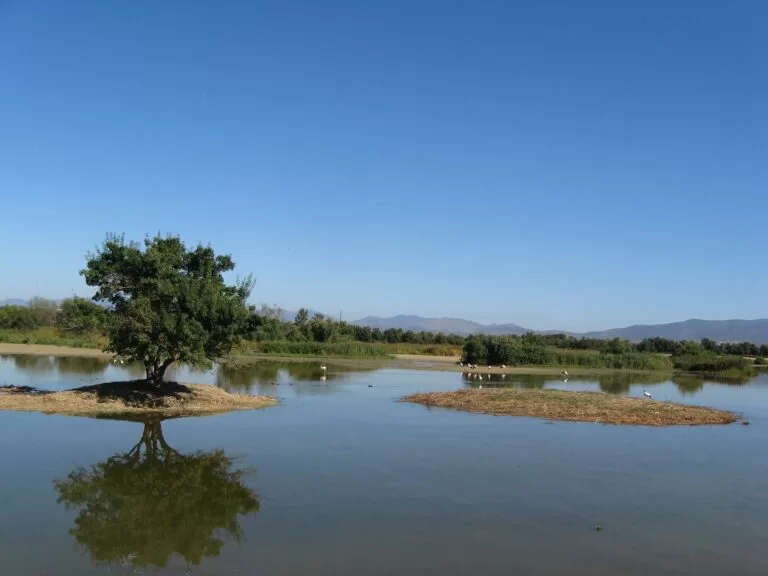 Costa BravaAiguamolls de l’Empordà Natural ParkAiguamolls de l’Empordà was drained as malarial swampland, then deliberately rebuilt — even its rice fields were replanted on purpose for the birds.Read more →
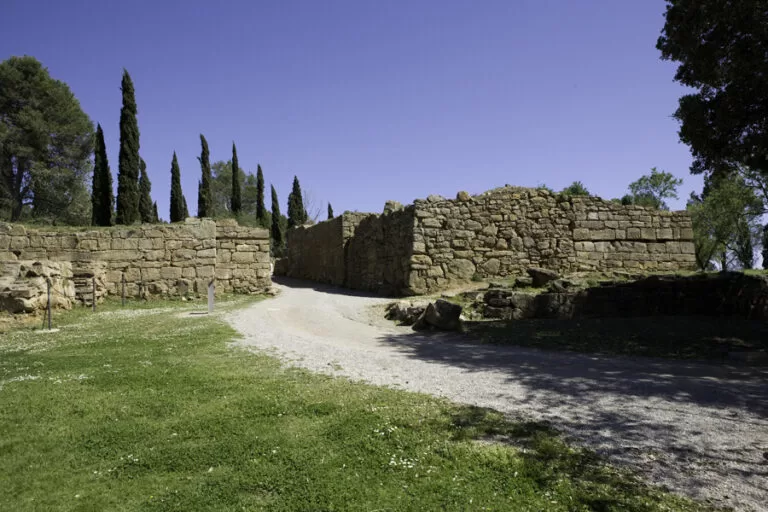 Costa BravaIberian Town of UllastretUllastret was the largest Iberian city in Catalonia — and in 2012, excavators found human skulls nailed up as war trophies in its own streets.Read more →
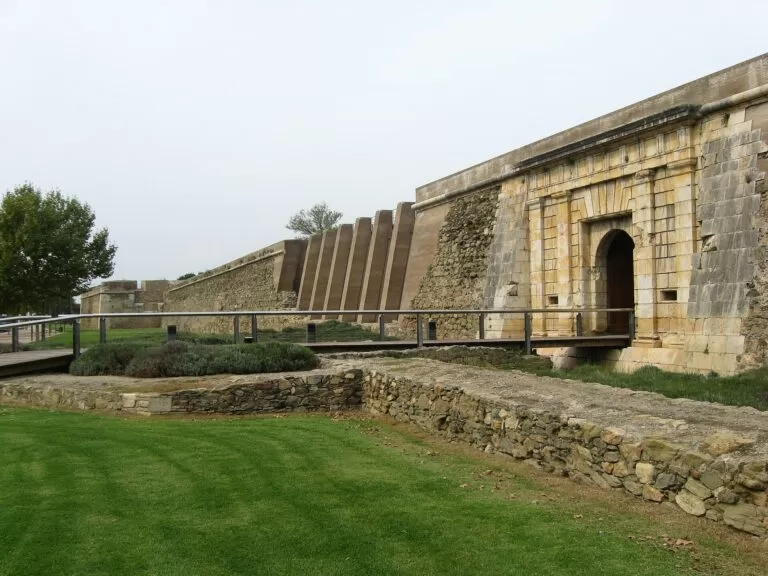 Costa BravaCiutadella de RosesThe Ciutadella de Roses encloses 2,300 years of layered history — Greek, Roman, Visigothic and medieval — inside a 16th-century artillery fortress.Read more →
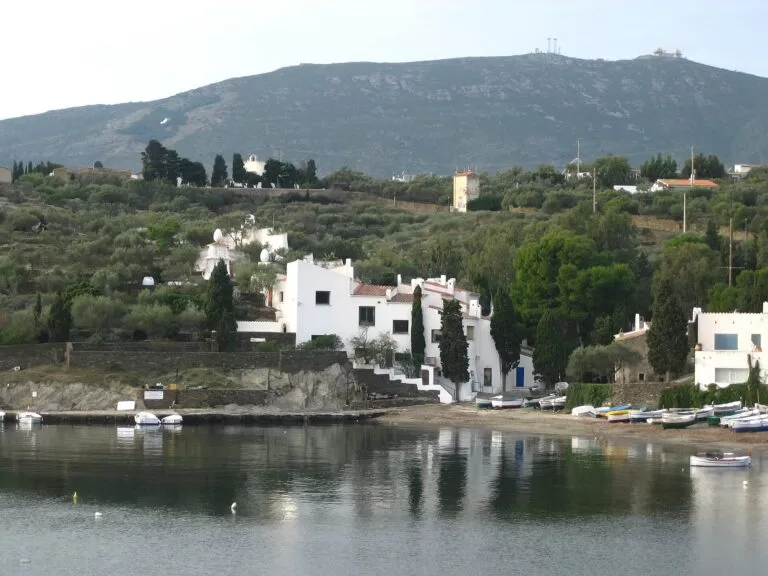 Costa BravaSalvador Dalí House MuseumDalí’s home and studio on Portlligat bay near Cadaqués: visits must be booked in advance, small groups go in every 10 minutes, and the house is not wheelchair accessible.Read more →
How this page is maintained. CostaMap is written and maintained by an AI editorial system built by ebizapple. Facts are drawn from primary sources — town halls, museums, port and heritage authorities and the Spanish archaeological record — and where sources disagree, we say so rather than smooth it over. Photographs marked as ours are taken on location. This page was last reviewed on 3 October 2026. Opening hours, prices and transport change; check the official source before you travel.