
Puig de la Nau Iberian settlement (Benicarló)
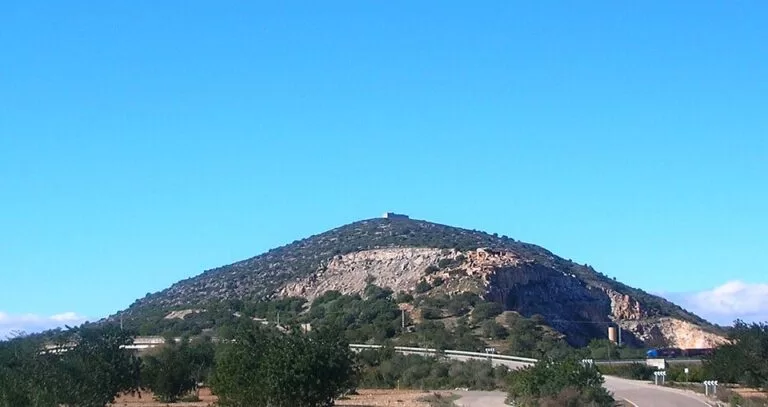
Historic sitePuig de la Nau (also Puig de la Nao) is an Iberian settlement on a hill about 5 km north of Benicarló, in the north of Castellón province, which the Valencian tourist board counts among the most important Iberian sites in the Region of Valencia (Comunitat Valenciana). You visit it on a guided tour booked through MUCBE, the Benicarló city museum, which also displays the finds. It suits travellers interested in archaeology and the Iberians; skip it if you want a monument you can simply walk into at any time.
Quick facts
- Names: Puig de la Nau (Valencian), Puig de la Nao (Spanish spelling used by the tourist board); in Spanish, poblado ibérico del Puig de la Nau.
- Where: Partida El Puig, Benicarló (Castellón), on the eastern slope of the hill, north of Benicarló towards Vinaròs.
- Coordinates: 40.4765, 0.4060 (the summit, 162 m, as mapped on OpenStreetMap; the settlement itself is not mapped as a point).
- Period: Iberian, with its peak in the 6th and 5th centuries BC; the hill has finds from the Bronze Age to early Christian times.
- Best-known find: Attic Greek pottery, above all a kylix (drinking cup) attributed to the Penthesilea Painter.
- Visits: by appointment (concertar visita); guided tours are booked at MUCBE.
- Contact: Benicarló tourist office, tel. 964 47 31 80, benicarlo@touristinfo.net; MUCBE, tel. 964 460 448.
Access and booking
Booking: the tourist board’s page for the site gives its schedule only as “concertar visita”, by appointment, and says you can learn its history by booking a guided tour at the Museo de la Ciudad de Benicarló (Comunitat Valenciana). The Benicarló town page adds that information and tickets for the guided tours are at MUCBE (Comunitat Valenciana). We could not confirm tour days, times or prices, so call ahead.
By car: the hill rises north of Benicarló towards Vinaròs. The CV-138, the Vinaròs to Càlig road, runs along its southern foot, as mapped on OpenStreetMap. Ask when you book where to meet the guide and where to leave the car: we could not confirm a car park at the site.
By train: the nearest stations are Vinaròs, 4.2 km away in a straight line, and Benicarló-Peñíscola, 5.5 km away. From either you need a taxi or a car.
What you see
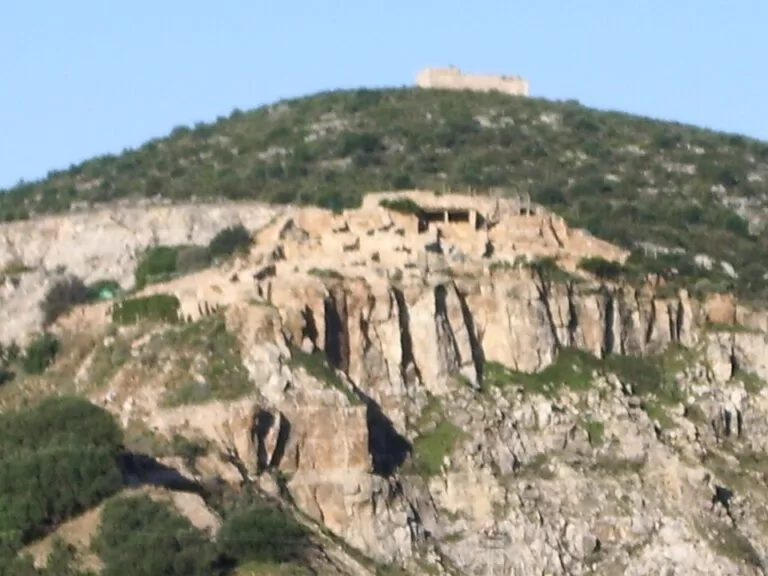
The tourist board dates the settlement to the 5th century BC and describes it as well preserved. Walking the site you follow the layout of the town: its streets and the buildings the Iberians used for living, working and worship. The houses were built with stone found nearby. The most interesting are houses with two floors, linked by stone or wooden stairs, or with the upper floor entered from higher ground on the slope. The town was laid out by first marking the line of the wall and then the main streets, which shows it was planned to make the best use of the space (Comunitat Valenciana).
The excavations turned up Attic ceramics from Greece, among them the site’s best-known piece, a kylix attributed to the Athenian vase painter known as the Penthesilea Painter.
The hill itself is a small ridge running east to west, with two summits. On the eastern one stands the unfinished and abandoned hermitage of the martyr saints Abdó and Senén, known as the Torre dels Màrtirs. The archaeological remains on the eastern slope cover a long span, from the Bronze Age to early Christian times, with their high point in the 6th and 5th centuries BC. Just below the settlement a large area was spoiled by an old quarry (Viquipèdia, background).
The finds at MUCBE
To see what came out of the ground, go to MUCBE, the Museu de la Ciutat de Benicarló, in the renovated former Franciscan convent of Sant Francesc at Carrer La Pau 2. Its main focus is the archaeology of Puig de la Nau, including its necropolis, with pieces from other prehistoric sites of the area. It also runs temporary exhibitions of painting, sculpture and photography over three floors, and a room for the artist Fernando Peiró (Comunitat Valenciana).
The tourist information point inside MUCBE was listed as temporarily closed when we checked, with the town hall number 964 47 00 50 for hours (Comunitat Valenciana). The main tourist office in Plaza de la Constitución opens Monday to Friday 10:00–13:30 and 16:00–19:00 and Saturday 10:00–13:00, checked November 2026 (Comunitat Valenciana).
Accessibility and safety
This is an excavated hillside site on uneven ground with stone walls and slopes; we could not confirm any step-free route. Wear walking shoes, bring water and a hat in summer, and follow the guide. Do not climb on the walls or enter the old quarry area below the settlement. MUCBE is the easier option for visitors who cannot walk on rough ground; ask the museum about access inside the building.
Best time to visit
Spring and autumn are the most comfortable seasons for a hillside site with little shade. In summer, ask for an early tour. Tours depend on the museum’s booking, so plan the date with MUCBE first. In January you can combine the visit with the Benicarló artichoke festival, held in the middle of the season of the town’s protected-origin artichoke (Comunitat Valenciana).
Nearby alternatives
- Benicarló town guide, about 5 km south: MUCBE, the church of Sant Bertomeu, the Casa del Marqués and the beaches.
- Ermita de la Misericòrdia, 4.0 km away: the Vinaròs sanctuary hill, with a second Iberian settlement and the Torre dels Moros.
- Vinaròs town guide, 5.9 km away: the old town, the port and 26 beaches and coves.
- Càlig, inland to the west along the CV-138: a 14th-century church and walks on La Tossa.
- Peñíscola Castle, 13.1 km away: the Templar castle completed in 1307 where Pope Benedict XIII lived.
- Cala de la Foradada, 9.0 km away: a snorkelling cove on the Vinaròs north coast.
Distances are in a straight line from the summit. More in the Vinaròs and Benicarló guide.
FAQ
Where is Puig de la Nau?
On a hill about 5 km north of Benicarló, in Partida El Puig, near the CV-138 road from Vinaròs to Càlig. The summit is at 40.4765, 0.4060.
Can you visit Puig de la Nau without a guide?
The official schedule is by appointment only, and the tourist board directs visitors to book a guided tour at MUCBE, the Benicarló city museum.
How old is the Iberian settlement?
The tourist board dates it to the 5th century BC. Finds on the hill range from the Bronze Age to early Christian times.
Where can I see the finds from Puig de la Nau?
At MUCBE in Benicarló, in the former convent of Sant Francesc at Carrer La Pau 2. Its main collection is the archaeology of the site, including the necropolis.
Is there parking at Puig de la Nau?
We could not confirm a car park at the site. Ask about the meeting point and parking when you book the tour.
Sources and freshness
Checked 7 November 2026 · 8 sources Show
Checked 7 November 2026. Official: Comunitat Valenciana tourist board pages on Puig de la Nao (date, layout, houses, Attic pottery, booking, contact), MUCBE, Benicarló, the Benicarló tourist office and the MUCBE information point, and the Benicarló artichoke. Background on the hill, the hermitage and the quarry: Viquipèdia. Summit, height, roads, the Torre dels Màrtirs and straight-line distances: OpenStreetMap contributors (ODbL). The Benicarló tourism site could not be reached. Not confirmed: tour days, times and prices, the meeting point, parking and the exact position of the excavated area. Photos: Wikimedia Commons, licences as credited.
This place is part of our Costa del Azahar travel guide: map, beaches, camping and the Castellón coast — see every town, beach and cove we have mapped on that coast.
How this page is made. CostaMap is written with an AI editorial system run by Ebizapple. This page is based on the sources listed above. Last updated 9 November 2026. Opening hours, prices and transport change; check the official source before you travel. How we work · Partner links and ads