
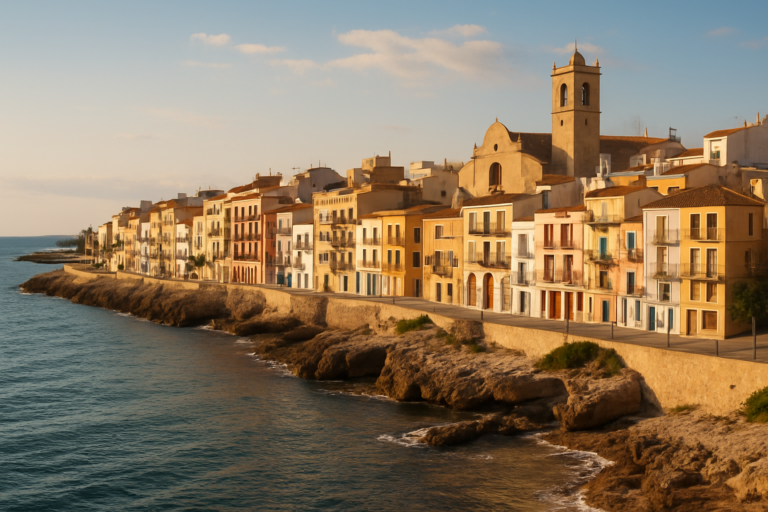
Benicarló is a working coastal town of about 30,300 people in the Baix Maestrat, in the north of Castellón province. It suits visitors who want a Spanish town with real daily life, beaches within walking distance of the centre and a protected local food product, the PDO artichoke. It also works as a quieter base for visiting Peñíscola, 6.6 km away in a straight line. It is part of our Costa Azahar guide.
Quick facts
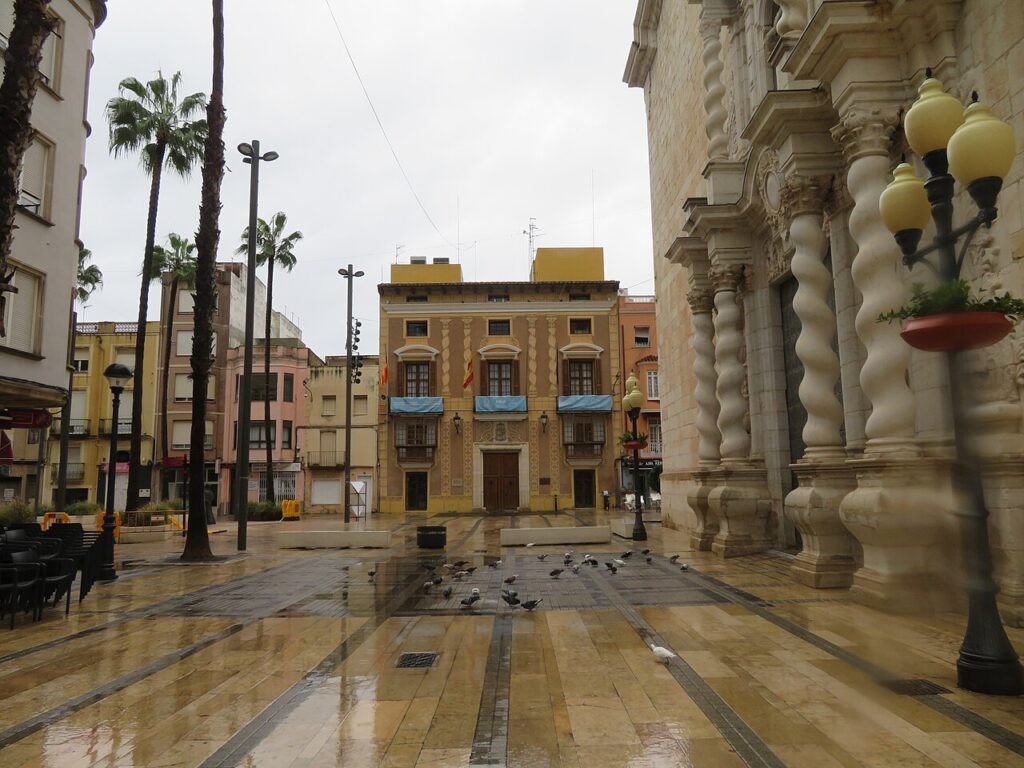
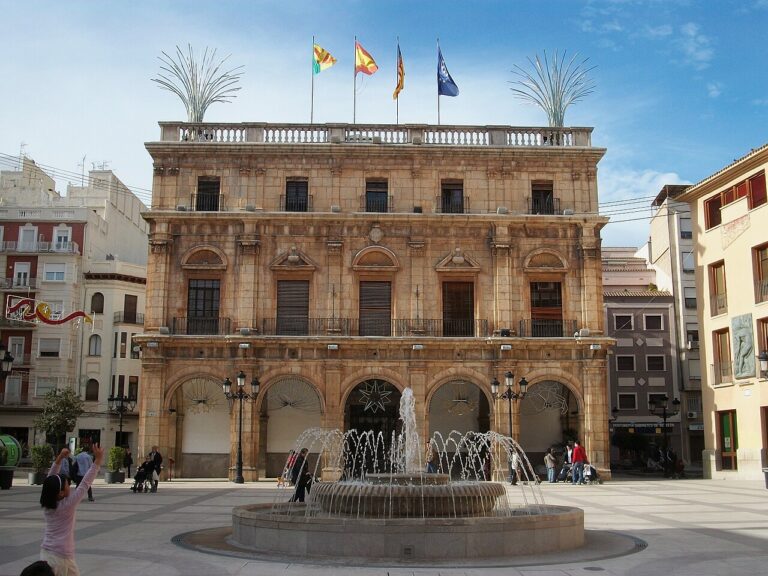
- Where: Benicarló, comarca of Baix Maestrat, province of Castellón. The town hall and tourist information are on Plaça de la Constitució.
- Residents: 30,296 on 1 January 2025 (INE).
- Beach: yes. The urban beaches El Morrongo and El Gurugú lie about 0.8 km and 1.2 km from the centre in a straight line; Mar Xica and El Fondalet are on the northern edge of town.
- Neighbours: Peñíscola about 6.6 km and Vinaròs about 7.4 km away in a straight line.
- Nearest airports: the town lists Castellón, Reus, Valencia (Manises) and Barcelona (El Prat). Castellón airport is about 38 km away in a straight line.
- Trains: Renfe Benicarló-Peñíscola station, with regional, Intercity, Talgo and Alvia services.
- Language: Valencian and Spanish are both used; Spanish works everywhere.
- Market day: Wednesday, with a street market in the town centre.
Where to base yourself
Benicarló is compact, so the useful question is how close you want to be to the sea and to the market. The town tourist board lists hotels, apartments, campsites, hostels and rural lodging.
The town centre
The centre around Plaça de la Constitució has the town hall, the Wednesday market, the municipal market on Carrer Pius XII, the museum and the old streets. It suits visitors who want to walk to dinner and take the train or a bus to the neighbouring towns. The beaches are a short walk or bike ride away.
El Morrongo and the fishing port
El Morrongo beach lies south of the fishing port and close to the centre. The regional tourist board lists lifeguard cover, showers, walkways, parking, restaurants and accessible access, which makes it the easy choice for families with young children. Nearby El Gurugú is a more residential stretch with bars and restaurants on the sand.
The northern edge: Mar Xica and El Fondalet
Mar Xica lies beside the town marina and has no houses close by. It is a stone and gravel beach, not a sand beach, and the regional tourist board describes it as one of the quieter ones. El Fondalet is further from the centre and more natural. You need a car or a bike here, and it is the best choice if you want quiet over services.
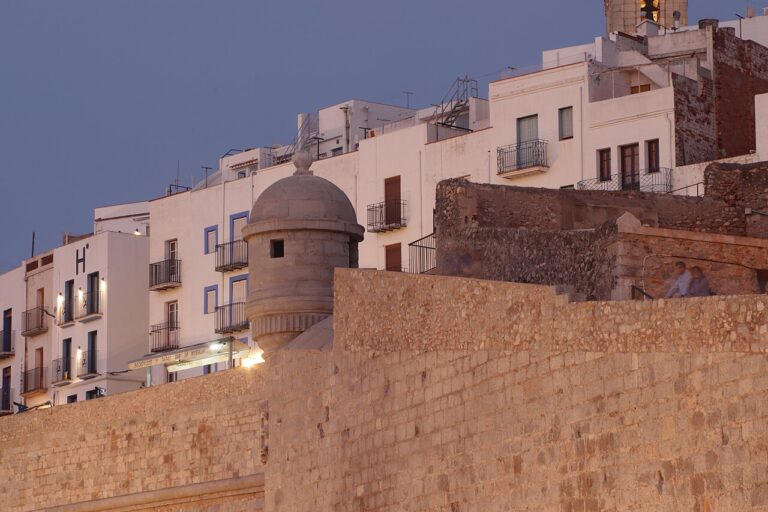
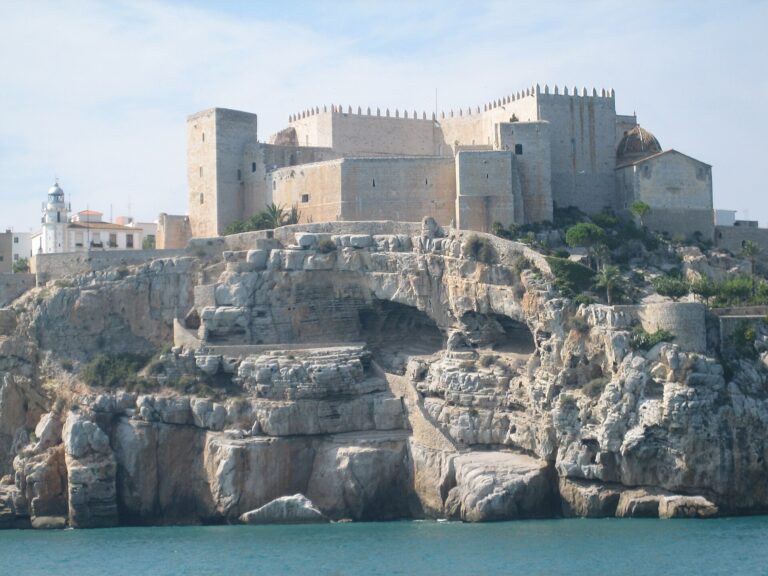
Skip Benicarló as a base if you want a walled castle on the doorstep or a long promenade of cafés. Peñíscola, a short drive south, has the Papa Luna castle; our Peñíscola guide covers it.
Things to do
Benicarló’s sights are modest and easy to combine in a day. The tourist office offers a cultural route through the historic centre that explains the street names and local history.
MUCBE and the Iberian past
The city museum, MUCBE, is housed in a former Franciscan convent on Carrer de la Pau. Its main collection is the archaeology of the Iberian settlement of Puig de la Nau, including its necropolis, plus finds from other prehistoric sites in the county. It also has a room dedicated to the artist Fernando Peiró and runs temporary exhibitions. Guided tours of the Iberian village itself are booked through the museum (Turisme Comunitat Valenciana).
The old centre
The Casa del Marqués de Benicarló is a Baroque mansion with ceramic tile panels showing everyday scenes. The Bosch House has an Art Nouveau facade, and the parish church of San Bartolomé Apóstol dates from the 18th century. The chapel of San Gregorio, from the 17th century, stands on the outskirts. Carrer Major and Carrer de Sant Joan are the main streets to wander.
A short history
The oldest known settlement is an Iberian village from around the 8th century BC. The present town grew from an Arab farmstead, and the oldest written record is the 1236 town charter granted by James I. The town separated from Peñíscola in 1359 and later belonged to the Order of Montesa. In the 19th century, wine made from the local Carlón variety brought wealth, until phylloxera destroyed the vineyards in the early 20th century. Port construction began in 1886 (Turisme Benicarló).
Water sports
The regional tourist board lists water-sports activities in Benicarló, and the town has a marina with charter and nautical companies. Check with the operators for what is running when you visit.
Beaches and places nearby
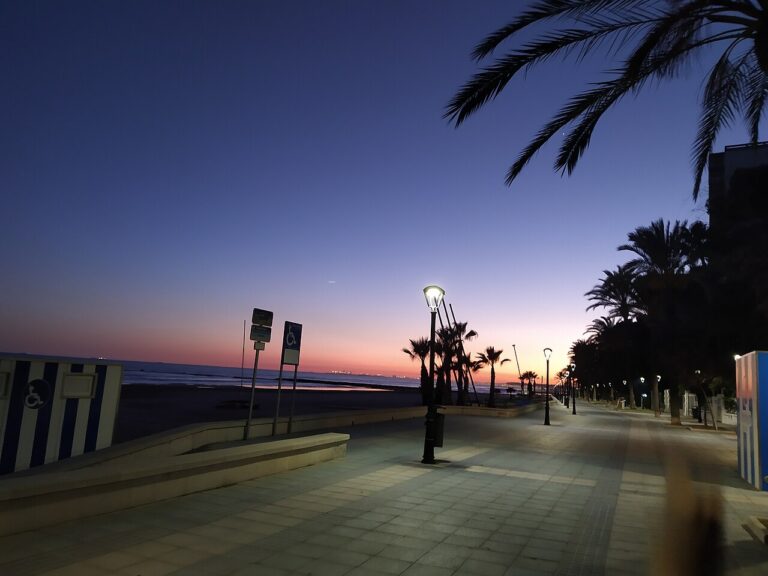
The beaches differ more than the brochures suggest. El Morrongo has fine-grained golden sand, according to the regional tourist board. El Gurugú is 900 m long and 15 m wide and is a mix of sand and small pebbles; it is reached by walking along Avenida del Papa Luna. Mar Xica is about 1,000 m long and 20 m wide and is stone and gravel with no sand.
Peñíscola is the obvious half-day trip: its castle and old town are about 6.6 km away in a straight line, and Peñíscola’s own tourist office describes Playa Norte, running from the castle towards Benicarló, as 5.5 km of fine sand. Vinaròs lies about 7.4 km in the other direction, and the town tourist board lists a Vinaròs–Peñíscola bus service.
Other town guides nearby: La Ràpita (about 27 km in a straight line).
On CostaMap near Benicarló: Peñíscola Castle (6.6 km) · Serra d’Irta (12 km).
Food and drink
The Benicarló artichoke
Benicarló is the home of an artichoke with a protected designation of origin. The PDO was approved on 18 September 1998 and recognised by the European Union on 12 November 2003. The growing area covers Benicarló, Càlig, Peñíscola and Vinaròs, and the regulatory council lists 300 registered hectares. The artichoke is recognised by its flat, compact shape and a small dimple, and only the Extra and First categories carry the PDO label. The season runs from October to June (Alcachofa de Benicarló regulatory council).
The town celebrates the artichoke every January with a festival of regional tourist interest; the festival has run for more than 30 editions. It includes a competition for artichoke tapas in local bars, a market of dishes and a public roast in which up to 3,000 kg of artichokes are cooked over wood fires (Turisme Benicarló). If you visit between October and June, ordering artichoke when you see it on a menu is the easiest way to taste the PDO product.
Seafood and sweets
Local fishing boats land fish and seafood at the port, and the municipal market says boats bring fish directly to its stalls each afternoon. The town tourist board names traditional fish dishes such as allipebre (eel, sea bass and mullet with garlic, almonds, parsley and red pepper), suquets, fideuà and rice dishes. The Fiesta del Pulpo a Caduf y el Pescado de Lonja takes place in September and October, with tapas days and tasting menus (see the current programme on the tourist site). Local bakeries make savoury cocs and pastissets filled with artichoke, tuna or spinach, plus sweet carquiñols and rollitos de anís.
Markets
The municipal market stands between Carrer Pius XII and the market square. It has a 1,431 m² sales hall and 36 stalls, with fish, meat, bread, sweets and fruit and vegetables. On Wednesdays the street market fills the centre: the town lists up to 95 stalls for clothing, shoes, bags and accessories on Plaça de la Constitució, and a food market with fruit, vegetables and cured meats around the Mercado Central (Ajuntament de Benicarló). It is closed on some local holidays, so check before planning around it.
The local wine is Carlón, and the tourist board presents a “renaixença” (revival) of it. We have not named restaurants, because we could not check them against a current official list.
Where to stay
The town tourist board lists hostels, apartments, campsites, hotels, guesthouses and rural lodging, and the regional tourist board names the El Morrongo hotels and apartments close to the beach. We did not find an official price source, so we give no price levels; prices vary with the season. For a walkable stay, choose the centre or the streets near El Morrongo; for quiet, choose near Mar Xica and expect to drive.
Getting there and around
By train, the Renfe station Benicarló-Peñíscola is on Plaça de l’Estació, with regional, Intercity, Talgo and Alvia trains; the AVE from Madrid stops at Castellón and València depending on the journey. Check the timetable and fares on Renfe before travelling, as services change.
By road, the AP-7 motorway exit is number 43 (Peñíscola–Benicarló), and the N-340 runs through the area. From Sant Mateu, Cervera del Maestrat and Càlig, use the CV-135. By bus, Autos Mediterráneo runs a Castellón–Vinaròs line and a Benicarló–Albocàsser line, HIFE coaches serve Valencia, Barcelona and Tarragona, and Avanza runs to Madrid. There is a bus link between Castellón airport and Benicarló, Peñíscola and Vinaròs; check the operator timetable. All of this comes from the town tourist board’s travel page.
In town you can walk or cycle between the centre and the beaches. The town has a separate page for parking zones, so look at it before a market day or festival week.
Best time to visit
The best reason to time a trip is food. The artichoke season runs from October to June, and the artichoke festival is held every January. The octopus and fish festival is in September and October. For the beaches, summer is when the beach bars at Mar Xica are open, and the regional tourist board describes Mar Xica as less busy than other beaches in town. We have no climate figures from an official source to quote here, so check a local forecast before you go.
FAQ
Is Benicarló worth visiting?
Yes, if you want a real town with beaches, a good market and a strong food identity. It is not a resort. If you want a castle and an old town on a rock, add a trip to Peñíscola, about 6.6 km away in a straight line.
Does Benicarló have a beach?
Yes. El Morrongo and El Gurugú are urban beaches close to the centre, while Mar Xica and El Fondalet are on the northern edge of town. Mar Xica is stone and gravel, not sand.
What is Benicarló famous for?
Its artichoke, which has a protected designation of origin. The season runs from October to June and the town holds an artichoke festival every January.
How do I get to Benicarló by train?
Renfe stops at Benicarló-Peñíscola station with regional, Intercity, Talgo and Alvia trains. The station name includes Peñíscola, but the station is in Benicarló.
When is the market in Benicarló?
The street market is held on Wednesdays, and the municipal market has stalls during the week. See the town hall page for holiday closures.
Sources and freshness
Last checked: October 2026. Sources: INE, municipal population 1 January 2025; Turisme Comunitat Valenciana, Benicarló; Turisme Comunitat Valenciana, MUCBE; Gurugú beach; Mar Xica beach; Morrongo beach; Turisme Benicarló, how to get there; Turisme Benicarló, history; Turisme Benicarló, Fiesta de la Alcachofa; Turisme Benicarló, municipal market; Alcachofa de Benicarló, history; Alcachofa de Benicarló, qualities; Ajuntament de Benicarló, markets; Peñíscola tourist office, beaches.
Main photo: Juan Emilio Prades Bel, CC BY 4.0, via Wikimedia Commons.
Nearby on the Costa del Azahar
Benicarló on the map
Places worth knowing near Benicarló
How this page is maintained. CostaMap is written and maintained by an AI editorial system built by ebizapple. Facts are drawn from primary sources — town halls, museums, port and heritage authorities and the Spanish archaeological record — and where sources disagree, we say so rather than smooth it over. Photographs marked as ours are taken on location. This page was last reviewed on 28 October 2026. Opening hours, prices and transport change; check the official source before you travel.