
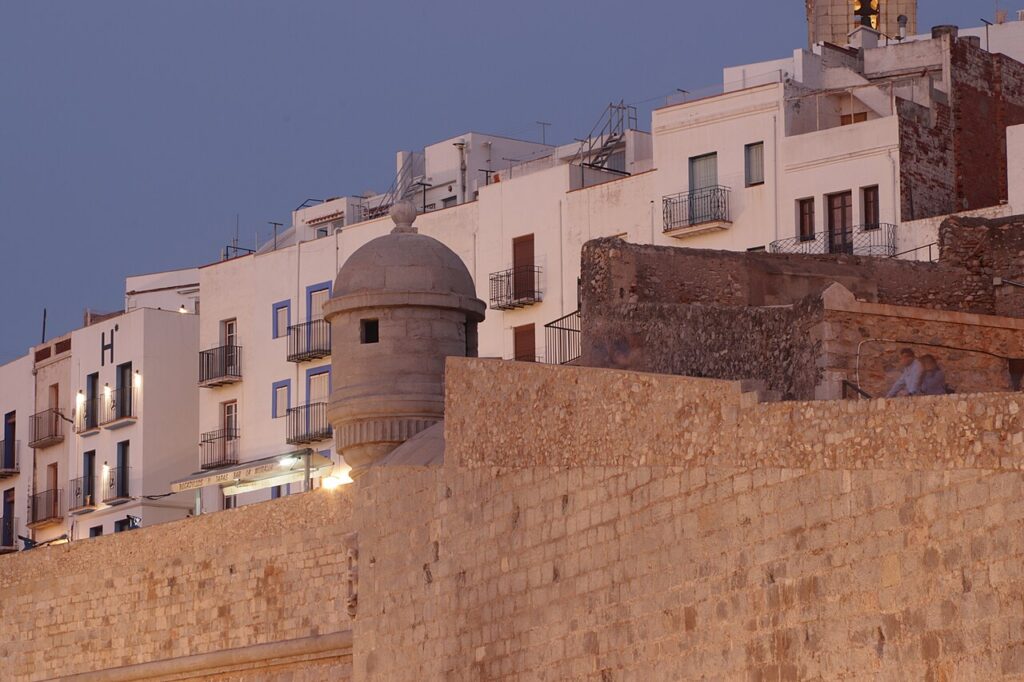
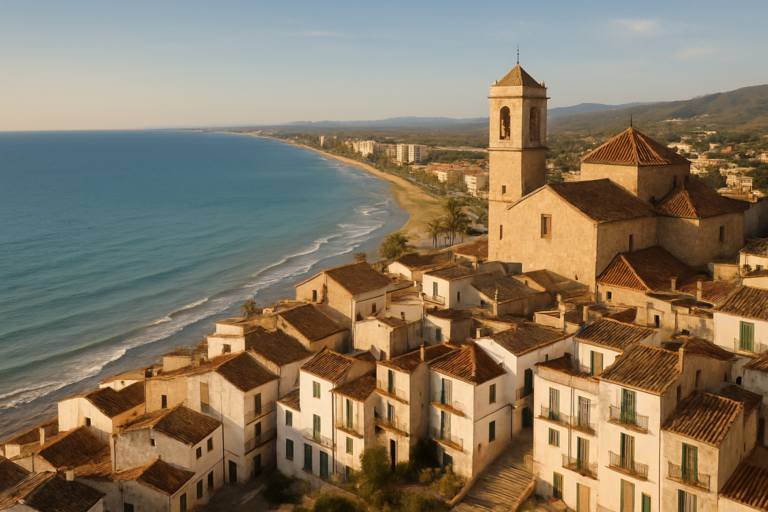
Peñíscola is a small coastal town of about 8,800 residents in the north of Castellón province, built around a castle on a rocky peninsula. It suits visitors who want an old town and a long town beach in one place, and who are happy to walk uphill to see the sights. Stay near the sea if beaches matter most, or on the rock if you want the castle at your door. It is part of our Costa Azahar guide.
Quick facts
- Where: Peñíscola (Peníscola in Valencian), comarca of Baix Maestrat, province of Castellón. The municipality covers about 79 km² (Peñíscola tourist office).
- Residents: 8,774 on 1 January 2025 (INE).
- Beach: yes. Playa Norte has 5.5 km of fine sand from the foot of the castle towards Benicarló; South Beach by the fishing port is 650 m long (Peñíscola tourist office).
- Nearest airport: Castellón, about 33 km away in a straight line. The Benicarló tourist board also lists Reus, Valencia (Manises) and Barcelona (El Prat).
- Train: the Renfe station is called Benicarló-Peñíscola and stands in Benicarló, about 7.7 km from Peñíscola town hall in a straight line.
- Climate: the tourist office gives an average annual temperature of 18 °C and about 270 clear days a year.
- Language: Spanish and Valencian; the tourist office site also comes in English and French.
- Market day: we found no official market day for Peñíscola, so ask at the tourist office.
Where to base yourself
Peñíscola is compact, so the choice is mainly between the rock and the beach. The tourist office lists hotels, aparthotels, residential hotels, hostels, pensions, holiday apartments and campsites, but we found no official price source and give no price levels.
The old town on the rock
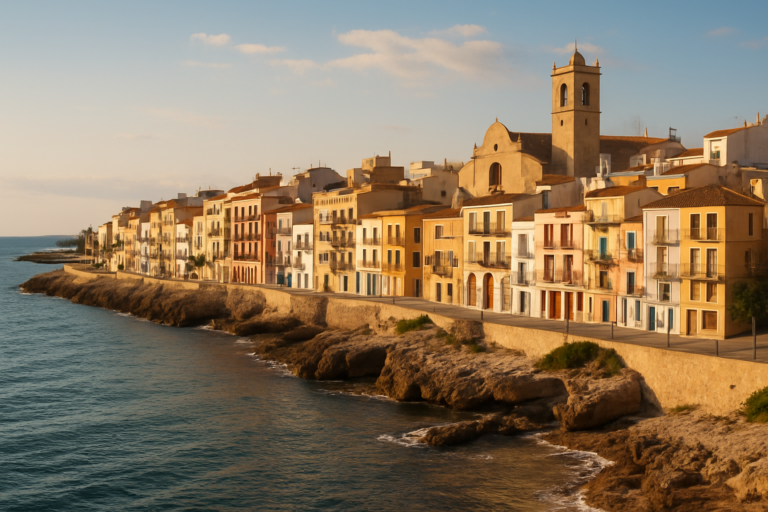
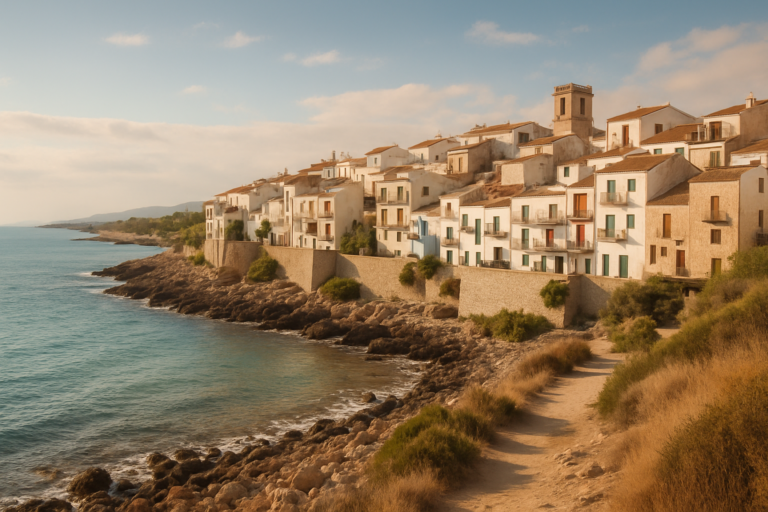
The regional tourist board describes steep, narrow streets and whitewashed houses with colourful shutters. Staying here puts the castle, the walls and the sea views at your door, and it suits couples and walkers. It is not the easy option with luggage, small children or a pushchair, because you are climbing all the time.
Playa Norte and the seafront
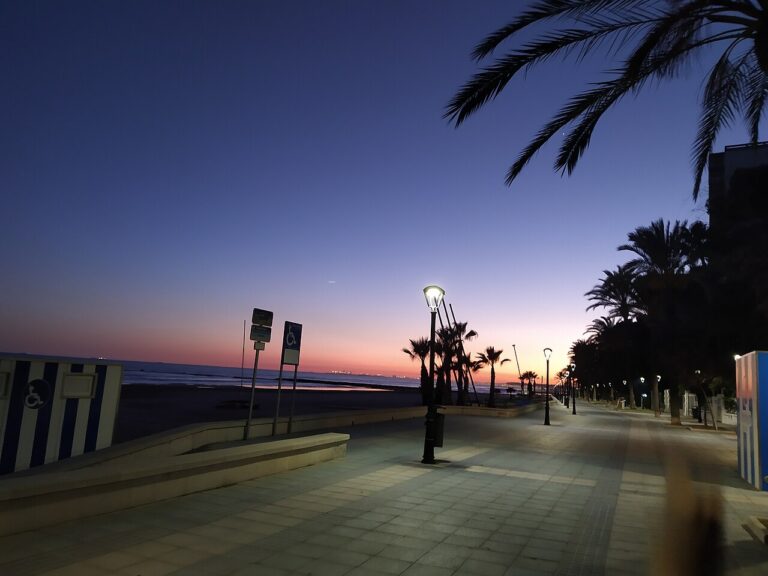
Playa Norte starts at the foot of the castle and runs along Avenida Papa Luna for 5.5 km, according to the tourist office. The seafront promenade, the tourist office on Paseo Marítimo and several children’s playgrounds are along this stretch. It is the practical base for a beach holiday, for families and for anyone who wants flat ground; the sand is a short walk from almost any hotel door, and the old town is a walk away.
The port and South Beach
South Beach lies next to the fishing port. It is 650 m long, and the breakwater keeps the water calm; the tourist office lists an accessible access point, showers and a play area. The fish market is also in the port. This end suits visitors who want calmer water and the harbour close by.
Towards the Sierra de Irta
South of town the road leads into the Sierra de Irta natural park, past the Badum tower to the Pebret and Russo beaches. You need a car or a bike to base yourself on this side, and it works best if you want nature and quiet rather than restaurants on your doorstep. If you would rather have a bigger town with a market and a train station, Benicarló is about 6.8 km north in a straight line.
Things to do
Most sights sit inside or just below the walls, so a day on foot covers them. The castle is the headline, but the old town itself, the sea cave and the film locations fill the rest of the time.
The Papa Luna castle
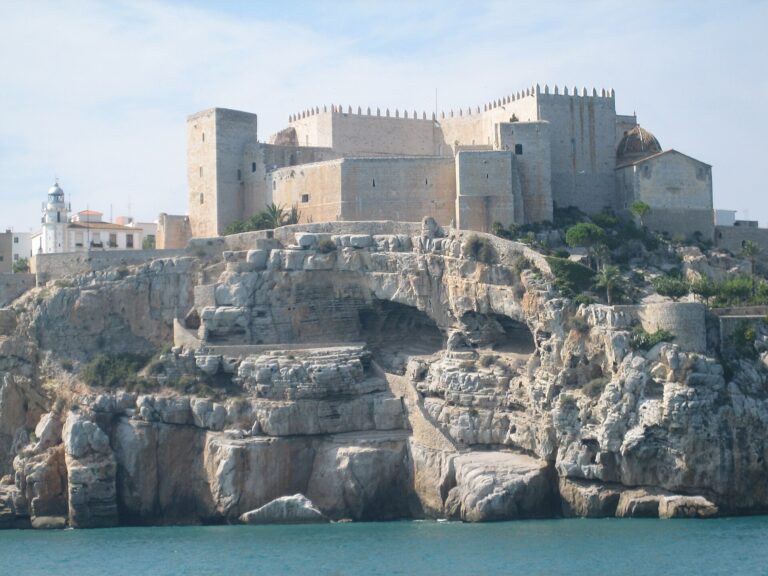
The castle is a Templar fortress that Turisme Comunitat Valenciana says was completed in 1307. Peñíscola’s tourist office says the Templars built it on the remains of an older Arab building at the beginning of the 14th century. It is known as the Castillo del Papa Luna because Benedict XIII, Pedro de Luna, was excommunicated and exiled to the fortress, where he lived; Peñíscola tourist office says the castle served as a papal seat alongside Avignon and Rome. Inside you can see the hallway, stables, gatehouse, dungeons and cistern, then the papal rooms on the next level (Turisme Comunitat Valenciana). The castle has been a National Historic-Artistic Monument since 1931. We did not read current opening hours or ticket prices; check the castle’s official page before you go.
Walls, gates and the old town
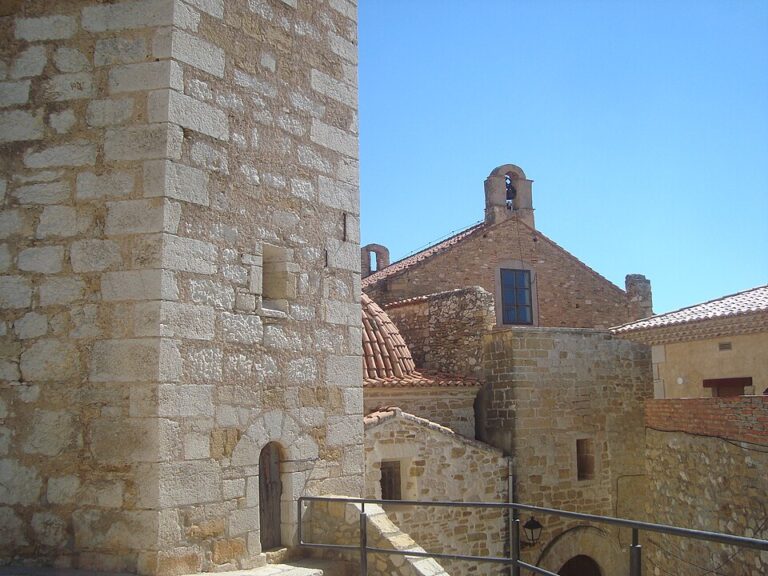
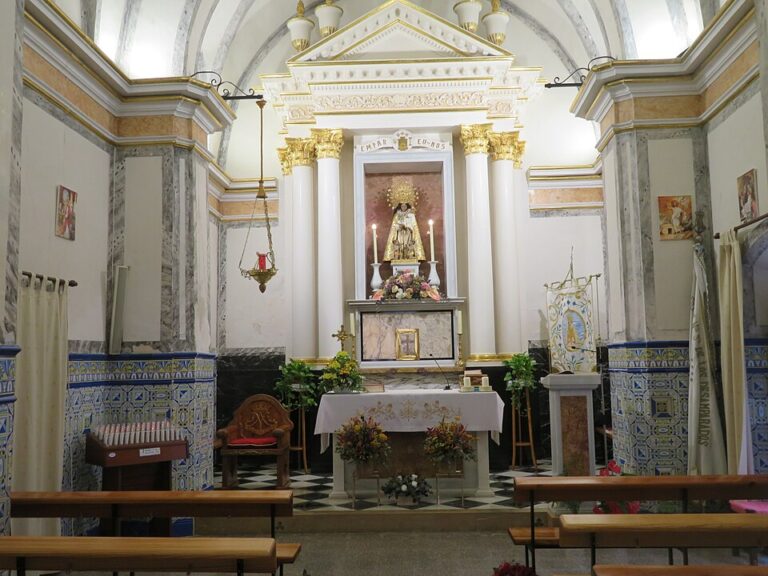
The Renaissance walls were designed by Vespasiano Gonzaga, with Bautista Antonelli directing the works for Philip II, who visited the town in 1563. Portal Fosc was the only land access to the fortress until the 18th century. The town hall building dates from the 16th century, and the Calvario bastion’s vaults housed the town’s schools from 1912 to 1971, with the cannon openings serving as classroom windows (Peñíscola tourist office). The parish church of Santa María has a Romanesque door and origins in the 13th century. The church of the Virgen de la Ermitana is Valencian Baroque from the early 18th century.
El Bufador, the shell house and the lighthouse
El Bufador is a natural tunnel through the rock that connects with the sea; on stormy days the water rises with a loud roar. The Casa de las Conchas has a façade covered in shells, which a couple of neighbours began to add in the 1950s. The present lighthouse dates from 1892, and its light reaches 35 miles (65 km), according to the tourist office. A bronze statue of Pope Luna by the sculptor Sergio Blanco was inaugurated in 2007.
Peñíscola on screen
The tourist office dates the town’s film history to 1913 and the silent film Ana Cadova, and counts more than 22 titles shot here. El Cid, with Charlton Heston and Sophia Loren, made the town known abroad, Luis García Berlanga filmed Calabuch and Paris-Tombouctou here, and the sixth season of HBO’s Game of Thrones used the town as a setting.
Beaches and places nearby
Playa Norte is the best-known beach and the one that most visitors will use. The Peñíscola tourist office puts it at 5.5 km of fine sand; Turisme Comunitat Valenciana calls it the best-known and most visited beach in Peñíscola, with views of the castle. South Beach is smaller and calmer. Next to it, separated by a small breakwater, is Playa de las Viudas, where Professor Hamilton appeared in Berlanga’s film Calabuch.
For a quieter day, follow the road towards the Sierra de Irta natural park. Past the Badum tower you reach the Pebret and Russo beaches, next to a restored building called the Carabineros’ hut. The tourist office says there is a parking area and picnic areas, and lists more small coves along the coast, among them Basseta, Argilaga, Torrenova, Santa Lucía and Puerto Azul.
The Sierra de Irta covers 7,743 protected hectares and 12 km of unbuilt coast, rising to 572 m at the Campanilles peak. It was declared a natural park and marine reserve on 16 July 2002. In the summer months, access by motor vehicle must be booked online through the GVA Parcs Naturals app, so check that before driving in. Our Serra d’Irta page covers the park in detail. Other town guides nearby: Benicarló, about 6.8 km away in a straight line.
On CostaMap near Peñíscola: Peñíscola Castle (0.1 km) · Serra d’Irta (5.5 km).
Food and drink
The tourist office describes a seafaring cuisine built on fish and shellfish, olive oil, garlic and potatoes. The dishes it names as representative are suquet de peix (a fresh fish stew), arrossejat (rice with fish), coca de sardina (a thin pastry base with fresh sardines) and paelleta de molliconet, which it calls a strictly local recipe.
Seafood by season
The fish market is run by the fishermen’s guild and sells the catch through daily auctions, which the tourist office says keeps local restaurants supplied. The Peñíscola prawn is mainly a summer product. Galeras, a local crustacean, are grilled or boiled or used in rice dishes, and are most prized in the cold months when they carry roe. The caragol punxent, or cañadilla, is a sea snail the town celebrates in its gastronomic festivals.
We have not named restaurants, because we could not check them against a current official list.
Where to stay
By type, the tourist office lists hotels, aparthotels, residential hotels, hostels, pensions, holiday apartments and campsites. We did not find an official price source, so we give no price levels, and prices vary a lot between summer and the rest of the year. A hotel or apartment on the seafront gives you flat ground and the beach; the old town gives you atmosphere and stairs. Book early if you are going in summer, and think about whether you will have a car, because parking is a practical question in a town built on a rock. We could not read an official parking page, so we give no lot names or tariffs.
Getting there and around
By train, the nearest Renfe station is Benicarló-Peñíscola on Plaça de l’Estació in Benicarló, served by regional, Intercity, Talgo and Alvia trains according to the Benicarló tourist board. It is about 7.7 km from Peñíscola town hall in a straight line, so plan a bus or taxi for the last stretch. We did not read a Peñíscola timetable, so check Renfe and the bus operators before you travel.
By road, the AP-7 motorway exit is number 43 (Peñíscola-Benicarló), and the N-340 runs through the area. Long-distance coaches stop in Benicarló, run by HIFE and Avanza, and Autos Mediterráneo runs a Castellón–Vinaròs line. The Benicarló tourist board also lists a bus link between Castellón airport and Benicarló, Peñíscola and Vinaròs; check the current timetable. Castellón airport lies about 33 km from Peñíscola in a straight line, and the board lists Reus, Valencia and Barcelona as other nearby airports.
In town, the sights and the seafront are close together, and you can walk between the castle and Playa Norte. Towards the Sierra de Irta you will want a car or a bike.
Best time to visit
The tourist office gives an average annual temperature of 18 °C, about 270 clear days a year and about 140 days above 25 °C, which makes the shoulder seasons good for walking up to the castle. Summer is the time for the beaches and for the Peñíscola prawn, while the cold months are when the galera is at its best. The patron saint’s festivities, in honour of the Virgen de la Ermitana, are held in the first days of September and were declared of national tourist interest in 1997; the tourist office describes traditional dances at the church and Plaza de Armas. Check the current year’s programme before planning around them.
FAQ
Is Peñíscola worth visiting?
Yes, if you want a castle, an old town and a long town beach together. It is a small place, so one or two days cover the sights, and a longer stay works best if you also use the beaches and the Sierra de Irta.
Does Peñíscola have a beach?
Yes. Playa Norte has 5.5 km of fine sand from the foot of the castle, and South Beach by the port is 650 m long with calm water behind a breakwater. Quieter beaches such as Pebret and Russo are on the road towards the Sierra de Irta.
Who lived in the Peñíscola castle?
Pope Benedict XIII, known as Papa Luna or Pedro de Luna, lived here from the second decade of the 15th century, and the castle served as a papal seat alongside Avignon and Rome, according to the tourist office.
How do I get to Peñíscola by train?
Take a train to Benicarló-Peñíscola station, which is in Benicarló about 7.7 km away in a straight line, then continue by bus or taxi. The station name includes Peñíscola, but it is not in the town.
Sources and freshness
Last checked: October 2026. Sources: INE, municipal population 1 January 2025; Peñíscola tourist office, general information; Peñíscola tourist office, beaches; Peñíscola tourist office, gastronomy; Peñíscola tourist office, film tourism; Peñíscola tourist office, Sierra de Irta; Peñíscola tourist office, accommodation; Turisme Comunitat Valenciana, Peñíscola; Turisme Comunitat Valenciana, castle; Turisme Comunitat Valenciana, Nord Beach; Turisme Benicarló, how to get there.
Main photo: Jiří Sedláček, CC BY-SA 4.0, via Wikimedia Commons.
Nearby on the Costa del Azahar
Peñíscola on the map
Places worth knowing near Peñíscola
How this page is maintained. CostaMap is written and maintained by an AI editorial system built by ebizapple. Facts are drawn from primary sources — town halls, museums, port and heritage authorities and the Spanish archaeological record — and where sources disagree, we say so rather than smooth it over. Photographs marked as ours are taken on location. This page was last reviewed on 26 October 2026. Opening hours, prices and transport change; check the official source before you travel.