
Costa de Barcelona · Barcelona city
Barcelona and its city beaches travel guide: old town, districts and seafront
The Gothic Quarter and El Born, La Rambla and the Raval, Gaudí’s Eixample, Gràcia, Montjuïc and Tibidabo, and ten city beaches from Sant Sebastià to the Fòrum.
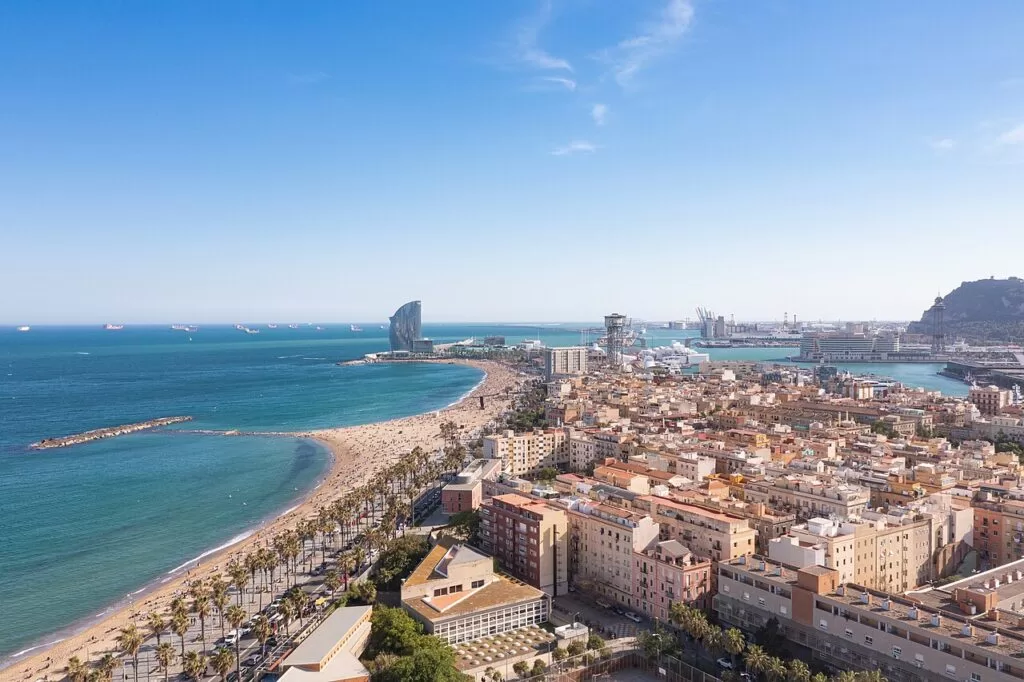
Barceloneta beach and Port Vell from the air · Photo: dronepicr, CC BY 2.0
Part of the Costa de Barcelona guide · Centre: Barcelona and its city beaches
Barcelona is the capital of Catalonia and the centre of the Costa de Barcelona: a city of ten districts between the Llobregat and Besòs rivers, with ten council beaches nearly five kilometres long from Sant Sebastià by the port to the Fòrum. The old town lies between the port and the Eixample grid, with Montjuïc to the south-west and Tibidabo behind. This guide goes district by district, then covers beaches, sights, where to stay, transport and a two-day route.
At a glance
- Where the centre of the Costa de Barcelona, between the Besòs to the north-east and the Llobregat delta to the south-west.
- Districts Ciutat Vella (Gothic Quarter, El Born, El Raval, La Barceloneta), the Eixample, Gràcia, Sants-Montjuïc, Sarrià-Sant Gervasi and Sant Martí with Poblenou and Diagonal Mar.
- Best for Gothic and Modernista architecture, museums, markets, city beaches and views from the hills.
- Getting there El Prat airport is 12 km away; high-speed trains arrive at Sants (Spain.info).
- On CostaMap the Barcelona city guide and 14 places in the city.
Map of Barcelona and its city beaches
The places in Barcelona city that have a CostaMap page. Click a marker to see the place in the panel.
Place type
Area · next level
 Area map
Barcelona and its city beaches
Click a marker to see the place here. Barcelona city: the old town, the Eixample, Montjuïc, Tibidabo and the beaches.
DistrictsDistricts and neighbourhoods
From the old town by the port outwards. Descriptions are from Spain.info (Turespaña) and Barcelona City Council unless another source is named; district history is from Wikipedia.
The Gothic Quarter (Barri Gòtic)
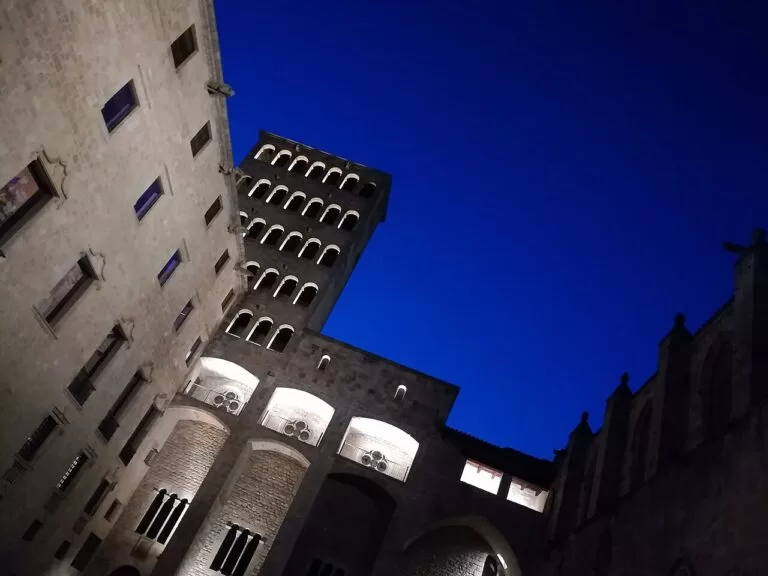
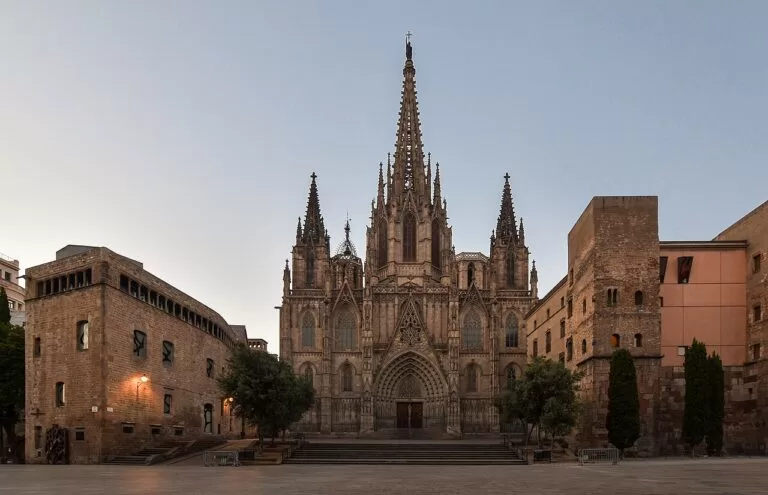
The oldest part of the city, narrow streets and squares that have been its heart since Roman times (Spain.info). Plaça de Sant Jaume holds the City Hall and the Palau de la Generalitat; Plaça del Rei, with the royal palace, the Roman wall and the History Museum, is the main medieval ensemble; the arcaded Plaça Reial fills with diners at dusk. The cathedral, begun under Jaume II, took more than 150 years to build.
El Born and La Ribera
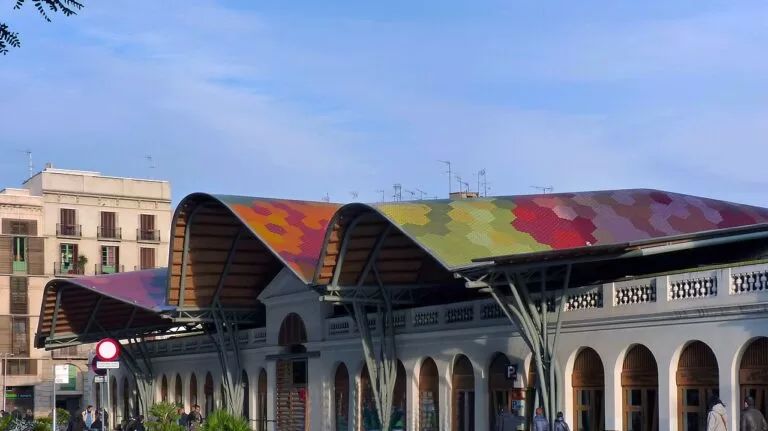
The medieval artisans’ quarter east of Via Laietana, now full of galleries, boutiques and bars. Passeig del Born leads to the iron El Born market and to Santa Maria del Mar, a 14th-century Catalan Gothic church built for the port’s shipbuilders and merchants (Spain.info). The Museu Picasso holds more than 4,000 works. Santa Caterina, the first covered market (1845), has a wavy ceramic roof; the Palau de la Música Catalana (1908) is a World Heritage Site; and the Parc de la Ciutadella, about 18 hectares, replaced an 18th-century fortress.
El Raval and La Rambla
La Rambla runs for a little over a kilometre from Plaça de Catalunya to the 51-metre Columbus monument of 1888, which has a lift to the top (Spain.info). On it are the Liceu opera house of 1847 and La Boqueria market. West of it lies the Raval, named from the Arabic for “suburb”, with about 50,000 people (Wikipedia). Here are Gaudí’s Palau Güell, built on a site of 18 by 12 metres, the MACBA with Keith Haring’s mural, and the Biblioteca de Catalunya in the medieval Hospital de la Santa Creu.
La Barceloneta and Port Vell
La Barceloneta, a triangle of narrow streets between port and sea, was built in the 18th century for families from La Ribera who lost their homes to the Ciutadella fortress (Wikipedia). Its seafront has the four oldest city beaches, including Barceloneta Beach, and restaurants for paella and seafood. Port Vell is the old harbour, with the Moll de la Fusta, the Maremàgnum and the aerial tramway from the Torre Sant Sebastià to Montjuïc.
Poblenou and the Vila Olímpica
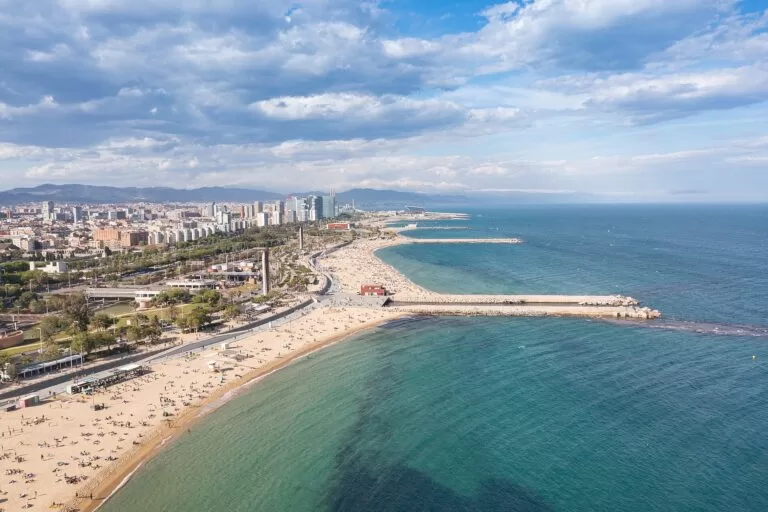
Poblenou was a separate town that became the centre of Catalan industry, the “Catalan Manchester” (Wikipedia). For the 1992 Olympic Games its seafront was rebuilt with the Vila Olímpica, the Port Olímpic and the beaches of Nova Icària and Bogatell. Old factories are now lofts and the offices of the 22@ district, and the Rambla del Poblenou runs from Avinguda Diagonal to the sea. The Llum BCN light festival is held here every February.
Diagonal Mar and the Fòrum
The last stretch before the Besòs, rebuilt from the late 1990s for the 2004 Forum of Cultures, where Avinguda Diagonal reaches the sea beside the Parc de Diagonal Mar by Enric Miralles and Benedetta Tagliabue (Wikipedia). Its beaches are the quietest in the city: Mar Bella with its naturist area, Nova Mar Bella and Llevant, opened in 2006. The Fòrum bathing area has no sand, only steps into the sea (Barcelona City Council). Across the river is Sant Adrià de Besòs.
The Eixample
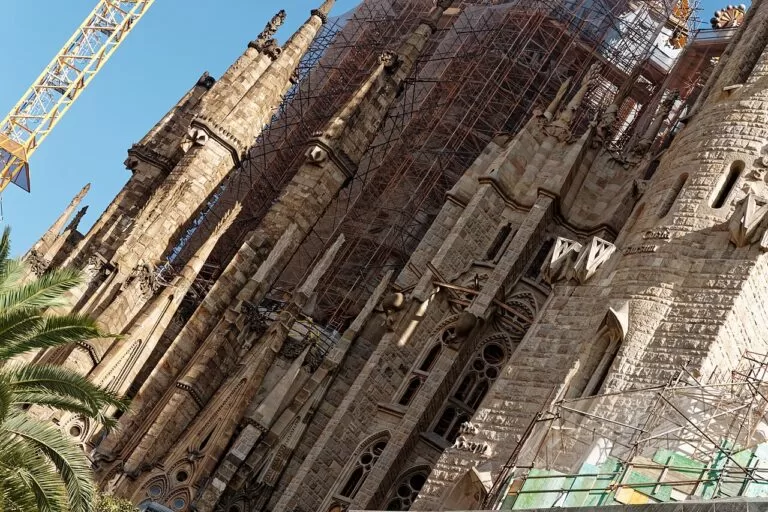
Ildefons Cerdà’s 19th-century grid of straight streets and blocks with cut-off corners (Wikipedia). On Passeig de Gràcia stand Gaudí’s Casa Batlló and Casa Milà, La Pedrera, built from 1906 to 1912, with 4,500 square metres open to visitors (Spain.info). The Sagrada Família, begun in 1882, became the tallest church in the world in 2026 with its 172.5-metre Tower of Jesus Christ. Domènech i Montaner’s Sant Pau, opened as a hospital in 1930, is described by Spain.info as the largest Modernist site in the world.
Gràcia
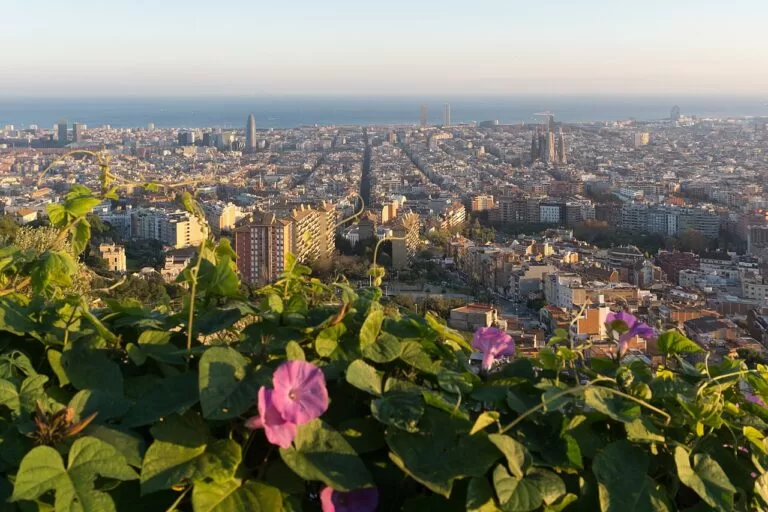
An independent town until Barcelona annexed it in 1897 (Wikipedia). Spain.info says life here still has a real neighbourhood feel, with long-established bars, designer shops and multicultural eateries, and suggests lunch here before Park Güell, Gaudí’s garden city on the Muntanya Pelada where only two houses were built. North-east of Gràcia, the Bunkers del Carmel on the Turó de la Rovira, an old anti-aircraft battery, give a free 360-degree view (MUHBA).
Montjuïc and Poble-sec
The hill above the port, reached from Paral·lel by funicular and cable car. Montjuïc Castle looks over the harbour; admission was €12 when we checked, free on Sundays from 3 pm (Barcelona City Council). The MNAC covers Catalan art from the Romanesque on, the Joan Miró Foundation holds some 11,000 of his works, and the Poble Espanyol of 1929 reproduces 117 buildings from all over Spain. Below the hill, Poble-sec is the city’s theatre district.
Sants
A separate municipality before it joined Barcelona, now part of the Sants-Montjuïc district (Wikipedia). For visitors it means Barcelona-Sants station, where high-speed trains arrive from France, Madrid, Valencia, Málaga, Seville and Zaragoza, with metro lines L3 and L5 below (Spain.info).
Sarrià, Pedralbes and Tibidabo
Sarrià, joined to the city in 1927, keeps a village feel around Carrer Major de Sarrià (Wikipedia). Pedralbes has a Gothic monastery founded in 1327 by Queen Elisenda de Montcada, with a chapel painted by Ferrer Bassa in 1343, and Gaudí’s Güell Pavilions nearby (Spain.info). Above, Tibidabo is the city’s highest hill at 512 metres, in the Collserola park, with the amusement park, the Sacred Heart temple and the Carretera de les Aigües path (Spain.info). In November 2026 access restrictions to Collserola to control African swine fever were still in force (City Council).
Beaches
Ten council beaches and bathing areas run from Sant Sebastià by the port to the Fòrum; lengths are the council’s own. In 2026 lifeguards worked on all of them from 10.30 am to 7.30 pm between 30 May and 13 September; outside the season there is only the 112 emergency number (Barcelona City Council).
Sant Sebastià, Sant Miquel, La Barceloneta and Somorrostro
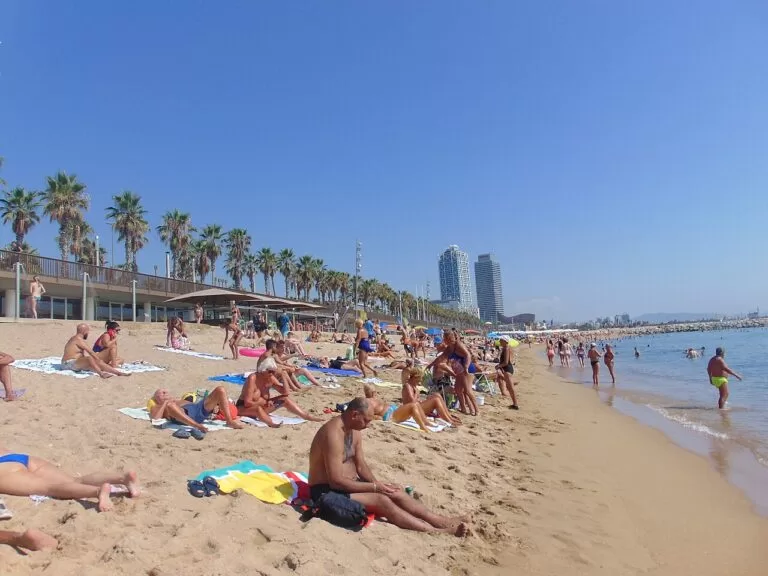
The four oldest beaches, about 2 km together: Sant Sebastià (660 m) with its sailing clubs, Sant Miquel (420 m), La Barceloneta (422 m), a favourite of foreign visitors, and Somorrostro (522 m) with the Beach Centre (Barcelona City Council).
See the Barceloneta Beach guide →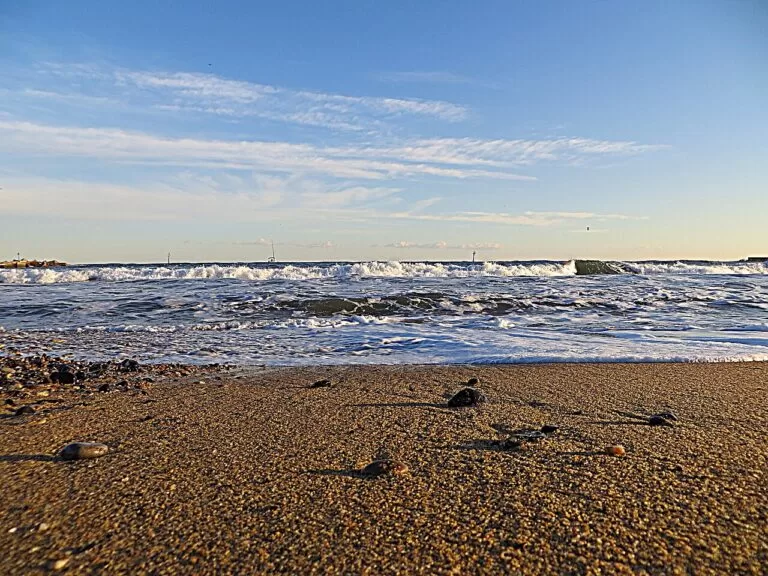
Nova Icària
About 415 m beside the Port Olímpic, one of the quietest city beaches according to the council, with a Blue Flag, volleyball and an assisted bathing point (Barcelona City Council).
See the Port Olímpic guide →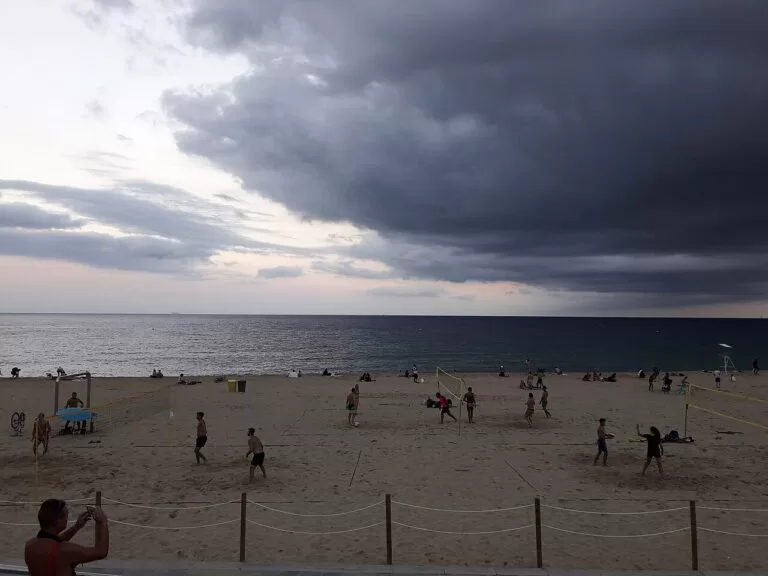
Bogatell
At 702 m the longest city beach, with a Blue Flag, beach football, volleyball and an assisted bathing point (Barcelona City Council).
See the Bogatell Beach guide →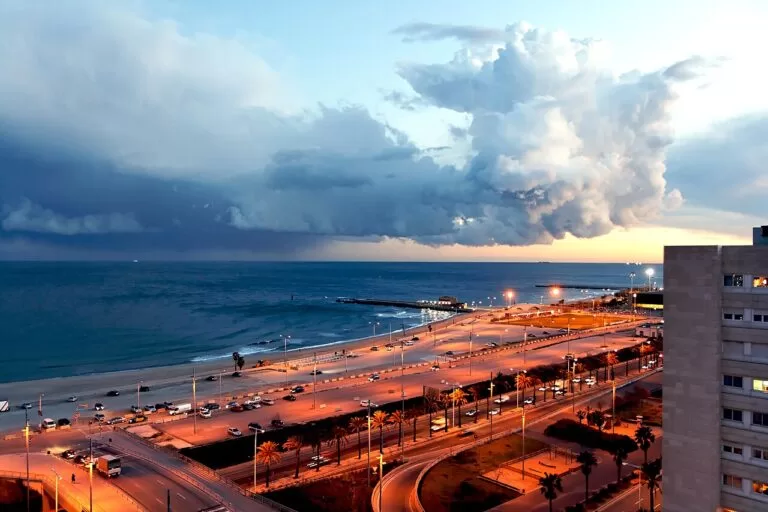
Mar Bella, Nova Mar Bella, Llevant and the Fòrum
Mar Bella (512 m) has the nudist area and a nautical centre; Nova Mar Bella (420 m) is quiet; Llevant (375 m) has a dog area in summer. The Fòrum bathing area has steps instead of sand and sea urchins, so wear water shoes (Barcelona City Council).
The council says the improvement plan for the Fòrum bathing area was completed in 2026, including the naturalisation of Pangea Island as a space for marine life; it lists the area with a Blue Flag and an assisted-bathing point for people with reduced mobility (Barcelona City Council, checked 9 November 2026). North-east of it the beaches continue in Sant Adrià and Badalona.
Things to do
Roman and medieval Barcelona
Start at Plaça del Rei and the Barcelona History Museum, then the cathedral, with its 70-metre neo-Gothic façade, 200 gargoyles and the cloister geese (Barcelona City Council). Walk on to Santa Maria del Mar and the Museu Picasso in El Born, looking out for the bomb scars of Sant Felip Neri on the way (Spain.info).
Gaudí and Modernisme
Seven works by Gaudí share a UNESCO World Heritage listing (Spain.info). The essentials are the Sagrada Família, Casa Batlló, La Pedrera, Park Güell and Palau Güell; add Domènech i Montaner’s Palau de la Música and Sant Pau, both listed in 1997. Book ahead; we could not confirm current prices.
Views from the hills
Montjuïc Castle and the MNAC terrace look over the port. The Bunkers del Carmel are free, a ten-minute walk from buses V17, 24, 92, 114 or 119 (Spain.info). Tibidabo, at 512 m, has the amusement park.
Markets and food
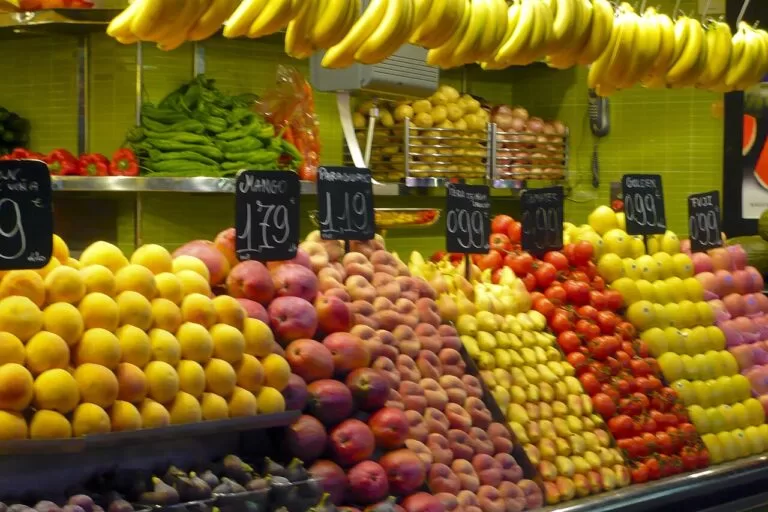
La Boqueria, open Monday to Saturday 8 am to 8.30 pm, is the famous market; Santa Caterina is the other one to see (Barcelona City Council). Spain.info sends you to La Barceloneta for paella and seafood, to El Born and Poble-sec for an evening drink and to the Maremàgnum in Port Vell.
Where to stay by district
Choose by atmosphere; the metro links them all. We name no hotels.
Ciutat Vella
Walking distance to La Rambla, the cathedral, the Picasso museum and the port. Expect narrow streets, night noise and crowds.
First visits and nightlife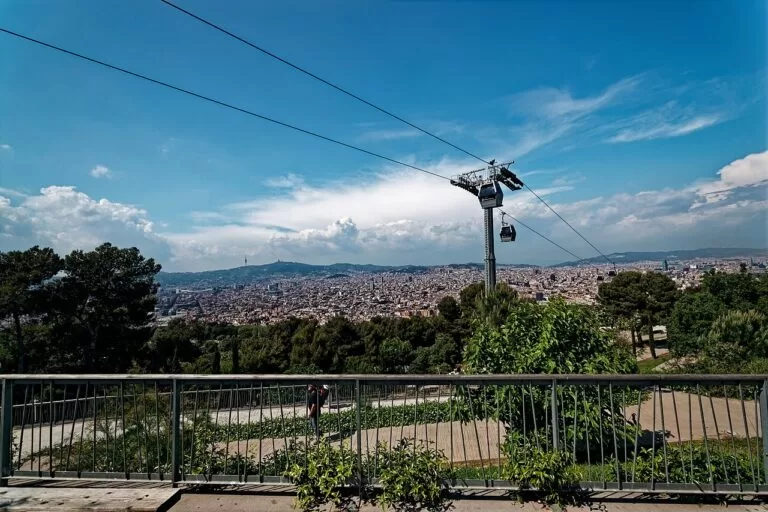
The Eixample
The grid around Passeig de Gràcia, with Casa Batlló, La Pedrera, the main shops and several top restaurants. Wide streets, good metro links.
Architecture and shopping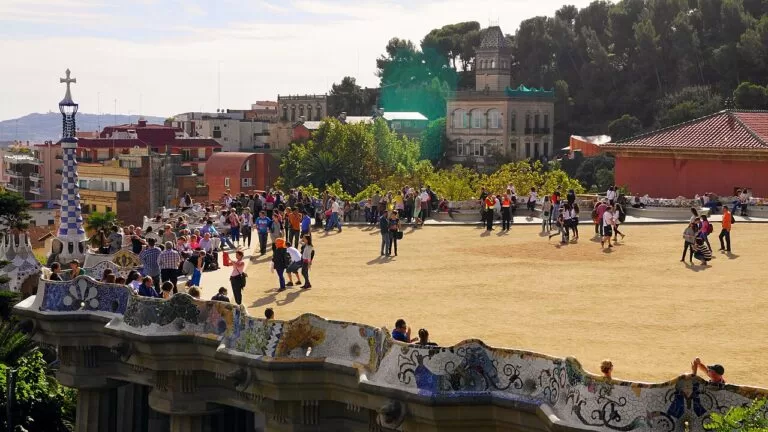
Gràcia
The former town below Park Güell, with local bars and designer shops; the nearest base for the park.
Neighbourhood life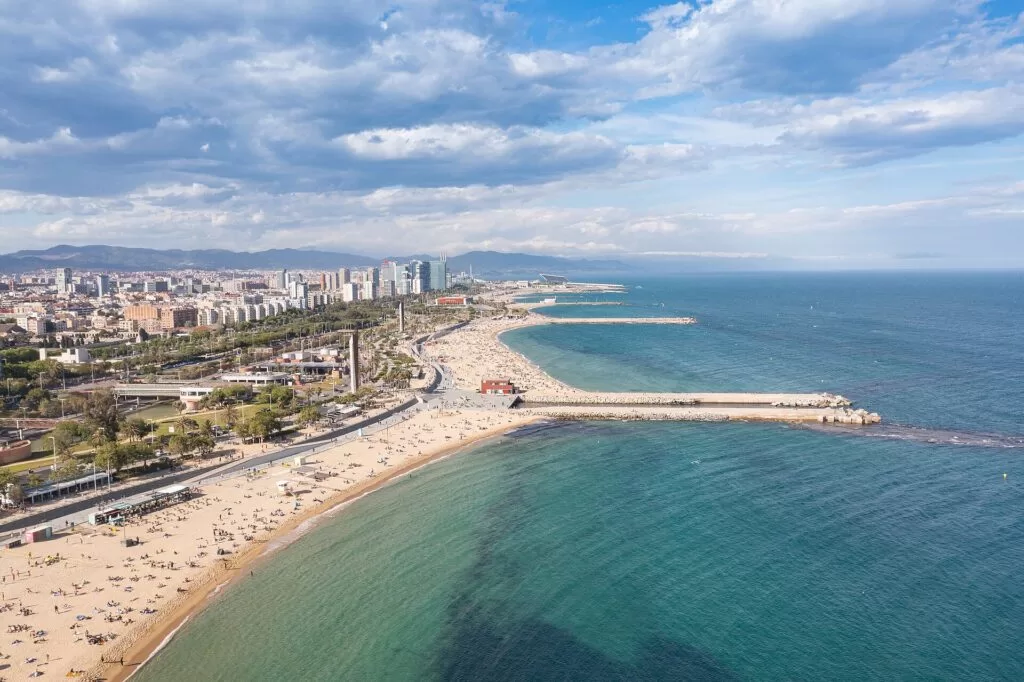
Poblenou and the seafront
Next to the quieter beaches and the Port Olímpic, on metro line L4; further from the old town.
Beaches and familiesGetting there and around
By air
Barcelona-El Prat is 12 km from the city, about 35 minutes or less by Aerobus A1 or A2, the R2 North train, metro L9 Sud or city buses (Spain.info). It lies in the Llobregat delta.
By train and sea
Sants is the high-speed station (metro L3 and L5); França is on L4 and Barcelona Nord bus station by Arc de Triomf (L1). The cruise port is about 5 km from the centre (Spain.info). Coast trains run north along the Maresme and south to the Garraf.
Metro, bus and taxi
The metro runs from 5 am to midnight, to 2 am on Fridays and non-stop on Saturday nights. The Hola Barcelona card covers 2 to 5 days; the Nit Bus runs at night (Spain.info).
By car and bike
Much of the city is a Low Emission Zone with driving and parking limits, also for foreign cars. There are many cycle lanes and the Bicing scheme (Spain.info).
A two-day route
Based on Spain.info’s Barcelona in two days, on foot and by metro.
Day 1
Old town, port, beach and Montjuïc
The Gothic Quarter and the cathedral, then La Rambla past La Boqueria to Port Vell and Barceloneta Beach for lunch. Afternoon on Montjuïc and the Magic Fountain; dinner in El Born.
Day 2
Gaudí, Gràcia and the views
Passeig de Gràcia for Casa Batlló and La Pedrera, then the Sagrada Família. Lunch in Gràcia, afternoon in Park Güell, dusk at the Bunkers del Carmel or, with children, Tibidabo.
FAQ
How many beaches does Barcelona have?
Ten, as listed by the City Council: Sant Sebastià, Sant Miquel, La Barceloneta, Somorrostro, Nova Icària, Bogatell, Mar Bella, Nova Mar Bella, Llevant and the Fòrum bathing area, together nearly 5 km long.
Which is the quietest beach in Barcelona?
The council describes Nova Icària, Bogatell and Nova Mar Bella as among the quietest. Sant Sebastià and Sant Miquel are among the busiest.
Is there a nudist beach in Barcelona?
Yes. Mar Bella beach in the Sant Martí district has a designated nudist area.
When are there lifeguards on Barcelona’s beaches?
From 30 May to 13 September 2026, 10.30 am to 7.30 pm; in the spring and late-September mid season, until 6.30 pm.
Is Montjuïc Castle free?
Entry is free every Sunday from 3 pm and on the first Sunday of the month; otherwise general admission was €12 when we checked in November 2026.
Other areas of the Costa de Barcelona
Costa de Barcelona
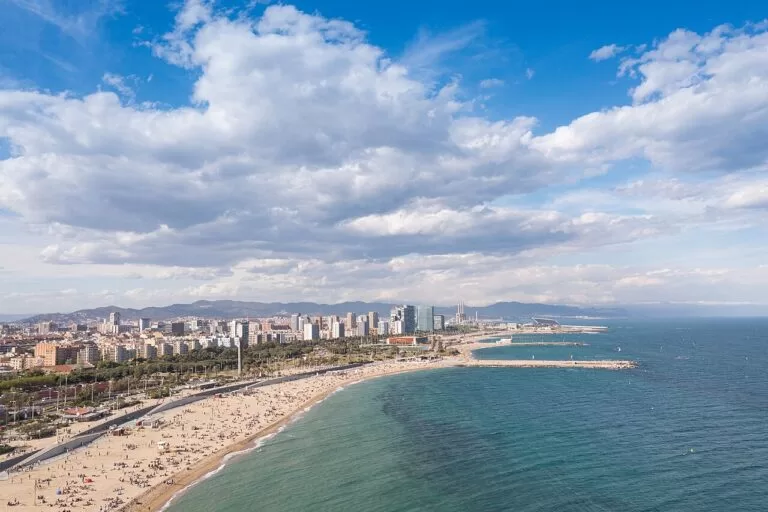
The whole coast of Barcelona province, with the map, the five areas and the inland day trips to Montserrat and Manresa.
Costa de Barcelona guide →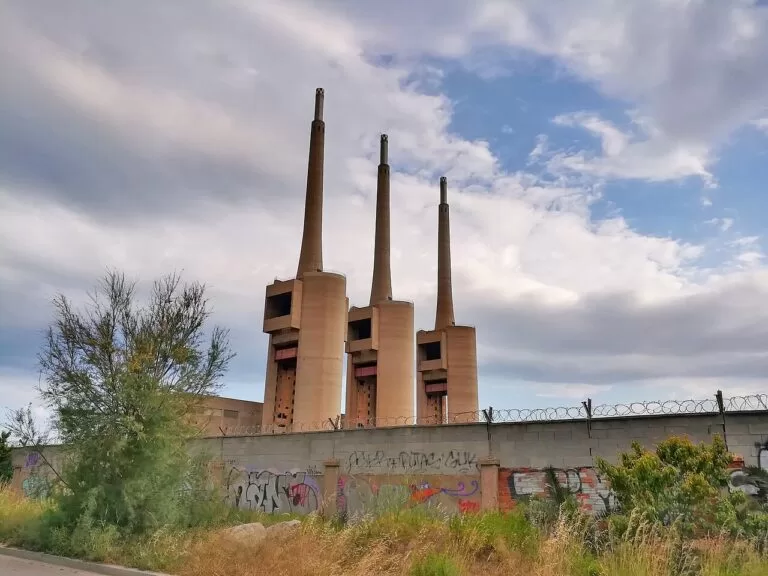
The Besòs: Sant Adrià and Badalona
Where the city ends: the beaches either side of the Besòs mouth under the Three Chimneys of the old power station.
Besòs, Sant Adrià and Badalona guide →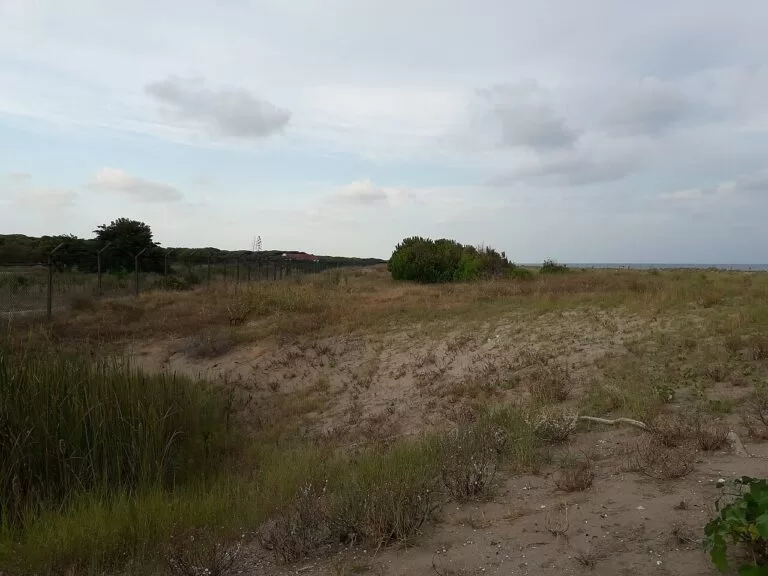
The Llobregat delta and El Prat
The airport, the delta lagoons and the long beaches of El Prat, Viladecans and Gavà south-west of the city.
Llobregat delta and El Prat guide →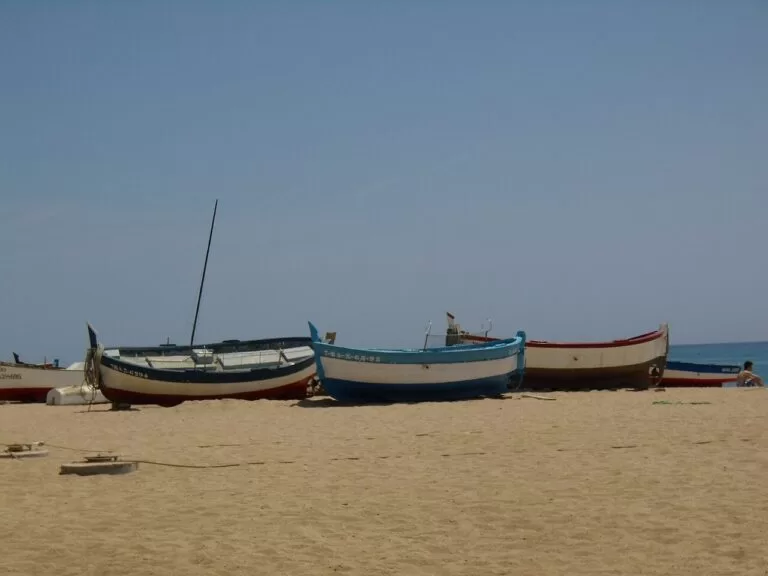
Costa del Maresme
The coast towns north of Badalona along the R1 railway, from El Masnou and Mataró to Malgrat de Mar.
Costa del Maresme guide →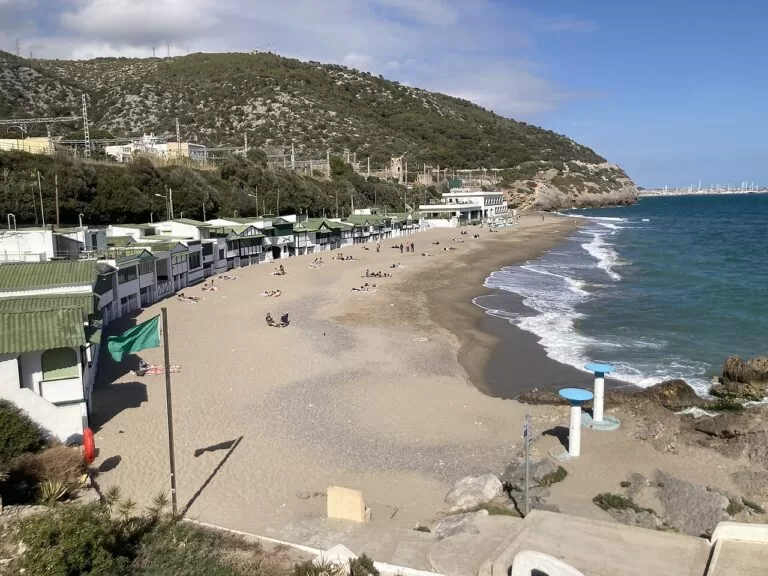
Costa del Garraf
Castelldefels, the Garraf massif, Sitges and Vilanova i la Geltrú south-west of the airport.
Costa del Garraf guide →Sources and freshness
Checked 9 November 2026. Barcelona City Council beach pages for Sant Sebastià, Sant Miquel, La Barceloneta, Somorrostro, Nova Icària, Bogatell, Mar Bella, Nova Mar Bella, Llevant and the Fòrum bathing area, and the 2026 bathing season; the council’s pages on the cathedral, Montjuïc Castle, the Turó de la Rovira, La Boqueria and the Sarrià-Sant Gervasi district. Spain.info (Turespaña): Barcelona, Barcelona in two days, lesser-known places, cool areas, the Gothic Quarter, El Born, Santa Maria del Mar, La Rambla, the Liceu, Palau Güell, the Columbus monument, Parc de la Ciutadella, Santa Caterina, Palau de la Música, La Pedrera, Sagrada Família, Sant Pau, Park Güell, the Miró Foundation, Poble Espanyol, Pedralbes monastery and Tibidabo. Background on the districts: Wikipedia (Ciutat Vella, El Raval, La Barceloneta, Poblenou, Diagonal Mar, Eixample, Gràcia, Sants-Montjuïc, Sarrià-Sant Gervasi). Map data and stations: OpenStreetMap (ODbL). The Barcelona tourist board (barcelonaturisme.com), the provincial site (barcelonaesmoltmes.cat) and the operators’ own websites could not be reached when we checked. Not confirmed: ticket prices and hours for the Gaudí buildings and museums other than Montjuïc Castle, current metro fares, water quality results and how long the Collserola restrictions will last. Sources differ on the century of Montjuïc Castle (17th or 18th). Corrected 9 November 2026: the Fòrum bathing area line now follows the council page (improvement plan completed in 2026, Blue Flag listed) instead of saying the area was closed for works. Photos from Wikimedia Commons: Barceloneta, Nova Icària and the beaches from the air by dronepicr (CC BY 2.0); Barceloneta beach by Nicholas Gemini (CC BY-SA 4.0); Nova Icària by Mister No (CC BY 3.0); Bogatell and Viladecans by pere prlpz (CC BY-SA 3.0); Nova Mar Bella by Gogo69 (CC BY-SA 3.0); Plaça del Rei and the Sant Adrià power station by Enric (CC BY-SA 4.0); Sagrada Família and Montjuïc by Txllxt TxllxT (CC BY-SA 4.0); Bunkers del Carmel by Alexey Komarov (CC BY-SA 4.0); Boqueria fruit stall by Andy Mitchell (CC BY-SA 2.0); Santa Caterina by patano (CC BY-SA 3.0); Park Güell by Mickey Løgitmark (CC BY 3.0); the cathedral by Jose María Ligero Loarte (CC BY-SA 4.0); Mataró beach by maczopikczu (CC BY 3.0); Garraf by Mattsjc (CC BY 4.0).