
Costa de Barcelona · North-east
The Besòs: Sant Adrià and Badalona travel guide: chimneys, river park and beaches
Where Barcelona ends to the north-east: the mouth of the Besòs under the Three Chimneys, the river park inland, and Badalona’s Roman old town, pier and town beaches.
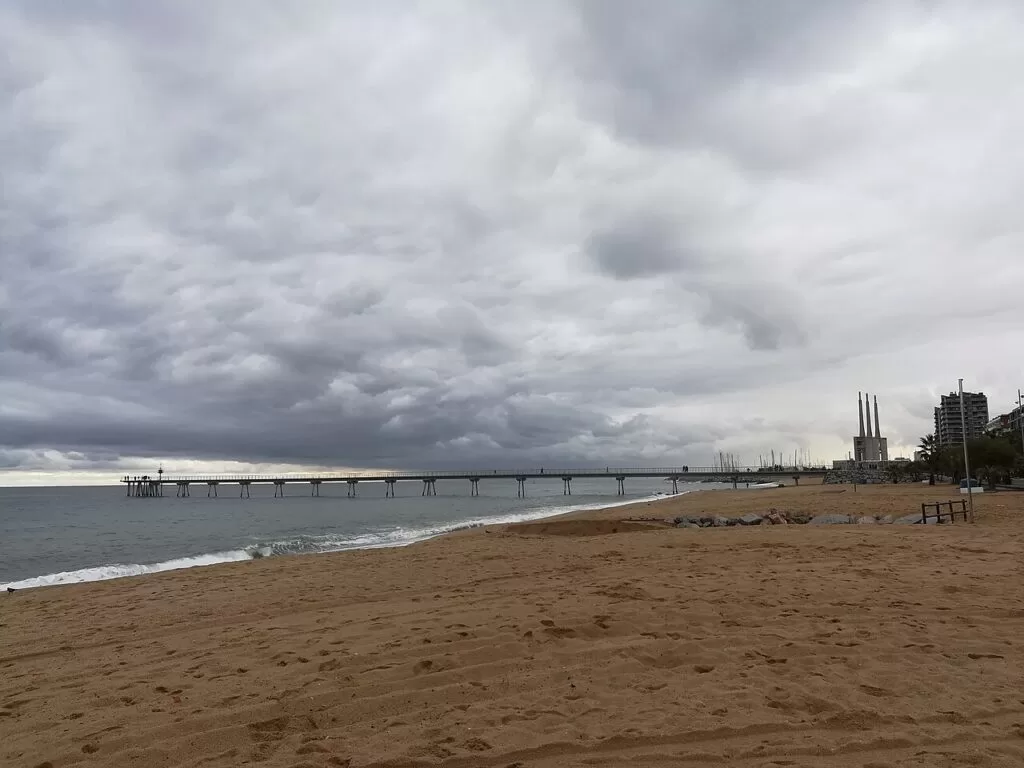
Pont del Petroli, Badalona, with the Sant Adrià power station behind · Photo: Enric, CC BY-SA 4.0
Part of the Costa de Barcelona guide · North-east: the Besòs, Sant Adrià and Badalona
The Besòs stretch is the north-eastern end of the Costa de Barcelona: about 6.5 km of urban coast, in a straight line, from the Parc del Fòrum on the edge of Barcelona, across the mouth of the river Besòs at Sant Adrià de Besòs, to Badalona’s Barca Maria beach on the Montgat boundary. It is a working, built-up coast of former power stations and factories, now with sandy town beaches, a long promenade, the Besòs River Park inland and the Roman remains of Badalona, all linked to central Barcelona by train, metro and tram.
At a glance
- Where the Barcelonès comarca, Barcelona province: from the Parc del Fòrum and Port Fòrum, across the Besòs mouth, along the Badalona seafront to the Montgat boundary, with the river park running inland.
- Towns Sant Adrià de Besòs (37,906 inhabitants) and Badalona (224,301, the third largest municipality in Catalonia), both Catalunya.com figures, with Santa Coloma de Gramenet and Montcada i Reixac up the river.
- Best for uncrowded city beaches next to Barcelona, industrial heritage, Roman Baetulo, cycling the river park and festivals such as Primavera Sound and the Cremada del Dimoni.
- Getting there the Rodalies R1 stops at Sant Adrià and Badalona; the Trambesòs and the metro also link both towns with Barcelona. By road, the C-31 and the B-10 Ronda Litoral meet in Sant Adrià.
- On CostaMap guides to Badalona, the Tres Xemeneies, the Besòs River Park and the town of Sant Adrià de Besòs.
Map of the Besòs, Sant Adrià and Badalona
The map shows the places on this stretch that have a CostaMap page. Tick a place type to filter, and click a marker to see the place in the panel.
Place type
Area · next level
 Area map
The Besòs: Sant Adrià and Badalona
Click a marker to see the place here. The north-eastern Costa de Barcelona, from the Fòrum and the Besòs mouth to Badalona and the Montgat boundary.
Towns and districtsTowns and districts
From south-west to north-east, the way the R1 runs out of Barcelona. Two municipalities, Sant Adrià de Besòs and Badalona, but their districts differ, so each has its own section.
Sant Adrià: the Fòrum side and La Mina
Sant Adrià de Besòs stretches across both banks of the estuary (English Wikipedia). On the right bank, next to Barcelona’s Parc del Fòrum, are the Port Fòrum marina, the Parc de la Pau and the Platja del Fòrum. Catalunya.com says the park is named after the Peace Camp that stood here during the 2004 Universal Forum of Cultures, and describes the beach as coarse sand between the river mouth and the port, with lifeguards, toilets, showers and adapted facilities. Behind them lie the La Catalana and La Mina neighbourhoods; Barcelona and Sant Adrià list La Mina among the districts they plan to regenerate (Barcelona City Council). Our Sant Adrià de Besòs town guide covers where to stay.
Sant Adrià: the old town and the river
The original village, with its parish church, sits on a small rise on the left bank in the north of the municipality (English Wikipedia). Catalunya.com describes a town that began as a group of mills along the Besòs, documents its parish church in the 10th century, and calls it a reference point for coexistence after the migration of the 1920s and 1930s. That history is told in the Museum of the History of Immigration of Catalonia, in the Can Serra farmhouse, which keeps El Sevillano, a restored 1950s railcar used by migrants from southern Spain (Catalunya.com, English Wikipedia). The town has 37,906 inhabitants on 4 km², according to Catalunya.com.
Sant Adrià: the river mouth and the Three Chimneys
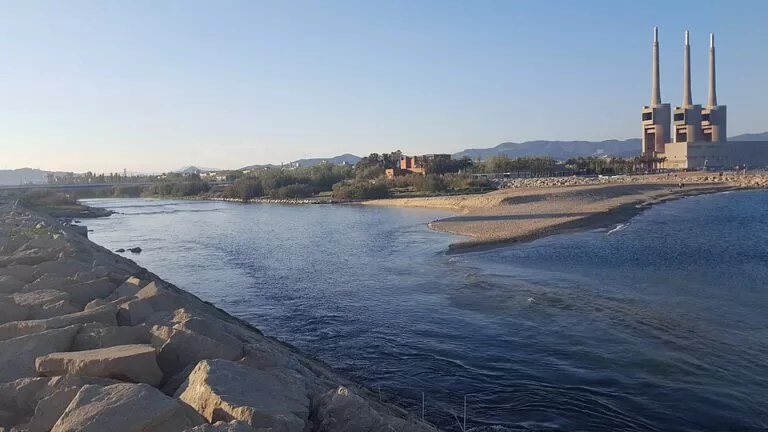
On the left bank of the mouth, Platja del Litoral is the beach of the Parc del Litoral: 250 m long and 120 m wide, golden sand, calm water and low occupancy, with a large flat parking area and a palm-lined walk (spain.info). Behind it rise the Tres Xemeneies, the three 200 m chimneys of the power station that worked from 1973 to 2011. Catalunya.com calls them an icon of the coastline. The turbine hall opens only for events and is to become the Catalunya Media City (Barcelona City Council). Sant Adrià station on the R1 is about 300 m from the beach (OpenStreetMap).
Badalona: La Mora and the port
Across the municipal boundary, Badalona’s seafront begins at Platja de la Mora, which Catalunya.com calls a good example of the reconversion of an industrial zone into a leisure one. It is 585 m long, not usually busy, and nudism is permitted. Next comes the Port of Badalona, a marina and fishing port opened in 2001, with bars, restaurants and a sailing school, and then the small Platja del Coco, 250 m long and about 80 m wide, joined to the centre by a palm-lined promenade (Catalunya.com).
Badalona: Progrés and the Pont del Petroli
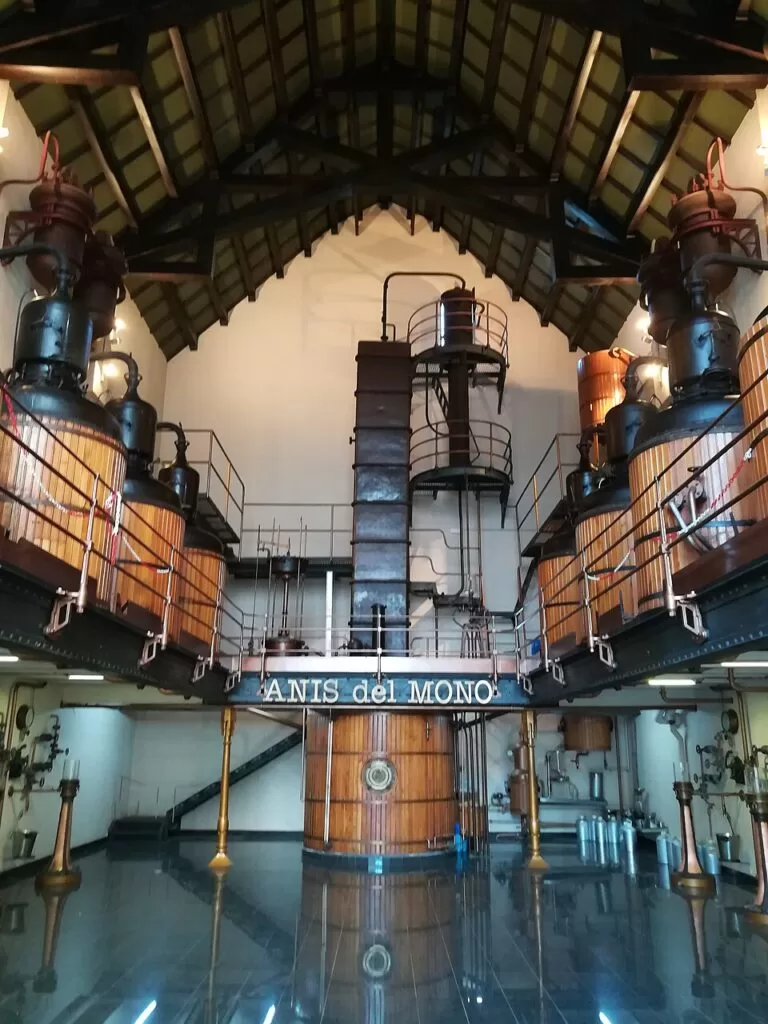
In the Progrés district stands the Pont del Petroli, a concrete pier that runs about 250 m out to sea at about 6 m above the water, built to unload oil and adapted as a walkway; Catalunya.com calls it a symbol of the Badalona coastline. Catalan Wikipedia records that it opened to the public in 2009 and that Storm Gloria destroyed its final section in January 2020; we could not confirm from an official page whether it is open now. On the promenade beside it is the Anís del Mono factory, founded in 1868, with modernista distillation rooms that can be visited through the Museu de Badalona. Our Badalona guide has more.
Badalona: the centre and Dalt de la Vila
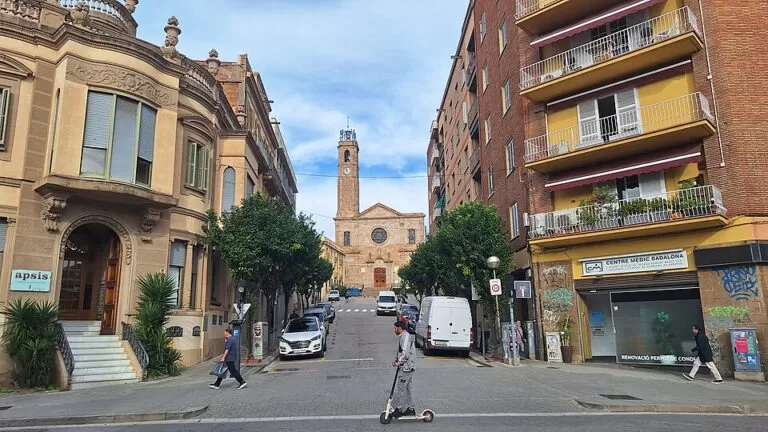
Badalona has 224,301 inhabitants and is the third largest municipality in Catalonia by population, according to Catalunya.com. The Romans founded Baetulo here in the 1st century BC; the Museu de Badalona, founded in 1955, shows its baths in the basement and arranges visits to the Casa dels Dofins, a 1st-century BC house with a dolphin mosaic. Above it, the old town of Dalt de la Vila keeps the Romanesque church of Santa Maria, the Torre Vella and medieval streets such as Carrer de la Costa, which lead down to the seafront district of Baix a Mar and the pedestrian shopping street Carrer del Mar (Catalunya.com).
Badalona north: towards Montgat
North of the centre the beaches run on past the Club Nàutic Bétulo at Pont d’en Botifarreta to Platja de la Barca Maria, the northernmost in Badalona at 915 m, and probably the least visited because it faces an industrial zone (Catalunya.com). The beach ends at Els Banys beach in Montgat, which belongs to the Maresme; Montgat station is just over half a kilometre from its far end. Inland, in the Serra de Marina, are the monastery of Sant Jeroni de la Murtra with its Gothic cloister and the Iberian settlement of Baitolo. For the coast beyond Montgat, see the Costa del Maresme guide.
Up the river: Santa Coloma and Montcada i Reixac
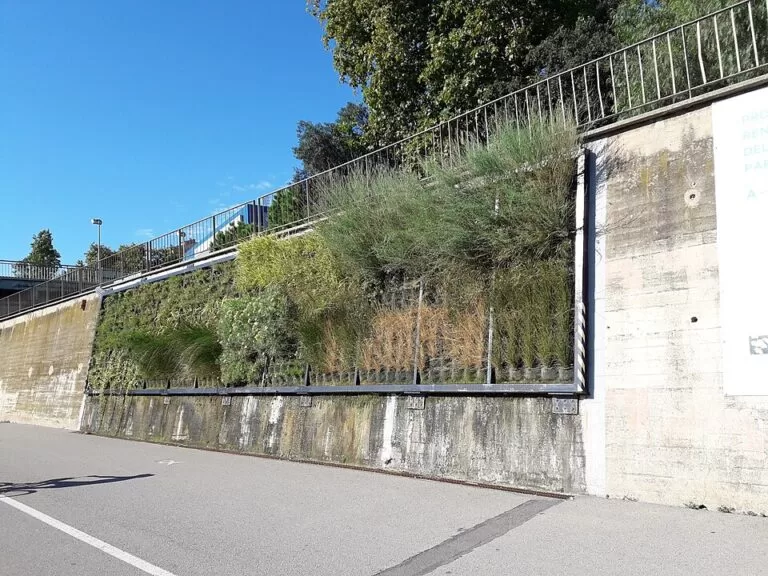
Inland, the Besòs River Park follows the riverbed past Santa Coloma de Gramenet and the Sant Andreu district of Barcelona to Montcada i Reixac. The Besòs River Park covers 115 ha shared by four municipalities, with about 5 km of paths for walking and cycling and wetlands upstream that are closed to the public (Barcelona City Council). Montcada i Reixac has its own CostaMap guide.
Beaches
All the beaches here are urban sand beaches with a promenade behind them and the coast railway close by. Sizes and services below are from Catalunya.com and spain.info.

Platja del Fòrum
Coarse-sand urban beach between the Besòs mouth and the Port Fòrum, part of the Parc de la Pau, with lifeguards, showers, toilets and adapted facilities (Catalunya.com).
See the Sant Adrià guide →Platja del Litoral
250 m long and 120 m wide, golden sand and calm water, low occupancy, with a large parking area and a palm-lined walk by the river mouth (spain.info).
See the Three Chimneys guide →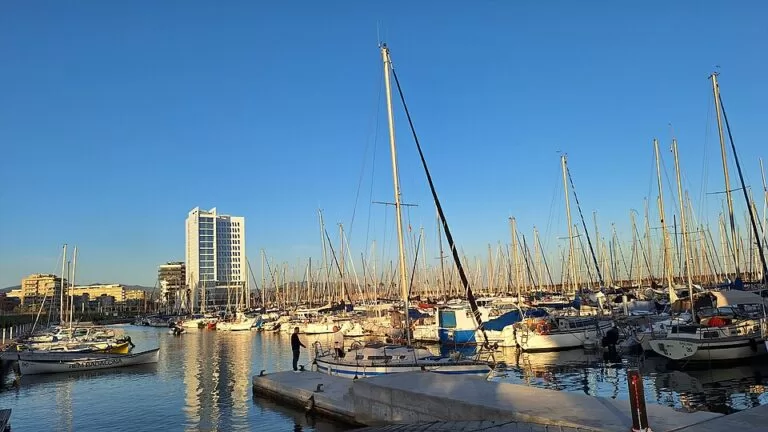
La Mora and El Coco
La Mora, 585 m, quiet, nudism permitted; El Coco, 250 m by about 80 m, beside the marina with its bars and sailing school (Catalunya.com).
See the Badalona guide →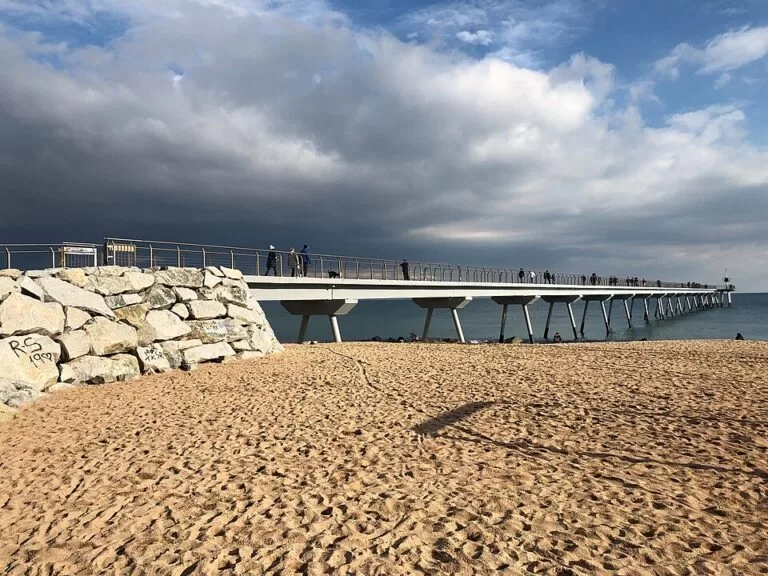
Pont del Petroli
370 m of sand named after the 250 m pier; showers only, with toilets, bars and first aid at the neighbouring beaches, half a kilometre from the station (Catalunya.com).
See the Badalona guide →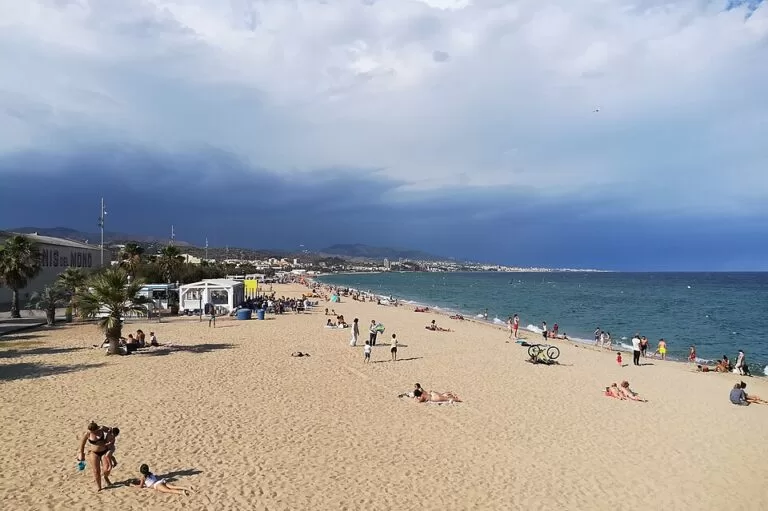
Els Pescadors
420 m, 150 m from Badalona station, with fishing boats on the sand, beach volleyball, adapted facilities and an assistance service (Catalunya.com).
See the Badalona guide →Also in Badalona: L’Estació (390 m), opposite the station; Els Patins a Vela, the best-known beach of the city; Pont d’en Botifarreta (620 m); and Barca Maria (915 m), the quietest, up to Montgat (Catalunya.com). Just south-west of the Fòrum, in Barcelona, are the Fòrum bathing area, 375 m of paved terraces with steps into the sea and no sand, and Llevant beach (375 m), with a dog area in summer; see the Barcelona city beaches guide.
Things to do
Nature: the Besòs River Park
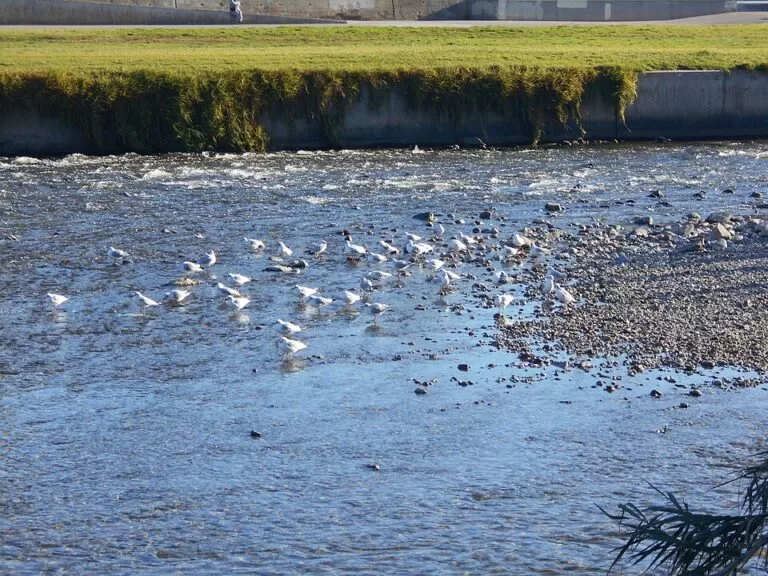
The river that Barcelona City Council says was cleaned up from 1995 and opened as a park in 2004 is now 115 ha of lawns, asphalt paths and a bike track in the riverbed, with more than 200 bird species recorded. The wetlands upstream and the last 450 m of the mouth are closed to the public, and the whole park is cleared when the river rises (Catalan Wikipedia). See our Besòs River Park guide.
History: Roman Baetulo
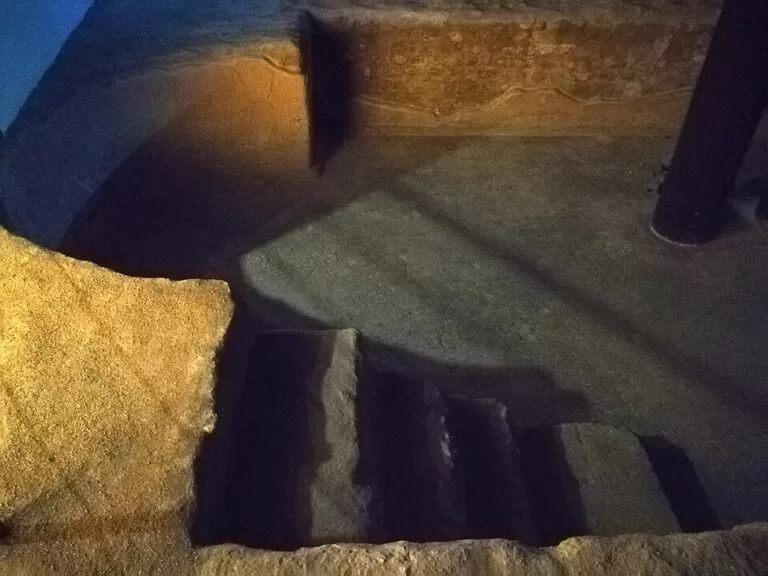
Badalona grew from the Roman town of Baetulo, founded in the 1st century BC. The Museu de Badalona shows its baths in the basement and arranges visits to the forum area under Plaça de Font i Cussó and to the Casa dels Dofins with its dolphin mosaic (Catalunya.com). We could not confirm current opening hours. More in our Badalona guide.
Industrial heritage: chimneys and anise
The Tres Xemeneies, the 200 m chimneys of the old power station, were saved after a 2008 vote in which 82% of Sant Adrià voters backed keeping them (Catalan Wikipedia). In Badalona, the Anís del Mono factory, founded in 1868, keeps modernista distillation rooms that can be visited through the city museum (Catalunya.com).
Festivals and food
On the eve of Sant Anastasi, 10 May, Badalona burns a devil figure on the beach in the Cremada del Dimoni; its Festa Major is on 14 and 15 August (Catalunya.com). Sant Adrià’s Festa Major is in September, and in May a festival of world cultures fills the Parc del Fòrum, where Primavera Sound is also held (Catalunya.com, spain.info).
Where to stay by town
We do not name hotels. These are the bases we would choose.
Badalona centre
The old town, the museum, the shopping street Carrer del Mar and the town beaches are all within walking distance of Badalona station on the R1. The best base on this stretch if you want a town of its own with restaurants and festivals.
Beaches, history, no car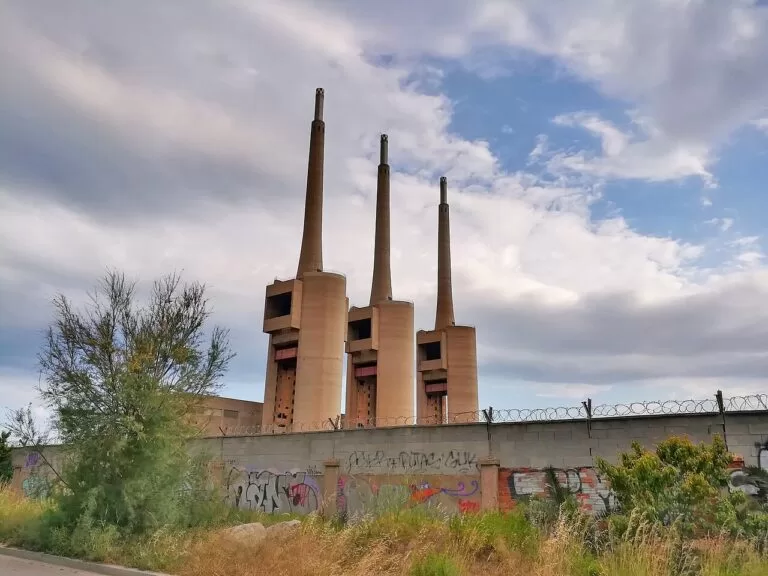
Sant Adrià seafront
The streets near the Port Fòrum and the two beaches at the river mouth, with the R1, the metro and the Trambesòs close by. Quieter, with fewer places to eat; our Sant Adrià guide explains the options.
A calm base by the sea
Or stay in Barcelona
If your plans are mostly Barcelona sights and nightlife, stay in the city and come out to the Besòs for a day; the eastern city beaches run right up to the Fòrum. See the Barcelona city beaches guide.
City break with day tripsGetting there and around
By air
Barcelona-El Prat airport is about 19 km from Sant Adrià station and 22 km from Badalona station in a straight line (OpenStreetMap). From the airport, travel into Barcelona and change to the R1, the metro or the tram; check current connections with the operators.
By train
The Rodalies R1, the coast line from Barcelona towards Mataró and Blanes, stops at Sant Adrià de Besòs and Badalona (English Wikipedia), and Montgat station lies just beyond Barca Maria beach (Catalunya.com). Sant Adrià and Badalona stations are about 2.9 km apart along the seafront.
Metro, tram and bus
The Trambesòs has seven stops in Sant Adrià and runs to Barcelona’s Parc de la Ciutadella; Verneda and Artigues–Sant Adrià are the metro stations nearest Sant Adrià (English Wikipedia). TMB metro and buses also reach Badalona, and the TUSGSAL company runs 27 bus lines in and around the city (Catalunya.com).
By car and bike
The C-31 from Glòries meets the B-10 Ronda Litoral in Sant Adrià, with a link to the B-20 Ronda de Dalt at the Trinitat junction (English Wikipedia). Badalona has about 20 km of cycle lanes (Catalunya.com), and the seafront promenade joins Sant Adrià with Badalona and Barcelona.
A one-day route
By train from Barcelona, on foot along the seafront, with an optional second day on a bike.
Day 1
From the Fòrum to Badalona on foot
Take the metro or tram to the Fòrum, walk past Platja del Fòrum and across the river to Platja del Litoral for the view of the Three Chimneys, then follow the promenade along La Mora, the port and El Coco to the Pont del Petroli and the Anís del Mono factory. After lunch, climb to Dalt de la Vila and the Museu de Badalona for Roman Baetulo, then swim at Els Pescadors before taking the R1 back from Badalona station.
Day 2
Optional: the Besòs River Park by bike
Start at Sant Adrià station and ride or walk up the riverbed on the asphalt paths to Santa Coloma de Gramenet, about 5 km each way, looking out for birds from the viewpoints. Check the weather first: the park is closed when the river rises.
FAQ
Is Badalona part of Barcelona?
No. Badalona is a separate city and municipality just north-east of Barcelona, across the river Besòs, though the two are joined in one urban area. Sant Adrià de Besòs lies between them at the river mouth.
Are there good beaches near the Fòrum?
Yes. Platja del Fòrum and Platja del Litoral in Sant Adrià lie either side of the Besòs mouth, and Badalona’s beaches start at La Mora, about 0.7 km north-east of Platja del Litoral. The Fòrum bathing area in Barcelona has no sand, only steps into the sea.
Can you visit the Three Chimneys in Sant Adrià?
You can walk around them and see them from the beaches, but the turbine hall opens only for events, as it did for Manifesta in 2024 and the UIA World Congress of Architects in 2026.
How do I get from Barcelona to Badalona’s beaches?
Take the R1 Rodalies train to Badalona station, opposite L’Estació beach; Els Pescadors is 150 m from the station (Catalunya.com). The metro, the Trambesòs and TUSGSAL buses also connect the two cities.
Where is Primavera Sound held?
At the Parc del Fòrum, Carrer de la Pau 12, in Sant Adrià de Besòs, according to spain.info, which lists the 2027 edition for 2 to 6 June.
Other areas of the Costa de Barcelona
Costa de Barcelona
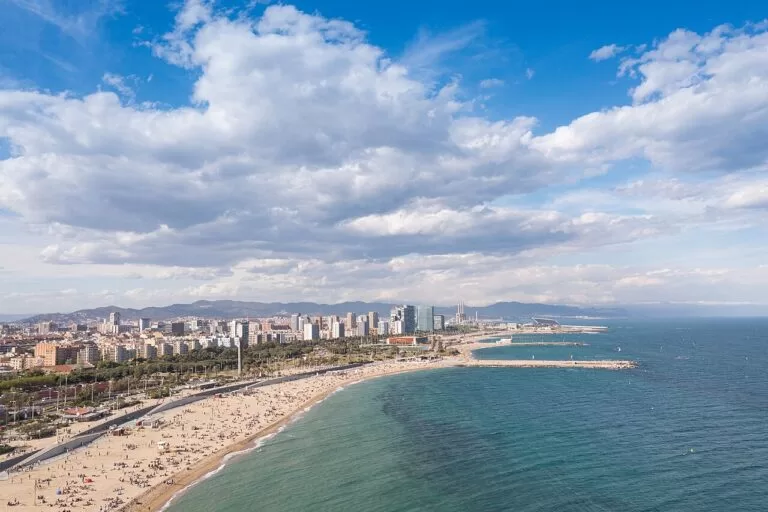
The whole coast from the Maresme to the Garraf, with the full map and the five areas.
Costa de Barcelona guide →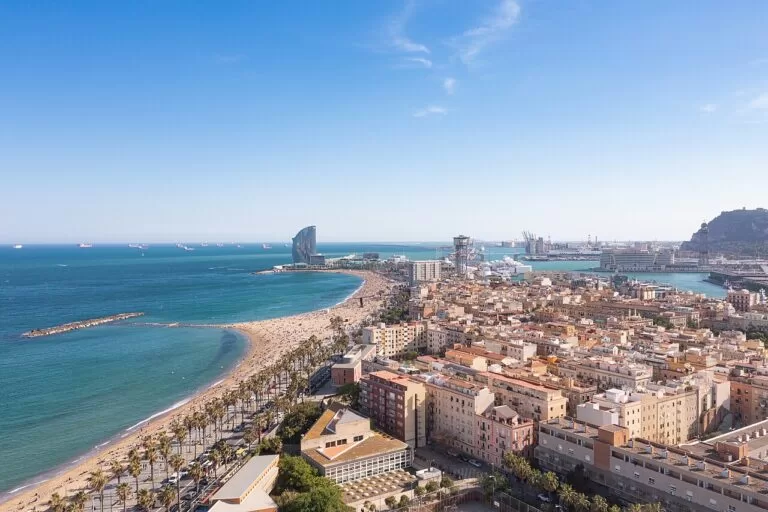
Barcelona and the city beaches
The City Council’s beaches from Sant Sebastià to the Fòrum, with the old town and Montjuïc behind.
Barcelona city beaches guide →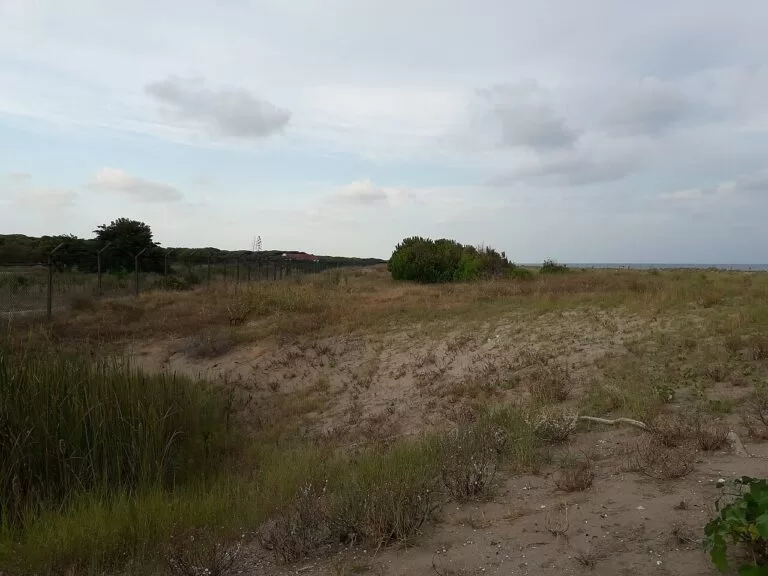
The Llobregat delta and El Prat
Long, flat beaches and lagoons past the airport, from El Prat to Viladecans.
Llobregat delta guide →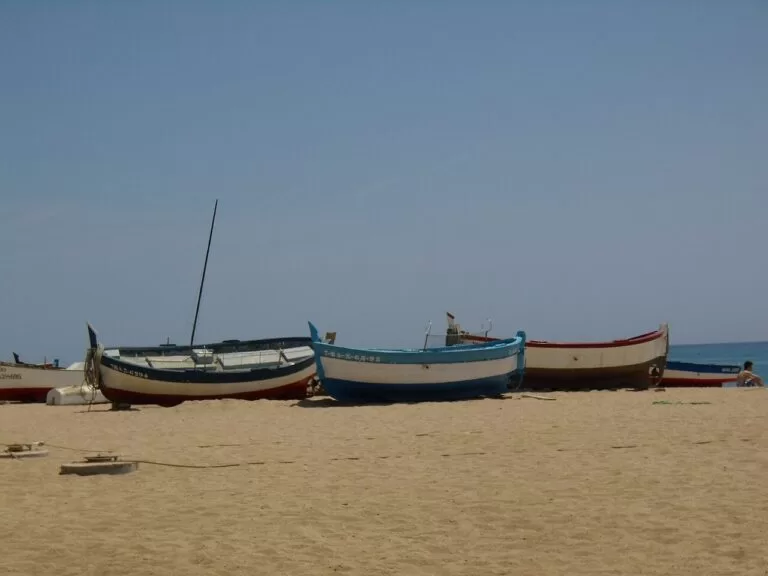
Costa del Maresme
The coast beyond Montgat: Masnou, Mataró and the beach towns along the R1 towards the Costa Brava.
Costa del Maresme guide →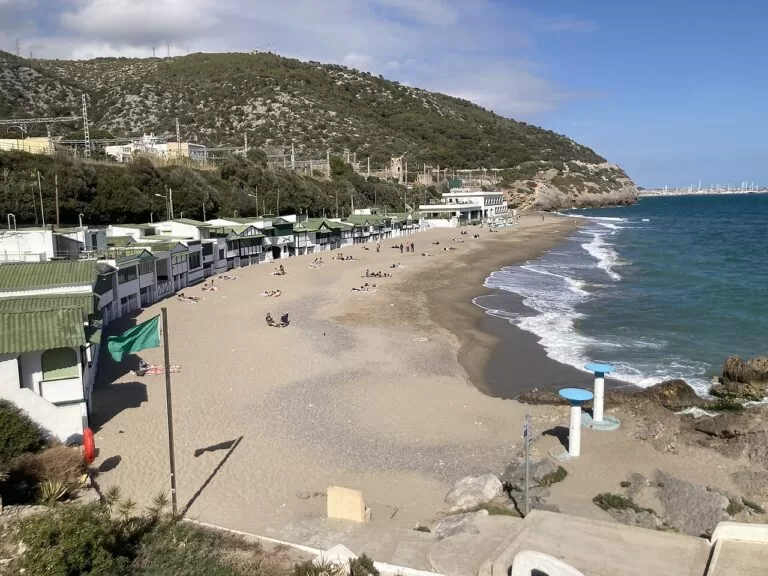
Costa del Garraf
Castelldefels, Garraf village, Sitges and Vilanova i la Geltrú, south-west of the Llobregat.
Costa del Garraf guide →Sources and freshness
Checked 9 November 2026. Catalunya.com (Catalan Tourist Board) on Sant Adrià de Besòs, Badalona, the Barcelonès, the Museu de Badalona and its Roman house, and the beaches of the Fòrum, La Mora, El Coco, Pont del Petroli, L’Estació, Els Patins a Vela, Els Pescadors, Pont d’en Botifarreta and Barca Maria. Spain.info (Turespaña) on Platja del Litoral, the Museum of Badalona and Primavera Sound. Barcelona City Council on the Besòs River Park, the Sant Martí routes to the park, Les Tres Xemeneies, their second life, the June 2026 agreement with Sant Adrià, the Fòrum bathing area and Llevant beach. Background: English Wikipedia on Sant Adrià de Besòs and Badalona; Catalan Wikipedia on the power station, the Pont del Petroli and the river park. Location and straight-line distances: OpenStreetMap contributors. The Sant Adrià and Badalona town hall and tourism sites, the Diputació de Barcelona parks site, Barcelona Turisme and Rodalies could not be reached while checking, so this page is shorter than our other area guides. Not confirmed: the current status of the Pont del Petroli, museum hours, parking charges, train and tram frequencies. Photos from Wikimedia Commons: Pont del Petroli by Enric (CC BY-SA 4.0); Besòs mouth by Jordiferrer (CC BY-SA 4.0); Three Chimneys from the Fòrum by Enric (CC BY-SA 4.0); Port of Badalona by Pere López Brosa (CC BY-SA 4.0); Pont del Petroli by Joan GarciaBadalona (CC BY-SA 4.0); Badalona seafront by Enric (CC BY-SA 4.0); Besòs River Park by Canaan (CC BY-SA 4.0); Museu de Badalona by Enric (CC BY-SA 4.0); Anís del Mono by Enric (CC BY-SA 4.0); Dalt de la Vila by Pere López Brosa (CC BY-SA 4.0); Sant Adrià power station by Enric (CC BY-SA 4.0); Tres Xemeneies by Pere López Brosa (CC BY-SA 4.0); Besòs River Park by Pere López Brosa (CC BY-SA 4.0); the cards for other areas use photos credited in the Costa de Barcelona guide.