
Costa del Garraf · Garraf comarca
Vilanova i la Geltrú and Cubelles travel guide: beaches, museums and the Foix
The southern Costa del Garraf: the capital of the Garraf with its fishing port, railway museum and carnival, then the family beaches of Cubelles and the mouth of the Foix, where the Costa Daurada begins.
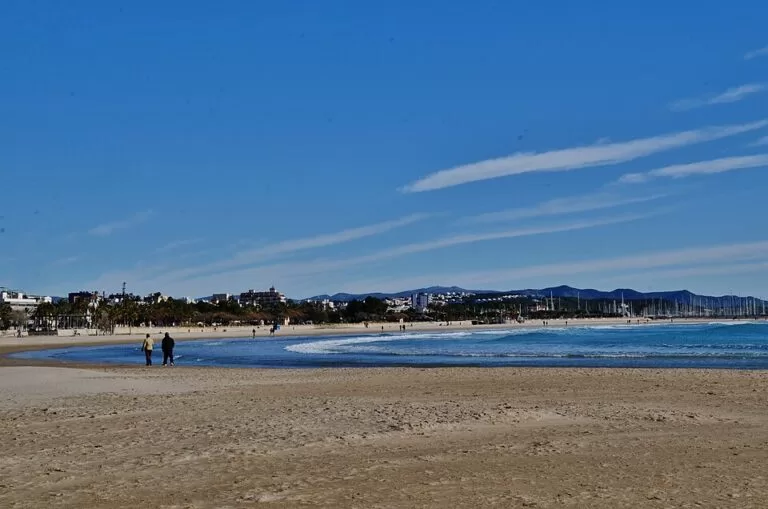
Ribes Roges beach, Vilanova i la Geltrú · Photo: MARIA ROSA FERRE ✿, CC BY-SA 2.0
Part of the Costa del Garraf guide · Other areas: Castelldefels and Gavà · Garraf and Sitges
Vilanova i la Geltrú and Cubelles are the southern end of the Costa del Garraf, the coast south-west of Barcelona, in Barcelona province, Catalonia. Vilanova is the capital of the Garraf comarca, a town of about 68,800 people with a working fishing port, a long seafront and some of Catalonia’s best-known festivals; Cubelles, next door, is a smaller town of family beaches at the mouth of the river Foix, on the boundary with Cunit and the Costa Daurada (Catalunya.com). Both are on the R2 Sud train line from Barcelona, so you can reach the beaches, the Railway Museum of Catalonia and the Víctor Balaguer Library-Museum without a car.
At a glance
- Where the south-west end of the Garraf comarca, from the Sitges and Sant Pere de Ribes boundary through Vilanova i la Geltrú to Cubelles and the Cunit boundary, where the Baix Penedès and the Costa Daurada begin.
- Towns Vilanova i la Geltrú, with its old quarter of La Geltrú and the seafront Barri de Mar; Cubelles; and inland Canyelles, reached from Vilanova.
- Best for calm family beaches, water sports from Ribes Roges, the railway and art museums, Carnival and the Tres Tombs, seafood and xató, and birdwatching at the Foix river mouth.
- Getting there Rodalies R2 Sud and regional trains stop at Vilanova i la Geltrú and Cubelles; by road the C-32, C-31 and AP-7.
- On CostaMap town guides for Vilanova i la Geltrú and Cubelles, and four places: the Railway Museum, the Víctor Balaguer Library-Museum, Ribes Roges beach and Vilanova Park campsite.
Map of Vilanova i la Geltrú and Cubelles
The places in this area with a CostaMap page. Tick a place type to filter, and click a marker to see the place in the panel.
Place type
Area · next level
 Area map
Vilanova i la Geltrú and Cubelles
Click a marker to see the place here. The capital of the Garraf with its port, museums and Ribes Roges beach, and Cubelles at the mouth of the Foix.
Towns and villagesTowns and villages
From north-east to south-west, the way the train runs from Sitges towards Cunit, with Canyelles inland.
Vilanova i la Geltrú
Vilanova i la Geltrú is the capital of the Garraf, with about 68,800 residents on 34 km² (Catalunya.com). King Jaume I granted its charter of settlement in 1274, when it was still called Vilanova de Cubelles. In the 18th century Carles III allowed its port to trade with America, and the wealth that “indianos” brought back from the colonies paid for manor houses and gardens; by the early 19th century the town was nicknamed l’Havana Xica, “Little Havana”. Francesc Macià (1859–1933) was born here. Today industry matters more than tourism, which Catalunya.com calls average in impact. It has three and a half kilometres of beaches and half a dozen museums.
Vilanova: La Geltrú and the old town
The town grew from two places. La Geltrú, inland, is the older medieval core; Catalunya.com tells how its people moved down towards the coast to escape a feudal lord, founding Vilanova. Spain.info notes that the old part keeps its medieval defensive wall, and names the church of Santa Maria de la Geltrú, with an 18th-century polychrome wooden altarpiece, and the church of Sant Gervasi (Spain.info). In the centre, the arcaded Plaça de la Vila is the heart of town, the Rambla is the main shopping street, and the Mercat del Centre, opened in 1941, has 78 stalls since its 1999 refurbishment (Catalunya.com). The Museu Romàntic Can Papiol on Carrer Major shows how a wealthy family lived in a house of the early 19th century (Catalunya.com).
Vilanova: the Barri de Mar, the port and the lighthouse
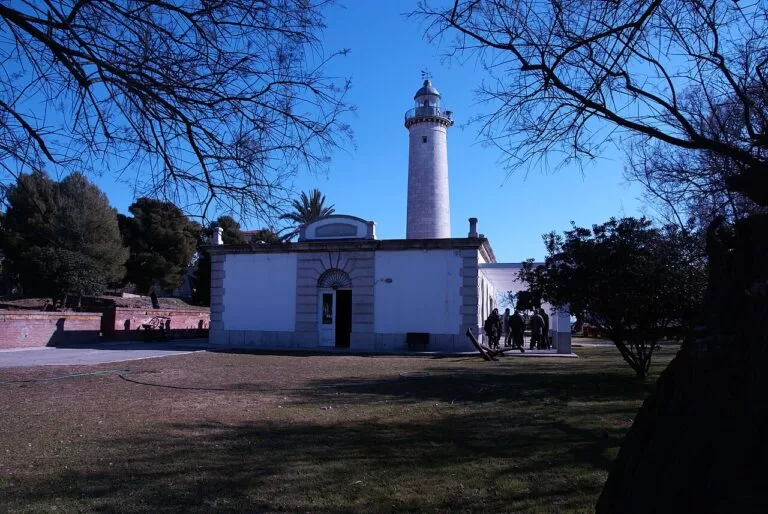
The seafront district is where most visitors spend their time. Catalunya.com describes the maritime promenade, where colonial-style houses stand beside fishermen’s homes, and a port that is industrial, fishing and leisure at once, the third most important in Catalonia. The fish market works Monday to Friday and is one of the busiest in the Mediterranean. At the eastern end, the Sant Cristòfol lighthouse, in service since 1905, houses the Espai Far, with three spaces: the Museu del Mar, Francesc Roig Toqués’ Museum of Seafaring Curiosities with Juanita the carp, and the Espai Víctor Rojas, which keeps one of only three sea-rescue boats preserved in Catalonia (Catalunya.com). West of the port lie Ribes Roges beach, its park with a miniature railway, the Carlist Torre Blava and the Iberian and Roman site of Adarró.
Canyelles
Canyelles lies inland, north of Vilanova, between the Olèrdola park and the Garraf natural park, and is a starting point for walks into both (Catalunya.com). Its 14th-century castle, with towers and battlements, and part of the old fortified enclosure still stand over the village, with the church of Santa Magdalena beside the castle and views over the Garraf plain. Paths lead into the holm oak and pine woods of Pla del Bosc and the Montgròs ridge, and nearby cellars sell Penedès wines and cavas. Before Christmas the Fira de Santa Llúcia fills the village with craft stalls. Public transport is limited to some buses to Vilanova, so you will need a car. There is no CostaMap page for Canyelles yet.
Cubelles
Cubelles is the last town of the Garraf coast, at the mouth of the Foix, with about 16,400 residents on 13 km² (Catalunya.com). Catalunya.com stresses its quiet family beaches, the seafront promenade with terraces and the river-mouth wetland for birdwatching. The castle, documented in 1041, was rebuilt between 1674 and 1676 as the triangular palace of the Marquises of Alfarràs, and has been a protected monument since 1949 (Catalunya.com). Inside are the tourist office and the permanent exhibition on the clown Charlie Rivel (Josep Andreu i Lasserre), who was born and died in Cubelles (Catalunya.com).
Beaches and coves
Long, sandy, gently shelving beaches, many split by breakwaters into bays; no real coves. Lengths are as official sources give them, checked in November 2026.
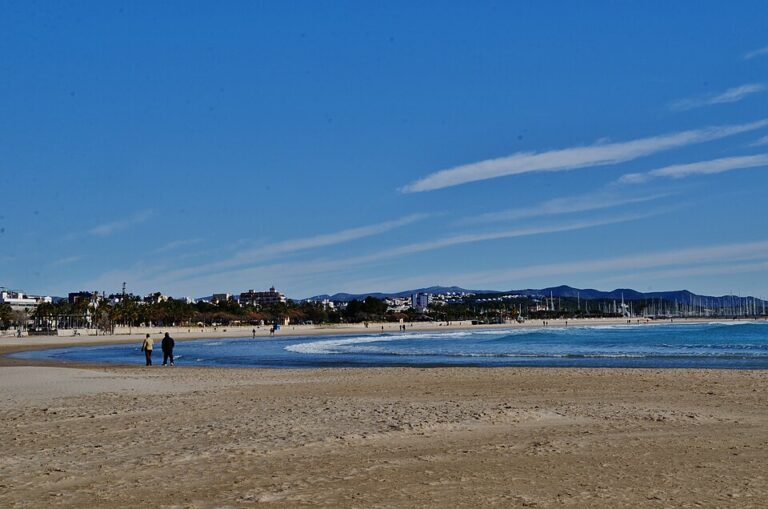
Ribes Roges
The busiest beach in town, almost one kilometre long beside the marina, with lifeguards, ramps, late-night beach bars and hire of pedalos, jet-skis and kayaks. Spain.info calls its flat water ideal for young children (Catalunya.com).
Ribes Roges guide →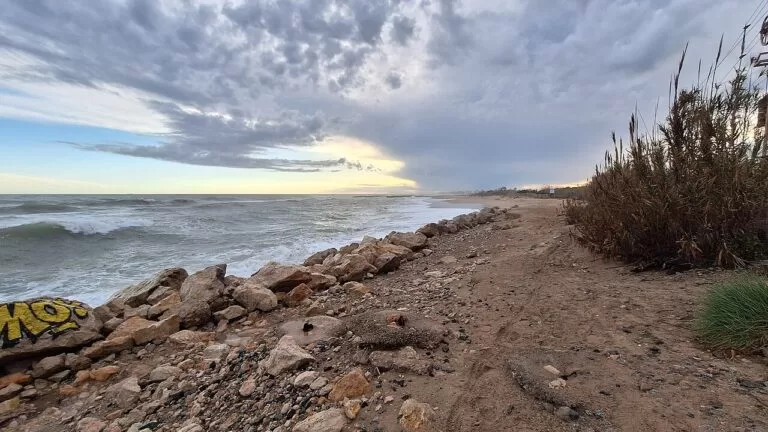
Platja Llarga
The longest beach of Vilanova, 1,900 m of sand in breakwater bays, shared with Cubelles at its western end. Until the late 19th century it was a wetland of dunes and marsh called El Prat. Showers, rescue service, disabled access and hire (Catalunya.com).
Vilanova guide →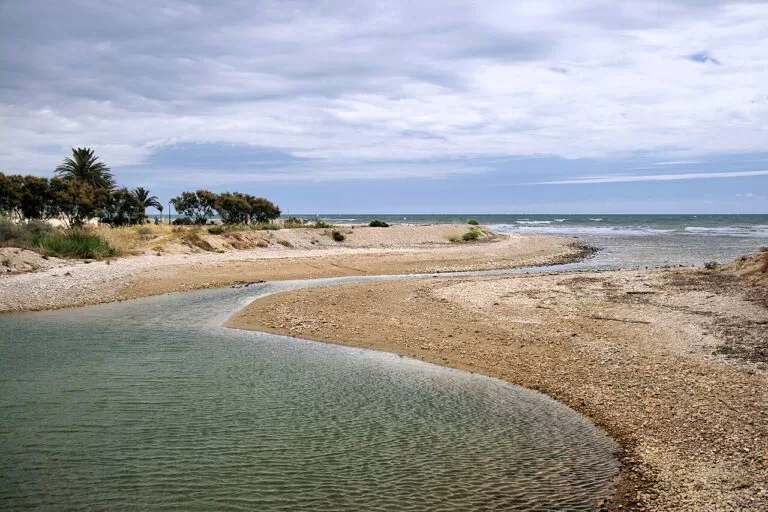
Mota de Sant Pere
Nearly two kilometres of fine sand and shallow water south of the Foix, quiet and popular with families and anglers at dusk. Showers, first aid and toilets; park in the streets behind or on the promenade (Catalunya.com).
Cubelles guide →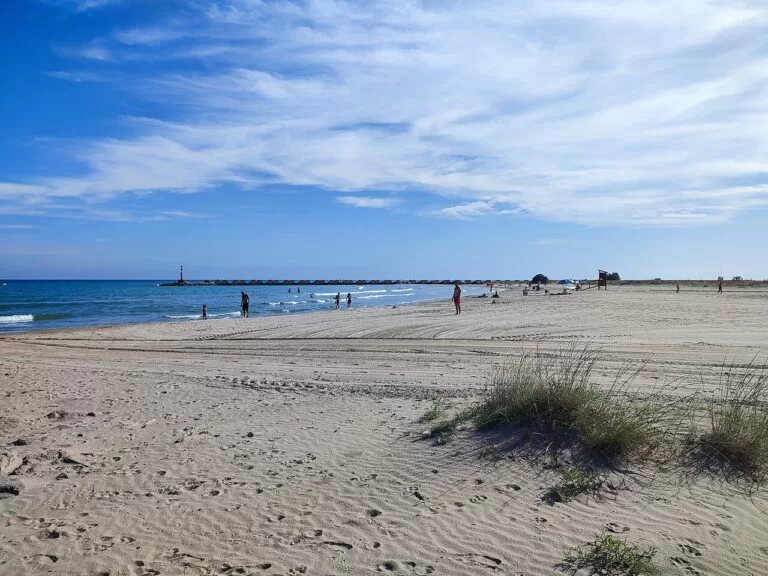
Les Salines and Les Gavines
Les Salines is a small, semi-urban beach protected by breakwaters between the Foix power-plant channel and the port of Cubelles, with lifeguards and showers. Les Gavines is a calm 250-metre bay, 100 m wide (Spain.info).
Cubelles guide →- Adarró, Vilanova: west of Ribes Roges beyond the Pasiphae breakwater, with a parking area, an accessible path, a first-aid hut, a beach bar and buoys that keep boats away from swimmers (Catalunya.com).
- La Farola, Vilanova: the beach by the Sant Cristòfol lighthouse (la Farola), named by Catalunya.com among Vilanova’s best with Ribes Roges and Llarga.
- Platja Llarga, Cubelles side: Catalunya.com’s Cubelles page calls it the main beach of Cubelles, with a Blue Flag for some years, seven parallel breakwaters and large parking on its eastern side (Catalunya.com).
Things to do
The Railway Museum of Catalonia
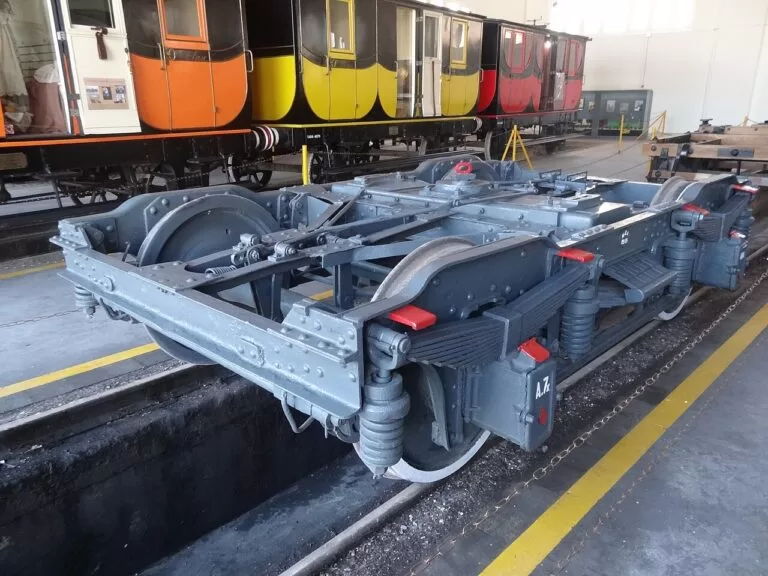
The Railway Museum of Catalonia fills the old steam-locomotive depot next to Vilanova station: 17,000 m², 13,000 of them in the open air, with more than fifty vehicles (Catalunya.com). They include a replica of the 1848 Barcelona–Mataró train, the first in Spain, and the Martorell, the oldest steam locomotive preserved in Spain.
Art and history in Vilanova
A few metres from the railway museum, the Víctor Balaguer Library-Museum, opened in 1884, shows Catalan art from Romanticism to the 20th century, Baroque paintings on deposit from the Prado and Egyptian pieces including the child mummy Nesi, in a temple-like building by Jeroni Granell (Catalunya.com). On the western seafront, the Adarró site keeps the craftsmen’s quarter of an Iberian village of the Cossetani, used from the 5th to the 1st century BC, and a Roman villa lived in until the 4th century AD; visits are guided (Catalunya.com).
On the water
The Estació Nàutica Vilanova i la Geltrú, based in the Ribes Roges park, groups the companies that offer boat hire, sailing courses, kayak and canoe trips, paddle boarding and diving, and sailing outings from the port (Catalunya.com).
Walks and nature: the GR 92 and the Foix
The GR 92 Mediterranean path runs along this whole coast. Its stage from Vilanova to Calafell passes Adarró, the Racó de Santa Llúcia and a short stretch close to the railway, then follows the sand of Platja Llarga to the mouth of the Foix, a small unbuilt gap where you can see ducks and other birds, and continues past Mota de Sant Pere and Les Salines into Cunit (Catalunya.com). At the mouth, a sand bar formed by the currents holds back freshwater lagoons; Cubelles has recovered the wetland as a nature and leisure area. Upstream, the Foix park around its reservoir covers 3,157 hectares, with some 150 bird species recorded (Catalunya.com).
Food: prawns, xató and the fish market
Vilanova’s signature dish is xató: escarole, salt cod, tuna, anchovies and olives with a sauce of almonds, hazelnuts, garlic and ñora peppers. The Ruta del Xató links five towns of the Garraf and the Penedès; the xatonada season runs from November to April, with popular celebrations almost every week from January to March, and more than fifty restaurants offer xató menus (Catalunya.com). Also try Vilanova prawns, rancho marinero, rossejat and the llunes, the town’s biscuits.
Festivals
Vilanova’s Carnival runs from Fat Thursday to Ash Wednesday, with the town’s troupes and figures such as Vidalot in the streets; the Tres Tombs on 17 January sends decorated carts three times round the church of Sant Antoni (Catalunya.com). The Setmana del Mar is at the end of June, the International Traditional Popular Music Festival in July and the Festa Major on the last weekend of July. Cubelles holds a Medieval Fair in its old centre in April (Catalunya.com) and its Festa Major for the Assumption in mid-August, with diables, correfocs and havaneres with rom cremat.
Where to stay by town
We do not recommend individual hotels.
- Vilanova, Barri de Mar: the seafront between the lighthouse and Ribes Roges puts you on the beach, the port restaurants and the water-sports base; the station is about a kilometre inland.
- Vilanova, centre: near the station, the Rambla and the museums, the best choice if you plan day trips by train to Barcelona or Sitges.
- Vilanova Park: Vilanova Park is a first-category campsite with shaded pitches of 70 to 100 m² with electricity, and bungalows and mobile homes for up to six (Catalunya.com).
- Cubelles: quieter, with long beaches and the Foix wetland; Catalunya.com lists accommodation from campsites to family hotels. The R2 Sud station makes it workable without a car.
Getting there and around
By air
The nearest airport is Barcelona–El Prat, covered in the Costa del Garraf guide. Check Rodalies de Catalunya and the airport for current connections towards the Garraf.
By train and bus
Vilanova i la Geltrú is on the Rodalies R2 Sud and several regional lines, and has an urban bus service with five lines (Catalunya.com). Cubelles has an R2 Sud station and regular buses to Vilanova and Barcelona (Catalunya.com). In summer a tourist road train tours Vilanova from June to September.
By car
The C-32, C-31 and AP-7 serve the coast (Spain.info). Ribes Roges has large paid parking areas along the promenade; in Cubelles, park in the streets behind the beaches or on the promenade. Canyelles needs a car.
A 1–2 day route
Day 1: Vilanova i la Geltrú
Arrive by train and start at the Railway Museum of Catalonia, then cross to the Víctor Balaguer Library-Museum. Walk through Plaça de la Vila, the Mercat del Centre and down the Rambla to the seafront for a seafood lunch. Spend the afternoon on Ribes Roges beach with a kayak or paddle board, see the Pasiphae on the breakwater, and end at the lighthouse and the Espai Far.
Day 2: along the coast to Cubelles
Follow the GR 92 west from Adarró along Platja Llarga to the mouth of the Foix, watching for ducks and waders in the lagoons. Continue into Cubelles: visit the castle and the Charlie Rivel exhibition, have lunch on the promenade and swim at Mota de Sant Pere or Les Gavines. Take the train back from Cubelles station, or carry on into Cunit and the Baix Penedès.
FAQ
Is Vilanova i la Geltrú worth visiting?
Yes, for a real town with beaches: two major museums, a working fishing port, three and a half kilometres of beaches and a nationally protected Carnival.
How do I get from Barcelona to Vilanova i la Geltrú?
By Rodalies R2 Sud or regional train to Vilanova i la Geltrú; the R2 Sud continues to Cubelles. By car, take the C-32.
What is the best beach in Vilanova i la Geltrú?
Ribes Roges is the most popular, with the most services and water sports; Platja Llarga is the longest and quieter, and La Farola is by the lighthouse.
Vilanova or Sitges: which is better for a stay?
Sitges, in the Garraf and Sitges area, is better known abroad for its museums and nightlife. Vilanova is a larger, more everyday town with a big fishing port and calm family beaches, and the two are next stops on the same train line.
Are the beaches of Cubelles good for children?
Yes. Catalunya.com describes Les Gavines, Mota de Sant Pere and Platja Llarga as fine-sand beaches with calm water, well suited to families.
When is the Vilanova i la Geltrú Carnival?
From Fat Thursday to Ash Wednesday, usually in February.
Other areas of the Costa del Garraf
Garraf and Sitges
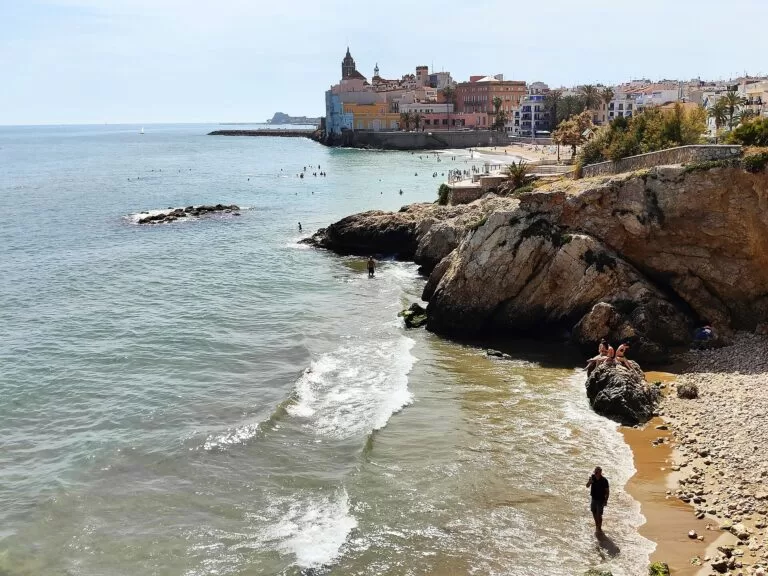
The fishing huts of Garraf village, the Garraf massif and Sitges with its town beaches, museums and festivals.
Garraf and Sitges guide →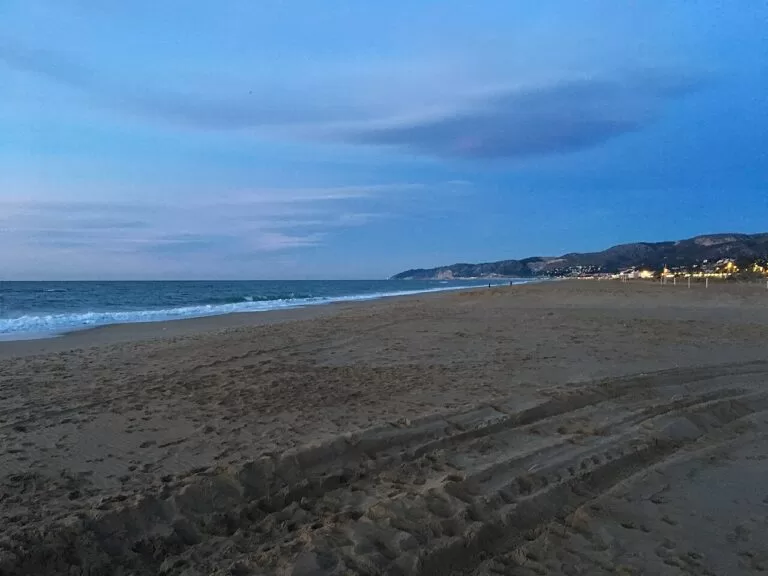
Castelldefels and Gavà
The long sandy beaches nearest Barcelona and its airport, between the Llobregat delta and the Garraf hills.
Castelldefels and Gavà guide →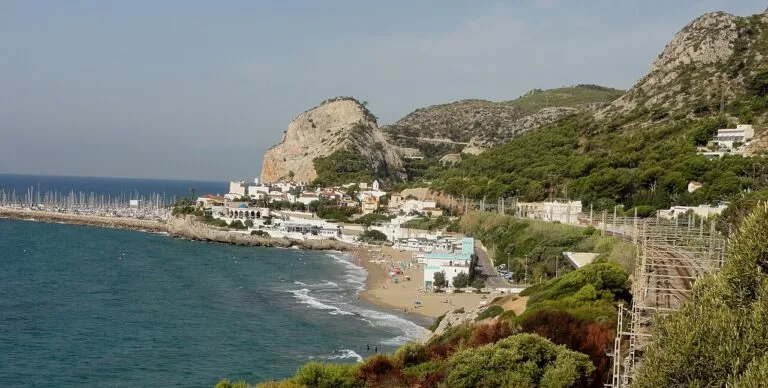
Costa del Garraf
The full guide from Castelldefels to Cubelles, with the map, the R2 Sud, the weather, campsites and day trips to the Penedès.
Costa del Garraf guide →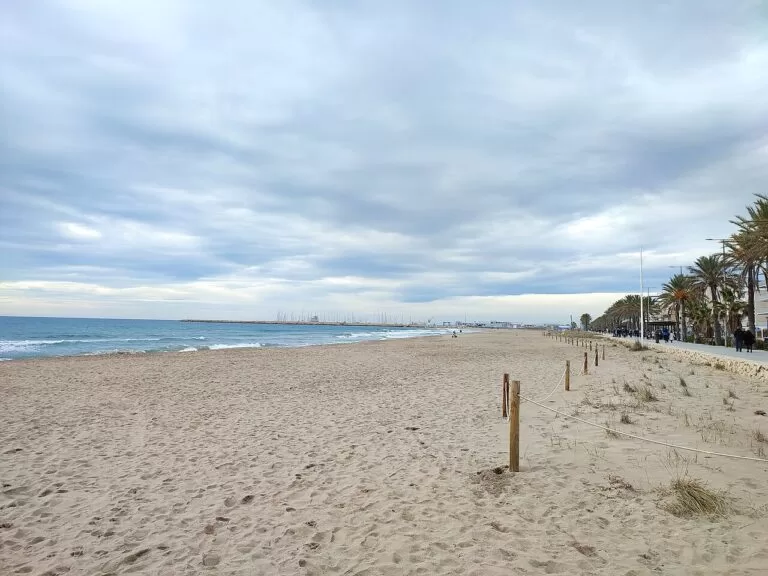
The Baix Penedès coast
Over the Cunit boundary, the northern Costa Dorada: Cunit, Calafell, Coma-ruga and Roda de Berà.
Baix Penedès guide →Sources and freshness
Checked 9 November 2026. Official: Catalunya.com (Catalan Tourist Board) on the Garraf, Vilanova i la Geltrú, Cubelles, Canyelles, Vilanova with kids, a family day out in Vilanova, 24 hours in Vilanova, Cubelles castle, Adarró, GR 92 stage 23, the Xató route, the Foix park, and the museum, beach and festival pages linked above; Spain.info on Vilanova i la Geltrú, Ribes Roges and Les Gavines. The lighthouse date is from Viquipèdia. The town tourism websites of Vilanova and Cubelles and the Diputació de Barcelona portal (barcelonaesmoltmes.cat) could not be opened from here; Where Catalunya.com beach pages contain obvious errors, we used only facts that match other sources. Population figures are as Catalunya.com gives them. Locations from OpenStreetMap.
Photo credits · 10 photos from Wikimedia Commons Show
Photos from Wikimedia Commons, not altered except for resizing: Platja de Ribes Roges by MARIA ROSA FERRE ✿ (CC BY-SA 2.0); El far de Sant Cristòfol by Ajuntament de Vilanova i la Geltrú (CC BY-SA 2.0); Platja Llarga, Vilanova i la Geltrú by Pere López Brosa (CC BY-SA 4.0); Desembocadura del Foix by Jorge Franganillo (CC BY 3.0); Platja de les Salines, Cubelles by Joandrés (CC BY-SA 4.0); Museu del Ferrocarril by Jordiferrer (CC BY-SA 3.0); Sitges by Dessources (CC BY-SA 4.0); Castelldefels by Thomas Woodtli from Zürich, Switzerland (CC BY-SA 2.0); Platja de Garraf by Isidro Jabato (CC BY-SA 3.0); Platja de Segur de Calafell by Joandrés (CC BY-SA 4.0).