
Expect a low-key Catalan seaside town rather than a buzzy resort — this is a place for sand, short coastal walks and a slice of local life on the Garraf coast. If you want big-nightlife Sitges or a long list of museums, look elsewhere; if you want quiet family beaches, a small medieval core and direct commuter access to Barcelona, this town delivers.
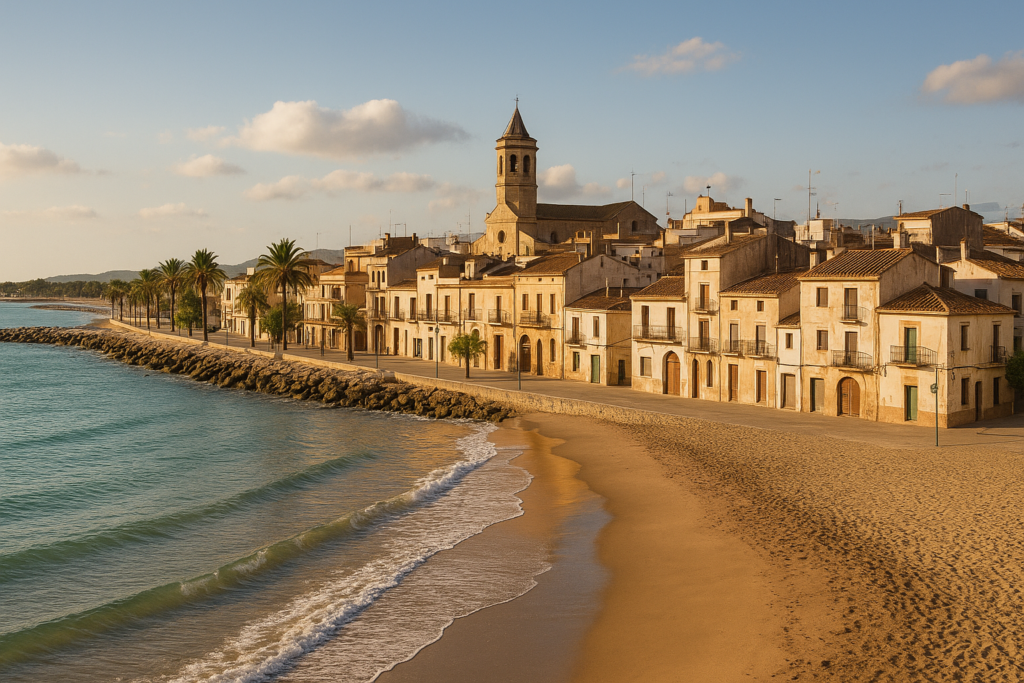
Cubelles at a glance
- Coastal town on the Costa del Garraf between Vilanova i la Geltrú and Cunit, about 50 km southwest of Barcelona.
- Rodalies Renfe station on the R2 Sud line with direct commuter trains to central Barcelona.
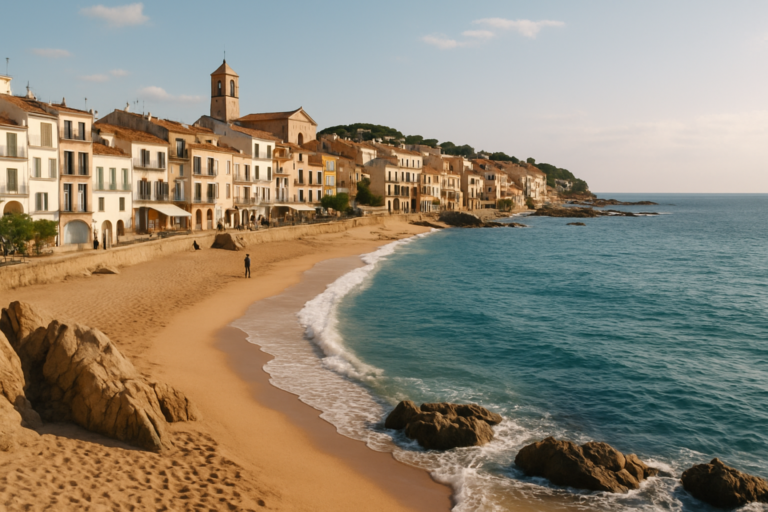
- Roughly 2 km of sandy beaches, chief among them Platja Llarga and Platja de les Salines.
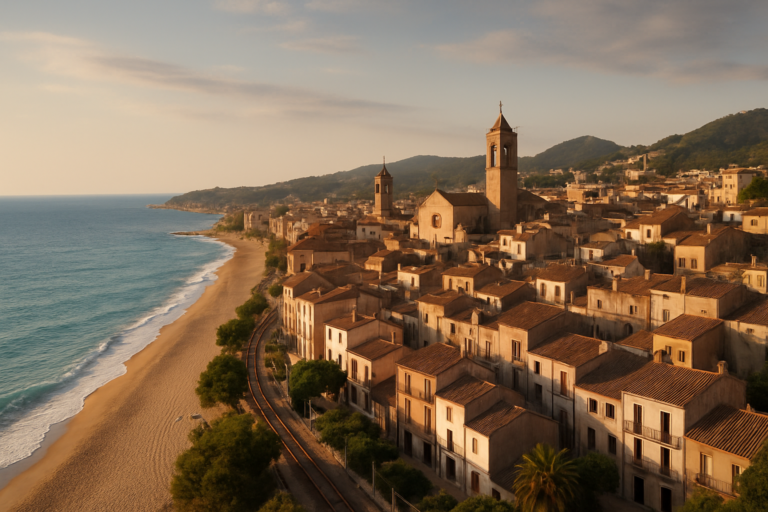
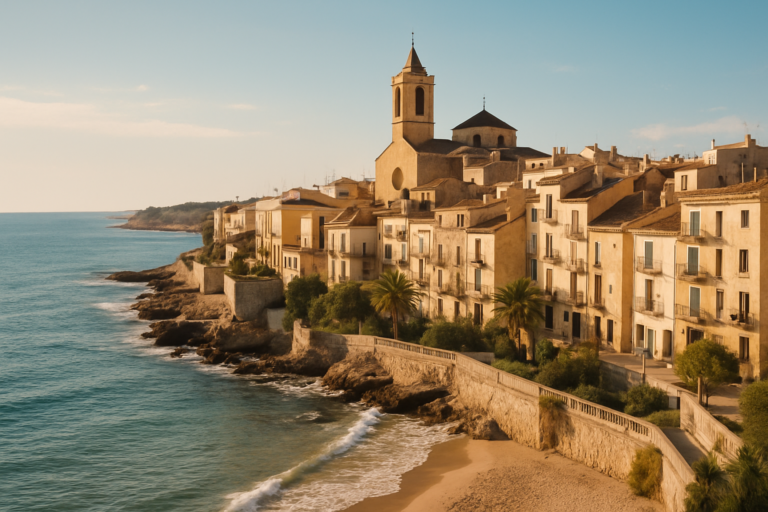
- Small medieval centre anchored by the Castell de Cubelles and the parish church of Santa Maria.
- The Foix river reaches the sea here, creating a protected wetland popular for short walks and birdwatching.
- Known as a quieter, family-friendly beach base close to Sitges.
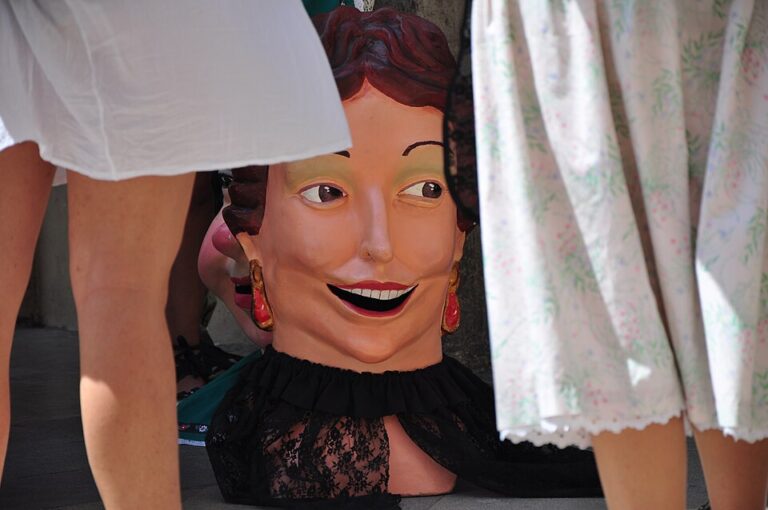
- Local culture includes an annual international clown festival honouring native son Charlie Rivel.
Things to do in the area
The appeal is simple: beaches and short, easy outings rather than a list of blockbuster attractions. Plan to relax on the sand, stretch your legs along the river mouth, poke around the old town and use the commuter train for quick excursions to larger nearby towns or Barcelona.
| Attraction | What it is | Price/entry | Best for |
|---|---|---|---|
| Castell de Cubelles | Medieval castle beside the parish church in the old town | – | History and photography |
| Foix river mouth and wetland | Small protected river-mouth area and wetland popular for walks and birdwatching | – | Nature walks and birdwatching |
| Charlie Rivel festival | Annual international clown festival celebrating the town’s famous son | – | Families and culture-seekers |
The medieval core and Castell de Cubelles
The old‑town cluster around the parish church of Santa Maria feels intimate rather than monumental. The Castell de Cubelles sits beside the church and marks the historical centre — it’s a compact slice of local history that rewards a short wander. Expect streets suitable for a relaxed stroll, with a handful of cafés and small local shops rather than tourist-trap commercialism.
Walks at the Foix river mouth
The Foix meets the Mediterranean here, creating a small protected wetland and a pleasant stretch for short walks and birdwatching. The area is low-key and natural: bring binoculars if you’re keen on birds, but don’t expect an extensive visitor centre or guided-programme infrastructure.
Local culture: Charlie Rivel and film ties
The town honours clown Charlie Rivel (Josep Andreu i Lasserre), born here in 1896, with an international clown festival that draws performers and families. Cubelles also served as the setting for Paco Plaza’s 2005 film “Cuento de navidad,” a detail that occasionally appears on local cultural trails and plaques.
Best beaches in Cubelles
The coastline here adds up to roughly two kilometres of sandy beaches. These are broad, family-friendly strips rather than secluded coves; popular stretches concentrate near the mouth of the Foix river.
| Beach | Character | Facilities / Blue Flag |
|---|---|---|
| Platja Llarga | Long sandy stretch, suitable for families and relaxed sunbathing | – |
| Platja de les Salines | Sandy beach near the Foix river mouth with calm areas good for children | – |
Cubelles with kids
This is one of the strongest selling points. The town’s beaches are calm and sandy, and the short, flat walks around the river mouth and through the old town are manageable with pushchairs. The annual clown festival is explicitly family-friendly and gives children a cultural highlight that’s different from a beach day. If you want a relaxed seaside holiday with easy access to bigger attractions via the commuter train, this town is a natural fit.
How to get to the town and get around
One of the practical advantages here is direct rail access: the town has a Renfe rodalies R2 Sud station offering commuter trains to central Barcelona. That makes day trips into the city straightforward without driving. Along the immediate coast, the town sits between the beach resort of Cunit to the southwest and the larger Vilanova i la Geltrú to the northeast; those towns are easily reached for more restaurants or services.
Where to stay in Cubelles
Accommodation choices are concentrated along the seafront and near the old town. Pick the seafront if beach time is the priority; choose the old town if you prefer proximity to cafés and historical sights. Families often favour the calmer seafront stretches for easy beach access and shorter walks to local amenities.
Best time to visit Cubelles
Summer is when the beaches are at their most usable, and many local cultural events — including the clown festival — take place around the warmer months. If you prefer quieter conditions, shoulder seasons outside the peak beach months are less crowded and better for walking and birdwatching. The town also works well as a quieter alternative to nearby busy resorts during peak season.
History of Cubelles
The town has a clear medieval footprint: the Castell de Cubelles and the parish church of Santa Maria anchor the historical centre. Over time the settlement evolved into a coastal municipality in the province of Barcelona and today sits within the Garraf comarca. Cultural memory in the town also preserves its 19th‑century native son, the clown Charlie Rivel, who remains a visible figure in local festivals and commemorations.
Practical info
- Transport: The Renfe rodalies R2 Sud station provides direct commuter trains to central Barcelona — a practical option for day-trips without a car.
- Beaches: About 2 km of sandy coastline in total, with the main beaches concentrated near the Foix river mouth.
- Administrative: The town is a municipality in Catalonia, in the province of Barcelona, situated in the Garraf comarca.
- Population: The municipality recorded 17,648 residents in 2025.
- Neighbouring towns: Cunit lies to the southwest and Vilanova i la Geltrú to the northeast along the Garraf coast — both useful for additional services and options.
Worth it for: families seeking quieter beaches close to Sitges and Barcelona; travellers who want an easy rail link to the city but prefer a low-key seaside base. Less so if: you want bustling nightlife, extensive museums, or a long list of organised excursions — those are better found in nearby larger towns or Barcelona itself.
How we assess this guide
Our content is compiled from verified regional sources and transport records. We cross-checked historic and cultural claims and flagged ongoing statuses. This guide synthesises available public information — it is not a substitute for local on-the-ground reporting, but aims to set correct expectations and reduce disappointment by highlighting what this town realistically offers.
Frequently asked questions
How do I get from Barcelona to Cubelles?
Take the Renfe rodalies R2 Sud commuter trains; the town has a station on that line with direct services into central Barcelona.
Is Cubelles expensive?
Prices vary with season and service level. The town generally functions as a quieter, local seaside option compared with more touristic resorts; expect typical coastal costs in summer and quieter, often lower-cost conditions off-season.
Which is the best beach here?
Platja Llarga and Platja de les Salines are the main sandy beaches; both are family-friendly, with calm stretches near the mouth of the Foix river.
How many days should I allocate?
A weekend or a few days is enough to enjoy the beaches, stroll the old town and visit the river mouth. Stay longer if you want day trips into Barcelona combined with slow beach days.
Is it a good place to bring children?
Yes. The beaches are sandy and family-friendly, the Foix wetland offers short nature walks, and the annual clown festival caters specifically to families and children.
Can I get around without a car?
Yes. The town is compact and walkable for beach and old-town activities, and the Renfe commuter station links to larger nearby towns and Barcelona if you want day trips without driving.
Is parking easy to find?
Parking availability varies by season and location; seafront and central areas can be busier in peak summer. If avoiding parking stress is important, consider using the train.
What are rainy-day options?
This town’s draws are outdoors-oriented: beaches, short walks and a small medieval core. For indoor cultural options or a longer list of museums, nearby larger towns or Barcelona are better choices.
When is the clown festival?
The town holds an annual international clown festival honouring Charlie Rivel. Check local event listings for the current year’s schedule before planning travel.
Are there protected natural areas to visit?
Yes — the Foix river mouth forms a small protected wetland area that’s popular for short walks and birdwatching.
How close is Sitges and is it worth visiting from here?
The resort of Sitges lies a short train ride up the Garraf coast and is a common day-trip from this town for visitors seeking a livelier scene with more nightlife and additional beaches.
Which towns flank the coast nearby?
To the southwest is Cunit; to the northeast is Vilanova i la Geltrú. Both are easily reached along the Garraf coastline and offer alternative services and dining options.
Was any notable film shot here?
Yes — the 2005 film “Cuento de navidad” by director Paco Plaza was set in the town.
Who was Charlie Rivel?
Charlie Rivel (Josep Andreu i Lasserre) was a clown born in the town in 1896; his legacy is celebrated locally, including with an international clown festival.
Is the coastline mostly sandy or rocky?
The coastline around the town comprises roughly 2 km of sandy beaches, concentrated around Platja Llarga and Platja de les Salines.
Plan the wider trip
- La Garriga: Thermal Spa Town and Modernista Valles Escape
- Cardedeu: Modernista Valles Town near the Montseny
- Montcada i Reixac: Roman ruins and river valleys near Barcelona
- Caldes de Montbui
- Sant Celoni
- Piera: Anoia Wine Country, Fontanet Castle and Modernisme
Nearby on the Costa de Barcelona
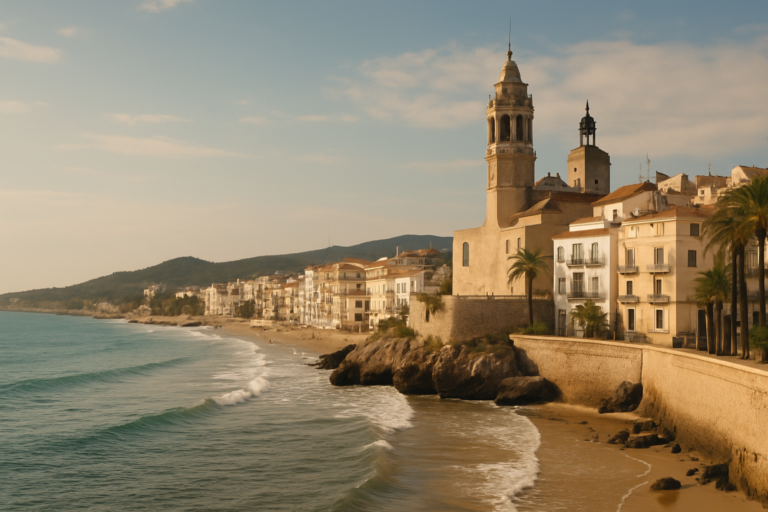
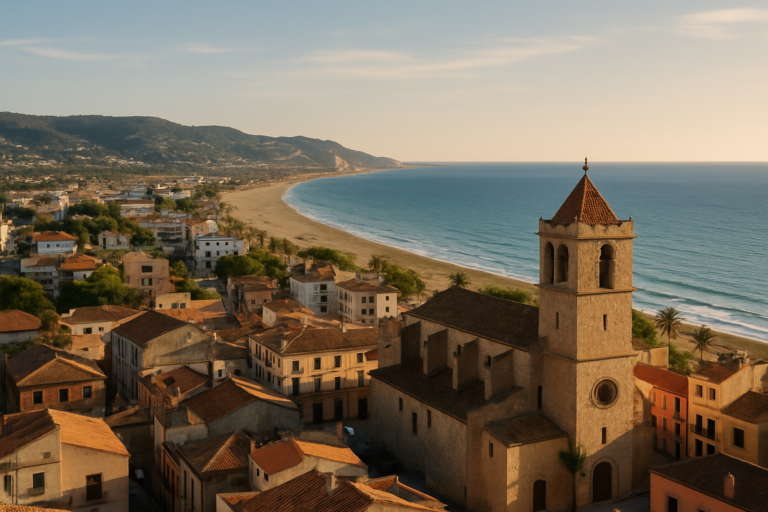
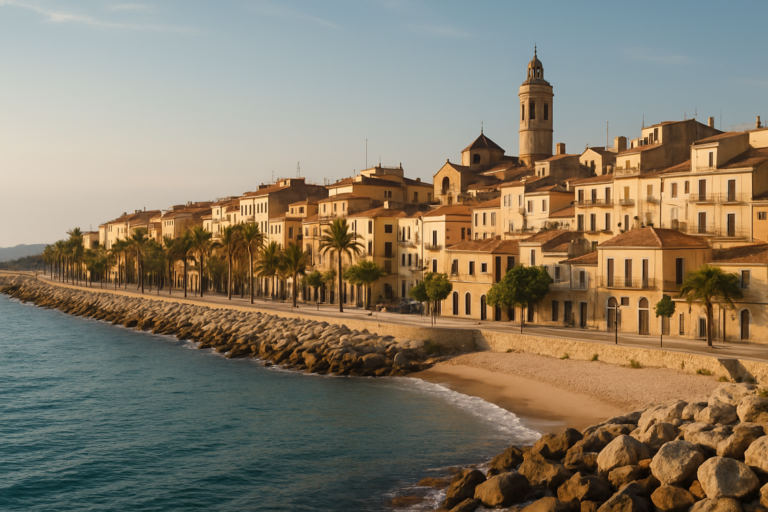
Cubelles on the map
Places worth knowing near Cubelles
This place is part of our Costa Barcelona Guide: Maresme, Garraf, Sitges & Penedès — see every town, beach and cove we have mapped on that coast.
How this page is maintained. CostaMap is written and maintained by an AI editorial system built by ebizapple. Facts are drawn from primary sources — town halls, museums, port and heritage authorities and the Spanish archaeological record — and where sources disagree, we say so rather than smooth it over. Photographs marked as ours are taken on location. This page was last reviewed on 15 August 2026. Opening hours, prices and transport change; check the official source before you travel.