
Albufera de Adra (Adra)
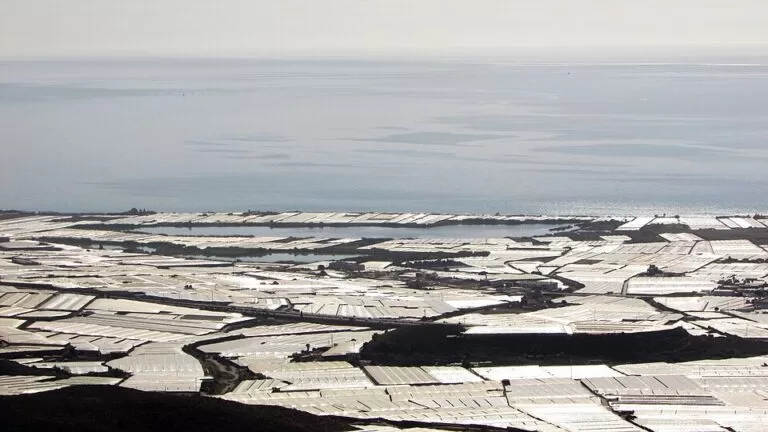
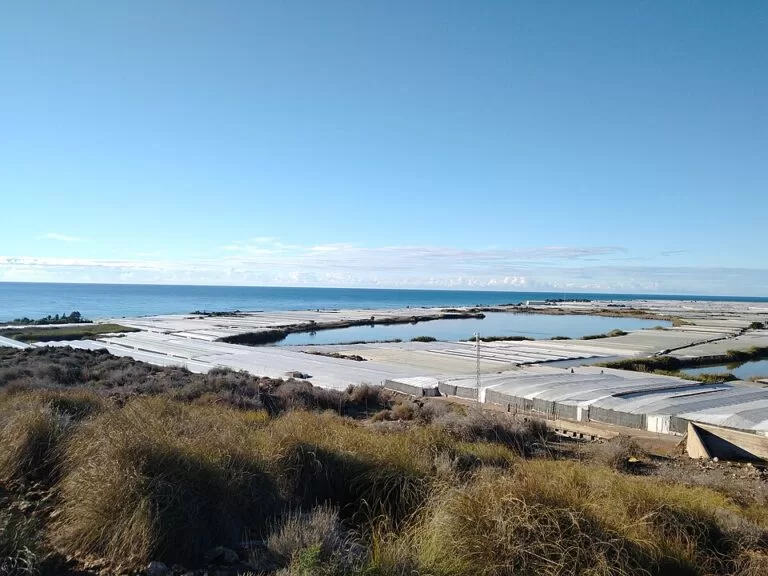
Natural parkThe Albufera de Adra is a coastal wetland nature reserve on the western Costa de Almería, made up of two lagoons, the Albufera Honda and the Albufera Nueva, between the mouth of the river Adra and the plain of the Campo de Dalías. It lies about 6 km east of Adra town and 6 km west of Balerma, just south of the N-340A coast road, surrounded by greenhouses. Andalusia’s tourist board calls it the most important wetland in Almería province. It suits birdwatchers and anyone curious to see a freshwater-and-brackish lagoon in a semi-desert; skip it if you want a beach or a marked day walk.
Quick facts
- Names: Reserva Natural Albufera de Adra; in Spanish also “Albuferas de Adra” for the two lagoons together. The lagoons are the Albufera Honda (north) and the Albufera Nueva (south).
- Where: municipality of Adra (Almería), between the mouth of the river Adra and the Llanos de Dalías (Andalucía.org), by the hamlet of Venta Nueva on OpenStreetMap.
- Coordinates: 36.7525, -2.9498 (protected area, OpenStreetMap). Albufera Honda 36.7561, -2.9475; Albufera Nueva 36.7513, -2.9509.
- Water: brackish, fed by seawater seeping in and above all by rain running off the La Estanquera and Las Adelfas ravines; the water is permanent all year.
- Best known for: the white-headed duck, a rare diving duck, among many water birds on the route between Europe and Africa.
- Entry: we found no entry charge and no visitor centre in the official listings.
Access and parking
By car: the reserve lies on the coastal plain between Adra and Balerma. The N-340A (Carretera del Mediterráneo) runs along its northern edge and the A-7 motorway passes about 1 km further north (OpenStreetMap). Local roads named Calle Camino Cauce and Calle Rambla Cajorros run between the greenhouses on its western and northern sides. OpenStreetMap shows no marked car park for the reserve, so park considerately on a wide verge and do not block greenhouse access.
By bus: there is a bus stop called Venta Nueva on the N-340A, tagged with ALSA as operator, about 1.1 km from the Albufera Honda (OpenStreetMap). We could not confirm which routes stop there or how often.
From Adra: the town centre is about 6 km west in a straight line; Balerma, in El Ejido, is about 6 km east.
What to expect
Two lagoons of reed-fringed water in the middle of the greenhouses of the Poniente plain. Andalucía.org stresses that contrast: a protected wetland of real natural value in a semi-desert setting ringed by intensive farming. The mild winters and permanent water make it a main stop on the migration routes of birds between Europe and Africa, and a place where birds nest and breed (Andalucía.org).
Birds. The star is the white-headed duck (malvasía cabeciblanca), which the tourist board calls very scarce. It shares the water with great crested grebes, coots, mallards and black-necked grebes. In autumn ducks such as mallard and shoveler arrive from northern Europe to spend the winter. In spring coots and the ferruginous duck nest in the thick reeds. In the reeds you may also hear or see Cetti’s warbler, reed and great reed warblers, the penduline tit and the reed bunting, while swifts, swallows and sand martins feed over the water.
Other wildlife. The lagoons hold sand smelt and the fartet, a small endemic fish in danger of extinction, plus Spanish pond turtles and viperine snakes. With patience you may spot the Mediterranean tree frog, the ladder snake or a weasel among the waterside plants.
Plants. Common reed and giant cane dominate, with saw-sedge, bulrush and club-rush near the water, and rushes, reed grass and tamarisk on the outer edge (Andalucía.org).
The tourist board mentions observation points set up beside the lagoons. We could not confirm their exact positions or whether they are open, so treat the reserve as a place to look from its edges rather than a site with a marked trail.
Practical details
- Visiting: this is a protected nature reserve. Stay on roads and tracks, and keep away from the reeds in the nesting season.
- Bring: binoculars or a telescope. The reeds are tall and the birds keep to open water, so optics make the visit.
- Combine with: the Museo de Adra in town, in the 18th-century house of the Marqués de Villacañas, with Phoenician, Punic and Roman finds and access to the Cerro de Montecristo archaeological site (Andalucía.org), and the 19th-century Torre de los Perdigones, a shot tower of the old San Andrés lead foundry (Andalucía.org).
- Food and toilets: none at the reserve; the nearest are in Adra, Balerma and the roadside businesses on the N-340A.
Accessibility and safety
We found no information on accessible paths or hides. The surrounding roads serve greenhouses and carry farm vans and lorries: walk facing traffic and wear something visible. There is little shade, and summer days on the Poniente plain are hot.
Best time to visit
Autumn and winter, when the wintering ducks from northern Europe are on the water, and spring, when the reeds hold nesting coots and ducks and migrants pass through. Early morning and late afternoon give the best light and the most activity. Summer is the quietest time for birds and the hottest for you.
Nearby alternatives
- Puerto Deportivo de Almerimar, 15 km east: the big marina of El Ejido, with beaches on both sides.
- Punta Entinas-Sabinar, 26 km east: dunes, salt pans with flamingos and a 6.5 km wild beach.
- Aguadulce, 34 km east: the resort beach and marina near Almería city.
- Castillo de Salobreña, 57 km west: the Moorish castle above Salobreña on the Costa Tropical.
Distances are in a straight line from the reserve. See also our Adra town guide.
FAQ
Where are the Albuferas de Adra?
On the coastal plain in the municipality of Adra, Almería, about 6 km east of Adra town and 6 km west of Balerma, just south of the N-340A road by Venta Nueva.
What birds can you see at the Albufera de Adra?
The tourist board highlights the rare white-headed duck, with great crested and black-necked grebes, coots, mallards, shovelers and the ferruginous duck, plus reed warblers and reed buntings in the reeds.
Is there parking at the Albufera de Adra?
OpenStreetMap shows no marked car park. Visitors park on the local roads around the reserve; leave greenhouse entrances clear.
Can you get to the Albufera de Adra by bus?
There is a Venta Nueva bus stop on the N-340A about 1.1 km from the Albufera Honda, but we could not confirm the routes or timetable.
When is the best time to visit?
Autumn to spring. Wintering ducks arrive in autumn, and the reeds hold nesting birds in spring.
Sources and freshness
Checked 9 November 2026 · 5 sources Show
Checked 9 November 2026. Official: Andalucía.org (Junta de Andalucía tourism) on the Reserva Natural Albufera de Adra (lagoons, water, birds, fish, plants), Adra (20 km of coast and the reserve), the Museo de Adra and the Torre de los Perdigones. Location, roads, the bus stop and distances: OpenStreetMap (ODbL). Not confirmed: the reserve’s size and date of declaration, the position and opening of observation hides, bus routes at Venta Nueva, any visiting rules beyond the general protection. The Junta de Andalucía environment pages and Adra town hall’s tourism site could not be reached when we checked.
This place is part of our Costa de Almería travel guide: where it is, Cabo de Gata, Mojácar and Almería city — see every town, beach and cove we have mapped on that coast.
How this page is made. CostaMap is written with an AI editorial system run by Ebizapple. This page is based on the sources listed above. Last updated 9 November 2026. Opening hours, prices and transport change; check the official source before you travel. How we work · Partner links and ads