
Costa Tropical · Middle
Salobreña, Motril and Calahonda travel guide: castle town, sugar coast and Cabo Sacratif
A white town under a Nasrid castle, the working town of Motril with its port and long beaches, a wetland full of birds, and the small resorts of Torrenueva Costa, Carchuna and Calahonda around Cabo Sacratif.
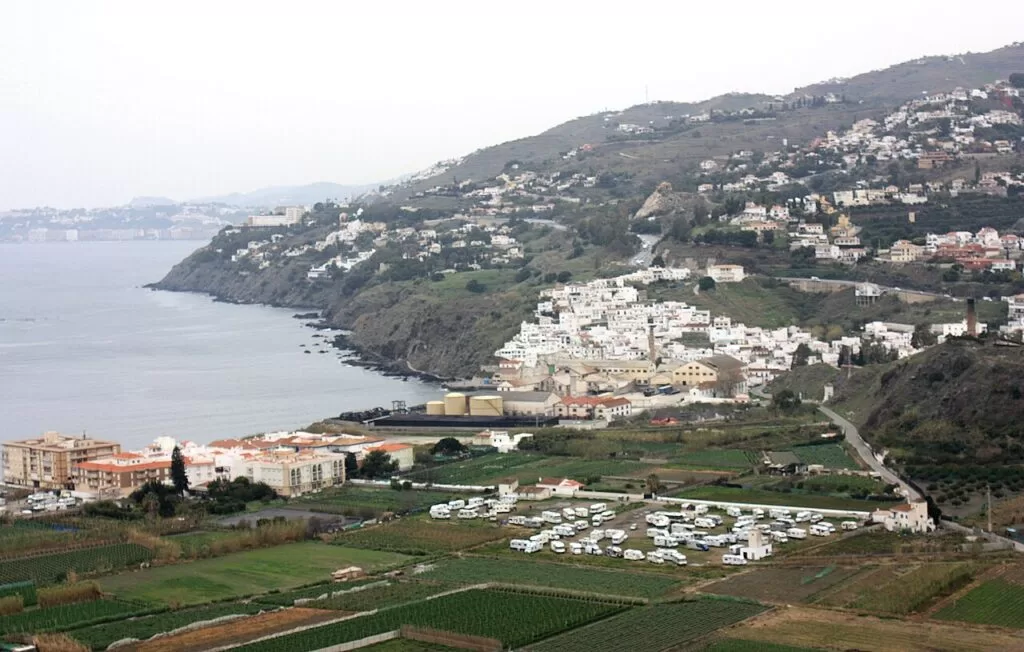
From Salobreña castle to Caleta-La Guardia · Photo: Dguendel, CC BY 4.0
Part of the Costa Tropical guide · Middle: Salobreña, Motril and Calahonda
The middle stretch of the Costa Tropical is the central coast of Granada province, about 16 km in a straight line from Salobreña in the west to Calahonda in the east. It takes in three of the coast’s main places, Salobreña, Motril and Torrenueva Costa, plus Motril’s beach villages of Playa Granada, Carchuna and Calahonda; Spain.info names Salobreña and Motril among the five tourist centres of the Costa Tropical (spain.info).
At a glance
- Where the central coast of Granada province, from the castle town of Salobreña and the mouth of the Guadalfeo east past Motril and Cabo Sacratif to Calahonda.
- Towns Salobreña with Lobres, Motril with Playa Granada and Playa de Poniente, Torrenueva Costa, Carchuna and Calahonda.
- Best for long beaches with services, a castle and a white old town, birdwatching, diving at Calahonda, and Granada by bus.
- Getting there Granada airport (GRX) is about 54 km from Motril and Málaga airport (AGP) about 88 km, in a straight line; the N-340 coast road links every place, and Motril has the bus station.
- On CostaMap Salobreña and Motril town guides, the Castillo de Salobreña, Torrenueva Costa, Calahonda and the Charca de Suárez reserve.
Map of Salobreña, Motril and Calahonda
The map shows the places on this stretch that have a CostaMap page. Tick a place type to filter, and click a marker to see the place in the panel.
Place type
Area · next level
 Area map
Salobreña, Motril and Calahonda
Click a marker to see the place here. From Salobreña and its castle past Motril and Torrenueva Costa to Carchuna and Calahonda.
Towns and villagesTowns and villages
From west to east. Straight-line distances are from OpenStreetMap.
Salobreña
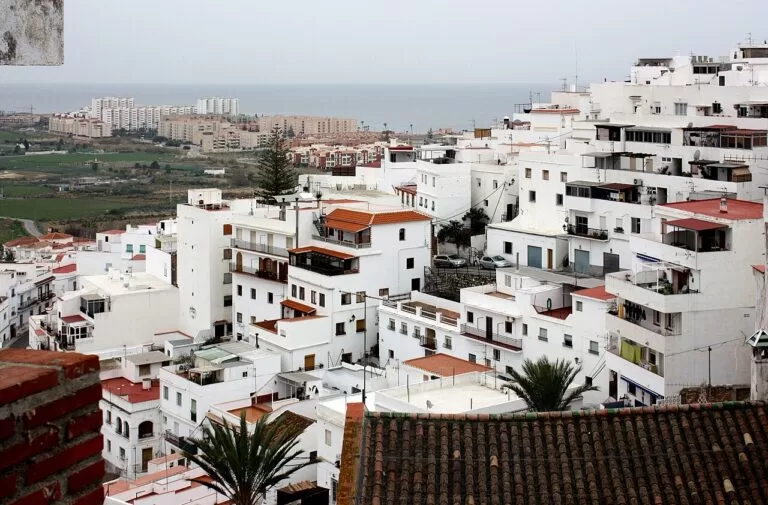
Salobreña stands on the Gran Peñón, a rock between the plain and the sea, its white houses climbing to a Hispano-Muslim castle. Andalucía.org traces it back to Argaric and Phoenician remains; it was Salambina to the Carthaginians, Segalvina to the Romans and Salawbiniya to the Arabs, and the Catholic Monarchs took it in 1489. Pirate raids in the 18th and 19th centuries drove people to the hills, and sugar cane, tropical fruit and tourism brought it back in the 20th century (Andalucía.org). Spain.info points to the 16th-century church of Nuestra Señora del Rosario, built on the site of a mosque, and the old quarters of La Loma, La Fuente, El Brocal and El Albaycín (spain.info). See our Salobreña guide and the Castillo de Salobreña guide.
Lobres
Lobres is a village of Salobreña municipality, 3.5 km inland up the Guadalfeo valley, with 1,233 inhabitants in 2022 (Spanish Wikipedia). It has no beach; the valley of Salobreña and Lobres is one of the four stages of the town’s 14 km birdwatching route (Andalucía.org). Its fiestas are for San Antonio, on the weekend nearest 13 June, and for the Virgen de la Candelaria on 2 February, when people throw popcorn from balconies onto the procession.
Playa Granada
Playa Granada is the westernmost beach district of Motril, next to Salobreña. King Baudouin and Queen Fabiola of Belgium had their summer residence here, Villa Astrida, and Baudouin died there in 1993 (Spanish Wikipedia; Andalucía.org). The 1,450 m beach of dark sand has a golf course right behind it, lifeguards and views north to the Sierra Nevada (spain.info). The Motril Air Show is held here on a Sunday in early June.
Motril
Motril, on a hill at the foot of the Sierra de Lújar about 2 km from the sea, is the main town of this stretch; Andalucía.org calls it the capital of the Costa Tropical. Its port has fishing, commercial and leisure traffic, and its beaches run from Playa de Poniente to Carchuna and Calahonda, which belong to the municipality (Andalucía.org). In town, spain.info lists the 16th-century Mudéjar church of La Encarnación, built over a mosque, the Baroque town hall and the sanctuary of the Virgen de la Cabeza on a hill with views, built over the house of the mother of Boabdil (spain.info). Casa de la Palma, from 1604, is the only survivor of the 11 sugar mills that worked here in the 16th century (Andalucía.org). See our Motril guide and the Charca de Suárez reserve guide.
Torrenueva Costa
Torrenueva Costa, 5.7 km east of Motril, split from it in 2018 to become its own municipality, with 3,207 inhabitants (Spanish Wikipedia). It is named after its coastal watchtower beside the N-340; the church of Nuestra Señora del Carmen faces the sea, and an old cistern, the Aljibe, is now an exhibition space. Its town beach and La Pelá–El Cañón hold the Blue Flag and the Q for tourism quality, and the naturist beach of La Joya lies below the cliffs of Cabo Sacratif, on the 10 km PR-A 420 trail of viewpoints and cliffs (Andalucía.org). See our new Torrenueva Costa guide.
Carchuna
Carchuna, part of Motril, lies on the plain east of Cabo Sacratif, at the foot of the hills of the same name. A rock shelter on the Llanos de Carchuna has paintings from the Neolithic and Bronze Age. The present village began in the 1940s, when small farmers from Alpujarra villages such as Torvizcón and Rubite settled the plain, and grew with state-built housing (Andalucía.org). Greenhouses surround its 3 km beach (Andalucía.org), and in the middle of the sand stands the Fuerte de Carchuna, an 18th-century coastal fort with a semicircular gun battery facing the sea (Andalucía.org). Since 2005 Carchuna and Calahonda form one local entity within Motril (Spanish Wikipedia).
Calahonda
Calahonda, 13 km from Motril and just east of Carchuna, is a fishing village turned resort. Andalucía.org says its beaches and diving make it one of the most interesting places on the Granada coast, that its name refers to the deepest, clearest water on this shore, and that its population multiplies in summer. It grew up after the castle of Carchuna made the shore safe from Berber raids (Andalucía.org). Its 1.4 km beach of dark sand regained the Blue Flag in 2019 (Andalucía.org), and spain.info calls it probably the best tourist beach in the area (spain.info). See our new Calahonda guide.
Beaches and coves
Mostly long beaches of dark sand or gravel with promenades, and a few quiet or naturist stretches. Lengths and services are from spain.info’s beach sheets and Andalucía.org.
La Charca and La Guardia
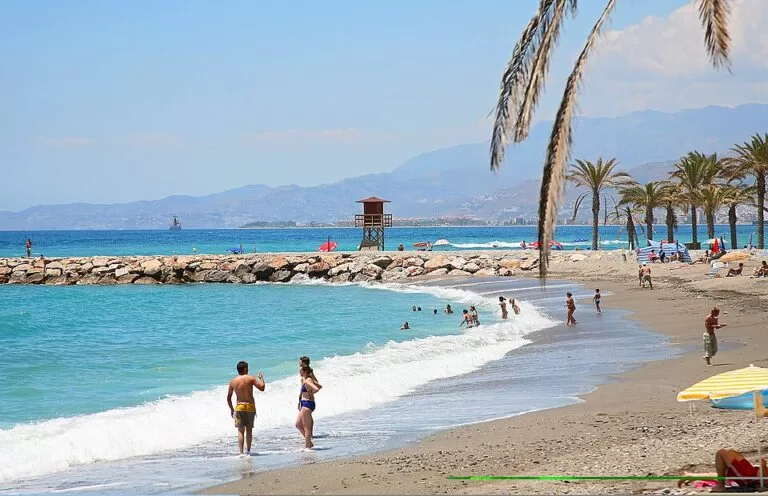
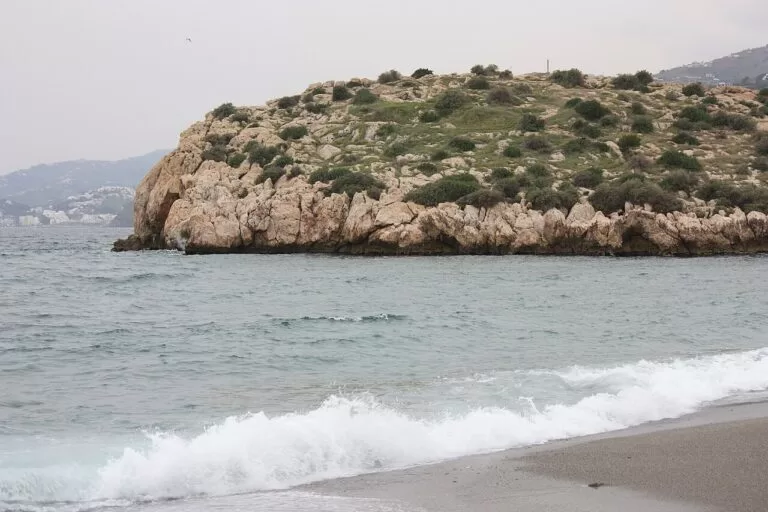
La Charca, also called del Peñón, is long and wide, with a promenade, lifeguards, adapted toilets and amphibious chairs (Andalucía.org). The rock of the Peñón separates it from La Guardia, a long beach backed by fields (Andalucía.org).
See the Salobreña guide →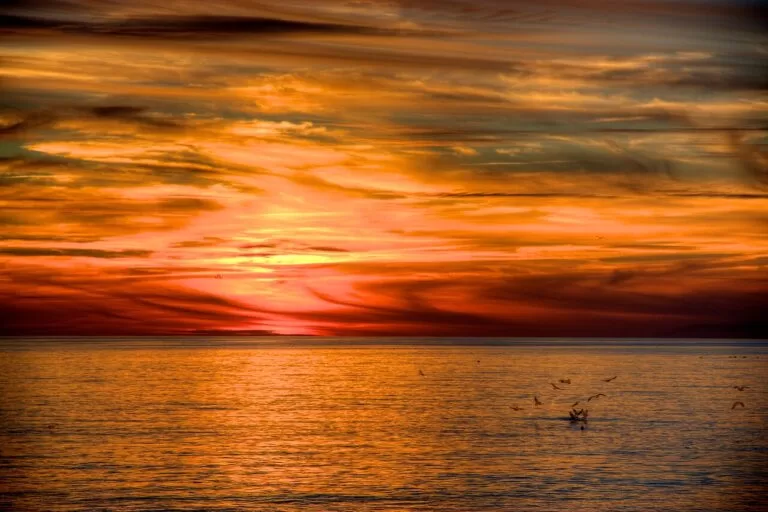
Poniente and Playa Granada
Poniente–El Cable is Motril’s busiest beach, with a promenade, amphibious chairs on some days in high season and a dog area, PlayaCan, by the port wall (Andalucía.org). Playa Granada next to it is 1,450 m of dark sand with lifeguards (spain.info).
See the Motril guide →Torrenueva and La Joya
A 1,630 m town beach split by groynes, with the Blue Flag, the Q since 2005 and the accessible-beach label (Andalucía.org); La Joya is a 300 m naturist beach reached by a 500 m path (spain.info).
See the Torrenueva Costa guide →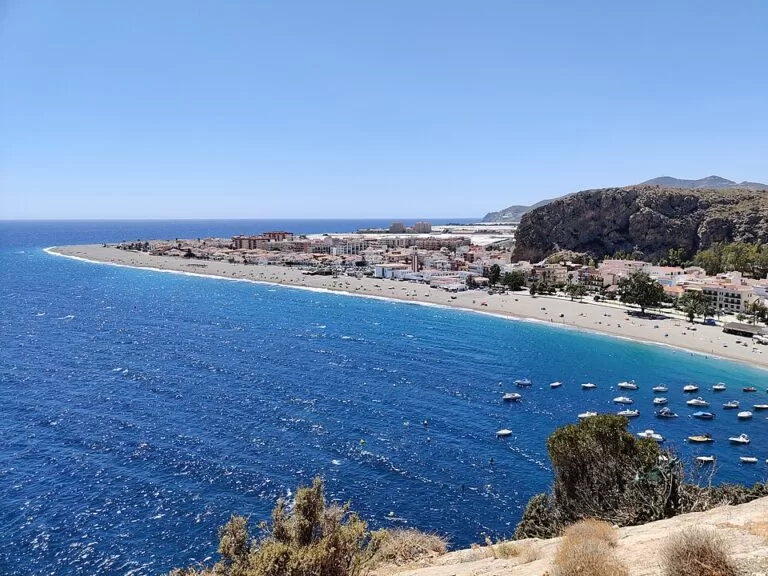
Calahonda
About 1,400 m by 40 m of dark sand in front of the village, with loungers, showers, a children’s area and a diving zone; high occupancy in summer (spain.info).
See the Calahonda guide →- El Cambrón – a 100 m pebble beach by the Torre del Cambrón estate at Salobreña, hard to reach and with no services (spain.info).
- Las Azucenas – 2,100 m of gravel and dark sand near Motril port, reached across sugar-cane fields, so rarely busy (spain.info).
- La Chucha – 996 m at the start of Carchuna beach, fairly sheltered from the wind (spain.info).
- Carchuna – about 3 km of sand and gravel around the fort, quiet for its size (spain.info).
Things to do
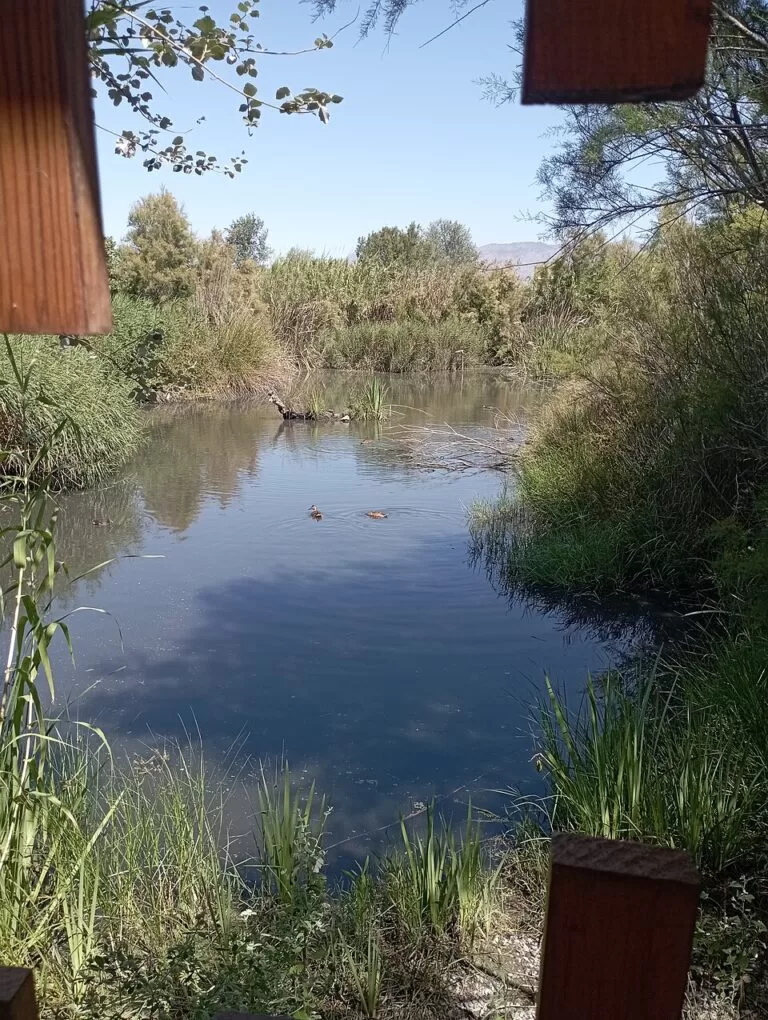
Nature: wetland birds and cliff trails
The Charca de Suárez, a reserve of a little over 13 ha behind Playa de Poniente, is the most important wetland on the Granada coast; in one afternoon you can see more than ten species of waterbirds, and in winter flamingos, spoonbills and squacco herons. From March to May only guided visits of 90 minutes are allowed (Andalucía.org). Salobreña’s 14 km bird route runs from the cliffs of La Caleta to the Guadalfeo mouth and the Tajo del Gambullón (Andalucía.org), and Torrenueva Costa’s PR-A 420 follows 10 km of cliffs and viewpoints.
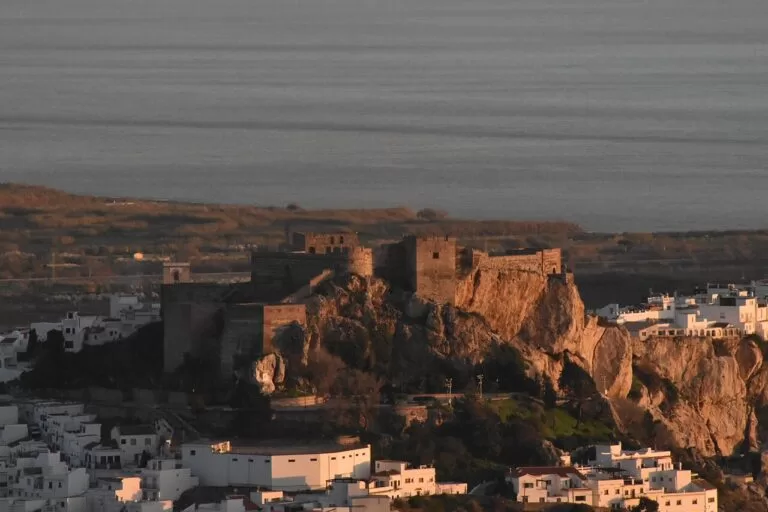
History: a Nasrid castle and coastal forts
A fortress has stood on Salobreña’s rock since the 10th century; its inner enclosure keeps the layout of the Nasrid alcázar, and two outer enclosures were added by the Castilians in the late 15th century. From the towers you see the town, the plain, the sea and the Sierra Nevada (Andalucía.org). See our Castillo de Salobreña guide. In Motril, visit La Encarnación and the sanctuary of the Virgen de la Cabeza; on the coast, the watchtower of Torrenueva and the Fuerte de Carchuna recall the defences against Berber raids.
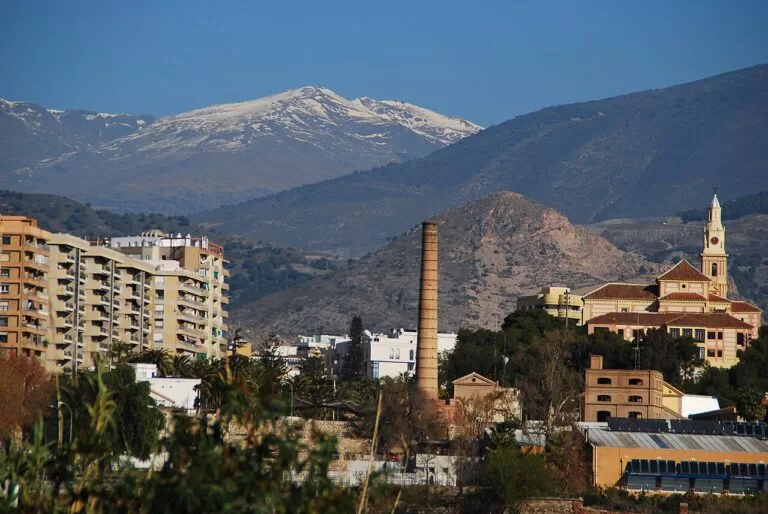
Food and sugar
Sugar cane and tropical fruit shaped this plain. Motril’s Casa de la Palma is the last of its old sugar mills (Andalucía.org). Spain.info lists Salobreña dishes such as potatoes with shark, seafood soup, migas, dried octopus and sardine skewers, and fruit such as mango, avocado and custard apple (spain.info). Torrenueva adds caldero, pulpo en zoquillo, espichás and iced leche rizada (Andalucía.org).
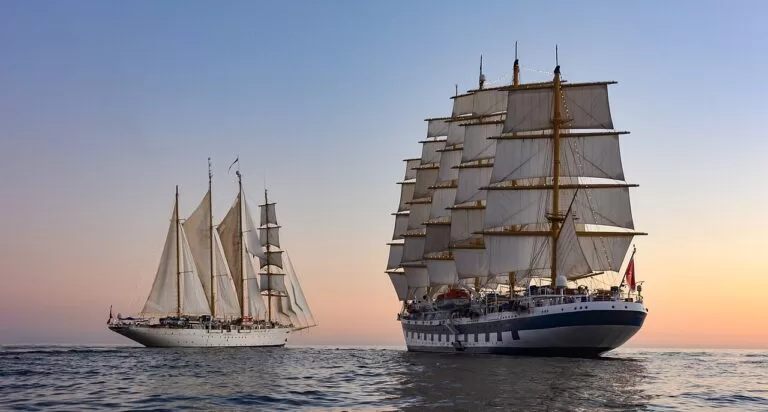
On the water
At Playa Granada, the AWA Center teaches kitesurfing, windsurfing, paddle surfing and surfing, with free parking (Andalucía.org). Calahonda is the diving village, with a dive centre offering try dives, courses and boat dives (Andalucía.org). Torrenueva lists windsurfing, diving, kayaking and paddle surfing.
Where to stay by town
The bases we would choose, west to east. For Granada by bus, Motril and Salobreña are the easiest.
Salobreña
The prettiest base: a white old town under the castle, with long beaches below. The town’s tourist office is on Plaza de Goya.
Old town and beachMotril and Playa de Poniente
A real town all year, with the bus station, the port and the beach suburbs of Poniente and Playa Granada. Two campsites, Playa de Poniente and Playa Granada, sit by the beach (Andalucía.org).
Practical, all yearTorrenueva Costa
A small, flat seafront with an accessible Blue Flag beach. Busy in summer and very quiet out of season.
FamiliesCalahonda
A village beach and diving base with an ALSA bus stop. Full in July and August.
Divers and quiet weeksGetting there and around
By air
Granada airport (GRX) is about 54 km and Málaga airport (AGP) about 88 km from Motril in a straight line (OpenStreetMap); road distances are longer. The port of Motril notes three airports within 45 minutes by road: Granada, Almería and Málaga (Andalucía.org).
By car
The N-340 coast road links Salobreña, Motril, Torrenueva Costa, Carchuna and Calahonda; spain.info gives it as the nearest road to every beach on this stretch. Granada city is 69 km from Torrenueva Costa (Spanish Wikipedia).
By bus
Motril’s bus station is at Camino Nuevo de San Antonio (Andalucía.org), and OpenStreetMap maps an ALSA stop in the centre of Calahonda. Check timetables locally: we could not reach the bus operator or the town sites.
A two-day route
By car, west to east, with a night in Salobreña or Motril.
Day 1
Salobreña and Motril
Climb through Salobreña’s old quarters to the castle in the morning, then swim at La Charca or La Guardia. In the late afternoon, drive to Motril for Casa de la Palma and La Encarnación, or go to the Charca de Suárez when it opens its afternoon slot (check the day first) and end at sunset on Playa Granada.
Day 2
Cabo Sacratif: Torrenueva, Carchuna and Calahonda
Walk part of the PR-A 420 cliff trail from Torrenueva Costa in the cool of the morning, with the viewpoint over the Peñón de Jolúcar. Continue to Carchuna to see the fort on the beach, then spend the afternoon snorkelling or diving at Calahonda.
FAQ
Is Salobreña or Motril better to stay in?
Salobreña for a white old town and a castle above the beach; Motril for a working town with the bus station, the port and more open all year. They are 6 km apart.
What is there to do in Motril?
The beaches of Poniente and Playa Granada, the Charca de Suárez bird reserve, the church of La Encarnación, the sanctuary of the Virgen de la Cabeza and Casa de la Palma, the last of the town’s old sugar mills.
Which is the best beach near Motril?
For services, Poniente–El Cable or Playa Granada; for a village beach and clear water, Calahonda, which spain.info calls probably the best tourist beach in the area.
Is there a nudist beach near Motril?
Yes: La Joya, below the cliffs of Cabo Sacratif in Torrenueva Costa, about 7 km from Motril in a straight line. It is reached on foot along a path of about 500 m.
Can you visit Salobreña castle?
Yes. It is one of the most visited monuments on the Granada coast (Andalucía.org). Check current hours and prices with the Salobreña tourist office before you go.
How far is Granada from Motril?
About 48 km in a straight line; by road it is further. Granada city is 69 km from Torrenueva Costa by road (Spanish Wikipedia).
Other areas of the Costa Tropical
Costa Tropical
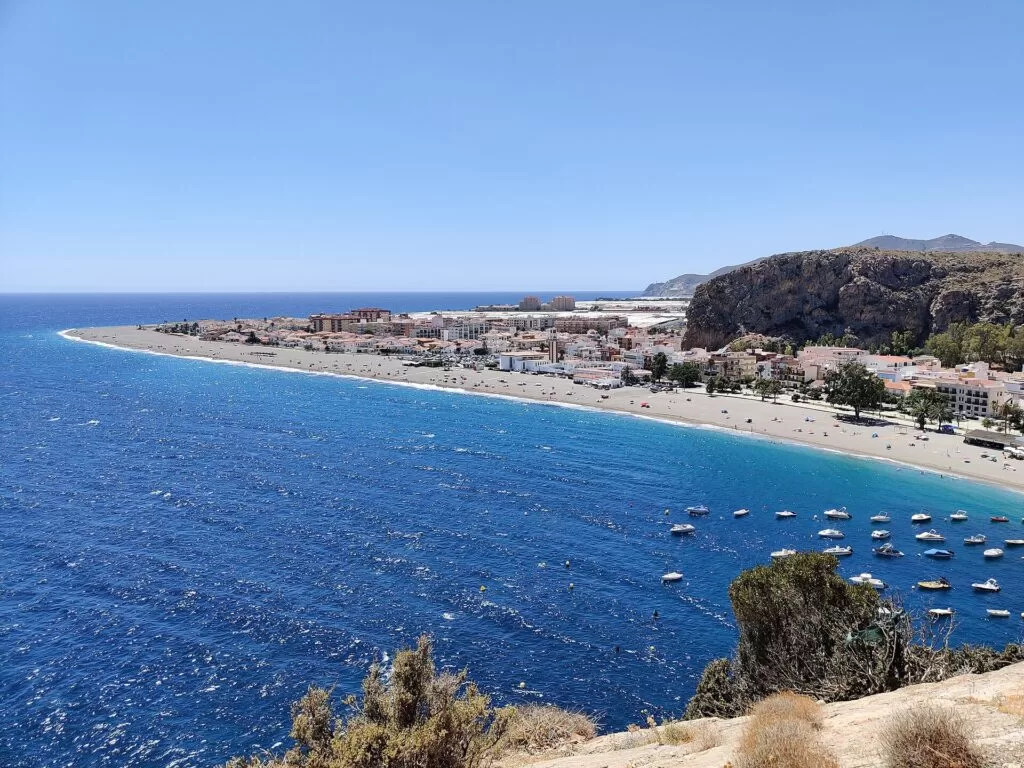
The whole coast of Granada province from La Herradura to La Rábita, with the map, the three areas and the inland day trips.
Costa Tropical guide →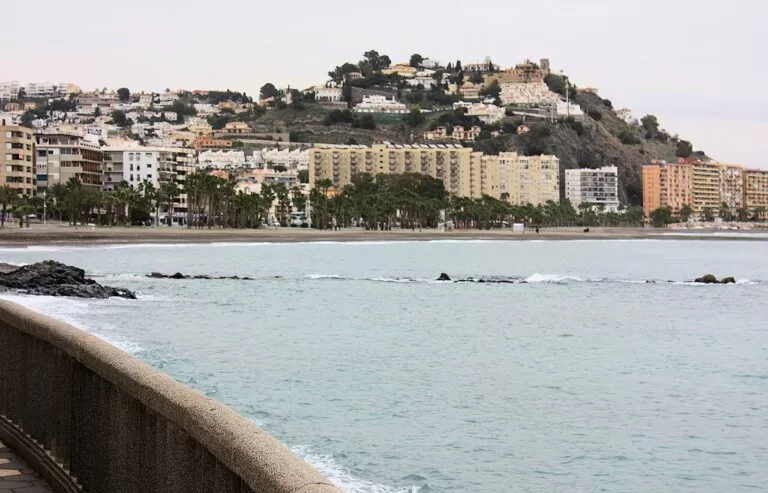
Almuñécar and La Herradura
The castle and Roman sites of Almuñécar, the bay of La Herradura and the coves towards Cerro Gordo.
Almuñécar and La Herradura guide →
Castell de Ferro to La Rábita
Villages and coves east of Calahonda, with castles at Castell de Ferro and La Rábita.
Castell de Ferro to La Rábita guide →Sources and freshness
Checked 9 November 2026. Andalucía.org (Junta de Andalucía tourism) on Salobreña, Motril, Torrenueva Costa, Carchuna, Calahonda, the Castillo de Salobreña, the Charca de Suárez, the Salobreña bird route, Casa de la Palma, the Fuerte de Carchuna, the port of Motril, the Motril bus station, the Motril and Salobreña tourist offices, the beaches of La Charca, La Guardia, Poniente–El Cable, Torrenueva Costa, Carchuna and Calahonda, the AWA Center, Buceo Calahonda and the campsites Playa de Poniente and Playa Granada. Spain.info (Turespaña) on Salobreña, Motril and the Costa Tropical, and its beach sheets for El Cambrón, Playa Granada, Las Azucenas, La Chucha, Carchuna, Torrenueva, La Joya and Calahonda. Background (population, Playa Granada, Lobres, local entities, roads): Spanish Wikipedia on Torrenueva Costa, Carchuna, Calahonda, Playa Granada and Lobres. Map data, bus stops and straight-line distances: OpenStreetMap (ODbL). Not confirmed: bus routes and timetables, castle and museum opening hours and prices, and this year’s Blue Flag list; the Motril, Salobreña and Torrenueva town and tourism sites and turgranada.es could not be reached when we checked. Photos from Wikimedia Commons: Salobreña and the Peñón by Dguendel (CC BY 4.0); Castillo de Salobreña by Inés Palomino Ureña (CC BY-SA 4.0); Motril and Torrenueva beach by Rosa F. Seguido (CC BY-SA 4.0); Playa Granada by Jiuguang Wang (CC BY-SA 2.0); tall ships off Motril by Gordon Leggett (CC BY 4.0); Charca de Suárez by Thoughtfortheday (CC BY 4.0); Calahonda by Veinticuatro de Jahén (CC BY-SA 4.0); Almuñécar by Dguendel (CC BY 4.0); Castell de Ferro by Feranza (CC BY-SA 4.0).