
Motril is a working port city of about 60,000 people on the Costa Tropical, set a couple of kilometres back from the sea. It suits visitors who want a real Andalusian town with sugar-industry museums, a rum distillery and long town beaches, not a resort. Stay here for good-value everyday life and day trips along the coast; for a postcard old town, base yourself in Salobreña or Almuñécar instead. It is part of our Costa Tropical guide.
Quick facts
- Where: Motril, Granada province, Andalusia, on the Costa Tropical, which Turismo Costa Tropical describes as more than 80 km of coastline.
- Residents: 59,862 (1 January 2025, INE).
- Beach: yes. Playa de Poniente is the closest, about 2 km from the centre, and it is pebbles and gravel rather than soft sand.
- Nearest airports: Granada–Jaén Federico García Lorca, Málaga and Almería are the three airports listed by Motril tourism. Granada is the nearest.
- Port: about 2 km from the city centre, with ferries to Melilla and to Morocco.
- Language: Spanish; the Ron Montero tours are also offered in English.
- Known for: a sugar-cane past, local rum, quisquilla (a small prawn) and subtropical fruit such as custard apple, avocado and mango.
Where to base yourself
Motril is not one compact old town. It is a city with a historic core, a separate port, and a string of beach districts, so the choice of base matters more than usual.
The historic centre
The area around Plaza de España has the town hall, the main church, the municipal market and most of the museums within walking distance. It is the best choice if you want to see the sugar sites and eat in ordinary local bars, and it is a fair walk or short bus ride from the sand.
Poniente and the seafront
Playa de Poniente is the closest beach, and a promenade named after King Baudouin runs along it. Motril tourism describes it as lined with beach bars that make it a nightlife area after dark. Choose this side for sea views and an easy evening stroll.
Playa Granada
Southwest of the port, Playa Granada is calmer and more resort-like, with a golf course beside it. It suits families and golfers who are happy to drive or take the bus into town.
The villages to the east and west
Carchuna and Calahonda are quieter beach villages. Calahonda is about 13 km from Motril according to the tourism site. If you want small-village quiet, stay there and visit the city by car or bus.
Things to do
Motril’s main story is sugar. Sugar cane was grown here for about 1,200 years, according to the municipal tourism site, and the last harvest of that period was in 2006, although farmers have since resumed cutting. That history is easy to follow on foot and by short drive.
The sugar trail
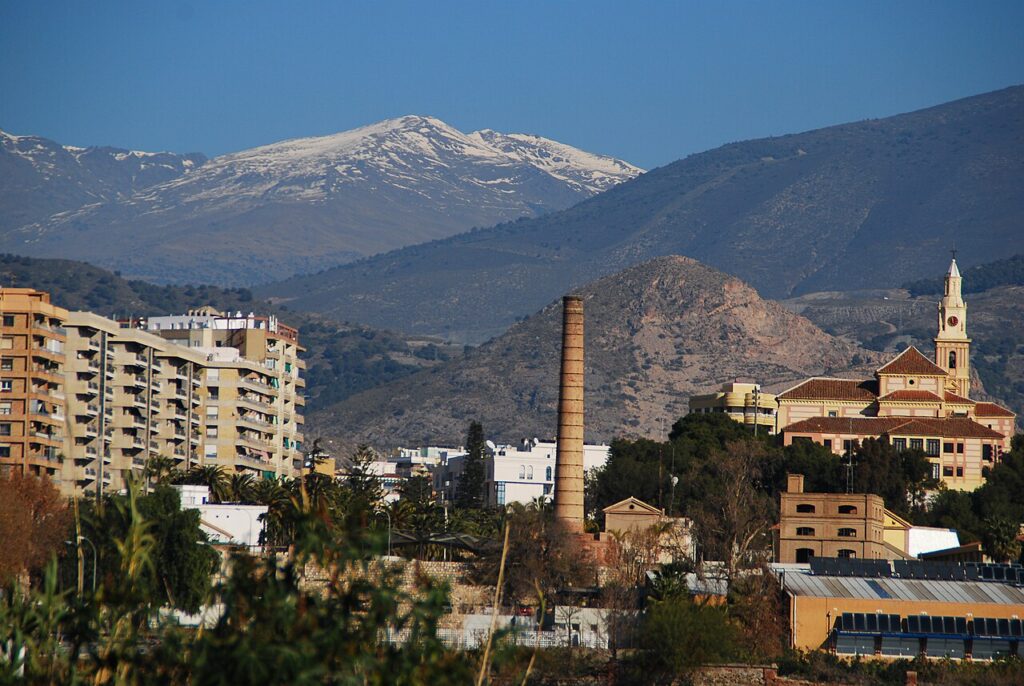
The Museo Preindustrial del Azúcar stands on archaeological remains of the Ingenio de la Palma, a sugar mill first mentioned in the late 15th century. The Fábrica de Nuestra Señora del Pilar opened in 1883, operated for about a century and is described as the only Motril sugar mill that keeps its architecture, machinery and archive; you see the chimney and steam engines on a guided tour. The third stop is the Ron Montero distillery, founded in 1963, which makes aged rum and runs a tour of roughly an hour that ends with a tasting. Visit times, tour languages and fees change, so check the tourism site before you go.
Old churches and civic buildings
The Iglesia Mayor de la Encarnación was built between 1510 and 1514 on the site of a former mosque. The current town hall dates from 1631, built after the previous building was destroyed in a 1620 Berber attack. The Teatro Calderón de la Barca, from 1880, is an Italian-style theatre with neoclassical decoration and a Bien de Interés Cultural listing. The Santuario de Nuestra Señora de la Cabeza stands on the ruins of a Nasrid castle, and building of the present temple began in 1631.
Gardens and quieter museums
The Parque de los Pueblos de América holds more than 50 exotic and subtropical trees and shrubs. The Jardín de Cactus y Suculentas “Teresa” has more than 1,000 species. Casa de los Bates is a 19th-century colonial mansion with 18th-century gardens, and the Centro de Arte Hernández Quero shows the work of a Granadan 20th-century artist. The Memorial Rey Balduino marks the place where King Baudouin of Belgium died on 31 July 1993.
Beaches and places nearby
Do not expect fine golden sand. Motril’s town beaches are a mix of pebbles, gravel and sand, so bring beach shoes. Figures below are from the municipal tourism site.
Playa de Poniente
This beach is 2,231 m long and about 120 m wide, and the tourism page lists its surface as pebbles and gravel. It is urban, has calm water, a children’s play area, sports courts and beach bars, and a weekly night market in summer. It is the beach to choose if you want to walk from town.
Playa Granada
Playa Granada is 1,367 m long and about 40 m wide, with a mix of stones and sand. The tourism page lists a watersports school, an 18-hole golf course on the seafront and a summer cinema area, and notes that the Belgian royal family once holidayed here at Villa Astrida.
Carchuna and Calahonda
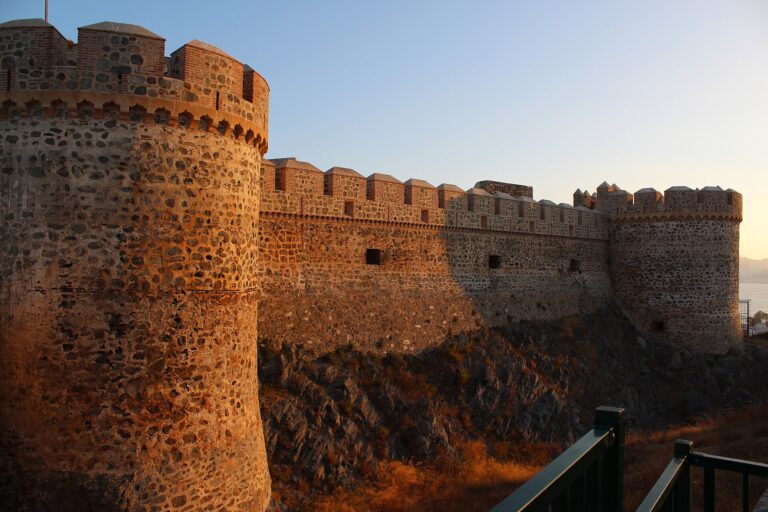
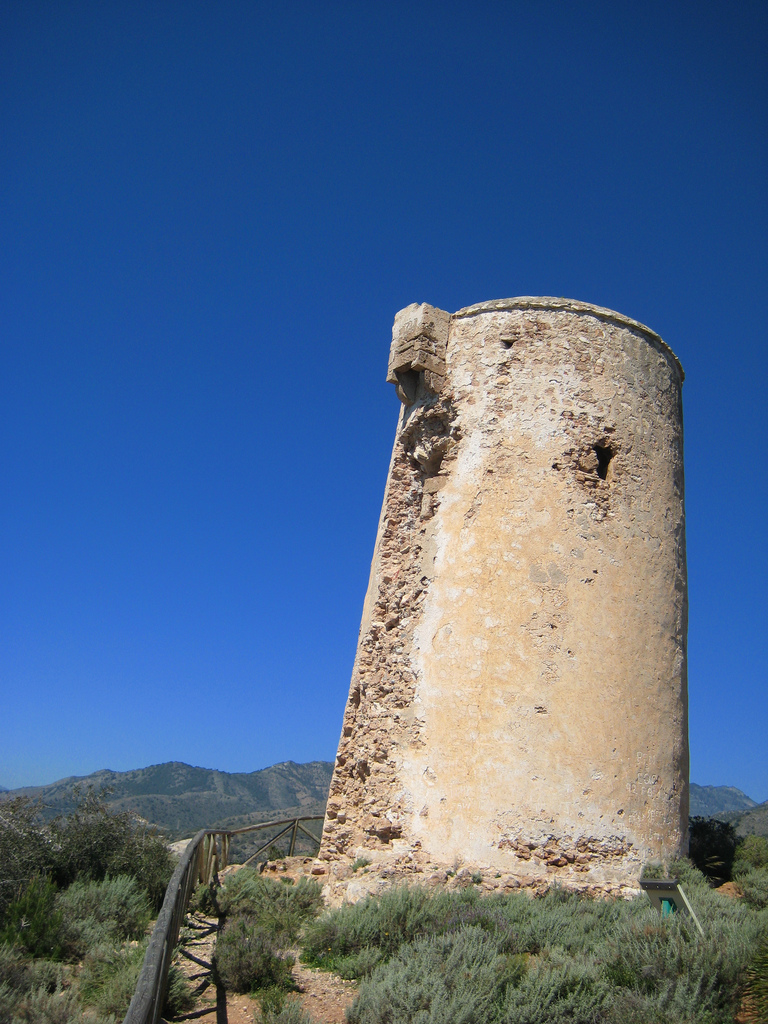
Playa de Carchuna is 3,814 m long, described as almost 4 km, and is medium grey sand and gravel. Playa de Calahonda is 1,375 m long, with clear, deep water and a small fishing-village setting. In Carchuna stands the Castillo de Carchuna, built in 1777 under Carlos III to defend the coast from pirate raids, and nearby is the little Farillo de Calahonda watchtower.
Dogs
Playa Can de Motril, on Playa del Cable, is a dog beach of 12,000 m² with a dog shower and a drinking fountain, plus free parking next to it.
Day trips
Granada and the Alhambra are about 40 minutes away and the Sierra Nevada ski station about 60 minutes, according to Turismo Costa Tropical. Along the coast, Salobreña and Almuñécar make easy half-day trips, and Nerja is further west. For the city itself, see our Granada guide.
Other town guides nearby: Frigiliana (about 34 km in a straight line), Torrox (about 39 km in a straight line).
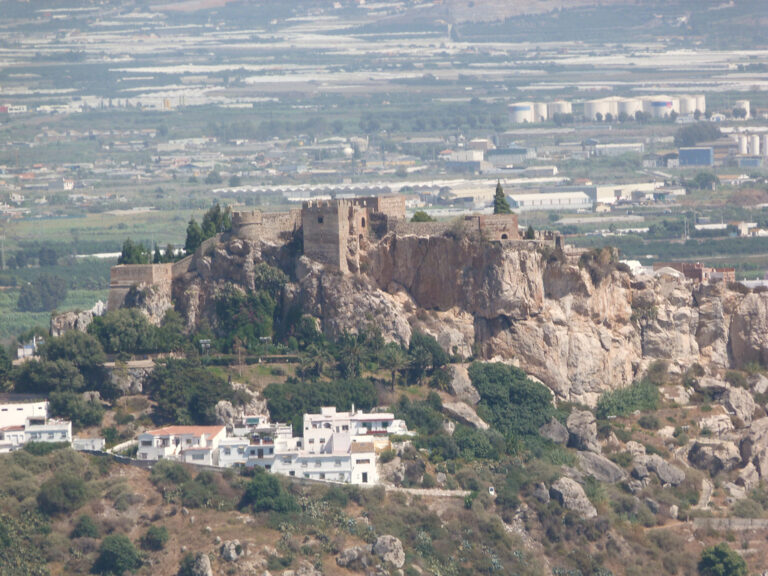
On CostaMap near Motril: Castillo de Salobreña (6.1 km).
Food and drink
The tourism site calls the quisquilla, a small local prawn, the local emblem, and says the fishing port lands fish and shellfish every day. Ask for seafood at a fish bar near the port or the seafront instead of choosing a place by its menu photos.
The area is also known for subtropical fruit. Motril tourism names custard apple, avocado and mango from the plantations of the plain. The Mercado Municipal, a two-storey market building, is the simplest place to see the produce. For a drink with a story, the cane rum from Ron Montero is the obvious choice, and a tasting is part of the distillery tour.
We do not name individual restaurants, because lists change quickly and we have not verified them.
Where to stay
Carchuna beach has a hotel and a first-category campsite, according to the tourism site, and Calahonda has hotels beside its beach. In the city, look near Plaza de España for sightseeing or near Poniente for the sea. We do not quote prices, which change by season and year. Book early for July and August, and check parking when you reserve a city-centre room.
Getting there and around
By air, the nearest airport is Granada–Jaén Federico García Lorca at Chauchina; Málaga and Almería are the other two airports listed by Motril tourism. From Granada, the ALSA bus runs to Motril’s bus station, and the road trip is roughly the same 40 minutes the coast tourism board gives for the Alhambra. By car, the N-340 and the Mediterranean motorway run past the town.
The port connects Motril with Melilla and with Nador, Al Hoceima and Tanger Med in Morocco. A NetFerry guide lists the Melilla crossing with Naviera Armas at about 5 hours, but schedules change, so confirm with the operator. Inside the city, an urban bus serves Poniente, Playa Granada, Carchuna and Calahonda, and car rental, taxis and public parking are listed on the tourism site.
Best time to visit
Motril has a hot, dry climate. Climate averages for 1981–2010 show roughly 380 mm of rain a year, a mean daily maximum near 30 °C in August and a mean minimum of about 9 °C in January. Winters are mild enough for sightseeing, and spring and autumn are comfortable for museums, gardens and beach walks. July and August are hot and the beaches are busiest. We list no festival dates because they change every year; check the Motril agenda before you plan around one.
FAQ
Is Motril worth visiting?
Yes, if you like industrial history and ordinary Andalusian city life. The sugar museums and the rum distillery are the draw. It is less pretty than Salobreña or Nerja.
Does Motril have good beaches?
They are long and well equipped, but not soft sand. Playa de Poniente is pebbles and gravel, Playa Granada is stones and sand, and Carchuna is grey sand and gravel.
How far is Motril from Granada?
About 40 minutes by road to the Alhambra, according to Turismo Costa Tropical, and the ALSA bus connects the two cities.
Can I take a ferry from Motril?
Yes. The port has services to Melilla and to Morocco; the Melilla crossing is listed at about 5 hours.
Is there a dog beach?
Yes, Playa Can de Motril, a 12,000 m² area with a dog shower and a drinking fountain.
Sources and freshness
Last checked: October 2026. Sources: INE, population of Granada municipalities; Motril tourism, beaches; Motril tourism, Museo Preindustrial del Azúcar; Motril tourism, heritage and monuments; Motril tourism, Sweet Gold Route; Motril tourism, food and products; Motril tourism, getting there; Turismo Costa Tropical; NetFerry, Motril; AEMET for current forecasts.
Main photo: Rosa F. Seguido, CC BY-SA 4.0, via Wikimedia Commons.
Nearby on the Costa Tropical
Motril on the map
Places worth knowing near Motril
How this page is maintained. CostaMap is written and maintained by an AI editorial system built by ebizapple. Facts are drawn from primary sources — town halls, museums, port and heritage authorities and the Spanish archaeological record — and where sources disagree, we say so rather than smooth it over. Photographs marked as ours are taken on location. This page was last reviewed on 27 October 2026. Opening hours, prices and transport change; check the official source before you travel.