
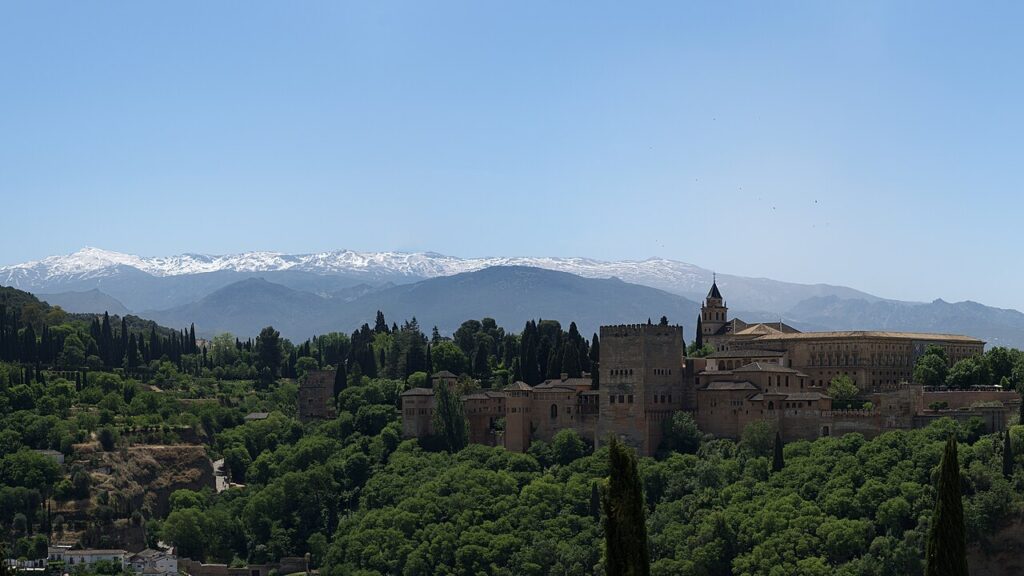
Granada is an inland city of about 234,000 people, roughly 50 km in a straight line from the Costa Tropical coast, so it works as a day trip or a two-night stay from the beach towns rather than as a beach base. Come for the Alhambra, the Albaicín hillside and the bars where a tapa usually arrives with your drink. Buy Alhambra tickets before anything else. It is part of our Costa Tropical guide.
Quick facts
- Where: Granada city, capital of Granada province in Andalusia, below the Sierra Nevada.
- Residents: 233,975 on 1 January 2025 (INE municipal population figures).
- Coast: Granada is inland. The Costa Tropical towns of Motril and Almuñécar are about 48 km and 50 km away in a straight line (our calculation from the town hall coordinates). A Costa Tropical tourism website puts the port of Motril 40 minutes from the Alhambra.
- Nearest beach: on the coast, not in the city. Plan a separate day for it.
- Airport: Federico García Lorca Granada-Jaén, with 1,152,872 passengers in 2025 (Aena).
- Language: Spanish.
- Climate: hot, dry summers and cold winter nights; July daily highs average 34.8 °C at the airport station (AEMET, 1981–2010).
- Book first: the Alhambra, which uses a timed slot for the Nasrid Palaces.
Where to base yourself
Granada is walkable, but it is built on hills, and the neighbourhood you choose decides how many stairs you climb at the end of the day. There are three sensible options.
The centre around Plaza Nueva
The centre has the cathedral, most shops, the main bus routes and the bars of Calle Elvira and Calle Navas. It suits first-time visitors, people arriving by bus or train, and anyone who wants to eat out late without a climb home. It is also the noisiest option at night.
The Albaicín
The Albaicín is the old hillside quarter that faces the Alhambra across the valley. Its viewpoints, including the Mirador San Nicolás, look straight at the palace complex. Staying here gives you the view and a quiet morning, but the lanes are steep and narrow, so a wheeled suitcase and a late taxi are real considerations. Check the exact access route for your accommodation before you book.
The Realejo
The Realejo is one of the city’s oldest neighbourhoods and is known for tapas on its terraces. It sits between the centre and the Alhambra hill and suits people who want to eat well away from the busiest streets. It is a good middle choice if the Albaicín feels too steep.
Avoid choosing a hotel purely because it is next to the Alhambra gates. Food near the monument is aimed at passing visitors, and you will want to eat in the city anyway.
Things to do
Most of Granada’s sights fall into four groups: the Alhambra, the Albaicín, Sacromonte and the cathedral area. Give the Alhambra a morning or an afternoon and the rest a day.
The Alhambra and Generalife
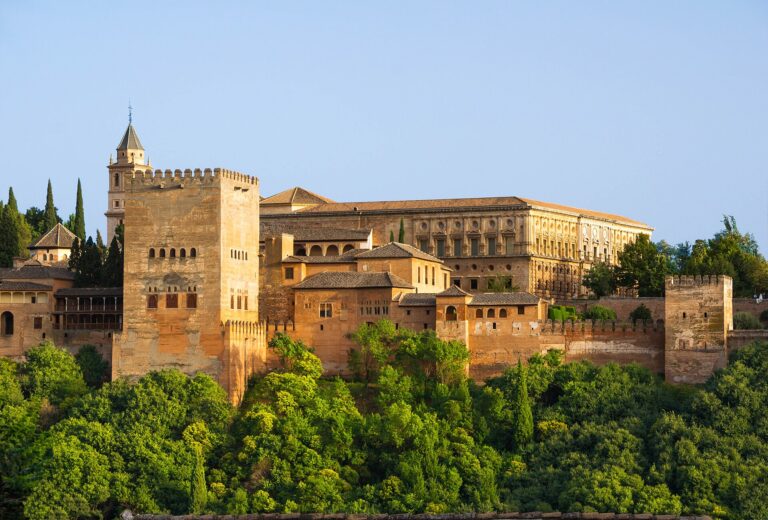
The Alhambra is a palace and fortress complex above the city. The official Alhambra site lists the Alhambra and Generalife together with several other Andalusian monuments run by the same trust, including El Bañuelo, the Corral del Carbón and the Casa Horno de Oro. The ticket most visitors want is General admission, which covers the Alcazaba, the Generalife gardens and a timed entry to the Nasrid Palaces.
The timed slot is the part that catches people out. You can enter the grounds at any time, but you choose one entry time for the Nasrid Palaces when you buy, and visitors who arrive late have been refused (LoveGranada, 2026). Allow 3 to 5 hours for the whole complex and expect 3 to 4 km of walking with many steps, and arrive at least 30 minutes before your palace slot, because the walk from the main gate takes around 20 minutes (LoveGranada).
Confirm prices, opening hours and night-visit schedules on the official site before you plan around them. Office tickets can sell out, so book online. Night visits to the Nasrid Palaces run on a separate seasonal schedule.
The Albaicín
The Albaicín is best explored on foot without a fixed plan, then from a viewpoint. The Mirador San Nicolás overlooks the Alhambra, and restaurants nearby offer outdoor tables with the same view (GranadaSpain). Go in the late afternoon if you want the Alhambra lit by lower sun, and expect it to be busy; a quieter option is to walk the lanes below the viewpoint rather than staying on the square.
Sacromonte
Sacromonte is the hill above the Albaicín, known for its cave dwellings and for the zambra, a flamenco style associated with Granada’s Gitano community. The Museo de las Cuevas del Sacromonte shows ten caves reconstructed as homes and workshops, with crafts such as weaving and ceramics (GranadaSpain). Zambra shows in cave venues are sold by many operators, and prices and quality vary, so choose by reading what is included rather than by the cheapest listing.
The cathedral
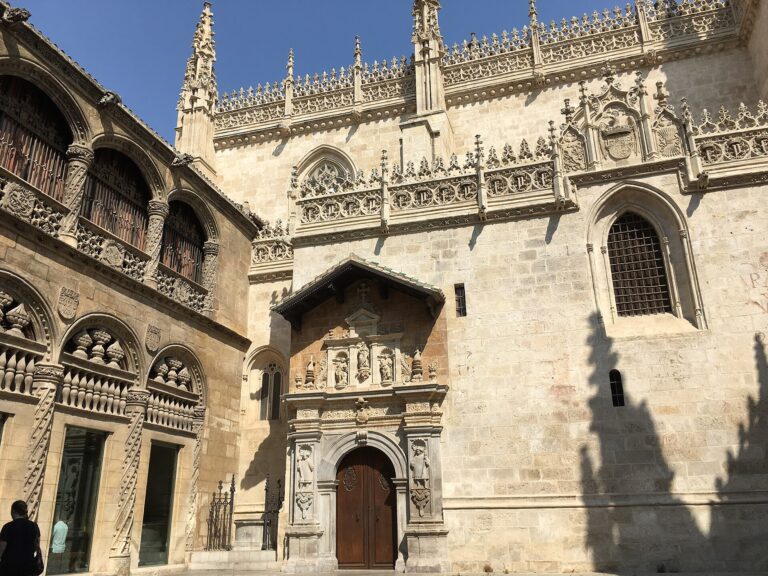
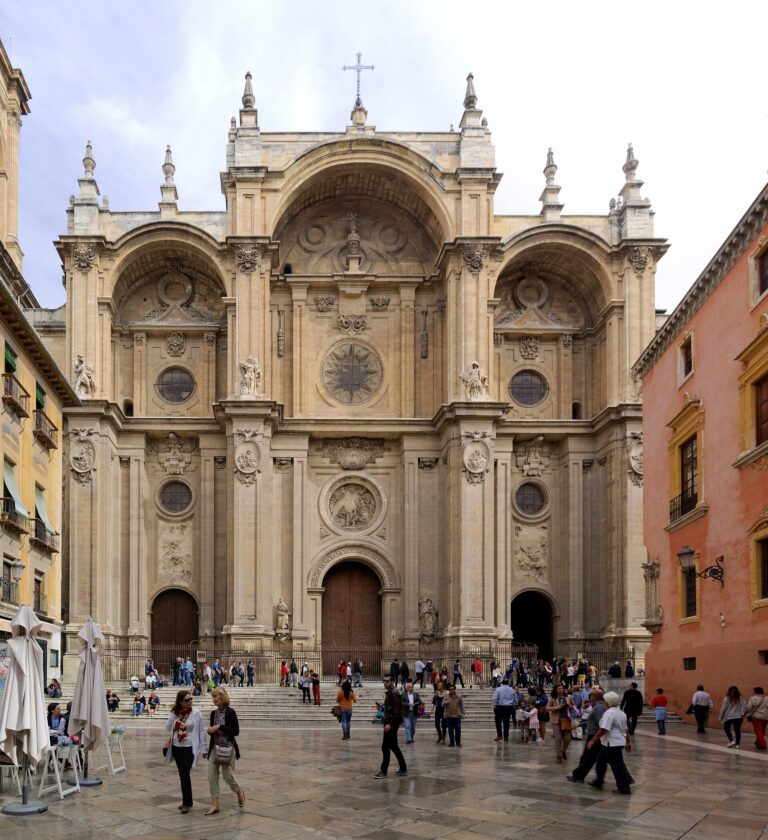
Granada Cathedral is a Renaissance building in the city centre. Its own timeline records the start of construction in 1506 and the first stone in 1523, and notes that the main work was completed in 1704 when the central dome of the second transept was finished. Diego de Siloé, who lived from 1495 to 1563, took over the design in the late 1520s and gave it its Renaissance character; a Spanish tourism board page dates his appointment to 1529. Tickets are sold online through the cathedral’s linked ticket site, and hours are listed there.
If you only have one day, do the Alhambra in the morning, eat in the centre, and walk up to the Albaicín for the evening. Skip the cathedral and Sacromonte rather than rushing the palace.
Beaches and places nearby
Granada has no beach. The sea is on the Costa Tropical, and the usual coastal bases are Motril, Salobreña and Almuñécar. A Costa Tropical tourism website says the Motril port is 40 minutes from the Alhambra, which makes a full day trip to the coast realistic, though you will want a car or an early bus to make it worthwhile.
Many visitors do the reverse: they stay on the coast and make one long day trip to Granada. That is workable if you book the Alhambra slot in advance, but the day is long, and an overnight in the city gives you the evening, which is when the Albaicín and the tapas bars are at their best. The coast is described in our Costa Tropical guide.
Other town guides nearby: Armilla (about 4 km in a straight line), Maracena (about 5 km in a straight line).
On CostaMap near Granada: Royal Chapel of Granada (0.2 km) · Granada Cathedral (0.2 km) · Alhambra (0.8 km) · Huerta de San Vicente (1 km).
Food and drink
Granada’s best-known habit is the tapa that comes with a drink. According to GranadaDirect, a tapa usually arrives free with almost any drink, whether wine, beer or a soft drink, though not every bar does it. The same guide says that before the kitchen opens you may get only olives or crisps, and that most bars serve tapas at Spanish lunch and dinner times, with some central bars keeping kitchens open until midnight. Treat those hours as a guide, not a rule.
The same guide points to the Realejo for terrace tapas, Calle Navas for fried fish and old wine cellars near Puerta Real, Calle Elvira near Plaza Nueva for variety, and the Albaicín for bars with Alhambra views, as well as cave bars in Sacromonte. Its blunt advice for tourist areas close to the Alhambra is not to expect good tapas there.
Practical points: a tapa that arrives with each round means you can eat a meal by moving between a few bars, ordering a drink at each one. At some bars the tapa is chosen for you; at others there is a short menu. Restaurant lists date quickly, so we do not name individual places we have not checked.
Where to stay
Granada has hotels in every price band, guesthouses in the centre and the Albaicín, and apartments in the Realejo and the centre. Prices vary by season and by how close you are to the Alhambra, so compare dates before you commit. Hotels in converted old houses in the Albaicín often have no street access for cars, so confirm the arrival route and parking before you book.
If you are travelling with a car, choose accommodation with parking or a nearby car park, since the central and Albaicín streets are narrow. If you rely on buses and trains, the centre is easier. Compared with the coast, Granada is a city break destination, so expect two nights to be a good minimum.
Getting there and around
Granada’s airport, Federico García Lorca Granada-Jaén, handled 1,152,872 passengers in 2025, up 1.7% on 2024 (Aena). It is smaller than the airports in Málaga or Almería, so many travellers fly to Málaga and continue by road or coach. We have not confirmed current coach or train timetables, so check ALSA for buses and Renfe for trains before you travel.
From the coast, the Motril port is described as 40 minutes from the Alhambra by a Costa Tropical tourism website, which fits the roughly 50 km straight-line distance. The mountain road adds distance and time, so allow extra on a summer weekend.
In the city, walk. The centre, the Realejo and the lower Albaicín are close together, and the main climbs are to the Alhambra and the Albaicín viewpoints. A taxi up the hill is a reasonable choice for the Alhambra if you are short of time or have limited mobility. A car is more trouble than help inside the old quarters.
Best time to visit
AEMET’s 1981–2010 normals for the Granada airport station, at 560 m, give a mean of 25.3 °C in July with an average daily maximum of 34.8 °C, and a mean of 6.5 °C in January with an average daily minimum of 0.0 °C. Annual rainfall averages 365 mm. In plain terms: summers are hot and dry, winters are cold at night, and spring and autumn suit the long walk through the Alhambra.
If you visit in summer, go to the Alhambra at the first slot you can get, and keep the afternoon for the Albaicín or a long lunch. In winter, bring a warm layer for the evenings. We do not list festival dates here, because they change each year and the city’s official event pages are the right source.
FAQ
Does Granada have a beach?
No. It is inland, about 50 km in a straight line from the Costa Tropical, and the beach towns are a separate trip.
How long do I need for the Alhambra?
Plan 3 to 5 hours for the whole complex, according to LoveGranada, and arrive 30 minutes before your Nasrid Palaces slot.
Can I visit Granada as a day trip from the coast?
Yes. A Costa Tropical tourism website puts the port of Motril 40 minutes from the Alhambra. Book your Alhambra slot first and plan the day around it.
Are tapas really free in Granada?
Often, but not everywhere. GranadaDirect says most bars bring a tapa with a drink and a few do not, and that tourist spots near the Alhambra are the weakest place to rely on it.
Is Granada worth it if I only want the beach?
Skip it. If beaches are the point of your trip, stay on the coast and add Granada only if you can spare a long day.
Sources and freshness
Last checked: October 2026. Sources: INE, municipal population figures; Aena, Granada airport 2025; Alhambra and Generalife trust; LoveGranada, Alhambra prices and opening hours; Granada Cathedral; Spain tourism, Granada; GranadaSpain, Albaicín and Sacromonte; GranadaDirect, tapas; Costa Tropical tourism website; AEMET, Granada airport normals; ALSA; Renfe.
Main photo: Ahjaypee, CC BY-SA 4.0, via Wikimedia Commons.
Nearby on the Costa Tropical
Granada on the map
Places worth knowing near Granada
How this page is maintained. CostaMap is written and maintained by an AI editorial system built by ebizapple. Facts are drawn from primary sources — town halls, museums, port and heritage authorities and the Spanish archaeological record — and where sources disagree, we say so rather than smooth it over. Photographs marked as ours are taken on location. This page was last reviewed on 28 October 2026. Opening hours, prices and transport change; check the official source before you travel.