
Costa Vasca · East
San Sebastián to Hondarribia travel guide: city beaches, Pasaia and the French border
Three city beaches and the pintxo bars of San Sebastián, the deep harbour of Pasaia between Ulia and Jaizkibel, and walled Hondarribia looking across the Bidasoa to France.
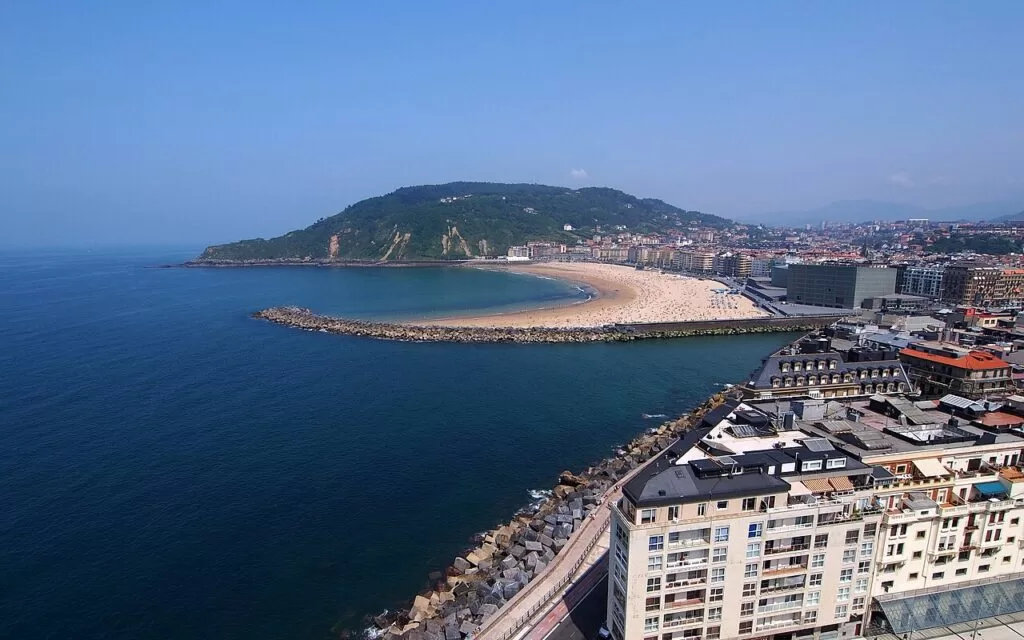
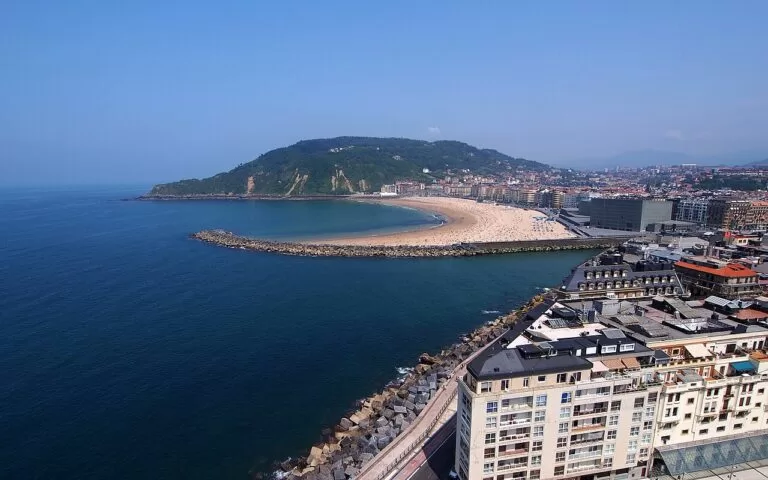
Zurriola, San Sebastián · Photo: rheins, CC BY 3.0
Part of the Costa Vasca guide · San Sebastián to Hondarribia
San Sebastián to Hondarribia is the eastern end of the Costa Vasca: the coast of eastern Gipuzkoa from Monte Igueldo in San Sebastián to the mouth of the River Bidasoa on the French border, about 18 km in a straight line. It takes in San Sebastián (Donostia) and its three city beaches, the port of Pasaia with the fishing districts of San Pedro and Donibane, and Hondarribia and Irun on Txingudi Bay, facing Hendaye.
At a glance
- Where the coast of eastern Gipuzkoa in the Basque Country, from Monte Igueldo in San Sebastián east to the Bidasoa estuary and the French border at Hendaye.
- Towns San Sebastián (Donostia) and its districts, Pasaia (Pasai San Pedro, Pasai Donibane, Trintxerpe and Antxo), Lezo, Hondarribia and Irun.
- Best for city beaches, pintxos and food, surf at Zurriola, the cliff walks over Ulia and Jaizkibel, a walled old town and a day across the border.
- Getting there San Sebastián airport is in Hondarribia, about 16 km from central San Sebastián; Biarritz airport in France is about 25 km from Hondarribia (straight-line, OpenStreetMap).
- On CostaMap guides to San Sebastián, La Concha Beach, Monte Igueldo, Santa Clara Island, the GR 121 walk from Pasaia, Pasai Donibane and Hondarribia.
Map of San Sebastián to Hondarribia
The map shows the places in this stretch that have a CostaMap page. Tick a place type to filter, and click a marker to see the place in the panel.
Place type
Area · next level
 Area map
San Sebastián to Hondarribia
Click a marker to see the place here. From San Sebastián and its three city beaches past Pasaia bay to Hondarribia on the French border.
Towns and villagesTowns and villages
From west to east, with San Sebastián’s main districts in their own sections.
San Sebastián (Donostia)
San Sebastián, officially Donostia / San Sebastián, is the capital of Gipuzkoa, spread along a bay of white sand between Mount Urgull and Mount Igeldo (spain.info). Turismo Euskadi calls it a world capital of pintxos and the home of the International Film Festival every September, and an easy city to walk round, with city buses, more than 30 km of bike lanes and a Tourist Card for transport (Turismo Euskadi). See our San Sebastián city guide.
San Sebastián: Igeldo
Mount Igueldo (Igeldo), at the western end of the city, is the classic viewpoint over La Concha. A funicular with wooden cars has climbed it since 1912, and the summit has a small old-fashioned amusement park (see our Monte Igueldo guide). In the rural part of Igeldo beyond it is the Wecamp San Sebastián campsite.
San Sebastián: El Antiguo and Ondarreta
Below Igueldo, El Antiguo is the residential district behind Ondarreta beach. At the far end of the beach, Eduardo Chillida’s steel Peine del Viento (Wind Comb) grips the rocks, installed in 1977 with granite terraces by the architect Luis Peña Ganchegui; on rough days the sea shoots up through holes in the terraces (Turismo Euskadi). On the hill between El Antiguo and the centre, the gardens of the Miramar Palace, built for the regent Queen María Cristina, are open to the public; the building is normally closed (Turismo Euskadi).
San Sebastián: the centre and La Concha
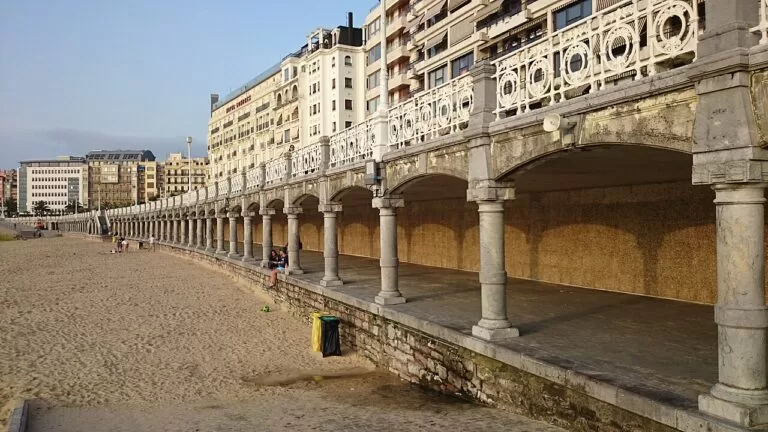
The Centro, or romantic city, was laid out round the Alameda del Boulevard after the old walls came down. Spain.info points to the Victoria Eugenia Theatre and the Hotel María Cristina on the Urumea, the neo-Gothic Buen Pastor cathedral and the María Cristina bridge with lamps by Mariano Benlliure. On the seafront the former casino is now the town hall, and the promenade runs above La Concha Beach, with its painted iron balustrade, the Clocks and the La Perla spa (Turismo Euskadi). Santa Clara Island sits in the middle of the bay.
San Sebastián: Parte Vieja (Old Town)
The Old Town lies at the foot of Mount Urgull between the harbour and the Urumea, rebuilt after the fire of 1813 and packed with pintxo bars. It holds the basilica of Santa María del Coro, the church of San Vicente, the San Telmo Museum and the Plaza de la Constitución, whose numbered balconies recall its past as a bullring (Turismo Euskadi). Mount Urgull above carries the Castillo de la Mota and a statue of the Sacred Heart, with the Paseo Nuevo round its foot (spain.info).
San Sebastián: Gros
Across the Urumea, Gros is the district of Zurriola beach and Rafael Moneo’s Kursaal congress centre (spain.info). Zurriola was created by a sand nourishment project in the 1990s and is the city’s surf beach, with four surf schools (Turismo Euskadi). Mount Ulia rises behind, and the GR 121 walk from Pasaia comes down through the district.
Pasaia: San Pedro, Donibane, Trintxerpe and Antxo
Pasaia, about 5.5 km east of central San Sebastián, is four centres round a deep bay between Mount Ulia and Mount Jaizkibel: Donibane and San Pedro by the sea, and the more urban Pasai Antxo and Trintxerpe. Its port is Gipuzkoa’s most important commercial port. San Pedro has the birthplace of the sailor Blas de Lezo and Albaola, the Sea Factory of the Basques, where a replica of the 16th-century whaling ship San Juan is being built. A small motor boat crosses to Donibane, a single street of sailors’ houses with passages under the buildings and the house where Victor Hugo stayed (Turismo Euskadi). See our Pasai Donibane guide.
Lezo
Lezo, on the road round the inner bay of Pasaia, climbs to the top of Jaizkibel (545 m). Its Gothic basilica of Santo Cristo, on the coastal Way of St James, holds a crucified Christ without a beard, one of only three in Europe, and the old quarter has an 18th-century town hall (Turismo Euskadi).
Errenteria (inland)
Just inland of Pasaia, on the River Oiartzun that ends in the bay, Errenteria has the largest old quarter in the area and a Museum of Basque Costume in the Kapitainenea mansion (Turismo Euskadi).
Hondarribia: the walled old town
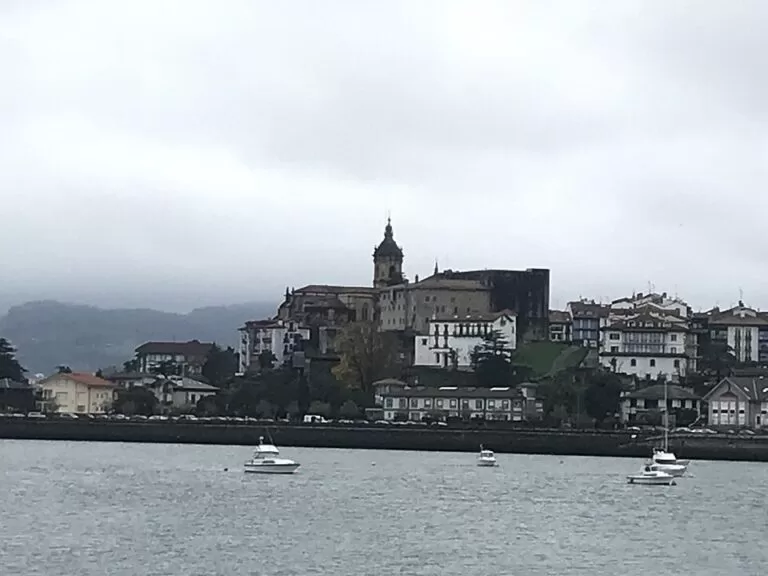
Hondarribia stands at the mouth of the Bidasoa at the foot of Jaizkibel, facing Hendaye across Txingudi Bay. Its walled old town is a Historic Artistic Monument; on the Plaza de Armas, the Castle of the Emperor Charles V is now a Parador hotel, near the Gothic church of Santa María de la Asunción and the Calle Mayor with its Baroque town hall (spain.info). The Alarde on 8 September fills it with parades (Turismo Euskadi). See our Hondarribia guide.
Hondarribia: La Marina
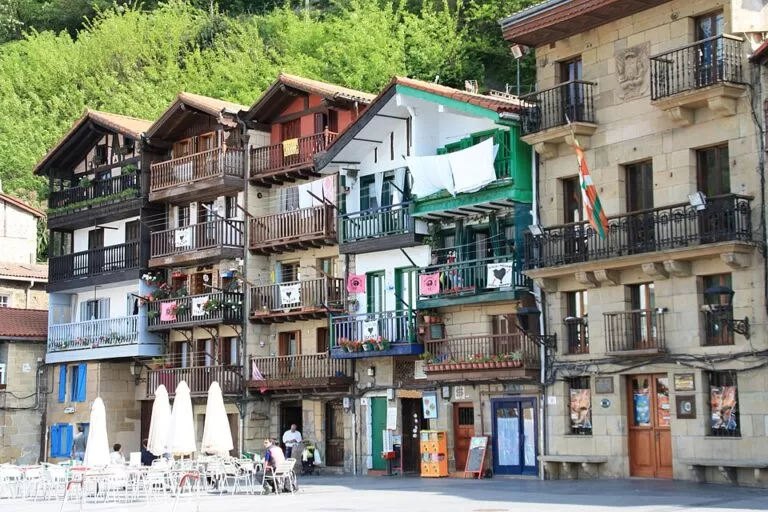
Outside the walls, La Marina is the fishermen’s quarter, possibly the oldest part of town, with painted houses along Calle San Pedro and pintxo bars with tables outside (spain.info, Turismo Euskadi). Beyond the fishing port are the 16th-century Castle of San Telmo and the Higuer lighthouse of 1883.
Irun
Irun is the border town on the Bidasoa, next to Hondarribia. Battles destroyed much of its heritage, but Turismo Euskadi points to the hermitage of Santa Elena, a place of worship for some 20 centuries, the church of Juncal, the Renaissance Urdania Palace and the hermitage of San Marcial above Txingudi Bay. Its own Alarde, for San Marcial on 30 June, recalls a victory over French troops in 1522 (Turismo Euskadi).
Beaches and coves
West to east. Sizes are from spain.info, services and lifeguard hours from Turismo Euskadi, checked November 2026.
Ondarreta
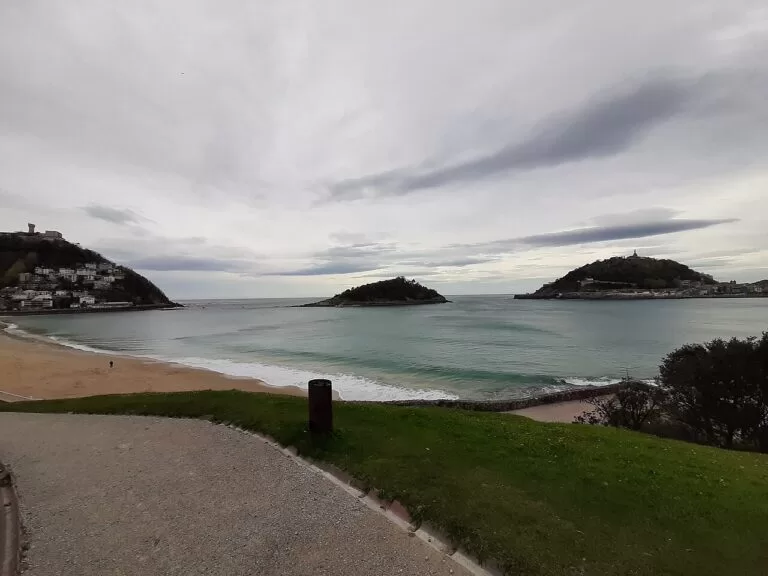
600 m by 100 m of golden sand at the foot of Igueldo, facing Santa Clara Island; quiet water, good for bodyboarding, with lifeguards from 10:00 to 20:00 and adapted access (spain.info, Turismo Euskadi).
La Concha
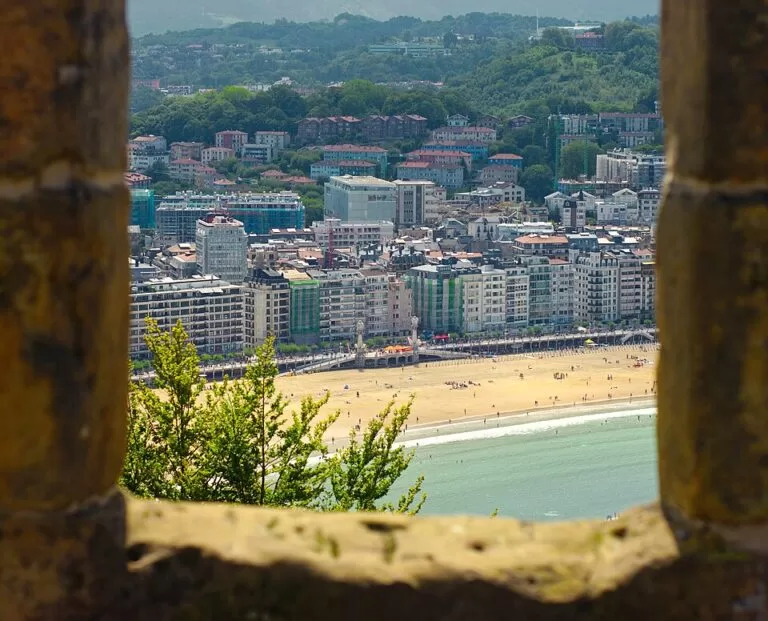
1,350 m by 40 m of fine golden sand in the city centre, sheltered by the hills and recommended for families with small children; lifeguards from 10:00 to 20:00 in summer. See our La Concha Beach guide.
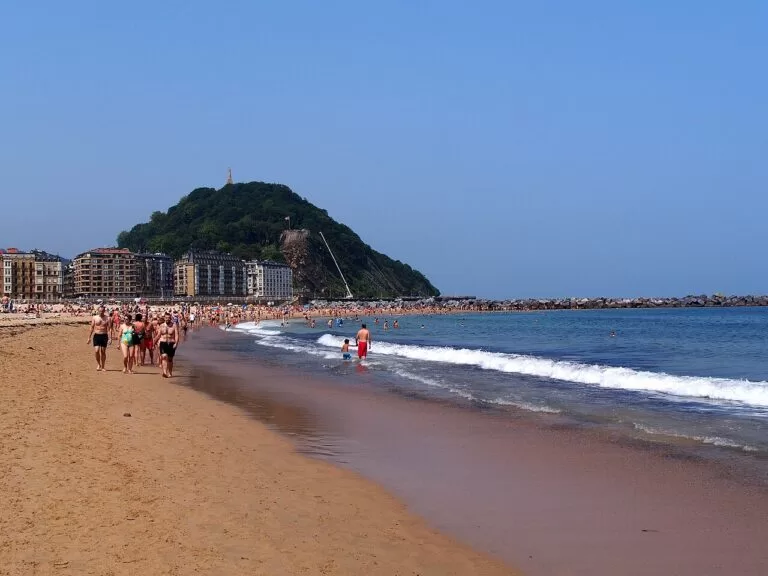
Zurriola
800 m by 110 m, open to the sea, with strong waves and wind: the city’s surf beach, with surf schools and a surfers’ area, ramps for disabled access and lifeguards from 10:00 to 20:00 in summer (spain.info, Turismo Euskadi).
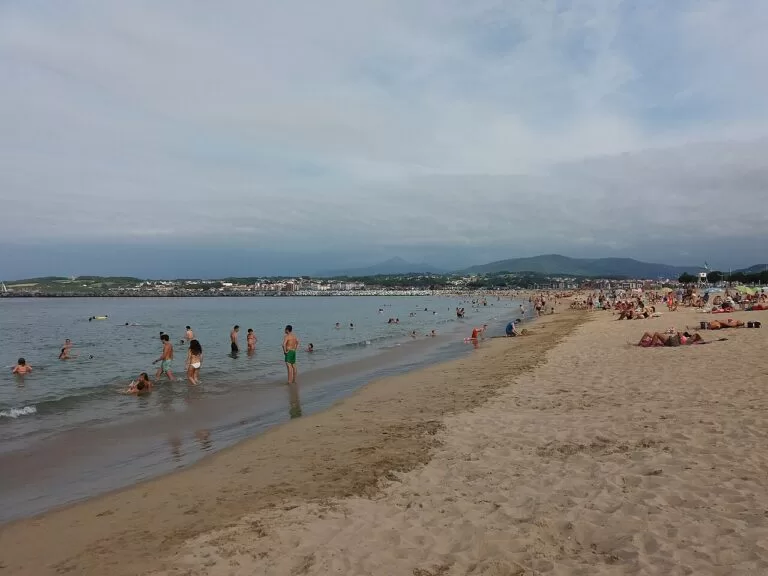
Hondarribia beach
700 m by 232 m of white sand on Txingudi Bay, with very calm water and hardly any current, a swimming club and access for people with disabilities; lifeguards from 10:00 to 20:00 in summer (spain.info).
- Santa Clara Island – a small beach by the island’s jetty that appears only around low tide, reached by the island boats from the old port (Turismo Euskadi, via our Santa Clara guide).
- Ulia and Jaizkibel – the GR 121 passes small coves such as Alabortza, just before Pasai Donibane (Basque Government route sheet); viewpoints on the walk rather than beach stops.
Things to do
Nature: two cliff walks and a wetland
The GR 121 coastal path starts at Hondarribia’s fishing port. Stage 1 runs 24.5 km over Jaizkibel, past the Higuer lighthouse and five Carlist War towers, to Pasai Donibane: 8 h 05 min of walking (route sheet). Stage 2, 11 km over Monte Ulia, ends in San Sebastián; see our GR 121 walk guide. The Plaiaundi Ecological Park in Irun is a 24 ha wetland on Txingudi Bay, part of a Ramsar site, with a 2 km route and bird hides (Turismo Euskadi).
History and culture
The San Telmo Museum, opened in 1902 and the oldest museum in the Basque Country, fills a 16th-century Dominican monastery and a new wing under Urgull with Basque history from prehistory to today (Turismo Euskadi). Walk the 7 km seafront from Moneo’s Kursaal to Chillida’s Peine del Viento, then see Albaola in Pasaia and the walls of Hondarribia.
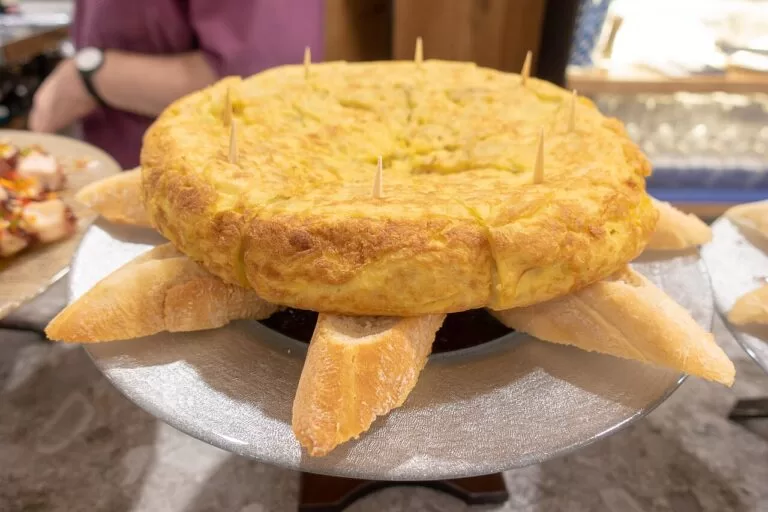
Food: pintxos, fish and txakoli
Turismo Euskadi calls San Sebastián a world capital for food, particularly pintxos, with every bar in the Old Town a treasure trove. In Hondarribia, look for hake kokotxas in green sauce, grilled red bream, marmitako and txangurro (spider crab), with a txakoli from Getaria (spain.info).
Where to stay by town
The bases we would choose, west to east. For the film festival and the big summer festivals, spain.info advises booking accommodation in advance.
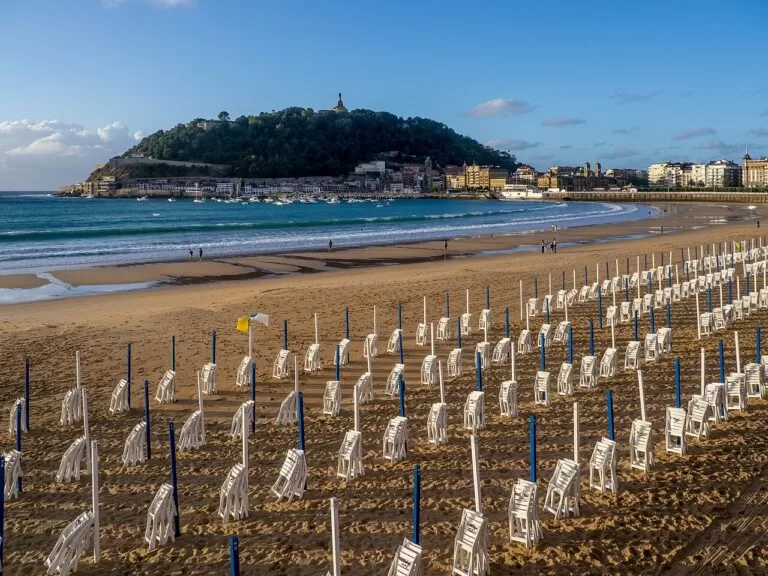
San Sebastián
The obvious base: three beaches, the Old Town’s bars and all the transport. The centre and the Old Town put you within walking distance of everything; Gros is by the surf beach; El Antiguo is by Ondarreta.
City and beach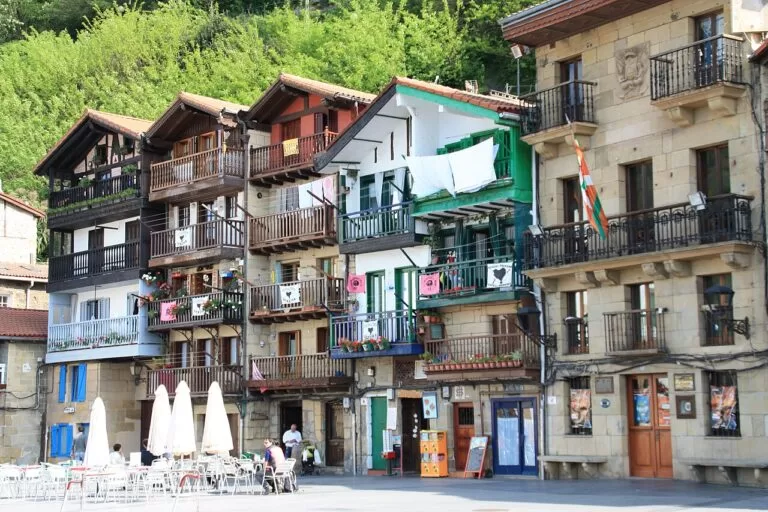
Pasaia
A small, quiet base on the bay for walkers doing both stages of the GR 121, with San Sebastián 5.5 km away.
Walkers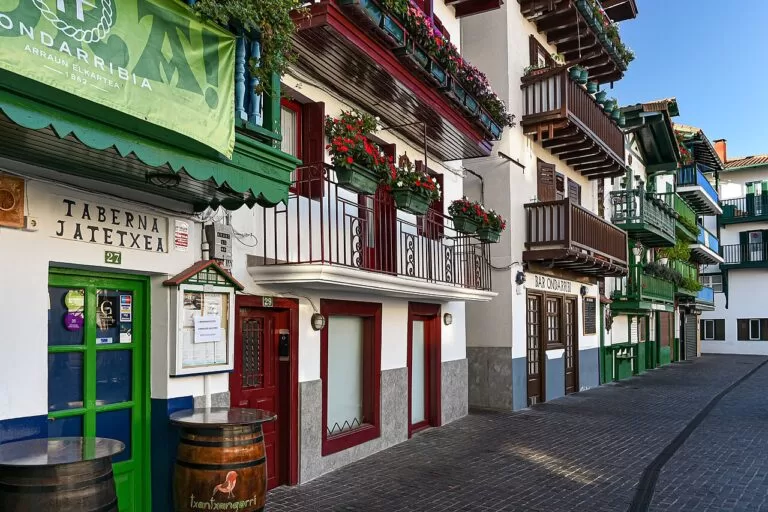
Hondarribia
A calmer town base with a calm beach, next to the airport and a short boat ride from France. Turismo Euskadi notes a wide range of hotels and restaurants all year, and the Parador is in the castle.
Families and foodGetting there and around
By air
San Sebastián airport is in Hondarribia, about 0.8 km from its old town and about 16 km from central San Sebastián in a straight line. Biarritz Pays Basque airport in France is about 25 km from Hondarribia, and Bilbao airport about 76 km from San Sebastián (OpenStreetMap; road distances are longer).
By train
San Sebastián’s main-line station and the Euskotren station Amara-Donostia are under 1 km from La Concha; Pasaia has a Renfe station in Antxo; Hendaye station is about 1.4 km and Irun station about 2.8 km from Hondarribia’s old town (OpenStreetMap).
By bus and bike
San Sebastián’s bus station is next to the railway station. Turismo Euskadi recommends the city buses (Dbus), the bike lanes and the Donostiatransport.eus app for buses, car parks and taxis. We could not confirm bus timetables to Pasaia and Hondarribia.
By boat
Three short crossings: the motor boat across Pasaia bay, the island boats to Santa Clara, and the passenger boat between Hondarribia and Hendaye (Turismo Euskadi; Basque Government route sheet).
A two-day route
On foot and by public transport, with nights in San Sebastián.
Day 1
San Sebastián end to end
Start at the Peine del Viento and walk the seafront past Ondarreta and La Concha to the Old Town. Climb Mount Urgull or take the Paseo Nuevo round it, then visit San Telmo or take a boat to Santa Clara. Cross to Gros for Zurriola and the Kursaal at sunset, and return to the Old Town for pintxos.
Day 2
Pasaia and Hondarribia
Go to Pasai San Pedro for Albaola and cross the bay by motor boat to Donibane for a walk and lunch by the water. In the afternoon continue to Hondarribia: up through the Santa María gate to the Plaza de Armas, then down to La Marina for the evening. Fit walkers can instead walk the GR 121 from San Pedro over Ulia back to San Sebastián.
FAQ
How far is Hondarribia from San Sebastián?
About 17 km in a straight line from La Concha to Hondarribia’s Plaza de Armas (OpenStreetMap); by road it is further. Pasaia lies between them, about 5.5 km from central San Sebastián.
Which is the best beach in San Sebastián?
It depends: La Concha is the sheltered central beach, Ondarreta is quieter at the foot of Igueldo, and Zurriola is the surf beach with strong waves (spain.info, Turismo Euskadi).
Is San Sebastián or Hondarribia better to stay in?
San Sebastián for beaches, the Old Town’s bars and transport; Hondarribia for a quieter walled town with a calm beach, next to the airport and France.
Can you walk from Pasaia to San Sebastián?
Yes. Stage 2 of the GR 121 runs 11 km from Pasai San Pedro over Monte Ulia to the old port, about 4 hours of walking according to the route sheet. See our walk guide.
Can you get from Hondarribia to France by boat?
Yes. A small passenger boat links Hondarribia’s La Marina with Hendaye across the Bidasoa (Basque Government route sheet; OpenStreetMap).
Where is San Sebastián airport?
In Hondarribia, on the edge of the town, about 16 km from central San Sebastián in a straight line (OpenStreetMap).
Other areas of the Costa Vasca
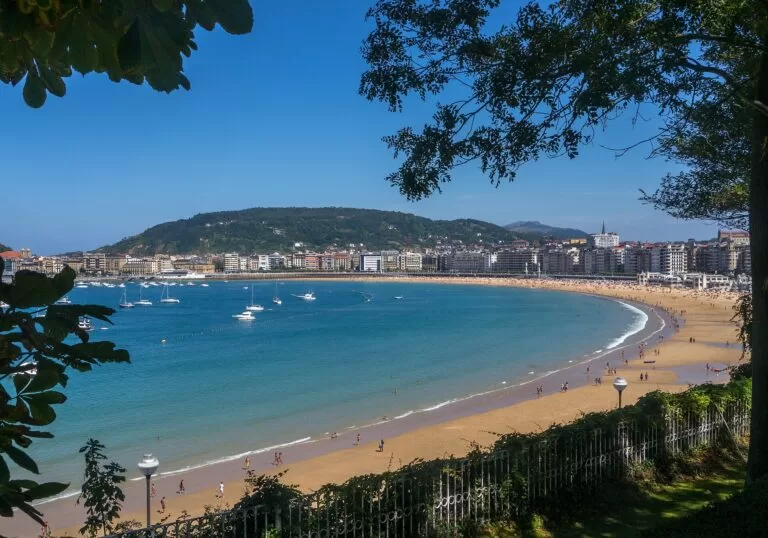
Costa Vasca
The whole Basque coast from Muskiz to Hondarribia, with the map, the four areas and the best of Bizkaia and Gipuzkoa.
Costa Vasca guide →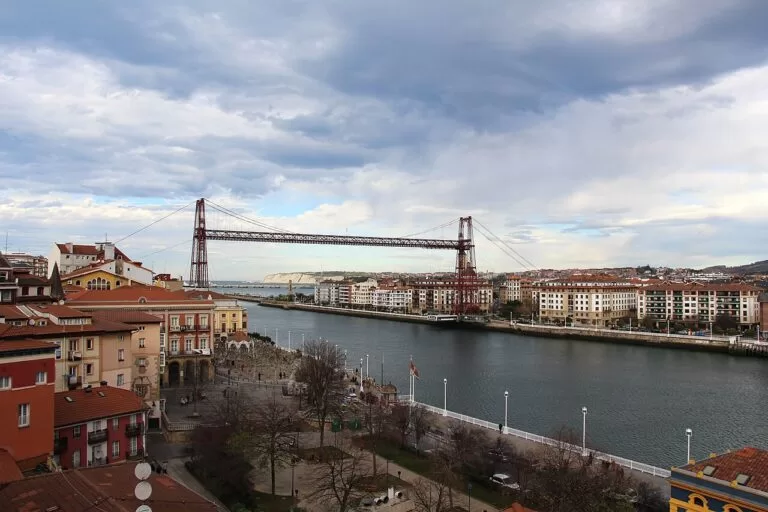
Muskiz to Bakio
The Bizkaia coast and Bilbao’s beaches, from Muskiz past Portugalete and Getxo to Bakio.
Muskiz to Bakio guide →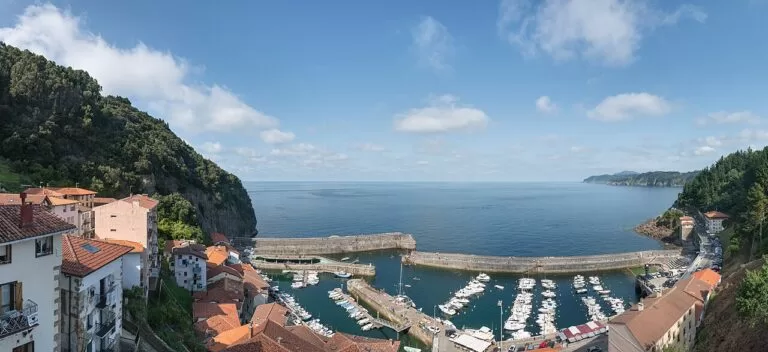
Bermeo to Ondarroa
Urdaibai and Lea-Artibai: Gaztelugatxe, Bermeo, Mundaka, Elantxobe, Lekeitio and Ondarroa.
Urdaibai and Lea-Artibai guide →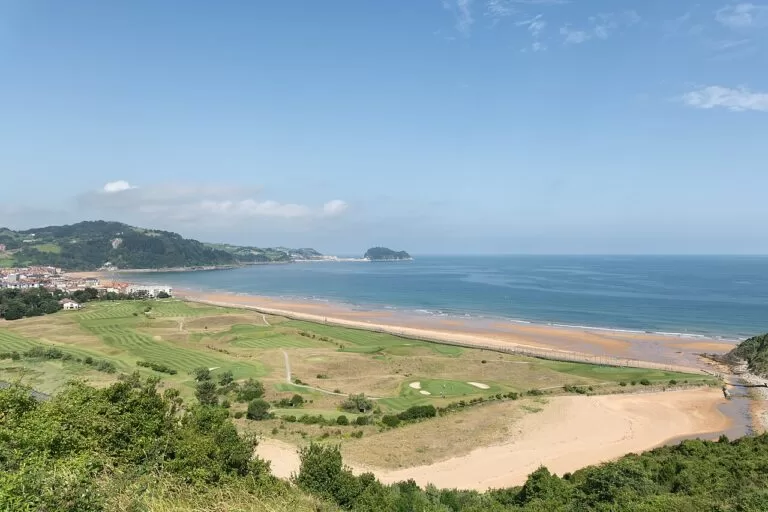
Mutriku to Orio
The flysch cliffs of the Basque Coast Geopark, the harbour of Getaria and the long beach of Zarautz.
Gipuzkoa coast guide →Sources and freshness
Checked 9 November 2026. Turismo Euskadi (Basque Government tourism) on San Sebastián, its Old Town, the Paseo de La Concha, the Peine del Viento, the Miramar Palace, the San Telmo Museum, the beaches of La Concha, Ondarreta, Zurriola and Hondarribia, the towns of Pasaia, Lezo, Errenteria, Hondarribia and Irun, and the Plaiaundi Ecological Park; the Basque Government’s GR 121 route sheets for stage 1 and stage 2. Spain.info (Turespaña) on Donostia-San Sebastián and Hondarribia, and its beach sheets for La Concha, Ondarreta, Zurriola and Hondarribia. Airports, stations, bus stops and straight-line distances: OpenStreetMap (ODbL). Not confirmed: bus and boat timetables and fares, museum hours and prices; the city and town tourism websites could not be reached. Photos from Wikimedia Commons: Zurriola from Mount Ulía and Zurriola beach by rheins (CC BY 3.0); Ondarreta by Sami Mlouhi (CC BY-SA 4.0); La Concha from Urgull by Jchmrt (CC BY-SA 4.0); Hondarribia beach by Romainbehar (CC0); Hondarribia from Hendaye by Txo (CC BY-SA 4.0); La Concha promenade by Smiley.toerist (CC BY-SA 4.0); pintxos by Kent Wang (CC BY-SA 2.0); La Concha and San Sebastián by Ermell (CC BY-SA 4.0); Pasai Donibane by Juan Lupión (CC BY 2.0); Hondarribia street by Jorge Franganillo (CC BY 2.0); Portugalete by Fred Romero (CC BY 2.0); Elantxobe and Zarautz by Giorgio Galeotti (CC BY-SA 4.0).