
Costa Vasca · Western Bizkaia
Muskiz to Bakio travel guide: the Bizkaia coast and Bilbao’s beaches
The cliffs and surf of Muskiz, the Bizkaia Bridge between Portugalete and Getxo, the wild beaches of Sopela, the bay of Plentzia and Gorliz, and Bakio, with San Juan de Gaztelugatxe close by.
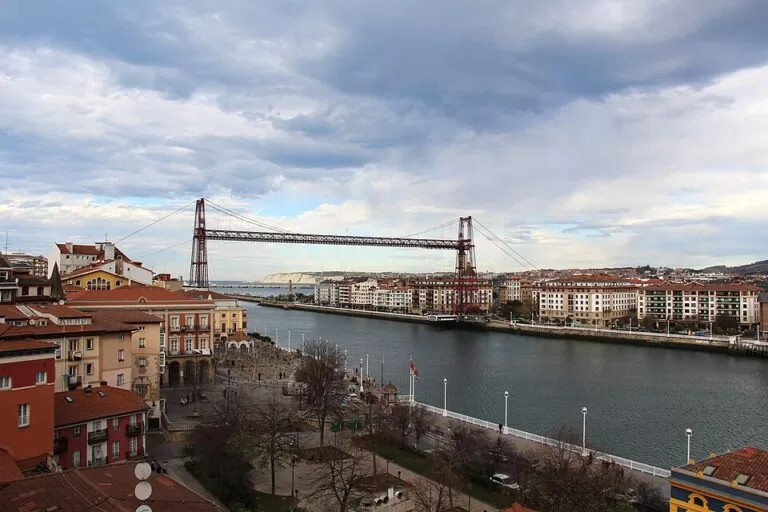
Bizkaia Bridge · Photo: Fred Romero from Paris, France, CC BY 2.0
Part of the Costa Vasca guide ←
Muskiz to Bakio is the western stretch of the Costa Vasca, the coast of Bizkaia from Muskiz on the Cantabrian border, past the mouth of the Bilbao estuary, to Bakio below San Juan de Gaztelugatxe. It is the coast of Bilbao: the metro and local trains run from the city to the Bizkaia Bridge, the old town of Portugalete, the beaches of Getxo and Sopela and the bay of Plentzia, while buses go on to Muskiz and Bakio.
At a glance
- Where the coast of western Bizkaia, from La Arena beach in Muskiz to Bakio: about 27 km in a straight line, with the Bilbao estuary in the middle.
- Towns Muskiz, Zierbena, Santurtzi, Portugalete, Getxo, Sopela, Barrika, Plentzia, Gorliz, Armintza and Bakio; Bilbao inland.
- Best for surf at Sopela, La Arena and Bakio, family beaches at Plentzia and Gorliz, the UNESCO-listed Bizkaia Bridge, and beach days by metro from Bilbao.
- Getting there Bilbao Airport (BIO) is about 8 km from Getxo; metro lines 1 and 2, the Renfe C-1 and Bizkaibus serve the coast.
Map of the Bizkaia coast
The map shows the places in this stretch that have a CostaMap page: Bilbao, the Bizkaia Bridge, Getxo and Bakio. Tick a place type to filter it, and click a marker to see the place in the panel. San Juan de Gaztelugatxe, just east of Bakio, is on the map of the next area.
Place type
Area · next level
 Area map
Muskiz to Bakio
Click a marker to see the place here. From the Bizkaia Bridge and Getxo to Bakio, with Bilbao up the estuary.
Towns and villagesTowns and villages
From west to east. Facts are from Turismo Euskadi, the Basque Government’s tourism service, unless another source is named, checked in November 2026.
Muskiz
Muskiz, in the valley of the Barbadún, is where the Basque coast begins on the Cantabrian side; it has 7,289 inhabitants. Come for La Arena beach, shared with Zierbena, and the Itsaslur park, a promenade along the cliffs between the hamlets of Kobaron and Pobeña. Inland, the Muñatones castle, palace and hermitage were declared a Historical Monument in 1944, and the 16th-century El Pobal ironworks keeps its old tools. Bizkaibus line A3321 runs from Portugalete through Zierbena and Muskiz to Kobaron (OpenStreetMap).
Zierbena
Zierbena is a small fishing port of 1,517 people. The building of the port of Bilbao transformed it, but it keeps its fishing boats, and Turismo Euskadi says the smell of charcoal-grilled fish from the harbour restaurants is part of the visit. Besides its half of La Arena, it has a 100 m beach that appears only at low tide, calm enough for children. The longest bike lane in Bizkaia, 11 km, starts by the beach and runs towards Portugalete, and a walk climbs Punta Lucero (307 m) for views over the Bay of Biscay.
Santurtzi
Santurtzi lies on the left bank of the estuary below Mount Serantes (451 m) and is known for its fishing port. The 1916 Fishermen’s Association building on the harbour holds the fish market, the tourist office and the Santurtzi Itsasoa visitor centre, opposite the statue of Our Lady of El Carmen; every 16 July fishermen carry her image in procession. On the Iparraguirre walk stands La Sardinera, the sardine seller of the traditional song, and fourteen donated sculptures form an open-air museum around town. Santurtzi is the end of the Renfe C-1 line (OpenStreetMap).
Portugalete
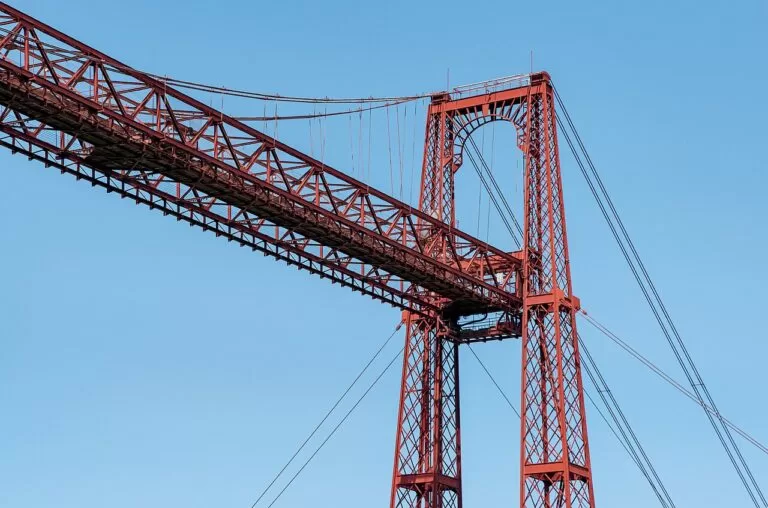
Portugalete is the old town on the left bank at the mouth of the estuary. Its landmark is the Bizkaia Bridge, opened on 28 July 1893 and a UNESCO World Heritage Site since 2006, whose hanging gondola carries cars and people across to Getxo. Steep medieval streets climb to the Gothic-Renaissance basilica of Santa María and the Salazar Tower, which spain.info dates to 1379. By the river, the Rialia Museum of Industry tells the story of the estuary. The San Roque fiestas run from 14 to 17 August.
Bilbao (inland)
Bilbao is not on the sea, but it is the gateway to this stretch; our Bilbao guide covers the city. Turismo Euskadi calls Frank Gehry’s Guggenheim Museum the icon of the city’s transformation, with the Abandoibarra promenade beside it, and sends visitors to the Casco Viejo, the Old Town of the “seven streets”, for pintxos. Metro Bilbao runs to Portugalete and Santurtzi on one line and to Getxo, Sopela and Plentzia on the other.
Getxo
Getxo faces Portugalete across the estuary, with about 10 km of cliffs, shore and beaches on the bay of the Abra and 76,319 inhabitants in five districts: Andra Mari, Algorta, Las Arenas, Neguri and Romo. Metro line 1 stops six times in the town (OpenStreetMap). The tourist office on Ereaga beach books sailing, surf lessons, paragliding from the cliffs and visits to the walkway on top of the Bizkaia Bridge.
Getxo: Las Arenas (Areeta)
The district by the Bizkaia Bridge, built in the early 20th century over the sands at the mouth of the Gobela creek, according to English Wikipedia. Its small urban beach sits by the Churruca quay, with a long-established sailing club and the José Luis de Ugarte sailing school. The hermitage of Santa Ana is one of the oldest neo-Gothic buildings in Bizkaia, and the Zugazarte promenade leads north past the Churruca palace and the Bake-Eder mansion. Areeta metro station is a short walk from the bridge.
Getxo: Neguri
Neguri lies between Las Arenas and Algorta, with the Getxo marina on the waterfront below it (OpenStreetMap). Turismo Euskadi’s walking route through Getxo continues here from Zugazarte to the church of Nuestra Señora de las Mercedes, which has a four-keyboard organ. Neguri and Algorta are the closest metro stations to the tourist office on Ereaga beach.
Getxo: Algorta and the Old Port
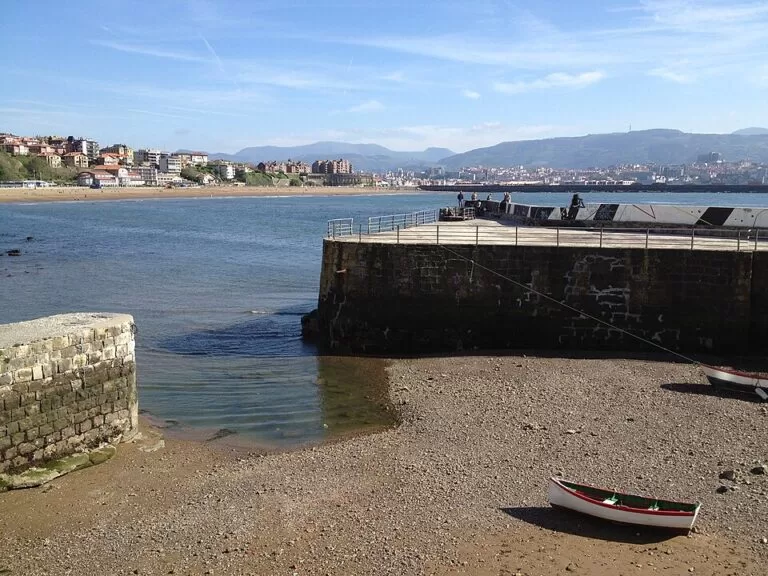
Algorta is the centre of town and commerce around its Metro Plaza, according to English Wikipedia. Its Old Port (Puerto Viejo, Portu Zaharra) is the picture most visitors take home: narrow fishermen’s houses on the slope above the water. Below it, Ereaga beach runs for more than 800 metres. Further north, past the 18th-century church of Andra Mari, the cliffs of La Galea carry the Aixerrota windmill and the 18th-century Galea fort, and the Punta Galea promenade follows the cliff edge to Sopela.
Sopela
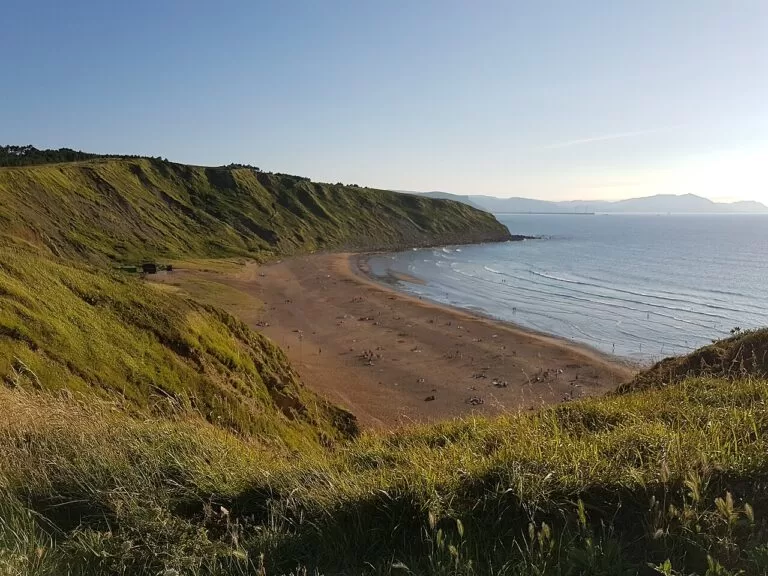
Sopela has some of the most striking cliffs and wild beaches on the Bizkaia coast, with surfing, bodyboarding and paragliding. Its three beaches are Barinatxe (La Salvaje), with heavy swell and a nudist area; Arriatera-Atxabiribil, one of the longest beaches in Bizkaia and the surfing centre of the area, with half a dozen clubs and three schools; and Meñakoz, the most solitary and hardest to reach. The settlement of Kurtzio is one of the oldest in Bizkaia. Sopela has 13,273 inhabitants and two stations on metro line 1 (OpenStreetMap).
Barrika
Barrika is a village of 1,590 people between Sopela and Plentzia, with a coast protected by cliffs. Turismo Euskadi suggests starting at Barrika beach, good for long, relaxed walks, and its page also pictures Muriola beach. The River Butrón runs through the municipality to the sea, and archaeological sites lie around Mount Kurtzio. The fiesta of San Juan at the end of June ends with a bonfire on the eve of the saint’s day.
Plentzia
Plentzia, 25 km from Bilbao and the end of metro line 1, was founded in 1299 on a bay it shares with Gorliz. Its medieval old quarter holds the church of Santa María Magdalena with a 16th-century tower, the former town hall that now houses the Plazentia Butrón Museum on the town’s history, the Arco de Santiago, the last piece of the town wall, and the Barri Tower. Plentzia beach, near the mouth of the estuary, has calm water that suits families, and two surf schools open all year.
Gorliz
Gorliz, next door to Plentzia, has 6,059 inhabitants and a beach that attracts many visitors: 842 metres of fine white sand in the town centre, with a car park, a promenade, picnic areas and barbecues. The calm bay suits canoeing, bodyboarding and stand-up paddle. On the promenade stands the Gorliz hospital, one of the best-known buildings in town, and the 11th-century hermitage of Andra Mari looks over the bay and the estuary of the Butrón.
Armintza (Lemoiz)
Armintza is the fishing village of Lemoiz, a rural municipality of 1,320 people where cliffs alternate with bays and beaches. It sits in a natural cove with a small port for pleasure boats; up the hill, the Romanesque church of Santa María in Urizar has a large portico. Armintza beach is 250 metres of dark, coarse sand, popular with divers and anglers, and in very heavy seas a gentle right-hand wave forms by the dock that suits children.
Bakio
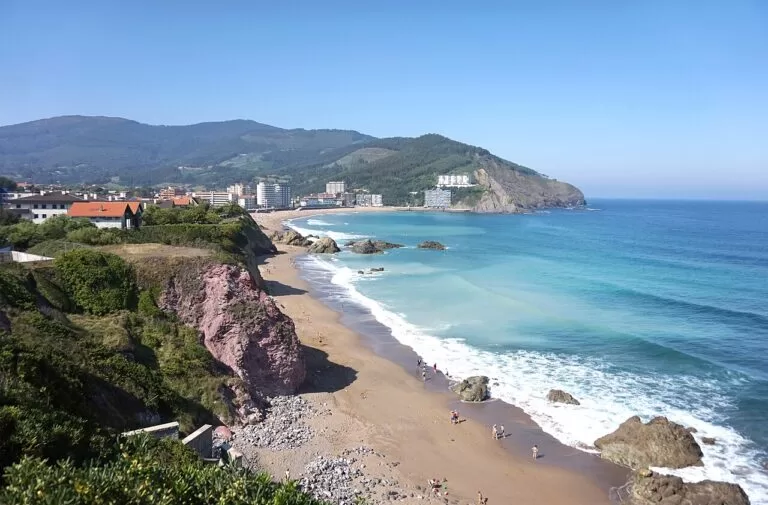
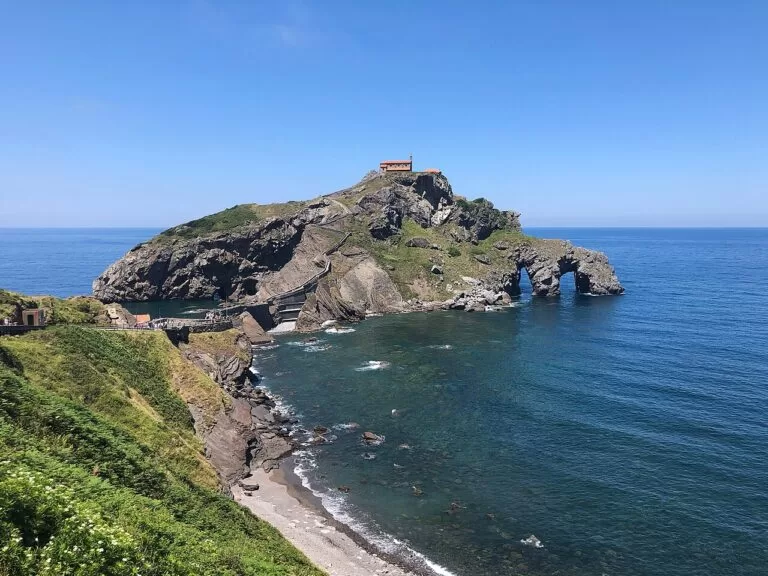
Bakio, a village of 2,781 people between Mungia and Bermeo, has an open beach in the centre with waves practically all year, a local surf club and two schools. Txakoli has been made here since the late 14th century, and the Txakolingunea museum explains the wine, with a tasting included; the new vintage is launched on 19 March. East of the village the road climbs to San Juan de Gaztelugatxe, the hermitage on a rock islet with a 241-step staircase, just over the boundary in Bermeo; a free access ticket is needed.
Beaches and coves
Our pick from west to east, with facts from Turismo Euskadi, checked November 2026. All have lifeguards from 11:00 to 20:00 in summer; several get heavy swell, so swim between the flags.
Barinatxe (La Salvaje)
A wide-open beach under cliffs, with dunes and a nudist area. Its best-known wave, La Triangular, is a long right over a rocky seafloor that suits longboards.
Ereaga
More than 800 m of fine sand between the Old Port of Algorta and the Arriluze breakwater, sheltered from the northwest wind, with full summer services. Getxo guide.
Bakio
A very open beach with waves practically all year and peaks for all levels, a promenade and two surf schools. Bakio guide.
Also worth knowing: La Arena, between Muskiz and Zierbena, is 966 metres long with three surf waves, lessons in the central area and strong currents at the two ends. Arriatera-Atxabiribil in Sopela is the surf centre of the area. Plentzia has calm water for families and learner surfers, and Gorliz, 842 metres of fine white sand, is a family favourite. Arrigunaga in Getxo lies under the La Galea cliffs, with rocks at low tide.
Things to do
Nature
Walk the Itsaslur cliff promenade between Kobaron and Pobeña in Muskiz, or climb Punta Lucero above Zierbena. Across the estuary, the Punta Galea promenade follows the cliffs from Getxo to Sopela, where paragliders take off. The coastal Way of St James, one of the oldest pilgrim roads to Compostela, crosses Bizkaia, and the GR 123 and GR 280 paths cross Bakio (OpenStreetMap).
History and industry
The Bizkaia Bridge, the first transporter bridge in the world with a metal structure, has a walkway 45 metres above the river. The Rialia Museum of Industry in Portugalete tells the story of the estuary, and the Muñatones castle and El Pobal ironworks in Muskiz show an older iron industry.
Food and drink
Eat grilled fish on the harbours of Zierbena and Santurtzi, taste txakoli at Bakio, where the wine belongs to the Bizkaiko Txakolina designation of origin, and go for pintxos in Bilbao’s Casco Viejo.
Where to stay by town
We do not list hotels. These are the bases we would choose, with what each suits.
Getxo
Town beaches, the Old Port and six metro stations: the best base without a car.
Beach and city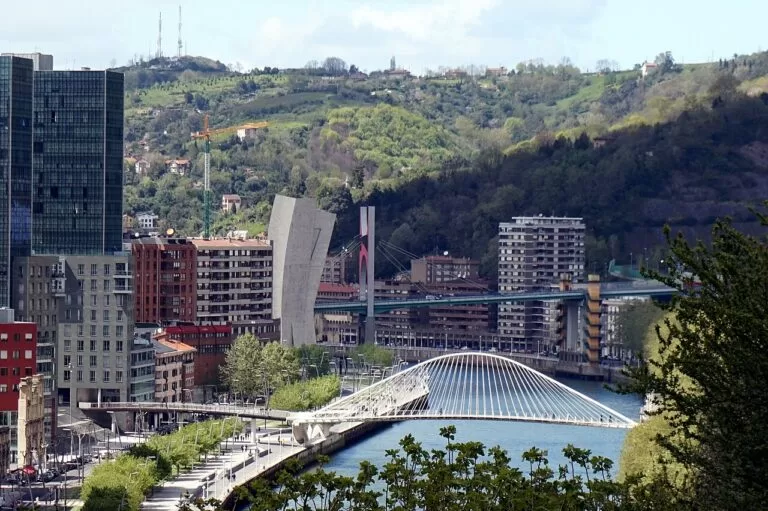
Bilbao
The widest choice of places to stay, with the metro out to the beaches.
City first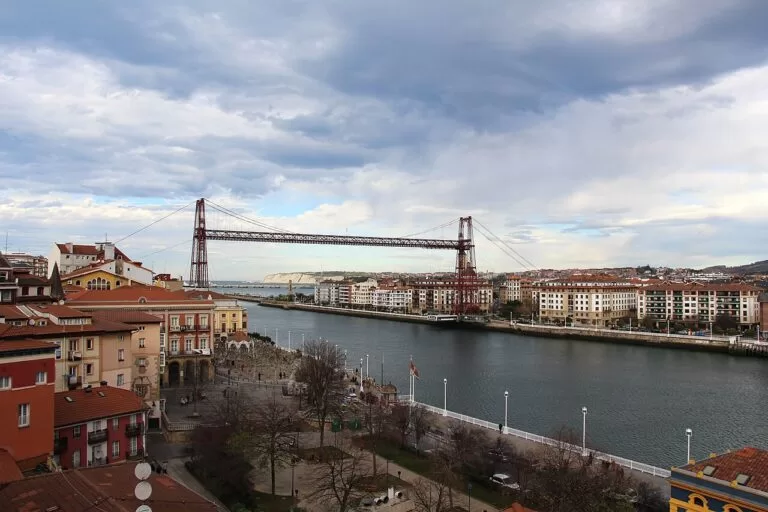
Portugalete
A medieval old quarter by the bridge, on metro line 2, with buses to La Arena.
Old town by the riverBakio and Plentzia
Bakio for surf and Gaztelugatxe; Plentzia and Gorliz for calm family beaches.
Beach villageGetting there and around
By air: Bilbao Airport (BIO) is about 8 km from Getxo and 17 km from Bakio in a straight line (OpenStreetMap).
By metro and train: Turismo Euskadi recommends Metro Bilbao for Santurtzi, Portugalete and the beaches of Sopela and Plentzia. Line 1 runs through Getxo and Sopela to Plentzia; line 2 serves Portugalete and Santurtzi; the Renfe C-1 links Bilbao-Abando with Portugalete and Santurtzi (OpenStreetMap). English Wikipedia says the Barik card works on metro, buses and the Bizkaia Bridge.
By bus: Bizkaibus A3321 runs from Portugalete to Muskiz and Kobaron, and A3518 from Bilbao to Bakio (OpenStreetMap); A3527 Bilbao – Bermeo stops at Gaztelugatxe (Turismo Euskadi).
By car: the gondola of the Bizkaia Bridge carries cars between Portugalete and Getxo. Turismo Euskadi lists parking at La Arena, Ereaga, Plentzia, Gorliz and Bakio beaches.
A two-day route
Two days
Day 1
Portugalete, the Bizkaia Bridge and Getxo
Start in the old quarter of Portugalete, then ride the gondola of the Bizkaia Bridge, or go up to the walkway, and cross to Las Arenas. Walk the waterfront through Neguri to Ereaga and the Old Port of Algorta for lunch. In the afternoon follow the Punta Galea cliffs towards Barinatxe and take metro line 1 back from Sopela.
Day 2
Plentzia, Gorliz, Bakio and Gaztelugatxe
Take metro line 1 to Plentzia, walk the old quarter and the promenade to Gorliz. Continue to Bakio for Txakolingunea (book ahead) and the beach, then go on to San Juan de Gaztelugatxe with your free access ticket, leaving time for the 241 steps.
FAQ
What are the best beaches near Bilbao?
For surf, Barinatxe and Arriatera-Atxabiribil in Sopela, La Arena in Muskiz or Bakio. For calm water and families, Plentzia and Gorliz. For a town beach with full services, Ereaga in Getxo.
Can you get to the beach from Bilbao by metro?
Yes. Metro line 1 reaches the beaches of Getxo, Sopela and Plentzia. Bakio and Muskiz are reached by Bizkaibus.
How do you visit the Bizkaia Bridge?
Take the metro to Areeta (line 1) or Portugalete (line 2). Cross in the gondola, on foot or by car, or take the lift to the walkway 45 m up; check fares and hours on the bridge’s website.
Is Sopela good for surfing?
Yes. Turismo Euskadi calls Arriatera the surfing centre of the area, with half a dozen clubs and three schools, and Barinatxe has the well-known wave La Triangular.
How do I get from Bilbao to San Juan de Gaztelugatxe?
Bizkaibus line A3527 from the Termibus station stops at Gaztelugatxe. You need a free access ticket to visit the islet.
Is Plentzia worth visiting?
Yes, for a half day: a medieval old quarter founded in 1299, a calm family beach shared with Gorliz, and the end of metro line 1, 25 km from Bilbao.
Other areas of the Costa Vasca
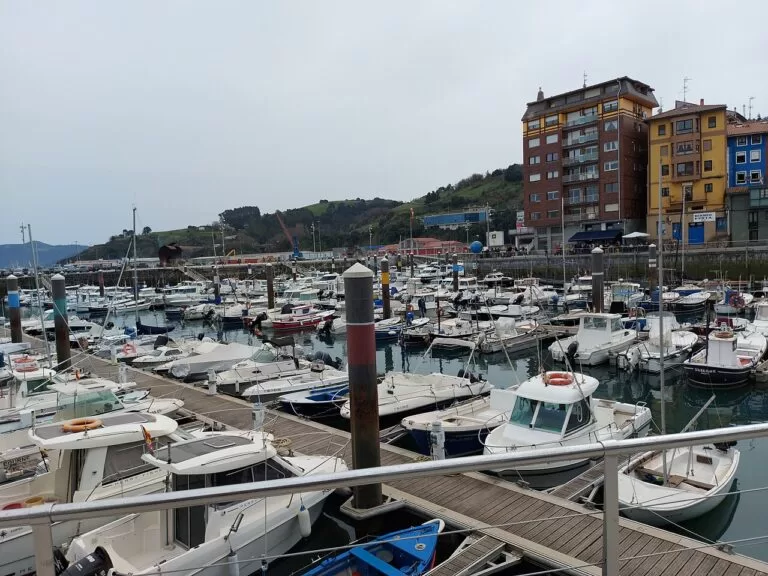
Bermeo to Ondarroa
The Urdaibai Biosphere Reserve around the Mundaka estuary, then fishing ports and beaches east to Ondarroa, starting with Bermeo, 7 km from Bakio.
Urdaibai guide →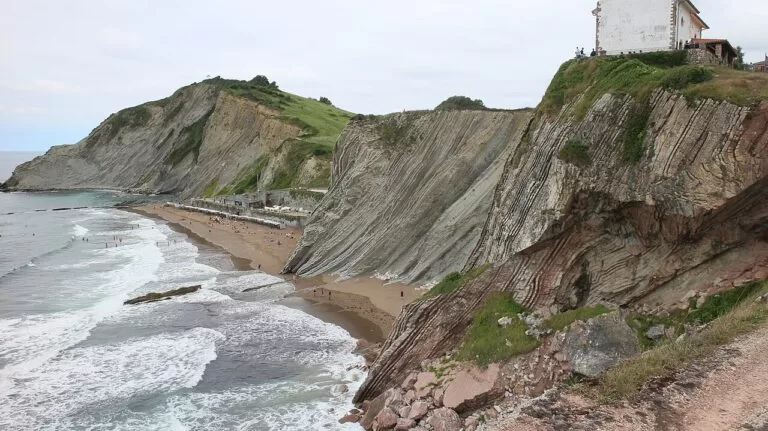
Mutriku to Orio
The flysch cliffs of the Basque Coast Geopark, the harbour of Getaria and the long beach of Zarautz.
Mutriku to Orio guide →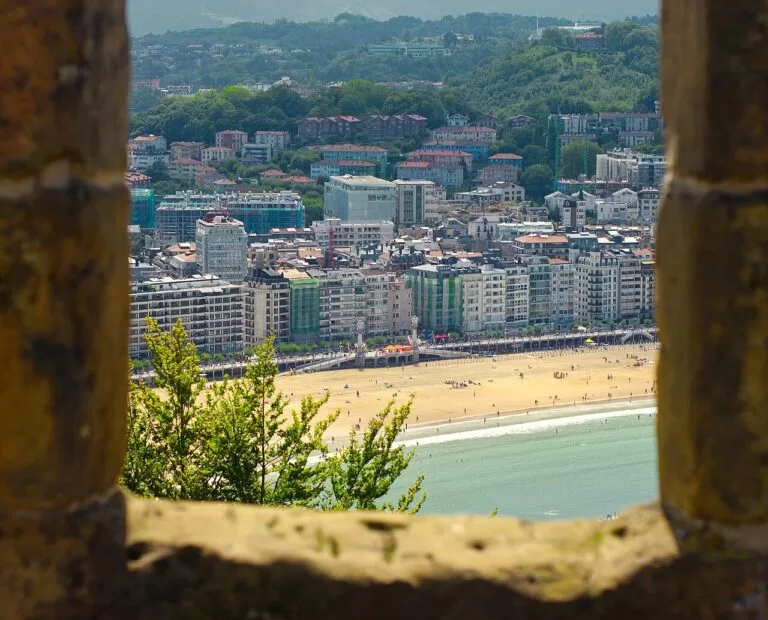
San Sebastián to Hondarribia
Three city beaches in San Sebastián, the natural harbour of Pasaia and Hondarribia at the mouth of the Bidasoa.
San Sebastián to Hondarribia guide →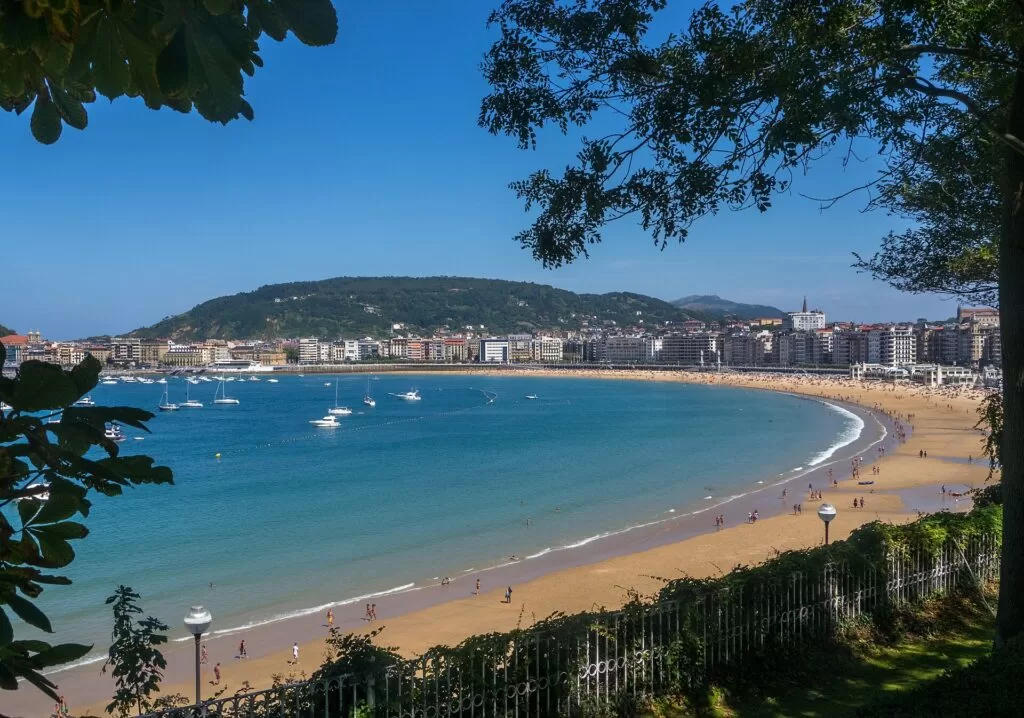
Costa Vasca
The full guide to the Basque coast: all four areas, the campsite, weather and routes.
Costa Vasca guide →Sources and freshness
Checked 9 November 2026. Turismo Euskadi on the towns of Muskiz, Zierbena, Santurtzi, Portugalete, Getxo, Sopela, Barrika, Plentzia, Gorliz, Lemoiz and Bakio; on the beaches of La Arena, Las Arenas, Ereaga, Arrigunaga, Barinatxe, Arriatera-Atxabiribil, Plentzia, Gorliz, Armintza and Bakio; on the Bizkaia Bridge, the Santurtzi fishing harbour, Txakolingunea, San Juan de Gaztelugatxe, Bilbao and the coastal Way of St James; and the tourist offices of Getxo, Portugalete, Plentzia and Bakio. spain.info on Portugalete. English Wikipedia on the Vizcaya Bridge and Las Arenas. Metro and train stations, bus lines, car parks and straight-line distances: OpenStreetMap contributors (ODbL).
Photo credits · 11 photos from Wikimedia Commons Show
Photos from Wikimedia Commons, not altered except for cropping: Bizkaia Bridge, Portugalete by Fred Romero from Paris, France (CC BY 2.0); Bizkaia Bridge by José Ligero Loarte (CC BY-SA 4.0); Barinatxe, Sopela by Xabier (CC BY-SA 4.0); Ereaga, Getxo by rpacho (CC BY 3.0); Bakio by Tiia Monto (CC BY-SA 3.0); Bilbao by Matt Kieffer from London, United Kingdom (CC BY-SA 2.0); San Juan de Gaztelugatxe by Einaz80 (CC BY-SA 4.0); Bermeo by Quahadi (CC BY-SA 4.0); Zumaia by Pomfuttge (CC BY-SA 4.0); San Sebastián by Jchmrt (CC BY-SA 4.0); San Sebastián by Ermell (CC BY-SA 4.0).