
Punta de la Banya and the Trabucador sandbar
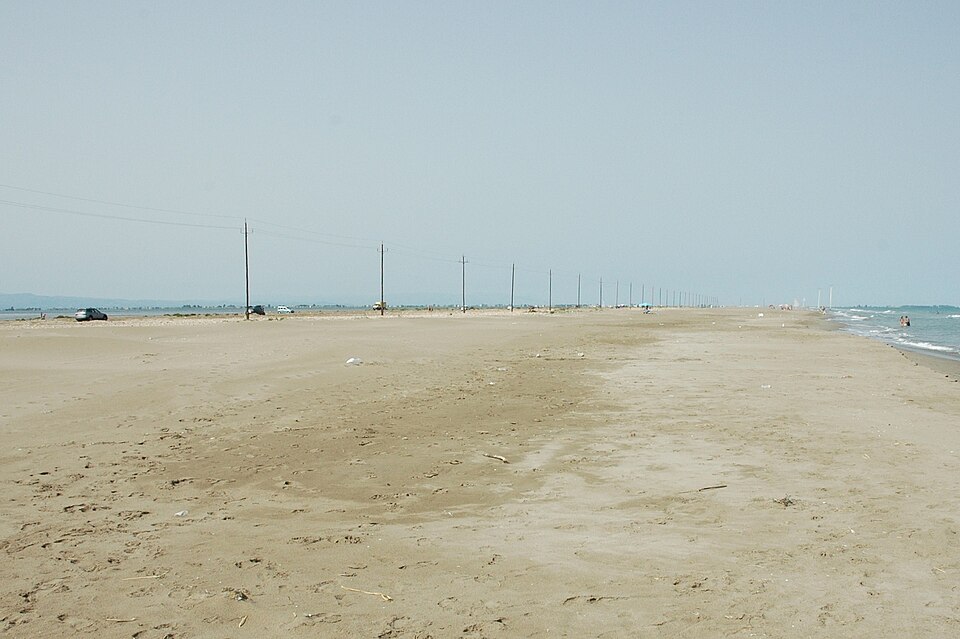
Natural parkThe Trabucador is the 6 km sandbar that joins the Ebro Delta to the Punta de la Banya, the big sandy peninsula at the delta’s southern tip. You reach it by car from La Ràpita or Poblenou del Delta to the car parks at its northern end, then walk, cycle or drive the sandy track along the bar. The beach is open to everyone; the Banya beyond it is a nature reserve with restricted access all year, and the salt works of La Trinitat at its end are private. It suits beach walkers, kitesurfers, windsurfers and birdwatchers; skip it if you want shade, a promenade or a resort beach.
Quick facts
- Names: Platja del Trabucador or Barra del Trabucador (Catalan), Playa del Trabucador (Spanish), also called the Trabucador isthmus. Punta de la Banya is often shortened to “la Banya”.
- Where: municipality of La Ràpita (Montsià), inside the Ebro Delta Natural Park. The bar and the Banya together close off Els Alfacs bay.
- Coordinates: 40.6092, 0.7233 (middle of the bar).
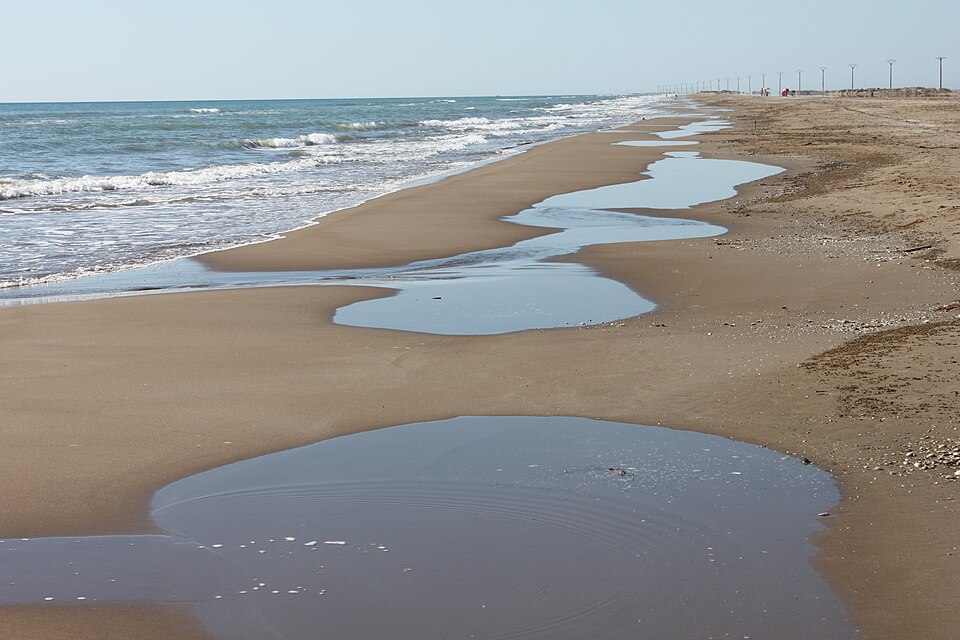
- Beach: 6,165 m long and 150 m wide, golden sand, calm water, low occupancy (spain.info).
- Punta de la Banya: about 2,700 ha of flat sand, dunes and salt marsh, a partial nature reserve since 1986.
- Salines de la Trinitat: about 1,000 ha of salt pans on the Banya, the only salt works still working in the delta. Private, no public access.
- Entry: free on foot or by bike. Motor vehicles are regulated (see below).
Access and parking
By car: from La Ràpita, cross the rice fields towards Poblenou del Delta and follow the road to the Salines de Sant Antoni, where the bar begins. spain.info gives 13 km from the Sant Carles de la Ràpita marina to the beach; in a straight line the north end of the bar is 12.9 km from La Ràpita.
Vehicle rules: La Ràpita town hall, the natural park and the state coastal service regulate motor access to the Trabucador, with limited entry for vehicles, several parking areas and services. Parking is allowed only from 06:00 to 23:00, and driving or parking on the bar is banned from 23:00 to 06:00. Entry on foot or by bike is free (Ebro Delta Natural Park, access page updated September 2026). The town hall first made parking paid at Easter 2021 after crowds of cars; we could not confirm the current fee.
Parking: OpenStreetMap shows two surface car parks with a picnic area at the northern end of the bar, next to two small piers.
Without a car: OpenStreetMap shows no bus stop near the bar. Cycling is the realistic option: the delta is completely flat, but the park warns about strong winds.
What to expect
A long, bare strip of sand with almost no plants and no shade, the open Mediterranean on one side and the shallow, sheltered water of Els Alfacs bay on the other. A sandy track, the Camí del Trabucador, runs the length of the bar to the salt works. The beaches are long and shelve slowly, so the water warms up quickly.
Kitesurfing and windsurfing: the La Ràpita nautical station lists kitesurf, windsurf, water skiing and canoeing among its activities, mainly in Els Alfacs bay, which the Trabucador shelters (catalunya.com). spain.info marks the beach as a surf practice area. We could not confirm marked kite zones, schools or rental on the bar itself, so ask the nautical station before you go.
Punta de la Banya: the park calls it “the jewel of the park (restricted access)”. It is of world importance for Audouin’s gull: about 60% of the world population breeds here, according to the Catalan Wikipedia. Flamingos, terns and Kentish plovers nest on the ground, and Hermann’s tortoises were reintroduced in 1987–1993.
Salines de la Trinitat: the salt pans at the end of the track are private property. The park’s birding route along the Trabucador stops at the salt works and asks visitors to respect the signs; their basins hold seabirds, waders and flamingos all year.
Practical details
- Dogs: on a lead everywhere in the natural park; fines reach €3,000. In summer, dogs are allowed only on beaches marked for them (park rules).
- Camping and motorhomes: wild camping and overnight stays are not allowed on beaches or in the park. Use campsites or motorhome areas.
- Drones: the delta is a restricted air zone and hobby flights are not authorised.
- Nearby visitor centre: OpenStreetMap shows the MónNatura Delta de l’Ebre centre, run by the Fundació Catalunya La Pedrera, at the Salines de Sant Antoni where the bar starts, with toilets and drinking water. Check its opening times before you go.
- Bring: water, food, sun cream and mosquito repellent.
Accessibility and safety
The bar is low and fragile. In January 2020 storm Gloria put most of its central part under water and washed about 700,000 m³ of sand into the bay, turning the Banya into an island for a time; later storms broke it again, and in February 2023 it was impassable (Catalan Wikipedia). After an easterly storm, check that the track is open. There is no shade, and we could not confirm lifeguards or step-free access to the sand.
Best time to visit
For a quiet beach, come outside July and August, when the Catalan Wikipedia names crowds and traffic as the main pressures on the bar. For birds, the park advises early morning and dusk, and the migration seasons. For kitesurfing, choose windy days and ask the nautical station about conditions.
Nearby alternatives
- Platja dels Eucaliptus, 6.8 km away: the next beach north-east, with campsites, shops and the Tancada lagoon close by.
- La Ràpita town guide, 11.3 km away: the fishing port and natural base for the Trabucador, with boat trips on Els Alfacs bay.
- Ebro Delta, 12.7 km away: our overview of the natural park, its lagoons and rice fields.
- Riumar and the Ebro river mouth, 17 km away: where the river meets the sea, with viewpoints and boat trips.
- Alcanar and Les Cases d’Alcanar, 21.7 km away: the last Catalan town on the coast.
Distances are in a straight line from the middle of the bar. For the whole coast, see the Ebro Delta coast area guide.
FAQ
Can you drive on the Trabucador?
Yes, with limits: vehicle entry is regulated, parking is allowed from 06:00 to 23:00, and the bar is closed to vehicles overnight. Walking and cycling are free.
Can you visit Punta de la Banya?
Not freely. The Banya is a partial nature reserve with restricted access all year, and the Salines de la Trinitat on it are private. You can see it from the Trabucador and from the bay.
Is the Trabucador good for kitesurfing?
The La Ràpita nautical station runs kitesurf and windsurf mainly in Els Alfacs bay, sheltered by the Trabucador, and spain.info marks the beach as a surf area. Check zones and conditions with the station first.
How do I get to Trabucador beach from La Ràpita?
Drive through Poblenou del Delta to the Salines de Sant Antoni, where the bar starts: about 13 km from the La Ràpita marina. There is no bus to the bar.
Are dogs allowed on Trabucador beach?
Only on a lead, and in summer only on beaches signed for dogs.
Sources and freshness
Checked 10 November 2026 · 13 sources Show
Checked 10 November 2026. Official: Ebro Delta Natural Park pages on access rules, key data, areas of interest, day itineraries, rules for dogs, camping and drones and visitor advice. Beach data: spain.info. Water sports: catalunya.com on the La Ràpita nautical station and La Ràpita. Background: Catalan Wikipedia on the Trabucador, Punta de la Banya and the Salines de la Trinitat. The La Ràpita town hall and Terres de l’Ebre tourism websites could not be reached when we checked, so local fees and services are not confirmed. Location, parking, bus stops and distances: OpenStreetMap contributors (ODbL). Photos: Wikimedia Commons, licences as credited.
This place is part of our Costa Dorada map and travel guide: Roman Tarragona, Salou and the Ebro Delta — see every town, beach and cove we have mapped on that coast.
How this page is made. CostaMap is written with an AI editorial system run by Ebizapple. This page is based on the sources listed above. Last updated 10 November 2026. Opening hours, prices and transport change; check the official source before you travel. How we work · Partner links and ads