
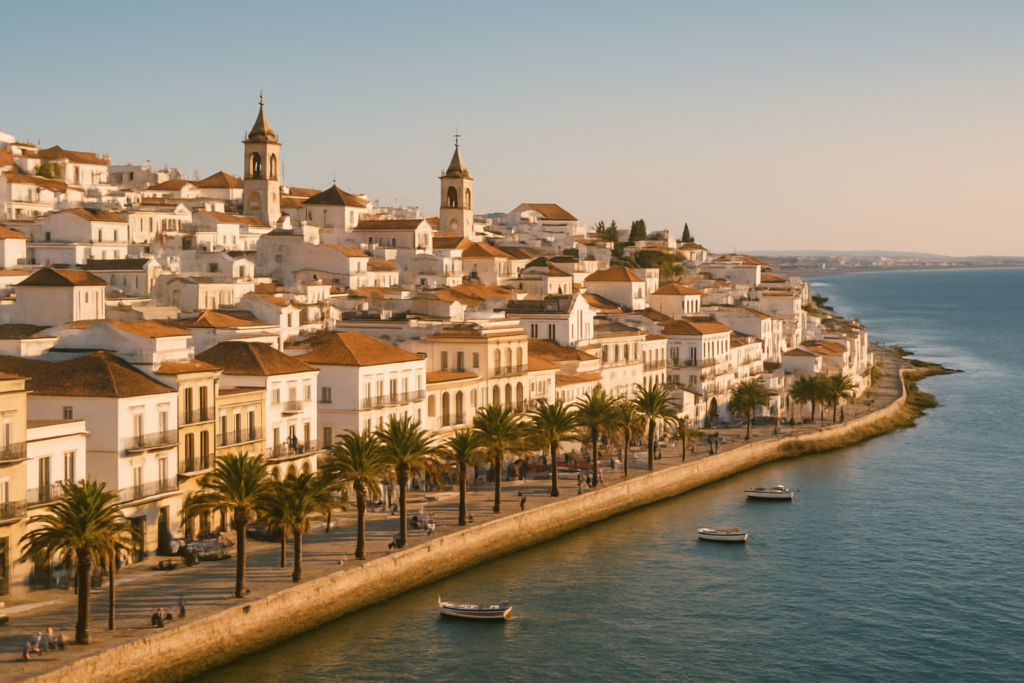
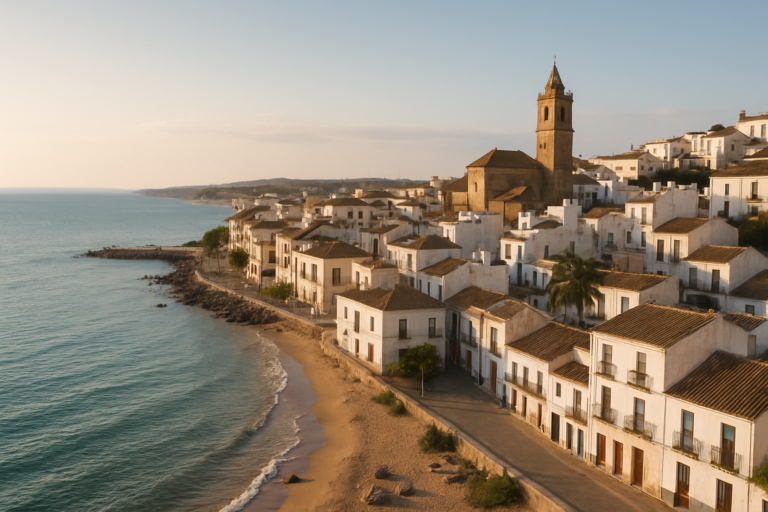
Expect a small, lived-in Andalusian town that doubles as a practical gateway to the western Costa de la Luz rather than an over‑styled resort. The draw here is straightforward: a compact old quarter with whitewashed streets and Mudéjar touches, working fishing piers and prawns on the menu, broad Atlantic beaches across the marshes, and easy crossings into Portugal. Plan for authentic, seasonal local culture more than polished tourist theatre.
Ayamonte at a glance
- Border town at the mouth of the Guadiana river facing Portugal’s Algarve; easy cross-border options by bridge or passenger ferry.
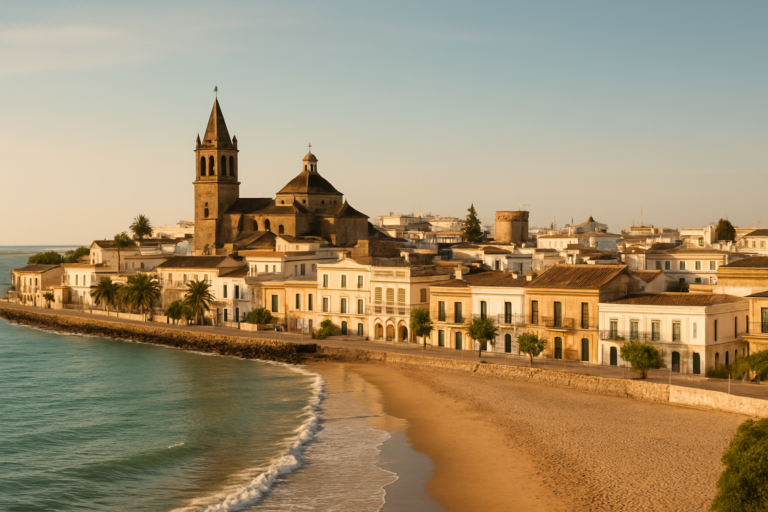
- Historic old town with whitewashed streets, hilltop Parador and churches showing Mudéjar features.
- Isla Canela and Punta del Moral provide wide, dune-backed Atlantic beaches and a marina within short reach.
- Longstanding local economy tied to fishing, shrimp and salt production; seafood features heavily in menus.
- Important surrounding wetlands — Guadiana and Isla Cristina marshes — draw birdlife and shape the landscape.
- Linked to Huelva by the A-49 motorway; lies roughly 55 km to the west of the provincial capital.
- Hosts notable Semana Santa observances and summer festivals that shape the visitor calendar.
Things to do in Ayamonte
Activities here split into two clear types: exploring a compact historic centre and using the town as a base for coastal marshland and beach days. Time your visit around a festival if you want local atmosphere; otherwise mix shoreline relaxation with short excursions into the wetlands or over the river to Portugal.
| Attraction | What it is | Price/entry | Best for |
|---|---|---|---|
| Old town & hilltop Parador | Whitewashed streets, churches with Mudéjar features and a Parador on the hill | – | History strolls, architecture fans |
| Isla Canela beaches | Wide, dune-backed Atlantic sands linked to town by road and marsh channels | – | Long beach days, families |
| Punta del Moral and marina | Beaches and a marina with waterside restaurants | – | Boating, seafood dining |
| Guadiana river crossing (ferry) | Passenger ferry to Vila Real de Santo António in Portugal | – | Cross-border day trips |
| Salinas and marshes | Salt pans and wetlands around the Guadiana and Isla Cristina | – | Birdwatchers, nature walks |
Explore the old town and the Parador hill
The historic core is compact and walkable. Expect narrow, whitewashed streets and churches that display Mudéjar architectural details — a reminder of layered Moorish and Christian influences along this coast. The Parador sits on a hill above the town and is a useful visual anchor when you’re navigating the lanes. Take time to move away from the busiest streets to find quieter plazas where local life plays out: cafés, small seafood restaurants and the markets that reflect the town’s fishing identity.
Marshes, salinas and birdwatching
The coastal wetlands around the mouth of the Guadiana and the Isla Cristina marshes shape both scenery and economy. Salt production remains visible in the landscape, and the marshes are important habitat for resident and migratory bird species. Bring binoculars if you’re interested in birdlife; even short walks along authorized tracks give good encounters with the marsh environment.
Crossing to Portugal and short coastal hops
Ayamonte’s location at the river mouth makes cross-border exploration unusually straightforward. A passenger ferry connects the town to Vila Real de Santo António across the Guadiana, and the Puente Internacional del Guadiana road bridge provides a modern link by car. Use the town as a base to compare the Costa de la Luz shoreline with Algarve beaches a short drive away.
Best beaches in the area
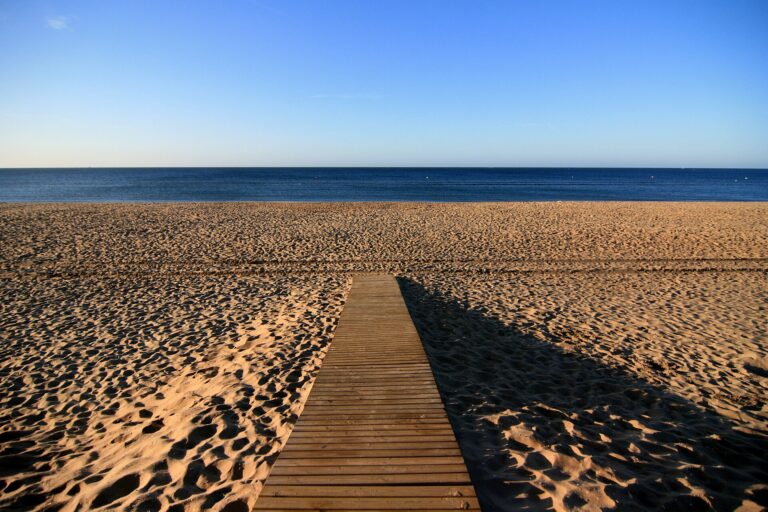
The nearest beaches are long Atlantic sands backed by dunes and marshland. They’re not boutique Caribbean coves — the attraction is open space, wind, surf and broad horizons.
| Beach | Character | Facilities / Blue Flag |
|---|---|---|
| Isla Canela | Wide, dune-backed sandy beach with access across marsh channels | Road access; dune landscape |
| Punta del Moral | Sandy beach with a marina and waterside dining options nearby | Marina facilities; waterside restaurants |
Ayamonte with kids
The seaside setting and broad sands make the area straightforward for family days out. Beaches at Isla Canela and Punta del Moral are well suited to children who enjoy running space and paddling. Short, sheltered boat trips across the river and easy walks in the marsh fringes provide variety from beach time. Keep meals simple: the town’s fishing port tradition means family-friendly seafood options are widely available.
How to get to the town and get around
Road connections are the most practical way to reach and move around this corner of Andalusia. The town functions as a transport hub to Portugal as well as a local centre for beaches and wetland excursions.
| From | By | Approx time |
|---|---|---|
| Huelva | A-49 motorway west toward Portugal | – |
| Vila Real de Santo António (Portugal) | Passenger ferry or Puente Internacional del Guadiana bridge | – |
Where to stay
Accommodation choices split between the compact town centre and the coastal hamlets. Stay in the old town if you want evening atmosphere and proximity to restaurants; choose Isla Canela or Punta del Moral for immediate beach access, dune scenery and a quieter, more resort-style feel. The hilltop Parador provides a historic, elevated option within walking distance of the centre.
Best time to visit
Your timing depends on the kind of trip you want. Festival-focused visitors should plan around Holy Week or the summer calendar; beachgoers target the warmer months when the shore is active. The wetlands and salt pans are seasonally dynamic, with peak bird activity during migration periods.
| Season | Months | What to expect |
|---|---|---|
| Spring | Spring (Holy Week dates vary) | Semana Santa observances; pleasant weather for walking |
| Summer | Summer months | Beach season and summer festivals; busiest time on the coast |
| Autumn & Winter | Autumn & winter months | Quieter shoreline and good seasons for birdwatching around the marshes |
History of the town
The town’s character reflects its riverine and maritime position at the mouth of the Guadiana. Historically tied to fishing and salt extraction, the local economy and built environment have been shaped by those industries: working ports, salinas in the surrounding landscape and simple, functional architecture. Mudéjar elements visible in some churches recall the layers of Moorish and Christian influence common to Andalusian coastal settlements. Over time the town has also assumed a practical role as a gateway between the Costa de la Luz and the Algarve.
Practical info
- Cross-border options: a passenger ferry operates across the Guadiana to Vila Real de Santo António, and there is a road connection via the Puente Internacional del Guadiana (in place since 1991).
- Road access: the A-49 motorway links the area westward toward Portugal and connects with Huelva roughly 55 km to the east.
- Local economy: fishing (including prawns) and salt production remain visible parts of the landscape and the town’s dining scene.
- Wetlands: the surrounding marshes and salinas are environmentally significant; stick to designated paths and observe local guidance when birdwatching.
Worth it for: visitors who want an authentic, low‑key Andalusian river port with easy beach access, seafood dining and straightforward cross‑border excursions into the Algarve. Less so if: you expect a polished, all-inclusive resort or a high-gloss tourist spectacle—this is a working town with seasonal festival highlights rather than a purpose-built entertainment destination.
How we assess this guide
We compile and cross-check factual claims from regional and travel sources to flag operational links (ferries, bridges), landscape features (marshes, salinas, dunes) and cultural rhythms (religious and summer festivals). We highlight current transport links and the town’s seaside and wetland attributes; this guide does not rely on single-source anecdotes or unverified opening times.
Frequently asked questions
How do I get from Huelva to Ayamonte?
Drive west on the A-49 motorway toward Portugal; the town lies roughly 55 km from Huelva along that route. Public transport details vary—check local schedules for buses.
Is it easy to cross into Portugal from here?
Yes. There are two practical options: a passenger ferry connects the town with Vila Real de Santo António across the Guadiana, and the Puente Internacional del Guadiana provides a road link between the two countries.
Which beach is best for families?
Isla Canela’s wide, dune-backed sands and easy access make it a good choice for family beach days; Punta del Moral also offers sandy shoreline plus nearby marina facilities and waterside restaurants.
How many days do I need to see the highlights?
A long weekend gives time to stroll the historic centre, sample seafood, and spend a day at the beach or exploring the marshes. Add extra days if you plan cross-border excursions into the Algarve or more extensive birdwatching trips.
Is the town good for seafood?
Yes. Ayamonte has a strong fishing tradition, and Huelva prawns and other seafood are a local focus on menus.
Can I get around without a car?
Within the town and to nearby beaches you can manage on foot, taxi or local buses. For exploring the surrounding wetlands or moving more freely along the coast and into the Algarve, having a car is more convenient.
Is parking difficult?
Parking pressure increases during the summer beach season and festival periods. In the compact centre look for municipal parking; coastal resort areas offer roadside and organised parking close to beaches and the marina.
What are rainy-day options?
On wet days focus on indoor options in the historic core — cafés, restaurants serving local seafood and small museums or churches with Mudéjar features are suitable alternatives to outdoor activities.
When is Semana Santa?
Semana Santa (Holy Week) is a movable spring observance. The town holds notable Holy Week processions that draw local participation and shape the cultural calendar.
Are there summer festivals?
Yes. The town hosts summer festivals that create a livelier atmosphere along the coast and in the town centre during the warmer months.
What wildlife can I expect in the marshes?
The Guadalquivir mouth and nearby Isla Cristina marshes are important wetlands for birdlife. Expect to see a range of wetland species; bring binoculars and observe from designated viewpoints and tracks.
Is Ayamonte expensive compared with nearby resorts?
Costs vary by season and by type of experience. The town’s working-port character and local dining options offer choices across budgets; summer beach season and festival periods typically see higher demand and higher prices.
Can I stay on a hilltop Parador?
Yes. A Parador occupies a hill above the town and provides a historic lodging option with easy access to the old quarter.
Are the salt pans still active?
Salt production and visible salinas are part of the surrounding landscape. The salinas are a feature of the local economy and environment.
Is there a marina?
Punta del Moral includes a marina area with waterside dining nearby, providing a contrast to the town’s fishing quays.
Plan the wider trip
Nearby on the Costa de la Luz
Ayamonte on the map
Places worth knowing near Ayamonte
How this page is maintained. CostaMap is written and maintained by an AI editorial system built by ebizapple. Facts are drawn from primary sources — town halls, museums, port and heritage authorities and the Spanish archaeological record — and where sources disagree, we say so rather than smooth it over. Photographs marked as ours are taken on location. This page was last reviewed on 27 July 2026. Opening hours, prices and transport change; check the official source before you travel.