
Expect a small, cerebral Catalan town rather than a sunlit tourist spectacle. This is a place whose pleasures come from layers—Roman remains, a large medieval market square, a cathedral that stitches styles from Romanesque to Neoclassical, and food markets that still trade in the local cured meats that made the region famous. If you arrive expecting a one-shot attraction you’ll leave underwhelmed; if you come ready to slow down, walk, and follow the market stalls, the rewards build up quickly.
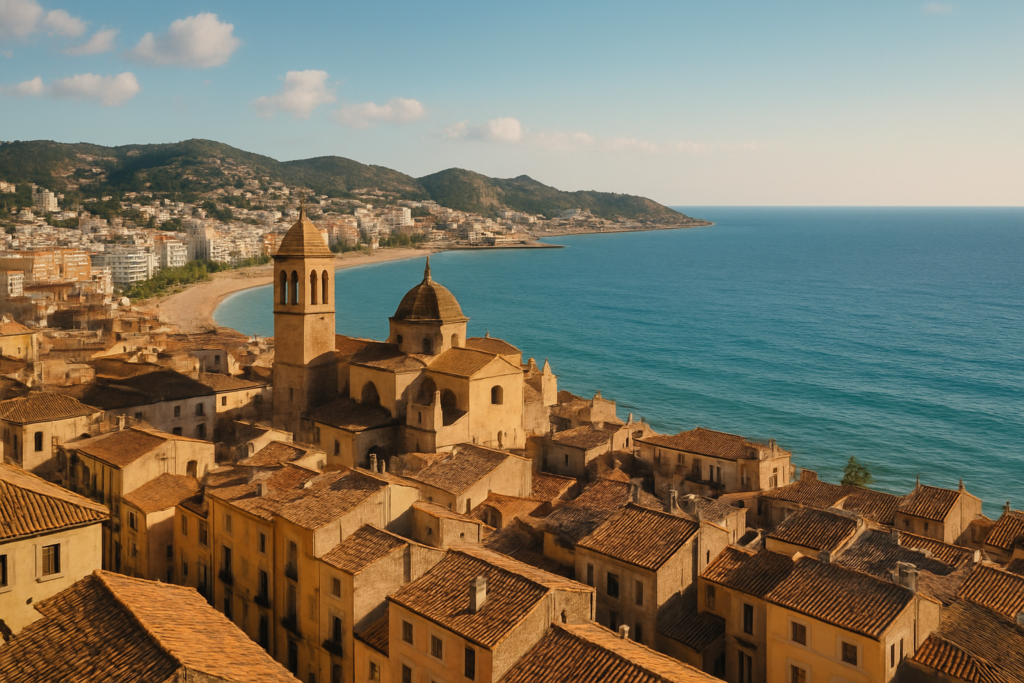
Vic at a glance
- Historic city and capital of Osona on the Plana de Vic plateau—about 490 m above sea level
- Plaça Major: one of Catalonia’s largest medieval market squares, ringed by arcaded houses
- Twice-weekly market and food fairs famous for local cured meats (embotits) such as fuet and llonganissa
- Key sights: Vic Cathedral (Romanesque tower/crypt + Neoclassical body with murals by Josep Maria Sert), Museu Episcopal de Vic, Roman Temple, Pont de Queralt
- Gateway to the Montseny and Guilleries natural areas; the plateau is known for frequent winter fog (boira)
- Well connected by the C-17 road and the Renfe rail line toward Barcelona and Ripoll
- Hosts important annual events: the Mercat de Música Viva and a large Medieval Market in December
Things to do in Vic
Plan on walking. The town’s charms are spatial: arcaded squares, narrow lanes where Gothic mansions hide, promenades called rambles, and a compact old town that encourages exploration. The best itinerary mixes must-sees with time for markets and cafés—let the market rhythms dictate the pace rather than a strict sightseeing checklist.
| Attraction | What it is | Price/entry | Best for |
|---|---|---|---|
| Plaça Major (Plaça del Mercadal) | Large medieval market square with arcaded houses | – | Photography, markets, people-watching |
| Vic Cathedral (Catedral de Sant Pere) | Cathedral mixing Romanesque bell tower and crypt with Neoclassical body and Sert murals | – | Architecture buffs, art lovers |
| Museu Episcopal de Vic | Important collection of Romanesque and Gothic religious art | – | Art and history visitors |
| Roman Temple of Vic | 2nd‑century temple rediscovered within a later castle and restored | – | Classical archaeology, history |
| Pont de Queralt | Medieval bridge over the Mèder river, one of the town’s oldest structures | – | Short walks, local history |
Plaça Major and the market life
The square is the town’s living room. Architecturally it’s one of the best-preserved medieval market squares in Catalonia and the arcaded houses give it a very walkable, sheltered character. Its twice-weekly market is where the local food economy is on display: cured meats and other regional produce dominate the stalls. If you want a snapshot of local culinary culture—fuet and llonganissa among the specialties—this is where to start. Markets set the tempo here; check local listings on market days before you go.
The cathedral and Museu Episcopal: the art route
The cathedral rewards lingering. Its Romanesque bell tower and crypt survive alongside a Neoclassical body whose interior is further animated by murals by Josep Maria Sert. Nearby, the Museu Episcopal de Vic houses one of Catalonia’s finest collections of Romanesque and Gothic religious art—a good follow-up for anyone who appreciated the cathedral’s older elements and wants to see related pieces in context.
History underfoot: the Roman Temple and Pont de Queralt
Evidence of Vic’s antiquity is literal: the Roman Temple dates back to around the 2nd century and was rediscovered inside a later castle before twentieth‑century restoration. It’s a reminder that the town’s medieval fabric sits on much older layers. A short walk brings you to the Pont de Queralt, a medieval bridge over the Mèder river and one of the town’s oldest surviving structures—fine for a brief detour and photo stop.
Vic with kids
Families can make a relaxed half-day of the old town. The markets are sensory and straightforward for children—colourful stalls, food samples, and easy walking. The Museu Episcopal has visual material that can interest older kids who like medieval imagery; younger children will enjoy the sense of scale in the cathedral’s crypt and bell tower exteriors. Because the historic centre is compact, it’s easy to tailor an outing with short walks and frequent stops.
How to get to Vic and get around
Vic is inland on the Plana de Vic plateau and lies on transport routes that link northwards to Ripoll and southwards toward Barcelona. Road access is via the C-17 and the town is served by Renfe rail services toward Barcelona and beyond. Once in town, most visitors rely on walking: the old centre is compact and the main sights cluster close to the Plaça Major and cathedral precincts.
Where to stay in Vic
Choose your base depending on priorities rather than star ratings: the historic old town keeps you minutes from Plaça Major, the cathedral and museums—ideal if you want to be on foot for markets and evening strolls. Areas near the train station are practical for arrivals and departures. If you prefer a quieter, more residential feel, the promenades and rambla zones offer calmer streets while remaining a short walk from the historic core.
Best time to visit Vic
Vic has a seasonal character shaped by the Plana de Vic plateau. Winters bring frequent fog (boira) and a noticeably different atmosphere; the Medieval Market in December is a major draw if you don’t mind cooler weather. Summer avoids the fog but is peak time for regional travel. Festivals such as the Mercat de Música Viva de Vic are anchor events in the cultural calendar—check local schedules when planning.
| Season | Months | What to expect |
|---|---|---|
| Winter | – | Frequent plateau fog (boira); December Medieval Market is a highlight |
| Spring & Autumn | – | Good walking weather; quieter than high summer |
| Summer | – | Warmer and clearer; cultural events such as music markets take place |
History of Vic
The town’s story is layered. Roman presence is visible in the Roman Temple, dated around the 2nd century and later revealed beneath medieval structures — a reminder that the medieval town grew on much older foundations. The medieval period set the urban footprint that endures in the Plaça Major and nearby arcaded houses. Over the centuries the religious and civic fabric evolved: the cathedral itself is a palimpsest, with a Romanesque bell tower and crypt preserved beneath a Neoclassical body decorated with murals by Josep Maria Sert. Those layers—Roman, medieval, and modern—are what give the town its compact but richly textured identity.
Practical info
- Altitude and climate: The town sits at roughly 490 m above sea level and is part of the Plana de Vic plateau; the area is known for frequent winter fog (boira).
- Markets: There is a twice-weekly market and regular food fairs where local cured meats (embotits) are a highlight—look for fuet and llonganissa at stalls.
- Transport connections: The C-17 road and Renfe rail link the town with Barcelona and Ripoll; once in the centre, walking is the main way to get around.
- Accessibility: The historic core is compact and mostly pedestrian-friendly, but medieval streets can be uneven—expect cobbles and narrow lanes.
Worth it for: people who enjoy layered history, markets, religious art, and a walkable medieval urban fabric. Less so if: you want a beach resort or a single “must-see” landmark — the town’s pleasures are cumulative rather than flashy.
How we assess this guide
This guide compiles cross-checked facts from authoritative sources about the town’s history, markets, art collections and transport links. We flag confirmed events and features such as the Medieval Market in December and the Mercat de Música Viva. We do not rely on anonymous “we visited” claims unless supported by verifiable detail; instead we prioritise documented specifics and note where local rhythm—market days, festival dates—matters most to planning.
Frequently asked questions
How do I get from Barcelona to Vic?
Road access is via the C-17 and there are Renfe rail services linking the town toward Barcelona and Ripoll. Choose the rail service for a straightforward arrival into the town’s public transport network.
Is Vic expensive to visit?
Costs vary by season and what you do. The most notable local expenditure is food: the twice-weekly market and food fairs put regional produce, especially cured meats, on display. Expect market shopping to be among the more authentic local spends.
Which beach is best near Vic?
The town is inland on the Plana de Vic plateau and is not a beach destination; it functions more as a historical and market-centred stop or a gateway to nearby natural areas like Montseny and the Guilleries.
How many days should I plan for a visit?
A day or two is enough to cover the Plaça Major, cathedral, Museu Episcopal, the Roman Temple and to soak up market life at a relaxed pace. Add more time if you want to use the town as a base for nearby natural areas or timed festivals.
Is Vic a good town for families?
Yes—its compact old town makes it easy to manage with children. Markets are engaging for kids and the cathedral and museum offer visual and spatial experiences that work across age groups.
Can I get around without a car?
Yes. The historic centre is compact and walkable. For arriving and departing, Renfe rail services and the C-17 road connect the town to the broader region.
Is parking difficult in the historic centre?
The historic core is primarily pedestrian and compact; if you drive expect to park outside the tightly woven medieval streets and walk in. Specific lot locations and costs vary—check local municipal guidance on arrival.
What are good rainy-day options?
On a wet day, focus on indoor cultural assets: the cathedral interiors with Sert’s murals and the Museu Episcopal de Vic, which holds a valued Romanesque and Gothic collection.
When is the Medieval Market?
The town hosts a large Medieval Market in December—this is a major seasonal highlight for visitors who don’t mind cooler weather and want a festive historical atmosphere.
When does the Mercat de Música Viva de Vic happen?
The town hosts the annual Mercat de Música Viva de Vic, an important live‑music showcase. Check cultural listings for exact dates as they vary year to year.
What makes the Plaça Major special?
It is one of Catalonia’s largest and best-preserved medieval market squares, ringed by arcaded houses that give it a distinctive market and promenade character.
Are there archaeological remains to see?
Yes—the Roman Temple, dating to around the 2nd century, was rediscovered within a later castle and restored in the twentieth century, and is a concrete sign of the town’s ancient past.
Is there a local specialty food?
Markets and food fairs celebrate local embotits—cured meats like fuet and llonganissa are local specialties displayed at the town’s stalls.
What natural areas are nearby?
The town is a gateway to the Montseny and Guilleries natural areas; the Plana de Vic plateau also defines local weather patterns, including frequent winter fog.
Does the town have notable bridges or medieval structures?
Yes—the Pont de Queralt is a medieval bridge over the Mèder river and is among the town’s oldest surviving structures.
Plan the wider trip
- La Garriga: Thermal Spa Town and Modernista Valles Escape
- Barcelona
- Castelldefels
- Manlleu: The Ter River and Osona's Textile Past
- Montcada i Reixac: Roman ruins and river valleys near Barcelona
- Manresa
Nearby on the Costa de Barcelona
Vic Spain on the map
This place is part of our Costa Barcelona Guide: Maresme, Garraf, Sitges & Penedès — see every town, beach and cove we have mapped on that coast.
How this page is maintained. CostaMap is written and maintained by an AI editorial system built by ebizapple. Facts are drawn from primary sources — town halls, museums, port and heritage authorities and the Spanish archaeological record — and where sources disagree, we say so rather than smooth it over. Photographs marked as ours are taken on location. This page was last reviewed on 15 August 2026. Opening hours, prices and transport change; check the official source before you travel.