
Costa Dorada · Tarragonès
Tarragona, Altafulla and Torredembarra travel guide: Roman Tarraco and the Tamarit coast
The centre of the Costa Dorada: a Roman capital on the sea, a castle on a beach, a walled village and dunes, all on one coastal path.
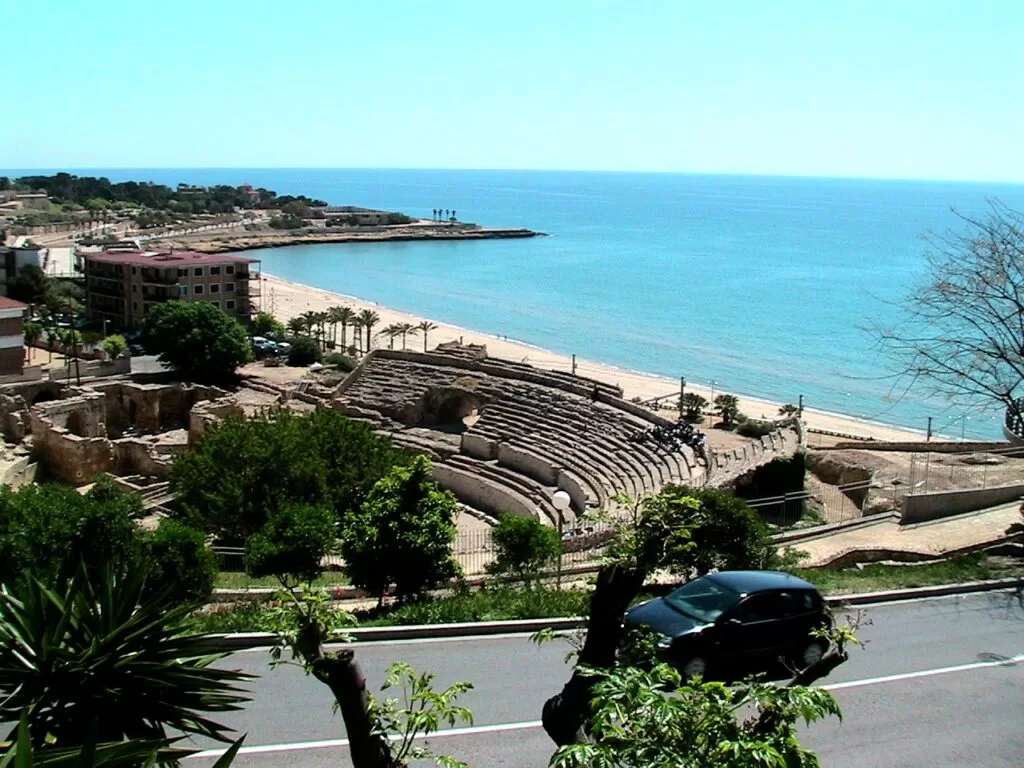
Platja del Miracle and the amphitheatre, Tarragona · Photo: Isidre blanc, CC BY-SA 3.0
Part of the Costa Dorada guide · Other areas: the Baix Penedès coast · Salou, Cambrils and PortAventura · the Ebro Delta coast
Tarragona, Altafulla and Torredembarra are the central stretch of the Costa Dorada, the coast of the Tarragonès county in southern Catalonia, about 100 km south-west of Barcelona. It runs from the Roman city of Tarragona, once Tarraco, capital of Hispania Citerior, north-east past Tamarit Castle and the walled village of Altafulla to the dunes of Els Muntanyans at Torredembarra; the GR 92 coastal path links them all (Catalunya.com). Roman Tarraco and the monuments around it have been a UNESCO World Heritage Site since 2000 (Catalunya.com).
At a glance
- Where the coast of the Tarragonès, from Tarragona city and the mouth of the Francolí north-east to Torredembarra and Creixell; Torredembarra is 13 km from Tarragona.
- Towns Tarragona with El Serrallo and Tamarit, Altafulla, Torredembarra and Creixell on the coast; Constantí and El Catllar inland.
- Best for Roman monuments, city beaches below the old town, the coastal path through the Bosc de la Marquesa, quiet beaches at Tamarit and Altafulla, and dunes at Els Muntanyans.
- Getting there Reus airport is about 12 km from Tarragona and Barcelona airport about 80 km; trains run along the coast to Tarragona, Altafulla-Tamarit and Torredembarra.
- On CostaMap 11 places in this area, from the amphitheatre and the cathedral to Tamarit, the Pont del Diable and the Torredembarra dunes.
Map of Tarragona, Altafulla and Torredembarra
The places in this area with a CostaMap page. Tick a place type to filter, and click a marker to see the place in the panel. The towns below follow the coast from south-west to north-east.
Place type
Area · next level
 Area map
Tarragona, Altafulla and Torredembarra
Click a marker to see the place here. Roman Tarragona, Tamarit, Altafulla and the Torredembarra dunes.
Towns and villagesTowns and villages
From Tarragona north-east along the coast, then the villages inland.
Tarragona
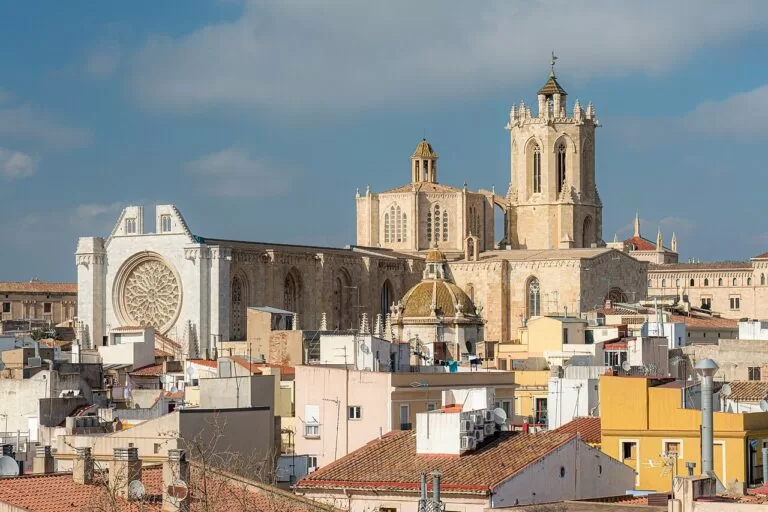
Tarragona is the capital of the province and the most Roman of Catalan cities. Tarraco began as a Roman camp in 218 BC, became a colony in the 1st century BC and was made capital of Hispania Citerior by Augustus in 26–25 BC (Catalunya.com). The World Heritage monuments are in and around the old town, the Part Alta: the walls, the amphitheatre, the theatre, the circus and the Praetorian tower, the Paleo-Christian necropolis and the forums. From the medieval city come the cathedral of Santa Maria, the Jewish quarter and the old hospital of Santa Tecla. The municipality has nineteen kilometres of coast, and the Balcó del Mediterrani at the end of the Rambla Nova looks over the port, the amphitheatre and the Miracle beach (Catalunya.com). Our Tarragona city guide and the Tarragona town guide have more.
El Serrallo
The fishing quarter beside the port is where the city keeps its seafaring side. The Fishermen’s Guild runs guided visits to watch the boats come in and the fish auction; the Port Museum and the Blue Observatory, a multimedia space on local fishing, explain the trade. The neo-Gothic church of Sant Pere dates from 1880, and the Banya lighthouse on the Llevant breakwater worked in the Ebro Delta from 1864 to 1978 before it was moved here (Catalunya.com). Spain.info says the fish auction takes place every afternoon (Spain.info). Next to it, Tarragona Marina covers the city marinas.
Tamarit and La Móra
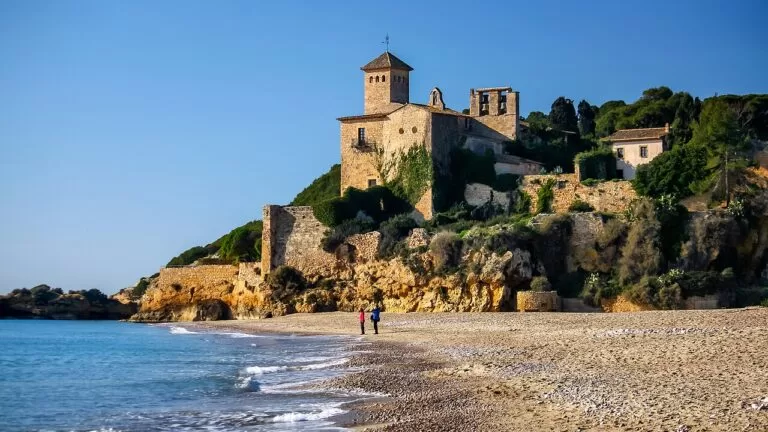
North-east of the city, still inside Tarragona’s boundary, the coast turns wild. The Bosc de la Marquesa pine wood runs from Platja Llarga to Punta de la Móra, with small coves and a 16th-century watchtower at La Móra; the coast from there to Tamarit is a protected natural area (Catalunya.com). Tamarit is a medieval castle and walled village on a rock above the beach, restored after 1916 by Charles Deering with the painter Ramon Casas and today used for private events (Viquipèdia). Campsites stand behind the beach, including Tamarit Beach Resort.
Altafulla
Altafulla sits on a 52-metre hill on the left bank of the Gaià, with a population of 4,835 (Catalunya.com). Its old centre, the Vila Closa, was declared a Historic and Artistic Ensemble of National Interest in 1998; the castle, first mentioned in 1059, is a 17th-century building in private hands and cannot be visited inside (Catalunya.com). On the seafront, the Botigues de Mar promenade takes its name from 18th-century warehouses later turned into houses. The Roman villa of Els Munts, part of the World Heritage site, lies by the beach, and the mouth of the Gaià has been a wildlife reserve since 1992 (Catalunya.com). The Night of Witches falls on the last weekend in June.
Torredembarra
Torredembarra grew around a defensive tower that Count Ramon Berenguer I ordered in 1057, and maritime trade made it grow in the 18th century. The town hall occupies a 16th-century castle-palace, which Catalunya.com calls the only newly built civil Renaissance building preserved in Catalonia, and the Baix a Mar district keeps something of a fishing village. The marina offers sailing trips and diving, and local cooking means xató, fish stews, romesco and rice (Catalunya.com). The lighthouse on the El Roquer cliff began working on 1 January 2000; designed by Josep Maria Llinàs, it has the tallest tower in Catalonia and 217 steps to the top (Catalunya.com). East of the town are the dunes of Els Muntanyans.
Creixell
Creixell is the last town of the Tarragonès before Roda de Berà, which our Costa Dorada guide places with the Baix Penedès stretch. Its old centre stands inland on a rise, with a castle begun in the 11th century (private), the 16th-century church of Sant Jaume crowned by a Modernista dome by Josep Maria Jujol, and the 15th-century manor house Ca la Miquelina. The beach has not been heavily built up, the municipality has five campsites, and the summer population can grow almost tenfold (Catalunya.com).
Constantí and El Catllar (inland)
Two villages behind the coast are worth a detour. In Constantí, the Roman villa of Centcelles is part of the World Heritage site; buses link the village with Tarragona and Reus (Catalunya.com). El Catllar, up the Gaià valley, has a castle that houses the Baix Gaià Castles Interpretation Centre, built over an Iron Age settlement, and walking and cycling routes to the El Catllar reservoir (Catalunya.com).
Beaches and coves
Sizes and services as the Catalan Tourist Board gives them, checked in November 2026; where another source differs, the guide pages say so. Catalunya.com does not give a year for the Blue Flags it mentions.
El Miracle
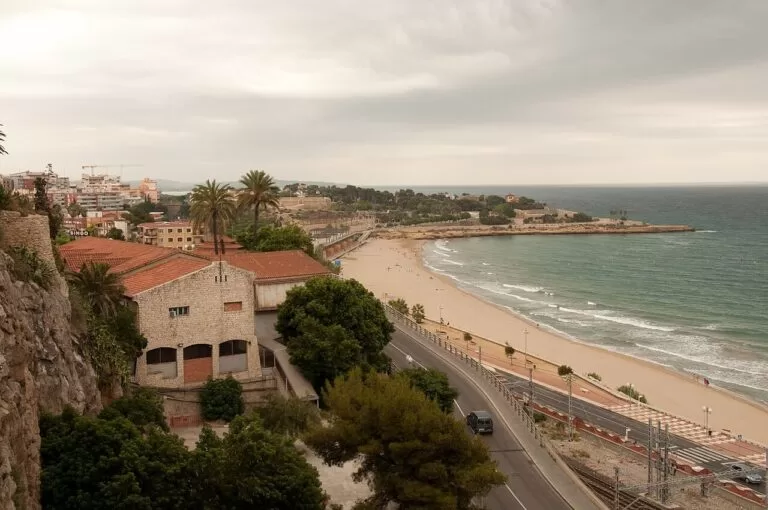
Nearly 500 m of fine golden sand below the amphitheatre, the beach closest to the old town, with lifeguards, showers and adapted access (Catalunya.com).
Tamarit
Nearly 1 km of golden sand with some pebbles below Tamarit Castle, with showers and a parking area (Catalunya.com).
See Tamarit →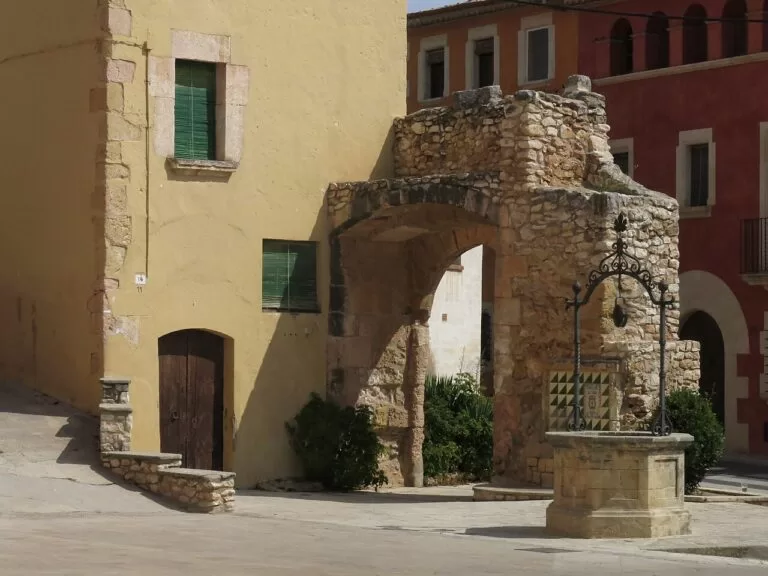
Altafulla
About a kilometre long and 70 m wide, with a Blue Flag, lifeguards, adapted access and calm water (Catalunya.com).
See Altafulla →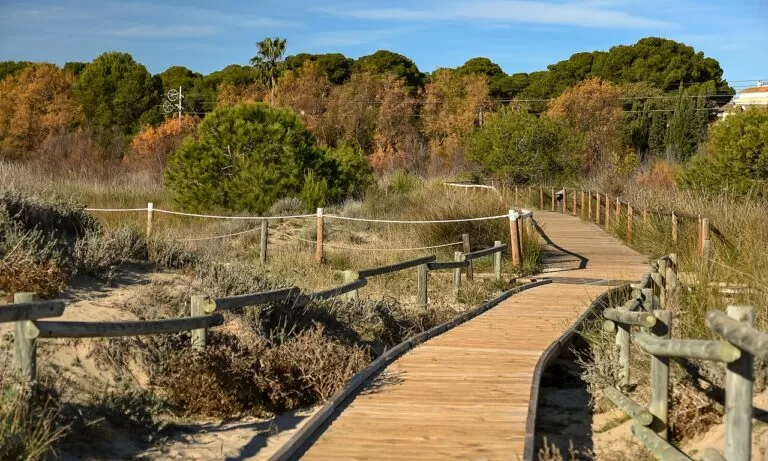
Els Muntanyans
A protected dune beach with saltwater lagoons behind it; part of it is used by nudists (Catalunya.com).
See Els Muntanyans →Also on this stretch, from south-west to north-east:
- L’Arrabassada (Tarragona): a busy 550 m town beach with a Blue Flag and full services (Catalunya.com).
- La Savinosa (Tarragona): 350 m, separated from the city by rocks and pines; a nudist beach with lifeguards and adapted access (Catalunya.com).
- Els Capellans – Cala Romana (Tarragona): a 60 m cove under pines and oaks, about three kilometres from the centre, with a Blue Flag (Catalunya.com).
- Cala Fonda or Waikiki (Tarragona): a cove in the Bosc de la Marquesa where nudism is allowed, reached only on foot (Catalunya.com).
- Creixell: a kilometre and a half of fine sand, 40 m wide, with a Blue Flag; good for dinghy sailing and windsurfing (Catalunya.com).
Things to do
Roman Tarraco
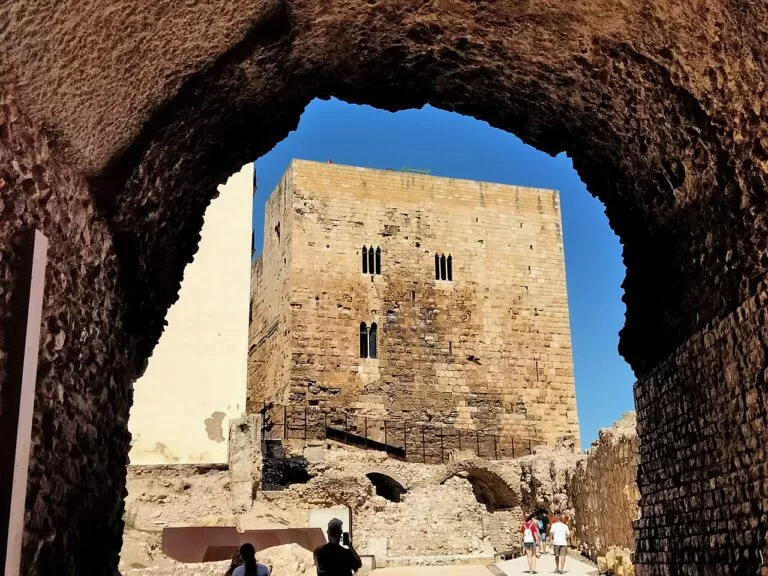
Start at the amphitheatre, built in the 2nd century for 14,000 spectators, with the remains of a Visigothic basilica in the arena. The circus, which held about 30,000, connects with the Praetorian tower; the colonial forum was the centre of public life; and the walls, once 3.5 km long, are the oldest Roman walls in Hispania, with an archaeological walk between the wall and its later outer defences (Catalunya.com). The National Archaeological Museum holds the finds. Outside the centre are the Pont del Diable aqueduct, the Mèdol quarry, where a 16-metre rock needle stands in the middle of the pit and entry is free, and the Tower of the Scipios, a 1st-century funerary tower 9.17 m high that, despite its name, holds no Scipio (Catalunya.com, Mèdol) (Scipios). Tarraco Viva, the Roman festival, fills the city in May (Catalunya.com).
Roman villas by the sea and inland
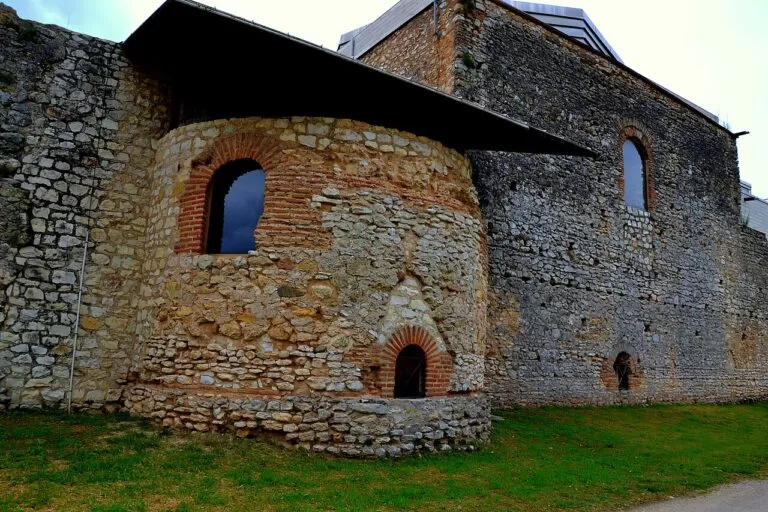
The villa of Els Munts, on a small hill near the beach between Altafulla and Torredembarra, was built in the reign of Claudius in the 1st century and abandoned in the 5th; Caius Valerius Avitus, the highest magistrate of Tarraco, lived here in the 2nd century. Its residential area, baths and working buildings can still be told apart, while its mosaics and sculptures are in the National Archaeological Museum (Catalunya.com). Inland, the Roman villa of Centcelles at Constantí is the other villa in the World Heritage listing.
The coastal path: Tarragona to Torredembarra
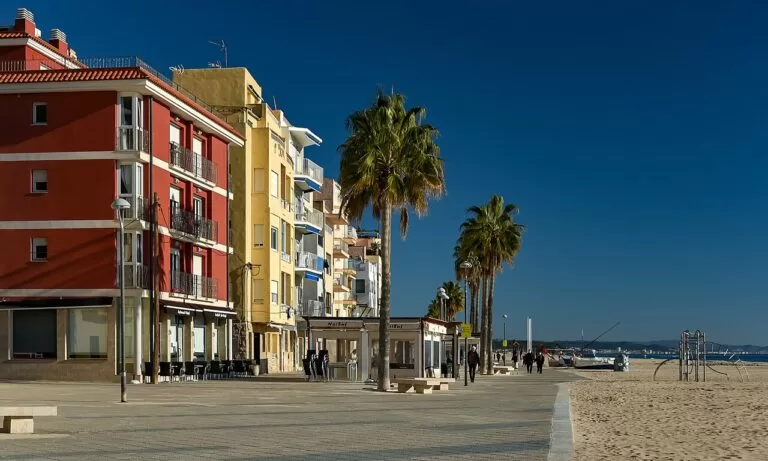
The GR 92 stage from Torredembarra to Tarragona is about 20 km (Wikipedia). From Torredembarra it follows the seafront to the port and the lighthouse, enters Altafulla by the cove of Canyadell, passes Els Munts and the Gaià mouth, rounds Tamarit Castle and follows the camí de ronda past La Móra beach and its tower into the Bosc de la Marquesa. It ends via Platja Llarga, La Savinosa, L’Arrabassada and El Miracle, climbing to the city by the amphitheatre (Catalunya.com, GR 92). Trains on the coastal line make it easy to walk one way and ride back.
Food, markets and festivals
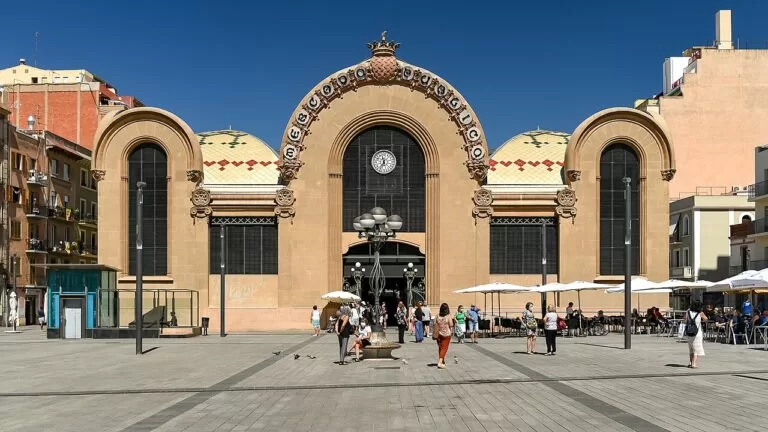
Fish romesco is the city’s typical dish, best eaten in El Serrallo; in October the Tastets del Serrallo revive the stews fishermen cooked on board and at home (Catalunya.com). Tarragona hosts the Human Tower Contest on the first Sunday of October in even-numbered years, and the Festes de Santa Tecla (Catalunya.com); Torredembarra holds a human towers day on 1 November (Catalunya.com).
Where to stay by town
We do not recommend individual hotels. These are the bases that make the most sense, with what each suits.
Tarragona
The old town and the monuments on foot, the main station, the bus station and city beaches below the amphitheatre.
History and transport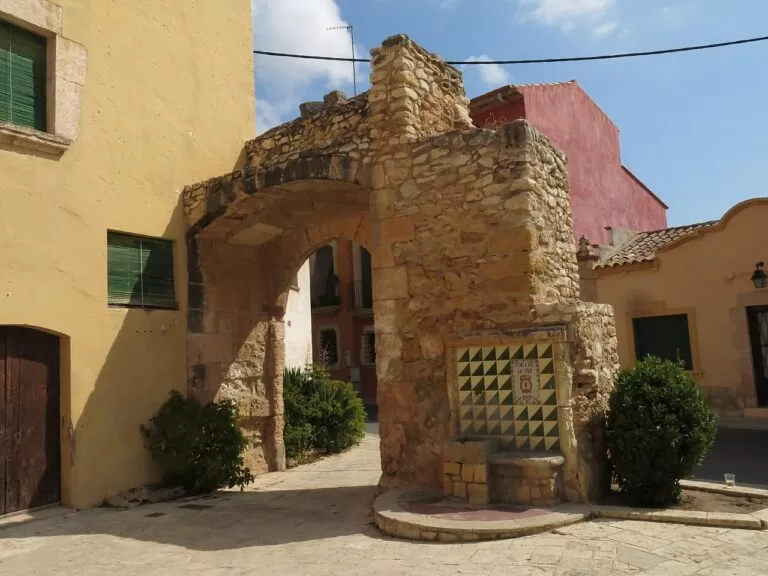
Altafulla
A small walled village above a calm beach, with its own station and the coastal path in both directions.
Quiet beach and village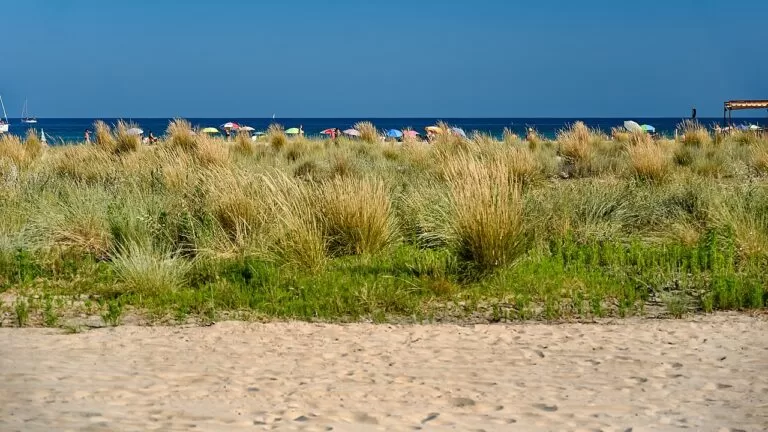
Torredembarra
A beach town with a station on the seafront, a marina and the Els Muntanyans dunes at the edge of town.
Beach holidaysTamarit and Creixell campsites
Campsites line the coast at Tamarit and Creixell, which has five; Tamarit Beach Resort is right behind Tamarit beach.
Camping by the seaGetting there and around
By air
Reus airport is about 12 km from Tarragona, with bus 50 into the city; Barcelona airport is about 80 km away, around an hour by direct bus (Spain.info).
By train
Tarragona station is in the city centre, and Camp de Tarragona high-speed station is about 10 km out, with a bus link (Spain.info). Coastal trains stop at Altafulla-Tamarit and Torredembarra (Catalunya.com).
By car and bus
The AP-7 reaches the centre of Tarragona at exit 33, and the N-340 runs along the coast (Catalunya.com). In the city, EMT buses leave from Plaça Imperial Tarraco and most run from 6 am to 11 pm (Spain.info).
A 1–2 day route
Day 1: Roman and medieval Tarragona
Start at the cathedral and walk the archaeological promenade along the walls. Go down through the forum and the circus to the Praetorian tower, then to the National Archaeological Museum on Plaça del Rei. Visit the amphitheatre in the late morning and look out from the Balcó del Mediterrani. After a swim at El Miracle, walk to El Serrallo for the boats coming in and a fish romesco dinner near the marina.
Day 2: aqueduct, Tamarit and Altafulla
Drive early to the Pont del Diable, or to the villa of Centcelles in Constantí. Then head up the coast to Tamarit and walk the camí de ronda for a while towards La Móra. In the afternoon follow the beach to Altafulla, see the Vila Closa and Els Munts, and end at the Torredembarra lighthouse and the Els Muntanyans dunes at sunset.
FAQ
Is Tarragona worth visiting?
Yes, if you like history: its Roman monuments are a World Heritage Site, and the city has beaches a short walk below the old town. Plan one full day for the centre and half a day for the aqueduct, Centcelles or the Mèdol quarry.
What is the best beach near Tarragona?
El Miracle is the closest to the old town and L’Arrabassada the busy family beach. For a quieter, more natural setting go north-east to Tamarit, Altafulla or Els Muntanyans.
Can you walk from Tarragona to Altafulla?
Yes. The GR 92 coastal path runs from Tarragona through the Bosc de la Marquesa and past Tamarit Castle to Altafulla and on to Torredembarra, about 20 km for the whole stage.
How do I get from Tarragona to Altafulla and Torredembarra?
By coastal train to Altafulla-Tamarit or Torredembarra stations, or by car on the N-340 or the AP-7.
Can you visit Tamarit Castle?
Not as a museum: it is privately owned and used for private events. You can see it from the beach and the coastal path.
Are there nudist beaches near Tarragona?
Yes. La Savinosa in Tarragona, Cala Fonda (Waikiki) in the Bosc de la Marquesa and part of Els Muntanyans in Torredembarra are used by nudists.
Other areas of the Costa Dorada
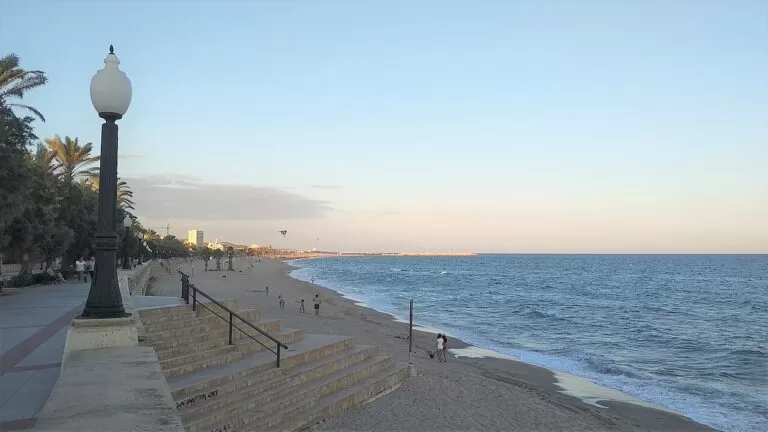
The Baix Penedès coast
Cunit, Calafell, Coma-ruga and El Vendrell, with the Roman Arc de Berà.
Baix Penedès guide →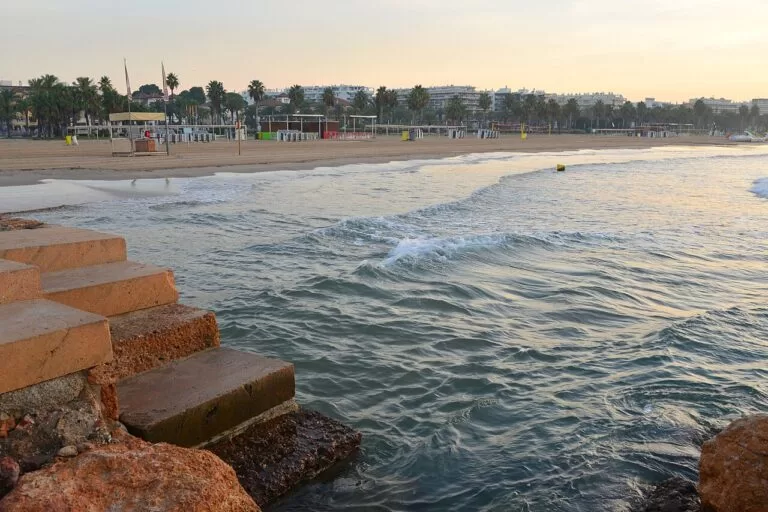
Salou, Cambrils and PortAventura
Long resort beaches, the coves of Cap de Salou, Cambrils harbour and PortAventura World.
Salou and Cambrils guide →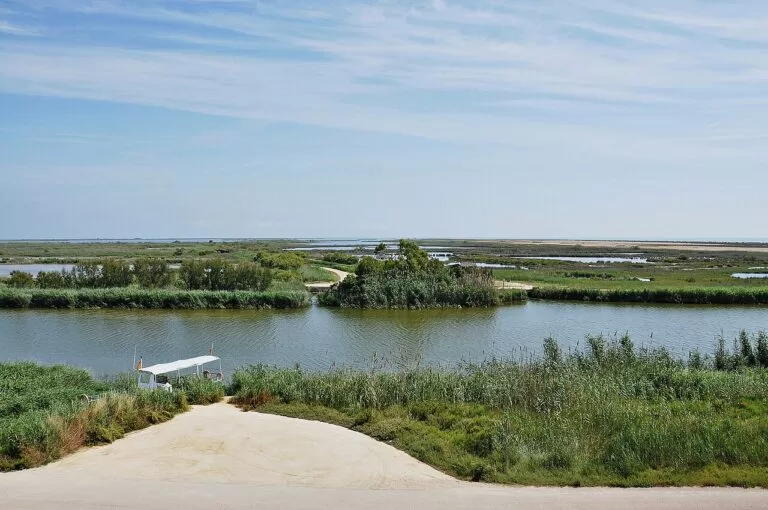
The Ebro Delta coast
Rice fields, lagoons, flamingos and the Trabucador sandbar where the Ebro meets the sea.
Ebro Delta guide →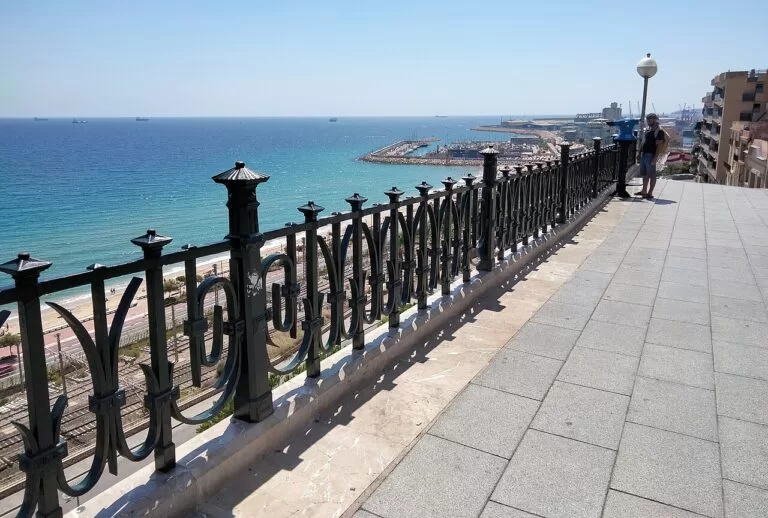
Costa Dorada
The full guide to the coast of Tarragona province, with the map, trains, campsites and weather.
Costa Dorada guide →Sources and freshness
Checked 7 November 2026. Official: Catalunya.com (Catalan Tourist Board) on Tarragona, Altafulla, Torredembarra, Creixell, Constantí, El Catllar, the Tarragonès, the Tarraco ensemble, Els Munts, Torredembarra lighthouse, El Serrallo, the GR 92, plus the beach and monument pages linked above; Spain.info on Tarragona. Background from Viquipèdia on Tamarit Castle and Wikipedia on Torredembarra. The Tarragona, Altafulla and Torredembarra tourism websites and the Costa Daurada tourist board could not be reached from our research setup, so opening hours and prices are left to the individual guides. Map data © OpenStreetMap.
Photo credits · 16 photos from Wikimedia Commons Show
Photos from Wikimedia Commons, not altered except for cropping: Platja de Tamarit, Altafulla by Jorge Franganillo (CC BY 2.0); Amfiteatre de Tarragona by Isidre blanc (CC BY-SA 3.0); Platja del Miracle, Tarragona by Arwin Meijer (CC BY-SA 3.0); Plaça del Pou, Altafulla by Enric (CC BY-SA 4.0); Els Muntanyans, Torredembarra by Jorge Franganillo (CC BY 2.0); Pretori, Tarragona by Enric (CC BY-SA 4.0); Centcelles, Constantí by Angela Llop (CC BY-SA 2.0); Barri Marítim, Torredembarra by Jorge Franganillo (CC BY 2.0); Mercat Central de Tarragona by Jorge Franganillo (CC BY 2.0); Tarragona old town by Fernando (CC BY-SA 4.0); Vila closa, Altafulla by Enric (CC BY-SA 4.0); Platja de la Paella, Torredembarra by Jorge Franganillo (CC BY 2.0); Platja de Coma-ruga by Senancio (CC BY-SA 4.0); Platja de Llevant, Salou by Андрей Бобровский (CC BY 3.0); Delta de l Ebre by Alberto-g-rovi (CC BY-SA 3.0); Balcó del Mediterrani, Tarragona by Enric (CC BY-SA 4.0).